Aldi's County Market Campaign
0
In May 2025, ALDI opened its first store in Kunshan, Jiangsu Province.
In the first hour of opening, customers flooding into the store gathered mainly around the fresh produce and bakery sections. Swiss rolls priced at 9.9 yuan, 47.9-yuan Wuchang rice, and fresh milk at around 10 yuan on the shelves were snapped up in a rush.
In September this year, ALDI's second store in Kunshan opened for business.
In the first five years after entering the Chinese market, ALDI barely expanded beyond the downtown area of Shanghai. The largest discount chain retailer in Germany once adopted an extremely restrained expansion strategy. It was not until last year that it extended its reach to Jiangsu, successively entering Suzhou, Wuxi, Changzhou and Nanjing, and then intensively setting up outlets in Kunshan, Zhangjiagang and Jiangyin.
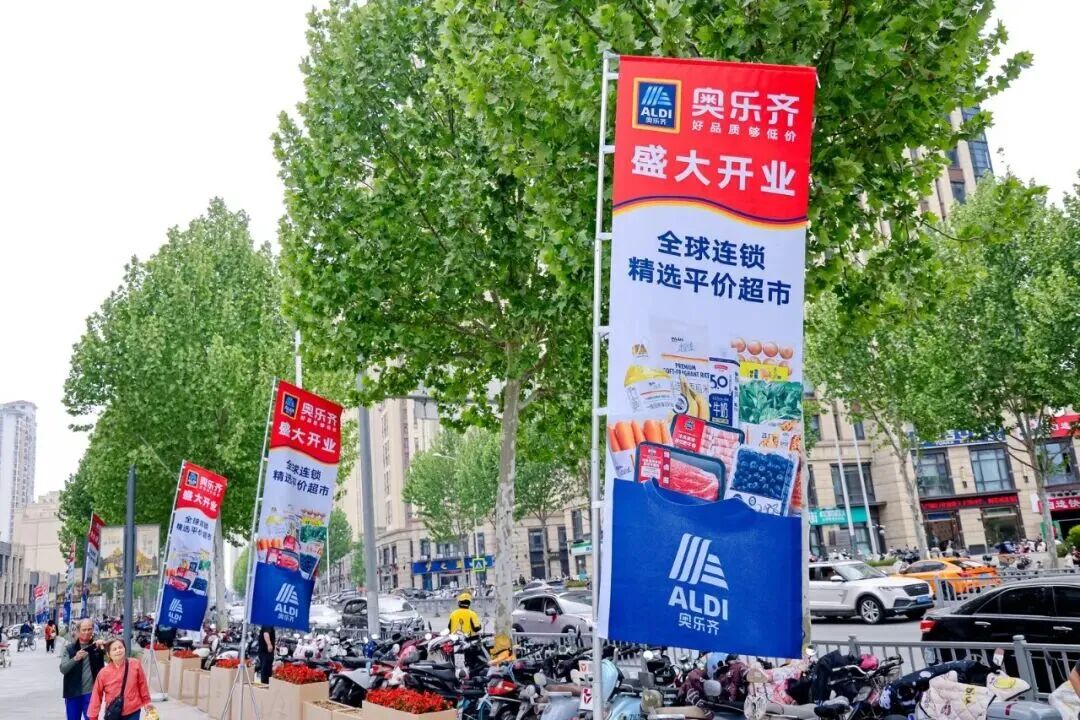
Image | Source from the Internet
Instead of seizing the high ground of first-tier cities such as Beijing and Guangzhou like RT-Mart or Carrefour in their early days, ALDI directly opened stores in county-level cities along the node cities of the Shanghai-Nanjing Railway.
However, county towns are not a blue ocean. When ALDI started expanding out of Shanghai, it found that local competitors had almost achieved pixel-level benchmarking, whether in the upstream supply chain or on the shelves of the sinking market.
1
What ALDI chose is not the sinking market in the general sense.
Kunshan has ranked first among the top 100 counties in China for many consecutive years, with a per capita disposable income of over 70,000 yuan and direct access to Shanghai Metro Line 11. Jiangyin and Zhangjiagang, which follow closely behind, are also top-ranked cities in the list of top 100 counties with highly concentrated private manufacturing and private capital.
In the site selection logic of the retail industry, this is the most certain step. ALDI still relies on its supply chain hub located in Jiading, with a distribution radius entirely within 150 kilometers, so its warehousing and logistics system does not need to be reconstructed. Meanwhile, the floating population who commute across cities have already completed the brand awareness building for ALDI in advance.
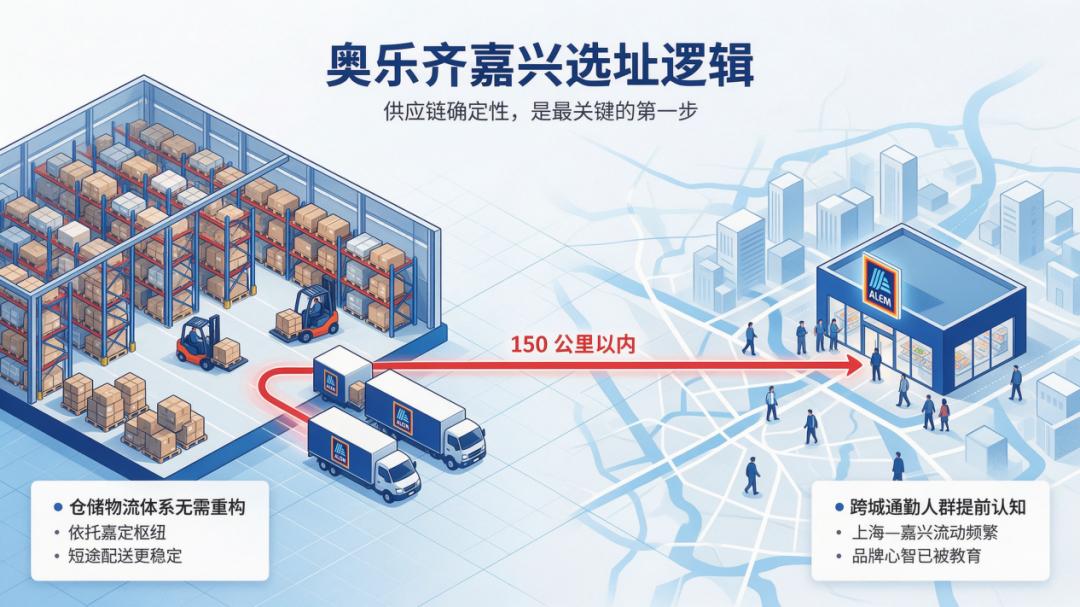
Image | Source from the Internet
But the underlying logic of the business environment has changed.
In Shanghai, ALDI was able to quickly build a "low-price" label thanks to the comparative context. It is usually surrounded by Freshippo, Sam's Club and various boutique supermarkets, where the average customer spending of more than 30 yuan and high packaging premium make ALDI's self-operated products priced at 9.9 yuan highly recognizable.
There is no such contrast in county towns.
The consumption ecosystem of county-level cities is composed of local traditional supermarkets, wet markets and snack discount stores.
The instant distribution networks of Pinduoduo, Meituan and Taobao have long compressed the prices of standard products to the limit.
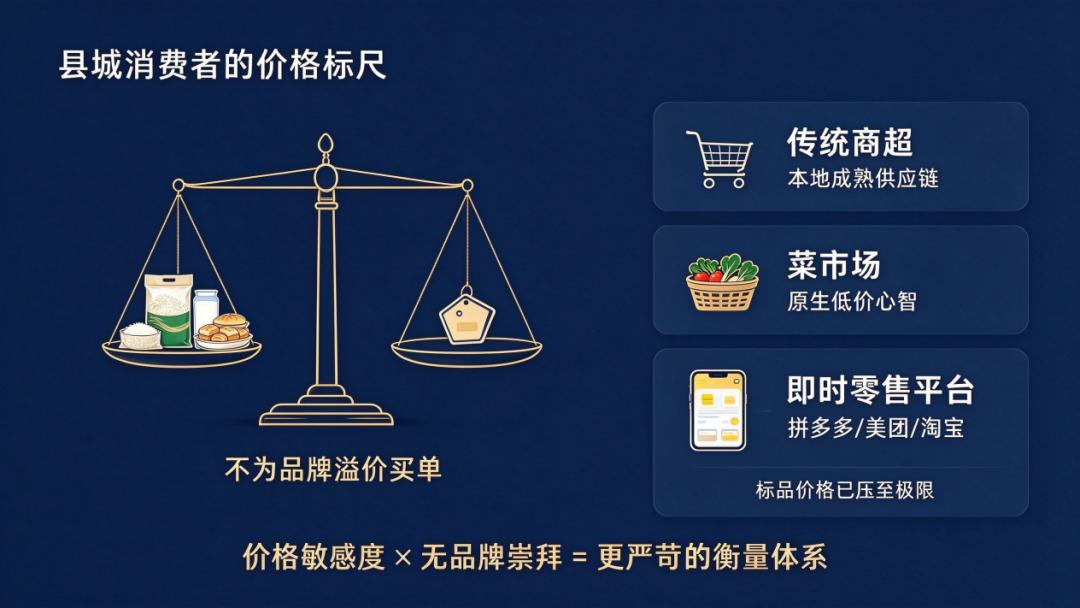
Image | Source from the Internet
ALDI, regarded as a representative of cost-effectiveness by the middle class in Shanghai, needs to face a more stringent measurement system after entering county towns: consumers here are extremely sensitive to prices and will not pay for the premium narrative of foreign retail brands.
2
On the retail shelves in the Jiangsu and Zhejiang regions, ALDI is encountering more and more counterparts that are similar to itself.
The most direct competitor is Super Box Value NB under Freshippo. The product matrix and pricing strategies of the two stores are converging.
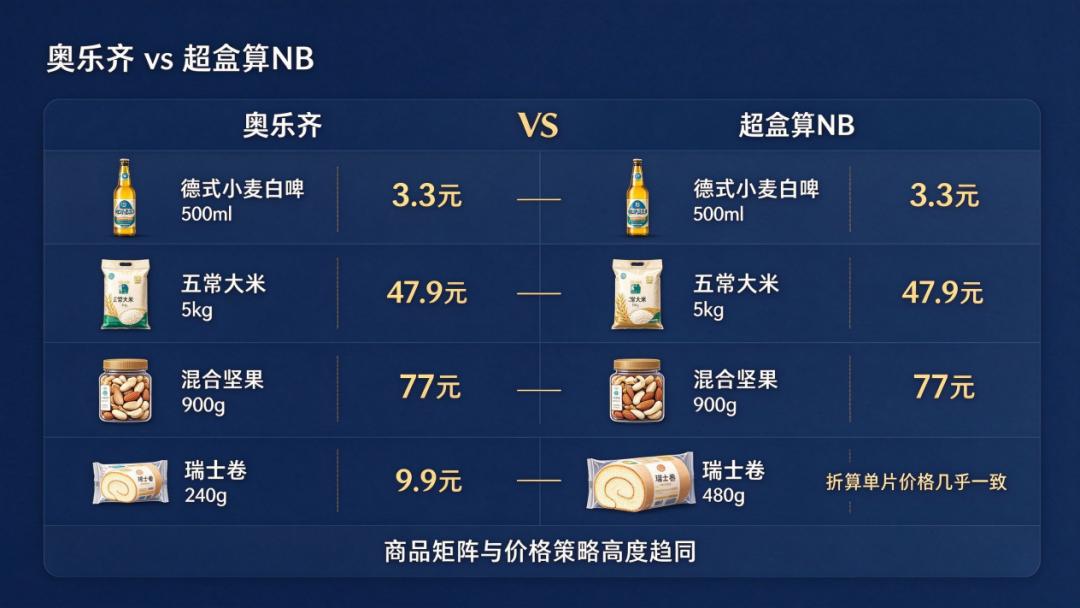
Image | Source from the Internet
The 500ml German-style wheat white beer is priced at 3.3 yuan in both stores;
The 5kg pack of Wuchang rice is sold at the same price of 47.9 yuan;
The 900g mixed nuts are both marked at 77 yuan;
For the core drainage product Swiss roll, ALDI sells 240g at 9.9 yuan, while Super Box Value NB launches a 480g specification at 19.9 yuan, and the price per single piece is almost the same when converted.
Behind the overlapping prices is the high degree of overlap in the supply chain. After opening the packaging of the 950ml fresh milk in convenient packs of the two brands, the OEM behind both points to New Hope Dairy.
ALDI's underlying business model consists of a minimal SKU set. A standard store usually only retains 1500 to 2000 product categories, and self-operated products account for more than 90% of the total. It cuts off brand entry fees and intermediate distribution tiers, and relies on large procurement volumes of single categories to customize products from factories, so as to lower procurement costs.
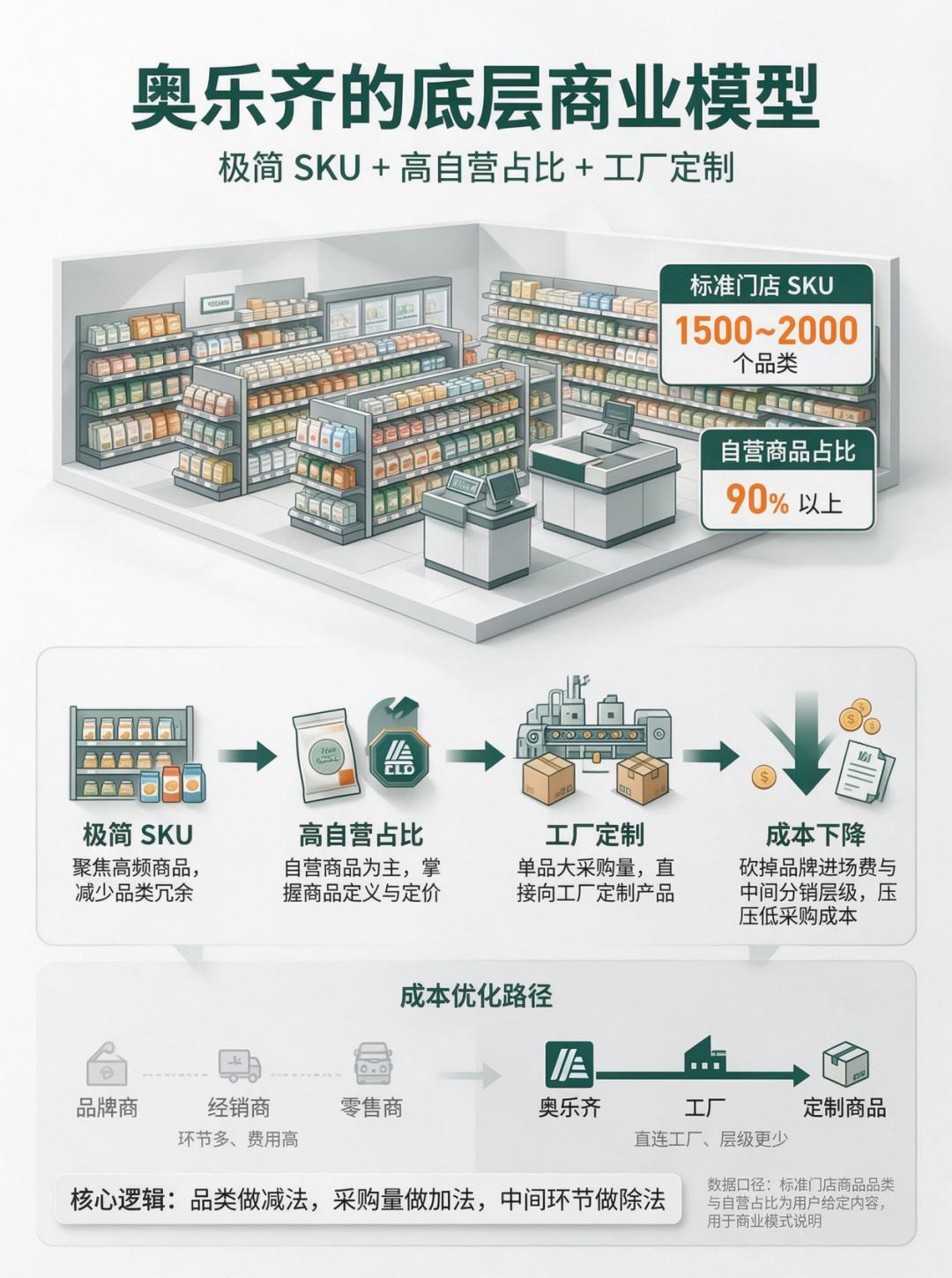
Image | Source from the Internet
This hard discount model that has been verified for decades has been quickly absorbed by local retailers in the past three years.
Not only Freshippo, but also Xiaohu Supermarket and Happy Monkey tested by Meituan, as well as Jingxiaobox incubated by JD, are all trying to carry out self-operation transformation.
The proportion of private brand sales of Super Box Value NB has exceeded 60% at present.
Over the past three decades, China's retail industry has mainly learned the Carrefour model, whose core is to make profits by expanding business area and charging shelf access fees from FMCG brands. Nowadays, all leading players are trying to move branded goods out of the shelves and take control of the production end themselves.
3
When manufacturing techniques and supplier resources are no longer barriers, the hard discount model ultimately returns to the competition of procurement volume.
China has the world's largest and fastest-responding OEM network for daily chemicals and food. Whether it is dairy, condiment or daily necessities manufacturing plants, in cycles with sufficient production capacity, upstream factories do not reject bypassing traditional consumer brands and directly doing white-label processing for downstream channels.
This means that whoever has more dense outlets at the end can place larger production scheduling orders to upstream factories, so as to secure a lower marginal ex-factory price.
Since ALDI opened its first batch of pilot stores in Shanghai in 2019, it has opened about 60 self-operated stores in total in the first five years, and its expansion pace is restricted by the internal control process of multinational enterprises. In contrast, local retail brands can complete the layout of hundreds of outlets within several quarters through partnership systems or franchise systems.
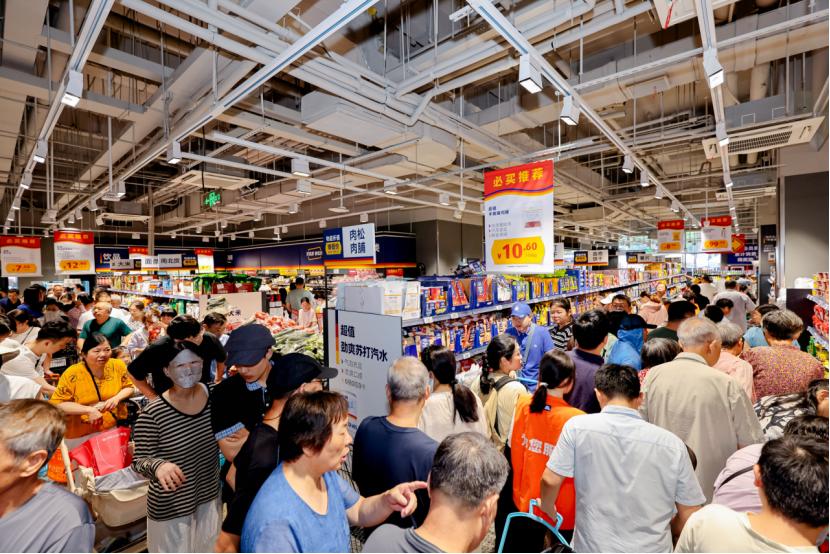
Image | Source from the Internet
With only dozens of existing stores in Shanghai, the procurement bargaining power established by ALDI can hardly resist the positive dilution from local capital. Expanding to the surrounding areas and reducing warehousing costs and unit procurement prices by densifying core business districts in the counties of southern Jiangsu is an inevitable choice for it to maintain gross profit margins.
For ALDI, moving out of Shanghai is no longer just a sinking channel attempt.
After the hard discount methodology has been fully deconstructed by the local business system, the challenge facing this established European retailer is whether it can outperform local companies with the same supply chain resources in the scale cycle of Chinese manufacturing.
To truly win the competition battle in China's county towns.