More than a third of car buyers reluctantly give up their car purchase plans, simply because there is no battery that meets their expectations.
"37.1% of Chinese consumers admit that if their desired vehicle model is not equipped with CATL batteries, they will give up buying this car."
In Nielsen IQ's 2026 Global New Energy Vehicle Consumer Research Report, this figure is particularly notable. After tens of thousands of new energy vehicle users and potential customers across the globe completed the survey, power batteries have become a core decision-making factor in car purchases. Nearly 40% of Chinese consumers prioritize CATL when choosing electric vehicles.
This scenario is not uncommon in the era of fuel vehicles. People buy Honda for its reliable engine, and choose BMW for its outstanding power performance and handling.
Nowadays, people prioritize batteries when buying electric vehicles, and the underlying logic is similar. Batteries are not only the largest part of the total vehicle cost, but also closely related to power performance, handling, safety, and energy replenishment experience. For automakers, batteries determine cost control, safety performance and sales conversion rate; for consumers, batteries represent quality endorsement and the fundamental guarantee of vehicle usage experience.
This is not a simple brand preference, but a shift in the value anchor of automobile consumption, which exactly creates new opportunities for China's automobile industry and consumers.
Engine = the measurement standard for fuel vehicles, battery = the measurement standard for electric vehicles
In the era of fuel vehicles, consumers do not only buy a product with four wheels and two seats.
They choose Honda for its engine, BMW for power and handling, and Toyota for its smooth and durable transmission. Engines and transmissions define the character of a fuel vehicle, and are also the core of brand premium.
When automakers hold new product conferences, they cannot avoid talking about horsepower, torque, 100-kilometer acceleration time, and transmission gear numbers. Consumers may not fully understand technical terms, but they have a clear judgment in mind: the performance of the engine and the smoothness of the transmission determine whether the car is worth buying.
In the new energy era, the core of this logic has been replaced.
Electric motors are becoming increasingly homogeneous, electronic control systems can be upgraded via OTA, the cockpit can be equipped with various high-end configurations, and the screen can be made larger and larger.
The factor that truly differentiates products is the battery. The battery is no longer just an energy storage component like a fuel tank. It acts as the power source, safety component, cost component, and experience component at the same time. Range, fast charging performance, low-temperature adaptability, service life, safety, and residual value are all related to it. For an electric vehicle, if the battery is poor, no matter how fancy other parts are, the overall product cannot be recognized by the market.
Looking deeper, the battery also affects the overall vehicle design. The thickness of the battery pack, energy density, and thermal management capability directly affect the chassis layout, interior space, vehicle weight, and handling performance.
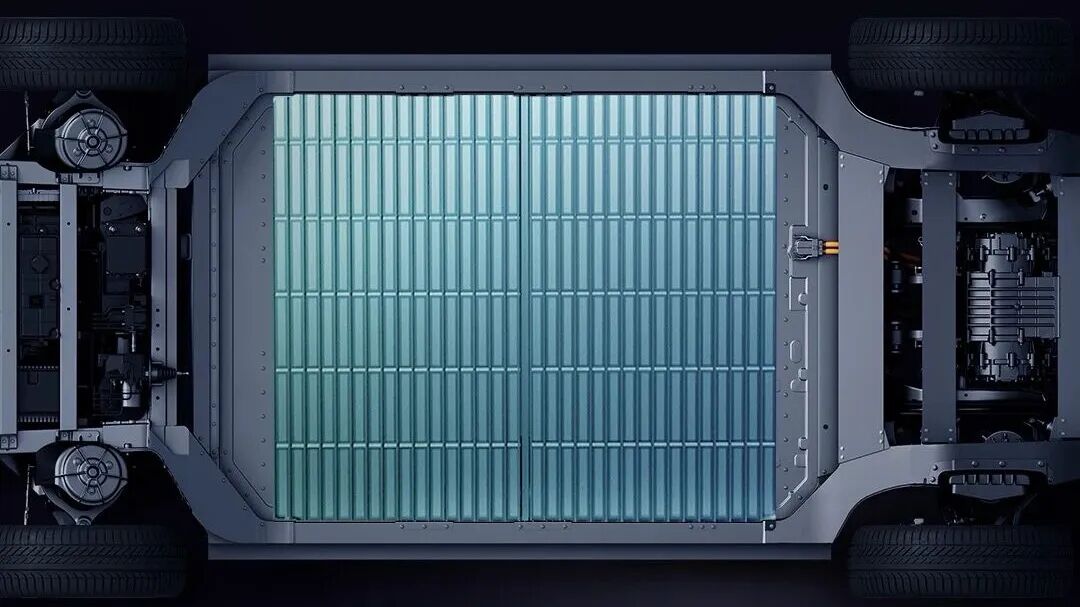
Technical routes such as CTP and CTC are widely discussed in the industry precisely because the battery is no longer just a "part to be installed", but participates in the definition of the whole vehicle from the underlying level. Whoever masters the battery will have more power to define the product.
Therefore, consumers begin to recognize battery brands just as they recognized engine brands in the past. When buying an electric vehicle, the first question they ask is: Whose battery is it? Is it a CATL battery? Does it mix batteries of different brands? This is not engineer thinking, but a common risk judgment for ordinary people.
Batteries account for a high proportion of vehicle cost, and the replacement and maintenance cost is very expensive. Consumers cannot directly test safety, degradation performance, and consistency when purchasing, so what can they do? They can only refer to the brand, see which brand has passed large-scale market verification, and which brand has stable reputation.
The most special feature of CATL is that it has developed from a To B company into a consumer-level trusted brand. It is no longer just a supplier, but an "invisible quality guarantee" for electric vehicles. For vehicles with the same price and same model, if the battery section is marked with CATL, half of consumers' concerns will be eliminated.
For the same vehicle model equipped with different battery brands, it is equivalent to two completely different powertrains in the eyes of users. At the same price, when CATL batteries are placed together with other batteries, most consumers will choose the former. Once this perception is formed, it is difficult to reverse.
Three thresholds for becoming a "consumer brand"
If you run an automobile company or a mobile phone company, it is not rare to make your brand known to almost every household, because these brands are "consumer brands", which is "To C", "to customers", facing end consumers.
But if you operate a component supplier, which is "To B (To Business)" facing the industry, and you can still be promoted to a "consumer brand", that is a real achievement, which means your product development and brand building have reached a very high level.
In the consumer electronics field, the most typical example is Intel. The "Intel Inside" label back then even made Huawei, which entered the automotive industry decades later, admire and follow this marketing strategy.
There are also Bosch's auto parts, Huawei's automotive components and communication equipment, all of which have achieved significant influence among consumer groups.
Nowadays, the opportunity is given to the power battery industry.
Originally, it was extremely difficult for power batteries to reach end consumers. They are hidden under the chassis, invisible and untouchable. To be remembered by consumers, the brand must have excellent performance in technology, reliability and safety at the same time, none of the three can be missing.
As the leader in the power battery field, CATL has gradually cultivated a brand that is also recognized and pursued by C-end consumers from different dimensions such as technology, quality, and market share. The underlying reasons lie in one upper limit, one bottom line, and one red line.

Technology is the upper limit.
Energy density, fast charging capability, low-temperature performance, and thermal management efficiency determine how far a car can drive, how fast it can be charged, and whether it can operate stably in winter.
With long-term high-intensity R&D investment, CATL has launched products such as Qilin and Shenxing, which continuously improve the indicators of fast charging, range and safety. Consumers may not understand the technical details, but they can perceive the actual results: whether the charging speed is fast, whether the range is realistic, and whether the performance attenuates seriously in winter, they will know after using the car.
Reliability is the bottom line.
Terms such as cell consistency, yield rate, and capacity degradation sound boring, but they are directly related to vehicle usage costs. After large-scale loading, stability is more important than surprising performance. The manufacturing scale and quality control system accumulated by CATL over the years are the reasons why it is trusted by consumers. The larger the loading volume, the more sample data, which means problems cannot be hidden. Being able to maintain stable performance for a long time is itself a strong capability.
Safety is the red line.
There is no luck in battery safety. Thermal runaway protection, structural design, and verification system all require a lot of capital investment and time. CATL's long-term investment in safety has made "equipped with CATL battery" a low-risk choice. Consumers are not battery experts, they just use their money to choose a brand that they can trust without much thinking, and CATL happens to be that brand.
None of the three thresholds can be missing to become a consumer brand.
With strong technology but poor consistency, users will be troubled by maintenance and capacity degradation. With good safety performance but poor fast charging and low-temperature adaptability, the usage experience cannot be guaranteed. With large scale but unstable quality control, the brand reputation will be damaged sooner or later. CATL can achieve today's achievements not because it is good at marketing, but because it has built these three aspects into systematic capabilities.
There is another easily overlooked point: in the early stage of electric vehicle popularization, online car-hailing, taxis, and operating vehicles are used with high intensity, which amplifies problems such as battery degradation, durability, and safety in advance. Brands that can withstand such scenarios are easier to build good reputation.
Ordinary consumers may not read professional reports, but they will listen to the feedback from drivers, pay attention to the used car market, and check relevant posts on forums. Battery brands have gradually penetrated into consumer awareness in this way.
Self-development and procurement are not mutually exclusive
Since power batteries are becoming more and more important and even expected to become consumer brands, should vehicle manufacturers develop and produce batteries on their own?
Recently, three events are related to "automakers independently developing and manufacturing power batteries".
First, Li Auto invested 2.65 billion yuan to participate in the capital increase and share expansion of Sunwoda Power. After the capital increase, Li Auto will directly hold 8.79% of the shares and indirectly hold 11.17% of the shares, becoming the second largest shareholder of Sunwoda Power.
Then, Xiaomi launched its Dragon Armor battery, cooperating with Sunwoda and CALB, where Xiaomi takes the lead in defining cell formula, BMS and Pack.
He Xiaopeng also publicly stated that XPeng will start to develop batteries independently this year, and XPeng will lead the whole process from the underlying design of the battery pack to the final loading on vehicles, while the cells are still provided by suppliers.
Sorting out the context of industrial development, the independent R&D of batteries by automakers does not necessarily conflict with the growth of suppliers such as CATL.
The premise of conflict is a zero-sum game. If the overall market is still growing, independent R&D will not necessarily "compete for benefits" with suppliers.
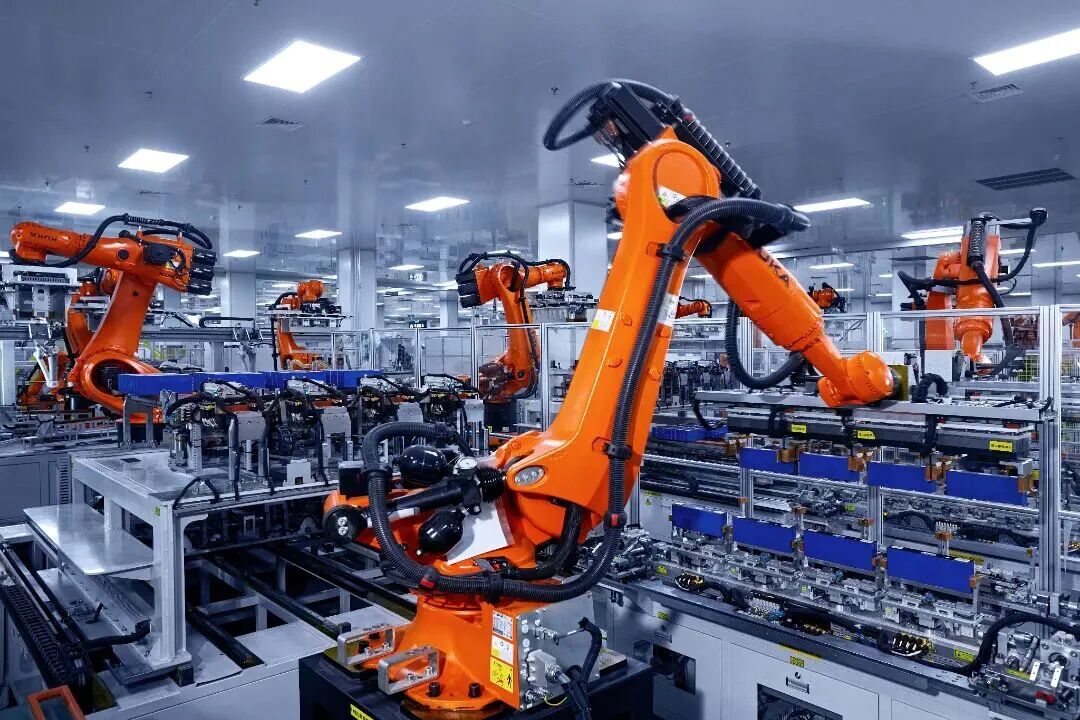
If we split the power battery business, there are R&D and manufacturing in the industrial chain, and cells and battery packs in the product dimension. When automakers carry out independent R&D, in most cases they independently develop BMS, thermal management, Pack structure, or define cell specifications. In terms of manufacturing, they mostly lead the production of battery packs. There are very few automakers that can fully take over the whole cell manufacturing process.
Cell manufacturing is a comprehensive project integrating materials, technology, yield rate, consistency and scale. It cannot be completed simply by building a factory and purchasing several pieces of equipment. It is understandable that automakers want to master relevant technologies and obtain product definition rights, but mastering technology and carrying out large-scale manufacturing by themselves are two completely different things.
As He Xiaopeng once said: When exploring the correct path of new technologies, XPeng prefers full-stack self-development and self-manufacturing; after confirming the correct technical direction, XPeng will consider purchasing components from suppliers to achieve large-scale production. This idea is very typical. In the early stage of new technology development, automakers will personally participate to figure out all the difficulties.
Therefore, automakers' exploration of independent R&D or self-manufacturing of power batteries does not mean negating CATL from the underlying logic. It is more like personally figuring out the situation in the early stage of new technology, and after the direction is clear and the scale expands, handing over the professional work to professional teams.
The value of CATL lies precisely in its professionalism. It has in-depth R&D capabilities, large manufacturing scale, mature quality control system, and global customer verification. Automakers can carry out joint development, purchase cells, and produce their own Pack. The two sides do not replace each other, but do what they are good at respectively.
In the industry, some automakers take shares in battery enterprises, some take the lead in defining battery packs, and some cooperate with suppliers to develop cells. These actions are very normal. There is no permanent boundary in the business world, only efficiency and division of labor.
As long as the final product is safer and more competitive, it is a good thing. With competition and innovation going hand in hand, a diversified supply chain will be more resilient.
When batteries move to the front stage, Chinese automobiles can have the right to speak
In the era of fuel vehicles, China's automobile industry had no much right to speak in the fields of engines and transmissions for a long time.
Core components are in the hands of foreign enterprises, and the ceiling of brand development is also restricted by them. You can make a car with large body size and high configuration, but when it comes to the powertrain, consumers still tend to choose foreign brands. That is a stage that Chinese automobile industry cannot easily bypass.
In the new energy era, power batteries have become the new core component. Chinese enterprises are not only participants in this field, but also stand at the position of defining industry standards. Power battery enterprises represented by CATL have built global competitiveness in technology, scale and supply chain capabilities.
More importantly, consumer awareness has changed. In the past, people judged a car by its logo, the brand of its engine, and the number of gears of its transmission. Now people judge a car by its battery, the brand of the battery, as well as safety, fast charging performance and service life. Power batteries have moved from behind the scenes to the front stage, becoming a key variable in car purchase decisions.
Behind this is the reconstruction of the value chain of China's automobile industry. Whoever masters the core components has the right to speak. Whoever is trusted by consumers has the brand premium.
The fact that 37.1% of consumers "vote" for CATL is not just a victory for one enterprise. It shows that China's automobile industry has begun to master core technologies and consumer awareness in the wave of transformation.
In the era of engines and transmissions, Chinese brands have been catching up for a very long time. In the era of power batteries, Chinese enterprises have the right to define the industry. "Prioritizing battery performance when buying a car" is not just a marketing slogan, but a real change in consumer decision-making mechanism. It means that Chinese automobiles no longer only impress users by configuration and price, but build trust by core components.
The grand development story of China's new energy vehicles is still ongoing. Power battery enterprises represented by CATL, as well as innovative vehicle manufacturers, are the important part of this era. Only the joint efforts of both sides can promote the emergence of "a new global automobile order with Chinese automobiles as the core".
The era when people prioritize batteries when buying cars is exactly the era of Chinese automobiles. This era has just begun. Whoever can make technology, reliability and safety become the core judgment standard in consumers' minds will stand at the center of the next round of competition.
This article is from WeChat official account "Auto Community" (ID: iAUTO2010), authors: Shi Jie, Zhang Zhidong, published with authorization from 36Kr.