The latest interview with the founder of Instinct: Valued at 10 billion US dollars and with a 10% daily growth rate of users, the Internet will be rewritten in a few years.
On September 28, 2026, Instinct announced the completion of its $1 billion Series C financing, with a valuation reaching $10 billion. The investors include HSG, Benchmark and Coatue. One month ago, the company just completed its previous round of financing at a valuation of $2.5 billion. Founded about a year ago, Instinct currently still requires an invitation code to use.
Instinct is growing faster than products such as ClaudeCode and Codex. Noah Shinn, Founder and CEO, said that its user base has recently grown at a rate of 10% to 11% per day, and the platform's annualized GMV has exceeded $1 billion, about half of which comes from travel.
Previously, on September 8, 2026, Meta officially launched its personal AI agent Muse. Meta later announced at the Connect conference that Muse would be integrated into AI glasses, support Mac control, independent email, real-time voice and background execution, and access services such as PayPal, ShopPay, Walmart, Expedia and Instacart.
Also on September 28, Manus released its latest version Manus 2.0 and new personal agent product CUE.
Muse, Instinct and Manus have adopted different product paths, but they are all competing for the same position: to become the key entry point for users to access the Internet, invoke services and complete transactions.
On the 28th, the latest episode of the investment podcast Invest Like the Best released an in-depth interview with Noah Shinn, the founder of Instinct. This is also the first time Noah Shinn has publicly elaborated on the logic of its product, commercialization and competition in detail.
Noah said that Instinct had an early principle: do not focus on capabilities first, only focus on understandability. "I think this is also one of the reasons why Instinct's growth through data and word of mouth far exceeded expectations."
Noah's judgment on the product is that the next-generation personal assistant should not first appear as a new application that needs to be learned, but should be as easy to reach as a reliable person: users can send it messages, call it or email it to state the desired result; it will get things done through the computer and authorized services. Compared with showing "what else AI can do", he values more whether users can understand what it will do, predict the results, and whether the whole process is natural and low-friction.
His judgment on user needs is that people have long imagined an AI assistant that can help them handle all kinds of affairs. What is missing is not demand, but a good enough experience and a process of gradually building trust. The more a personal agent knows about the user's calendar, preferences, accounts and payment methods, the more actively it can provide help; but the more sensitive information it accesses, the higher the user's requirements for control and security. Noah therefore emphasized that authorization should be carried out at a pace that users are comfortable with and can be withdrawn at any time. According to the data he disclosed in the interview, after about three weeks of use, about 40% of users have provided their personal credit card information to Instinct; he regards such behavior as a signal of the gradual formation of trust.
At the competitive level, Instinct is facing a market with highly asymmetric speed and distribution capabilities. Large platforms can quickly reach massive users relying on their existing entry points; Instinct is trying to win time with product experience and word-of-mouth growth.
Noah recognizes Muse as a good product, but believes that Instinct's path is different — it does not focus on launching a new AI application interface, but integrates into the user's existing communication channels as much as possible. He also admits that if the product continues to grow rapidly, computing power will become a severe constraint — personal agents not only work when receiving requests, but may also judge whether action is needed in the background all day long.
"I spend about 40% of my time worrying about another problem: how can computing power keep up with 10% daily growth?" Noah said.
The following is the carefully edited dialogue content (abridged) from *Suchbright*:
Patrick: Patrick O’Shaughnessy, Investor and Podcast Host
Noah: Noah Shinn, Founder of Instinct

Noah Shinn (Source:
A Larger Wave Than Coding, Competing Against the World's Largest Companies
Patrick: This is the first time you have talked about this company so comprehensively. The stage that personal agents are in now is very similar to code generation a year ago, and the scale may be even larger. How do you view the impact of such products on the world? Why did you choose to devote all your energy to this field?
Noah: It will bring a new way of technology interaction. In the future, most people on Earth may use technology in this way.
The company I run is called Instinct, founded about a year ago. We make personal assistants. I don't want to add too much packaging to it — it is just a personal assistant. An important reason why the product gained users and attention in the early stage is that it really works. This is also the form that many people have been looking forward to since they started using AI.
This is different from those applications that changed consumer experiences in the past. In the past, founders often put forward a new vision and then told everyone: "Trust me, in a few years you will understand." This time it is different. Since first using ChatGPT in 2023, many people have formed an imagination of AI: it should become an agent that can handle daily affairs.
It can help you accomplish almost anything. It could be a new creative project, or a task that used to take several hours to complete. It is a kind of daily intelligence that accompanies you and acts on your behalf. The interface should be very simple.
Instinct does not even have an application in the traditional sense. It is not a new App, nor a new tool, but a new experience. It has a phone number and a computer. You can text it, call it, and it can also call you actively.
Patrick: I have received a call from it.
Noah: In a few months, it has only called me about three times. If there is an urgent matter, it will say: "I don't want to disturb you too much, but this document must be signed before 3 p.m., and it is already 2:55 p.m. The document is in your inbox. If necessary, I can send another email to push it to the top."
It needs to understand social situations and know when to disturb users. You can also email it because it has its own email address.
A simple interface does not mean limited capabilities. Interacting with AI should not require users to learn a new application. It should have social understanding and collaborate with you the way people do. The interaction can be very simple, but it has a computer, which in theory can accomplish anything you can do on the Internet.
Patrick: Can you give a few examples of cases you have seen? You didn't set it to only complete a certain type of task, but gave it a phone and a computer to let it handle anything. For example, at the US Open, a couple appeared on the big screen at the scene, and they wanted to find that video. Instinct searched the Internet on its own and found the video. What other unexpected uses have you seen?
Noah: There is a group of users who like online shopping, they will scan every piece of clothing in their wardrobe, including tops, pants, socks and shoes. They also scan their face, body and proportions.
Instinct can arrange a week's outfits based on the existing wardrobe. It will not only give a text list of "what to wear today", but also generate renderings of users wearing these clothes, so that they can directly see what they look like that day.
This set of capabilities can also be used for shopping. Users ask Instinct to find clothes online, and it can combine thousands of sets of outfits from different websites, listing all items from tops to shoes. What users see is the effect of themselves wearing these clothes. As long as they point to one set and say "send this set to my home", it can complete the purchase.
Users can also ask it to generate three new full-body outfits every day and place an order with one click.
Another common use is related to goal management. For example, if a user wants to save a certain amount of money before a certain month, Instinct will continuously assist him in achieving the goal. Users can also connect their bank accounts. Instinct will check transaction records and subscriptions, and ask the user: "Are you really still using this service?"
Users often say: "I didn't even know I was still subscribed to it."
Patrick: Then it can go into the mailbox and cancel the subscription for the user.
Noah: Yes, it does everything from start to finish.
Many consumer financial products only remind users: "You should cancel these services." Instinct will go to the website, log in to the account. If the website sends a verification code to the mailbox, it already has mailbox permissions, can read the verification code and complete the login. It will keep operating until the subscription is cancelled, and finally tell the user: "These cancellation operations can save you $2000 per month."
Patrick: Those products that make money by relying on consumer laziness or inertia may be in trouble.
Noah: Yes.
Patrick: Let's talk about the network between Instincts next. In the future, how will agents of different users communicate with each other?
Noah: This function has been online for only about ten days. We didn't add it to create a new feature, but to solve a specific problem: many professionals have meetings every day, but arranging meetings is very troublesome.
You first ask the other party if they are available at a certain time. The other party says no, and sends several other times. You then say you are on a business trip and can only attend at certain times in another time zone. The two sides will communicate back and forth many times.
If both parties are using Instinct, they can negotiate directly. The goal is just to find a common free time, there is no need for two people to exchange time repeatedly.
Users only need to express their intention: "I want to meet this person before the end of this week, preferably during these time periods." Instinct will communicate with the other party's Instinct, check the free time that both parties can share, and finally write the meeting into the calendar.
We call it a "trusted interpersonal network". The key is that users only connect with people they trust. You will not grant permissions to someone who may maliciously probe the calendar or mailbox.
Users can also set different permissions for different relationships. Spouses may be willing to share almost all content. For colleagues, users can only open the work calendar. If the other party requests a certain document, they can allow Instinct to search from a specific range of the inbox, and the rest of the content remains inaccessible.
This will create a new network effect. The connections in the network are not simple "friend relationships", but trust relationships with different weights: I connect with you, I trust you, and at the same time specify what content you can access.
Some new social rules will also emerge. Suppose I invite you to the network just to arrange meetings conveniently. But you start trying to search for other data. Even if I only granted calendar permissions, my Instinct will tell me: "Patrick is looking for this type of information." This will directly affect the trust between us.
We need to use both social norms and technical restrictions. On the one hand, let users arrange time and organize activities conveniently; on the other hand, clarify what information is visible and what information is not visible.
Patrick: This may form a new set of order.
Noah: In other parts of Instinct, users usually know how it should work. But the trusted network is brand new, and users are still discovering new uses.
For example, when friends or couples arrange weekend activities, someone usually needs to take the initiative to initiate. On Thursday, someone starts thinking about what to do on Saturday night, and then asks in the group chat. Someone always disagrees, and the plan often ends up with nothing.
Six friends established a group rule: every week, design a different activity according to everyone's interests. Instinct will check everyone's free time, interests, performance and concert information. Because they connected Spotify, it also knows everyone's music preferences.
This group also asked one person's Instinct to call an Uber. The car picked up six people one by one according to the optimal route, and notified each person separately: "I will arrive at your place in ten minutes" "I will arrive at your place in five minutes". The six people finally rode in the same car, and the cost was lower. When a large number of repetitive social communication and organizational work are removed, users will discover these uses that were originally difficult to achieve.
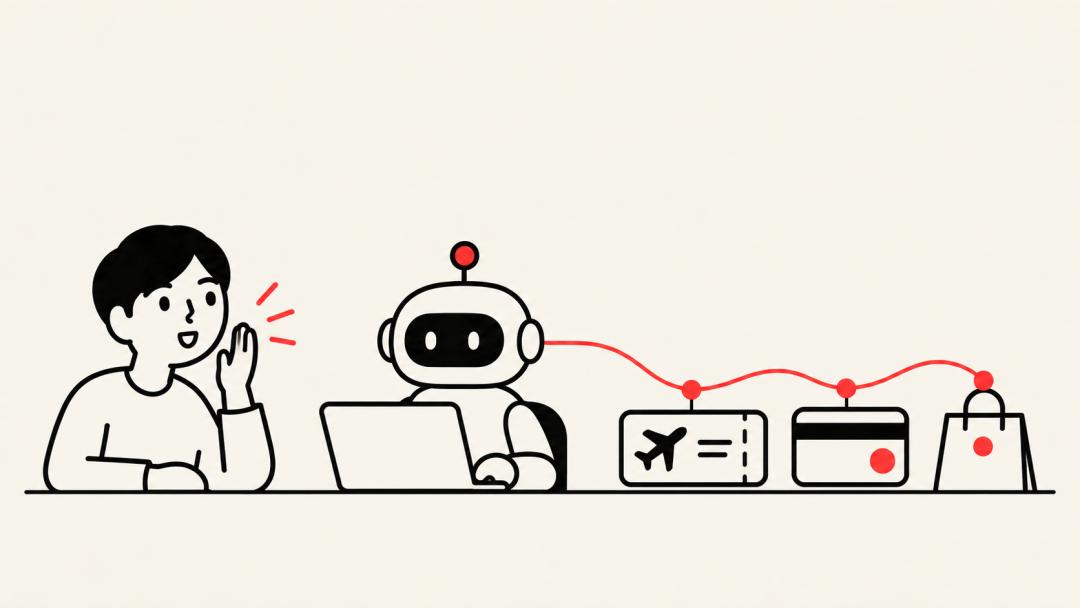
GMV Exceeds $1 Billion, 10% Daily Growth, Agents Will Rewrite the Internet Business Model
Patrick: The simplest way to describe this product seems to be to assume that you have a very capable person. He has a mobile phone, a computer and an email address, and can also call you actively. If everyone has such an agent, how will the world, the Internet and business change? Code generation has given many people amazing experiences, but in the past, only a few people actually wrote software. Personal agents face a broader group of people. What will the interface look like in the future?
Noah: I will talk about it in two parts, so as not to sound like I am empty claiming that "we are going to redo the Internet". But I do think that in a few years the Internet will be rewritten, and the way most people use software will change.
Let's look at the short term and medium term first. Take restaurant reservation as an example. In the past, users entered the restaurant website, selected two people and a certain time. If there was no seat, they could only accept the result, because the rule was first-come, first-served. With agents, it can check every five seconds. It not only checks one restaurant, but also checks restaurants and booking platforms in major cities around the world.
We are redesigning the reservation mechanism with partners. This is not only good for users, but also may be good for restaurants.
Users often book seats for important events, such as birthdays, anniversaries, or friends visiting from out of town. Restaurants also want to serve customers with special needs or special occasions, rather than just regular local customers who occupy the same table every day.
The past Internet could not express this information effectively, so it could only be first-come, first-served. Agents can communicate on behalf of both parties. The user's agent can state: "This is his spouse's 30th birthday." Restaurants can also set preferences, such as giving priority to birthdays, whole-decade birthdays, important anniversaries or certain types of customers.
When both sides no longer need to manually explain the background, the system can match the needs of restaurants and customers. Users have a better chance of getting seats on important days, and restaurants can also receive guests who are more in line with their business goals.
I don't want to limit the topic to restaurants. It is just an example of changes in the traditional model. The same goes for travel. Currently, about 50% of the transaction volume on the Instinct platform comes from travel. We are still in the invitation testing phase, with very few users, but the platform's annualized transaction volume is approaching or exceeding $1 billion.
Patrick: With a very small user base?
Noah: Yes. A small number of users have generated an annualized transaction volume of more than $1 billion, half of which comes from travel. Today's online travel platforms gather a large number of hotels, airlines and services in the same interface, where users can compare options, click to book, and receive confirmations in their inboxes. This experience is already very good.
But Instinct can offer a simpler experience.