Engine malfunctions, last-minute mission adjustments... Did Musk's Starship still make it after all?
Oh no! The holy grail of the aerospace industry is really about to be claimed by Elon Musk.
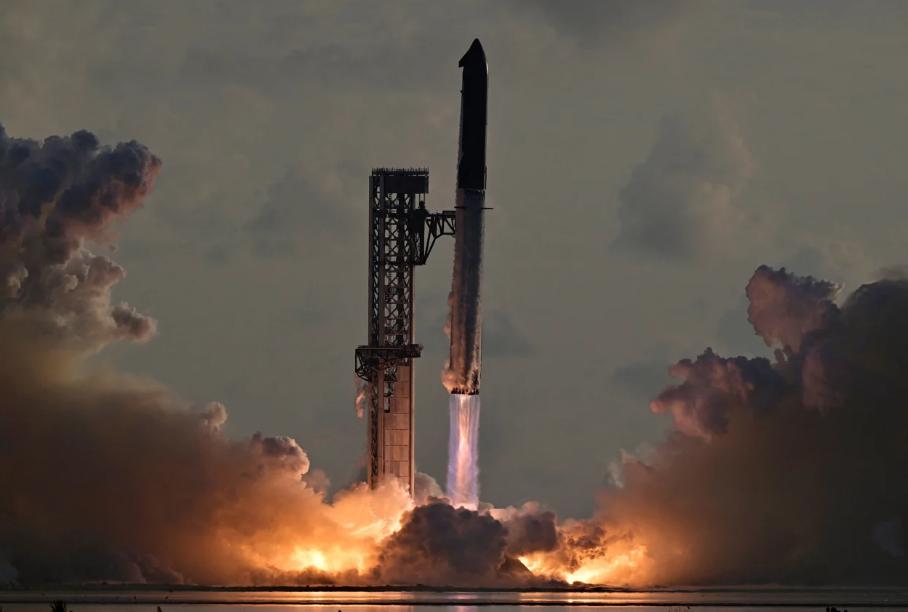
Just moments ago, SpaceX completed the 14th test flight of Starship, notching multiple milestone-breaking achievements once again.
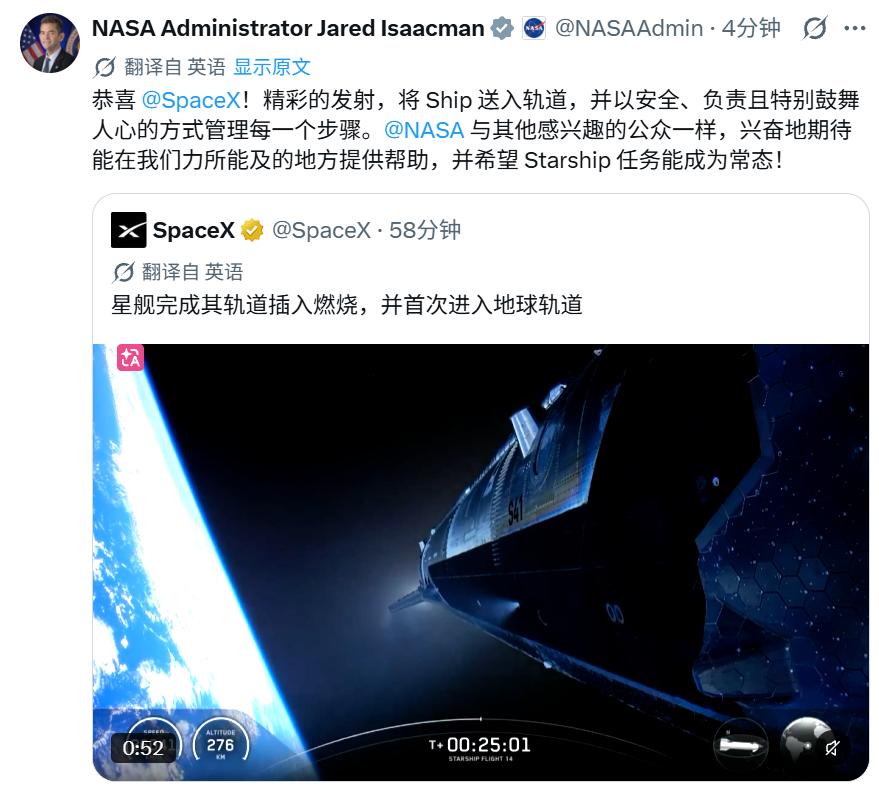
NASA Administrator Jared Isaacman also sent his congratulations immediately.
This giant stainless steel rocket, which carries Elon Musk's Mars dream, has exploded repeatedly, been iterated continuously, and returned to the launch pad again and again, finally evolving into a dedicated space cargo carrier.
Three hours ago, it completed its first-ever orbital insertion in its lifecycle, and officially deployed 26 new-generation satellites for the first time. Even the Starship spacecraft achieved a controlled landing.
Yet there are still regrets.
Due to the persistent unreliability of the iterated V3 version of the engine, the Super Heavy booster did not get caught by the "chopsticks" robotic arms during recovery this time.
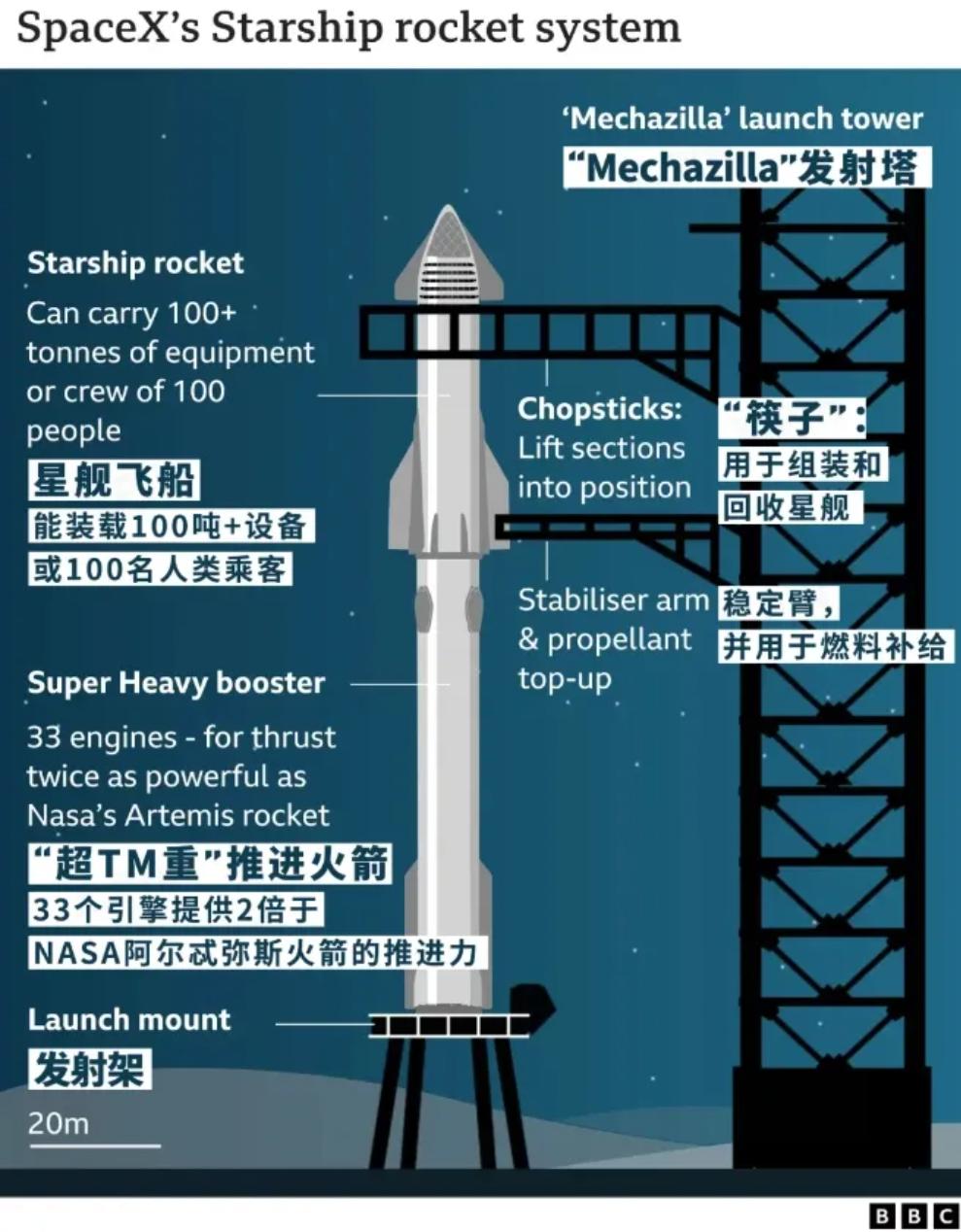
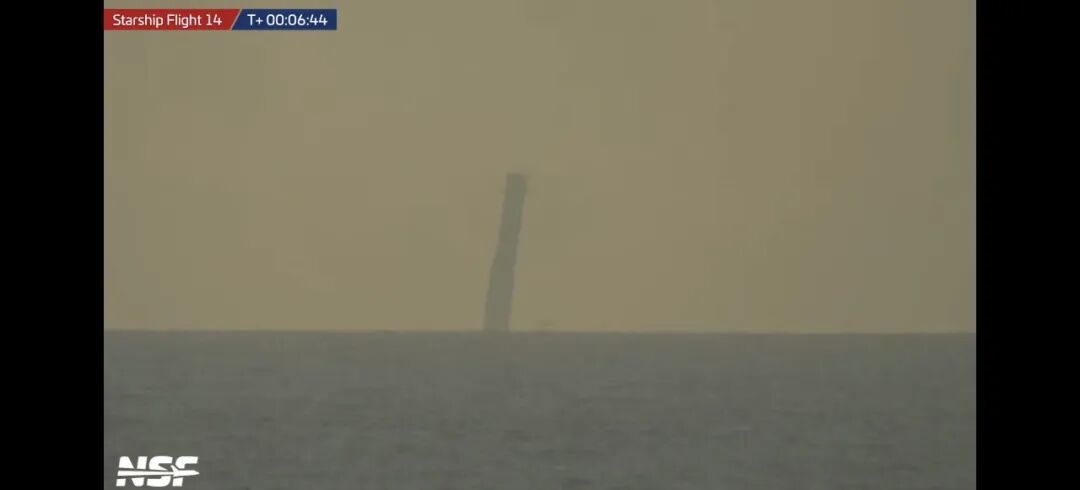
On its way back, only 31 of the 33 engines of the Super Heavy booster ignited. Although the booster finally returned to the vicinity of the predetermined position, it clearly stumbled when splashing down on the sea, with its attitude, speed and other parameters far from perfect.
Things got even more dramatic on the Starship side: one of the three engines used for space flight directly shut down, which probably made everyone in the control room break out in a cold sweat.
It should be noted that these three engines are not only used to send Starship into orbit, but more importantly, to ensure the controllable attitude and position of Starship when it re-enters the Earth.
Therefore, the SpaceX on-site team once decided to call off the operation to send the Starship spacecraft into orbit.
Fortunately, Starship had a backup plan: in addition to the three vacuum version Raptor engines, it was also equipped with three Earth-version Raptor engines that mainly operate in the atmosphere. After inspection, the flight control team found these three engines were in good condition.
Subsequently, an emergency internal vote was held, and the team finally decided to proceed with orbital insertion.
However, during the inspection process about one and a half hours after takeoff, SpaceX stated that it could not continue the original planned 10-hour Earth-orbital flight, and would initiate deorbit burn after about 2 hours and 12 minutes of flight, letting the Starship spacecraft land in the Pacific Ocean more than 3 hours after takeoff.
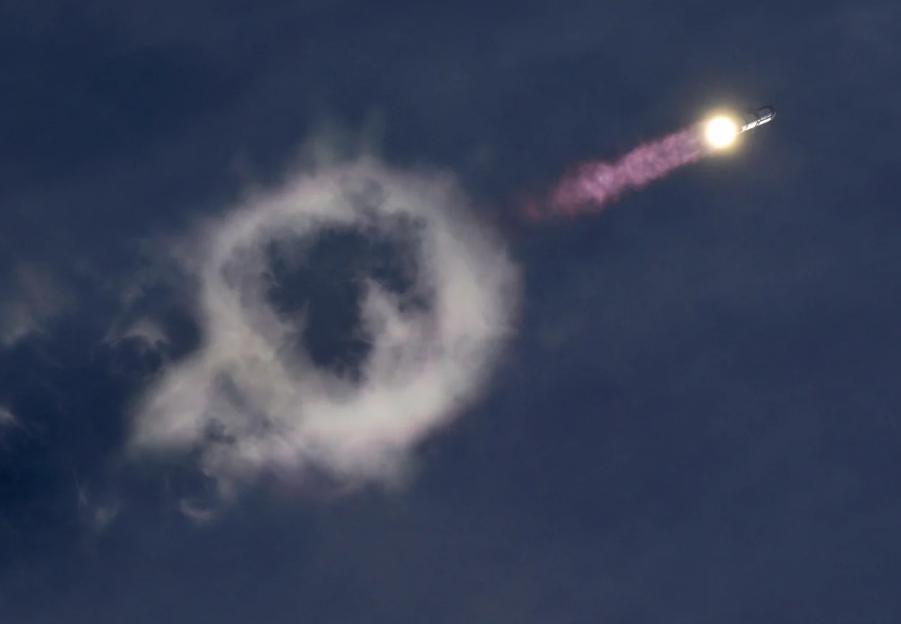
After these setbacks, the long-awaited threshold was finally crossed: the spacecraft successfully entered the actual Earth orbit.
The most intuitive change brought by this small step is that Starship can stay in space for a much longer time.
Even if the previous 13 test flights were successful, Starship only stayed in space for about an hour, while the original plan for this flight was to stay for 10 hours. Although the final duration was much shorter than planned, it still lasted for more than 2 hours.
You may wonder, why didn't they directly achieve orbital insertion in those 13 previous test flights?
To put it plainly, it's mainly because Elon Musk didn't have full confidence. As long as the spacecraft has not entered orbit, no matter what fatal failure occurs, even if all engines shut down completely, its physical inertia will make the debris fall firmly into the Indian Ocean or the Gulf of Mexico, and the spacecraft does not need any active deorbit capability at all.
This time it's different. Now that Starship has completed real orbital insertion, it requires active human control.
It should be noted that in this scenario, once the engines fail, this hundred-ton stainless steel behemoth will turn into an uncontrolled runaway vehicle. If it falls and hits people, Elon Musk's Mars dream will suffer a major setback.
This high risk made Elon Musk, who is usually very bold, extremely anxious before the launch.

He rarely showed his concern at the recent All-In Summit:
"Our biggest fear is that if the spacecraft disintegrates over land, the debris will rain down on crowds, and our reputation will plummet rapidly."
The SpaceX engineering team has set extremely strict thresholds: the spacecraft must self-check all hardware during the ascent phase. Only when the team is 100% sure that the deorbit burn system has sufficient redundancy and can safely return to an uninhabited sea area, will the ground team allow it to ignite for orbital insertion.
Similarly, for this launch, the return of the Starship spacecraft to Earth is probably the most dangerous part.
Less than an hour before we published this report, one of the Raptor engines on the spacecraft performed a deorbit burn, and the Starship spacecraft is now gradually splashing down towards the Pacific Ocean.
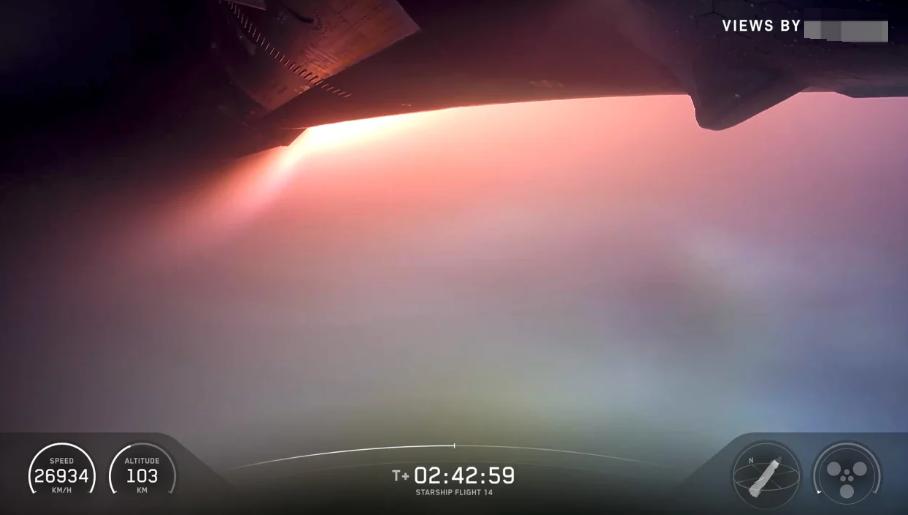
It will dive back into the Earth's atmosphere at a speed more than 20 times the speed of sound, a level of intensity that no previous Starship flight has ever encountered, and it performed remarkably well.
When approaching the surface, it completed re-ignition and attitude adjustment, finally landing in the ocean in a nearly perfect posture.
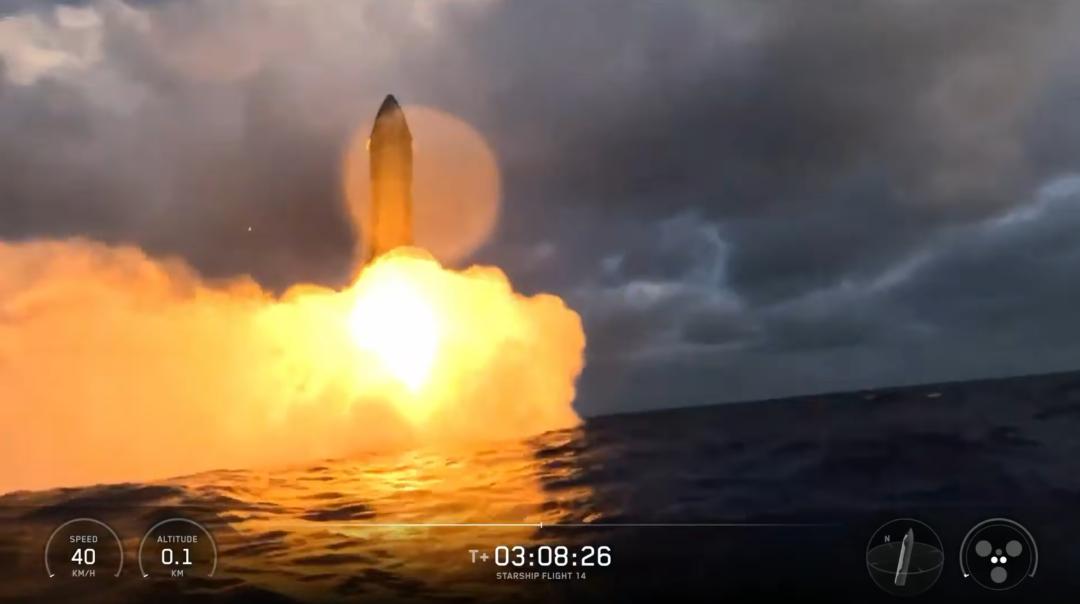
Compared with the flight process, the most outstanding performance of Starship this time is the satellite deployment.
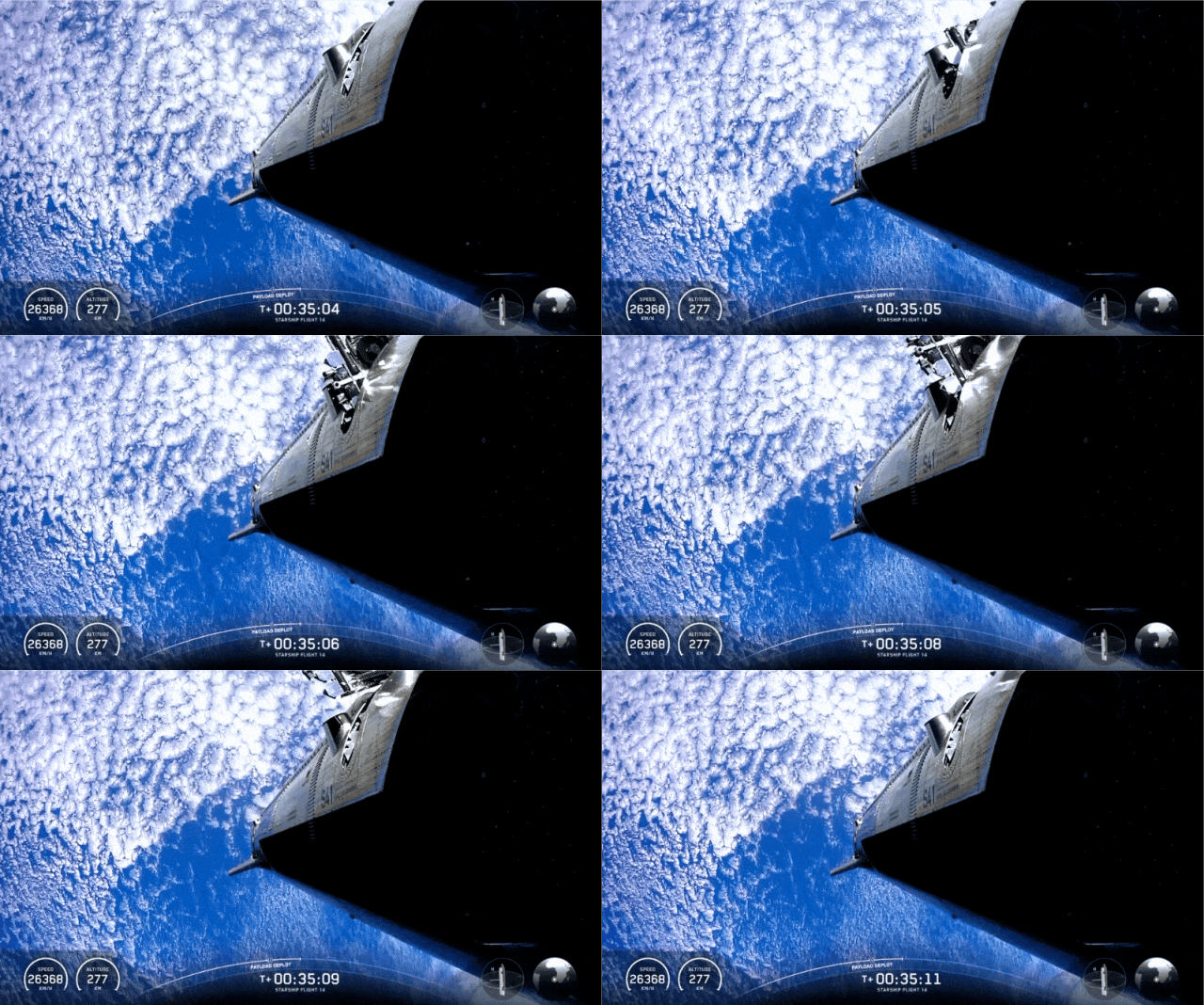
According to the latest official news from SpaceX, all 26 satellites carried to space this time have been successfully deployed and have established contact with the relevant teams. They will be able to officially serve users after orbit raising and in-orbit inspection.
For Starship, this is a revolutionary breakthrough, because it completed an orbital delivery mission with actual business value. According to the general definition of rockets, this is a complete and thorough launch success.
But for Starship, there are still greater and more distant challenges ahead, such as recovery and reuse, and Mars immigration.
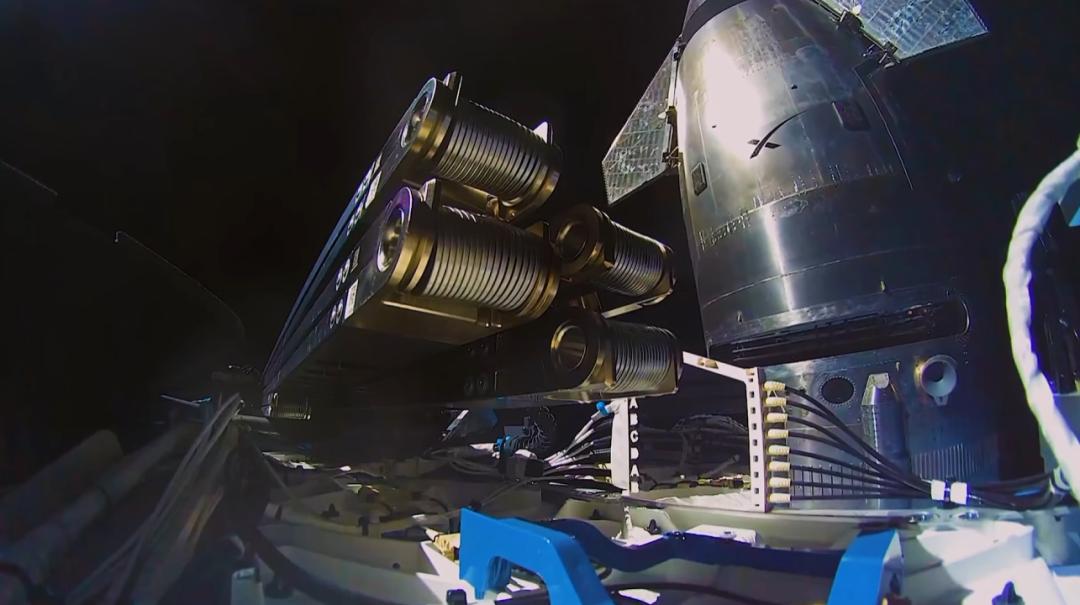
Interestingly, 3 of these satellites are additionally equipped with camera sets, which are used to take a set of "selfies" for the Starship spacecraft when they are deployed from the cargo bay, so that engineers can observe the belly heat shield from the outside, find visible anomalies such as fallen tiles and gaps, and compare them with flight data to facilitate the improvement of the heat shield in the future.
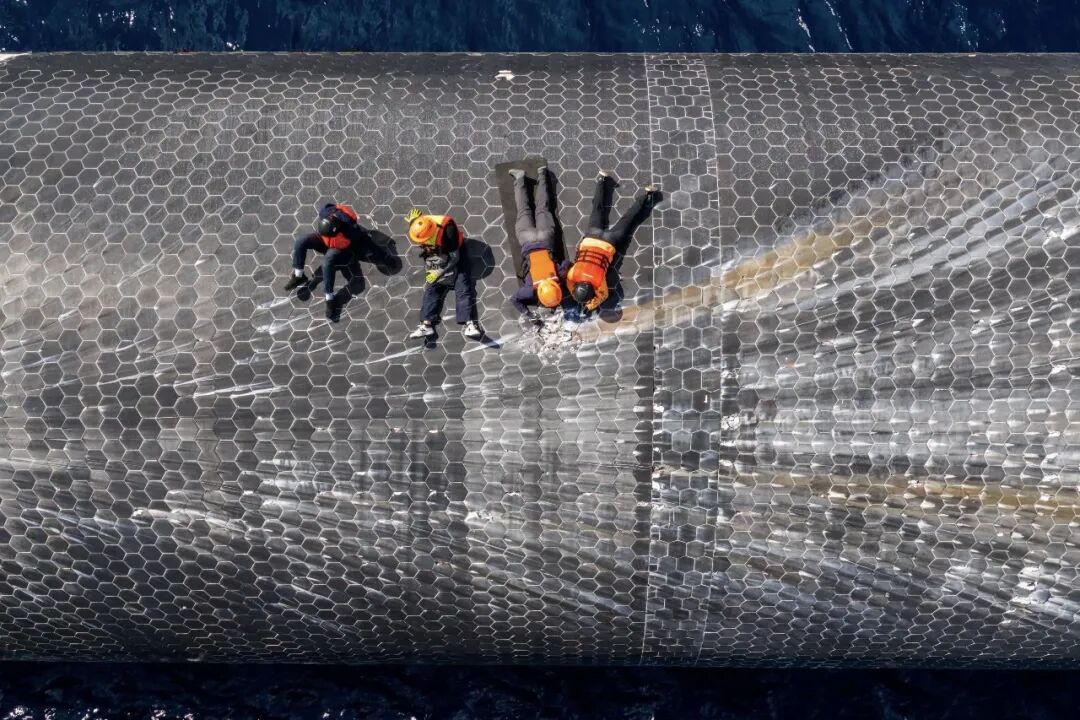
On the other hand, Starship's reusability test is also ongoing. After the last test flight, SpaceX specially sent employees to the Atlantic Ocean, retrieved two old heat shield tiles from the spacecraft debris, and installed them on this new vehicle for reuse.
However, as of the time of publication, the official has not released relevant data.
After this series of operations tonight, although we can't say that Starship can completely replace Falcon 9, we believe that it is only a matter of time before Falcon 9 is retired and its flight frequency is reduced.
Starship has clearly proved that it can fully serve as a new generation of dedicated space cargo carrier.
Unconsciously, almost two years have passed since the first time the "chopsticks" caught the rocket.
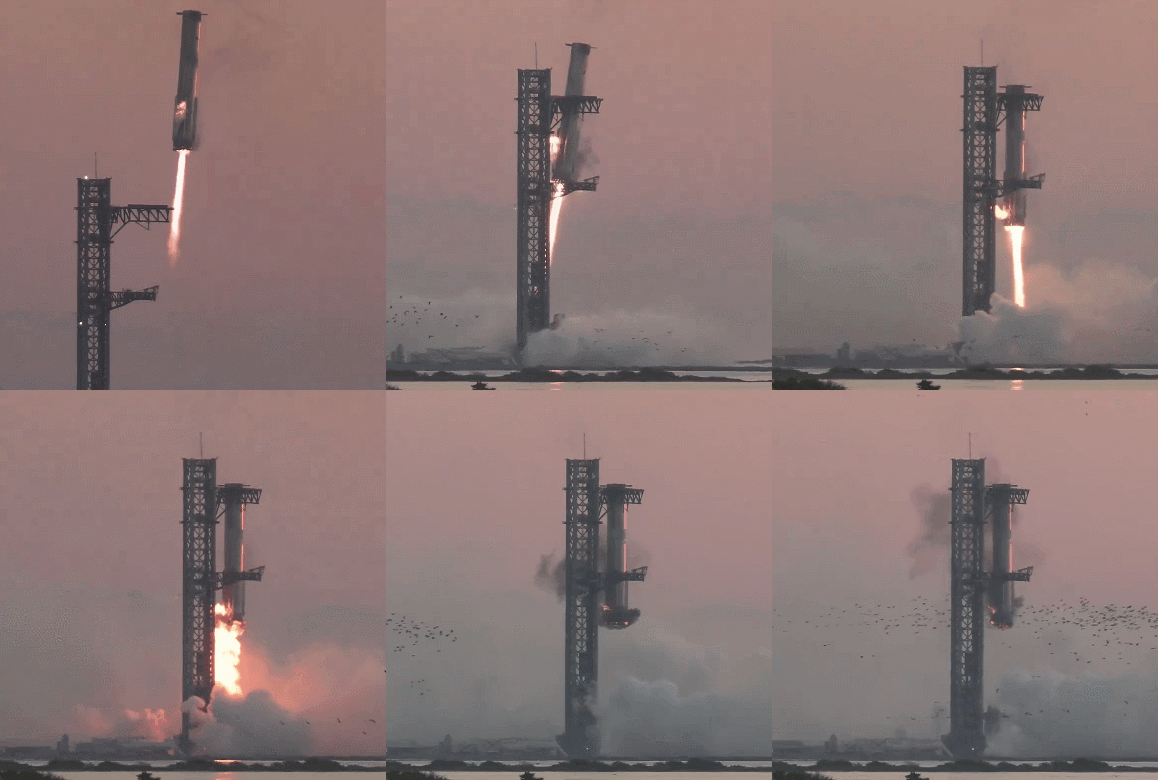
The most shocking thing at that time was that such a huge rocket could fly back upside down and be caught by two robotic arms.
Now, everyone seems to have shifted their attention, and are discussing what achievements Starship can realize with its payload capacity.
Gwynne Shotwell, President and Chief Operating Officer of SpaceX, also stated at the All-In Summit that the company plans to launch AI computing satellites in 2027.
And don't think that Starship's iteration speed will stay at this level. With the iteration of the assembly line at the Texas base and the full completion of the second launch pad, the test flights will only become more and more frequent.
According to the current plan, Starship can theoretically achieve two test flights in a single month as early as next month.
Now, the only thing that can hold back Elon Musk's rapid pace is probably the approval and stamp of the Federal Aviation Administration of the United States.
We, of course, hope it can go faster.
Image and data sources:
X
CNNscience:Unprecedented test flight of massive SpaceX Starship reaches orbit
All-In Podcast:Elon Musk & Gwynne Shotwell on AI Risks and Peer Review, Starship, Terafab, SpaceX/Tesla Merger
This article is from the WeChat Official Account "CHAPING X.PIN", author: Bajie, editors: Jiang Jiang & Mian Xian, published with authorization from 36Kr.