The underweight Chinese mitten crab blind boxes have been eliminated by AI.
In the golden October of autumn, chrysanthemums bloom and crabs are plump. This year, classic Chinese mitten crab producing areas in East China and other regions are not affected by extreme high temperatures, and the crabs have grown much fatter than in previous years, making it a bumper harvest year.
However, for consumers, due to the diversified market supply, the crabs they pick up with full expectations may be full of creamy roe when steamed and the shell is opened, or may be nothing but empty shells with watery content.
Who can fix this "Chinese mitten crab blind box" problem?
Schrödinger's Plumpness
During the Mid-Autumn holiday, Liu Yu, a citizen of Guangzhou, happily shared photos in her friend group: "My first meal of Chinese mitten crabs in golden autumn, they are really plump and delicious."
On the other side, on the "Black Cat Complaint" platform, a netizen named Xiao Miao filed a complaint, saying that she spent 169 yuan on a short video platform and bought three dead crabs that not only had short legs but also stank. The same crab feast brings two completely different emotional experiences to the public.
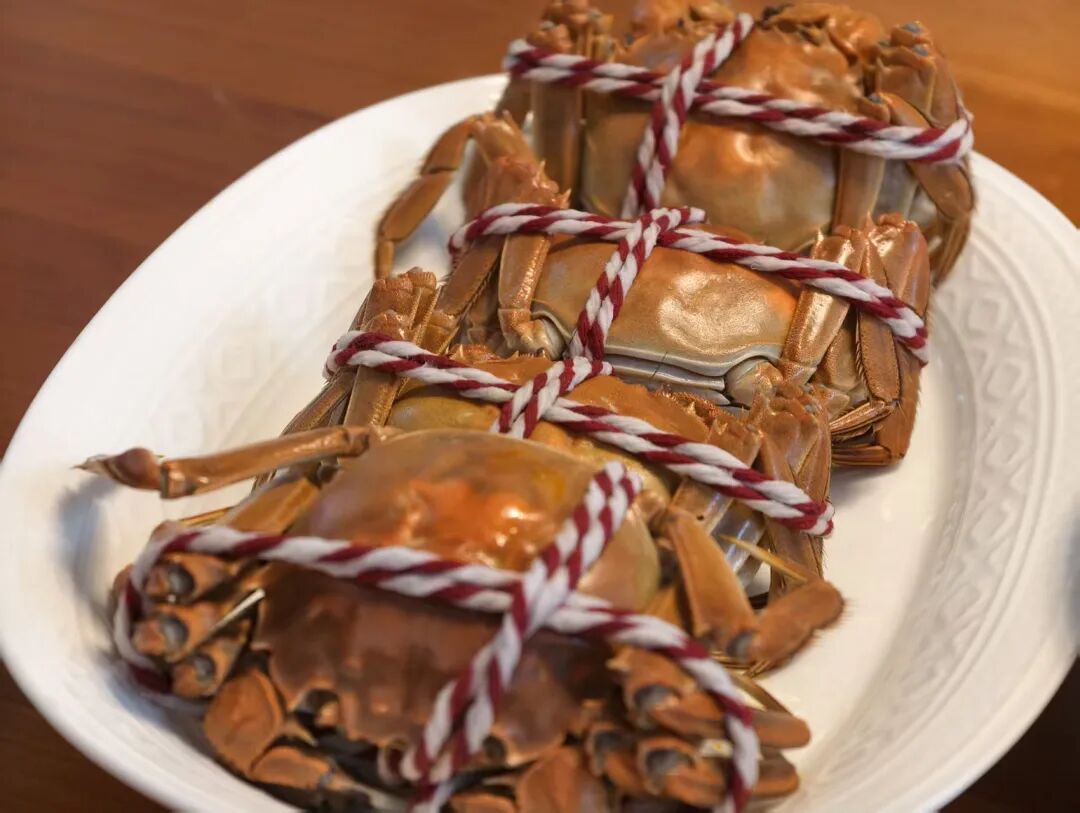
Figure | Provided by citizen Liu Yu
Chinese people have a deep obsession with Chinese mitten crabs, for which literati and scholars over the ages deserve much credit.
There is an old saying widely spread among the people: "When crabs are served on the table, all other dishes taste bland." It means that as soon as Chinese mitten crabs are on the table, all other dishes are overshadowed and lose their flavor.
Li Bai, a poet of the Tang Dynasty, compared eating crabs and drinking wine to the life of immortals: "Crab pincers are like golden liquid, the wine hill is the Penglai fairyland." Liang Shiqiu, a famous modern essayist and gourmet, said: "Crabs are a delicacy loved by everyone, no matter in the north or the south, no matter the refined or the common."
However, it was only after 2012 that ordinary people could truly eat cost-effective Chinese mitten crabs.
Before that, the Chinese mitten crab industry relied excessively on the single channel of business banquets, leading to a distorted consumption structure. At that time, crabs were not for eating, but for gifting. Before the crabs even left the water, a large number of high-value crab gift cards had already flooded the market, and the price was driven up to an irrational level.
In 2011, the pricing of 4680 yuan for 10 Chinese mitten crabs was almost as high as the gold price of more than 400 yuan per gram back then, which was widely reported by the media. Good-quality crabs only became a delicacy on the plates of a small group of people.
After 2012, Chinese people's logic of consuming crabs changed. Mu Xiao is the aquatic product purchasing and sales staff of Hema Fresh. What he feels most deeply is that in recent years, Chinese mitten crabs have gradually changed from a gift delicacy to a daily pleasure-oriented consumption for the general public.
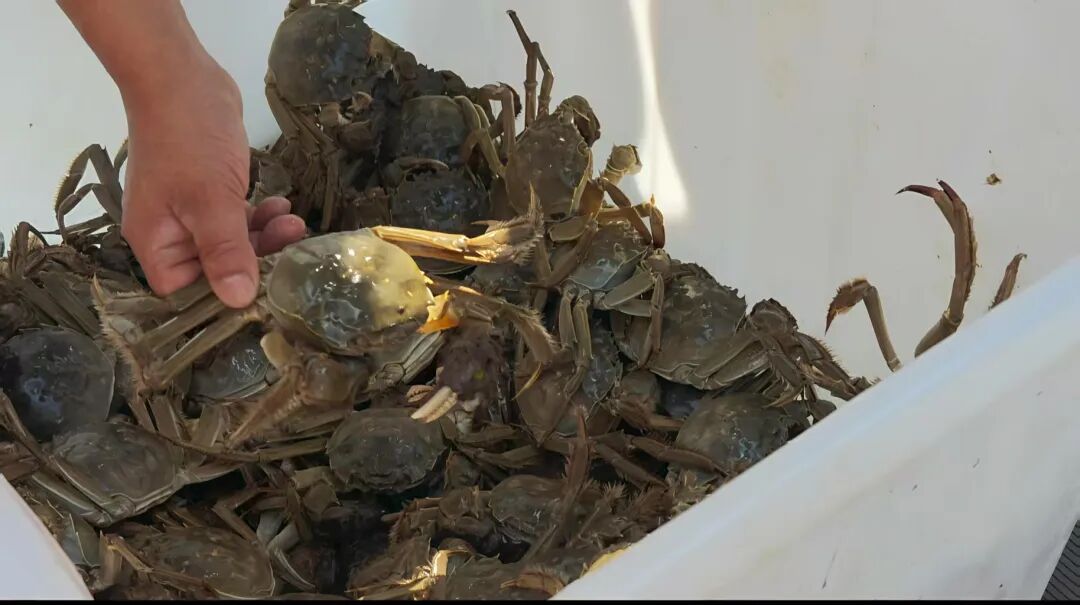
Figure | Chinese mitten crabs have transformed from gift delicacies to mass daily consumption
However, consumers still need to develop a pair of sharp eyes to pick good crabs.
In the consumer market, the "Schrödinger's Cat" law is widely known. It means that before the result is revealed, the object is in an uncertain state of "being both this and that".
In the crab industry, some netizens also created a parody concept called "Schrödinger's Plumpness". It means that before you open the crab shell, you never know whether it is "full of creamy roe and meat" or "a puddle of water", which is the so-called "Chinese mitten crab blind box".
This situation is caused by multiple factors.
First, the market supply is diversified, and the quality of products varies unevenly. When the golden September and silver October come, short video platforms, large supermarkets, and wet markets are all full of crabs, all of which look lively, but their sources and internal quality are very different.
On short video platforms, low prices are easier to attract traffic, so crab sellers are more motivated to look for cheap crabs all over the market. Since consumers cannot see the products in person with their own eyes, they are easy to buy inferior products, and the after-sales service levels are also uneven, which easily affects the repurchase rate.
In wet markets, the cheap "mesh bag crabs" have been popular in recent years, most of the small ones are only 0.4-0.6 taels, they are often called 2-yuan crabs, 3-yuan crabs, or 5-yuan crabs, which means that dozens of crabs are sold in a pack, and the average price of each crab is only 2-3 yuan. Such crabs can hardly satisfy the appetite of food lovers.
In large supermarkets, the quality is relatively more guaranteed. Relying on channel capabilities, sales scale and bargaining power, supermarkets can easily make Chinese mitten crabs a common dish for the public instead of an exclusive treat for a few people. If there is a problem with the product, the supermarket cannot shirk responsibility, and the fierce market reputation competition also makes them more inclined to sell good-quality crabs.
However, large supermarkets also encounter "micro-level problems of Chinese mitten crabs". This is the second factor.
Even if the Chinese mitten crabs sold in supermarkets all have meat, their K values vary greatly. The K value refers to the "plumpness index of crabs", which is equivalent to a BMI physical examination for crabs. A K value greater than 0.41 means the crab is about 70% plump.
Mu Xiao introduced that in Hema, 70% plumpness was the entry threshold for crabs to enter the store last year. But it is very difficult to ensure that every crab is more than 70% plump. The problem lies in the more upstream links of the industry chain.
AI is the Perfect Solution to the "Chinese Mitten Crab Blind Box" Problem
Dong Jiabei is the person in charge of Xinghua Ban'guli Hometown Aquaculture Co., Ltd. He has been breeding Chinese mitten crabs since 2009, and it has been 15 years so far.
Xinghua is a county-level city under the jurisdiction of Taizhou, which is covered with dense rivers and lakes, and is a well-known golden producing area for Chinese mitten crabs. Dong Jiabei grew up eating Chinese mitten crabs in his hometown, and now he has turned his life hobby into an entrepreneurial project.
He deeply feels that in the past, people spent high prices but could not buy good crabs, which made many food lovers feel distressed. Therefore, at the beginning of his business, he targeted the "high-quality crab" track, wanting to build a long-term business with high repurchase rate.
He contracted 4000 mu of water area here, adopted ecological breeding methods, and strictly controlled the standards of input materials. Now the annual output reaches 1.2 million jin, with annual revenue exceeding 100 million yuan. One third of the products are exported to Japan, South Korea and Southeast Asia. It is a demonstration base for Jiangsu Chinese mitten crab export, and the other two thirds are supplied to supermarkets and the gift market respectively.

Figure | Chinese mitten crab breeding ponds (Xinghua, Taizhou)
Mu Xiao, the aquatic product purchaser, saw that Dong Jiabei managed the business with great care, so he signed a long-term procurement agreement with him, turning the base into a "Hema Village", striving to further build public popularity.
In Dong Jiabei's eyes, Chinese mitten crabs are not difficult to breed. They only require clean water environment, so they basically will not get sick easily. But the problem is that just like no two fingers are the same, Chinese mitten crabs will naturally grow to different sizes and plumpness, which affects the standardized output.
Hema has only one requirement for Dong Jiabei: only crabs that are 70% plump or above are accepted. To meet the standard, every golden September and silver October, Dong Jiabei has to hire 10 local crab inspectors to help select qualified products.
Crab inspector is a profession that has only emerged for several decades. In the early stage, it mainly responded to the demand of export screening. Their job is to judge the plumpness of "roe, yolk and meat" of Chinese mitten crabs within a few seconds. The commonly used method is "first look at the appearance, second weigh the weight, third pinch to judge the fatness", and then grade the crabs according to their quality.
This is a well-paid job. It looks simple, but it fully tests the experience of the workers. The number of crab inspectors is very small. In order to recruit enough people in the peak season (the peak season lasts for 5-6 months), Dong Jiabei offers a monthly salary of 30,000 to 100,000 yuan to crab inspectors.
High salary also means high intensity of work. In the peak season, crab inspectors often need to work non-stop, even stay up for 24 hours.
Dong Jiabei has calculated the accounts: the annual labor cost for these 10 crab inspectors is as high as 2 million yuan, which is a considerable expense.
Even large crab breeding factories have to bear such high costs, let alone small factories which do not have the financial capacity to hire workers to select crabs of 70% plumpness. When these crabs flow into the market, they become the "blind boxes" that consumers take home.
For Hema, even with experienced crab inspectors stationed at the base to control quality, it is still difficult to completely eliminate the error of K value.
To further control and improve the quality of Chinese mitten crabs, since 2022, Hema Fresh has jointly developed the "AI Crab Inspector" with Shanghai Ocean University, Shanghai Fisheries Research Institute and Shanghai Shijia Technology. It quickly identifies 8 key parts of Chinese mitten crabs through AI, calculates the shell length of crabs, and then combines with the weighing data to intelligently calculate the K value of crabs.
In Dong Jiabei's warehouse, several AI crab inspectors are running 24 hours a day.
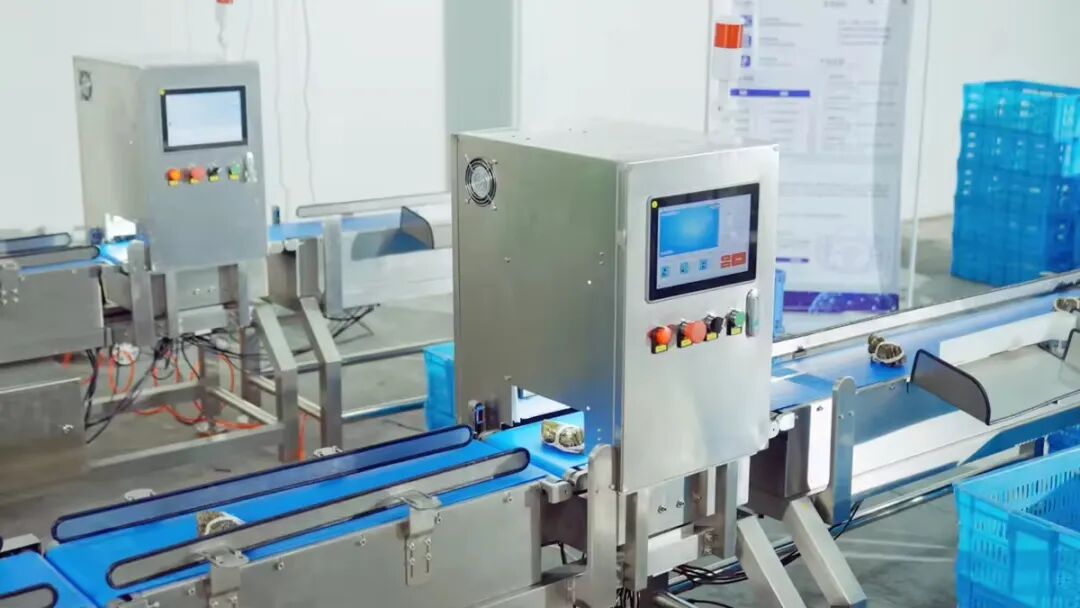
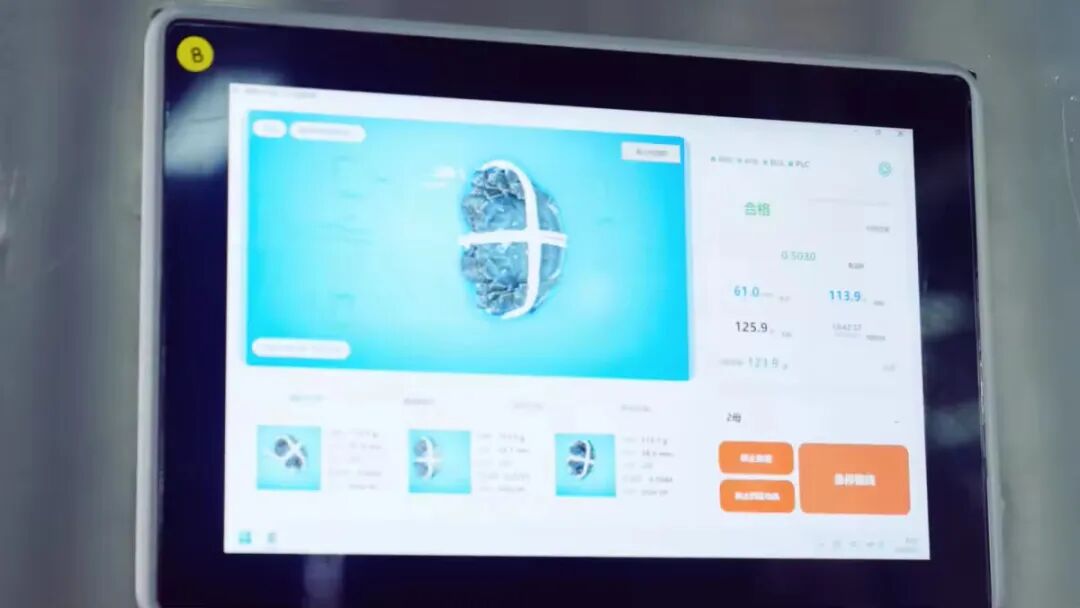
Figure | The third-generation AI crab inspector used in Dong Jiabei's factory
The AI crab inspector has iterated for three generations from 2024 to now. The first generation solved the problem of "whether it can inspect crabs", the second generation solved the problem of "whether the inspection is accurate", and the third-generation AI crab inspector has an accuracy rate as high as 95%, and also solved the problem of "batch inspection".
Dong Jiabei has used all three generations of machines. When using the second-generation machine, workers need to place the Chinese mitten crabs on the machine one by one for inspection, which takes at least 3 seconds per crab. With such efficiency, it is impossible to inspect all crabs, so they still have to hire human crab inspectors.
When it comes to the third generation, the new machine can inspect 1500 crabs per hour, and 100,000 crabs per day, which greatly improves the efficiency. It also solves the reserve talent problem for the aging group of "human crab inspectors" once and for all.
For the four units behind the AI crab inspector, as more and more data are collected through batch inspection, the accuracy rate of AI is still rising through deep learning.
Dong Jiabei exclaimed that he never thought that his traditional aquaculture industry could also use high technology.
Chinese Mitten Crabs are Starting to Transform into "Quantified Consumption"
Nowadays, the challenges in the general consumption environment are increasing day by day. But looking at the popular consumer goods in the market, from the ice cream brand that never sells overnight ice cream, to the sushi restaurant that was very popular last year, we can find that people are not unwilling to spend money, they only want to pay for consumption with unique features and guaranteed high cost performance.
Dong Jiabei said that in the past three years, the Chinese mitten crab consumer market is still growing, but the growth rate has slowed down. The main reason is that Chinese mitten crabs have changed from gift consumption to rational daily consumption for the public, "This gentle growth rate is normal." At the same time, the price of Chinese mitten crabs is becoming more and more transparent, which has changed the old industry growth mode that relied on speculation to get premium to increase revenue.
But the market expansion of this new mode also determines that crab breeders and sellers need to abandon the old myth of "getting rich overnight", and turn to meticulous operation and long-termism.

Figure | The Chinese mitten crab business is turning to long-termism and meticulous operation
In Dong Jiabei's view, although the AI crab inspector only improves the efficiency in one link from the technical perspective, it also has a far-reaching impact on the whole industry.
Upstream, "in order to produce more qualified crabs that meet the standards, we will make the ecological breeding method more refined, and a number of new technologies are under experiment." Dong Jiabei said.
For Hema Fresh, using AI technology not only forces upstream suppliers to improve production, but also continuously improves its own sales standards for Chinese mitten crabs. Last year, the K value was set at 0.41, which means 70% plumpness was enough for the