Stay Apart, Build Great Cars
For the entire industry, this is a clear signal. When technology suppliers and brand owners start to calculate their respective accounts and redraw their boundaries, it indicates that the competition in China's automotive industry is shifting from chasing traffic dividends to strictly enforcing cost discipline.
Working together to build high-quality vehicles is one thing, but only independent operation can help sell vehicles well.
On September 15, HarmonyOS Intelligent Mobility and Seres made a simultaneous official announcement: starting from that day, AITO will explore a new cooperation model, where Seres will take the lead in the product definition, product design, brand marketing, channel retail and service system of AITO. AITO will not completely break away from HarmonyOS Intelligent Mobility, but will switch to exclusive dedicated operation with independent sales channels. Huawei has kept stepping back from its previous role, only participating in technology empowerment.
In 2020, Seres, which was called Chongqing Xiaokang Co., Ltd. at that time, was at its darkest moment when its traditional main business shrank and its new energy transformation faced huge pressure. It acquired the remaining 50% equity of Dongfeng Xiaokang to achieve full ownership, but its micro-vehicle business kept declining; the Seres SF5 that it invested heavily in to develop achieved mass production, but only 732 units were sold throughout the year; its annual net loss reached 1.73 billion yuan, which was its first huge annual loss after listing.
In the same year, Huawei, which had repeatedly emphasized that it "will not build cars", released the HiCar solution while integrating its automotive BU into the Consumer BG, which was led by Yu Chengdong. In the general trend of a large number of tech giants crossing boundaries to enter the automotive industry, the slogan "Huawei does not build cars, but helps car companies build good cars" was still a vague concept at that time.
In March 2021, Huawei signed a cooperation memorandum with Xiaokang Co., Ltd. In April, the two sides announced their in-depth integration in technology, product and channel, and launched the Seres Huawei Smart Selection SF5, which was the first model sold in Huawei's stores, making the Huawei smart selection vehicle model a referable case. On December 2 of the same year, the AITO brand was officially established, and on the 23rd, its first model AITO M5 made its debut at Huawei's Winter Flagship Launch Event.
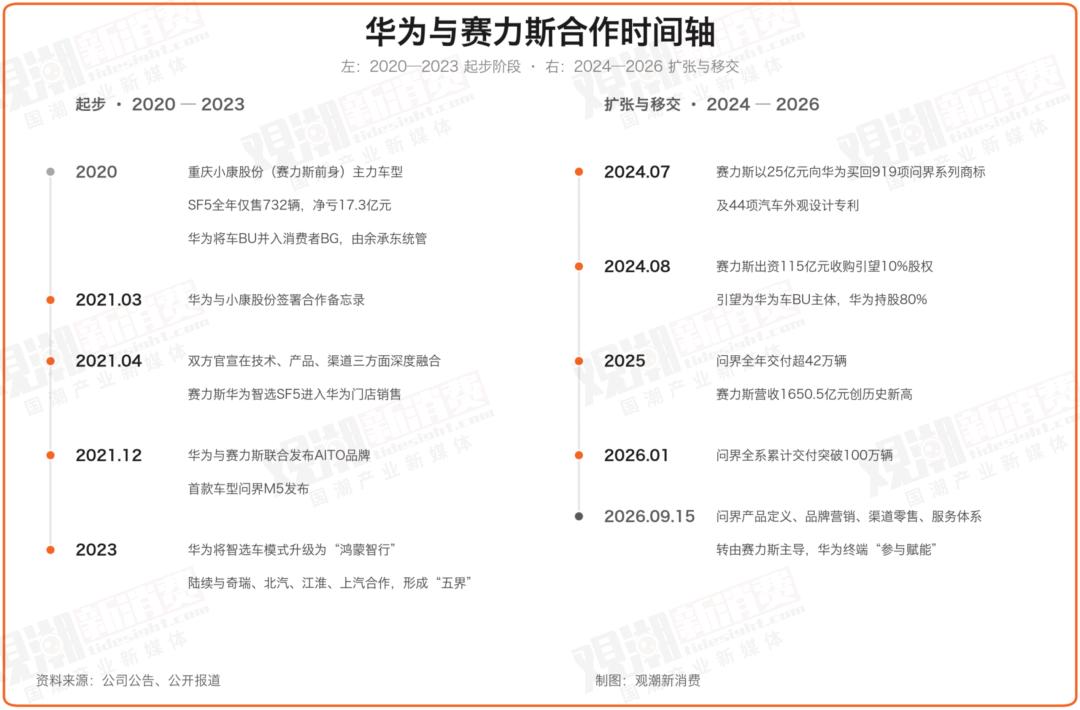
On January 13, 2026, the cumulative delivery of all AITO models exceeded 1 million units, and it only took more than four years from the release of the first model to the 1 million-unit milestone.
On this basis, Huawei upgraded its smart selection vehicle model to "HarmonyOS Intelligent Mobility" in 2023, and successively cooperated with Chery, BAIC, JAC and SAIC to form a pattern of "five Jie brands". AITO has always been the benchmark case and the one with the largest volume among them.
Now the cooperation model has changed. Although both sides emphasized that AITO is still a member of HarmonyOS Intelligent Mobility, the market can hardly avoid associating this move with a "breakup". On the day of the official announcement, Seres' A-shares closed at 45.46 yuan, down 5.09%; its H-shares closed at HK$34.68, down 6.12%, falling below the lowest point since its H-share listing in November 2025. This is the market's immediate reaction to the handover of AITO's dominant power.
In fact, compared with a breakup, this is more like a decent "property split". The division of labor between the two sides has been redefined, and Seres has taken over the steering wheel of AITO, taking full charge of product definition, design, marketing, channels and services. For both Huawei and Seres, the new cooperation model will bring a brand new AITO, but the key problem lies in whether the consumer market can accept this "new AITO".
The same proportion, different figures
There are two reasons that prompted Seres to make up its mind, which are also the two biggest obstacles at present: declining sales and profit pressure.
Looking at 2025 first, Seres sold 472,200 new energy vehicles for the whole year, with a year-on-year increase of 10.63%; the annual delivery of AITO exceeded 420,000 units; Seres' annual revenue reached a record high of 165.05 billion yuan; its net profit reached 5.96 billion yuan, achieving two consecutive years of profitability. Among them, the AITO M9 delivered more than 110,000 units throughout the year, ranking first in sales in the 500,000-yuan price segment for two consecutive years; the AITO M8 won the first place in sales in the 400,000-yuan price segment in its first year on the market, with cumulative sales exceeding 180,000 units. As of January 13, 2026, the cumulative delivery of all AITO models exceeded 1 million units.
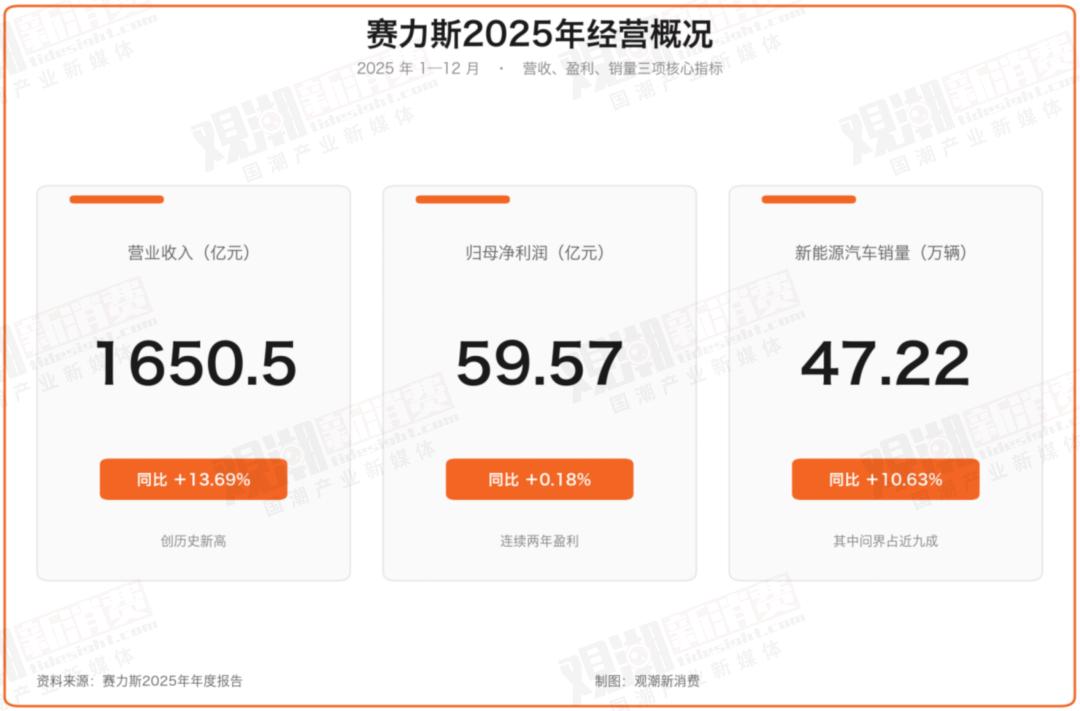
From the release of its first model at the end of 2021 to the cumulative delivery of over 1 million units in early 2026, it took more than four years to complete the journey that many new car-making forces took nearly a decade to finish. The M9 has firmly pushed Chinese brands to the high ground of the 500,000-yuan price segment, and the M8 has also gained a firm foothold in the 400,000-yuan price segment. On the product side, Seres has handed in a report card with no obvious shortcomings. For this reason, the cost dilemma that emerged after this report card is even more worthy of in-depth study. The problem does not lie in the products, but in the distribution structure outside the products.
According to the disclosure in the prospectus and media calculations, from 2022 to 2025, Seres paid a total of about 111.335 billion yuan to the Huawei system, accounting for 29.29% of the total revenue in the same period, while the total non-recurring net profit of Seres in the four years of the same period was only about 1.482 billion yuan.
According to the disclosure in Seres' H-share prospectus, Seres pays hardware procurement fees to Yinwang, including procurement of components such as smart cockpit, lidar, electric drive system and intelligent driving domain controller. In addition, there is a technology licensing fee of about 2% of the vehicle's selling price, as well as channel marketing service fees, user value-added service income, etc. of about 8% of the vehicle's selling price paid to Huawei Terminal BG. The three items together account for about 10% of the vehicle price, which is what the industry calls the "Huawei tax".
More critically, this fund is not linked to profits, but to the transaction volume with the Huawei system. Even if Seres is in a loss-making state, as long as it is still selling vehicles, this settlement will not stop, and the proportion of commission will remain unchanged. Seres has to use its own gross profit to bear the part of rigid expenditure that no longer grows. This model allowed AITO to quickly increase its sales volume by leveraging Huawei's stores, brand and intelligent capabilities, but it also continuously eroded the profits of the vehicle manufacturing end, which became one of the reasons for the two sides to adjust the cooperation model.
The 111.335 billion yuan of expenditure is not only the share in the vehicle price. In July 2024, Seres acquired 919 text and graphic trademarks of AITO and other series held by Huawei and its related parties, as well as 44 automotive appearance design patents for 2.5 billion yuan, and the ownership of the AITO brand belongs to Seres; in August 2024, Seres invested 11.5 billion yuan to acquire 10% equity of Yinwang, and the cooperation was upgraded to "business cooperation + equity binding".
From the birth of AITO to the sales volume exceeding 1 million units, the negative impact of the same sharing model in the incremental era will be ignored. But when the pressure of continuous growth keeps rising, the load of every cost may become the trigger for changes.
In the first half of 2026, Seres' revenue was 57.493 billion yuan, down 7.87% year-on-year; its attributable net profit was -1.717 billion yuan, and the non-recurring net profit was -2.379 billion yuan, while the same period of the previous year was a profit of 2.941 billion yuan and 2.474 billion yuan respectively.
It is clearer when broken down by quarter. In the first quarter, Seres' revenue was 25.746 billion yuan, up 34.46% year-on-year; its attributable net profit was 754 million yuan, up 0.89% year-on-year, and everything was still on the right track. In the second quarter, its revenue was 31.747 billion yuan, down 26.60% year-on-year; its attributable net profit was -2.471 billion yuan, down 212.69% year-on-year.
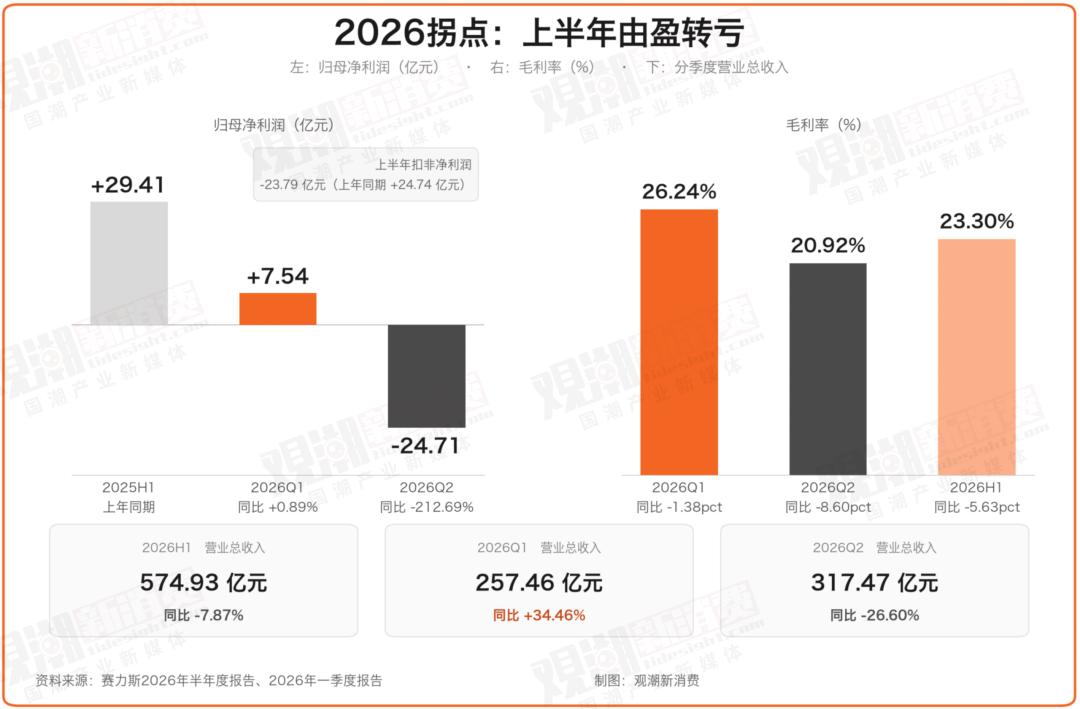
Gross profit margin is the most direct signal. The gross profit margin in the first half of the year was 23.30%, down 5.63 percentage points year-on-year; the gross profit margin in the first quarter was about 26.24%; the gross profit margin in the second quarter fell back to 20.92%, down 8.60 percentage points year-on-year and 5.32 percentage points quarter-on-quarter. When the gross profit margin of the whole vehicle is pressed to just over 20 percentage points, every point of downward pressure will first fall on Seres' own gross profit.
The explanation for the loss in the financial report is: the decline in operating revenue is mainly due to the change in product sales structure. The main models in the second quarter were in the transition period of product iteration, and the effect of production capacity and sales scale was not fully released; at the same time, it was affected by the price increase of core components such as battery-grade lithium carbonate (the average daily price in the first half of the year rose by 132.2% year-on-year) and automotive-grade chips; the company adheres to the principle of "not passing on costs by reducing the quality standards of components".
In June this year, Zhang Xinghai, Chairman of Seres, also publicly stated that affected by the price increase of storage chips, lithium carbonate and other products, the average cost of each AITO vehicle increased by 15,000 to 20,000 yuan.
The stall of sales volume is the last straw that crushes the account book. From January to August 2026, the sales volume of AITO was 201,900 units, down 14.07% year-on-year; in July, the sales volume of Seres vehicles was 20,480 units, down 50.86% year-on-year; in August, the sales volume was 20,652 units, down 49.68% year-on-year, with sales volume halved for two consecutive months. If it continues at this pace, it is questionable whether the annual sales scale can be maintained.
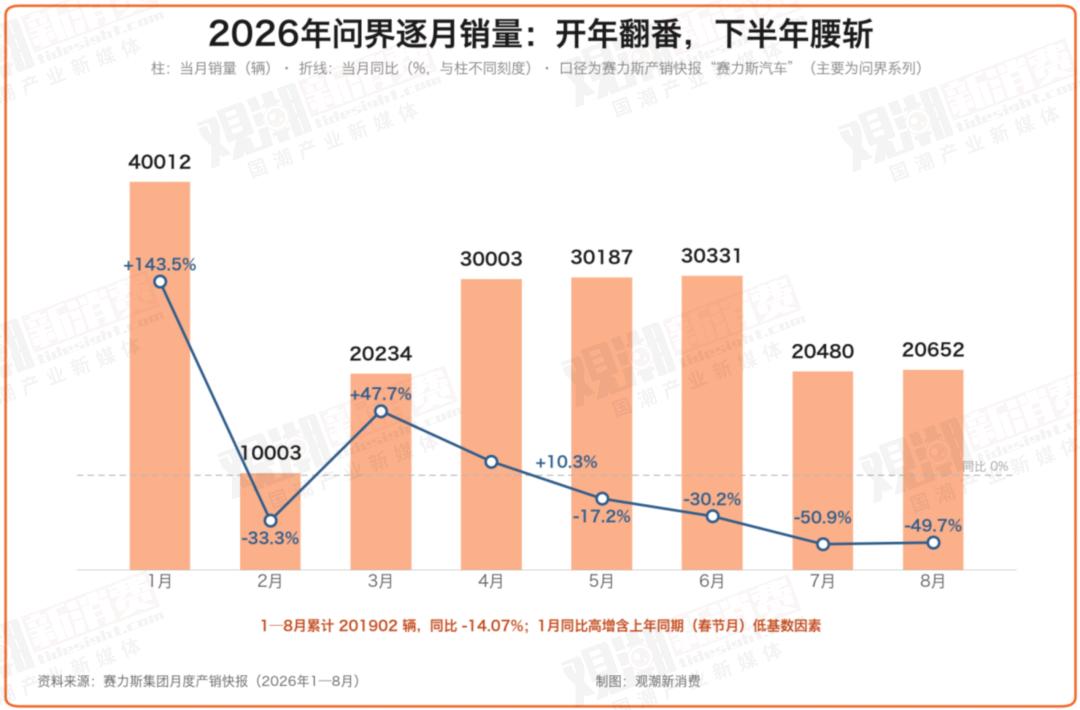
Therefore, the reason why Seres seeks change is not complicated. A distribution mechanism designed in the era of growth has become a profit black hole when sales decline. The problem is never whether this sum of money is expensive, but whether it is worth spending.
How many Jie brands can one store accommodate?
In the stores of HarmonyOS Intelligent Mobility, the number of "Jie" brands is increasing.
In August 2026, the total delivery of all HarmonyOS Intelligent Mobility models was 42,101 units, AITO accounted for nearly half, and both Shangjie and Zhijie delivered more than 8,000 units. Under the same roof, five brands share the same group of customer flow, and competition will also occur in the same store, so Huawei's brand power will inevitably be diluted.
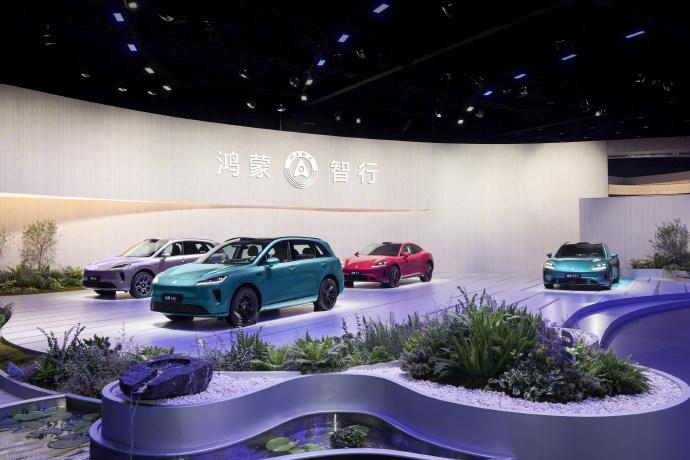
Image source: HarmonyOS Intelligent Mobility official Weibo account
For most consumers who walk into Huawei's stores, compared with the differences between the five Jie brands, it is easier for them to remember the common point, that is, Huawei; for Huawei, there is little difference on the books no matter which "Jie" brand consumers finally choose; the sales staff in the store will not favor one over the other, which is part of the experience itself; but for Seres, the above problems are real problems.
One store cannot accommodate five leading roles, which is the first place where the old model can no longer hold on.
On March 4, 2026, Huawei released its new generation of dual optical path image-level 896-line lidar, which made its debut on AITO M9 and Zunjie S800 simultaneously. On March 23, the refreshed version of AITO M7 was released, which is also equipped with 896-line lidar, while the old M7 launched in September 2025 cannot support the upgrade due to its incompatible hardware architecture.
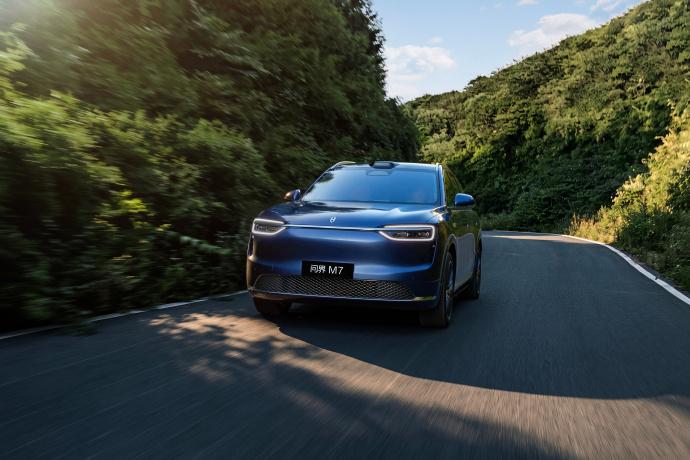
Image source: AITO Auto official Weibo account
The root of the contradiction is that AITO used to be the priority landing point for Huawei's latest technologies, but as HarmonyOS Intelligent Mobility enters the era of "five Jie brands operating in parallel", AITO's "hidden privileges" are disappearing, and the brand value is diluted accordingly. Bigger problems follow, for example, who should own the right to interpret product rights and brand value, and who should own the right to decide the rhythm of technology and products, the party that bears the brand's profit and loss, or the party that faces consumers directly?
In other words, when Huawei's technology, channels and ecology no longer serve only one partner, the same network has to sell more and more vehicles, and booths, sales energy and promotion resources have all become zero-sum. The sales dominance of the brand should be handed over to the cooperative car company. The benefit of shared channels is traffic, but the price is that no one can guarantee that the traffic will fall on their own brand.
In the summer of 2025, Zhijie, Xiangjie and Shangjie launched channel adjustments, and