GAC taking a stake in FAW Toyota is good news for BYD and Geely.
The merger of north and south Toyota ushers in an era of major consolidation for joint-venture automakers, with leading domestic brands including BYD and Geely welcoming their ideal "training partners".
On the evening of September 28, GAC Group announced a major asset restructuring plan, proposing to issue shares to acquire the 50% equity stake in FAW Toyota held by FAW Group, at an issue price of 5.75 yuan per share.
The long-rumored "merger of north and south Toyota" has thus come to light.
This is not a case of one party acquiring or swallowing the other. It is about directing resources to where they can deliver maximum value.
More critically, when the combined annual sales volume of 1.578 million units from north and south Toyota converges, a giant entity that can rank third in the total sales ranking of Chinese automakers and first in the joint-venture camp is born. The scale effect will bring new impetus to Toyota, Japanese-branded vehicles, and even the entire joint-venture sector.
And this is precisely good news for BYD and Geely.
Mencius, in *Gaozi II*, wrote: "If a state has no law-abiding sages and loyal remonstrants within its borders, and no hostile foreign threats outside, it will often perish." Thriving in adversity and perishing in ease has always been an unshakable truth on the path of development.
A strong joint-venture automaker is the best "training partner", "blue team" and "whetstone" for Chinese domestic automakers. The merger of north and south Toyota has toppled the first domino in the entire era of massive joint-venture consolidation.
A new joint-venture champion is set to emerge
Let's do the math first. In 2025, FAW Toyota sold 805,518 units, GAC Toyota sold 772,668 units, bringing the combined total of north and south Toyota to around 1.578 million units.
Where would this figure stand in the 2025 Chinese automaker retail sales ranking? BYD took first place with 3.485 million units, Geely second with 2.606 million units, and FAW-Volkswagen third with 1.531 million units. After the merger, north and south Toyota will directly overtake FAW-Volkswagen to jump to third place in the overall ranking.
Adding the contribution of over 180,000 units from Lexus in China, Toyota's total domestic scale approaches 1.78 million units, making it the well-deserved top player in the joint-venture camp. The combined sales of north and south Toyota account for 17.03% of total joint-venture passenger vehicle sales, meaning roughly one out of every six joint-venture vehicles sold bears the Toyota logo.
What is more worth dissecting is the high quality behind this sales volume.
In 2025, intelligent hybrid dual-engine models accounted for 47% of FAW Toyota's sales, and high-end models made up 61% of its total sales; the proportion of hybrid models in GAC Toyota exceeded 50% for the first time, and its pure electric model bZ3X claimed the top spot as the best-selling new energy vehicle among joint-venture brands with 70,000 units sold. This 1.578 million-unit scale is not achieved by low-price volume chasing, but comes with far higher structural quality.
The current equity structure of FAW Toyota is 50% held by FAW Group, 45.77% by Toyota Motor Corporation, and 4.23% by Toyota China. What GAC is acquiring is exactly the 50% stake held by FAW Group.
After the transaction is completed, the Chinese shareholder of FAW Toyota will change from FAW to GAC, forming a dual joint-venture structure where "GAC + Toyota" each hold a 50% stake, the same as the equity structure of GAC Toyota. FAW Co., Ltd. obtains shares of the listed GAC Group by transferring its equity in FAW Toyota, with no cash payment involved.
This is the underlying logic of the north-south Toyota merger. It is not about one party swallowing the other, but when a joint-venture brand can rank third in the sales chart, its bargaining power, supply chain discourse power, and channel control will all rise to a whole new level. And this is exactly what joint-venture automakers lack the most at present: scale.
In 2025, the market share of domestic brand passenger vehicles reached 64.6%, while that of joint-venture passenger vehicles fell to 35.4%, hitting an all-time low.
BYD and Geely are leveraging their scale to outcompete all peers. Behind BYD's 3.485 million units is a vertically integrated supply chain, self-developed and self-produced batteries and electric drives, and a product matrix covering all price ranges. Behind Geely's 2.606 million units is the integration of Zeekr and Lynk & Co, as well as the cost dilution brought by the scalable SEA architecture. The shared logic of these two Chinese local automakers is to use scale to reduce costs, use costs to support competitive pricing, and use pricing to capture even larger scale.
When north and south Toyota operated separately, FAW Toyota's 800,000 units and GAC Toyota's 770,000 units were not small volumes on their own, but in front of BYD and Geely, they became two mid-sized players.
Procurement bargaining power was fragmented, R&D expenses were split across two systems, and channel resources were cannibalized within the same brand. "Sister models from north and south Toyota are waging price wars against each other," a source from the automobile distribution industry told Auto Community.
After the merger, the 1.578 million-unit scale means Toyota can negotiate prices with suppliers with a unified voice in China, dilute technology costs through a single R&D system, and cover the national market with one unified channel network.
And this is exactly what BYD and Geely need to see: a sufficiently strong and efficient competitor that can push them to become better versions of themselves.
FAW and GAC: Complementary Strengths
Policy signals are the prelude to consolidation.
In March 2025, Gou Ping, Deputy Director of the State-owned Assets Supervision and Administration Commission of the State Council (SASAC), explicitly stated that strategic restructuring of central state-owned automakers would be carried out. In December of the same year, SASAC Director Zhang Yuzhuo further deployed that in 2026, efforts will be intensified to promote strategic and professional restructuring, integration, and high-quality mergers and acquisitions.
Why were FAW and GAC able to come together? The answer lies in their complementarity, as each has its own distinct strengths.
FAW is a central SOE directly under SASAC, headquartered in Changchun. It has the brand heritage of Hongqi and a complete R&D and manufacturing system.
But FAW's shortcomings are also obvious: it lacks the capability for rapid iteration of market-oriented products, and the implementation speed of electrification technologies is not fast enough. In 2025, FAW Group's new energy vehicle output was around 446,000 units, accounting for only 13.5% of its total production, of which the new energy output from its joint-venture brands was a mere 61,000 units. During the same period, the domestic new energy penetration rate had exceeded 60%.
GAC is a provincial SOE under the administration of Guangdong Province, located in the region with the densest new energy vehicle industry in South China, and has accumulated rich experience in electrification, three core electric technologies, and end-consumer market insight. But GAC also has its own ceiling: its attributable net profit suffered a loss of 4.467 billion yuan in the first half of 2026, and it faces great difficulties in moving its brands upmarket.
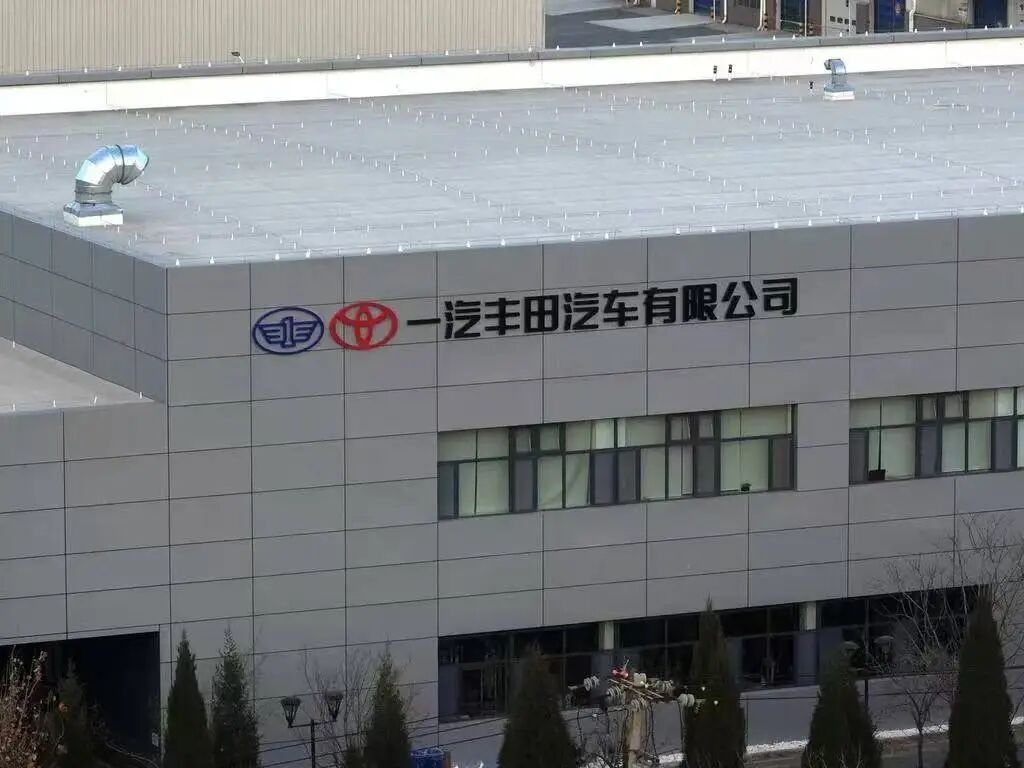
FAW has strong brands, GAC has advanced technologies. FAW has abundant resources, GAC has deep market insights. FAW needs a more flexible path to implement electrification technologies, while GAC needs stronger brand endorsement and system resources. Bestune needs technology injection, and Hyper needs brand empowerment. If the resources of both parties can be interconnected, many problems do not need to be solved from scratch.
What is more noteworthy is the transaction model itself. FAW obtains shares in GAC and becomes a strategic shareholder, which allows it to directly access GAC's market-oriented mechanism and electrification technologies. By transferring the 50% equity stake in its Toyota joint venture, FAW can concentrate its resources on developing its own domestic brands.
Hongqi and Bestune are in a critical development stage, so for this central SOE, focusing resources on self-owned brands is more important than expanding the scale of joint ventures.
GAC, by acquiring the 50% equity stake in FAW Toyota, can further integrate Toyota's business system, reduce internal competition, and improve operational efficiency. FAW Toyota recorded a net profit of around 4.234 billion yuan in 2025, and the 50% stake corresponds to an annual profit share of over 2.1 billion yuan, which is a timely help for GAC that posted a loss of 4.467 billion yuan in the first half of the year.
Toyota's role is also critical. For many years, north and south Toyota operated independently with disconnected channels, leading to redundant investment and head-to-head competition between sister models such as Corolla and Levin, RAV4 and Wildlander. Sienna and Granvia share the same platform and powertrain, targeting the same group of family users, but the two joint ventures were forced to undercut each other's prices at the retail end.
Internal friction in channels, pricing, and brand positioning ultimately damages the pricing power and brand premium of the entire Toyota system in the Chinese market. After integration, Toyota's room for product and channel deployment is fully unlocked.
Auto Community learned that the merged north and south Toyota will establish a unified sales company, with Toyota holding a 50% stake, and FAW and GAC each holding 25%. Toyota will immediately claim the title of the top-selling single joint-venture automaker in China, while eliminating the internal friction between its two Chinese joint ventures.
The underlying prerequisite for the integration of north and south Toyota is that Toyota has already completed the unification of its R&D system in China.
At the 2025 Shanghai Auto Show, Li Hui, General Manager of Toyota China, officially launched the ONE R&D system, which integrates FAW Toyota R&D, GAC Toyota R&D, BYD Toyota R&D, and Toyota's Intelligent Electric Vehicle R&D Center into a unified system, with core decision-making power transferred from the Japanese headquarters to China.
The supporting China Chief Engineer RCE system gives product definition rights to local engineers who have a better understanding of Chinese consumers. R&D has been integrated and product definition rights have been delegated, but the production bases, supply chain systems, and sales channels still operate as two separate sets of structures.
The merger of north and south Toyota essentially uses equity integration to complete the last missing piece of business integration.
The core of this model is: FAW provides resources and the right to share profits, GAC obtains operational management rights, and Toyota is responsible for products and technologies. The operational authority, profit distribution, and technology sharing are designed in a layered structure: the party with better operational expertise gets the management rights, and the party that provides resources retains a share of the profits. Property rights and management rights are separated, allowing all parties to get what they need. If this path proves successful, many other automakers will follow suit.
What's Next for Honda, Nissan and German Automakers?
By taking this step, Toyota naturally transmits the pressure to Honda and Nissan, and from Japanese brands to German and American brands across different brand camps.
So what are the advantages and disadvantages of Honda, Nissan and German automakers in terms of joint-venture consolidation in China?
In December 2024, Honda and Nissan signed a basic letter of intent for business integration, planning to reach a final agreement in June 2025, with Mitsubishi also considering joining. If the merger is successful, the new company will become the world's third-largest automotive group after Toyota and Volkswagen.
But on February 13, 2025, the two companies officially announced the termination of merger negotiations. The core divergence lay in the merger method and leadership arrangement: Honda proposed to acquire Nissan as a subsidiary, while Nissan sought an equal merger, and the two sides could not bridge their differences. This means the largest consolidation attempt in the Japanese automotive industry has failed.
But the door is not completely closed. In August 2026, Honda and Nissan officially launched cooperation, signing a joint development agreement for next-generation software-defined vehicles, to carry out standardized development of core electronic control units, in-vehicle operating systems, and key middleware components.
From a full merger attempt to targeted cooperation, the form of partnership has changed, but the logic of integration remains the same.
Honda is in a more urgent situation than Toyota in China. In 2025, Honda's total domestic terminal sales reached 645,300 units, and Dongfeng Nissan's total sales hit 601,000 units, both falling out of the top 10 in the national automaker sales ranking.
The combined sales of the two are around 1.246 million units, which would roughly rank 7th if counted together. This scale is still not enough to compete with BYD and Geely, but at least it can give Honda and Nissan a scale foundation to engage in dialogue with the top-tier automakers in the Chinese market again.
More critically, the joint-venture systems of Honda and Nissan in China are highly overlapping. Dongfeng Honda and Dongfeng Nissan are both under the Dongfeng Group, and models including CR-V and X-Trail, Accord and Teana, Civic and Sylphy have been competing with each other for the past two decades. If Honda and Nissan complete their merger at the global level, the Dongfeng camp will have two joint-venture brands belonging to the same global automotive group, making the integration logic even more natural than that of Toyota.
In fact, preparations for such integration are already underway. On December 31, 2025, Dongfeng Honda Engine Co., Ltd. completed industrial and commercial registration changes and was renamed GAC Honda Engine Co., Ltd., making GAC Honda the 100% owner of the company.
This acquisition puts an end to a historical legacy issue that spanned nearly 30 years, ending the "one project, two companies" structure of Honda's engine business in China.
However, the difficulty of local consolidation between Honda and Nissan is also obvious.
The integration of north and south Toyota has a natural prerequisite: only one layer of relationship needs to be restructured, and Toyota's headquarters has a highly unified strategic judgment on the Chinese market.
But Honda and Nissan need to restructure two layers of relationships involving both Chinese and foreign parties, with twice as many stakeholders as the north-south Toyota merger. This is not a technical problem, but a major governance structure challenge.
Will German brands follow suit? Volkswagen is currently one of the few foreign automakers in China that still maintains two large joint ventures in the north and south, with Volkswagen Anhui as its third strategic pillar. In 2026, Volkswagen brand will launch 13 all-new new energy vehicles in China, with new products distributed across its three joint ventures. Volkswagen's strategy is to "expand new increments" rather than "merge existing stocks".
However, the sales volume of both north and south Volkswagen declined in 2025 — FAW-Volkswagen dropped by 4.8% year on year, and SAIC Volkswagen fell by 11.4% year on year. The attractiveness of north-south Volkswagen consolidation is always positively correlated with the pressure of falling sales. However, it is difficult for FAW and SAIC to obtain the same integration driving force as FAW and GAC, so after the north-south Toyota merger overtakes the sales of the two Volkswagen joint ventures, the Wolfsburg headquarters can only watch the situation unfold and cannot immediately push for the integration of its Changchun and Shanghai operations.
In March this year, the market share of joint-venture brands shrank to a record low of 20.2%, and by the first half of 2026, the combined share of joint-venture and foreign brands dropped to only 28.2