Self-developed batteries are not a crime
On September 7, Li Auto announced that for all orders locked for the new generation MEGA starting from 3 p.m. that day, the battery will be switched from CATL's 5C battery to the 5C battery independently developed by Li Auto. The next day, CATL's market value fell by 3.65%, which was interpreted as car companies' move to "de-CATL-ize".
This is not the end. The Li Auto i9 launched on September 16 is initially equipped with CATL batteries. However, the head of Li Auto's product line later stated that all new i9 Home orders placed from September 17 will be equipped with the self-developed 5C battery.
According to Li Auto, the material system and structure of the self-developed battery cells are developed in-house, with Sunwoda and CALB responsible for production; the battery packs are developed and manufactured by Li Auto. This September, Li Auto announced a plan to increase its capital contribution to Sunwoda by 2.65 billion yuan.
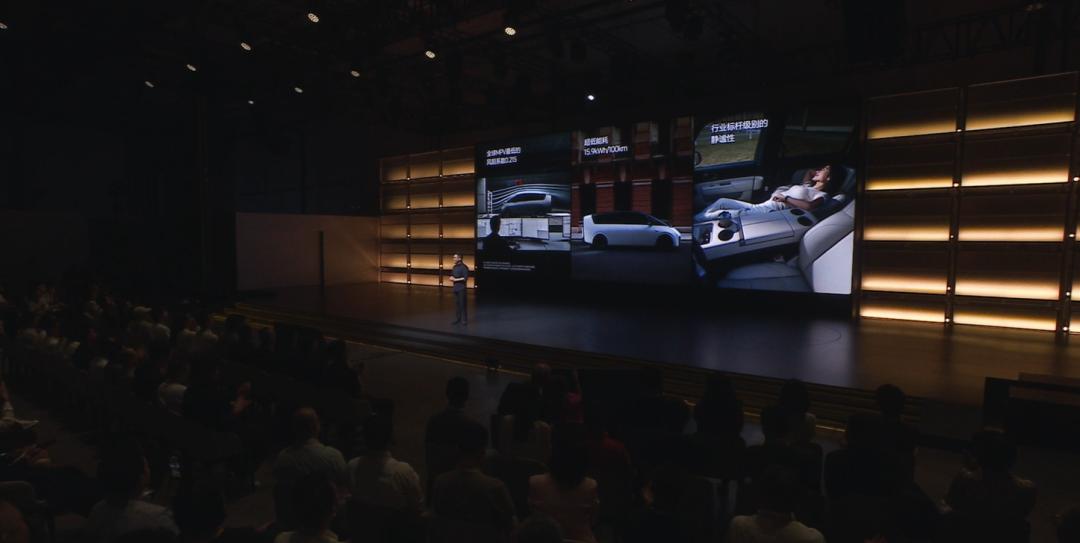
Li Auto New MEGA Launch Event
This is not an isolated case. This July, Xiaomi launched the "Dragon Armor Battery": Xiaomi is responsible for product definition, leading the design of the battery pack and participating in the cell design and development, and taking charge of full-process quality management.
By September, Xiaomi announced its two strategic partners for the Dragon Armor Battery, CALB and Sunwoda. CALB will develop the electrochemical system and materials as required, while Sunwoda provides cell manufacturing capabilities, and the two sides will build exclusive production lines.
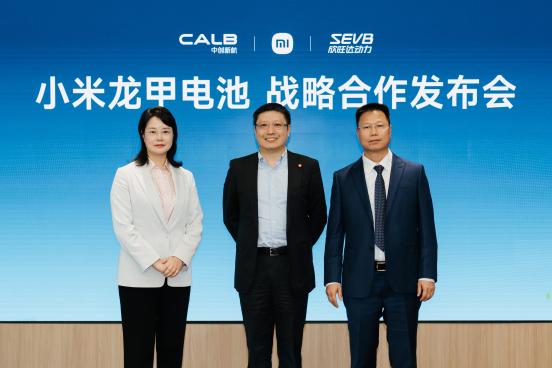
On September 4, Xiaomi announced the partnership with Sunwoda and CALB
In short, Xiaomi puts forward vehicle-level requirements, leads the definition of battery packs, and participates in cell development and supplier quality management, while battery manufacturers provide cell technology, engineering and manufacturing capabilities. Subsequently, the Pengcheng N70 and N90 series equipped with the Dragon Armor Battery went on the market, and CATL was not included in the list of battery suppliers.
In addition, XPeng is also preparing to take similar steps. Also during the interview session at the XPeng G9L launch event this September, He Xiaopeng stated that starting this year, "we will develop all batteries by ourselves", but immediately added "not the battery cells".
In other words, all three companies name their products "self-developed batteries", but their specific practices vary: XPeng is currently only prepared to develop battery packs, Xiaomi participates in cell development, while Li Auto has pushed R&D all the way to cell materials and structures.
However, the timing when the three car manufacturers "jumped out of the CATL supply system" coincided exactly with CATL's "Global Quality Open Month" event, making it impossible for CATL not to make a statement. Ni Jun, Chief Manufacturing Officer of CATL, said at the event:
Those who can make cars may not necessarily make batteries, and professionals should do professional work (BYD: ?).
This quiet contest is far more than just the simple trend of "de-CATL-ization". The common question raised by all parties is: who should take control of the design and manufacturing of a battery?
Foreshadowed Long Ago
Li Auto took the earliest action and moved the fastest in the field of self-developed batteries.
The first-generation MEGA launched in 2024 was equipped with the Kirin 5C co-developed by Li Auto and CATL. According to the statement at that time, Li Auto put forward vehicle-level requirements, technical standards and verification methods; CATL was responsible for capabilities in materials, cells, structures and manufacturing processes.
From underlying materials to battery pack architecture, the two companies jointly worked out solutions and conducted experiments. Li Auto invested more than 200 people, while CATL invested about 800 people. The scale is 5 to 8 times that of ordinary battery projects[1]. The R&D started in 2020 and took three years to achieve mass production.
The changes this year go a step further. According to Li Auto, the company starts with anode and cathode materials, electrolytes and formulas, verifies cell prototypes in its own laboratories, and then cooperates with partner battery manufacturers to turn the solutions into mass-producible engineering designs.
At the same time, the battery packs, management systems and vehicle control are also led by Li Auto. Sunwoda and CALB are only responsible for the production of cells and battery packs.
Compared with the Kirin 5C back then, the R&D division of labor and cooperation mode between upstream and downstream have all changed. However, there is still no answer to the ownership of intellectual property rights for each specific formula and process, as well as the cost difference when the two factories produce products based on the same solution.
Since the timing when new car-making forces turned to self-developed batteries coincided with public opinion that CATL's profitability outperformed all car manufacturers, it is inevitable that the market will speculate on car companies' move to "de-CATL-ize".
According to previous supply chain surveys, before Li Auto switched to self-developed batteries, CATL's share in Li Auto's product line was close to 70%, and it is expected to drop to around 50% for the whole year of 2026.
Considering Li Auto's strong support for its second supplier Sunwoda, CATL's share may further decline in the future.
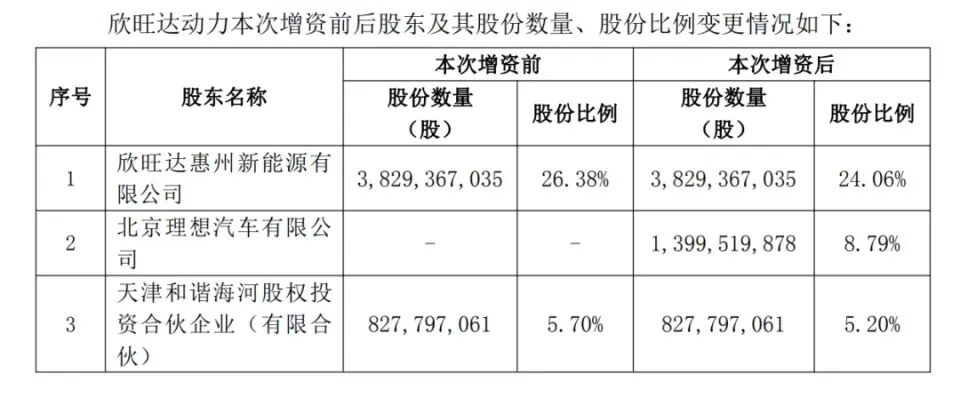
This September, Li Auto took equity stake in Sunwoda
Previously, Xiaomi only had two models, SU7 and YU7. The standard version with LFP batteries also had orders from CATL. Together with NCM batteries, CATL's share in Xiaomi's system was close to 70%.
However, when selecting suppliers for its range-extended models, since the products of CALB and Sunwoda have been fully verified on a large number of range-extended models, CATL was excluded. But for Xiaomi's subsequent pure electric models, CATL still holds most of the share.
CATL's discourse power in the industrial chain is obvious to all. Therefore, all kinds of self-developed batteries are eventually regarded as car companies' further move to support second suppliers and seize power from the upstream.
In November last year, Ma Donghui, President of Li Auto, stated at the earnings call that the delivery delay of Li Auto i6 was mainly affected by "core component supply and production capacity ramp-up". Although he did not name the specific party, it was interpreted as an early signal to introduce a second supplier.
By December, owners of Li Auto i6 received a survey on battery selection intention: choosing Sunwoda batteries allows them to pick up cars faster and get free extended warranty.
The self-development move by Li Auto alone is not a big deal, but when many similar car manufacturers emerge suddenly, the situation will be different.
Game
The weight of CATL in the industrial chain can be illustrated by several sets of data.
By the end of 2025, CATL had 263.6 billion yuan of accounts payable and notes payable on its books, which can be roughly understood as the money it still needs to pay to suppliers; on the other hand, the accounts receivable and notes receivable that CATL's customers need to pay to it reached 121 billion yuan. The difference between the two is 2.18 times, and the figure in the first half of this year was 2.52 times.
In the first half of this year, CATL had about 57.8 billion yuan of accounts payable included in the supplier financing arrangement, which roughly means that suppliers can use CATL's payment vouchers for financing, and CATL will make the payment on the agreed date.
In the first half of this year, CATL accounted for 46.7% of the installed battery volume for domestic passenger cars. If only NCM batteries are counted, its share reaches 75.2%. For car manufacturers that use NCM batteries, it is particularly difficult to find alternative suppliers with sufficient scale.
It is hard to say that a company that can extend the upstream account period and collect advance payments from downstream customers has no discourse power. When it reaches the scale of CATL, its style can be described as strong.
In the second half of last year, battery raw material prices rose, and CATL's capacity utilization rate once reached as high as 102.6%. Car manufacturers not only had to wait for the production scheduling plan, but also had to accept a slight price increase.
Therefore, car companies either tacitly introduce second and third suppliers, or roll up their sleeves to develop batteries by themselves. The goal is to reduce the order quota of CATL, and the trigger that set off this movement is CATL's strong stance.
In 2023, Li Auto already showed the intention to support Sunwoda, and dispatched a large number of technical personnel to Sunwoda. In the same period, CATL and Li Auto signed a supply guarantee and strategic agreement, which was only executed until the end of 2025.
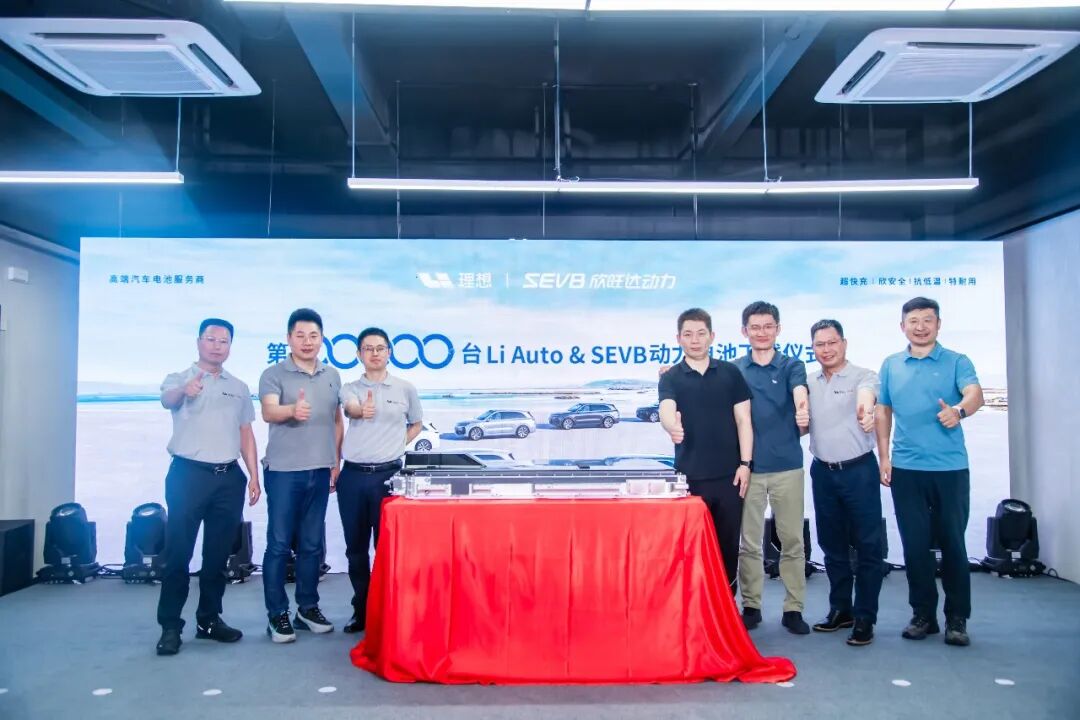
In 2024, the 100,000th battery pack co-produced by Sunwoda and Li Auto rolled off the production line
In 2025, the two sides renewed a five-year strategic agreement. But in the same period, Li Auto and Sunwoda established Shandong Li Auto Automotive Battery Co., Ltd., with each holding 50% of the shares, which pushed the self-developed battery business a big step forward.
At the end of the day, CATL's strong stance and car companies' resistance are both out of their own commercial instincts. The game between upstream and downstream of the industrial chain is an objective reality existing in any industry, and it is actually an inevitable process for the industry to move towards maturity, which should not be over-interpreted at the value level.
In the early stage of the development of the new energy industry, good batteries were scarce resources. Whoever mastered the battery production capacity mastered the discourse power. More importantly, since 2021, CATL has raised its R&D investment to the level of tens of billions of yuan, which is destined to be recovered by scale and profits.
Nowadays, the industry has entered a mature stage, batteries are no longer scarce resources, and the price war in the terminal market is extremely fierce, which has greatly compressed the gross profit of car companies. At this time, if 40% of the BOM cost of a car is taken by one supplier, the car company is no different from a wage earner.
CATL's problem may be that it wants to extend the strong position accumulated in the special historical period to today's mature industry, but car companies are unwilling to accept it and turn the table.
Introducing second suppliers can indeed improve car companies' discourse power to a certain extent, but there are some things that second suppliers cannot provide.
The Truth of Self-Development
First of all, it should be made clear that there is no such thing as a perfect battery, and different cars have different definitions of "perfect".
For example, performance cars need high discharge power, and energy density can be compromised; ride-hailing cars need long cycle life, and energy density can also be compromised; high-end cars require no shortcomings in all aspects, and cost can be further negotiated. Moreover, batteries are different from simple plugins, and their coupling with chassis and thermal management systems is getting deeper and deeper.
However, what battery manufacturers deliver to car companies is mostly general solutions, which must take into account the demands of the mainstream market. Even for customized solutions, it is impossible to completely rewrite the formula. Therefore, an important purpose for car companies to develop batteries independently is to take back the definition right. This can be seen from the changes in the mode of car companies purchasing batteries.
In the early stage, car companies purchased a complete set of battery pack assembly (PACK) from battery manufacturers, including all parts such as cells, BMS, thermal management and shell, which is the so-called black box mode. In this period, car companies could only make concessions to adapt to the chassis space, and most of the profits were taken away by upstream parties.
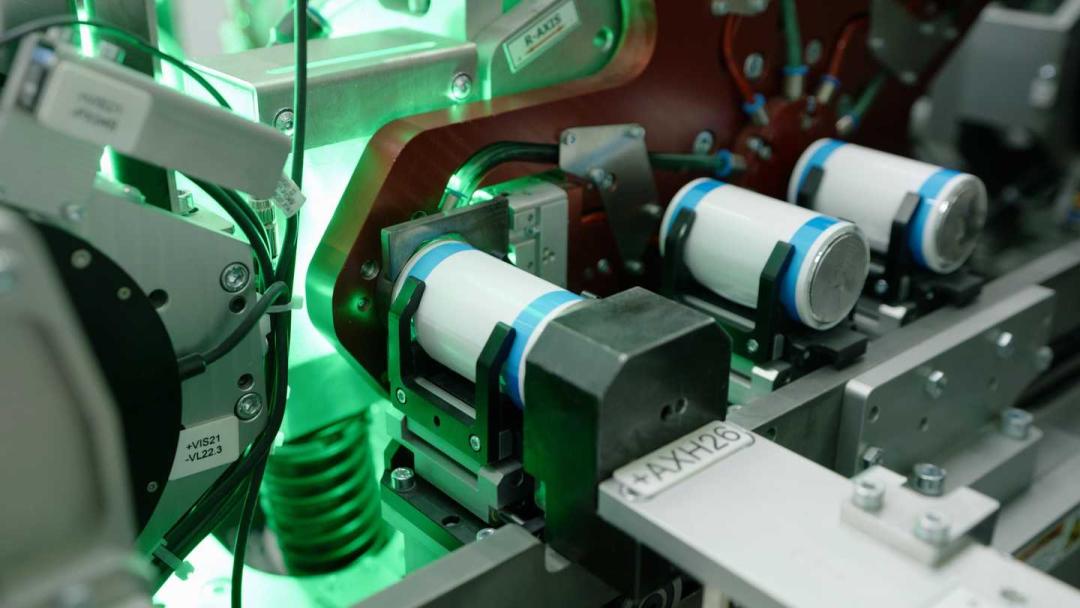
Tesla Texas Gigafactory 4680 Battery Cell Production Line
Later, car companies split the assembly into two parts: they only purchased cells from battery manufacturers, then purchased BMS from third-party companies and customized shells, and were responsible for the final assembly by themselves, saving the extra cost of system integration.
Around 2022, CTC/CTB (Cell To Chassis / Cell To Body) technology became popular, and batteries became structural parts of the chassis, making it meaningless to continue purchasing third-party shells. At this time, the number of car companies that built their own PACK production lines and developed BMS independently increased significantly.
In other words, for a long time in the past, car companies' involvement in battery R&D and production links has been continuously deepening.
The current new car-making forces launching self-development projects is because this involvement has reached a critical point, that is, the definition of batteries.
What is the definition of batteries? It refers to how to design various indicators of batteries and battery packs. In the past, battery manufacturers were responsible for both definition and production. Today, car companies want to take the complete product definition right from battery manufacturers.
Ma Donghui, President of Li Auto, once said that in the past, car companies could not obtain complete material formulas, process parameters and single cell detection data. Therefore, Li Auto requires its partners to open up all this information, and then connect the manufacturing data with the driving, charging and battery aging data after the vehicle is delivered, to find out problems.
For example, battery manufacturers will give the standards of allowable output power under different conditions, and the vehicle will control the power according to these standards. In the self-development scenario, Li Auto can combine its understanding of cell status to adjust the control algorithm by itself, reducing unnecessary power restrictions while protecting the battery.
Another example is fast charging: the premise is that the cell can withstand high rate charging, but the heat dissipation capacity of the vehicle, the air conditioning load in the car and the power supply of the charging pile will all affect how long the car can continuously charge in high temperature weather.
This round of changes will redefine the division of labor for some battery orders: car companies put forward more specific cell solutions, require access to manufacturing data, and take more R&D and quality responsibilities; battery manufacturers are responsible for mass production of the solutions, and can also continue to sell their own developed products to other customers.
CATL's statement that "those who can make cars may not necessarily make batteries" refers to the manufacturing link, that is, whether hundreds of millions of cells can achieve sufficient consistency. This statement points out the reason why car companies do not easily build their own factories.
However, car companies' plan is to separate the design and definition link from battery