It took Tongcheng Travel seven years to go from a 50,000-yuan fine to an official case filing.
On September 19, 2026, the Beijing Municipal Administration for Market Regulation announced that in accordance with the *Anti-Unfair Competition Law*, *E-Commerce Law* and other laws and regulations, it has launched an investigation into suspected illegal activities involving companies including Tongcheng Network Technology Co., Ltd. Tongcheng issued an announcement on the same day in response, stating that it "attaches great importance to the matter and will actively cooperate with the regulatory authorities to carry out relevant work", emphasizing that all its businesses are operating normally. The official announcement did not specify what illegal activities are suspected, and the case is still under investigation with no penalty conclusion reached yet.

However, this investigation filing notice did not come as a surprise to Tongcheng. In August 2019, it was fined 50,000 yuan by the Market Regulation Bureau of Suzhou Industrial Park because the actual price of its "flight and hotel discount campaign" did not match the advertised price. Compared with Tongcheng's revenue of 19.4 billion yuan in 2025, these figures are almost negligible.
Nevertheless, it should be clarified in advance that the investigation filing only marks the start of the procedure, which does not equal the final determination of illegality, and the conclusion shall still be subject to the investigation results of the regulatory authorities.
Ceiling: Growth Is Driven Exclusively by the Accommodation Business
Tongcheng is in a typical sandwiched position: at the upper end, the highest profit from high-star hotels has been locked by first-mover players, and brokerages' calculations show that mid-to-high star hotels of 3 to 5 stars contribute about 50% of the total hotel room nights of leading industry platforms and about 80% of domestic accommodation booking revenue; at the lower end, the local life and low-to-mid star hotel market has been repeatedly eroded by high-frequency traffic platforms, while content platforms are also diverting user decision-making entrances from the other side.
Tongcheng's real moat lies in the dividend of WeChat entry and more than 87% of its registered users from non-first-tier cities, but this moat is gradually weakening. In the first half of 2026, Tongcheng had an average of 45.1 million monthly paying users, down 3.0% year on year, and the figure further dropped to 43.7 million in the second quarter, down 5.8% year on year; its annual paying users reached 253.9 million in the same period, with a year-on-year increase of only 0.9%. The platform still has a huge user base, but the group of users who make high-frequency payments is draining, and the old method of driving growth by acquiring new users has been far less effective than before.
The first business to lose momentum is transportation ticketing, which is Tongcheng's largest revenue source and core traffic entry. It posted a revenue of 3.962 billion yuan in the first half of the year, with a year-on-year increase of only 2.1%, far behind the 11.1% growth rate of accommodation booking; its revenue in the second quarter was 1.838 billion yuan, down 2.3% year on year, marking the first single-quarter negative growth since 2022. The company attributed the result to the rise of fuel surcharges and high air ticket prices that suppressed long-distance travel demand, which is indeed a fact, but only half of the truth.
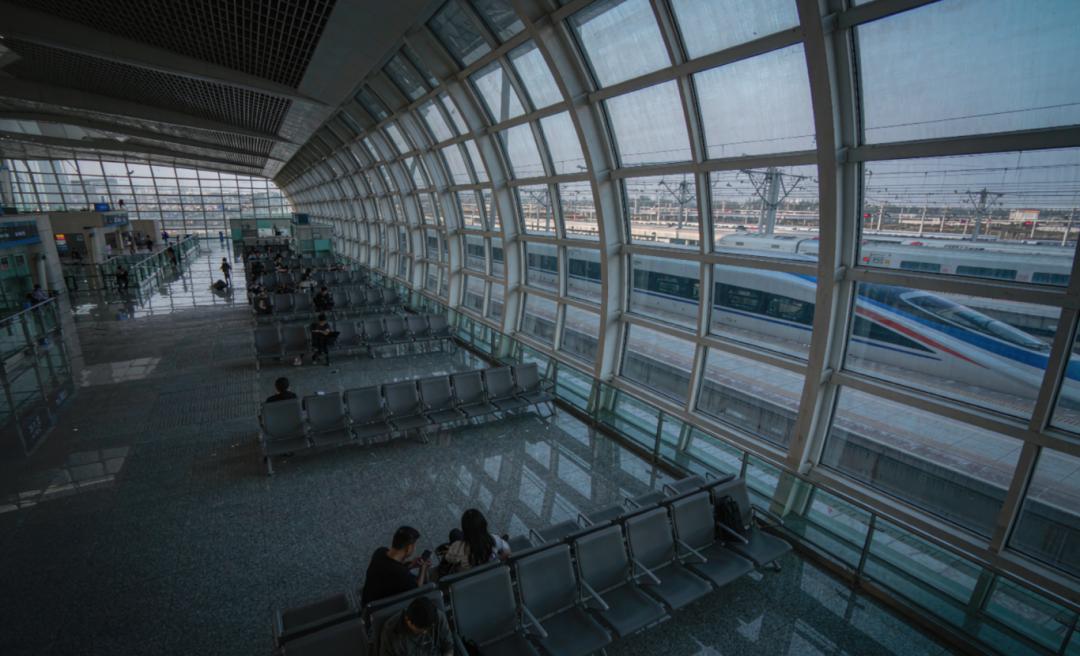
Train tickets are Tongcheng's core traffic pool. In February 2026, the Beijing Municipal Administration for Market Regulation interviewed 12 online train ticket sales platforms including Tongcheng, requiring them to fully remove misleading promotions such as "speed-up package", "dual channel" and "remaining ticket monitoring"; in April, the Cyberspace Administration of China and the National Railway Administration jointly interviewed 7 platforms including Tongcheng, pointing out that automated high-frequency ticket snatching threatens the security of the 12306 system; on June 11, the State Administration for Market Regulation and other departments once again required rectification targeting functions such as waiting-list ticket snatching and paid seat selection. Three rounds of tightened regulation within one year have continuously compressed Tongcheng's most familiar C-end monetization path.
As a result, almost all the growth burden falls on the accommodation business. In the first half of the year, Tongcheng's accommodation booking revenue reached 2.845 billion yuan, up 11.1% year on year; its other business revenue including hotel management hit 1.987 billion yuan, up 46.3% year on year, far exceeding the overall revenue growth rate of 10.5%. As of the end of June, eLong Hotel Technology and the hotel brands under Wanda Hotels & Resorts have more than 3,500 operating hotels and over 2,000 hotels under preparation, and the management has positioned hotel management as the "second growth engine".
In the first half of the year, the combined revenue of transportation ticketing and accommodation booking reached 6.807 billion yuan, while the revenue of other businesses was only 1.987 billion yuan, with a huge gap in scale. Besides, Tongcheng has never separately disclosed the revenue and profit of its hotel management business, which is not yet strong enough to support the whole business system of Tongcheng.
In addition, another acquisition that started in the first half of the year and completed its offer in August is also not optimistic: Dida Travel, which was acquired by Tongcheng for HK$1.424 billion, posted a revenue of 502 million yuan in 2025, down 36.2% year on year, and its carpooling orders dropped from 119 million in 2024 to 76.5 million in 2025.
Passing on Pressure: How Pressure Flows from Users to Merchants
According to incomplete statistics from the Maitour Institute, more than 3,500 new hotels and over 316,000 new hotel rooms were added nationwide in the first half of 2026; data from China Tourism Hotel Association shows that the online booking index of the accommodation industry in July increased by 10.1% year on year, while the average hotel price index decreased by 5.9% year on year. With growing orders and falling hotel prices, hotels in the middle can only accept the terms set by platforms to obtain traffic.
On March 23, 2026, multiple departments of Beijing jointly interviewed 12 platforms including Tongcheng, carried out special administrative guidance targeting "involution-style competition", and publicly notified a number of common risks existing in the online travel and hotel industry: including including merchants in promotions without their consent, monitoring merchants with technical means to require the lowest price across the network, and increasing merchants' operating burden by means of traffic restriction, clearly drawing compliance red lines for all platforms.
Data from Yunnan Tourism Homestay Industry Association shows that platform commission has been unilaterally raised from 8% to 10% a few years ago to 12% to 18%; He Shuangquan, president of the association, publicly stated that the comprehensive commission rate of some online travel platforms is as high as 30% to 40%; an investigation conducted by Legal Online under *Legal Daily* in February this year also showed that after adding implicit promotion fees, the comprehensive cost ratio of some homestays is close to 40%. It should be noted that this set of data comes from the association's statistics on member complaints, reflecting the overall situation of homestay operators facing channel parties, and cannot be directly converted into the actual commission rate of any single platform.

When incremental market disappears, raising the monetization rate by one or two percentage points is far easier than finding a new growth curve from scratch.
The same logic also applies to consumers. In August 2021, CNR exposed that a consumer booked an air ticket through the Tongcheng Travel App, with an actual payment of 4264 yuan but the ticket price marked on the ticket was only 2190 yuan. The trick was that the agent changed the ticket to a lower-priced one of the same flight before takeoff to earn the price difference, and Tongcheng even issued point rewards to such agents. Tongcheng responded at that time that it would "seriously deal with the agents that violated relevant regulations". Data from Tianyancha shows that in 2018, the Jiangsu Consumers' Protection Committee also interviewed Tongcheng Network Technology Co., Ltd. on the issue of air ticket refund and rescheduling in the civil aviation industry.
Five years later, similar issues still exist: in March 2026, media investigation found that a consumer selected a 613-yuan air ticket marked as "lowest price preferred", but the price was raised to 757 yuan at the payment page, which included a 44-yuan "flight protection package" bundled by default, and the consumer was told the ticket had been issued when trying to cancel the package. A loophole that allows suppliers to make continuous profits and cannot be blocked by the platform for five years can hardly be explained as an "individual case".
From the perspective of industry analysis, we can sort out such a deduction logic: The growth pressure brought by financial reports easily leads to radical operation on the business side, which accumulates complaints from merchants and consumers. Against the background of this special rectification of "involution-style competition" among platforms, relevant clues push the regulatory authorities to launch the investigation filing.
Backfire: Regulation Rewrites the Profit Formula
The cost of rectification will first affect short-term performance. Once the lowest price clause, traffic penalty mechanism and forced price adjustment tools are removed, the platform's ability to lock hotel supply will decline significantly, and part of the room nights obtained in the past by virtue of price advantage and traffic distribution will be taken away by competitors with stronger pricing power. The growth rate of accommodation booking has dropped to 11.1% in the first half of the year, and this only growth engine will most likely slow down after rectification, with the commission rate hardly rising any further.
The medium-term pressure comes from costs. Transparent algorithm, reconstruction of merchant rules, addition of appeal and manual review all require huge capital investment; the price adjustment that was automatically completed by machines in the past now needs manual judgment. Tongcheng's gross profit margin in the second quarter was 66.7%, up 1.7 percentage points year on year, a large part of which came from the rising proportion of high-margin hotel management business. Once the expansion of hotel management slows down due to integration and the compliance cost rises synchronously, the profit margin will be squeezed from both sides.
There are two other things that will expire around the same time. The newly revised *Anti-Unfair Competition Law* has been implemented since October 15, 2025, with penalties divided into different tiers according to the type of violation: for acts such as online unfair competition and abuse of dominant position, the maximum fine for serious cases ranges from 1 million yuan to 5 million yuan, and for platforms forcing operators on the platform to sell products below cost, the maximum fine is 2 million yuan; the *Rules on Price Behavior of Internet Platforms* implemented on April 10, 2026 explicitly prohibits differential pricing based on consumers' willingness to pay and payment capacity, and violators will be investigated and punished by market regulation departments in accordance with laws such as the *Price Law*. The fines Tongcheng paid in the past were at the level of 50,000 yuan, but now it is facing a completely different magnitude of penalties.
In addition, the *Strategic Cooperation and Marketing Promotion Framework Agreement* between Tongcheng and Tencent will expire on July 31, 2027. The announcement mentions that both parties intend to continue the cooperation, but the subsequent renewal plan has not been publicly disclosed yet. According to data from QuestMobile, 94.4% of Tongcheng's 218 million users in December 2024 came from WeChat Mini Programs.
And the most promising card in Tongcheng's hand is only the hotel management business, a light asset business: it has more than 3,500 operating hotels and over 2,000 hotels under preparation. However, hotel management is a business that focuses on operation and develops slowly. Its brand system, membership system and single-store operation model all need time to polish, and it is difficult to fill the gap left by the transportation ticketing business within three to five quarters.
The extensive growth model adopted by some platforms in the past that relied on locking supply, binding the lowest price and algorithm-based traffic distribution has been institutionally blocked. Tongcheng must complete the replacement of the second growth curve faster than originally planned, and its core competitiveness must shift from traffic competition to merchant empowerment, supply chain efficiency and service experience. The dilemma of Tong Travel triggered the motivation of violations, the violations led to regulatory investigation, and the rectification ended the old profit model, forcing a new round of transformation. The dilemma is the root cause, the violation is the appearance, the investigation is the consequence, and transformation is the way out.
This article is from WeChat Official Account "Deep Dive Atom" (ID: deepatom), written by Sun Feifan, and released with authorization from 36Kr.