Have domestic flagship smartphones been disrupted by Apple once again?
Apple's long-standing mindshare dividend remains. In this context, while flagship domestic smartphones have been consistently striving to make breakthroughs in product definition, they may continue to face sustained pressure against Apple's strong market presence and high public visibility. It remains an open question when the market will reach a tipping point between Apple's iPhones and domestic flagship models.
This fall, a highly contrasting and peculiar phenomenon is unfolding in the high-end mobile phone market.
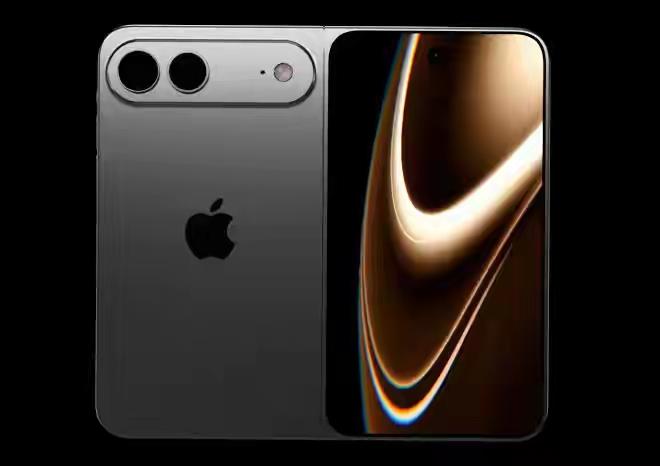
The presale of iPhone 18 Pro fell below the official guide price, the scalper premium was cut by half, and the market sentiment in distribution channels loosened. The "annual profit-guaranteed myth" of Apple's bar-shaped flagship has cracked for the first time. On the other hand, Apple's foldable iPhone Duo, which is far from perfect in hardware and immature in mass production, has received millions of reservations as soon as it was exposed, forcibly breaking into the foldable track that domestic brands have cultivated for many years.
However, compared with the heated discussions around new iPhone models launched by self-media, offline stores and social platforms every September, the popularity of recent press conferences of domestic brands such as Honor, vivo and OPPO has not changed much.
Doubts have arisen accordingly. In the era of AI phones, Apple, whose products do not have superior parameters, are not fully functional and have low yield rates, still seems to have a high-profile public opinion halo, absolute say in subverting industry pricing and reshaping user mindsets. In contrast, domestic flagships have continued to make breakthroughs in foldable iteration, on-device AI and system agents, with their hardware capabilities catching up significantly, yet they still have to face the pressure from Apple, the established industry leader.
Through sorting out and research, Liujiu Business Review tries to explore the core game in the current mobile phone industry: if domestic mobile phones fully march into the new track of AI agents, can Apple still rely on its stock ecosystem mindshare to continuously capture the high-end market? Why can the "imperfect" Apple always accurately suppress the upward breakthrough of domestic high-end products?
Further speaking, will there be a day when the tipping point of strength between Apple and domestic flagships arrives?
01 Apple Moves Toward Differentiation, Domestic Flagships Align and Focus
When talking about Apple many years ago, the main line was quite simple: high premium, single product category.
However, the market performance of Apple's new products in 2026 shows an unprecedented polarization trend, with the two product lines moving in completely opposite directions, which has disrupted the competition rhythm of the high-end mobile phone market this year to a certain extent.
First, the long-standing high premium of bar-shaped flagships has collapsed. Over the past few years, from iPhone 14 to iPhone 17, the launch of new Apple models has always been the most stable profit-making project in the 3C distribution channel circle. Every generation of new models will see the norm of out-of-stock across the whole network, offline queuing, and scalpers hoarding goods for premium. A large amount of channel funds are specially bet on the launch market of new Apple products, and the premium of new phones is a recognized deterministic income in the industry.
But the iPhone 18 Pro series this year has broken this convention. Liujiu Business Review found through research from two aspects:
In terms of online media, according to tracking reports from many 3C industry channel media, the scalper group was extremely cautious as a whole during this year's launch period, and some people did not dare to stock up on a large scale. There is an obvious gap in model premium: in some places, the scalper premium for the top version of iPhone 18 Pro has shrunk by nearly half compared with last year, and in other places, the premium of iPhone 18 Pro Max dropped rapidly after launch, and many channel merchants even said bluntly that "the price drop speed exceeded expectations". A media report said that this year scalpers do not accept the iPhone 18 Pro at all, only take the larger Pro Max, and the price increase has also shrunk to 200-300 yuan, or 300-500 yuan in some places.
Offline, we visited an Apple store in Guanyinqiao, Chongqing and found that there was an endless stream of people queuing up to pick up new products, there was no stock on site, and some people even picked up nearly 10 units outside the store.

Jefferies, an overseas institution, also found supporting evidence by tracking the pre-sale delivery cycle of new phones in six major markets: the waiting period for new iPhone 18 Pro and Pro Max models has been significantly shortened year-on-year, which indirectly confirms the decline in the popularity of new phone snapping up. The institution also gave Apple an "underperform" rating, with a 12-month target price of 263.66 US dollars, judging that there is room for downside in the current stock price.
The new feature found in the above comprehensive research is that, different from the uniformly hot market across the whole network in previous years, Apple's new bar-shaped phones this year show strong differentiation in regions, channels and models: the passenger flow in some offline stores is stable, and the popularity gap between different versions is huge, marking the end of the "unified premium myth" of Apple's bar-shaped flagships.
Moreover, forming an extreme contrast with the cold reception of bar-shaped phones, is the sky-high popularity of Apple's foldable iPhone Duo.
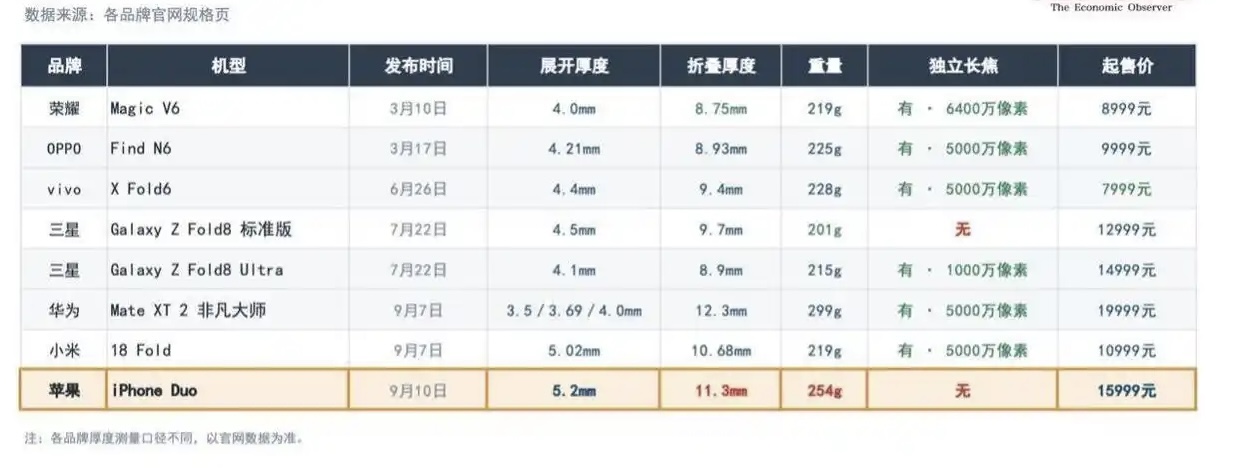
This so-called "immature product" has received millions of reservations, but its hardware configuration has not taken the overall lead in the industry. Reports say that Apple's foldable phone cannot compete for any "first in parameter", and the body thickness, weight, crease control and telephoto configuration of iPhone Duo are inferior to domestic foldable flagships.
For example, the Duo is equipped with a 48-megapixel main camera and ultra-wide-angle lens, but does not have the independent telephoto and variable aperture of the Pro series. The crease has not been completely eliminated as rumored. As a foldable phone, it is priced at 10,000 yuan. The iPhone Duo has a folded thickness of 11.3mm, which is the thickest among the 7 dual-fold devices, only slightly thinner than the Huawei Mate XT 2 with an extra screen. It weighs 254g, the heaviest among dual-fold phones, 53g heavier than the lightest one.
Even in terms of product quality, on September 17, a reporter from Jiemian News exclusively learned from people close to Foxconn's industrial chain that the current overall yield of iPhone Duo assembled by Foxconn is only over 60%, and the output of the first batch is relatively small.
According to Apple's strict factory quality inspection standards, this model still needs half a year to a year of continuous polishing and optimization to reach a mature and stable mass production state.
Even such a foldable product with obvious hardware shortcomings, unstable quality control and belonging to a semi-finished product in the industry, still has a high-end price of 10,000 yuan. In contrast, domestic foldable phones that have undergone five generations of iteration have mature technology, stable quality control and complete functions, and generally adopt the market strategy of low starting price and mass popularization this year.
This creates an interesting contrast: mature domestic foldable phones are often sold at reduced prices to boost volume, while Apple's semi-finished foldable products are sold at a premium. Has the foldable phone evaluation system of "parameters mean everything, iteration means advantage" that domestic manufacturers have worked hard to build in the past three years been subverted by Apple overnight?
However, while Apple is diverging in two directions and using its strong brand strength to offset the hardware gap, domestic flagships have completed a collective shift in track direction. Since 2026, the competition in the mobile phone industry has completely bid farewell to the involution of hardware parameters, and the comprehensive capabilities of AI systems and agents have become the only focus of flagship competition.
In the second half of this year, Honor, vivo and OPPO held intensive developer conferences, and the three mainstream domestic systems MagicOS 11, OriginOS 7 and ColorOS 17 completed major version upgrades simultaneously. Coupled with the newly released Nubia second-generation Doubao phone, the core goals of all parties are highly unified: to realize the commercial implementation of Agent intelligent bodies.
During this year's Shanghai World Artificial Intelligence Conference, many manufacturers including Honor, Nubia and Stepfun released new agent mobile phone solutions at the same time, and each put forward the product positioning of "the world's first AI agent mobile phone". Many manufacturers have concentrated on releasing products with the same concept, which directly confirms that the current AI mobile phone track is still in the early stage of scuffle, with undetermined industry standards and undefined definition rights.
So far, the new competitive characteristics of the two major camps in the industry are increasingly clear: Apple relies on its stock to stabilize the basic market, and even if new category products are not perfect, it still has market pricing power; domestic flagships abandon traditional hardware involution, and look for new breakthrough windows through rapid technology iteration, AI system evolution and scenario innovation.
Against this background, the collision between Apple's stock mindshare dividend and domestic incremental technological breakthroughs constitutes the most core industry change in the high-end mobile phone market this year, and the real key to victory for both sides lies in the in-depth game between user mindshare and ecological barriers.
02 iOS Ecosystem Legacy Mindshare Dividend VS Evolving Agent Capability
The completely different market performance of Apple and domestic flagships essentially comes from two completely separated consumer decision-making logics, which is also the mindshare barrier that is most difficult for domestic AI innovation to break through at present.
For old Apple users and other high-end groups, the first consideration when choosing foldable products is not necessarily whether the hardware parameters are extreme, but whether they need to break away from the complete iOS ecosystem. A large number of high-end stock users have long been deeply bound to Apple's full product ecosystem, and accounts, privacy, files and cross-device collaboration have formed a strong usage inertia.
This has created an extremely unfair two-way evaluation standard: the market has a high degree of tolerance for Apple products and is willing to pay for its imperfections. Even if the iPhone Duo has obvious creases, reduced configurations and unstable mass production, users are still willing to pay for Apple's brand, system fluency and ecological consistency, and accept the iteration defects of new products.
However, domestic foldable flagships often seem to be in a "zero-tolerance" public opinion environment. Often, a backward parameter or a detail shortboard will be magnified infinitely and continuously criticized, and it is difficult to get users' tolerance for iteration, which is evidenced by the fact that some brands became hot search topics due to some mistakes in 2026.
The long-term accumulated solidified high-end mindshare allows Apple to easily obtain hardware advantages. For Apple, the mission of iPhone Duo may not be to quickly seize the top spot in foldable phone sales in the short term. As long as the high-end stock users who originally planned to replace their bar-shaped iPhones are willing to upgrade to Apple's foldable models, Apple can complete the internal flow of high-end users and continuously increase the overall average price and profit margin of high-end products.
This kind of mindshare dividend may further reshape the industry pattern of the flagship market.
On the one hand, overall, Counterpoint's *Global Mobile Model Sales Tracking* shows that in the second quarter of 2026, the previous-generation iPhone 17 is still the top-selling model in the world, and the Pro versions occupy the second and third places. Old models still support Apple's overall market, and part of the growth expectation has been moved to the spring of next year. On the other hand, in terms of flagships specifically, according to Counterpoint's latest industry shipment forecast, the shipment volume of iPhone Duo in its first year of listing will directly rank second in the world, which may break the industry pattern where domestic manufacturers have long monopolized the high-end foldable market.
At the same time, well-known tech journalist Mark Gurman also publicly stated that iPhone has rapidly increased its share in the smartphone market from 6% to the main force of the industry in just 6 years. The entry of iPhone Duo will directly promote foldable screens to become the mainstream form of smartphones in the future. This means that with the continuous release of the iPhone 18 series, the domestic high-end market above 6,000 yuan will face the pressure of user return this year.
What is thought-provoking for the industry is that in the past two years, domestic mobile phone manufacturers were the first in the world to develop on-device AI, private domain AI and scenario intelligence, and took the lead in getting a nearly half-year window of industry first-mover advantage. Major brands have intensively implemented AI large models, agent interaction and scenario-based services, trying to rely on new AI functions to break hardware involution, increase the premium of domestic high-end models, and create new differentiated advantages.
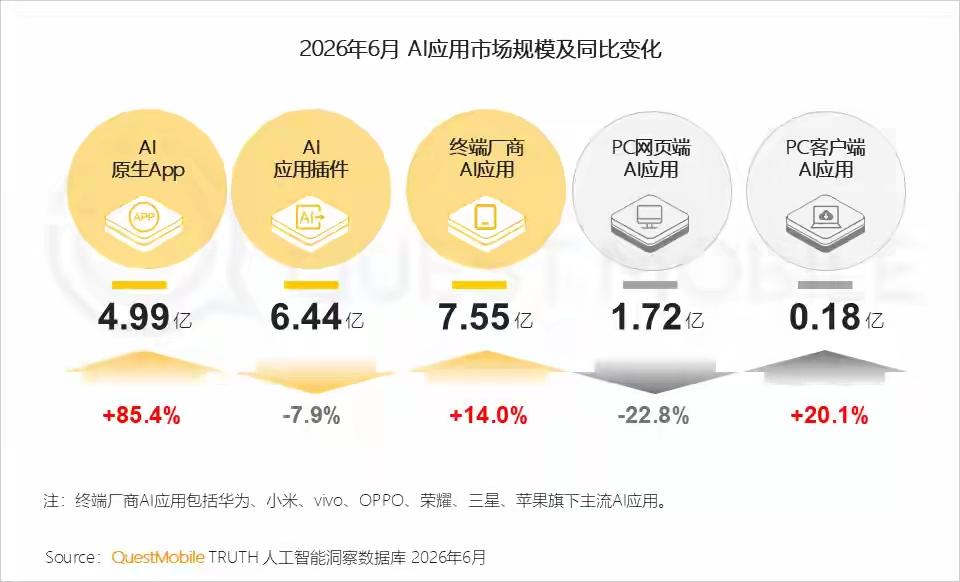
However, QuestMobile's 2026 July AI Application Semi-Annual Report presents a worrying reality: in June 2026, the monthly active users of built-in AI applications of terminal manufacturers reached 755 million, a year-on-year increase of 14.0%; the monthly active users of AI-native apps reached 499 million, a year-on-year surge of 85.4%. This set of data indirectly shows that users do not necessarily need to buy new phones to obtain AI capabilities, which casts a layer of uncertainty on the logic that domestic AI phones drive phone replacement by AI.
But Apple hardly did extensive AI concept marketing, and only relying on its extreme system fluency, leading privacy compliance and unified cross-device experience, took the lead in market momentum, which is indeed unfair.
A large number of high-end users who were originally attracted by domestic AI innovation and unwilling to break away from the iOS ecosystem are now firmly locked by Apple's new products. The AI price increase logic and innovation breakthrough path that domestic manufacturers have worked hard to build are under the pressure of Apple's ecosystem.
A sharp contrast has formed in the current industry: domestic manufacturers are doing their utmost to iterate visible, perceptible and propagandable AI Agent innovations, while Apple continues to enjoy the invisible but inseparable iOS ecosystem mindshare dividend. The evolution speed of domestic AI is very fast, but whether it can be truly transformed into market sales and user stickiness remains to be tested by the market.
This game between mindshare dividend and technological evolution ultimately determines whether domestic high-end products can truly get rid of involution, and also makes the ultimate competitive barrier of the industry completely clear.
03 Surpassing Competitors and Giving Users Reasons to Replace Phones Remain Two Must-Answer Questions
The upward breakthrough of domestic mobile phones is not a proposition that has only been launched this year. More than ten years ago, Huawei's breakthroughs in chips and operating systems have proved to the industry that domestic flagships are fully capable of catching up, benchmarking, and even partially surpassing Apple in core technologies.
But in the current 2026, the industry's predicament has become more complicated.
<