Hikvision, restoring old items to like-new condition
Hikvision, known as the "Moutai of the security industry", was once a rising small player with huge potential.
In the golden era when China was advancing large-scale urbanization and public security infrastructure was in urgent need of improvement, Hikvision quickly grew into a leading security enterprise with a market value of hundreds of billions of yuan, relying on its cost control of self-developed core components and precise penetration into local channels.
In 2021, the company's annual revenue growth rate still reached 28%, making it one of the most sought-after core assets on the A-share market. However, in the following years, its performance began to fluctuate and decline: changes in the macro environment represented by black swan events led to tightened financial budgets of key customers, which curbed the growth of the entire security market, and the growth story showed obvious signs of fatigue.
By 2025, the company's total annual revenue hit 925.08 billion yuan, with a year-on-year increase of only 0.01%.
During this period, traditional manufacturers including Dahua and Uniview, as well as AI unicorns such as SenseTime, Megvii and leading internet companies entered the market one after another. However, due to the inherent fragmented and customized characteristics of the security industry, no competitor has ever really shaken Hikvision's basic market.
With rivals failing to make breakthroughs and the whole industry seeing stagnant growth, Hikvision stayed out of the spotlight for several years.
The turning point for Hikvision to return to the growth track did not appear until the rise of multimodal large models and Physical AI. When artificial intelligence is no longer limited to text dialogue on the screen, but needs to perceive, understand and intervene in the physical world, this enterprise rooted in the real world with more than 10,000 hardware models has found a new path to future development.
According to Hikvision's 2026 semi-annual report, the company achieved a total operating revenue of 46.823 billion yuan in the first half of the year, a year-on-year increase of 11.97%; the net profit attributable to owners of the parent company reached 7.896 billion yuan, a substantial year-on-year increase of 39.57%, and the profit growth rate was more than three times the revenue growth rate. The overall gross profit margin even rose to 49.97%, hitting a new high in recent years.
At the performance briefing, the company publicly released its full-year guidance of "breaking 100 billion yuan in revenue and hitting a new high in profit". However, both its advantages and constraints often come from the same source.
Breakthroughs in multimodal technology allow software to be upgraded rapidly on the cloud, but for customers to truly use these capabilities, they still need to add computing nodes, adjust lens angles, renovate edge devices, and rearrange corresponding budgets. Hikvision can pass on part of the hardware price increase to downstream clients, but the deployment cost borne by customers will not disappear accordingly.
After all, the value brought by multimodal technology has to be realized in the real physical world.
I. "Re-reading" the Physical World
The benefits of being rooted in the physical world are obvious. In this round of multimodal wave, the iterative upgrade of software can be quickly verified and demonstrated across Hikvision's huge product matrix.
In the past, the core task of video surveillance was "recording": storing massive video footage in hard disks for manual spot checks after incidents. Supported by multimodal large models, Hikvision is trying to achieve the leap from "post-event response" to "real-time response" through two types of core applications.
From a technical perspective, compared with the previous language models, multimodal models add the image dimension to the understanding of things. When AI can "read" the footage in real-time surveillance and understand the complex information inside, it can make real-time responses according to pre-set rules.
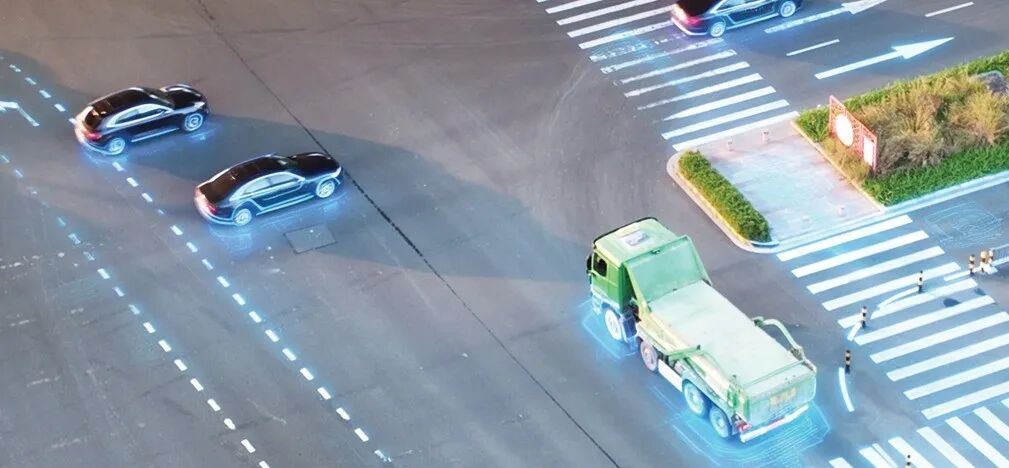
This "reading" capability has been first implemented in complex industrial and production sites.
The AI supervision in the traditional security era can be regarded as "static recognition", such as identifying workers' faces, muck trucks and protective suits. To achieve more fine-grained recognition, such as the position of the safety belt hook during high-altitude operation and whether there is a grounding wire when opening a valve, enterprises need to collect tens of thousands of images separately for each extremely segmented and rare scenario to carry out training and development.
The intervention of multimodal technology has changed this logic, enabling the model to analyze actions, positional relationships and contextual scenario conditions. A relevant insider told Yinxing Technology that multimodal technology can not only identify the hook, but also directly judge whether "the relative position between the hook and the person" complies with regulations through cross-verification of vision and text.
The improvement of capabilities is not only reflected in the on-site operation supervision, but also on the cost side: after the introduction of multimodal technology, the algorithm's dependence on training data is greatly reduced, and the algorithm implementation cycle is also greatly shortened.
When the real-time risks at the operation site are converted into computable data streams, video surveillance naturally extends to the next link. The "text search" function launched by Hikvision is an intuitive use case.
As a leading security enterprise, the cameras sold by Hikvision are recording and transmitting video streams to the storage center almost all the time. These video contents stored on the cloud or locally are all "dead data" lying in the storage system as long as no corresponding security incident occurs. To make these videos "come alive", users can only search mechanically according to identifiable conditions, or manually drag the progress bar frame by frame.
The function of text search is to complete cross-camera and cross-time period footage retrieval and spatiotemporal correlation through cross-matching of text vectors and image probabilities.
It can be seen that what multimodal technology really amplifies is not a single point algorithm, but the use value of Hikvision's existing equipment and data. These technological breakthroughs seem to depict a blueprint for Hikvision to achieve high-margin software breakthroughs, but if we look back at the actual scale of the physical world, its connection with high growth seems not strong enough.
Taking text search as an example, Yinxing Technology learned that the annual shipment volume of this product is about 100,000 units. The performance of this single product is quite impressive at its launch, but for Hikvision's huge annual hardware shipment base of tens of millions of units, the penetration scale of 100,000 units is no different from throwing a small stone into a lake in the overall market.
More importantly, the rebound of Hikvision's gross profit margin to 49.97% in the first half of 2026 cannot be entirely attributed to the pure premium of software. Over the past year, prices of global memory and upstream components have fluctuated drastically. Relying on its supply chain scale and pricing power, Hikvision has launched multiple rounds of hardware price adjustments for downstream customers.
The technical realization of software and the cost transmission caused by the price increase of upstream components converge at the terminal price. After all, the software transformation brought by multimodal technology cannot be separated from the cycle and law of the hardware carriers in the physical world.
II. The Other Side of the Coin
Every coin has two sides. For Hikvision, the other side of the software-side upgrade driven by multimodal technology is that the realization of its commercial value is highly dependent on hardware carriers in the physical world.
Taking Hikvision's main business as an example, no matter it is traditional public security or the broader Internet of Things (AIoT), the demands of enterprise customers show high fragmentation and scenario-based characteristics. The complex demands of industry and urban governance allow Hikvision to stabilize its customer base and scale when competitors aggressively attack its hinterland, but also make the new upgraded smart hardware face certain resistance.

The speed of expanding the market cake is limited by customers' willingness to invest. For customers, the commonly used measurement of the cost of adopting multimodal technology is Total Cost of Ownership (TCO): the equipment purchase price is only part of the book cost, followed by construction and wiring, network and storage renovation, subsequent operation and maintenance, and the hidden cost of business shutdown during the replacement period.
Taking Hikvision's own smart IoT products and services as an example, its business covers more than 90 sub-sectors and hundreds of specific scenarios. In 2024, the factory produced 256 million smart IoT products annually, with more than 30,000 hardware models, processing 10,000 orders per day on average, with an average of 40 units per order, and the proportion of customized configuration reached 75%.
Software upgrade means replacing a large number of discrete hardware carriers. Therefore, for customers, new functions must prove that they are worth the extra expenditure. However, in actual scenarios, for customers whose original systems can still meet basic demands, the efficiency improvement brought by multimodal technology is not necessary, so it is difficult to pry open their budgets.
Hikvision's management mentioned in the investor communication in July 2026 that security electronic products have an update cycle of 5 to 8 years. Since the industry adjusted downward in 2021, some products have entered the update period, and AI large models have brought new trending demands. The implied meaning is that the iteration of security software is measured in months, but the update of customer equipment and budget is often measured in years.
In order to cross this long update cycle, Hikvision is trying to lower the threshold for customers from a technical perspective.
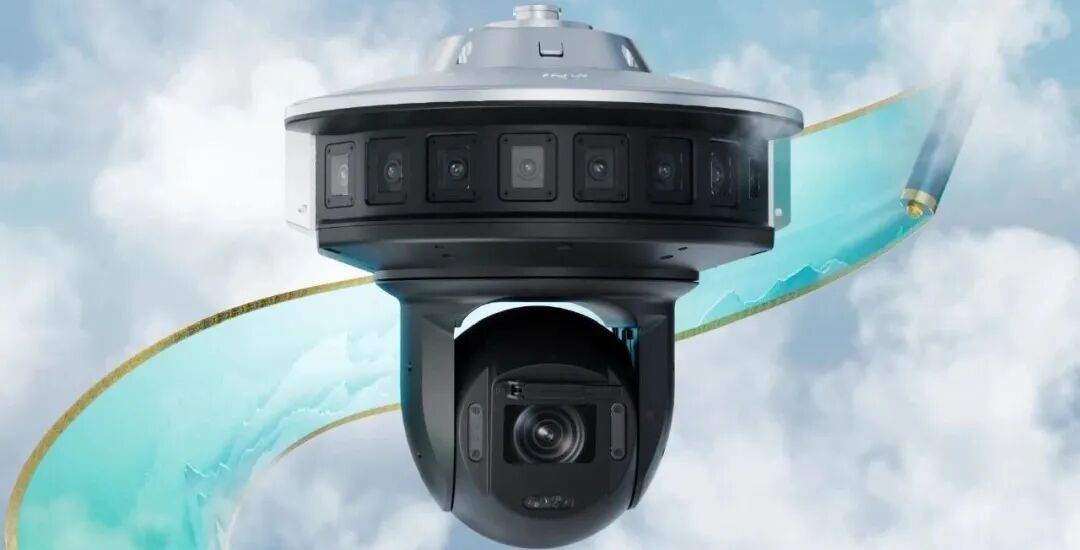
Taking the operation supervision product mentioned earlier as an example, this product was exhibited at this year's WAIC, and its product form is a multimodal smart camera. The device is built with a 26T computing power chip, which can run a 2B parameter local multimodal model, process perception, reasoning and other tasks locally, and interact with the cloud. The "edge-cloud" architecture and computing power allocation reduce the memory occupation of the model and save the transmission bandwidth of massive video streams.
What is more tricky is that when Hikvision tries to calculate costs carefully for customers, the actual supply chain cycle is still increasing the difficulty of the whole cost reduction narrative. Hikvision is not only a solution provider, but also one of the purchasers of storage and electronic components.
Hikvision admitted in the investor communication in July 2026 that the surge in demand for global AI large model computing centers has led to substantial price increases and shortages of storage and electronic components, and the downward transmission of rising costs will inevitably put pressure on market demand.
In order to cope with this round of cycle, Hikvision on the one hand increased the inventory of scarce materials, and promoted Guanlan coding to help users save hard disks, on the other hand, it had to pass part of the cost pressure to the downstream through multiple rounds of product price adjustments.
Therefore, in the first half of 2026, Hikvision's gross profit margin reached 49.97%, up 4.78 percentage points year on year. However, in the same period, the net operating cash flow was only 3.231 billion yuan, down 39.52% year on year, and the inventory increased from 20.472 billion yuan at the beginning of the year to 29.488 billion yuan.
For Hikvision's customers, technology can help them save hard disks, but price increases have raised the entry cost first, which is the most realistic tension in Hikvision's development narrative.
For government customers with tight finances and enterprise customers with cautious capital expenditure, AI is not a conceptual vote of "whether to adopt it or not", but a financial problem that is inseparable from TCO in every aspect.
III. How Innovative Are the New Businesses?
Apart from the "old-for-new" replacement business, Hikvision has already laid out many new businesses that are completely different from traditional security, looking for incremental growth in broader industrial and physical scenarios.
Gruenert Andreas, Logistics Planning Director of BMW Brilliance, said at the Hikvision Robot Intelligent Manufacturing Conference that the incompatibility of AGV scheduling systems of different brands is a barrier to logistics automation. Relying on the scheduling software of Hikvision Robot's open ecosystem, BMW realized the unified and centralized scheduling of 3,700 multi-brand AGVs, and combined with end-to-end process planning to implement "unified control".
It can be seen that Hikvision's software has begun to organize multi-brand and multi-type equipment to work collaboratively. Cameras, mobile robots, robotic arms, sensors, MES and WMS are no longer isolated hardware, but are arranged into a schedulable system by software.
Jia Yonghua, CEO of Hikvision Robot, summarized this direction as "embodied intelligent manufacturing", that is, to enable equipment to understand fragmented scenarios, integrate into production processes, and realize the transformation from "people adapting to machines" to "machines adapting to the environment".
This year is known in the industry as the first year of embodied implementation. Riding the wave of the times, robots have gradually become the benchmark of Hikvision's new businesses. In addition, the well-known new businesses also include Ezviz Network, automotive electronics, thermal imaging and storage.
As early as 2015, Hikvision issued the "Management Measures for Core Employees' Follow-up Investment in Innovative Businesses", established the follow-up investment mechanism for innovative businesses, and built an internal incubation platform, trying to incubate subsidiaries through exploring innovative businesses of the parent company to find new growth poles for its huge scale. This mechanism allowed subsidiaries including Ezviz, Hikvision Micro-vision and Hikvision Robot to emerge one after another.
In 2021, the company clearly positioned its business as "Smart IoT AIoT", emphasizing the use of IoT perception, artificial intelligence and big data technology to serve thousands of industries. In that year, the revenue of innovative businesses reached 12.271 billion yuan, a year-on-year increase of 98.93%. In 2022, Ezviz Network was successfully listed on the Sci-Tech Innovation Board (STAR Market), becoming Hikvision's first listed subsidiary.
Several years later, when the security business showed obvious fatigue, innovative businesses began to really support the growth. In the first half of 2026, Hikvision's innovative business revenue reached 15.170 billion yuan, a year-on-year increase of 28.93%, accounting for 32.40% of the company's total revenue. In the same period, the growth rate of its domestic main business was 4.98%.
However, if we carefully analyze Hikvision's "distributed innovation", it is essentially different from the decentralized innovation understood by the internet industry.
In the follow-up investment configuration document of 2015, Hikvision set the mechanism as "requiring core employees to follow up and invest in various innovative businesses to form a co-creation and co-sharing business platform", and "encouraging core employees of innovative business subsidiaries to participate in follow-up investment in subsidiary projects".
The company evaluates and explores projects uniformly at the corporate level, and then guides the core team to inject capital and energy accordingly. This logic is essentially top-down. To a certain extent, it is still a strongly centralized matrix incubation mode.
In contrast, Tencent, the internet giant, is a veteran player of real "distributed innovation", which allows edge teams to grow wildly from bottom to top without setting KPIs in advance. After the product shows growth momentum in the market, the group completes the "follow-up investment" through resource tilt or strategic investment.
The recently popular WorkBuddy is a typical example. It was developed by Wang Shengjie, a product manager of Tencent Cloud, based on the technical accumulation of CodeBuddy, together with several colleagues, who completed the first version on a weekend without going through the traditional project approval process.
The difference between centralization and decentralization is that the latter is spontaneous, less constrained and more creative, while the former may still be limited by old businesses, old channels and old experiences, and it is difficult to completely jump out of the inherent framework.
Ref