Victoria's Secret Returns to Huaihai Road in Shanghai, Enters the Store Expansion Phase in the Chinese Market | Frontline
On September 25, the Victoria's Secret (hereinafter referred to as VS) Huaihai Flagship Store in Shanghai officially opened. This is a re-layout of offline physical stores for VS on the 10th anniversary of its operation in the Chinese market.
The new store is located on the first floor of Longfeng PRSCO at the intersection of Middle Huaihai Road and Ruijin Road. In 2017, VS opened its first flagship store in China on Huaihai Road. Ten years later, the brand once again chose Huaihai Road as the location of its flagship store, but this time, both the positioning and spatial form of the store have undergone changes.
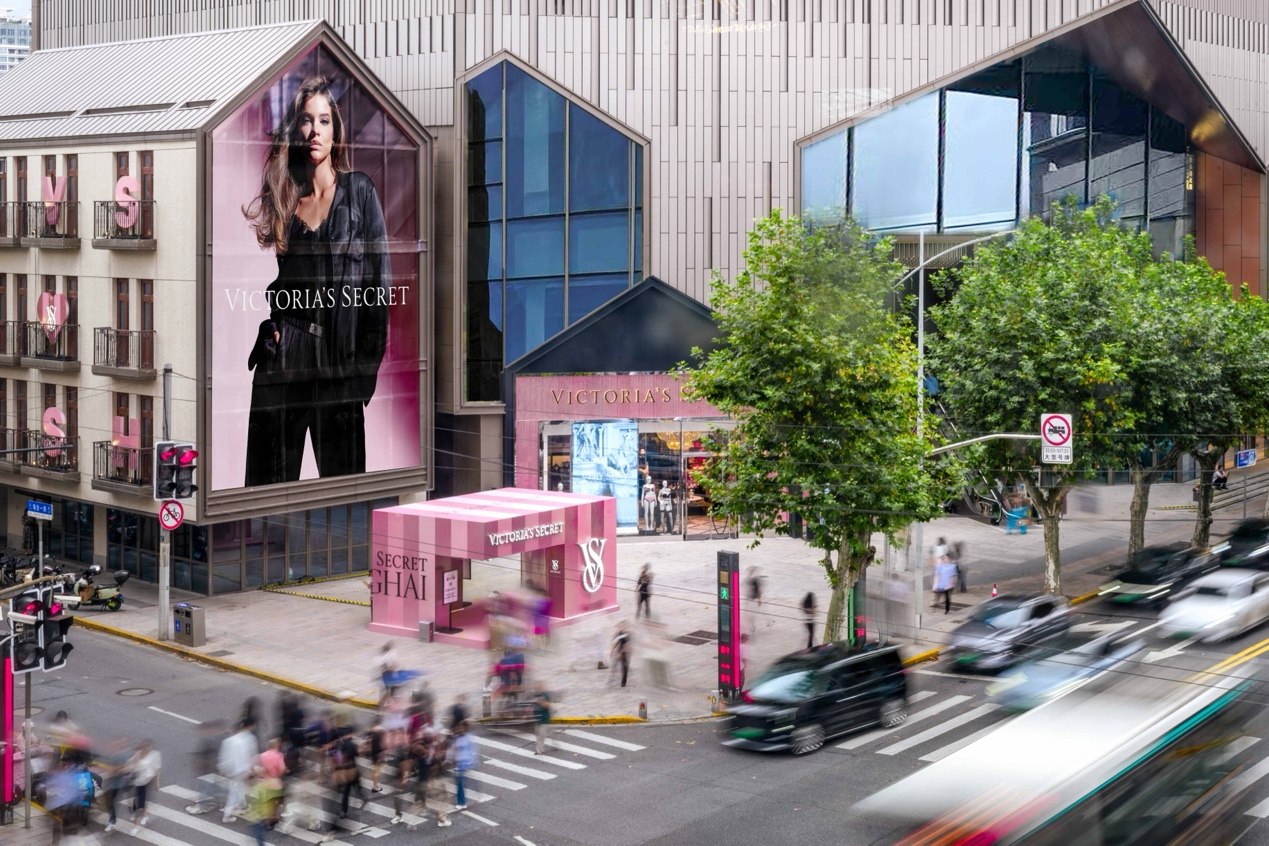
The brand new VS China flagship store "Shanghai Huaihai Flagship Store" is unveiled
Compared with past stores that focused on the lingerie category, the new flagship store covers a wider range of products, including lingerie, loungewear, sportswear, perfume and body care products. The store is also equipped with a dedicated fragrance and beauty area, as well as professional size measurement services.
In terms of spatial design, the new store continues VS's iconic pink visual identity, but does not completely copy the design of overseas stores. The facade of the store uses large-area floor-to-ceiling glass and LED screens, while the interior incorporates elements of Shanghai's urban architecture, and enhances the visual effect through digital images, window displays and lighting. Product displays are also re-divided according to different categories, so that consumers can purchase everything from lingerie to fragrance and body care products in the same store.
This is also part of VS's adjustment of its offline retail model in recent years.
In the past few years, VS has been readjusting its brand positioning on a global scale. Compared with the previous brand strategy that relied heavily on the "Victoria's Secret Fashion Show" and the sexy lingerie image, today's VS has begun to expand its product scope, and incorporated sportswear, daily wear, beauty and body care into its retail system. Stores in the Chinese market are also adding product categories and consumption scenarios simultaneously.
This change takes place at the stage when VS China is accelerating its store opening pace.
In the past two years, the number of VS's offline stores in China has increased significantly. At present, the brand has entered cities including Beijing, Shanghai, Guangzhou, Shenzhen and Hangzhou, and is also expanding to regional consumption center cities such as Qingdao, Hefei, Nanchang, Harbin, Lanzhou, Guiyang and Dalian. It is estimated that the number of stores will reach more than 70 by the end of this year, and new cities such as Wuxi will be covered in October.
Different from the early layout that mainly focused on core business districts in first-tier cities, VS's store opening scope is now expanding. At the same time, the brand does not fully rely on large-scale store expansion, but pays more attention to the performance of business districts and individual stores. Some stores have achieved double-digit year-on-year sales growth, and some have even refreshed their sales records since opening.
This means that VS's offline strategy in China is shifting from "entering more cities" to a mode that takes into account both city coverage and single-store efficiency. For lingerie brands, physical stores not only undertake sales functions, but also provide services such as size measurement, fitting and brand experience. Therefore, stores in core business districts are still important channels for brands to reach consumers.
The re-opening of the Shanghai Huaihai Flagship Store is also related to the recovery of VS's global business in recent years.
According to VS's latest released financial report for the second quarter of 2026, the company's net sales in the quarter reached 1.611 billion US dollars, a year-on-year increase of 10%. In previous performance communications, Hillary Super, Global CEO of VS, also regarded the Chinese market as one of the important growth markets for its international business.
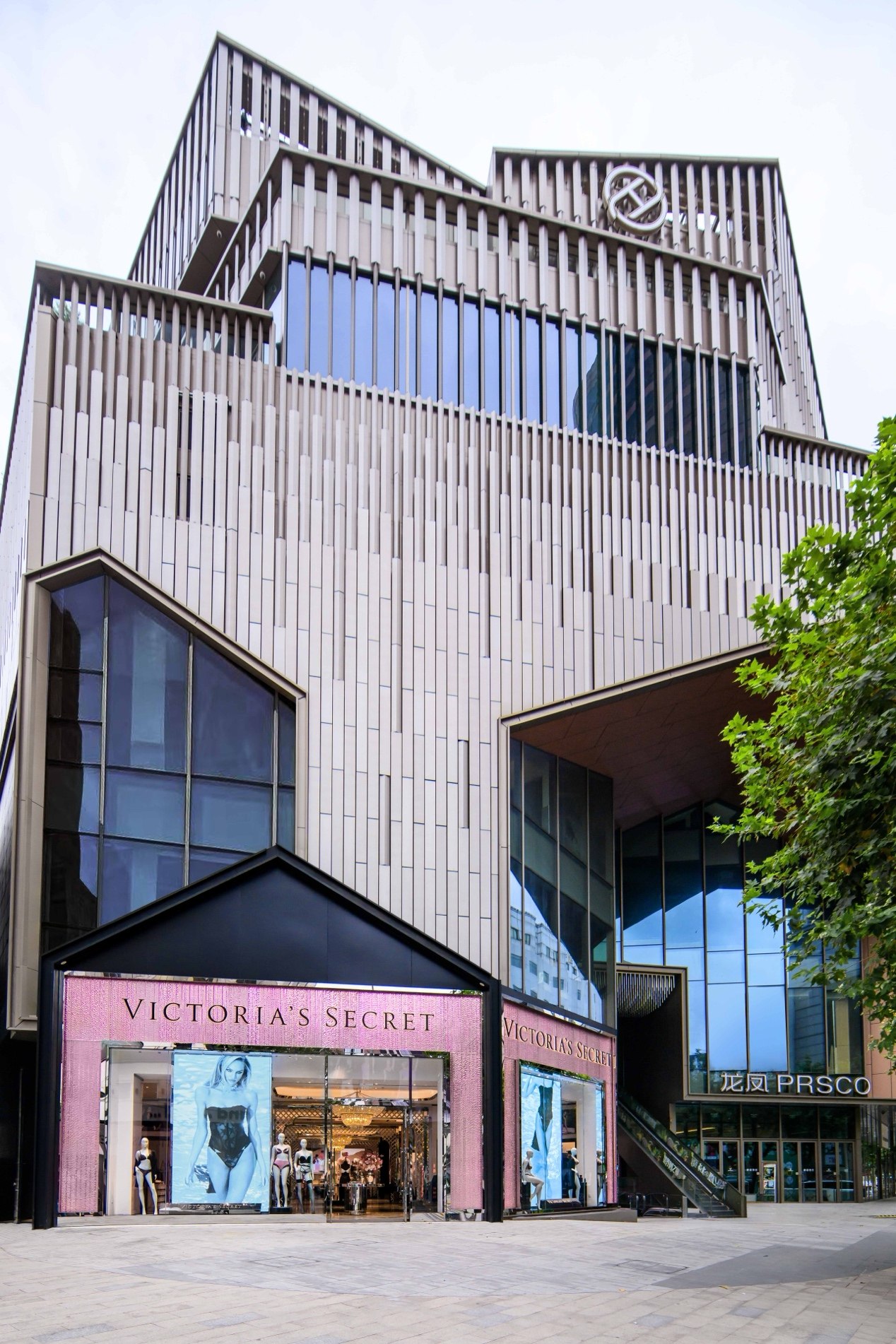
The Shanghai Huaihai Flagship Store of VS is located in Longfeng PRSCO
For VS, which has been operating in the Chinese market for 10 years, Shanghai is still a representative market in its offline layout. On the one hand, Shanghai has mature commercial real estate and fashion-consuming groups; on the other hand, Huaihai Road itself is a commercial block with a high concentration of international brands. Re-opening a flagship store here is more like a concentrated display of the brand's image and retail model, rather than simply adding a new store.
From a longer-term perspective, VS in the Chinese market has gone through a process from rapid entry and store expansion to re-adjustment of brand positioning. Around 2017, VS once quickly expanded its popularity with the help of large stores and the effect of brand fashion shows, but with the change of consumer demand and the rise of online channels, the attractiveness of the traditional large-store model has declined.
When expanding offline stores again now, what VS needs to solve is no longer just "where to open stores", but how to make stores undertake more functions: selling not only lingerie, but also sportswear and fragrance; not only completing transactions, but also providing services such as size measurement and fitting; not only serving mature consumers in first-tier cities, but also entering more regional markets.
The Shanghai Huaihai Flagship Store is actually a concentrated embodiment of this change. It retains VS's strong visual recognition, and at the same time expands products and consumption scenarios. As the number of stores in China continues to increase, whether this new store model can be replicated in different cities and whether the single-store efficiency can be maintained after store expansion will be the issues that VS needs to face in the next stage in the Chinese market.
For VS, the next decade of the Chinese market will no longer rely solely on one or two iconic flagship stores to gain attention, but how to combine flagship stores, regional stores and sales of different categories to form a continuously operating retail network.