Is Tesla the savior of Robotaxi?
Low cost is only the first hurdle.
Author | Jin Yufan
Editor | Wei Jia
In early September, Tesla Cybercab has begun operating paid passenger services in Austin, USA.
As of September 3, Tesla has registered 420 autonomous driving vehicles in Texas, including 45 Cybercab units, and the rest are mainly Model Y. Cybercab currently only operates in partial areas of Austin with a limited scale.
According to statistics from Huaxing Securities based on app and user feedback, Cybercab trips covering 3 to 8 miles are currently priced at approximately $1.5 to $2 per mile with dynamic pricing rules applied.
Two weeks later, this vehicle was put on static display at the Tesla Experience Store in Beijing China World Mall.
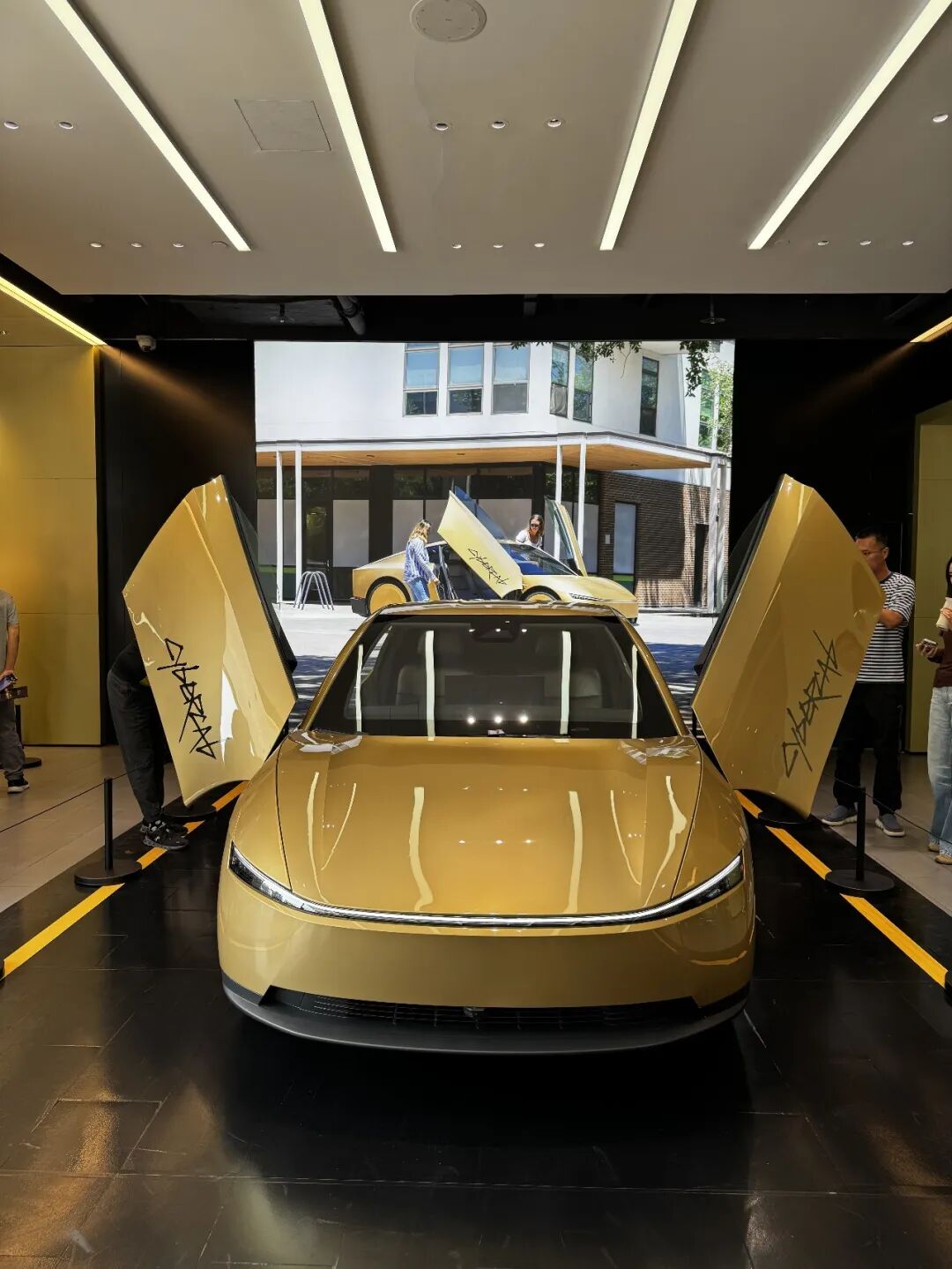
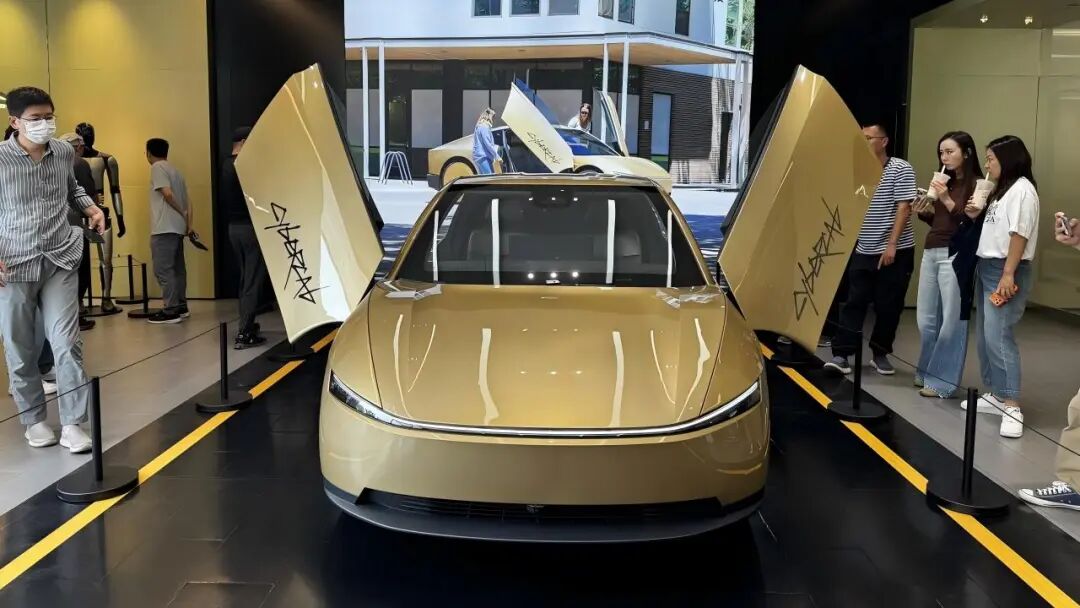
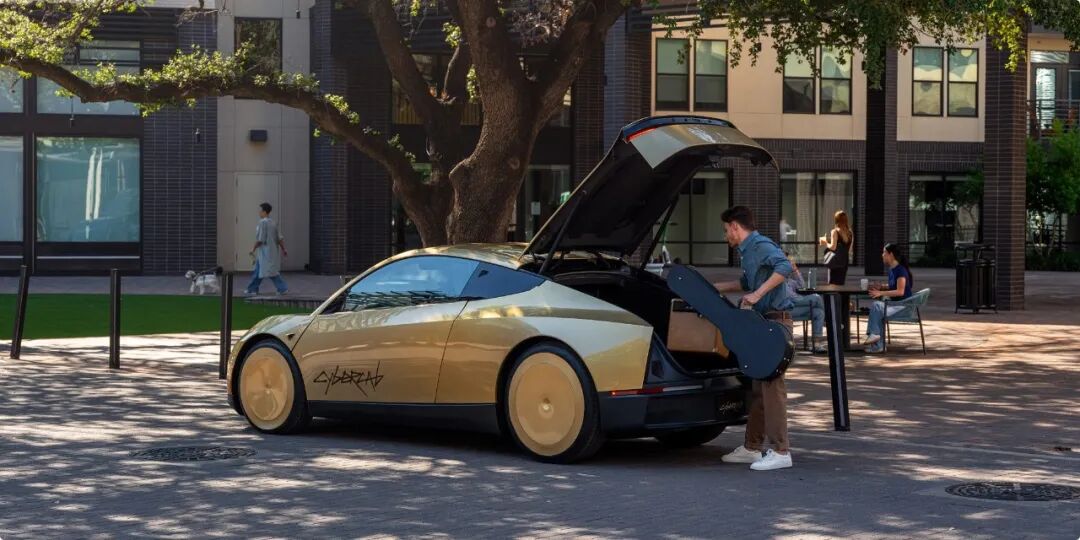
On the afternoon of September 17, a crowd gathered around the exhibition stand. The vehicle only has two seats and a large screen inside, with no steering wheel, accelerator or brake pedal, and two doors that open upwards.
When someone asked when this vehicle would be allowed to run on domestic roads, the staff at the store replied that there is no clear official information at present.
When talking about the automatic doors, the staff gave an example. If an autonomous taxi drops off passengers at their destination and the passengers forget to close the door, the operation team of traditional vehicles may need to send staff to the site to handle the issue. The doors of Cybercab can be remotely opened and closed, which is designed to eliminate this manual operation step.
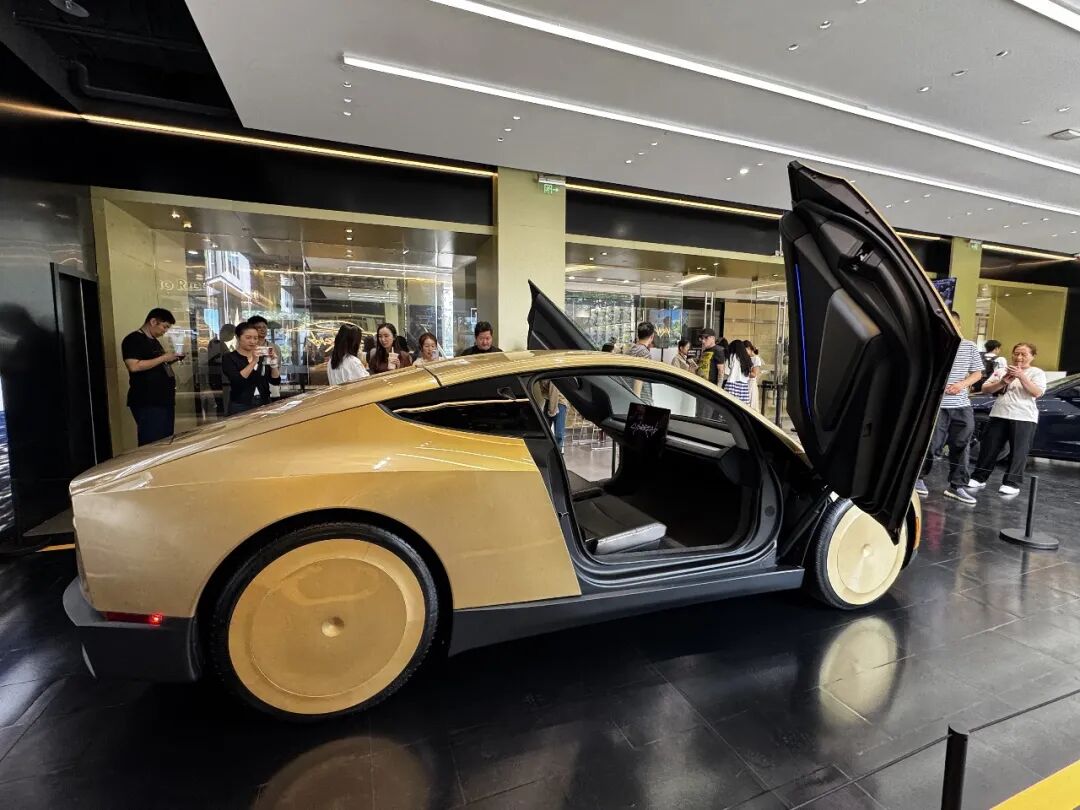
This exactly illustrates the current changes faced by L4-level autonomous driving. Drivers can be removed from the loop, but tasks such as charging, cleaning, maintenance and exception handling put high requirements on operation capabilities. The larger the fleet scale, the more difficult it is to ignore the labor and operation costs behind it.
At the same time, leading players including Waymo, Apollo Go, Pony.ai and WeRide have already launched paid services in several cities. This year, the whole industry has started to move towards larger operation scales.
Now the industry has begun to calculate more specific accounts: how many orders a Robotaxi can receive per day, how long it can run, how many supporting staff are needed behind it, when it can achieve payback, and whether the model that works in one city can still be valid when replicated to another city.
Cybercab also joins the competition at this stage. It further reduces the manufacturing cost of Robotaxi, but low cost is only the first hurdle for large-scale operations.
01. Cybercab cuts vehicle costs first
Cybercab has made a lot of subtractions based on traditional Robotaxi designs.
The most obvious change lies in the seat layout.
Cybercab only has two seats. At the Beijing China World Mall store on September 17, the staff explained that most trips only have one or two passengers. If the rear seats are empty for a long time, they still take up space and increase the vehicle weight. For multi-passenger trips, the fleet can dispatch Model Y, and larger models like Robovan will be available in the future.
The traditional driving position is also removed. Cybercab has no steering wheel or pedals, and no longer reserves the traditional operation area for drivers.
More interior space is left for passengers. The threshold is lower and the door opening is larger to facilitate wheelchair users to get on and off the vehicle; Braille is added to the emergency brake and door opening buttons.
The perception hardware follows Tesla's pure vision route, and also makes targeted subtractions.
Public data sorted out by Huaxing Securities shows that Cybercab has a curb weight of about 1.4 tons and a battery capacity of less than 50kWh. It mainly perceives the environment through external cameras, with no LiDAR or millimeter-wave radar equipped. The staff at the Beijing store said that the vehicle uses 8 cameras to collect road information, which is then processed by Tesla's AI chip.
The trade-offs of two-seat layout, smaller battery and removal of traditional driving area all affect the overall vehicle cost.
The manufacturing process also follows the cost reduction logic. Cybercab adopts the new Unboxed manufacturing process. Lars Moravy, Tesla's Vice President of Vehicle Engineering, revealed in an interview in July this year that the automation rate of Cybercab production line has exceeded 90%, and there are only about 20 to 25 stations in the final general assembly link. From wiring harness and battery production to vehicle assembly, this production line is completely different from that of Model 3 and Model Y which have been produced for many years.
The staff compared the Unboxed process to "building blocks". The front part, rear part, battery base and seats, left and right body parts and roof of the vehicle are produced separately, and then assembled together.
Changes have also taken place in body materials and painting processes.
The staff introduced that the Cybercab shell is made of composite material, which feels relatively soft, but there is still a rigid structure inside the vehicle. The vehicle also cancels the traditional painting process, and the color is directly combined with the material during production.
He compared this process to "pouring chocolate into a mold": the material itself has a certain color, and the finished product will retain that color after forming. This eliminates the painting link, and reduces the maintenance cost after partial collision damage.
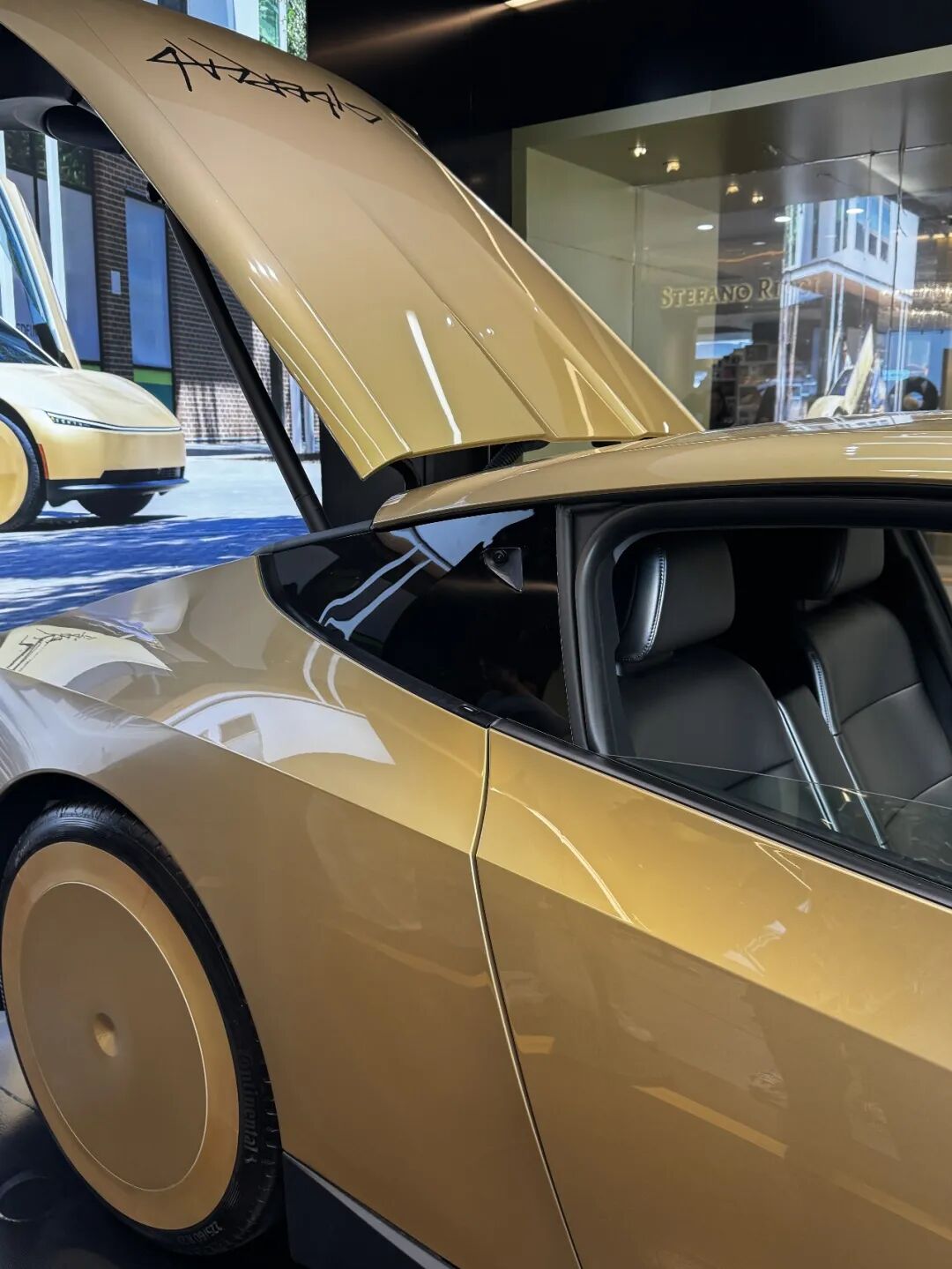
Cybercab's shell is made of composite material
When Moravy talked about Cybercab, he repeatedly mentioned "efficiency". The efficiency he refers to includes not only vehicle energy consumption, but also the full life cycle cost covering raw material entering the factory, vehicle manufacturing, subsequent charging and operation. For this kind of high-frequency running vehicle, Tesla has been calculating the per-mile cost and ownership cost since the development stage.
Huaxing Securities quoted Tesla's statement that the manufacturing cost of Cybercab is less than $30,000, and the ideal long-term operation cost is $0.2 per mile, which has included electricity expenses, depreciation, insurance and maintenance.
However, the $30,000 cost range is no longer exclusive to Cybercab.
Baidu stated at its earnings call in early 2026 that the unit cost of its 6th generation Robotaxi RT6 currently deployed has also been less than $30,000. RT6 is also a mass-produced model designed from scratch for L4-level autonomous driving.
Therefore, the most noteworthy point of Cybercab is that it takes many unmanned operation requirements into vehicle design in advance.
For example, energy replenishment. Cybercab supports 25kW inductive wireless charging. After the vehicle parks at the corresponding position, no manual plugging and unplugging of the charging gun is needed.
The seats and floor use materials that are more convenient for high-frequency cleaning. The vehicle is equipped with in-car passenger monitoring cameras, and the trunk can be opened and closed electrically. If passengers forget to close the door after getting off, the backstage can handle it remotely.
Vehicle finding is also designed as a product function. After a passenger calls a Cybercab, the light strip on the front of the vehicle can display the corresponding color in the App, making it easier for the passenger to find their target vehicle among a row of autonomous cars.
All these subtractions made by Cybercab finally contribute to lower manufacturing cost and higher operation convenience. After the vehicle itself becomes cheaper, Tesla is thinking about how to expand the fleet scale rapidly.
Tesla's official website in the United States has opened the commercial purchase intention registration for Cybercab. Individuals or enterprises can register to purchase single or bulk vehicles for commercial operation. The Robotaxi cooperation page is also soliciting cooperation for Cybercab fleet procurement, operation stations and supporting infrastructure.
The staff specially mentioned the price and operation mode: each vehicle is priced at $20,000. After the vehicle joins the Robotaxi fleet, Tesla will be responsible for unified maintenance and operation, and the buyer can share the operation revenue. This is more similar to an operation investment, which is completely different from buying a private car for personal use.
However, the final selling price, access conditions and revenue sharing method have not been officially announced yet. Whether external buyers are willing to purchase depends on whether this vehicle can achieve expected economic returns.
02. Robotaxi starts to calculate operation accounts
As soon as Cybercab was put into operation, several domestic Robotaxi companies were once again compared. At present, the leading players in the track are still Baidu's Apollo Go, Pony.ai and WeRide.
The three companies have different development priorities. Apollo Go has wider coverage and the largest operation scale; Pony.ai has been emphasizing front-end mass production, unit vehicle economy and cross-city replication in recent two years; WeRide not only develops Robotaxi, but also launches other L4 products, and expanded to overseas markets earlier.
In the past few years, these companies often announced their autonomous driving mileage, open operation areas and test progress. In this year's financial reports and operation announcements, more and more operating data such as average daily orders, unit vehicle revenue and UE (unit economics) have appeared.
In March, Pony.ai announced the revenue and expenditure data of its 7th generation Robotaxi in Shenzhen.
By the end of February, the average daily net income per vehicle in the previous month reached 338 RMB, with an average of 23 orders completed per day, and the unit economic model (UE) of a single vehicle achieved break-even. Previously, the company had already achieved this milestone in Guangzhou.
Pony.ai further broke down the cost structure for "Dingjiao One".
The BOM cost of the autonomous driving kit for the 7th generation Robotaxi has decreased by 70% compared with the previous generation, among which the cost of the domain controller decreased by 80%, and the cost of LiDAR decreased by 68%. In addition to the expansion of deployment scale, Pony.ai also uses the supply chain channels of traditional automakers to reduce component procurement costs.
However, the vehicle itself is only part of the total cost. Pony.ai emphasizes that operation cost is almost as important as the BOM cost of the whole vehicle.
Unit vehicle operation also includes expenses such as charging, ground support staff, remote safety officers, insurance, maintenance, network traffic and parking. If only the vehicle cost is reduced without cutting the operation cost at the same time, the cost advantage will still be limited.
Labor cost is one of the items that has changed significantly.
After drivers are removed from the loop, human staff are not completely out of the system. According to Pony.ai, special scenarios such as passengers' emergency demands and traffic control may still require remote personnel intervention; ground operation and maintenance staff are responsible for charging, cleaning, maintenance and inspection.
When Guangzhou achieved positive UE at the end of last year, one remote assistant was responsible for about 20 Robotaxi units. At present, the technical capability has realized the ratio of 1 remote staff to 30 vehicles. Ground operation and maintenance staff also begin to serve multiple vehicles at the same time. Pony.ai claims that one operation and maintenance staff can complete energy replenishment, cleaning and inspection for dozens of vehicles within one hour.
In addition to labor cost, vehicle utilization rate also directly affects the payback period.
Pony.ai told "Dingjiao One" that to further improve the unit vehicle economy, in addition to reducing vehicle price and operation cost, it is also necessary to increase the daily operation duration and order volume.
After returning to the operation station, Robotaxi can already find the charging position by itself, and can park autonomously even in narrow spaces. Part of the work that previously required staff to drive the vehicle back and find parking space is now being automated.
The Robotaxi fleet in a single city is still only at the scale of 1000 units. To achieve larger scale, we can refer to the autonomous delivery vehicles that have reached the scale of 10,000 units.
Source / Tesla Robotaxi official website
Yu Enyuan, CEO of Neolithic, told "Dingjiao One" that the company currently operates about 27,000 autonomous vehicles. At the 100-unit and 1000-unit stages, the team focused more on autonomous driving technology; when the fleet scale reaches 10,000 or even tens of thousands of units, energy replenishment, maintenance, repair and safety management become significantly heavier, and "the focus will shift from pure technology to 'technology plus operation'".
The current human-vehicle ratio of Neolithic is about 1:50. Yu Enyuan said that if the ratio can reach above 1:100 in the next few years, it will be close to the ideal state.
The trip length of delivery orders varies greatly, so Neolithic pays more attention to operation mileage internally. Yu Enyuan introduced that there are nearly 2,000 Neolithic autonomous vehicles forming a formal city-wide operation network in Qingdao at present, and the number of night orders is roughly equal to that of daytime orders.
After the vehicles can run continuously day and night, the utilization rate is improved, which will significantly optimize the payback period and return on investment.
The indicators for passenger carrying and cargo carrying are not exactly the same, but both cannot avoid one core point: the vehicle should be kept idle as little as possible.
Positive unit vehicle UE is still far from making the whole company profitable.
In the second quarter of this year, the revenue of Pony.ai's Robotaxi business increased by nearly 7 times year-on-year, and the total revenue of WeRide increased by more than 80% year-on-year, but both companies still recorded losses in the quarter. R&D, computing power investment, vehicle expansion and new market development still require continuous capital investment from the companies.
In addition to making the vehicle fleet in one city operate more efficiently, the next step is to expand the fleet to more regions.
Pony.ai introduced to "Dingjiao One" that the same set of autonomous driving system can now adapt to different markets faster, but when entering a specific city, qualification application, compliance filing and operation permit application still need to be re-applied; special road rules, traffic signs, user travel habits, charging standards and service details also need to be adjusted according to local conditions.
Their current practice is to delegate some of these links to cooperative partners who already have mature systems.
In March this year, more than 100 GAC Aion Robotaxi units were put into the Ruqi platform. GAC is responsible for providing vehicles, Pony.ai provides the 7th generation autonomous driving system, and Ruqi is responsible for order dispatching and daily operation. Traditional automakers have mature mass production and supply