There are no shortcuts for Sam's Club, and Chinese retail platforms are collectively catching up to a 30% self-operated rate.

A transformation that further penetrates into demands, products and supply chains based on channel operations.
Author | Li Shi
Supervisor | Shao Lele
Chinese retailers are strengthening their control over the upstream, shifting back to the self-operated era from the shelf-dominated era. Self-operation, which used to be the competitive edge of a small number of retailers, is now becoming the basic configuration for leading retail enterprises.
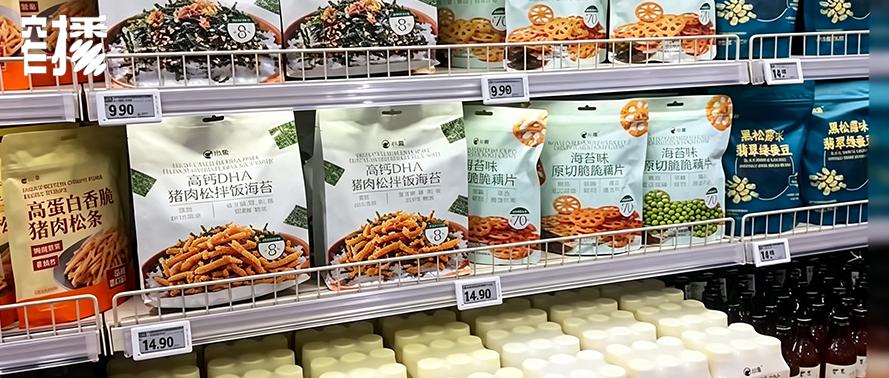
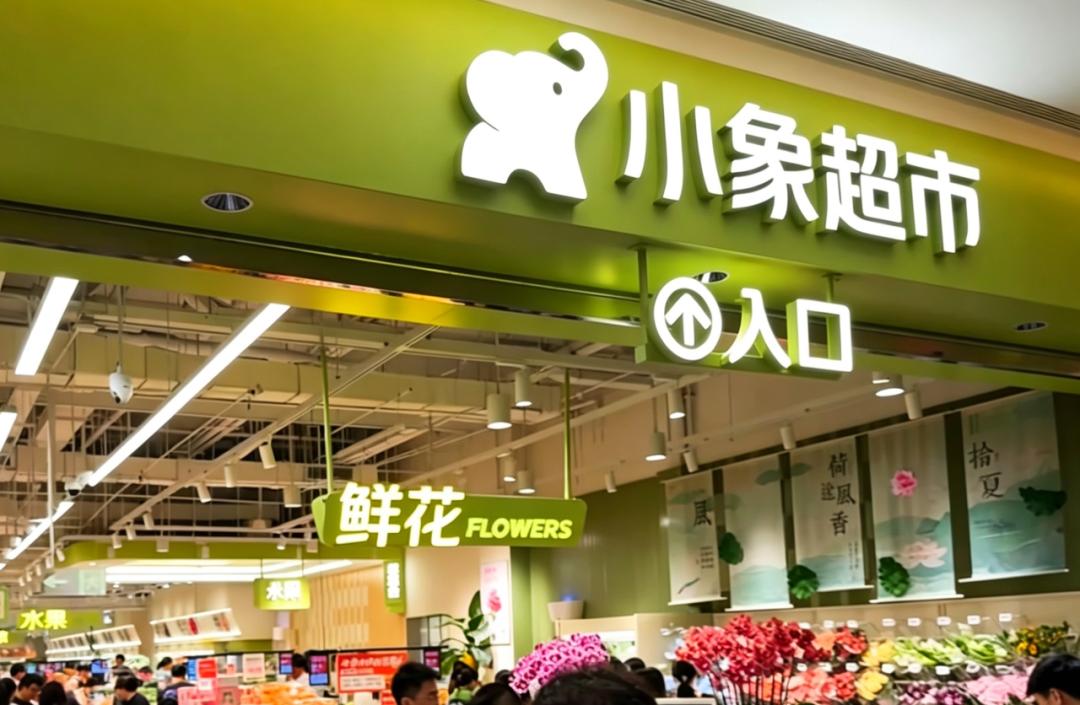
Sam's Club, Freshippo, ALDI and Dingdong Fresh all already have a batch of private-label products familiar to consumers. Walmart positions its private brand Great Value side by side with new community store formats as two interconnected approaches to explore store transformation. Xiaoxiang Supermarket, which was only launched in 2023, now also boasts a very considerable proportion of private-label products.
However, compared with the 20%-50% high proportion in Europe and the United States, there is still huge room for the development of domestic private labels in the future.
According to the data released in August this year by the China Chain Store & Franchise Association (CCFA) in cooperation with Boston Consulting Group (BCG), the sales penetration rate of private labels in Chinese supermarkets is about 8%, and the omni-channel proportion is only 1%-2%. Under the resonance of multiple structural forces, China's private label industry is entering a window period of rapid development, and the penetration rate is expected to rise from the current 8% to 20%-30% in the next five years.
Therefore, some views hold that a 30% self-operated product rate is very likely to become a new survival standard for the retail industry.
Private labels are not a new business. In the past, traditional supermarkets also sold private-label products such as tissue paper and drinking water, whose main function was to reduce the layered markup of brands and circulation, provide low-cost alternatives for consumers, and increase gross profit for channels.
The core of this round of changes is not just that more retailers' own brands are added to the shelves. After both product supply and channels fall into surplus, retailers begin to get involved in demand research, product definition, production organization and fulfillment management at an earlier stage.
We define this transformation that further penetrates into demands, products and supply chains based on channel operations as "new self-operation".
Moreover, China's new self-operation is not just a copy of the path taken by European and American retailers to increase the proportion of private labels. The development process of China's consumption and retail is highly compressed: low-cost OEM, differentiated private labels and platform-defined production standards almost coexist; the penetration of digitalization and instant retail is higher, so consumption, inventory, reviews and fulfillment can form faster feedback; the manufacturing and agricultural supply chains are sufficiently rich, but there is a lack of commercial entities that can continuously understand demands, set standards and organize supply.
Under the superposition of these conditions, retail platforms are evolving into a new role between channels, platforms and product companies: one end connects increasingly scattered consumer demands, and the other end organizes the rich yet equally scattered Chinese supply chains, turning changing demands into high-quality products that can be produced, delivered and continuously purchased.
In other words, the old self-operation mainly focuses on operating stores and channels, while the new self-operation starts to operate products and supply. In the past, retail platforms competed on whether they had private labels and how high the proportion was; next, they will compete on whether they can continuously discover demands, turn demands into product standards, organize the supply chain to complete production, and iterate rapidly based on sales and user reviews.
Why self-operation has become the standard configuration for leading retailers
The emergence of new self-operation first responds to the question of how retailers can continue to be chosen by consumers.
On the one hand, consumption is undergoing K-shaped differentiation. Extreme cost performance, quality upgrading, interest-driven consumption and instant satisfaction coexist. The same consumer may compare prices repeatedly for basic daily necessities, and is also willing to pay a premium for health, time, emotional value and self-expression.
On the other hand, both products and channels are in surplus. The 2025 China Shopper Report mentions that Chinese consumers buy fast-moving consumer goods through more than seven channels on average every year. When the same branded product is visible everywhere online and offline, simply providing shelves and trading places can hardly form long-term competitive differentiation.
This is also the reason why private labels are moving from low-cost alternatives to differentiated development.
In the early days, private-label products in supermarkets were mostly concentrated in daily standard products such as tissue paper and drinking water, and "low price" was the most intuitive reason for purchase.
Later, Sam's Club's Swiss roll with annual sales of 1 billion yuan, Freshippo's large seafood, fruit and vegetable juice and various baked goods, etc., made consumers start to choose a channel because of a hit product or an advantageous category. Retailers thus began to realize the power of "product as traffic", and private labels also began to enter the core of retailers' operations from being part of the procurement business.
However, a small number of hit products can help channels open up the market. Only by operating a batch of products that are frequently used and repeatedly purchased can retailers continuously obtain customers' choices in a meal or a daily restock, which is the so-called "competing for share of users' lives" in the stock market.
As retailers' understanding of users and products, as well as their accumulated supply chain capabilities continue to deepen, leading benchmarks are no longer just betting on the next hit product, but consciously building systematic product development and self-operation capabilities.
ALDI has formed a product structure dominated by private labels; Dingdong Fresh has built different private labels around scenarios such as quick-to-cook dishes, soy products and high-quality standard products. The transformation of traditional supermarkets such as Yonghui and BBK led by Pangdonglai is not only about modifying store displays and service standards, but also streamlining SKUs, strengthening direct procurement and private-label product development at the same time.
The value provided by these retailers is not just a batch of exclusive products, but to help consumers complete the selection from the surplus supply. When consumers trust a channel, it means they believe the channel has already compared the quality, price and usage scenarios for them. Channels thus begin to assume part of the function of product buyers.
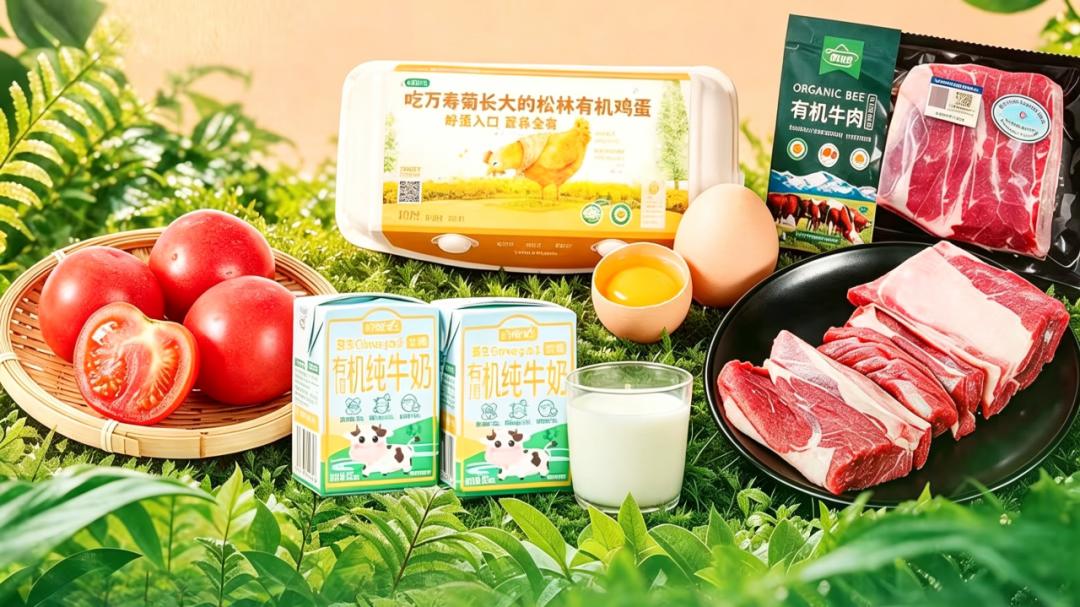
Since 2025, the fast-growing instant retail has become a new opportunity for retail channels and even e-commerce platforms to increase their investment in private labels.
The catalysis of instant retail on private labels is of course closely related to the fact that "instant retail has become a certain consumer demand", and it is more related to the integration of online and offline driven by instant retail — after transactions, searches, reviews, repurchases, inventory and warehouse distribution are connected to the same system, retailers can discover demands, test new products and adjust supply faster. The past inventory adjustments carried out on a quarterly and annual basis have begun to turn into higher-frequency, finer-grained dynamic operations.
This is somewhat similar to the digital supply chain that SHEIN has successfully implemented in the apparel field — when production at the origin, logistics turnover and end-point demand all run on the same real-time feedback retail digital system, after customers place orders, sales data can be checked against inventory, and reviews and repurchases can also become the basis for subsequent development. Over time, the supply's response to demands, especially scattered demands, will become more and more accurate.
But this does not mean that mature brands will be completely replaced by private labels. Up to now, private labels in European and American retail markets only hover in the range of 20%-50%. Consumers still need professional brands to provide technology, R&D and cultural value, and retailers also need branded products to enrich shelves and build category awareness.
What has really changed is the selection criteria: channels will leave more shelves and resources to brands and suppliers that truly understand consumers and can provide differentiated products.
New self-operation is a supply chain reshaping
If self-operation becoming the standard configuration is the obvious change in retail, then the deeper impact brought by new self-operation is the change in the relationship between retailers and suppliers.
In the past, brands and suppliers made qualified products, and retailers were responsible for product selection, shelving and sales. Now, channels begin to transmit consumer data and scenario insights to the upstream, and suppliers convert these vague demands into raw materials, formulas, processes and mass production plans.
Channels that master consumer data do not naturally have product operation capabilities; suppliers that are familiar with raw materials and production may not necessarily know what is happening in the end market. What new self-operation changes is exactly the collaboration and information translation method between the two parties.
In similar product development scenarios, the relationship between channels and suppliers has shifted from procuring standard products to joint R&D, and the product development process has also changed from "channel selects products — supplier supplies products" to "demand insight — product planning — raw material customization — factory testing — packaging adaptation — sales feedback — continuous iteration".
For supply chain enterprises, participating in channel private label projects can also help them more directly understand consumer demands and end market changes.
In the past, suppliers mainly arranged production according to brand orders, which kept them far away from consumers. After co-creating products with channels, suppliers can see the sales, repurchases and feedback of products in different cities, scenarios and crowds, and adjust processes and products accordingly. These experiences can also feed back their independent brands and other clients.
From the overall context of supply chain upgrading, "new self-operation" is not about channels replacing suppliers, but more like a capability exchange: channels provide demand understanding, consumption scenarios and order certainty, suppliers provide raw material knowledge, process R&D and stable mass production capabilities, and form a closer collaborative retailer-supplier relationship through new cooperation modes such as "order procurement" and "joint R&D".
This also means that "new self-operation" does not mean that all products are produced by retailers themselves. Private labels, customized products, direct procurement from origin, order-based agriculture, joint R&D and self-built processing capabilities can all be different forms of product self-operation.
The criteria for judging new self-operation is not who owns the property rights of stores, inventory or factories, but whether retailers can continuously discover demands, put forward product standards, organize R&D and production, and take full responsibility for the delivery results.
The proportion of private labels is only the external manifestation of this capability — low-cost OEM can also rapidly increase SKUs. The real test is whether there is a complete link behind the products covering demand discovery, standard definition, R&D and production, trial sales feedback and continuous iteration.
The scope of product self-operation does not have to be limited to self-operated stores. Platforms can establish standards through self-operated channels and private labels, and then expand coverage with the help of franchised stores, socialized instant warehouses and supply chain services.
For example, some normal-temperature private-label products of Jingdong 7FRESH, Freshippo, Dingdong Fresh and Pangdonglai have been passively or actively distributed outside self-operated channels. The franchising organization and supply chain services provided by Meituan Squirrel Convenience and Shandian Bangbang are also trying to connect a batch of screened product supplies to more outlets. The expansion of Chaohuasuan NB through franchising is essentially a supply chain expansion, and because of the brand effect and product competitiveness brought by product self-operation, it has stronger attractiveness than the new retail distribution projects in the internet era.
In this context, private labels can become the key for platform enterprises to promote the digital upgrading of the supply chain. China's private label industry is not just a channel story, but a supply chain reorganization that superimposes channel upgrading, manufacturing C2M and platform digital infrastructure. Commercial entities with "the capabilities of matching, rule making and demand insight" will be able to reconnect China's supply chain and Chinese consumers efficiently.
New self-operation requires long-term down-to-earth efforts
Private labels remove intermediate roles such as brands and distributors, but corresponding responsibilities such as demand research, product development, production management, quality control, inventory management and fulfillment are also more transferred to retailers.
Especially for fresh, refrigerated and short-shelf-life food, which is naturally non-standard, the output and quality are easily affected by season, climate and origin, and the shelf life is short. Fluctuation in any link will directly lead to product loss.
Therefore, deep involvement in the upstream has become a required course for new self-operation.
The well-known Daily Fresh products, various affordable organic vegetables, or various local niche fresh products, as well as some fresh milk, seafood and meat products that only take 24 hours from origin to dining table, all benefit from the results of retailers' in-depth reshaping and extreme efficiency improvement in the whole process from production, transportation, packaging to distribution based on the demands of freshness, short shelf life and high efficiency.
Behind this is a support system accumulated by retailers over several years. Freshippo has built more than 180 Freshippo Villages across the country, intervening in the whole process from seeds, planting standards to harvest time, so as to provide flowers, fruits and seafood that better meet consumer demands; Dingdong Fresh has built multiple central kitchens and food processing plants in East China, and its product development team is always active at the front line of origins, so it has the ability to cover high-quality supplies in the Yangtze River Delta and even Beijing and Anhui.
Product delivery also requires a whole set of heavy logistics infrastructure to support. Especially for fresh, refrigerated and short-shelf-life products, cold chain, inventory turnover, warehouse network density and the state when products reach customers will all affect the final quality obtained by consumers.
The popularization of affordable fresh dairy products benefits from the closer collaboration between R&D, production and instant retail scenarios. Taking the a2 fresh milk and 0-sugar fermented milk for Xiaoxiang, which was recently jointly launched by Junlebao and Xiaoxiang Supermarket, as an example, the two sides not only readjusted the specifications, taste and packaging, but also arranged exclusive factory production capacity and logistics links based on the accurate goods data provided by the end point, so that the distribution method can be upgraded from regional warehouse distribution to front warehouse direct distribution, and finally realize "Daily Fresh" supply.
After retailers deepen their involvement in the supply chain, they also have to face the risks of new product failure and demand judgment errors.
Especially when the single product has not yet formed stable sales and repurchases, and the inventory turnover efficiency has not been fully improved, retailers often go through a profit tug-of-war period where input does not match return. The high losses brought by Daily Fresh products to Freshippo and Dingdong Fresh in the early stage is a typical manifestation of this situation.
Only when the order volume is stable enough will suppliers have the incentive to adjust raw materials, processes and production capacity for specific channels.
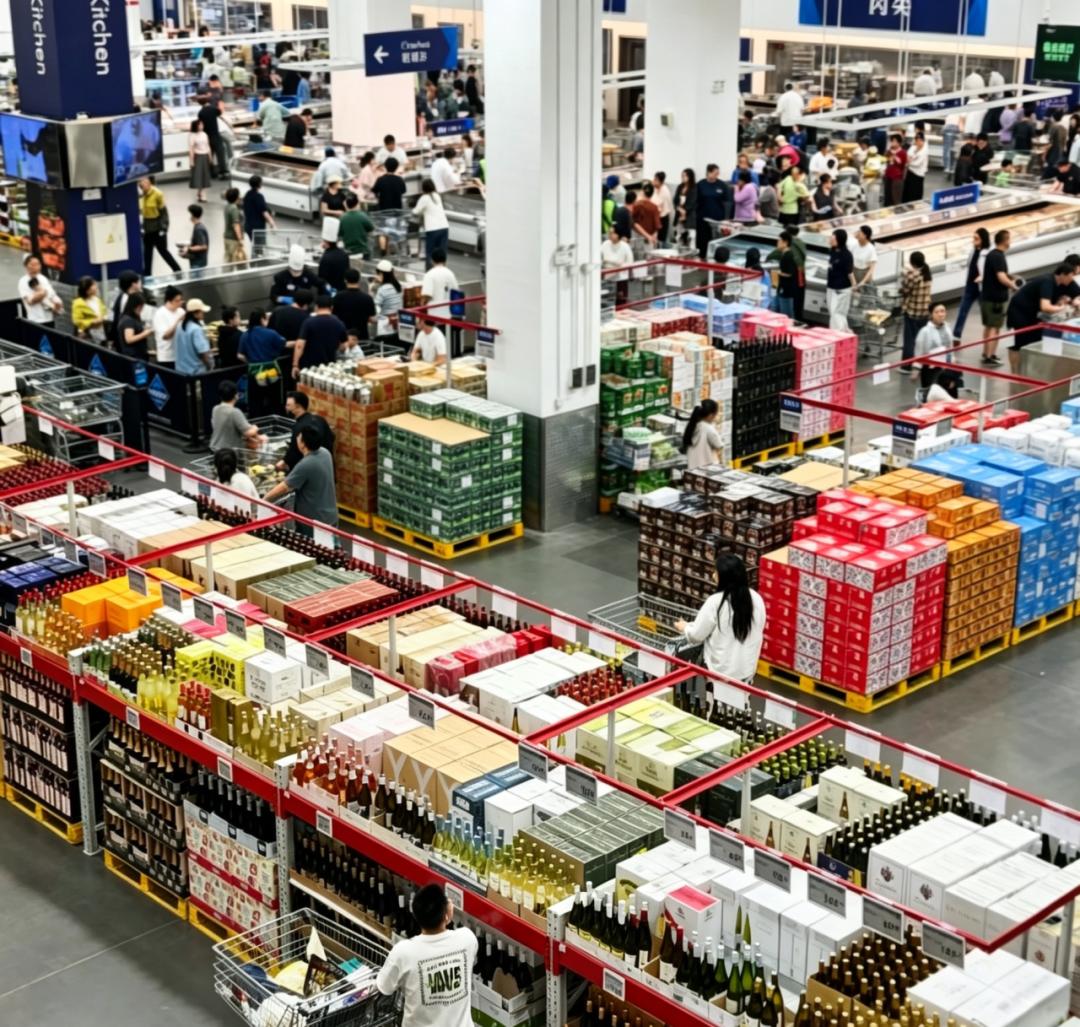
In the end, the "high quality with low price" of private-label products cannot only be achieved by squeezing factory profits. "High quality" comes from more accurate demand insight, as well as in-depth management of raw materials, processes, quality control and delivery;