Buy milk tea and get a "vintage old-style kettle" as a free gift! Priced at 40 yuan per cup, it is pre-destined to be a top-selling hit at scenic spots.
Recently, the "kettle milk tea" served in vintage aluminum pots has emerged in beverage stores across cities including Shanghai, Hangzhou and Qingdao, quickly going viral across social media platforms.
Netizens are joking that "buying milk tea now comes with free practical utensils", while rushing to search for nearby stores that sell this drink.
Some even predict: "This will be the next hit product in scenic spots."
Before finishing the extra-long egg tart, young people have started checking in for "kettle milk tea"
"I haven't got my turn to buy the extra-long egg tart, nor have I tasted the extra-large cup of bubble tea, and here comes the kettle milk tea."
Recently, a vintage aluminum kettle, also known as shuidiaozi, has unexpectedly appeared on young people's Mid-Autumn Festival check-in lists.
"Shuidiaozi" refers to the vintage boiling kettle used in many northern Chinese households: it has an aluminum body and a small handle, and was commonly used to boil water on coal stoves or firewood stoves in the past. Today, its miniaturized version has become a highly sought-after new gimmick in many independent milk tea shops.
Netizens exclaimed: "Now buying milk tea even comes with free practical utensils" "I definitely have to buy this, the kettle can still be used after I finish the milk tea."
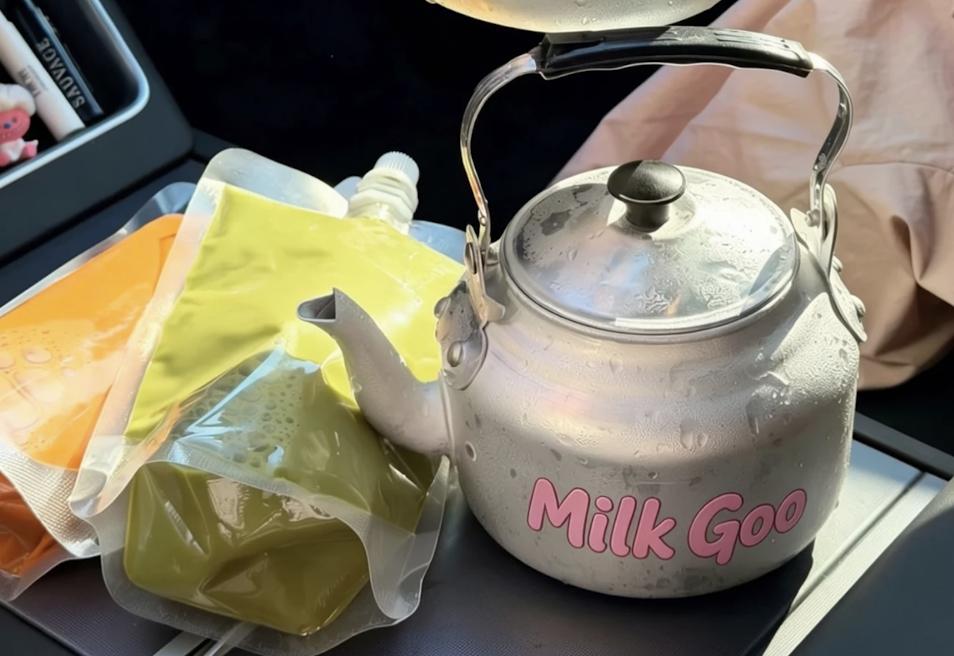
Image source: Xiaohongshu @Little Dog Milk Loves Milk Tea
It is understood that such "kettle milk tea" is mostly priced between 30 and 40 yuan, and there are currently two main serving methods:
One is that the store clerk pours the freshly made milk tea into the kettle, inserts a straw, so that consumers can pick it up and drink directly; the other is more ritualistic: only ice cubes are placed in the kettle, while the milk tea is served in a transparent bag for consumers to pour in by themselves.
Tear open the bag, lift the milk tea high, let the milk tea slowly pour into the kettle full of ice cubes, then stir with a straw. One kettle can generally hold about 800 milliliters of liquid, and consumers can take the kettle away after finishing the drink.
The whole process is more like the ritual of boiling water and making tea carefully in daily life than just drinking milk tea. The highly contrasting operation has naturally become a scene that everyone imitates in food exploration videos.
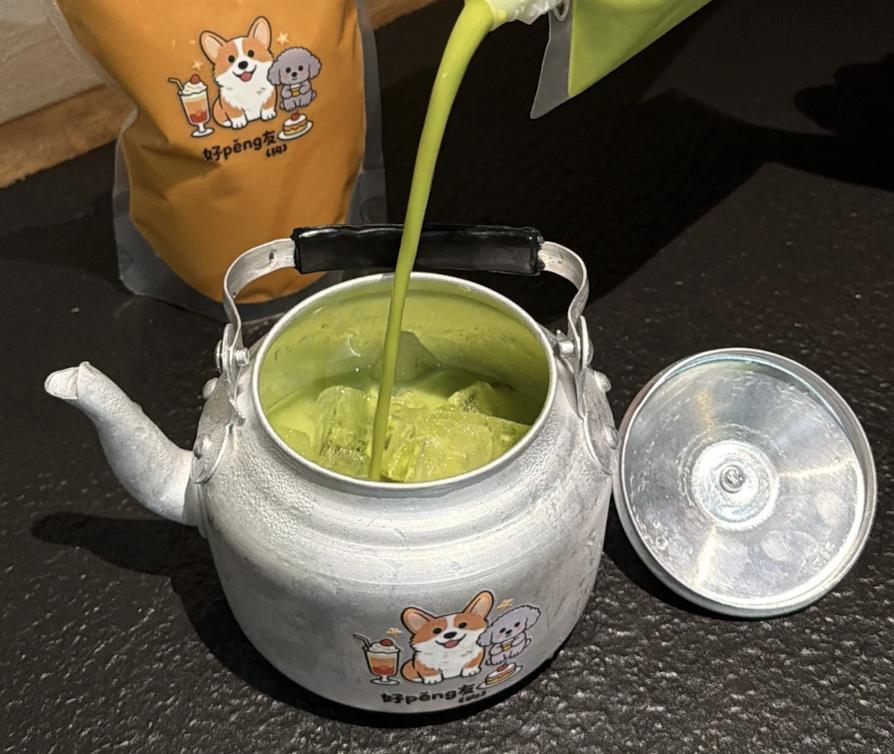
Image source: Xiaohongshu @Good Friend Rice & Tea House
As its popularity surges, kettle milk tea has sprung up across the country: stores including "Wenji Lemon Milk" in Shanghai, "NORTH ISLRST" in Hangzhou, "FaFatoo" in Yangzhou, and ohmo Korean iced milk have launched this product, followed by independent milk tea shops, coffee shops and street stalls in Hebei, Henan, Shandong and other regions, all using mini aluminum kettles to catch up with this trend.
On short video platforms, as soon as a store posts a related video, viewers will immediately ask for the store address in the comment section; as soon as the "first store" of this product appears in one city, neighboring cities will quickly follow suit.
Some netizens predicted: "It is absolutely the next big hit in scenic spots."
Why does an ordinary cup of milk tea become a hit just by changing its container?
1. Spend 8 to 15 yuan on a new kettle, and you can get a traffic-generating "new product"
The most direct reason why kettle milk tea can spread so fast is that its replication cost is extremely low, and there is no need to specially develop new products.
Stores can use existing coffee, milk tea, Thai milk tea or fruit tea on their menus, and create a new product simply by changing the container and serving method. At present, the wholesale price of mini aluminum kettles on e-commerce platforms is mostly between 8 and 15 yuan.
Although it is much more expensive than ordinary milk tea cups, it saves the cost of developing new formulas, purchasing new raw materials and adding new equipment. For small shops with limited budgets, it means spending a small sum of money to bring freshness to their products, and also allows consumers to participate in the experience and spread the word actively.
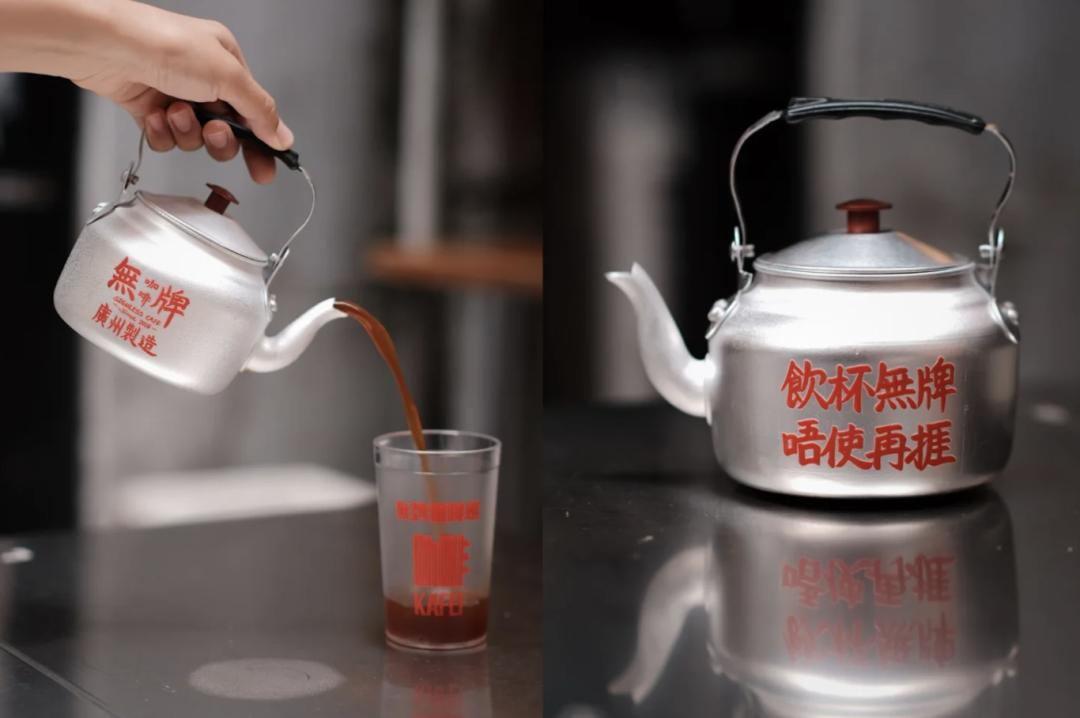
Ice Americano served in vintage pot from No Brand Coffee
2. Bamboo tubes, enamel mugs: milk tea containers are increasingly looking nothing like "regular cups"
Some time ago, the extra-long cup of milk tea "longer than a forearm" became popular; in 2024, the trend of "bringing an enamel basin to Manner to buy coffee" was prevalent; in 2023, bamboo tube milk tea occupied ancient streets and night markets in major cities, with some stores selling more than 1000 cups a day...
The street hits in the past few years have repeatedly proved that when the flavor of beverages becomes increasingly hard to perceive through the screen, the container becomes the most direct product expression. The less it looks like an ordinary cup, the easier it is to attract consumers' attention.
Many netizens guessed: "If this trend continues, will we use thermos flasks and wooden buckets to sell milk tea next time?"
Surprisingly, cities with rich beer culture such as Qingdao in Shandong and Shenyang in Liaoning have already used large vintage thermos flasks to sell beer.
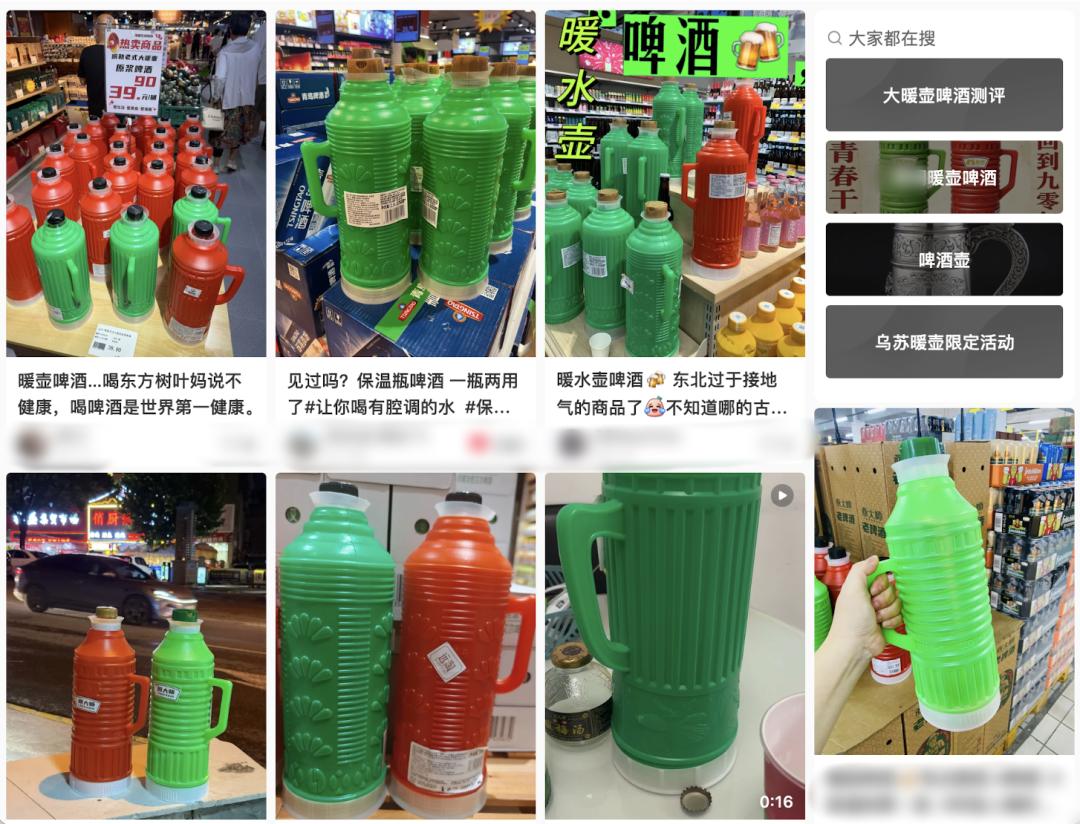
The reason why kettle milk tea becomes a hit is that its shape naturally carries retro nostalgic memories and a strong visual sense.
Walking around the night market with the kettle in hand, wandering through ancient streets with the kettle, slowly pouring the bagged milk tea into the kettle full of ice cubes — it not only changes the appearance of milk tea, but also designs a series of scenes and movements suitable for shooting for consumers, which naturally endows it with the genes of a viral hit.
3. Consumers are reluctant to throw it away after drinking, making the packaging itself a product
The popularity of creative milk tea containers such as kettles, thermos flasks and enamel mugs not only lies in their photogenic appearance, but also in the fact that there are still reasons to keep them after the drink is finished.
Recently, Nanning-based brand "Yuexia Chabai" has gained huge exposure on social media platforms with its metal tassel silver ornament decoration on the cup body. Many consumers directly take off the silver ornament as a souvenir after finishing the milk tea.
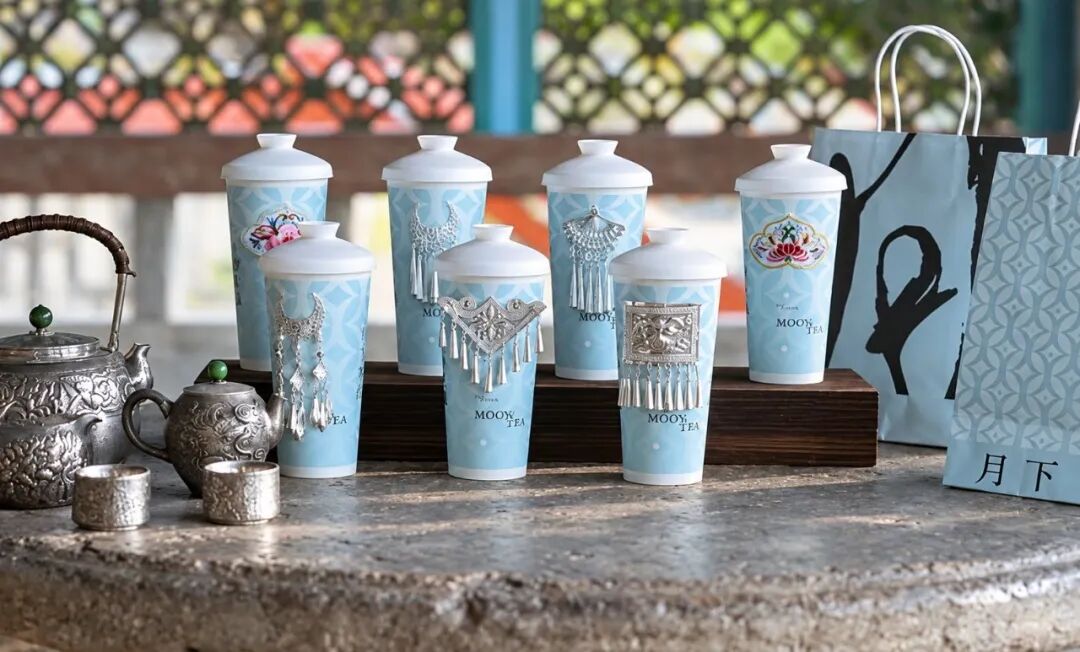
Although some people describe this kind of consumption as "buying the pearl box and returning the pearl", from another perspective, when consumers measure whether a cup of beverage is worth buying, they are including the cup, accessories and what they can keep after drinking into the total consumption cost.
Similar changes have also appeared in the drainage methods of chain brands.
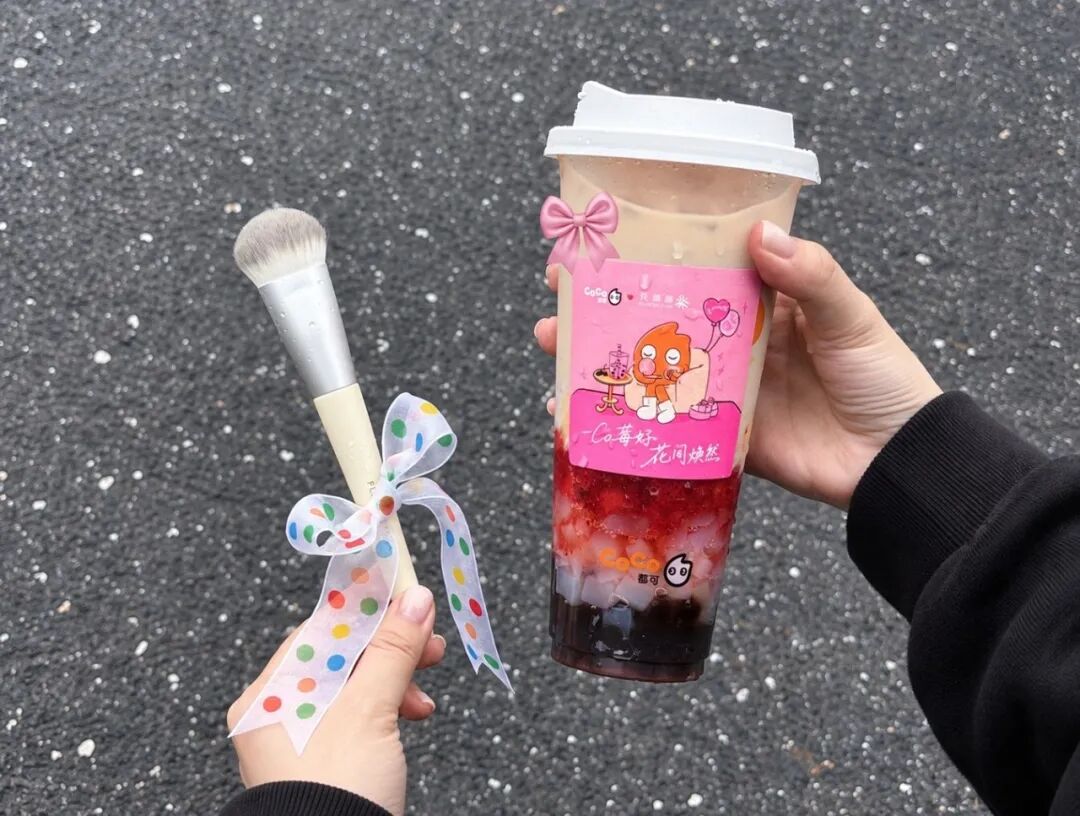
Manner gives out face masks and shampoo with coffee purchases, CoCo includes pressed powder and face cream in its combo sets, and LINLEE gives out pet food trial packs for cats and dogs. Compared with common stickers and badges, items that "are truly usable and can be experienced" are becoming more direct reasons for consumers to place orders.
When the packaging is no longer thrown away together with the beverage, it turns from a cost into a product value that consumers can directly perceive.
"One-off transaction" business model may not last long
Although creative cup shapes can bring instant short-term traffic, their biggest hidden concern also comes from the same source: consumers' attention is almost entirely focused on the container.
For small independent stores, this may not be a problem, and many stores mark these products as "limited-time drinks" when launching. Spending more than ten yuan in exchange for one store visit, one short video, and even a round of local traffic has already achieved the purpose of attracting customers.
However, when more and more stores purchase similar containers and fill them with indistinguishable beverages, the sense of freshness will soon become a public resource.
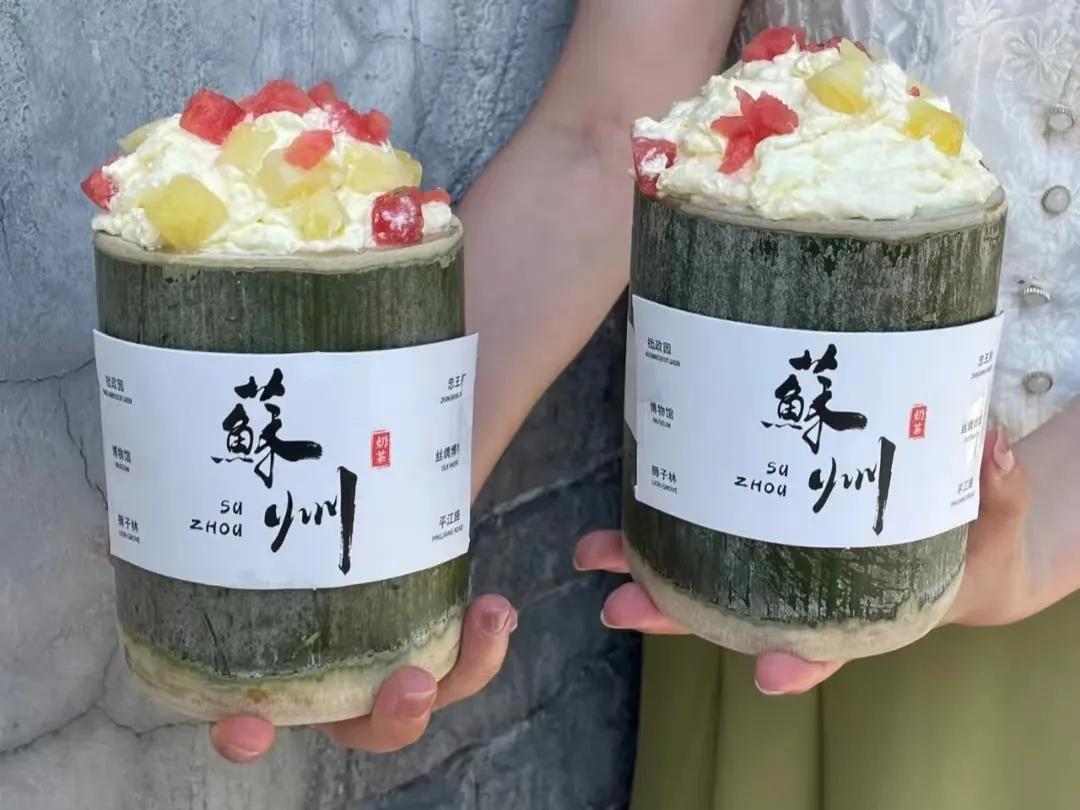
Bamboo tube milk tea, extra-long cups and enamel basins have all gone through similar processes: the easier the container is to replicate, the faster its popularity fades, and it will not bring long-tail effects to stores and brands.
More realistically, consumers may be willing to try the milk tea once for the novelty of the kettle, but they hardly need a second identical kettle.
If brands and chain stores follow up later, they need to solve more specific problems: whether the container meets food contact requirements, how to clean and reuse it, and whether it can be sealed to prevent leakage when taken out. The more practical the packaging is emphasized to be, the greater the responsibility the brand needs to take.
Kettle milk tea may soon be replaced by another novel container, but the trend of "adding extra value beyond the drink itself as the reason for purchase" will not be just a fleeting fad.
Whether the milk tea tastes good, whether the product has differentiated features, and whether the store can design refills or new usage scenarios, will determine how far this wave of popularity can go.
If you have seen other new creative cup shapes, welcome to share them in the comment section.
This article is from the WeChat official account "Kamen" (ID: KamenClub), written by Zi Qi, published by 36Kr with authorization.