Red Fruit takes on four rivals single-handedly, while iQiyi, Youku, Tencent Video and Mango TV all fall into collective silence.
Recently, the sky has fallen for the group of literary youth.
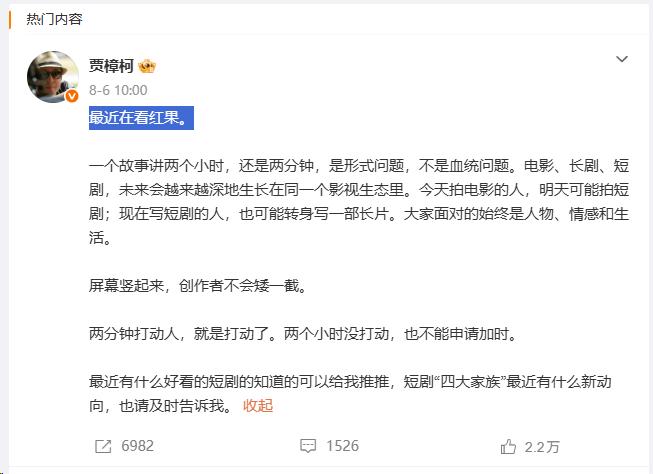
Because Jia Zhangke posted on his social media that he was watching Hongguo, and he has watched more than a hundred of its short dramas in a row, starting from the most folksy ones on purpose.
This group of people was collectively devastated. Where is the great director of art films they have long admired?
Guess what happened next? Hongguo did not fear the public backlash, and directly invited Director Jia to be its brand ambassador.
No matter how niche, artistic and distinctive your preferences are, can you resist not watching videos on Hongguo?
It is said that we have now entered the era of nationwide Hongguo, and this statement is not unfounded.
QuestMobile has just released a set of data: as of July this year, Hongguo has 168 million daily active users, more than doubling its size in one year.
You may not have a clear concept just hearing these numbers.
To put it this way, Tencent Video has 50 million daily active users, iQiyi has 45 million, Youku and Mango TV have around 30 million each. The sum of the four platforms is 155 million.
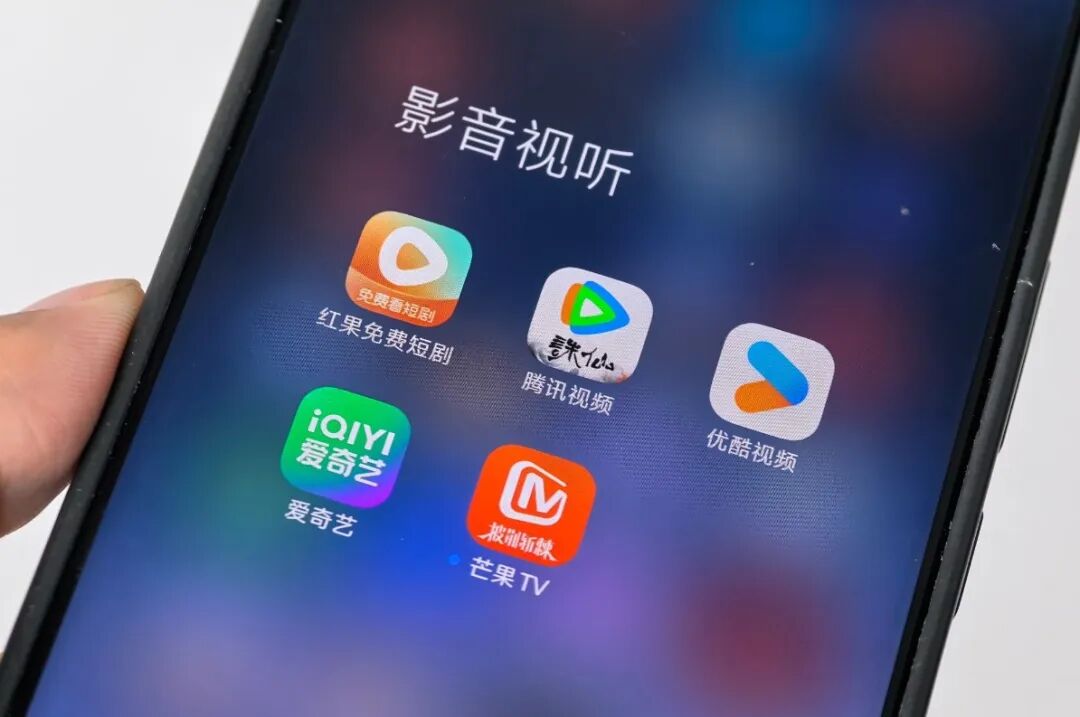
Hongguo, with only one app, has outperformed the four established long video platforms by a large margin.
The most striking gap is not the number of users, but the viewing duration: each user spends 125 minutes watching content on it per day, which is longer than the time spent on two full TV series.
For the four platforms of Tencent Video, iQiyi, Youku and Mango TV, their monthly viewing duration dropped by 24% to 47% in the past year, and the figure of Youku has almost halved.
In fact, Hu Mei has noticed something unusual since this year's Spring Festival.
During the Spring Festival cinema schedule, the average daily box office dropped below 1 billion yuan for the first time in six years. But at the same time, the total view count on Hongguo reached 33.6 billion, with 1.28 billion people catching up on short dramas on the platform. This huge contrast shocked everyone.
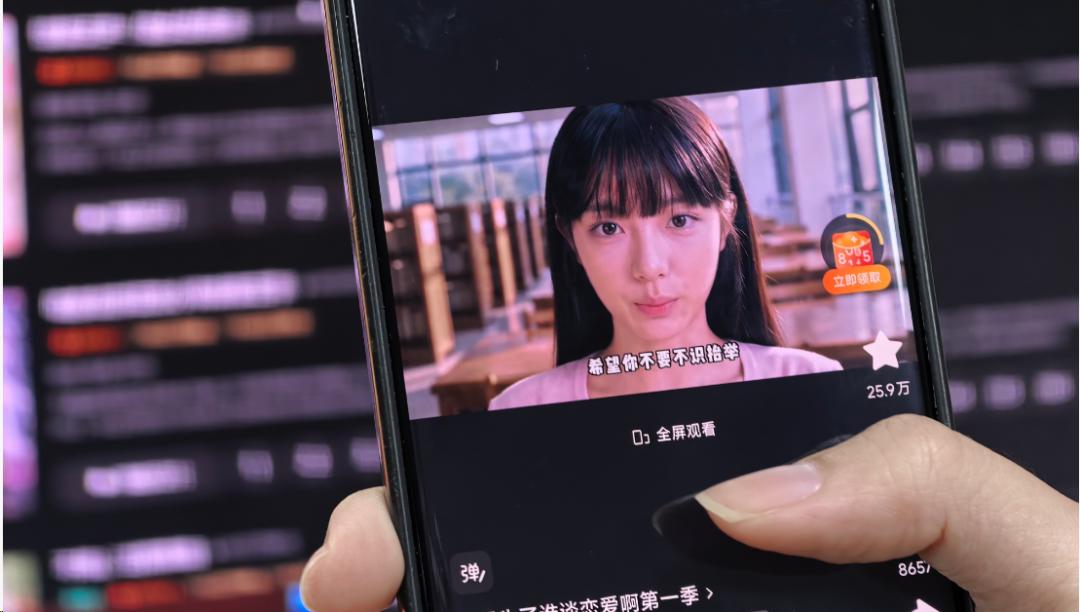
What on earth makes Hongguo so successful?
The first reaction of many people is that it is free of charge.
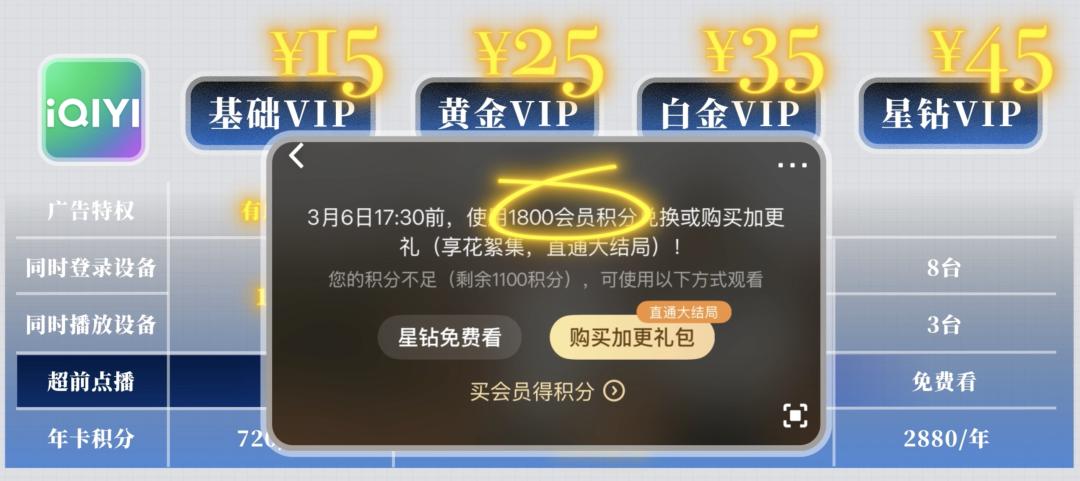
That's right, free access is its biggest killer feature. Looking back at the long video platforms, their membership fees have risen three times in five years, from 15 yuan per month to 45 yuan for the premium star diamond membership, and you even need to subscribe to a higher tier membership to cast the screen to other devices.
You are paying more and more money for fewer and fewer privileges, and these platforms have been complained by users and hit the hot search list for many times.
Some people say that Hongguo is seizing users from long video platforms.
Hu Mei thinks this is not entirely correct. To be precise, Hongguo turns a group of people who never watch dramas before into its audience.
For example, our parents.
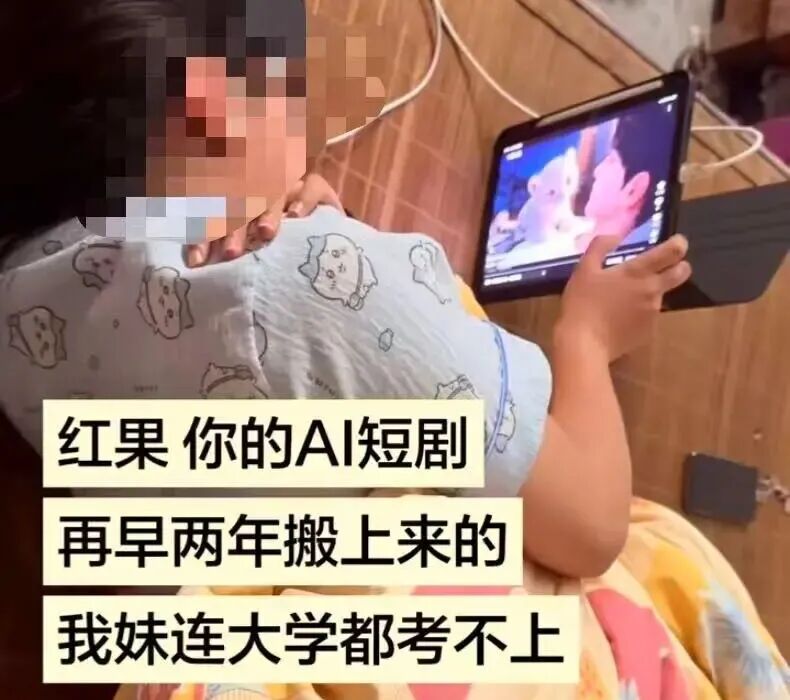
Data shows that users over 45 years old account for more than half of Hongguo's total user base. There are more than 40 million silver-haired users aged 50 and above, which means 1 in every 7 Hongguo users is an elderly person, and each of them spends two hours watching content on the platform every day.
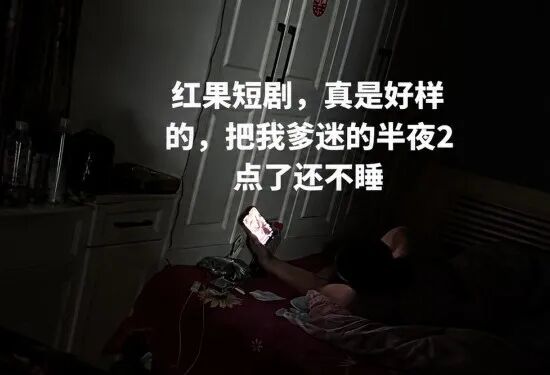
This group of people were never users of long video platforms before. They are reluctant to pay for content, but have a lot of spare time.
With Hongguo, the elderly finally find a free pastime. They can even withdraw a few yuan of cash from the platform, which is enough to buy a handful of green vegetables.

Another advantage is that it benefits from the strong backing of ByteDance, which controls the entire production pipeline.
Fanqie Novel provides online novel IPs covering all kinds of themes: rebirth, counterattack, fantasy, rural life and so on. The plots that traditional film and television companies dare not shoot or cannot shoot have already been produced in large quantities here.
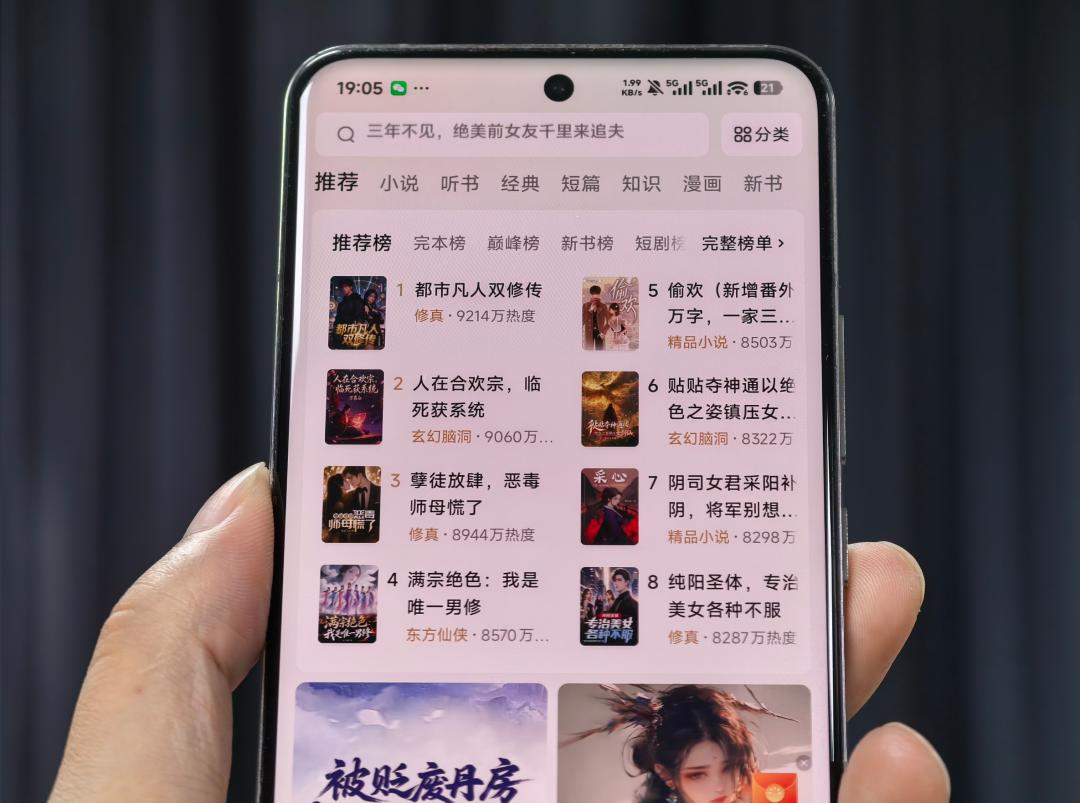
Long video platforms can only launch a few high-quality long dramas every month, with very limited repeated themes. But Hongguo launches dozens of new short dramas every day.
Coupled with its unique algorithm recommendation system, users do not need to think about what to watch. The drama starts playing as soon as you open the app, you can swipe to the next one if you don't like the current one, and there is always a new drama waiting for you.
Think about it: Douyin is responsible for attracting traffic to the pool, users can jump to Hongguo with one click after watching short drama clips on Douyin, Fanqie outputs IPs, and Hongguo is responsible for broadcasting the dramas. The three links form a complete closed loop within ByteDance's system.
It is equivalent to that while other people are still planting vegetables, ByteDance has directly opened a fully automatic canteen.
Finally, another important factor that accelerates the explosive growth of Hongguo is the development of AI technology.
In the past, to shoot short dramas, the crew had to go to Hengdian, rent venues and hire actors. Now for AI short dramas, only a few people with one computer typing prompts can finish the production. The cost is only one tenth of that of real-person dramas, and a new drama can be produced in two or three weeks.
With the cost dropping to an extremely low level, the production capacity naturally explodes. In the first quarter of this year, about 128,000 micro short dramas were launched across the whole industry, of which AI micro short dramas accounted for more than 95%.
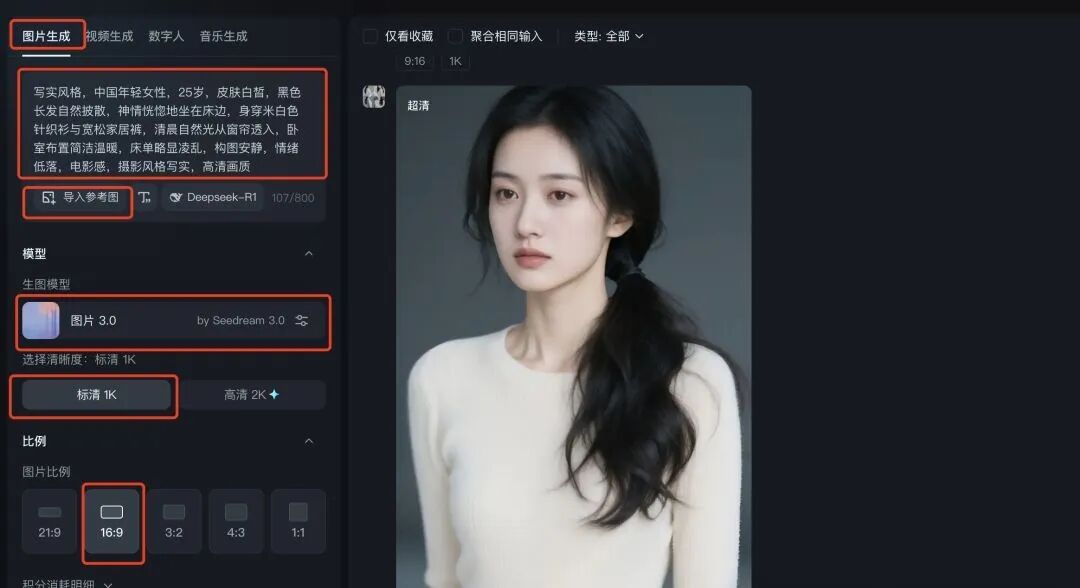
Many real-person drama crews in Hengdian have already stopped working.
On the one hand, real actors complain about losing their jobs, on the other hand, AI actors have endless performance schedules.
The short drama *The Laid-off Girl* made its leading actress Fang Taozi very popular. She not only received a lot of advertisement invitations, but even appeared on the cover of magazines.

What is more surreal is that many celebrities have already queued up to "license their faces" for AI use.
Joey Wong, who retired from the entertainment industry 22 years ago, has licensed her image in her peak years to a game company.
She did not shoot a single frame of footage herself, but the AI-generated short film *Phantom of the Beauty* was released. The scene where Nie Xiaoqian turns back under an umbrella made many viewers in the comment section cry.

Lawrence Ng also licensed his 20-year-old face to an AI film company, getting the payment while reliving the experience of being a leading actor.
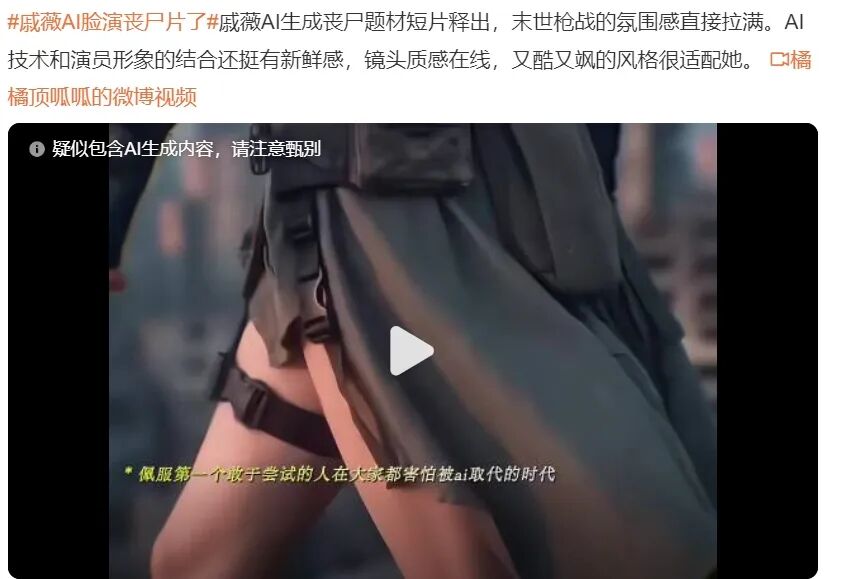
Actor Qi Wei starred in an AI zombie short drama. Although her performance was questioned to be slightly stiff, this trend is definitely unstoppable.
Looking at the long drama industry on the other side, they are still sticking to the old formula of "big IP plus traffic stars".
They cut the script to accommodate the actors' schedules, and modify the plot unreasonably to please fans, resulting in fragmented and illogical stories. Among the more than ten long dramas broadcast this summer, none of them is competitive enough.
The content is poor, but they come up with all kinds of new charging rules. Even VIP and SVIP users have to pay extra to watch the last few episodes, which netizens call "matryoshka-style charging".

Of course, Hongguo is not without weaknesses.
The biggest problem is that the industry seems prosperous, but the money does not go into the pockets of content creators.
Some reports say Hongguo's revenue in 2025 reached 15 billion yuan. ByteDance refuted that the data is not true, but insiders said the actual number is even higher.
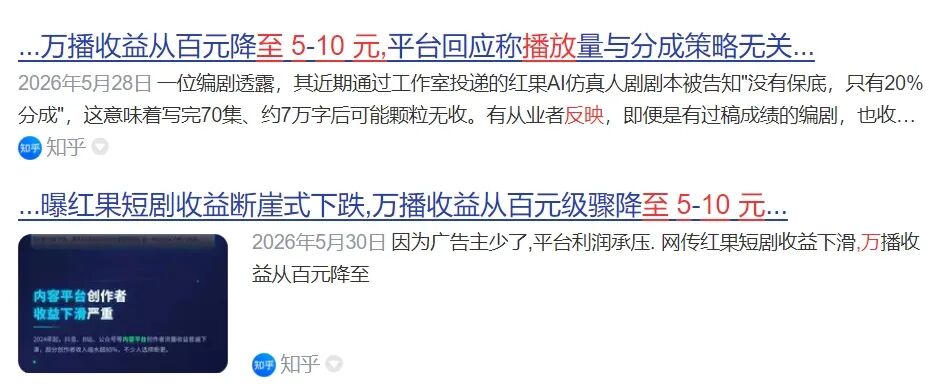
In any case, it is the consensus that 90% of the short drama producers are losing money. Some people reflect that the revenue for every 10,000 views has dropped from 100 yuan to only 5 to 10 yuan.
Moreover, the production capacity has been seriously overcapacity. In the first half of the year, the number of native AI short dramas newly launched on Douyin alone exceeded 220,000.
Calculated at 100 minutes per drama, a person needs to watch nonstop for 42 years to finish all of them.
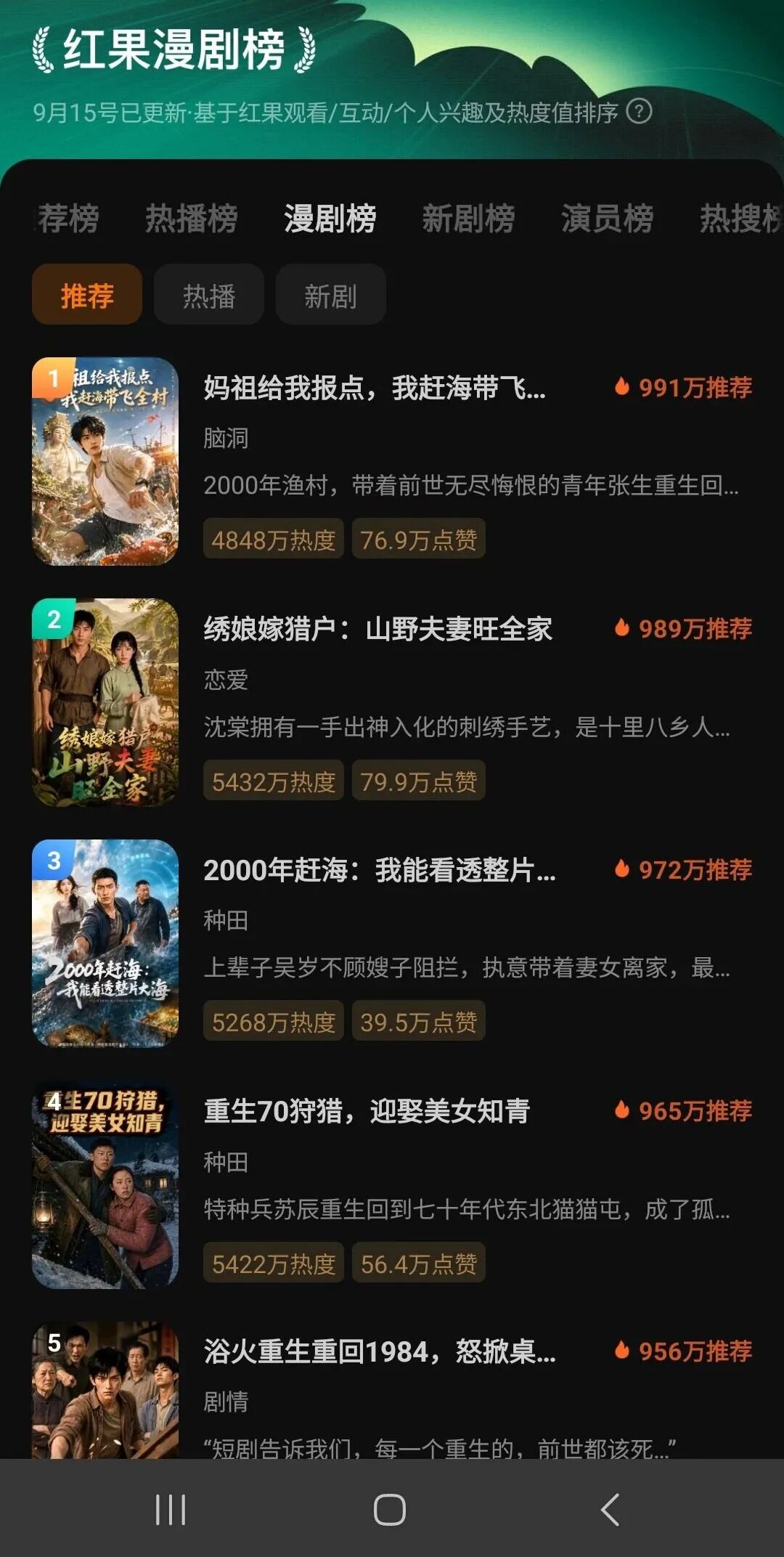
Among these dramas, only 1055 have view counts exceeding 100 million, with a hit rate of 0.47%. To put it bluntly, the vast majority of the dramas are just accompanying others to run the race as soon as they are launched.
Is it really reasonable that only the platform is making money? Without a win-win business model, how far can it go?
Finally, Hu Mei never thinks that if short dramas beat long dramas, everything will be perfect.
If the whole screen is full of AI-generated faces, you can see 5 identical faces when watching 3 dramas, and all plots are copied and pasted, that will be another kind of disaster.
But the long drama industry's failure is really not unjust. The audience has never been hard to please. As long as screenwriters write good scripts and actors polish their acting skills, there is no need to worry that no one will pay for the content.
Perhaps it is never short dramas that defeat long dramas, but arrogance.