From the Lego robotic duck, IKEA instruction manuals to *The Legend of Zelda*, Opus 5.5 is redefining vibe coding
It has been several days since the release of Opus 5.5, but the popularity of this model shows no sign of fading at all.
The reason is quite simple: netizens are still constantly developing new ways to use it.
In the past two days, a particularly interesting example came from Victor Mustar, Head of Product at Hugging Face.
Victor gave Opus 5.5 a task: design a life-sized Microduck using real, purchasable Lego parts.
Microduck is a small bipedal robot launched by Hugging Face and Pollen Robotics. It was a smash hit after release, with one unit sold every 4 seconds. What Victor wanted to make was its Lego version.
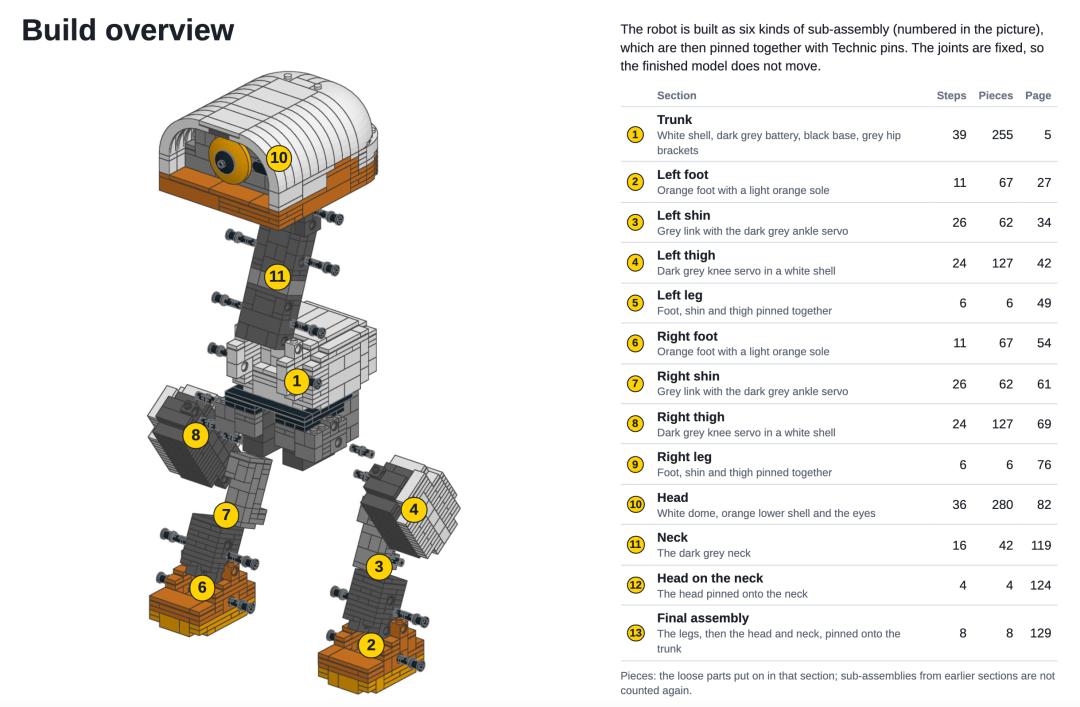
Unexpectedly, Opus 5.5 took the whole task on itself.
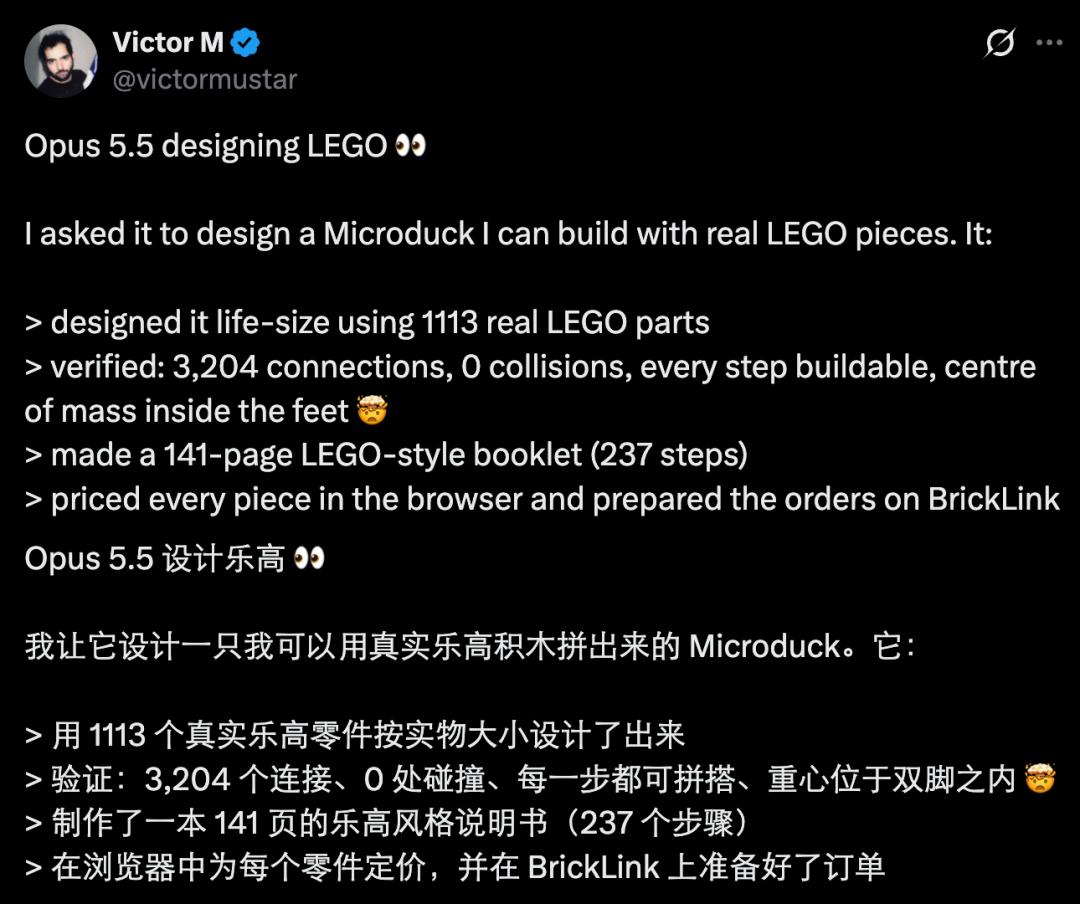
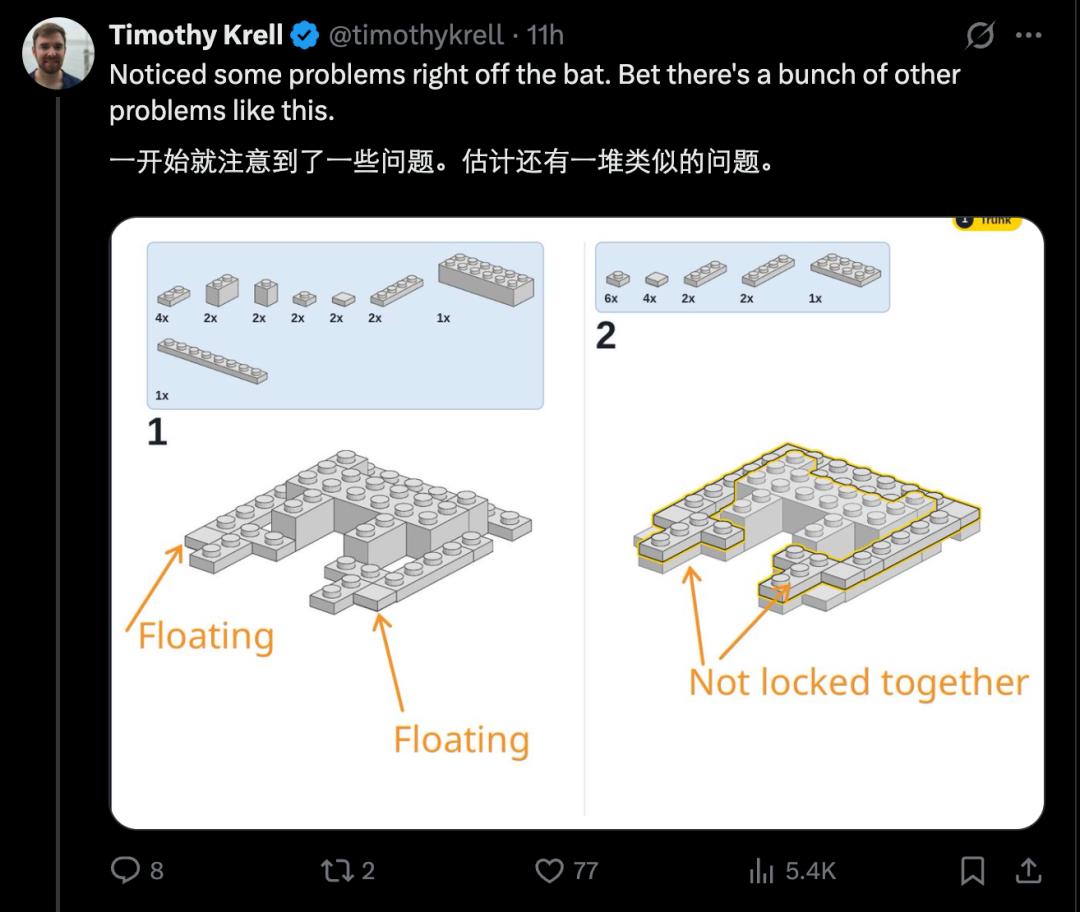
The design process first: Opus 5.5's design uses 1113 real existing Lego parts, the model checked 3204 connections, and also verified part collisions and center of gravity. The most impressive part is that it even generated a 141-page Lego instruction manual with 237 steps, as well as a list that can be used to purchase the parts. Even the demonstration video was made by Opus itself.
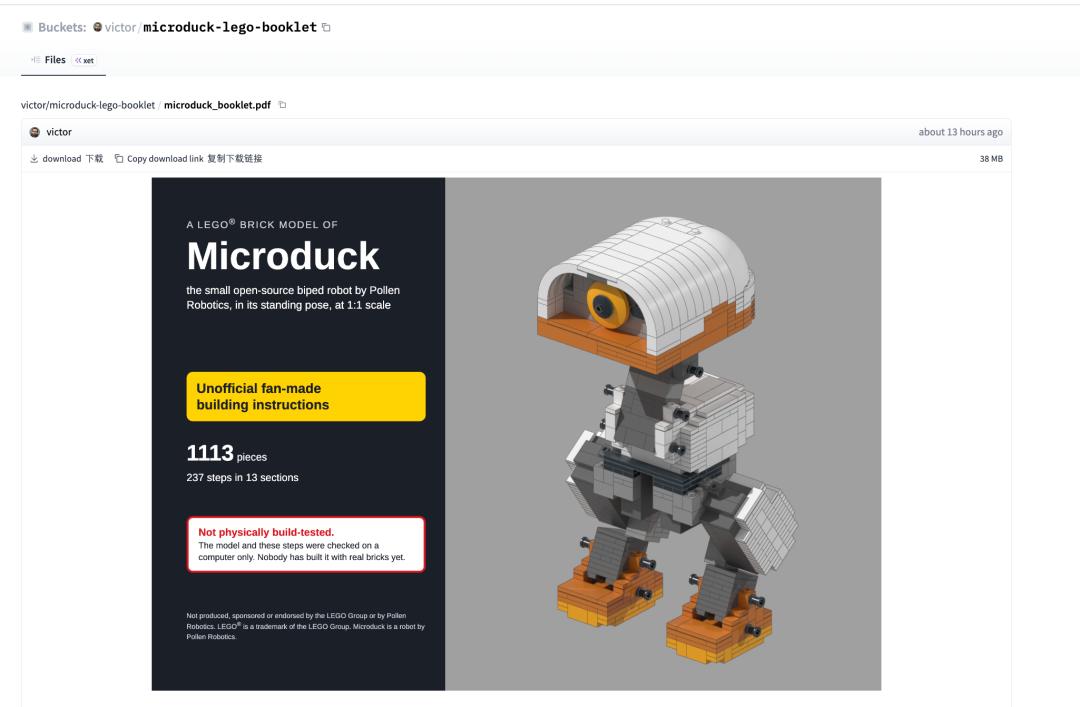
Victor uploaded the entire instruction manual to Hugging Face. Link: https://huggingface.co/buckets/victor/microduck-lego-booklet/tree/microduck_booklet.pdf
Everyone is curious whether the final assembled product can be completed by purchasing parts according to the list. Victor Mustar has already started the trial, and we need to wait for his further updates on the result.

Seeing this, Boris Cherny, Head of Claude Code, also went to the comment section. His first reaction was: That's pretty cool, I really want to connect this thing directly to a 3D printer.

It seems that this time, the new use case pioneered by Opus 5.5 is a bit different.
In the past, when testing whether a large model could write code, you might ask it to make a web page or draw an SVG. Now netizens have begun to ask it to design something that can actually be built in the real world, and then finish the engineering verification, documentation, and even the procurement list all at once.
And Lego is just the beginning of Opus 5.5's new use cases in recent days.
Another case is also very interesting. Everyone is familiar with IKEA's assembly manuals: there are very few words, and they rely entirely on illustrations of small figures and parts to tell you how to assemble those parts together.
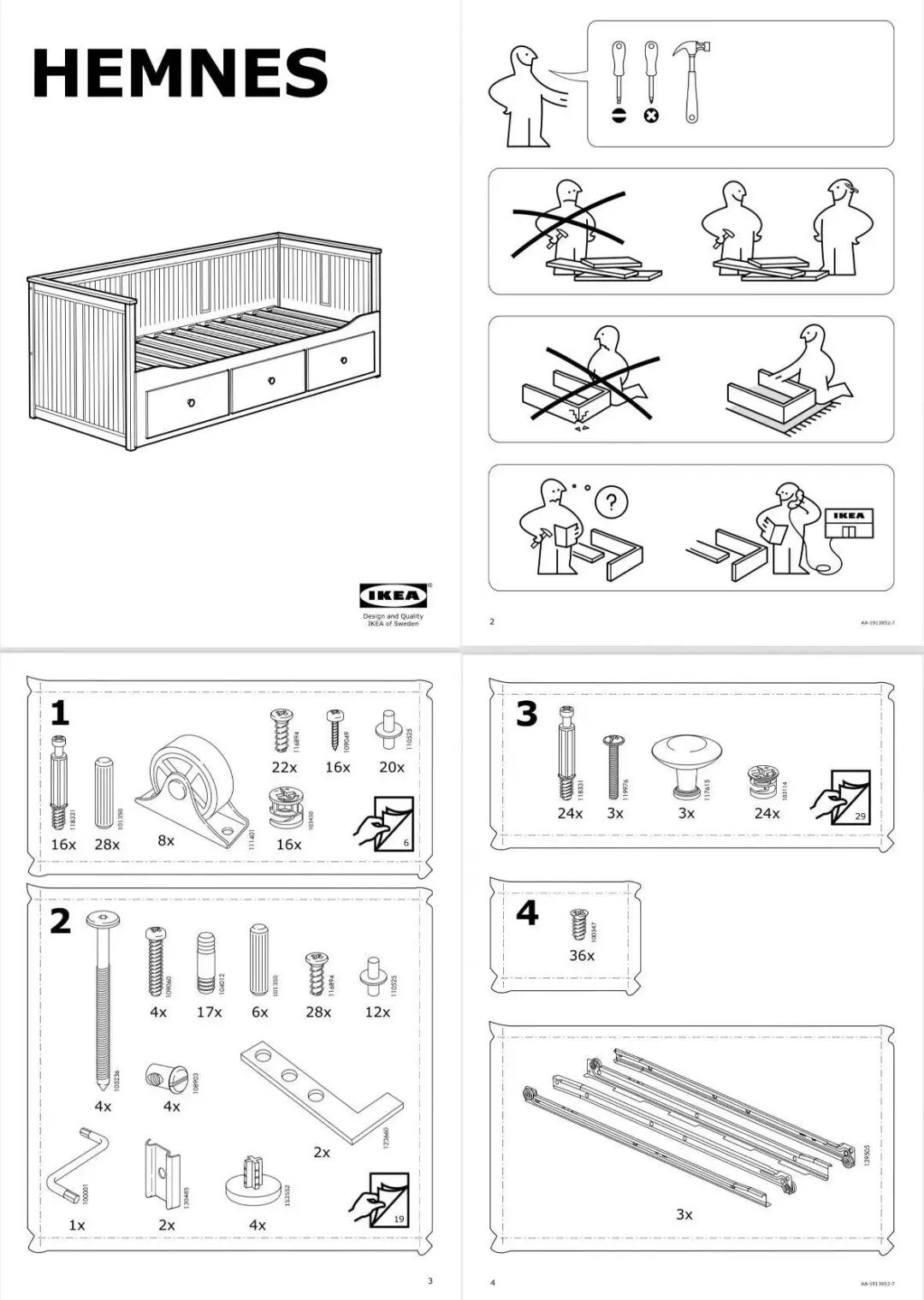
Some people love this minimalist design, but of course, many people's experience is: it's hard to understand, so frustrating.

So someone came up with an idea: directly turn the IKEA assembly manual into a 3D voice-guided tutorial video.
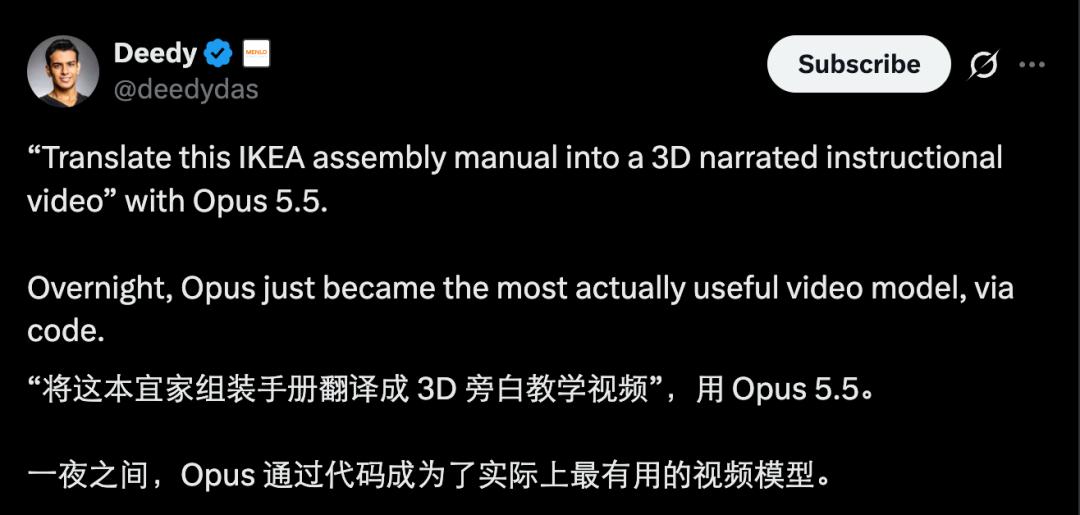
The original static 2D steps are remade into a 3D scene. Where the parts are, how they move, and where to install them next can all be directly demonstrated with animations, along with narration.
Deedy Das, the video creator and tech investor, commented emotionally, "Through code, Opus has overnight become a practically very useful video generation model."
Of course, strictly speaking, Opus 5.5 did not suddenly learn to directly output a video like a traditional video generation model.
This is exactly where the fun part lies. It understood the manual, then wrote the code by itself, built the scene, controlled the movement of objects, and finally rendered the result into a video.
Code is starting to become a universal middleware, and the model is writing code nonstop, but from the user's side, you don't have to look at the code at all.

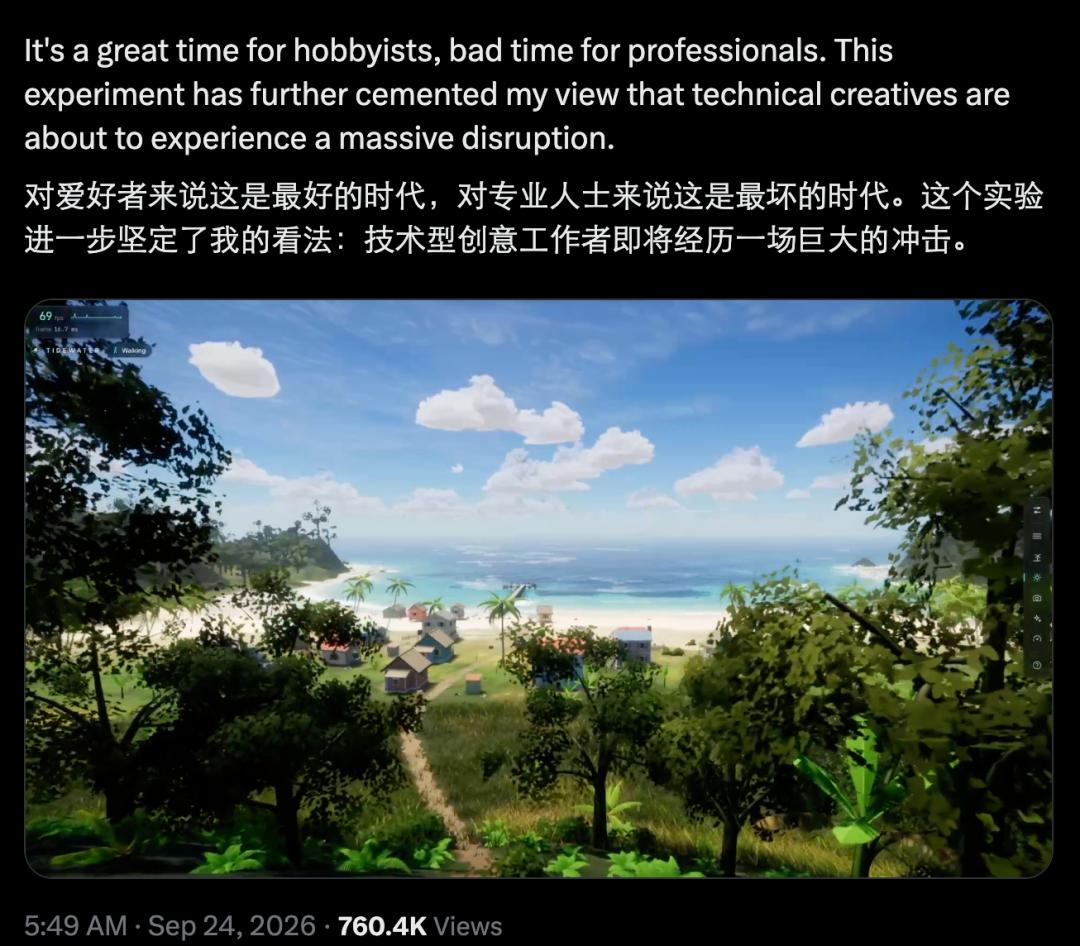
Even more hardcore, some people have extended this to games.
A netizen brought in Opus 5.5, GPT-6 Astra and Fable 5.1, and set them a task: recreate *The Legend of Zelda: Ocarina of Time*.
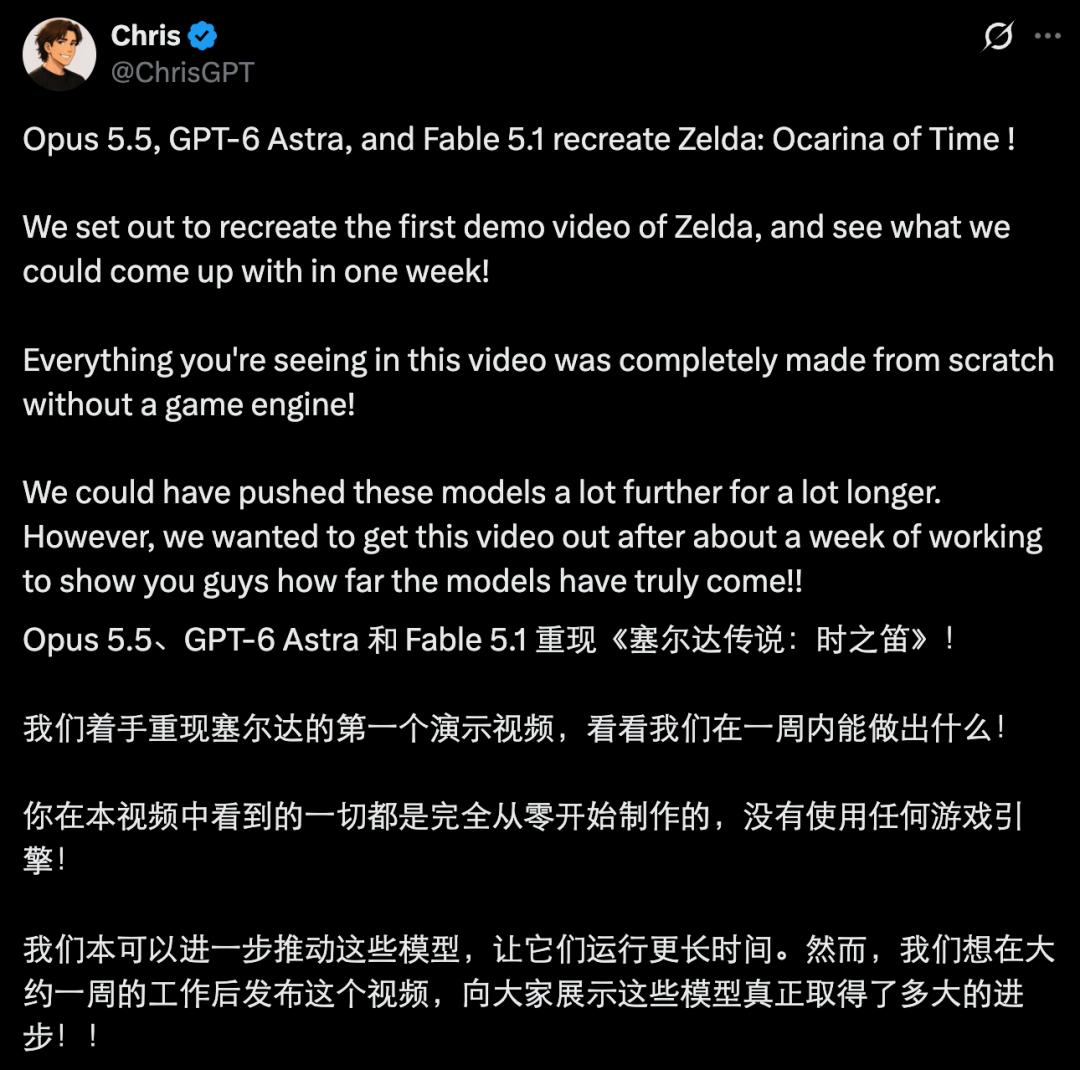
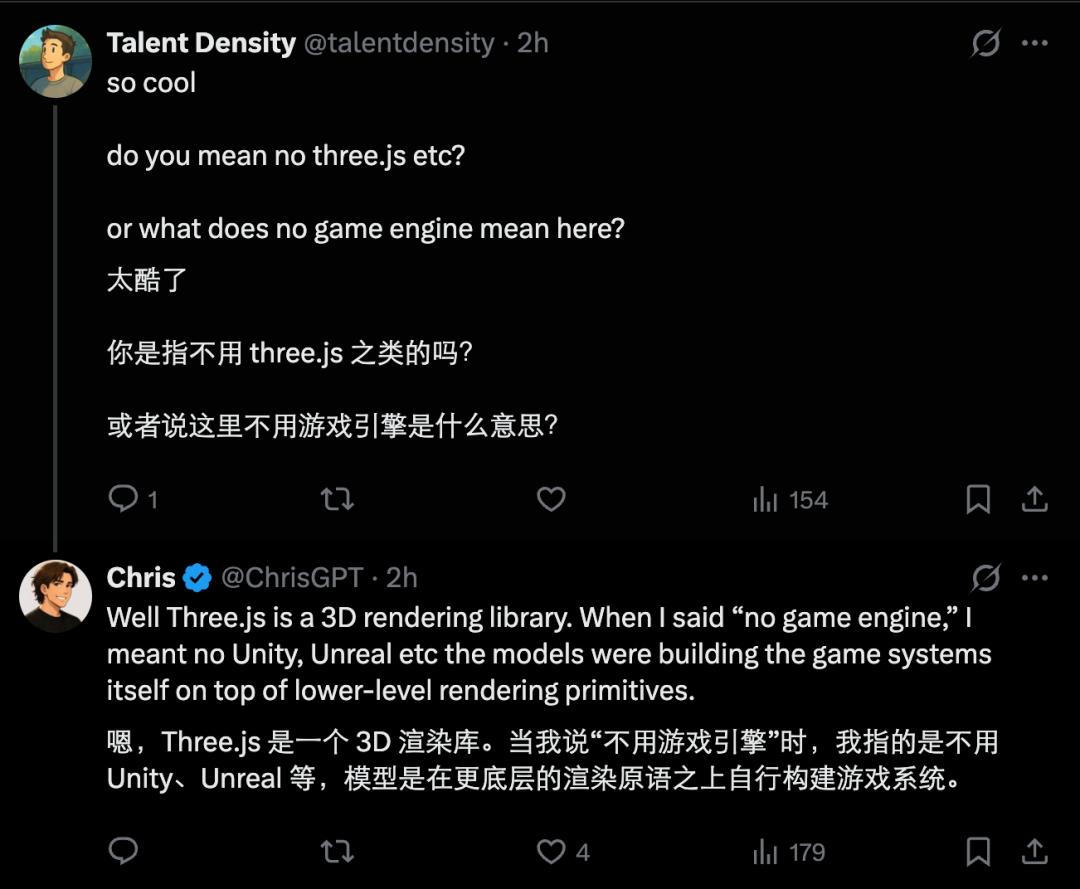
The team remade the scene from scratch according to the opening demo clip of the game. They emphasized that they did not directly use a ready-made full game engine, but let these models build a large number of game logic and visual content by themselves.
The content in the video is of course still very far from the real complete *Zelda* game, but the point is: until recently, we were still using "let AI draw a pelican riding a bicycle" to test whether a model understands the real world. Now a group of people have started using a model released only a few days ago to try to make Lego sets, 3D tutorials, videos, and even games. And this is not simply because everyone suddenly became exceptionally creative.

After its release, Opus 5.5 took first place on the Code Arena: WebDev leaderboard, with a price 60% lower than GPT-6 Astra (Max), the second-ranked best model.
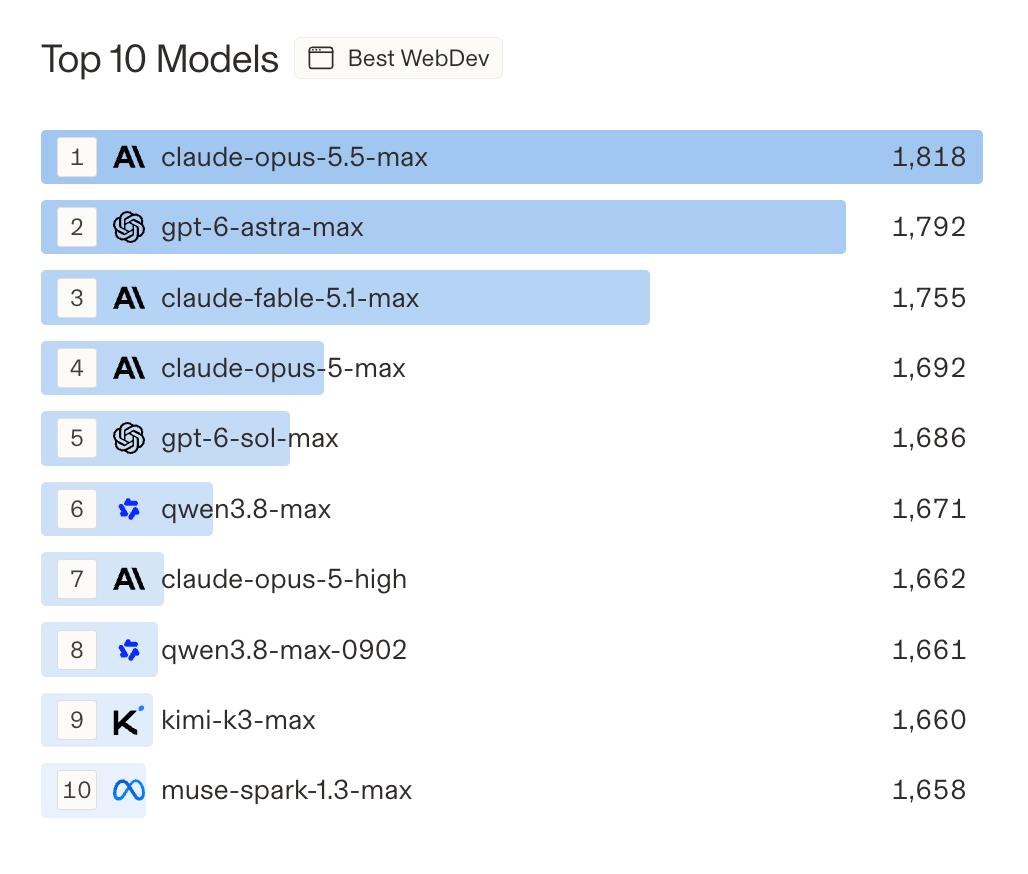

The leaderboard shows that its coding and Agent capabilities have been further improved. What netizens have done in recent days gives a more specific answer: when a coding model is powerful enough, what will "being able to write code" eventually become?
At this point, the name "Vibe Coding" even feels a bit too narrow to describe it.
However, some sharp-eyed netizens have also found some issues: in Victor's 141-page Lego manual, there are still floating parts and connections that are not properly locked. It seems that Opus 5.5 can already package an idea to look very much like a complete finished product, but there is still a final gap between "looks like it can be made" and "can actually be made".
If you have other new use cases, you are welcome to share them in the comment section.
This article is from the WeChat Official Account "jiqizhixin" (ID: almosthuman2014), the author is jiqizhixin, and it is republished by 36Kr with authorization.