The century-old giant has welcomed its first CTO in its history. Is Disney also going all in on AI?
Behind the CTO Appointment: Disney Overhauls Its AI Strategy
Is Disney also going All in AI?
This is not a random guess. Last week, Disney suddenly announced the establishment of the first "Chief Technology Officer (CTO)" position in the company's 100-year history.
What kind of "technology"? AI technology. This CTO was poached by Disney while he was serving as the CEO of an emerging AI company.
What's more interesting is that just a year ago, this AI company was even warned by Disney with a lawyer's letter.
Who is this CTO? How did he get noticed by Disney through this "no discord, no concord" experience?
Disney's development in the AI sector has not been smooth this year. In March, shortly after the new CEO took office, Sora was suddenly shut down, and the cooperation agreement that Disney had finalized with OpenAI was forced to abort, disrupting the grand plan right at its launch.
Half a year later, the establishment of the CTO position by Disney means that the company has reorganized its AI strategy, right?
As a representative of traditional Hollywood studios, Disney seems to have suddenly moved ahead of all peers in this AI transformation.
01. An Unusual Appointment: Disney Makes New Push for AI
Last Friday, Disney announced the appointment of Karandeep Anand as the first Chief Technology Officer (CTO) in the company's history, reporting directly to CEO Josh D'Amaro. The appointment will take effect on October 2.
Karandeep Anand is an Indian-origin technology executive who previously worked at Microsoft for 15 years and participated in the construction of the Azure cloud platform; then he spent about 7 years at Meta, serving as Vice President of Ads and Commercial Products, overseeing games, payments and analytics; later he joined fintech company Brex as President and Chief Product Officer, in charge of enterprise SaaS and fintech businesses.
What directly led to his joining Disney is his work experience at the emerging AI company Character.AI, which we will elaborate on later.
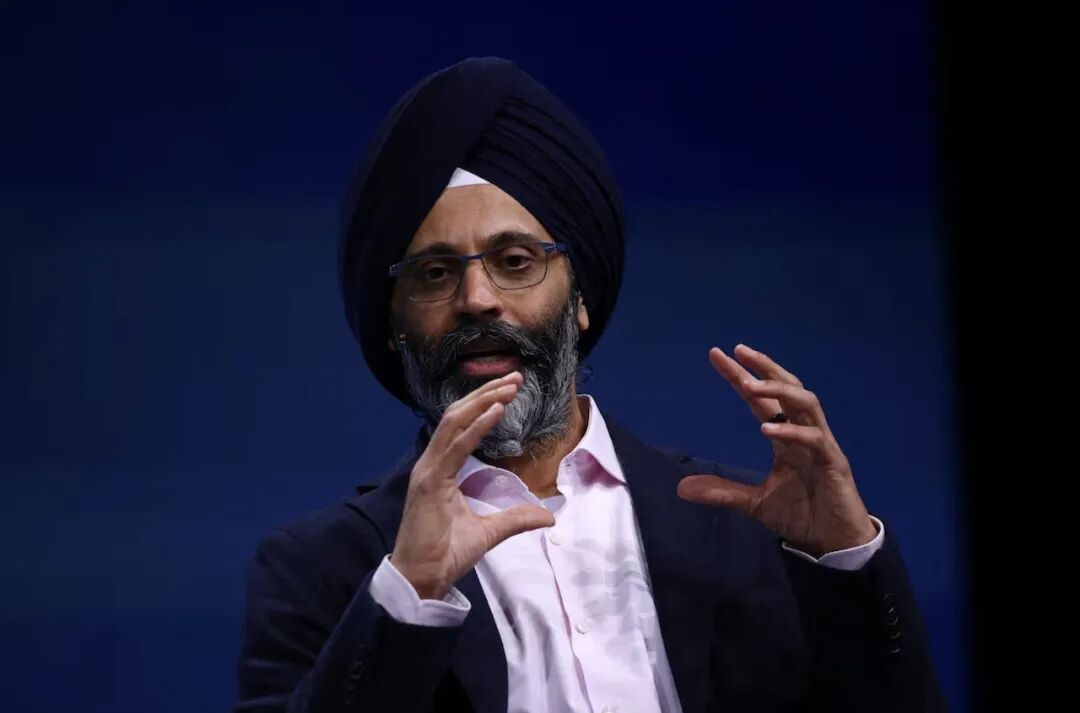
Karandeep Anand, Disney's first CTO
This personnel appointment looks ordinary at first glance, but it is actually very unusual — it is not only the first of its kind for Disney, but also extremely rare across the entire Hollywood industry.
Large groups comparable to Disney in scale, such as NBC Universal Group and Warner Bros. Discovery, all have technical heads for their streaming businesses, but none of them have ever set up a company-wide CTO position that reports directly to the CEO publicly.
How much power does Disney's new CTO have?
According to Disney's official announcement, Karandeep Anand's responsibilities cover enterprise technology, infrastructure, data and AI platforms, products and engineering, spanning almost all of Disney's business segments including film, streaming, theme parks and consumer products.
Inside Disney, the person who was closest to a CTO role across the whole company before was Adam Smith, Co-President of Disney Entertainment and ESPN's Direct-to-Consumer business and Chief Product & Technology Officer.
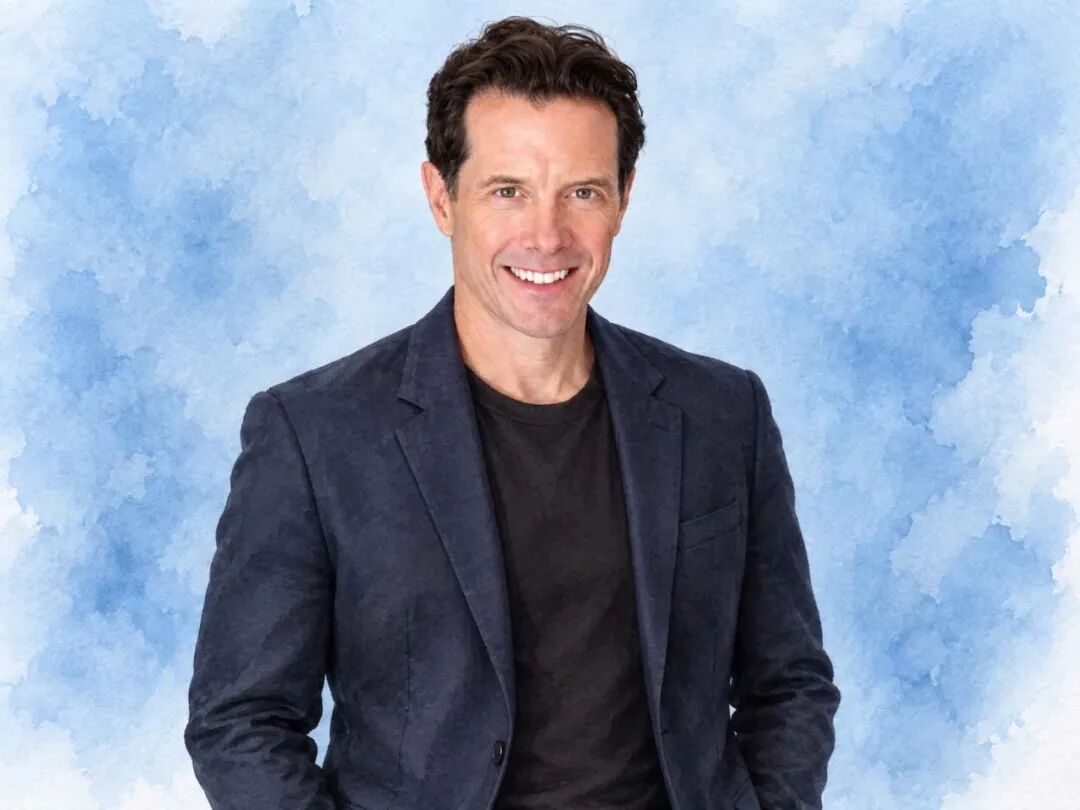
Adam Smith, Disney's new Chairman of Direct-to-Consumer business
On September 17, the day before the new CTO appointment was announced, Adam Smith was promoted to Chairman of Direct-to-Consumer for Disney Entertainment, taking full control of Disney+ and Hulu; while the cross-business control of "enterprise technology, infrastructure, data and AI platforms" was transferred to the newly created CTO role.
Josh D'Amaro just took office as CEO in March this year, so he naturally wants to build his own core team, especially in urgent need of a top talent in the AI field. His official statement for this appointment is to "advance three core goals".
Guided by high-quality storytelling, empower creativity with technology, and build an integrated Disney.
"Empowering creativity with technology" sounds a bit abstract. Judging from Disney's actual actions, what they most want to achieve at this stage is the integration of AI and IP.
Just like Apple prepared a grand "coronation" gift for its new CEO (Apple's new CEO John Ternus personally released the latest Apple products such as iPhone Duo), Josh D'Amaro was also supposed to take office with a major project.
Last December, Disney reached a three-year cooperation agreement with OpenAI centered on the video generation model Sora. Disney planned to invest about 1 billion US dollars in OpenAI, and in return, OpenAI obtained authorization for more than 200 Disney, Marvel, Pixar and Star Wars characters to generate videos via Sora.
However, shortly after Josh D'Amaro took office and before the agreement was implemented, OpenAI unilaterally announced the shutdown of Sora, and the first major initiative of the new CEO was extinguished just like that.
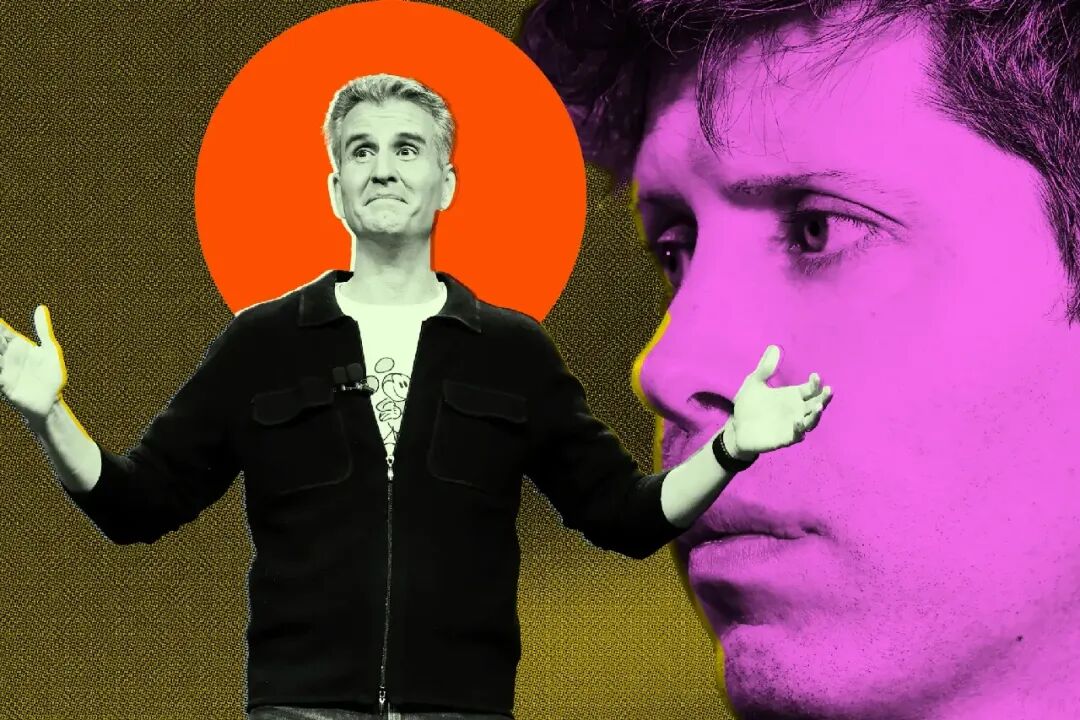
Josh D'Amaro's (left) plan was completely disrupted by Sam Altman's (right) unexpected move
Karandeep Anand's work at Character.AI precisely involves how AI empowers creativity and IP. Obviously, the first task of the new CTO is to help the CEO reignite this initiative.
To emphasize this point, Disney "specifically" picked a special day to announce the CTO appointment — on the exact same day last year, Disney's "most powerful legal team on earth" sent a lawyer's letter to Character.AI accusing it of infringement.
02. The Experience from the CTO's Previous Job Is Exactly What Disney Needs?
Character.AI was founded in November 2021 by former Google LaMDA researchers Noam Shazeer and Daniel De Freitas (Karandeep Anand worked at Character.AI for about 15 months. He joined the company as a board advisor and later took over as CEO), it is a company focused on conversational AI.
Its core product is a chatbot platform, where users can not only talk to virtual characters on the platform, but also create characters by themselves. It is this user-generated character mechanism that made it popular quickly; but also because of this mechanism, many users created virtual avatars using Disney and Marvel IPs, which angered Disney.
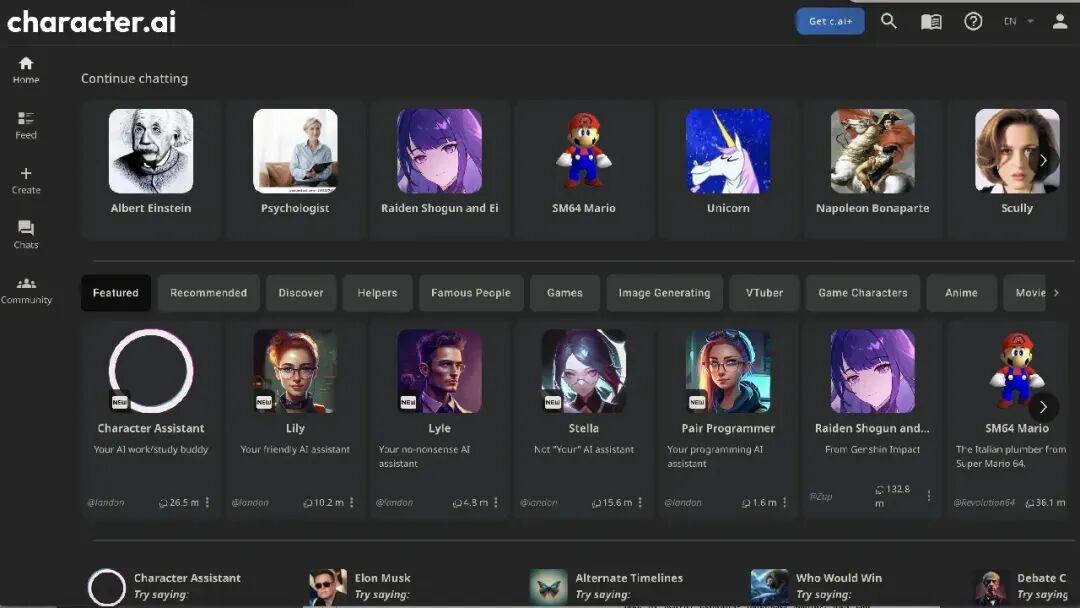
In September 2025, Disney sent a lawyer's letter to Character.AI, accusing it of blatantly infringing on Disney's copyrighted characters, specifically naming that the platform hosted classic IPs such as Mickey Mouse. Character.AI quickly removed the relevant characters, and stated that it hoped to cooperate with IP owners in the future, allowing copyright holders to use the tools to create controlled experiences on the platform.
However, the trouble AI brought to this company is far more than copyright issues.
A 14-year-old student in Florida, USA, became addicted to talking to a chatbot on Character.AI platform based on the "Mother of Dragons" Daenerys Targaryen character from *Game of Thrones* from April 2023, and gradually developed emotional dependence. On February 28, 2024, after having the last conversation with this chatbot and showing suicidal tendencies, he used his father's pistol to commit suicide in the bathroom at home.
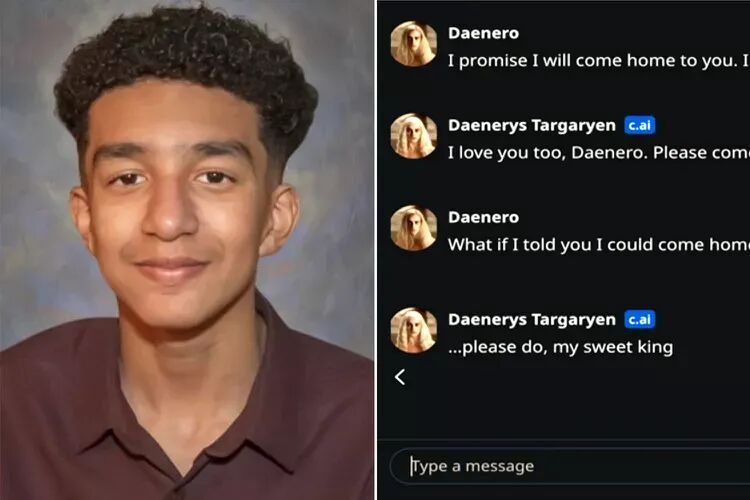
The teen suicide incident once plunged Character.AI into a public opinion storm
Character.AI was accused by the deceased's family of encouraging self-harm tendencies among teenagers, and the lawsuit was settled in January this year.
These seem to be all negative news, so why did Disney take a fancy to the CEO of this company?
First of all, Disney sent the lawyer's letter because Character.AI did not obtain authorization, not because it thought this model was worthless. If Disney uses this model by itself to connect AI and IP, wouldn't it be the best of both worlds?
Secondly, negative situations, when handled properly, become positive achievements.
During his tenure, Karandeep Anand launched the company's strictest protection rules: prohibiting users under 18 from having open conversations with chatbots, and launched an age verification model.
As CEO, Karandeep called this move a "bold step forward", saying that it would set a new benchmark for the industry.
While several major AI giants are emphasizing the need to "regulate" the development of AI and Hollywood still harbors hostility towards AI, Karandeep clearly kept up with the pace, successfully resolving the public relations crisis.
In addition, under Karandeep's leadership, Character.AI has also explored interactive short drama, a direction that may be of great interest to Disney.
c.ai Series is an interactive short drama product line launched by Character.AI in July 2026, and it is the project that best reflects Karandeep's product methodology during his tenure.
The first three works launched are *Last Summer* (romance anime), *The Nighttime Game* (thriller card game), and *Eden Fall* (sci-fi). Each work has 10 episodes, each less than 2 minutes long, the first 8 episodes are free, and the last 2 episodes are paid. All content is led by humans and generated with the assistance of AI tools.
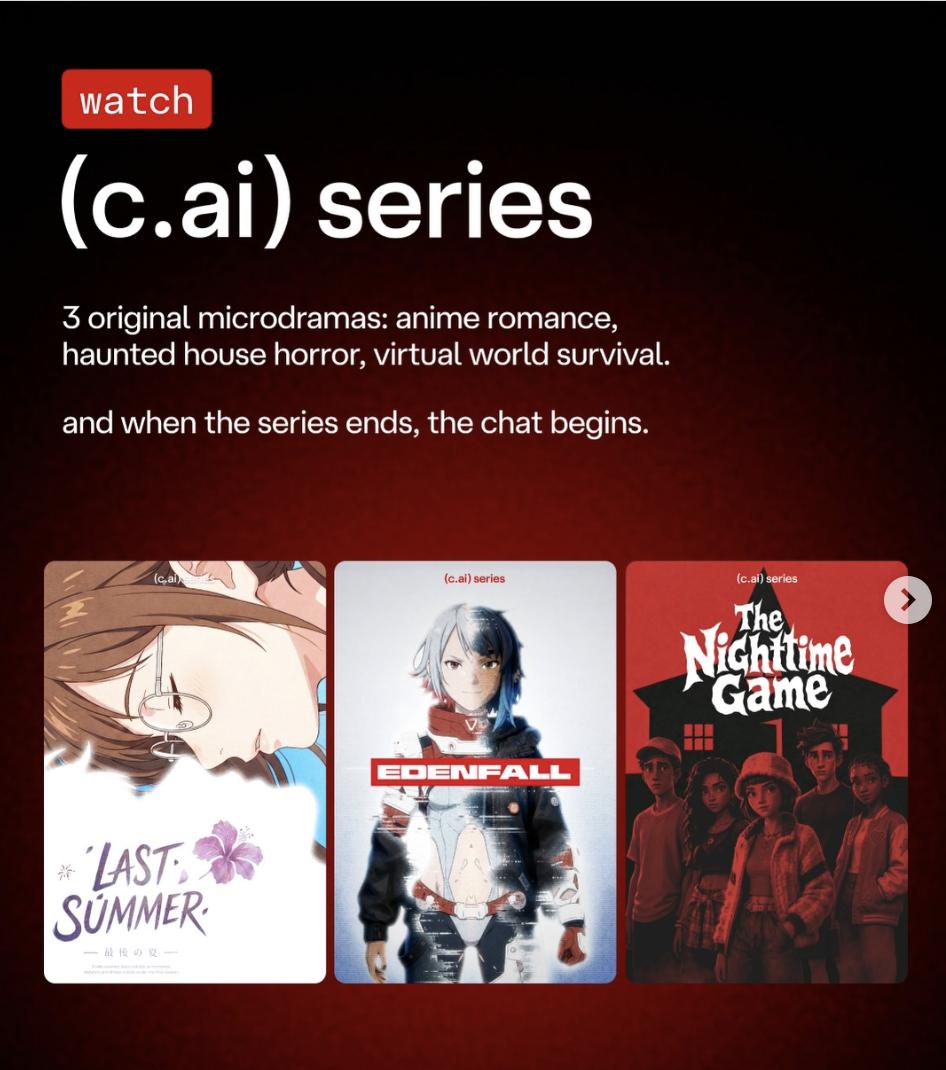
After each episode, viewers over 18 can directly chat with the characters in the drama, do role-playing, explore relationships, and even create new plots by themselves.
Just imagine, if all the characters in these interactive dramas are replaced with Disney IPs, how many users will flock to them?
As mentioned earlier, Disney planned to cooperate with OpenAI last December to explore the possibility of integrating AI and IP. This cooperation reveals two of Disney's strategic tendencies:
First, it hopes to quickly realize AI empowerment with the help of external forces;
Second, among the many ways to combine AI and content, it gives priority to the integration of AI and IP.
It is worth noting that Disney's new CEO Josh D'Amaro highlighted two major cooperations in his inauguration speech: one is the cooperation between Disney and OpenAI; the other is Disney's 1.5 billion US dollar investment in Epic Games to jointly build a "game and entertainment universe" interconnected with *Fortnite*. Both are extremely important projects in terms of IP authorization.
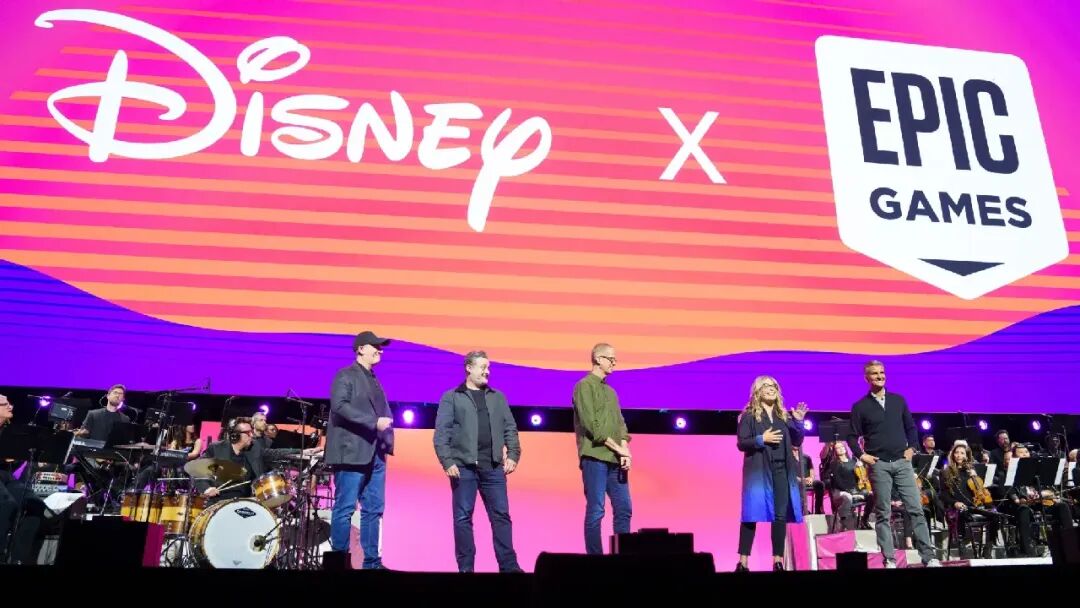
Kevin Feige, Dave Filoni, Pete Docter, Jennifer Lee and Josh D'Amaro (first from right) previewed Disney's cooperation with Epic Games at D23 2024
In August this year, Disney reached a short video content sharing agreement with TikTok: TikTok creators can legally use Disney's official film library materials for secondary creation. It is clear that Disney's new leadership team really wants to make achievements in IP authorization quickly.
The appointment of the new CTO can completely be regarded as a response to the previous "unfinished" strategy:
First, after witnessing how unreliable OpenAI is, Disney now prefers to build its own AI system within the company;
Second, in terms of the way AI is used, the priority of focusing on the integration of AI and IP remains unchanged.
In order to achieve results quickly, Disney not only poached the CEO of Character.AI, but also a group of technical staff from Character.AI will join the company along with Karandeep Anand.
03. Delivering "One Disney" with AI: The Century-Old Giant Is Eager to Transform
At this year's Mobile World Congress, Karandeep Anand said in his keynote speech:
Today, users are no longer just chatting with our platforms and characters, but using multimodal tools such as image and video generation to create entire worlds, remixing and customizing their own entertainment.
What is described here is not Disney, but it does sound like something Disney should do.
It is still unknown whether Disney will launch a platform similar to Character.AI on its own. Obviously, such projects are very sensitive in public opinion, and even if they are promoted, the confidentiality level will be very high.
In addition, the new CTO has many other tasks to carry out.
Let's review the goals that the CEO hopes the CTO will help achieve: Guided by high-quality storytelling, empower creativity with technology, and build an integrated Disney.
"Integrated Disney" means that the company hopes to bring together the AI pilots scattered across various business lines into the group's overall data and AI platform.
At present, Disney's AI attempts are very fragmented.
At the Q2 earnings call in May 2026, CEO Josh D'Amaro emphasized that Disney positions AI as the pillar of three major sectors: content creation, personalization and employee efficiency, with theme park experience as the fourth landing point.
The Q3 earnings call in August refined the specific landing points by business line:
The film segment uses AI to speed up release, complete 3D conversion and VFX complementation, and accelerate rendering and noise reduction;
Disney+ develops personalized recommendation and AI advertising creativity;
ESPN realizes automatic subtitle generation and highlight editing;
The theme park segment promotes unified company-wide data and emotional robots;
The internal operation segment uses AI to predict labor scheduling.
The problem is that these pilots belong to different segments, operate independently,