Sam's long-running food safety journey
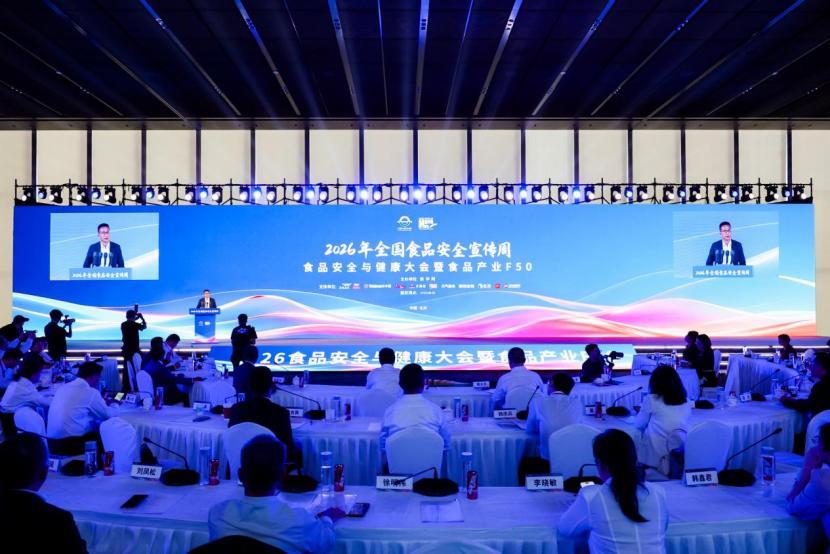
On September 22, 2026, the 2026 National Food Safety Publicity Week was launched. The theme of this year's event is "Upholding Virtue and Abiding by Law, Sharing Food Safety — Deepening Whole-Chain Supervision". At the 2026 Food Safety and Health Conference & Food Industry F50 held on the same day, Liu Peng, President of Sam's Club China, summarized Sam's food safety and quality control system management practices into three points: First, responsibility. Quality is the "No.1 Project for the Top Leader" of Sam's, and the primary responsibility is strictly implemented at every level from the headquarters to regions and individual stores. Second, whole-link management. Every link from commodity design, source management, logistics and transportation, inspection and shelf placement, in-store operation to the last mile is included in unified control. Third, all-round coverage. It adopts horizontal end-to-end management and three vertical lines of defense, forming an interconnected system that integrates internal and external governance.
High standards call for strict implementation. Before food enters a family's refrigerator, risks often hide in subtle deviations that are hard to detect. It could be an expired permit in the factory, an unrecorded temperature fluctuation during transportation, or a batch of ingredients that have been stored in the store for too long. Most consumers can only see the products on the shelves, and it is difficult for them to know what happened in these links.
The question a retailer has to answer is therefore very specific: Who bears the ultimate responsibility for food safety? If the responsibility is delegated to a system, how can the system detect that a problem has occurred? And after the problem is identified, who can stop the batch of goods in time?
1. The No.1 Project for the Top Leader
For food retail, quality is not only the responsibility of the procurement and food safety departments. The selection of suppliers, product development, logistics handover, and strict implementation in stores all require different business departments to make trade-offs that prioritize quality.
At Sam's, quality is defined as "the No.1 Project for the Top Leader". This means that all tens of thousands of Sam's employees, as well as every supplier and service provider behind the scenes, are included in the same responsibility system.
This responsibility is first reflected in the stage before the products enter the retail system. For food retail, the first threshold to determine whether a product can be put on the shelf is far beyond the store.
Before a factory becomes a Sam's supplier, it will first be assessed in dimensions such as production capacity, production environment, management level, and social responsibility, and then go through on-site audit. In August 2026, Sam's increased the number of audit clauses from 69 to 159, and matched professional module audit contents according to different types of suppliers. The audit usually lasts one and a half to two days. Suppliers with a score below 80 out of 100 cannot enter the qualified supplier pool. Problems such as expired production licenses, production beyond the approved scope, use of recycled deteriorated raw materials, or forgery of key records are red lines that will lead to direct disqualification.
Increasing the number of audit clauses does not automatically ensure food safety. What is more noteworthy is that Sam's incorporates audits into a continuous cycle.
Key suppliers that have entered the supplier pool will be re-audited every year. Sam's has also built a supplier maturity model, which aggregates quality-related data such as audit results, rejection and return rates, sampling inspection pass rates, store inspections, member complaints and public opinions, and grades suppliers. Suppliers under key attention will be tracked intensively and gradually eliminated if they fail to meet standards. A single audit only reflects the status of the factory on a certain day, and a set of strict monitoring standards can serve as the evaluation basis for daily performance.
This method is not built from scratch. Since 2010, Sam's has followed the global practices of its parent company Walmart, and included food safety certifications recognized by the Global Food Safety Initiative (GFSI) into the supplier access requirements. At present, the GFSI certification rate of Sam's private brand and direct-sourcing factory suppliers has reached 95%, and nearly 100 enterprises have been promoted to obtain GFSI-related certifications this year.
This means Sam's uses a "globally unified ruler" to measure all suppliers. No matter which country they are in and what the local standards are, the access thresholds are all raised to the same level. In short, this is to let international standards take root in local China, so that supplier management is backed by international standards and quality remains stable.
Certificates provide a unified inspection language, but they still cannot replace the retailer's continuous judgment on the actual production process.
This judgment sometimes goes deep into product specifications. Taking the MM salt-baked pistachio sold by Sam's as an example, when the pistachios are roasted with shells, nuts of different sizes receive different degrees of heat, so a can of pistachios may have both burnt-bitter and undercooked tastes. The team therefore requires to sieve the pistachios according to the size of the nuts, and then repeatedly adjust the baking time and temperature. This is essentially a flavor-related issue, but it also shows that retailers cannot just wait for the finished products to be delivered and then "pick the good ones". Product stability starts from the raw material grading stage.
Wuchang Rice follows a similar logic. After the release of the relevant variety testing standards in 2022, Sam's cooperated with Jianghan University, one of the standard drafting units, to apply DNA testing for verification, and sample test the variety purity of finished products. For consumers, it is easy to print the words "Wuchang" on the package; but for the supply chain, to prove that the rice in the bag is indeed from the corresponding variety, it is necessary to implement the variety identification in the testing process. The former is a sales commitment, while the latter is the cost that makes the commitment credible.
There are also some costs that seem to be "unprofitable" trivial details. Since 2024, from June to September every year, Sam's has added whole-chain temperature control for easily oxidized imported canned mixed nuts, keeping the temperature at 15 to 27℃ from the factory to the warehouse. This cold chain also costs a lot. Consumers may not know Sam's investment behind the scenes, but once the nuts produce an oily rancid taste at high temperature, the pricing and packaging on the shelf cannot restore the original flavor.
From supplier access to product design, all these actions have one thing in common: to move the time of problem detection forward as much as possible. If defects are found after the products arrive at the store, retailers can only remove the products from shelves. If risks are found when the products are still in the design and production stage, there is an opportunity to change the way the risks occur. However, source management is only the beginning of the whole chain. After the products leave the factory, every handover in storage, transportation, in-store operation and distribution may bring new risks.
2. One Whole Chain, Three Lines of Defense
Sam's "whole chain" management in food safety and quality control does not only stop at keeping risks out of the shelves. It starts from product design, goes through source management, logistics and transportation, inspection and shelf placement, in-store operation, and extends all the way to the last mile delivery.
Source audit determines "who is qualified to produce", while logistics and stores face another problem — how to ensure that the same set of standards is fully implemented in daily repeated operations without deviation.
When members walk into Sam's walk-in refrigerated area, they will immediately feel the cold. According to Sam's store requirements, the temperature in this area is maintained at 0-5℃ for storing refrigerated products such as milk, juice and eggs; sensors collect temperature at regular intervals and give automatic alarms when the temperature exceeds the range. Staff will also sample test the product temperature and upload the records.
In the backcourt, different foods correspond to different temperatures. In the special processing room for ready-to-eat foods such as sushi, cold dishes and decorated cakes, Sam's requires the temperature to be maintained at 16℃; the beef cutting room is kept at 3-7℃. The Australian chilled beef management materials provided by Sam's also list more conditions, such as controlling the temperature at -2℃ to 2℃ during transportation and in special cold storage.
All these figures show that cold chain is not only about "low temperature". It also needs to record at what temperature a batch of goods has been transported for how long, and how much remaining shelf life it has when arriving at the store. At Sam's, refrigerated product transport vehicles must be pre-cooled in advance, record the temperature during transportation, and test the temperature immediately upon arrival at the store. Products that fail to meet the standards will be directly rejected, and must be transferred to the freezer or cold storage within 20 minutes.
What is even less noticeable is the hand washing sink. Sam's requires employees, promoters and food tasting staff who contact fresh food to follow the same hand washing process, and the water temperature of the backcourt hand washing sink must reach above 37℃. On the one hand, this can avoid incomplete hand cleaning caused by cold water; on the other hand, under this temperature setting, the wrinkles on the hands will expand when heated, so the cleaning effect is improved. Third-party auditors will spot check whether employees remember the operation steps and actually implement them, so that standardized operations become a set of "muscle memory".
In addition to the previous links, how different functions form tacit understanding and consensus on quality control often tests the ability of retailers more.
Generally speaking, the procurement team hopes that products can be put on shelves in time, stores need to maintain normal operation, and suppliers care about delivery, all parties are under the pressure to complete their work. This is also why Liu Peng emphasized the "three lines of defense" in his speech at the conference: the front-line business team is responsible for implementation and self-inspection, the food safety and quality team formulates rules and supervises implementation, and third-party institutions conduct independent audits linked to store performance — the horizontal "end-to-end" whole chain answers "which links need to be managed", and the vertical "three lines of defense" answers "how to ensure effective management".
Sam's suppliers, warehouses and stores receive nearly 10,000 third-party independent audits every year, with relevant investments reaching tens of millions of yuan. Monthly surprise audits in stores cover nearly 500 evaluation points, and the results are directly linked to performance. The significance of nearly 10,000 audits is not only reflected in the quantity. For a large-scale retailer, the real difficulty is to ensure that the same set of standards remains effective after being applied across different factories, warehouses and stores, which is what Liu Peng said: not only to "cover all links", but also to "ensure effective control".
The number of audits cannot guarantee that every store or every batch of products is completely free of risks, but separate implementation, supervision and review at least solve an organizational problem — the same person cannot both rush for progress and score his own results. If an abnormal temperature, a member complaint or an audit defect can be recorded and trigger correction or even rejection, the written rules can be integrated into daily operations.
Member feedback is also part of this mechanism. The supply chain can establish batch records for goods, but consumers can find another type of problem from the taste of a bite of food or the status of a delivery. Sam's supplier assessment includes food safety complaints and negative feedback into the scoring system, so that signals from outside the shelves can be transmitted back to factories and stores, and become clues for the next audit.
3. From "Ensuring Safety" to "Improving Quality"
Sam's is a membership store. In this model, consumers pay the membership fee first, and then constantly make the decision of "whether to come back to buy".
Sam Walton mentioned a simple judgment in his autobiography Made in America: The real "boss" of a retail enterprise is the customer, because as long as customers spend their money elsewhere, they can make everyone from the chairman down lose their positions. In the membership business, this sentence is more straightforward: members will vote again every year by deciding whether to renew their membership. There is no shortcut between a single purchase experience and long-term trust. A member may be pleasantly surprised by a certain product, but he will also re-evaluate whether the membership fee is worth it after an unstable experience.
What retailers deliver is not only products, but also the predictability of the whole process from production to home delivery. Price and flavor are easy to compare at the moment of purchase, but most of the food safety management process is hidden before the transaction, and consumers can only gradually form their judgment after long-term use.
This also explains why food safety can hardly become a "selling point" in the traditional sense. Customers can perceive immediately when a product tastes better; but when a supplier audit is done more carefully, there will usually be no noticeable story left. Only when inspection, temperature control and interception become daily operations, can members get a "low-fluctuation" experience: the next time they buy the same product, they don't have to take a chance again. "Low fluctuation" sounds plain, but it is an ability that is difficult to replicate on a large scale in fresh food and food retail industry.
Therefore, for membership-based retailers, investment in food safety can hardly be simply regarded as a compliance cost. Extending audits to the daily operations of suppliers, running temperature control through warehouses, vehicles and stores, and increasing costs for a can of nuts may not bring visible returns in a single transaction. But if the products can stably meet expectations again and again, these investments will gradually become the reason why members are willing to renew their membership.
This is also the difference between "ensuring safety" and "improving quality". The former defends the bottom line that no problems should occur, while the latter pursues the stability of product identity, flavor and freshness. Whether the pistachio granules are uniform, whether Wuchang Rice can verify its variety, and whether beef can be delivered to the shelf at the appropriate time and temperature.
Food safety and quality are not two separate systems, but a continuous scale. The bottom line determines whether the product can be sold, and higher standards determine whether consumers are willing to buy repeatedly.
Strict standards will not automatically win consumer trust. The effectiveness of the audit depends on how the problems are handled after they are found; the credibility of the commitment depends on whether the daily records of suppliers, stores and distribution can withstand repeated inspections. There is no guarantee of "never making mistakes" in food safety. What really needs to be asked is whether the system can detect deviations in time when they occur, and whether someone is responsible for stopping them.
This year's National Food Safety Publicity Week included "Deepening Whole-Chain Supervision" in its theme, which discusses how responsibility can be implemented through the increasingly long food supply chain. Sam's "food safety network" is composed of factory audit, product specification, time and temperature control, in-store operation and independent review, connected link by link. What is worth observing is not that a certain rule is strict enough, but that these rules can still be implemented in every bag of rice, every can of nuts, and every in-store handover as the business scale expands.
For leading retail enterprises, scale not only amplifies risks, but also provides another possibility: when they are willing to continuously invest in third-party audits, cold chain and supplier transformation, and require upstream partners to jointly implement the standards through procurement requirements, enterprise standards may spread outward along orders and the supply chain. This is a logically rigorous, interconnected system that integrates internal and external governance, which minimizes the possibility of deviations caused by individual performance.
There is no end to food safety, only continuous new starting points. This is also the most simple reality of food retail: no single audit or sampling inspection can replace the next implementation. For retailers, the real exam is to ensure that the responsibility from the headquarters to regions and stores continues to be implemented on an ordinary day, and every seemingly insignificant link continues to operate in accordance with the standards.
———————— Brand Special Feature ————————