Lu Weibing talks about memory price hikes, Xiaomi bets on AI to build a new high-end development narrative
From September 21 to 23, 2026, the "VO Mi" relay race stepped into the mobile phone market with soaring prices. Right in the critical window period between the Mid-Autumn Festival and National Day holidays, three top mobile phone manufacturers jointly kicked off the fourth-quarter competition.
On the evening of September 23, Xiaomi officially launched two flagship models, the Xiaomi 18 Pro and Xiaomi 18 Pro Max, which went on full sale immediately after the new product launch, sprinting for the high-end mobile phone market in the second half of the year.
Before the price was announced, Lu Weibing, Partner and President of Xiaomi Group, President of the Mobile Department, and General Manager of Xiaomi Brand, made a preliminary introduction. He said: "These two days, our Android peers are also releasing new products, and everyone is working very hard. There has been a lot of discussion about the price of the Xiaomi 18 Pro series, but we will do our utmost."
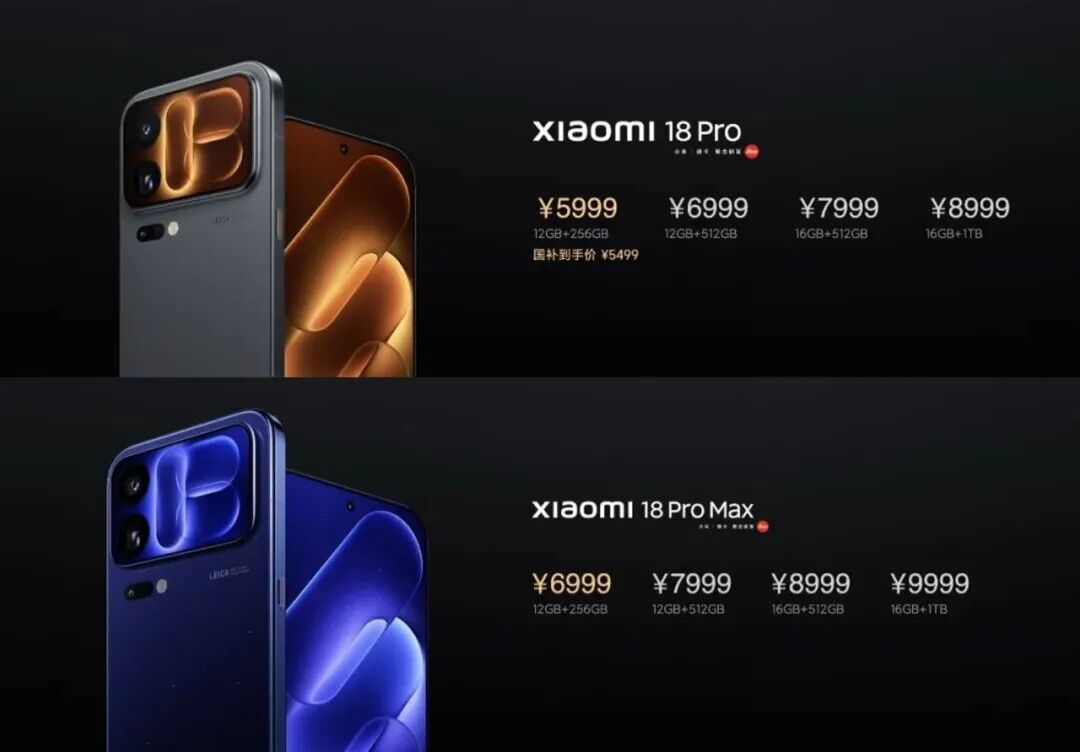
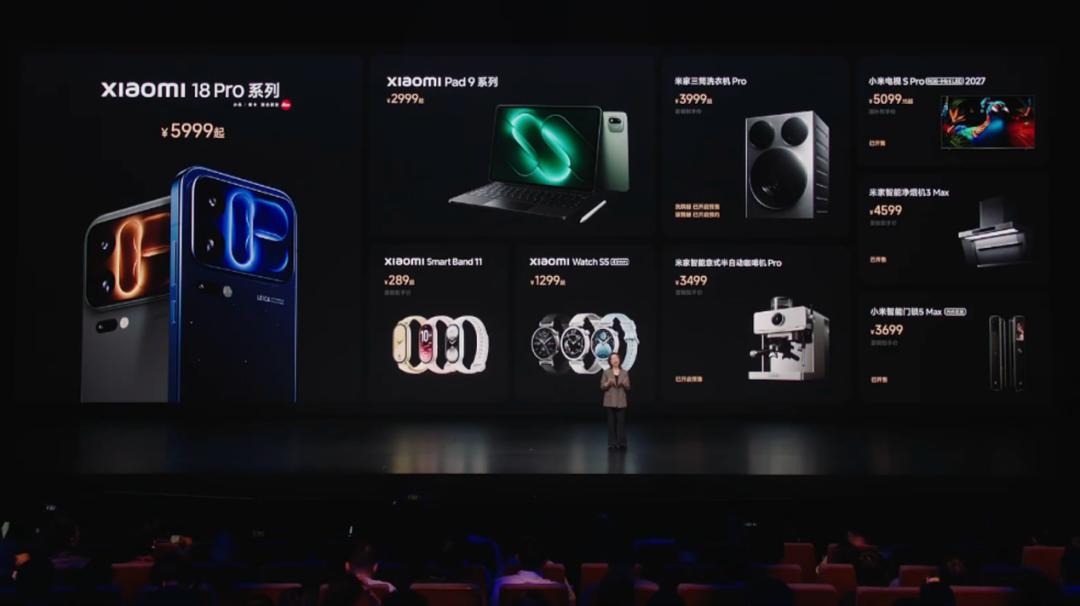
Finally, the starting price of Xiaomi 18 Pro is 5999 yuan, and the actual price after national subsidies is 5499 yuan, while the top-spec version is 8999 yuan; the starting price of Xiaomi 18 Pro Max is 6999 yuan, the top-spec version is 9999 yuan, and a transparent special version priced at 10999 yuan is also launched for high-end users who prefer collection value.
Interestingly, when the price of 5999 yuan for Xiaomi 18 PRO appeared on the big screen, Lu Weibing emphasized again: "This pricing is the result of our utmost efforts, and Mr. Lei has also given us tremendous support." The live broadcast cut to Lei Jun in the audience, and warm applause broke out at the scene.
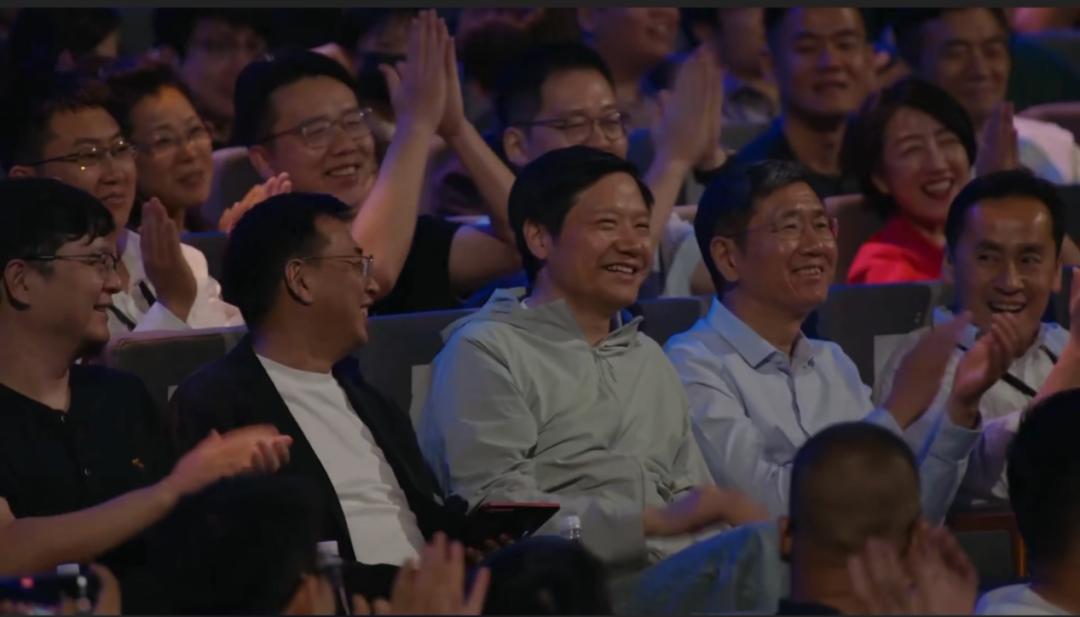
After the prices of the Pro and Pro Max versions were all announced, Lu Weibing also talked about the helplessness behind this pricing strategy: "Memory prices have risen sharply since the second quarter of last year, and it has been more than a year and a half so far. The industry generally predicts that 2027 will also see a continuous upward trend, the increase may become smaller, but the current base is too large, and even a small rise will lead to a very high absolute amount." He also "advised": "If you have a need to change your phone recently, we recommend you buy it as soon as possible. The earlier you buy, the more favorable the price will definitely be."
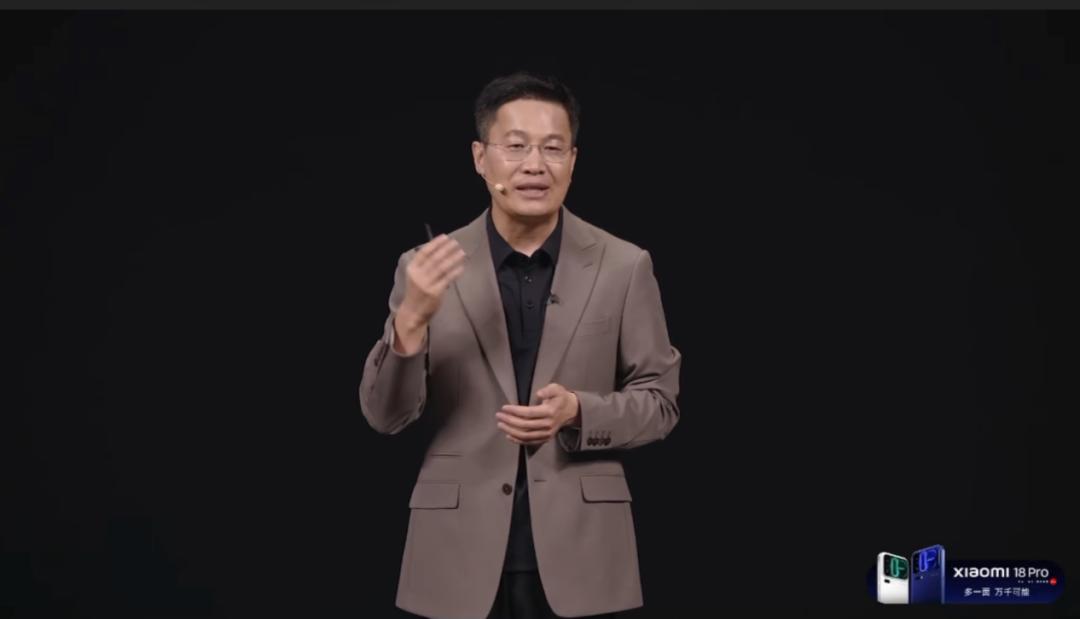
Lu Weibing, Partner and President of Xiaomi Group, President of the Mobile Department, and General Manager of Xiaomi Brand
This is equivalent to a remote response to the online discussions about the price increase of this round of new domestic Android phones. It is not yet known whether netizens will follow the advice, but the growth pressure faced by mobile phone manufacturers this year is clearly visible.
AI Becomes the Core Keyword of Xiaomi's New Flagship
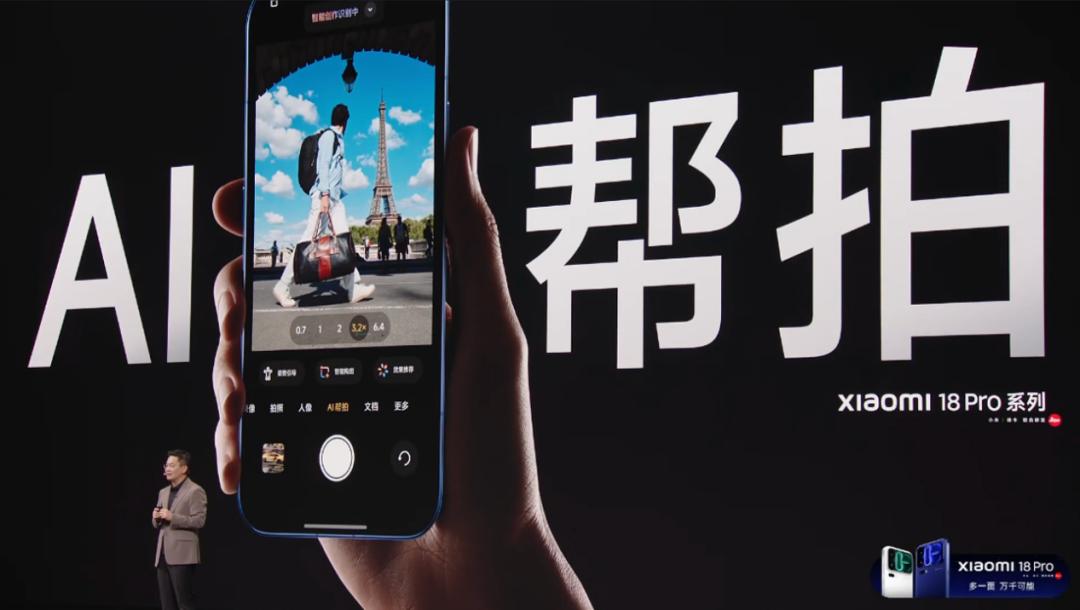
Node AI notes that the imaging system and AI intelligent system are the core focus of Xiaomi's press conference.
If at the hardware level, the imaging end of the Xiaomi 18 Pro series continues the cooperation route with Leica, builds static imaging capabilities with a large-base main camera and periscope telephoto lens, and is equipped with a large imaging model to optimize the image quality, then throughout the mobile phone launch session, AI has become the main line of Xiaomi's official narrative, and is no longer regarded as an auxiliary function of mobile phones.
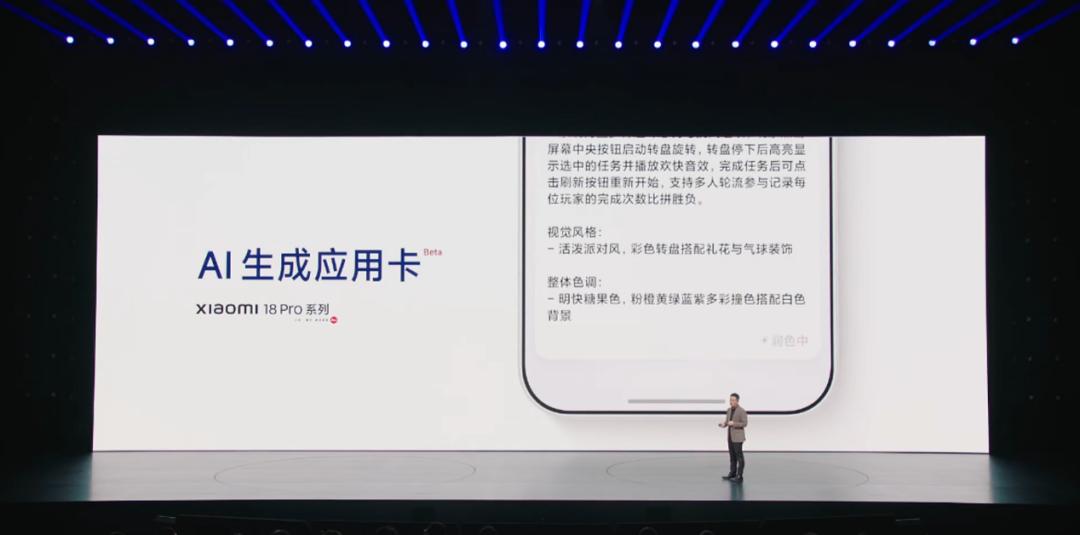
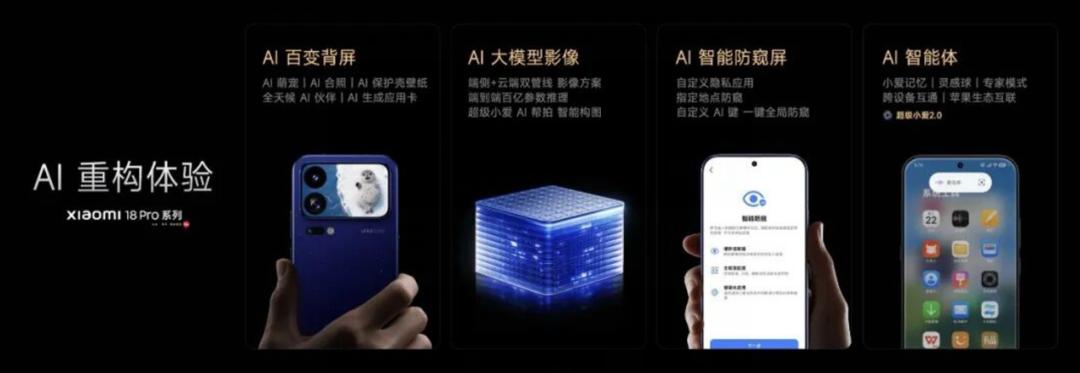
In addition to AI's assistance for photography and imaging, based on the MiMo large model, Xiaomi also launched the Super Xiaoai 2.0 intelligent agent. It breaks away from the traditional one-question-one-answer mode of voice assistants, can independently identify user intentions, connect multiple system tools, perform composite tasks step by step, and realize cross-device collaboration between mobile phones, tablets and PCs.
The press conference emphasized that this large model is mainly operated on the device side, taking into account response speed and privacy security; the new phone also realizes cross-brand ecological linkage with Apple Watch, and this set of cross-device collaboration is also scheduled by the MiMo large model.

The integration with AI can also be seen at the system hardware level. The Xiaomi 18 Pro series is equipped with the new generation Qualcomm 2nm flagship chip, which upgrades the upper limit of computing power; at the same time, it adopts the self-developed LIPO packaging process to achieve an extremely narrow four-sided equal screen, and adds hardware-level anti-peeping and an independent AI physical button.
The AI magic back screen also relies on MiMo to generate dynamic images from prompt words, making the back screen a window to display AI capabilities, rather than just a simple notification display screen. Node AI believes that the AI magic back screen will also become a differentiated label for Xiaomi products.
New Flagship, New Price, New Competition
Two days before Xiaomi's press conference, vivo and OPPO had successively released their new generation of flagship products. The three top domestic brands competed head-on, each choosing a completely different high-end breakthrough path.
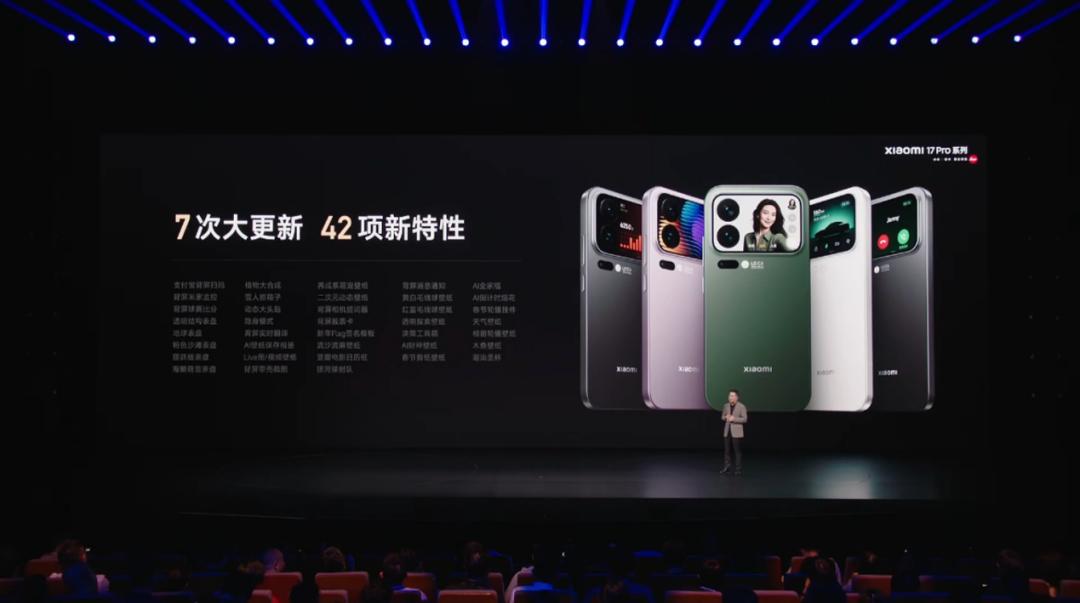
From the perspective of product differentiation, Xiaomi chooses to build recognition in battery life, on-device AI, and privacy hardware interaction, avoiding the professional video imaging track that OPPO and vivo have cultivated for many years; while the new products of vivo and OPPO in this round still take imaging creation capabilities as the core selling point. The difference is that vivo highlights technological breakthroughs, and OPPO highlights the real experience of shooting users.
In terms of pricing that users are most concerned about, a simple comparison by Node AI finds that the starting price of vivo and OPPO's flagship products in the same period is 5499 yuan, which is equal to the actual price of Xiaomi 18 Pro after subsidies, but Xiaomi's official starting price is higher, and the price threshold for mid-to-high-end versions is overall higher than that of competing products, with greater pressure on high-end premium.
This actually reflects the product trade-off strategies of various brands under the rising memory prices. Obviously, Xiaomi chooses to tilt resources to the fields of on-device AI and battery life innovation.
Node AI notes that the AI track that Xiaomi emphasized the most this time is the most distinct difference among the three press conferences. Vivo and OPPO embed AI into single-point creation tools such as imaging and photo albums, taking a lightweight and high-stability route as an auxiliary enhancement for imaging capabilities; Xiaomi takes the on-device large model as the core main line of the whole device, adds an independent AI button, and upgrades AI to a hardware-level interaction entrance.
This AI intelligent agent with autonomous planning capabilities belongs to a more forward-looking product exploration, but its functional fault tolerance and scenario adaptation still need to be actually tested by users.
From the perspective of Node AI, Xiaomi's strategy is like two sides of a coin.
On the one hand, AI is more important to Xiaomi. When the imaging track has reached a growth bottleneck, Xiaomi tries to break away from the homogeneous imaging parameter competition, and shape on-device AI into a new high-end value narrative, which is a necessary attempt. Its value is more prominent in Xiaomi's ecosystem. Xiaomi's on-device AI is not only connected to smartphones, but also to Xiaomi and Pengcheng's two important intelligent vehicle lines, as well as technology home appliances. In the future, Xiaomi mobile phones will become the core hub of its vehicle-home ecosystem.
But on the other hand, is Xiaomi's AI ready? The concept of AI and AI intelligent agent has cutting-edge communication attributes, which can attract consumers who pursue fresh experiences, but it also needs to educate the market to accept AI intelligent agents. If the experience is not good enough, or the collaboration ability with the internal system and third-party applications is not mature, it will greatly affect the product use experience. Whether the popularity of AI topics can be transformed into continuous sales and reputation will be a technical and marketing proposition that Xiaomi needs to continuously verify in this product strategy.
Looking back at 2026, before the Xiaomi 18 Pro series was launched on September 23, Xiaomi had released multiple rounds of mobile phone products in 2026, covering supplementary digital flagship models, foldable screens and Redmi sub-brand models, and the product rhythm was more scattered than in previous years.
In May 2026, Xiaomi launched the Xiaomi 17 Max large-screen flagship, focusing on long battery life to take over the previous generation of digital flagship; in early September, Xiaomi took the lead in releasing the Xiaomi 18 Fold foldable flagship, implementing the MiMo large model in advance, warming up for the subsequent digital flagship while seizing the foldable screen market in advance. In addition, Redmi, as Xiaomi's main online product line, continued to launch new products from the first half of 2026 to August, holding the mainstream mass mobile phone market.
This is also Xiaomi's new strategy under the involution of the mobile phone industry. It continuously uses new products to maintain annual exposure, while cultivating the market's awareness of MiMo on-device AI at a steady pace, and then takes the Xiaomi 18 Pro series as the annual flagship finale to fully prepare for sprinting the annual shipment volume in the fourth quarter.
Conclusion
The era of hardware involution has not passed, and AI has become a new outlet for domestic mobile phones to find incremental growth. Xiaomi has bet on the full-device-level AI intelligent agent to take the lead in implementation, hoping to break through the current market pattern. However, when memory prices are soaring and consumers' demand for changing mobile phones is more cautious, whether Xiaomi's AI narrative can get a response from the market still needs consumers to vote with their feet. Fortunately, Xiaomi's competitiveness starts with mobile phones, but is not limited to mobile phones. Node AI will continue to pay attention to how the competitive situation in the fourth quarter will develop.
This article is from the WeChat official account "Zhi Baidao", written by Dao Ge, and authorized for release by 36Kr.