Saudi capital has once again teamed up with Tencent to invest in a Chinese game company: Is Baokela, the developer of *Stellar Resonance*, planning to go global?
According to public information from Qichacha verified by Entertainment Capital Review, Scopely South East Asia Pte. Ltd. completed a strategic equity investment in Shanghai Baokela Network Technology Co., Ltd. on September 23. This entity is the Asia-Pacific regional arm of U.S. mobile game publisher Scopely, whose ultimate parent is Savvy Games Group under Saudi Arabia's sovereign wealth fund PIF. Its well-known published titles include *Pokémon GO* and *Monopoly GO!*.
This is not Scopely's first foray into China's gaming sector. It previously took controlling stake in Chengfeng Yunqi Network Technology — a team spun off from the former Perfect World Chengfeng Studio that is currently developing a Marvel IP-adapted ARPG project *Project Comet*. Shanghai Sikeli Software Development is its 100% owned local R&D center, making Baokela the third Chinese team it has invested in.
However, this transaction has a unique highlight that did not appear in previous cases: Tencent.
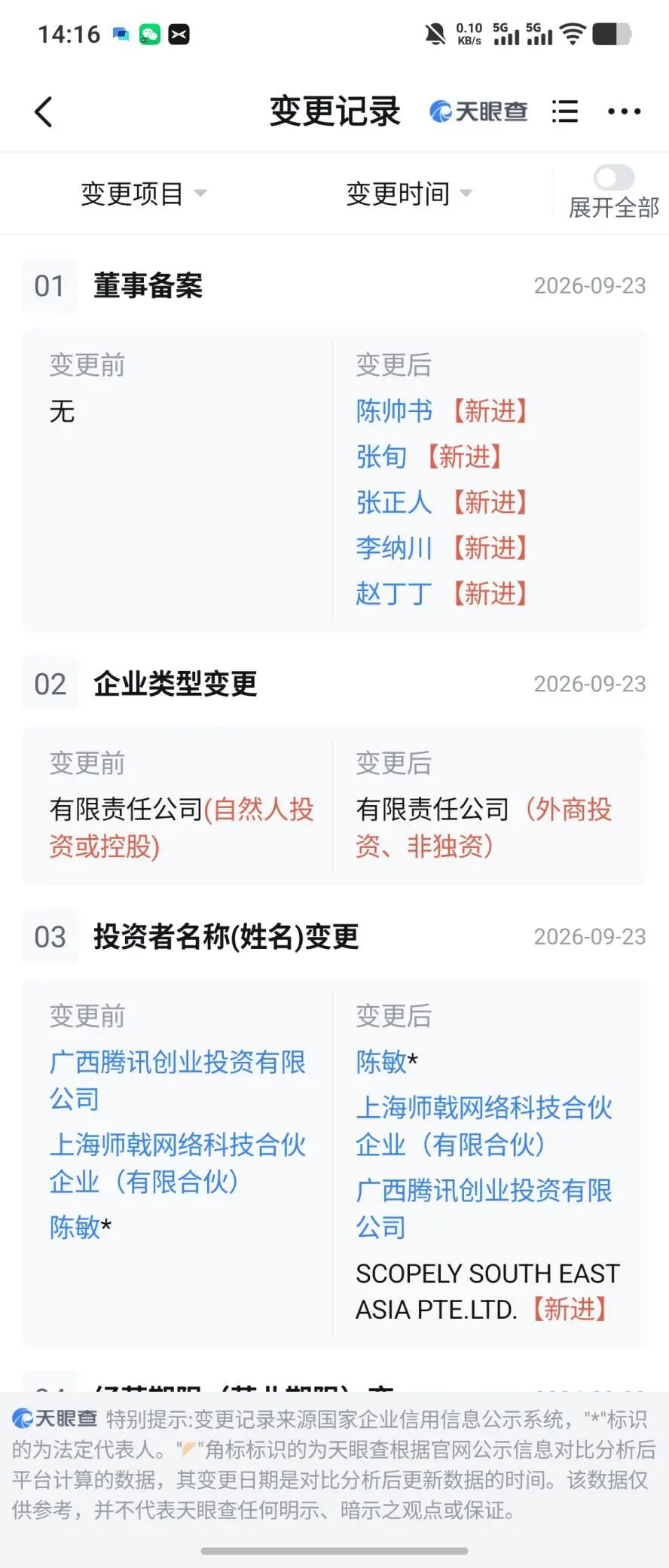
Tencent invested in Baokela back at its founding in 2021, holding a 20% stake and becoming the earliest institutional investor of the company. Scopely SEA joined as a shareholder later, and the two parties appeared on Baokela's shareholder list at the same time. It is worth noting that Jingxiu Games, an affiliate of Tencent-backed China Ruyi, has already realized its North American market distribution relying on Scopely's resources.
Therefore, Baokela's shareholder list marks the first real business intersection of the two giants. It is not a joint investment, but a scenario where two strategic shareholders entered the company one after another.
Baokela itself fully justifies this high-profile shareholder structure.
Chen Min, the founder, is a veteran with deep experience in China's MMO track. He led the development of *Dragon Nest Mobile* and the Korean server version of *Ragnarok: Origin*, both of which delivered robust revenue performance during their respective operation cycles. The company was founded in 2021, secured investment from Tencent, and now has a team of around 150 employees.
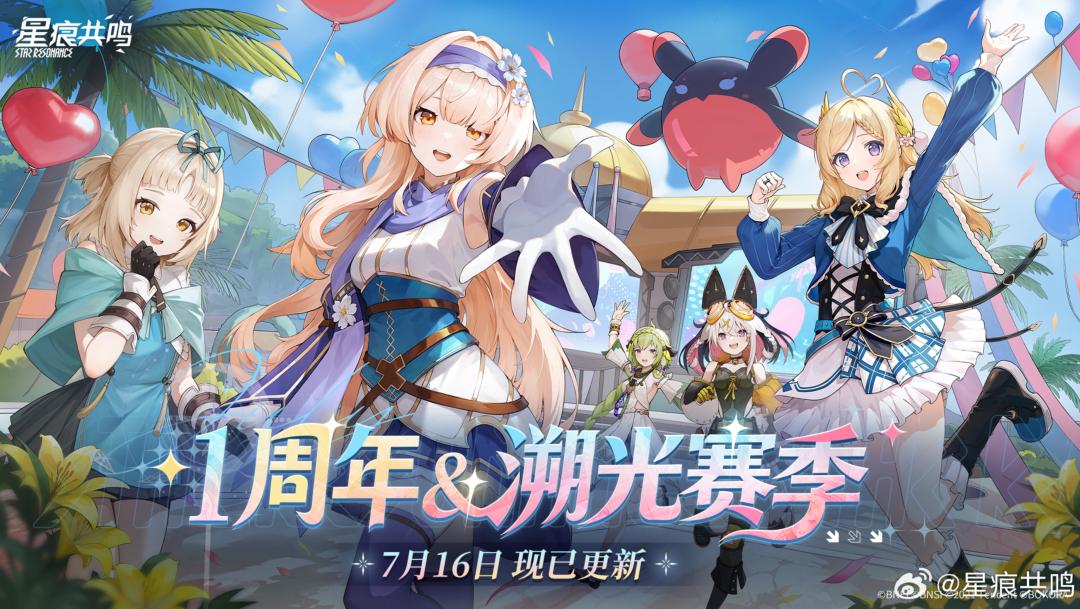
Its flagship product is *Echo of Starfall*, a cross-platform open-world MMO developed with the *Blue Protocol* IP licensed by Bandai Namco. Players often compare it to the now-discontinued *Blue Protocol* PC game, but Baokela has completely redeveloped the underlying technology stack: it redesigned the entire worldview, class system and social gameplay, retained the anime-style art direction, adopted a lock-free action combat mechanism, and launched on both PC and mobile platforms for global distribution. In China's domestic ACG MMO track, there are very few large-scale high-quality productions that can be fully delivered, and *Echo of Starfall* is one of the rare works in this category.
What Scopely values most is the team's mature industrialized R&D capability and proven track record of successful product delivery.
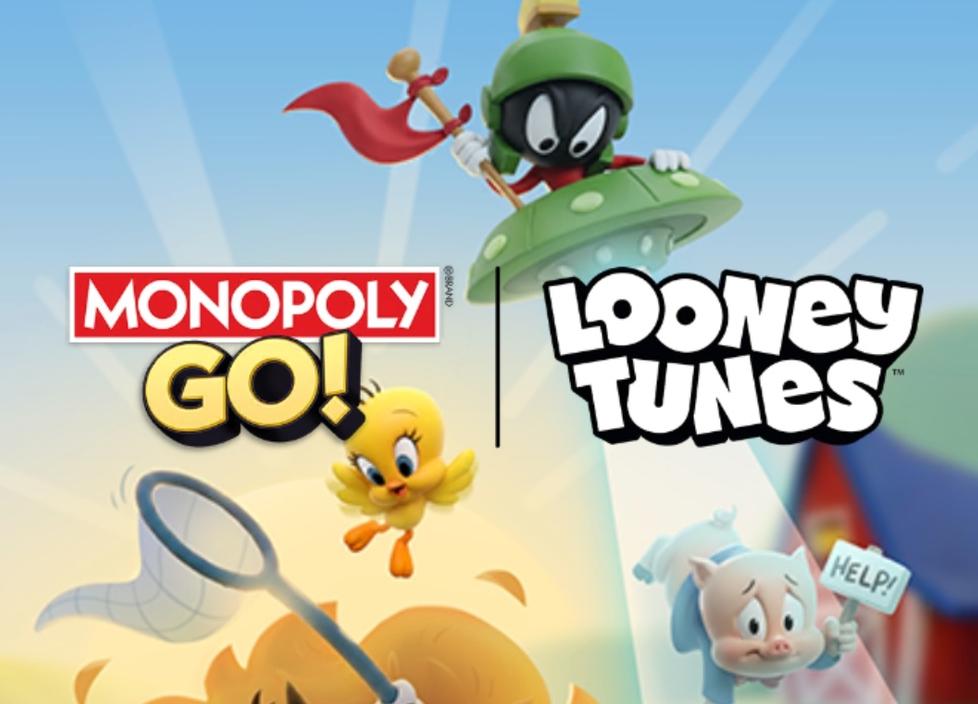
Scopely is inherently a game publisher at its core. *Monopoly GO!* is one of the highest-grossing mobile games worldwide since 2023, driven by its outstanding capabilities in user acquisition, ad delivery and long-term LiveOps operation. In 2025, it acquired Niantic's gaming business and incorporated *Pokémon GO* into its product portfolio. However, its existing product matrix is dominated by casual and medium-strategy games, and lacks sufficient R&D capacity for mid-core, IP-focused titles. Chinese teams can exactly fill this gap — ACG art creation, MMO architecture design and IP adaptation are fields that domestic studios have accumulated rich experience in over more than a decade.
Investing through its Singaporean entity is also a notable strategic signal. Scopely SEA is positioned within the group not only as a regional distribution headquarters, but also as an Asia-Pacific holding platform responsible for local equity investment and project mergers and acquisitions. Investing in the Shanghai-based company via the Singaporean structure brings greater flexibility in capital flow management, equity arrangement and subsequent global distribution collaboration. This has also become a common practice for overseas capital to enter China's gaming industry in recent years: instead of making investment directly through the U.S. parent company, they adopt a Singaporean or Hong Kong entity, hold minority stakes, retain the founding team's full autonomy, and output their overseas publishing resources at the same time.
For Baokela, the practical value of introducing Scopely as a shareholder is very clear. Tencent provides full support for its domestic business ecosystem — including game license application, local distribution, WeChat ecosystem resources and deep insight into ACG users; Scopely can offer a complementary set of capabilities: user acquisition experience in European, American and Southeast Asian markets, mature long-term operation methodologies, and global distribution channels. The two sets of resources do not conflict with each other, and are highly complementary. For a global-oriented ACG MMO, with Tencent backing its domestic operation and Scopely supporting its overseas expansion, such a shareholder configuration is very rare among Shanghai's gaming studios at present.
From a broader industry perspective, this transaction is not an isolated case.
Over the past two years, overseas capital has made increasingly frequent bets on mid-core game studios in China. Mutong was acquired by Savvy Games Group, the Chengfeng Studio secured investment from Scopely after its spin-off, and now Baokela has welcomed another overseas strategic investor. The underlying logic behind these deals is consistent: Chinese teams have mature industrialized R&D capabilities, but usually face shortcomings in global distribution, overseas user operation and long-term monetization; overseas publishers have mature channels and operation capabilities, but lack R&D teams that can continuously deliver high-quality mid-core content. The two sides cooperate to meet each other's core needs.
Saudi capital has played a particularly active role in this trend. PIF has invested in or acquired a long list of companies including Scopely, ESL, FACEIT and VSPO through Savvy Games Group, with a clear strategic goal: to secure a core position in the global gaming industry chain. Investing in Chinese R&D teams is a key part of this overall strategy.
As of the press release of HETUN JUN, the post-investment valuation and specific equity ratio of this transaction have not been disclosed to the public, and no official announcement has been issued by both parties.
It remains to be seen whether Tencent and Scopely will carry out deeper cooperation driven by Baokela. At least on this shareholder list, the two parties have already formally established a business connection.
Note: This article is compiled based on industrial and commercial change records and public industry information. Details such as transaction amount and valuation are subject to the official disclosure of the relevant enterprises.
This article is from the WeChat official account "Entertainment Capital Review" (ID: yulezibenlun), written by the Yuzijiang team, and published with authorization from 36Kr.