From fishing villages in Southeast Asia to the East African Plateau, Pinduoduo invites "them" to jointly embark on a rendezvous of agricultural innovation.
Written by Pan Yidan
Edited by Chang Weiqian
On September 10, the final of the 2026 Global Agripreneur Competition concluded in Hangzhou, where 13 teams stood out from 191 applications across 49 countries. After 3.5 hours of competition, the "Digital Agricultural Interconnection in East Africa" project from Kenya won the gold award of this competition; the "Women Empowerment in Fisheries" project from Indonesia took the silver award; and the "Caribbean Climate-Smart Smallholder Incentive" project from Grenada claimed the bronze award.
Since 2020, the Global Agripreneur Competition, co-hosted by the Food and Agriculture Organization of the United Nations, Zhejiang University and Pinduoduo, has built a platform for exchange and resource connection for global agricultural innovators for seven consecutive years, promoting more agricultural innovation solutions to be put into practice. In 2026, the No.1 Central Document mentioned the term "agripreneur" for the first time. This group that has long been engaged in front-line agricultural work and solves practical problems with innovation has begun to receive more attention.
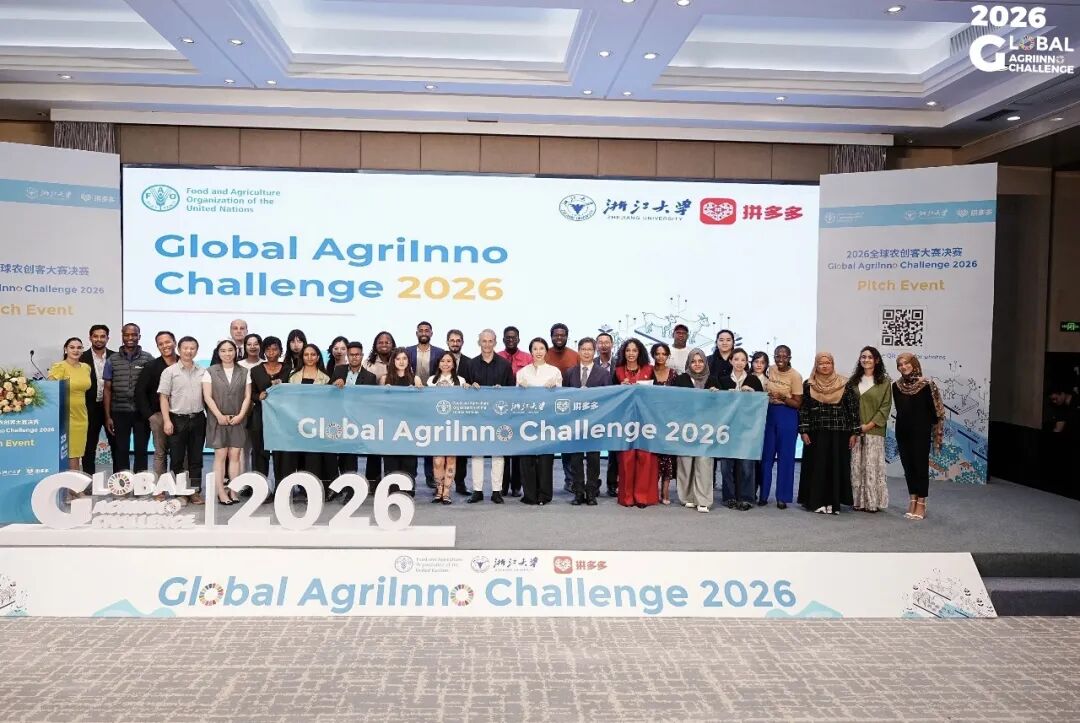
Teams in the final of the Global Agripreneur Competition | Photo by Fu Junhao
Among the 13 finalist teams this year, multiple teams have included women empowerment or women's participation as the core of their projects. The power of women has entered different links of agricultural innovation, and many projects have thus driven community changes.
01 The Power of Female Entrepreneurs
In Indramayu, West Java, Indonesia, fish is not scarce. It is an important local fishery production area, while facing high poverty and child stunting rates. After visiting the local coastal village Eretan Kulon, the team of the "Women Empowerment in Fisheries" project found that the problem was not "whether there are fish or not", but the lack of connection between fishery production, local consumption and dietary nutrition.
Fish in Eretan Kulon are divided into two grades of high and low by size and variety, and flow to different markets. High-value fish are often transported to cold storage, sold to other regions or even exported; local residents mostly consume cheap mixed fish made into cans, which is often insufficient in nutrition; while changes in weather, fishing volume and market prices make the income of fishing families extremely unstable.
The team of the "Women Empowerment in Fisheries" project uses biohydrolysis technology to turn low-value fishery products that would have been discarded into high-activity fish protein raw materials, and then develop them into characteristic seafood sauces, biscuits and other products, which not only reduces the pollution of offshore fish fertilizer, but also alleviates regional child malnutrition. In addition, many local fishermen's wives used to mainly take care of their families or do temporary work, and some even needed to go out to work. After participating in the project, they can use the existing fishery resources to obtain a source of income locally.
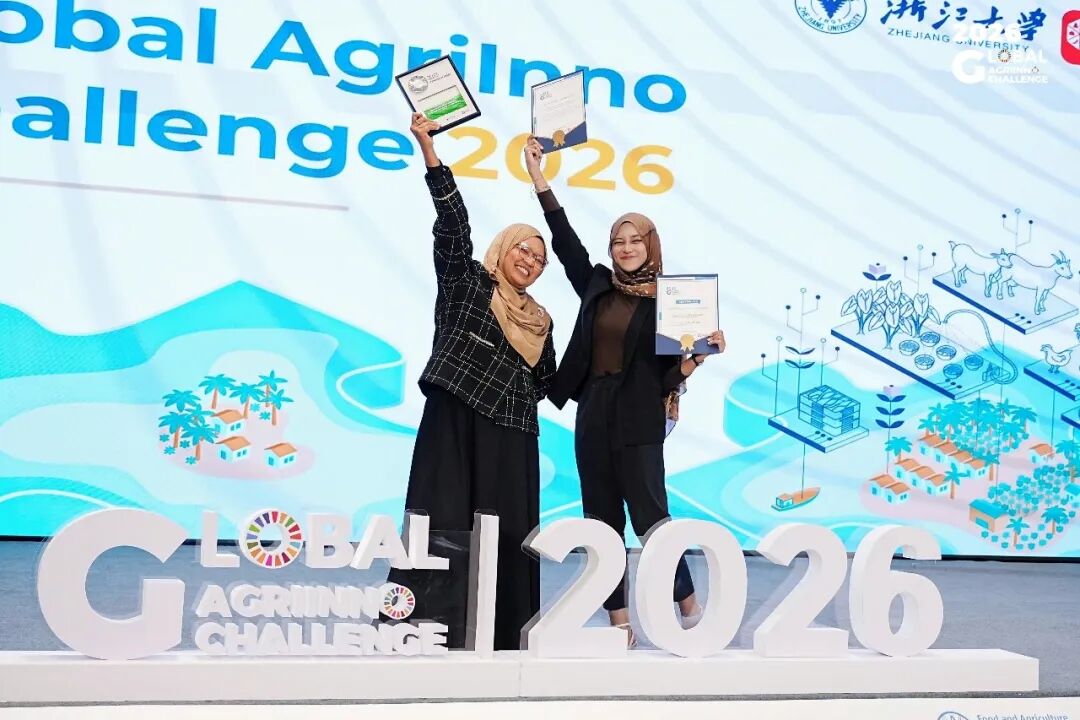
Indonesia's "Women Empowerment in Fisheries" project won the silver award of the 2026 Global Agripreneur Competition | Photo by Fu Junhao
Rosidah is one of them. She initially joined the project, then gradually took the initiative to participate in product sales, became a distributor of fish skin products, and built her own sales network. She also reached a wider range of customers through the local government network. An opportunity made this sales chain go further: she contacted the wife of the Vice President of Indonesia, and finally secured an order for about 500 pieces of fish skin products.
Today, Rosidah shares her experience of participating in community activities and product sales with more women. Over the past three years, the "Women Empowerment in Fisheries" project has processed more than 720,000 kilograms of low-value fish, cumulatively helping more than 6,000 people, and the related innovation has generated revenue of more than 16.8 billion Indonesian rupiah.
It is understood that the four female members of the team have an average age of less than 30, but they have provided dozens of fishermen's wives with integrated services from product development, entrepreneurship training to local sales.
When participating in the 2026 Global Agripreneur Competition, the "Women Empowerment in Fisheries" project had completed product development and community verification, hoping to find a way for small-scale producers to connect to larger markets. After winning the silver award, project leader Resy mentioned that what touched her most after coming to China was not a specific product, but the connection between different links. For the women in Eretan Kulon, not everyone has to become a mature online seller, and what is more important is the interconnection of production, digitization, logistics, marketing and the market.
02 The Problem a Fijian Farmer Wants to Solve
Fiji consists of hundreds of islands, and about 84% of its agricultural population are smallholder farmers. They have been engaged in farming for generations, but most of them have no formal production records and cannot provide credit certificates recognized by banks.
The shortlisted Fijian solution for the final — the Agricultural Trusted Digital Identity Platform project has built a digital agricultural platform Teivaka for smallholder farmers. By recording information such as land, planting, yield and income, it helps smallholder farmers who lack financial credit to establish exclusive trusted agricultural identity files for farmers, and connects finance, insurance, climate financing, channel traceability and other scenarios. At present, the Teivaka platform has completed a six-month pilot at two farms, and is accessing the first 100 users, 50% to 60% of whom are female farmers.
In Fiji's agricultural communities, women undertake a lot of field work and sales work, but they rarely appear in formal decision-making occasions. They grow vegetables, weed, harvest, carry goods, go to the market to sell, and manage household expenses, but it is often men who attend meetings. For traditional Fijian female farmers, the right to use land may not be under their own name, and long-term agricultural labor is easily counted as housework. A recorded agricultural data belonging to individuals can at least leave a clear trace of these labors, and also provide new possibilities for women to gain financial and market recognition.
28-year-old Kinisimere Wati is responsible for the finance and accounting management of Teivaka, and founder Uraia intentionally arranged her to a decision-making position. Uraia mentioned that some female farmers are more willing to communicate with Kinisimere when facing problems related to income and funds, rather than contacting him directly. If a project wants to promote the visibility of women's agricultural labor, the team also needs women to participate in decision-making.
When accessing the first 100 users, the problem Uraia faced was similar to that of Pinduoduo in its early days: when there were no successful cases, no one made money, and everything was just a stranger's promise, why would the first batch of farmers trust them. He hopes to participate in the 2026 Global Agripreneur Competition to learn from Pinduoduo how to get started in the first year and the methods to build trust between smallholder farmers and the big market.
Let More Women Benefit from Agriculture
The "Digital Agricultural Interconnection in East Africa" project from Kenya targets smallholder farmers in East Africa, and addresses four problems at the same time: soil degradation, post-harvest loss of more than 30%, high carbon accounting costs, and less than 5% of global climate funds directly reaching farmers.
In the final, the team leader mentioned: "The scale of global climate financing reached a record of 2.2 trillion US dollars in 2024, but African countries and small island developing states only got 2.3% of it." The reason behind this is that the planting methods, emission reduction effects and land status of most smallholder farmers are manually recorded and cannot be verified, so they cannot be used as the basis for climate financing.
What they built is a complete link from data generation to fund arrival, which the team calls a four-stage digital microservice system of "learning, earning, verification and transaction".
Technically, IoT soil sensors and satellite remote sensing form a dual carbon data (measurement, reporting, verification) system: sensor data is synchronized to farmers' mobile terminals within 24 hours, and after independent certification by a third party, funds are directly credited to the account through mobile payment; in terms of organizational structure, the project has built a five-level farmer cooperative organization system by village, district, county and country, supporting services such as soil testing, compost promotion, farmer training and carbon credit trading, and the built-in "climate wallet" pays carbon income directly to farmers.
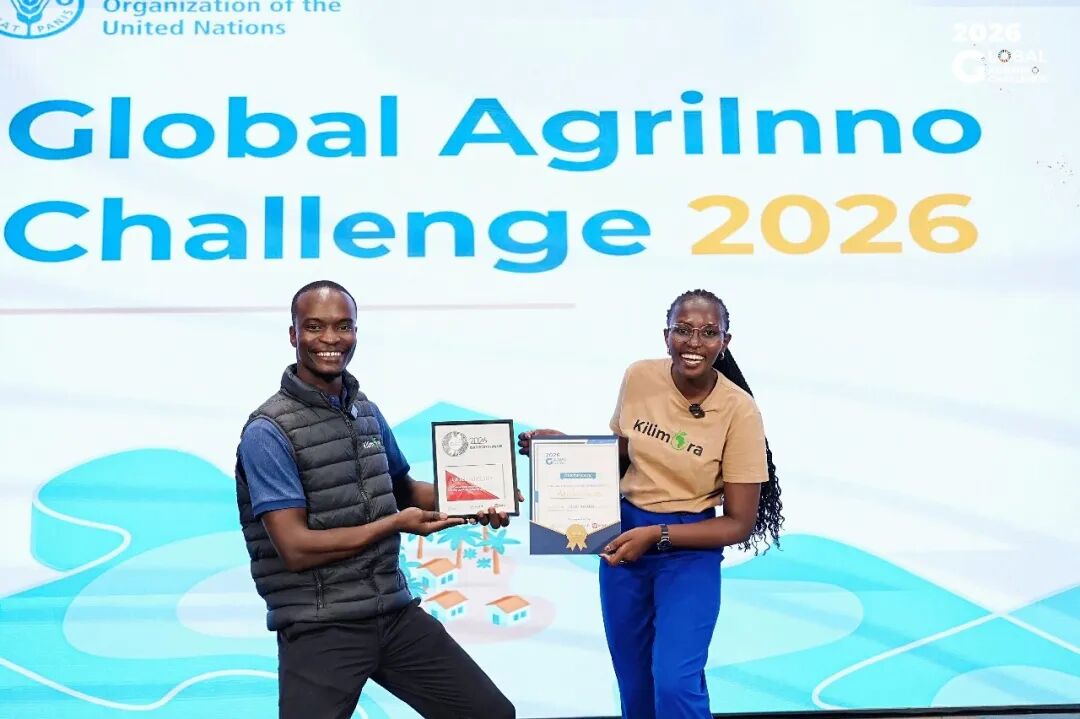
Kenya's "Digital Agricultural Interconnection in East Africa" project won the gold award of the 2026 Global Agripreneur Competition | Photo by Fu Junhao
Kenya's climate change policy requires that at least 30% of climate funds be allocated to smallholder farmers. The team distributes income to farmers, cooperatives and its own operations in proportion, and the operation part is used for R&D investment. At present, the project has served more than 2000 farmers, of which women account for about 55% to 67%, and more women have gained direct income as a result.
The next plan of the project is to cover 12,000 agricultural practitioners in Kenya and Uganda within 9 months, and raise 600,000 US dollars for this purpose.
Bring Experience Back to the Fields
In addition to participating in the final, the participating teams came to Hangzhou with another purpose.
Resy's team has been processing fishery waste for three years, and their products have entered the markets of Jakarta, Bandung and Bali. She came to Hangzhou to figure out one thing: how China combines scattered smallholder farmers, processing links, e-commerce platforms and consumers into a complete system. "How to connect small-scale production to the large-scale market is a problem we have always wanted to understand," she said. "China's breakthroughs in agricultural technology and commercialization paths are also worthy of our in-depth study." What she wants to bring back to Indonesia this time is agricultural innovation ideas and connections that can help the team replicate the project in more coastal communities.
Among the participating agripreneurs, there are team leaders like Resy who have been operating for many years and want to scale up their experience, as well as individual entrepreneurs who farm during the day and teach themselves programming at night. They came to Hangzhou with completely different projects, but asked similar questions: how these agricultural innovation solutions that have been verified in all corners of the world can connect to larger markets and more resources.
The "15th Five-Year Plan" for Accelerating Agricultural and Rural Modernization also proposes to "cultivate agripreneurs according to local conditions". As an enterprise rooted in agriculture, Pinduoduo continues to increase investment in agricultural science and technology innovation and achievement transformation through the "100 Billion Support" program, and also opens up the digital capabilities and production-consumption connection experience accumulated in the process of agricultural product upward movement for reference by agripreneurs from all over the world.
What Resy wants to bring back to Indonesia is ideas and connections. What Pinduoduo wants to achieve through this competition is also the same thing: leave something for every agripreneur who comes here, and then bring it back to their respective fields.
Photo by the enterprise
Upcoming Events
Registration for the 2026 Beijing International Investment and Trade Fair is now open
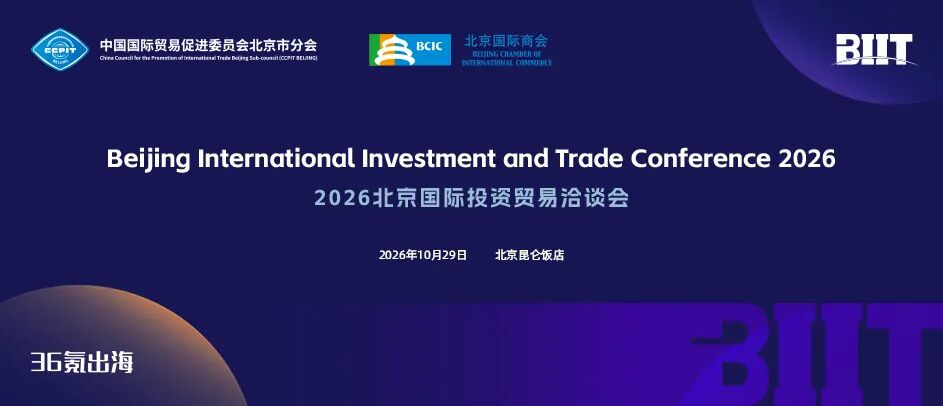
On October 29, the "2026 Beijing International Investment and Trade Fair", co-hosted by the China Council for the Promotion of International Trade Beijing Sub-council and Beijing Chamber of International Commerce, will be held at the Kunlun Hotel in Beijing. The conference focuses on Beijing's investment opportunities, cross-regional industrial coordination and two-way cross-border empowerment, bringing together Chinese and foreign government representatives, leading industry enterprises, think tank experts and investment institutions. The conference is now open for event registration and 1-on-1 business negotiation application for enterprises, building a practical docking and negotiation platform for two-way investment and industrial cooperation between Chinese enterprises and overseas government and enterprises. You are welcome to click "here" to submit your registration application. For enterprises with clear docking needs, please be sure to submit your B2B negotiation intentions at the same time when registering. The main conference adopts a screening system, and we will arrange the review as soon as possible after receiving your registration and notify you separately.
The full agenda and guests of "Dubai Business Forum · China" are released, and registration is entering the countdown
The 5th "Dubai Business Forum · China" will be held in Shenzhen on October 14, and the official full agenda has been officially released. This forum brings together many successful entrepreneurs, industry leaders and senior government representatives from China and Dubai to conduct in-depth dialogues on core topics such as bilateral cooperation, AI opportunities, industrial investment and logistics infrastructure. Representatives of Chinese enterprises including Baidu Apollo Go, Tencent Cloud and Huawei Cloud will share practical experience and regional insights in landing in Dubai; core institutions such as Dubai Chamber of Commerce, Dubai Department of Economic Development and Dubai Future Foundation will jointly interpret policy trends and industrial directions. The registration review is now in the final stage, please scan the QR code below or click "here" to register. All registration information will be uniformly reviewed and screened by the organizer, and you will be further notified of the specific meeting arrangements after the review is approved.