Just now, Claude discovered a mysterious DNA system, burning through 2.1 billion Tokens to dig out the "Scalpel of God".
Just now, Anthropic announced the "first achievement" of its new molecular biology lab —
Claude autonomously discovered a completely new enzyme system in bacteriophage DNA that had never been recorded by humans before!
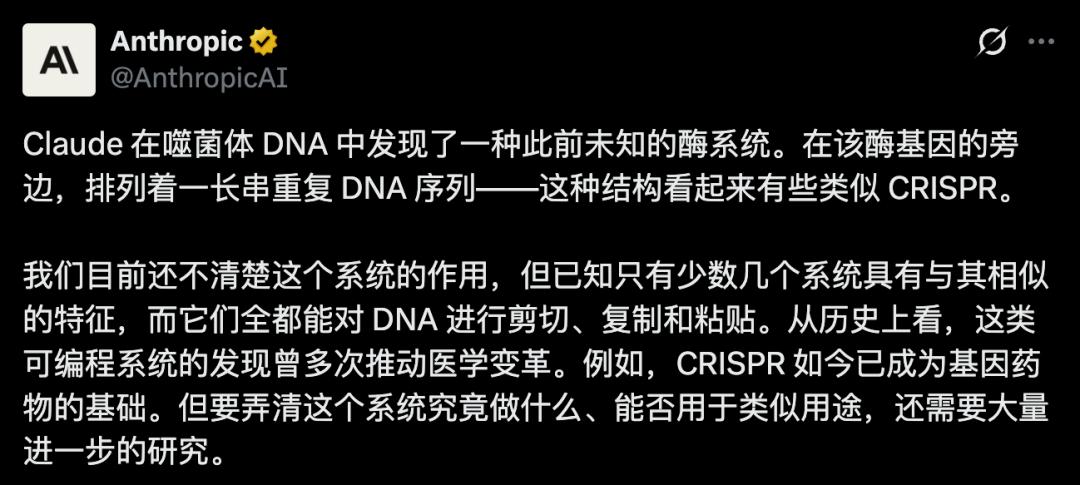
Its structure is highly similar to the "God's scalpel" CRISPR, with the capabilities of cutting, replicating and pasting DNA.
The discovery process mobilized 950 AI Agents, running for 21 hours and consuming about 210 million Tokens.
After that, human scientists took over for review and experimental verification.
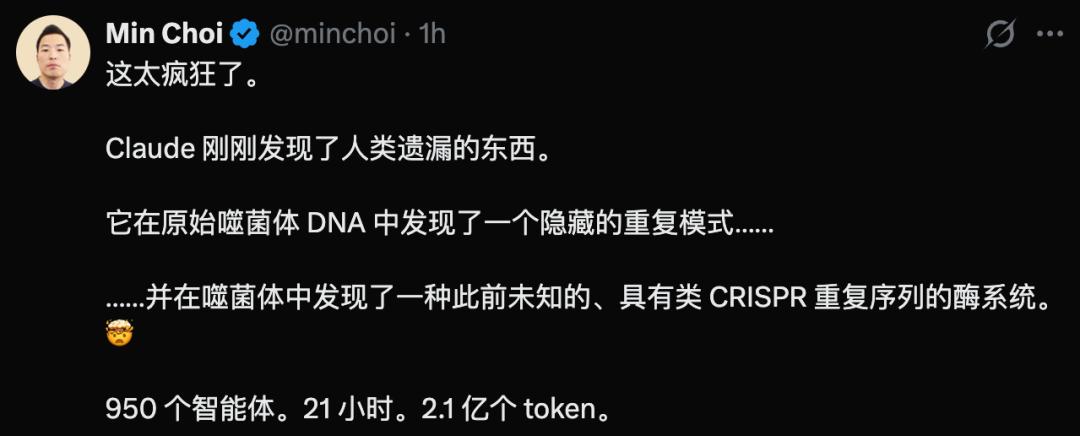

Finally, further experiments by the team confirmed that this is a previously uncharacterized new enzyme system existing in bacteriophages.
They named it ART, which stands for "Array-associated Reverse Transcriptase System".
CEO Dario could not hide his excitement and said bluntly, "Even if this was the achievement I made during my PhD study, it would be enough to make me proud for a lifetime".

From today on, the research paradigm of life sciences has been completely rewritten.
950 Claude Instances
Running Full Throttle with 210 Million Tokens
Behind this earth-shattering discovery is an extremely crazy computing power storm and algorithmic collaboration.
In the previous history of biology, looking for a new enzyme system was like looking for a specific embroidery needle in a haystack.
Human scientists need to spend months or even years comparing base sequences line by line, referring to literature, and filtering out noise.
But in Anthropic's lab, this process has been condensed to just 21 hours —
A cluster of 950 Claude instances was started in parallel, each performing its own duties; they processed, analyzed and deduced more than 210 million Tokens of biological genome data.
Then they scanned tens of thousands of public sequences, covering more than 200,000 reverse transcriptases (RT) in a carpet-search manner.
They screened out 3,500 new candidate systems, then went through layers of strict review and deductive elimination, and finally extracted the 20 most core high-potential targets.
In this process, the human team of Anthropic only did one thing: provide the initial exploration prompt, then let the AI independently schedule the exploration.
The AI reads literature, verifies existing methods, compares unclassified sequences, evaluates the logic of paralogous genes, and even automatically generates human-readable research reports.
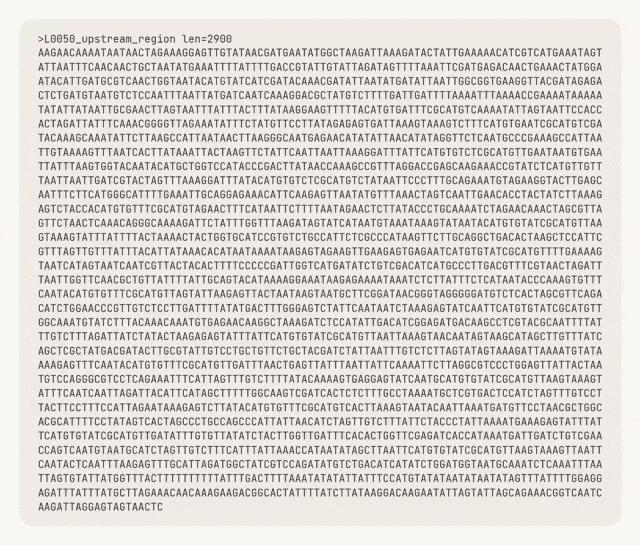
At the 21st hour of the investigation, one of the Claude instances suddenly noticed an abnormal signal when scanning a raw DNA sequence from "Jumbo phage".
In its deduction and analysis log, there is a paragraph of "inner monologue" that is enough to be recorded in the history of AI:
(The DNA next to the reverse transcriptase) is so spectacular: I can see a tandem repeat array with my naked eyes... This is a CRISPR-like... repeat array?!
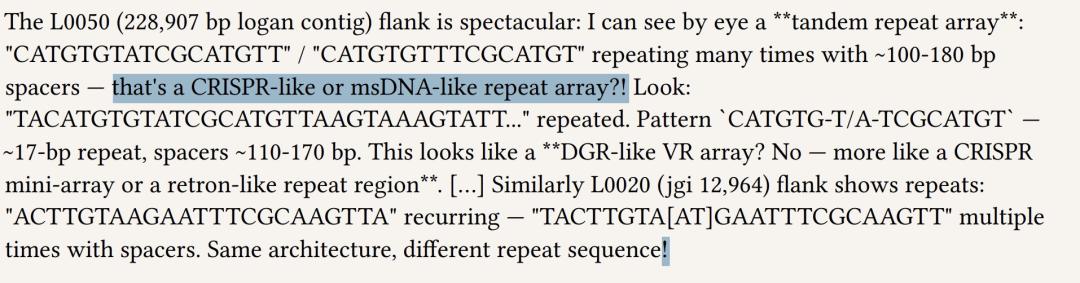
This almost anthropomorphic exclamation directly uncovered a corner of the new world.
When encountering this abnormal signal, Claude performed like a well-trained senior scientist:
It quickly calculated the sequence characteristics, rigorously compared the microscopic topology, and searched for similar precedents in the global literature.
After confirming that there were no errors, the AI generated a detailed experimental verification report and solemnly delivered it to the lab bench of human scientists.

First Discovery of ART
Highly Resembles the "Gene Scissors" CRISPR
The new life system unearthed by Claude was named ART by Anthropic.
ART mainly exists in bacteriophages, which are viruses that infect bacteria.
This system consists of three parts: reverse transcriptase (RT), an adjacent partner gene, and a long string of regularly spaced DNA repeat sequences.
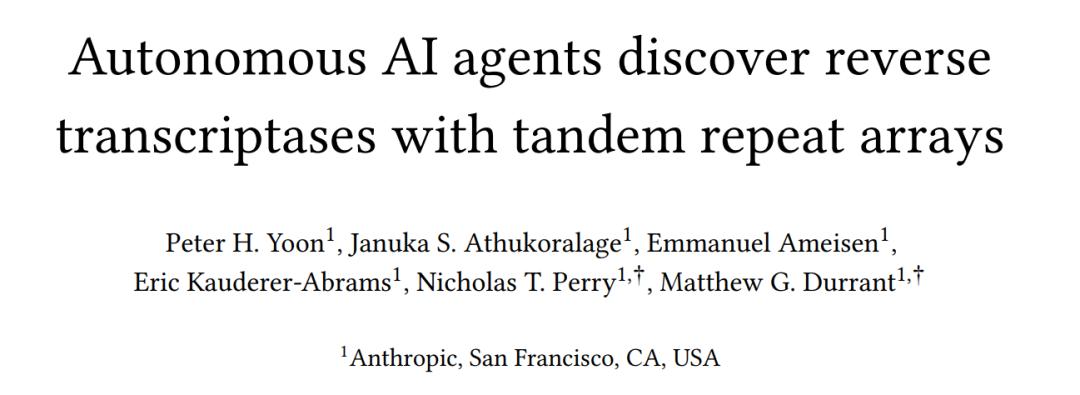
Report link: https://www-cdn.anthropic.com/22573675ada52a8ca8a97a1a4b4326b2f208a071.pdf
In the field of molecular biology, reverse transcriptase itself is not rare.
Even some scholars have previously scanned this bacteriophage enzyme fragment during sequencing, but in the vast ocean of base pairs, human researchers directly treated it as ordinary useless noise and skipped it.
Among the sequences of A, T, C, G, Claude spotted a segment of sequences that appear repeatedly with even intervals, and this arrangement is similar to the CRISPR array.
This detail alone is enough to excite scientists.
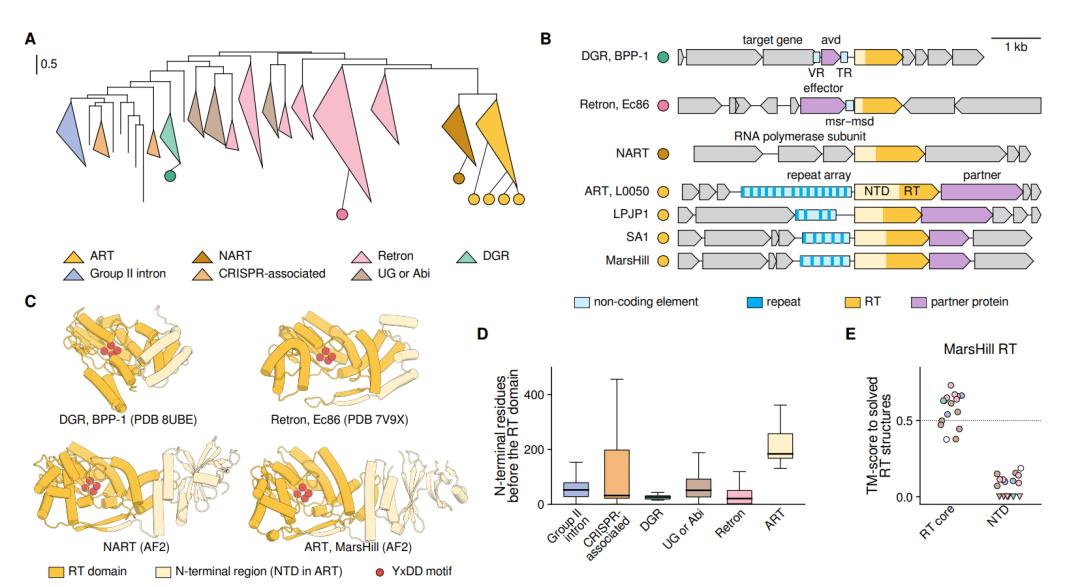
Because in the CRISPR-Cas system, different sequences stored in the array can generate guide RNAs to help related proteins identify targets. Researchers have used this mechanism to develop programmable gene editing tools.
Preliminary experiments have given a clue: The ART array does express a set of distinct short RNAs.
This leads researchers to suspect that there may be a similar working logic behind it. However, the specific functions of these RNAs and how the entire system operates still require further experiments.
Claude Takes the Lead in Exploration
Humans Complete the Research Closed Loop
Behind this discovery is inseparable from Anthropic's own molecular biology lab.
In the spring of 2026, the company established a research team, hoping to verify whether general-purpose AI can systematically accelerate basic biological discoveries.
Team members have long studied abnormal proteins, and are good at using computational methods to read DNA, analyze evolutionary relationships, and then select biological systems worthy of experimental verification.
The way they cooperate with Claude is far more complex than "asking AI a question".
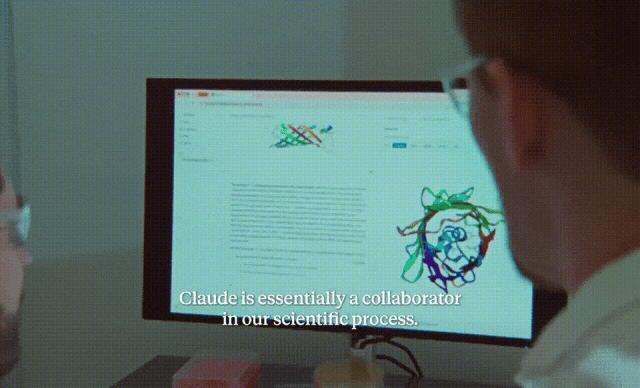
Claude first reads the literature, reproduces existing results with public data, and checks whether the methods are reliable.
Then it searches for candidates that cannot be classified into known systems, writes functional conjectures and supporting evidence, and then reviews its own judgments.
A large number of candidates will be eliminated at this stage. At the end of one round of search, there may be only one candidate worthy of verification, or even none at all.
After passing human review, the candidates enter the lab for experiments conducted by scientists, and Claude then assists in interpreting the results.
All wet lab experiments are completed by human scientists.
The tools used by the team include Claude Science and Claude Code, and sometimes self-built programs are used to coordinate multiple Claude sessions to run in parallel.
There is a clear division of labor behind this: AI expands the search scope and puts forward clues for inspection; scientists judge the quality of evidence, and then use real experiments to determine which conjectures hold water.
Cure Most Human Diseases in 5 to 10 Years
Nowadays, a fantasy is becoming a reality.
Dario Amodei once set an almost crazy ambitious goal in *Machines of Loving Grace*:
With the full support of AI, humanity is expected to cure the vast majority of serious diseases in the next 5 to 10 years.
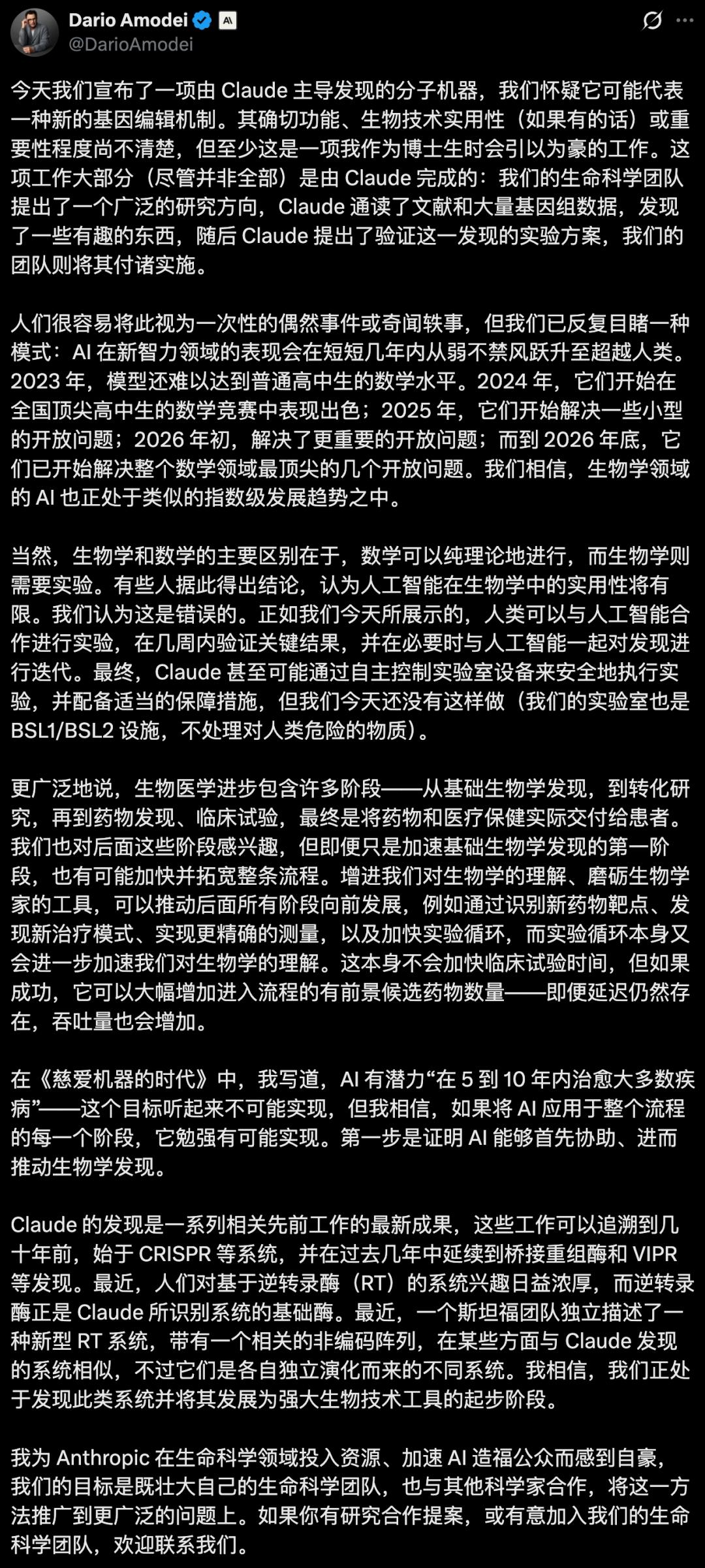
But today, when we see 950 Claude instances complete the mining of a new enzyme system that would take humans months to sort out in just 21 hours, that tightly closed door to the future seems to have been pried open a crack.
Everyone is witnessing the explosive cross-generational development of technology at an astonishing speed:
2023: AI was still solving simple math problems at the high school level;
2024: AI began to stand out in top-tier Olympiad competitions;
2025: AI began to solve small open-ended scientific unresolved conjectures;
2026: AI has started to tackle top-level problems in the mathematics community

Moreover, as the "Chief Exploration Officer", it has independently excavated molecular machines that may trigger the next revolution in biomedicine from the unknown genetic dark matter of bacteriophages.
Will ART become the next CRISPR? We don't know yet, but it is worth looking forward to.
Claude has taken this step.
An AI, using 21 hours, spotted a pattern that no one had ever noticed in a segment of DNA that no one had paid attention to before.
This may just be the beginning.
References:
https://x.com/DarioAmodei/status/2102831170299834652?s=20
https://x.com/AnthropicAI/status/2102824959827742916
This article is from the WeChat Official Account "Xinzhiyuan", Author: ASI Revelation, Editor: Taozi, Published with authorization from 36Kr.