The 5-Trillion-Yuan Massive Market Is Scrambling to Snap Up Young People
Over the past decade, Beijing's population structure has undergone significant changes.
In 2015, the permanent resident population aged 20-29 in Beijing reached 4.618 million, accounting for 21.3% of the city's total permanent resident population, which was significantly higher than the national average. Ten years later, however, this figure dropped to 2.489 million, with the proportion falling to 11.4%, returning to the national average. During the same period, the proportion of the elderly population in Beijing increased significantly.
The Outline of Beijing's 15th Five-Year Plan previously acknowledged that changes in the population structure have posed new challenges to economic development, social governance and other fields.
As a response, Beijing has listed "stabilizing the scale of the employed population and promoting the growth of the youth population" as a key goal for the next five years.
The latest move is that on September 20, Beijing held a large-scale on-site recruitment event for the first time targeting the autumn recruitment window, with more than 400 enterprises and public institutions offering over 20,000 positions at one go, of which science and innovation enterprises accounted for 46.2%, and high-end precision positions accounted for 58.3%.
The Beijing Municipal Human Resources and Social Security Bureau explained that this move aims to seize the golden window period of autumn recruitment, and send a strong signal to the whole society that the job market is "full of vitality, with booming supply and demand".
Just last month, Beijing's new real estate policy came into effect, further shortening the social security or individual income tax payment period for non-Beijing registered families to purchase commercial housing in Beijing. They only need to make payments for 1 year to qualify for home purchase.
On the one hand, it increases the opportunities for people to "stay", and on the other hand, it lowers the threshold for people to "settle down". Beijing is trying to retain more young people.
01
Escalating the "talent grab"
At present, all parts of the country are entering the autumn recruitment season.
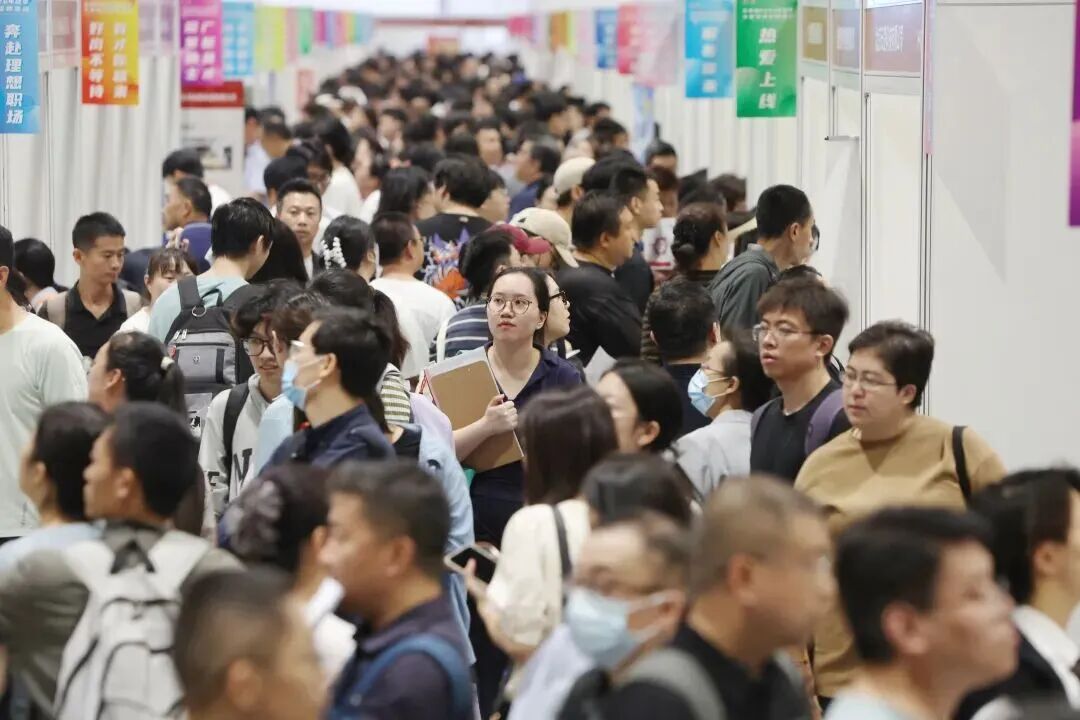
Image source: Official website of the People's Government of Beijing Municipality
This is regarded as the "golden period" for fresh college graduates to find jobs. The autumn recruitment features a large scale, numerous enterprises and abundant positions, and it is also a period when graduates have high willingness for employment. Not only graduates and enterprises participate in autumn recruitment, but many local governments also actively "grab talents" by building platforms, introducing policy incentives and other means to attract talents and intelligence.
On September 16, the "Million Talents Gather in Guangdong" 2026 N-city Linkage Autumn Recruitment Campaign was launched at Shanghai Jiao Tong University, kicking off the first event in the Jiangsu-Zhejiang-Shanghai region. The Beijing and Wuhan stations opened on the same day, which was called by the outside world as Guangdong's group going north to "recruit talents".
The outside world is almost accustomed to such operations, but now that Beijing is holding a large-scale on-site recruitment event for the first time targeting autumn recruitment, it still has some unusual implications.
On September 20, the large-scale 2026 autumn on-site job fair "Employment in Beijing" was held at Phase II of the China National Convention Center, bringing together more than 400 high-quality enterprises and public institutions, releasing over 20,000 jobs covering key industrial fields such as new generation information technology and artificial intelligence.
As the city with the most concentrated higher education resources in China, it is not difficult to understand that Beijing targets fresh college graduates.
According to statistics, in 2025, the number of graduate students, undergraduate and junior college students, and adult undergraduates in Beijing was 497,000, 666,000 and 76,000 respectively, with a total of 369,000 graduates, which can be called a "rich mine" of young human resources.
In fact, since last year, Beijing has successively issued the Notice on Further Supporting the Employment and Entrepreneurship of Young People including College Graduates and Several Measures on Further Supporting the Innovation and Entrepreneurship of Young Talents to encourage young talents to find jobs and start businesses in Beijing.
Correspondingly, last month, Beijing issued the Notice on Further Optimizing and Adjusting the City's Real Estate Policies, which further reduces the social security or individual income tax payment period for non-Beijing registered families to purchase commercial housing within the Fifth Ring Road from "2 years" to "1 year". This is already the third time Beijing has lowered the home purchase threshold for non-Beijing registered families in the past two years.
"Beijing has simultaneously launched large-scale autumn recruitment to release positions and lowered the social security payment period for non-Beijing registered residents to purchase houses. By increasing employment opportunities on the one hand and reducing living costs on the other, the combined measures send a clear signal: the city's population governance concept is being optimized. It no longer simply focuses on the control of total population, but shifts to taking into account talent attraction and retention, and actively lowers the core threshold for young talents to live and work in peace and contentment in Beijing." analyzed Song Xiangqing, Vice President of the China Commercial Economic Society and President of the Special Committee for Free Trade Ports (Zones).
At the end of last year, the Beijing Population Development Research Report (2025) also pointed out that during the 15th Five-Year Plan period, Beijing still needs to maintain an appropriate level of mechanical population growth, and take the construction of the capital metropolitan area, the optimization of work residence permits, and the urban housing project as important starting points to maintain an appropriate population scale.
A more systematic deployment has been rolled out.
The Outline of Beijing's 15th Five-Year Plan proposes to further optimize the youth development environment and increase efforts to attract outstanding young talents. It will launch a youth employment promotion campaign, explore a linkage mechanism for employment training, organize practical training for youth job-hunting abilities, strengthen financial support for youth entrepreneurship, encourage various entrepreneurship incubation platforms to provide more low-cost entrepreneurship spaces and professional services for young entrepreneurs, and build a youth-friendly employment and entrepreneurship environment in all aspects.
This also means that retaining more young people and re-adapting them to industrial development will become an important consideration of Beijing's systematic population policy in the next five years.
02
Structural Restructuring
An important background is that Beijing is experiencing the restructuring of population structure brought about by the transformation of the development stage of megacities.
Data from the Beijing Municipal Bureau of Statistics shows that the permanent resident population aged 20-29 in Beijing was 4.618 million in 2015, but the figure has fluctuated and declined since then, dropping to 2.489 million by 2024. In other words, Beijing has seen a cumulative decrease of 2.129 million permanent young residents in ten years.
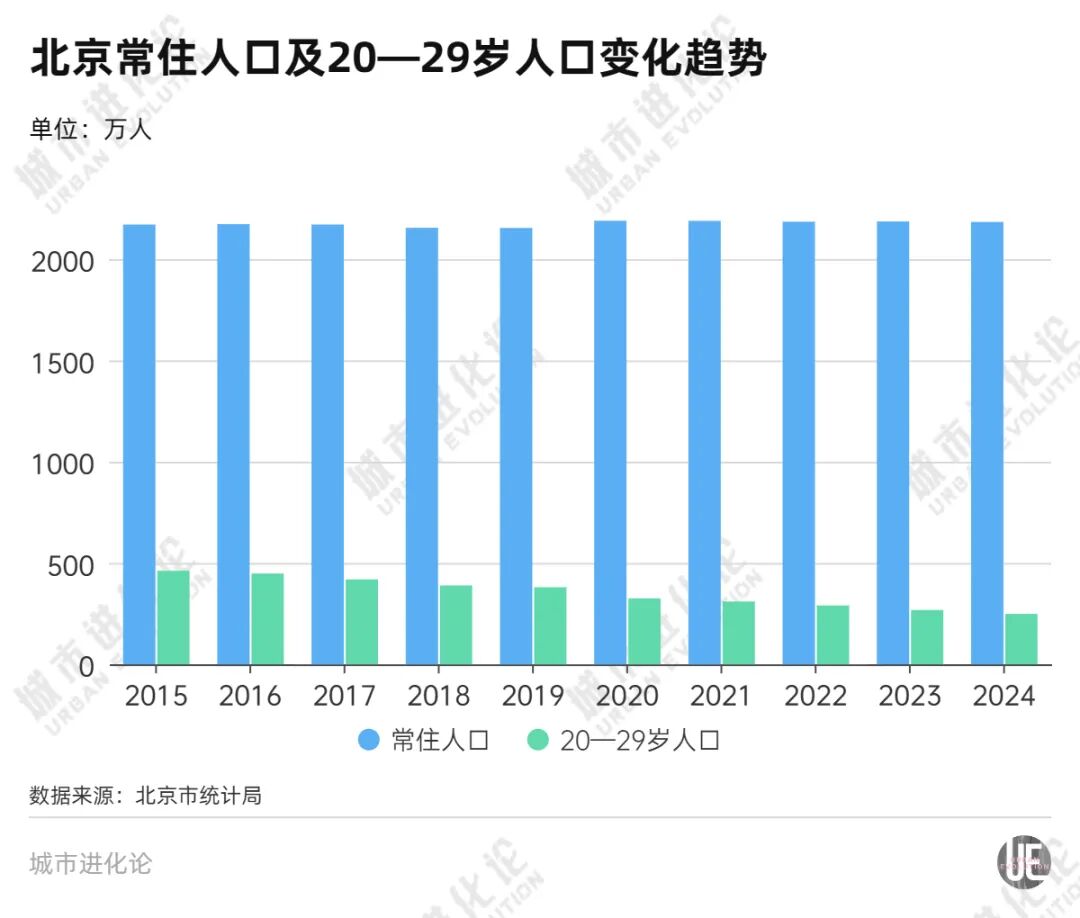
The change in the proportion of young people is even more obvious. In 2015, the proportion of permanent young residents in Beijing was 21.3%, much higher than the national proportion of 16.65%.
However, since then, the proportion of young population in Beijing has fallen significantly faster than the national average. In particular, the young population decreased by 550,000 in 2020. By 2024, the proportion of young population in Beijing has dropped to 11.4%, which is close to the national average.
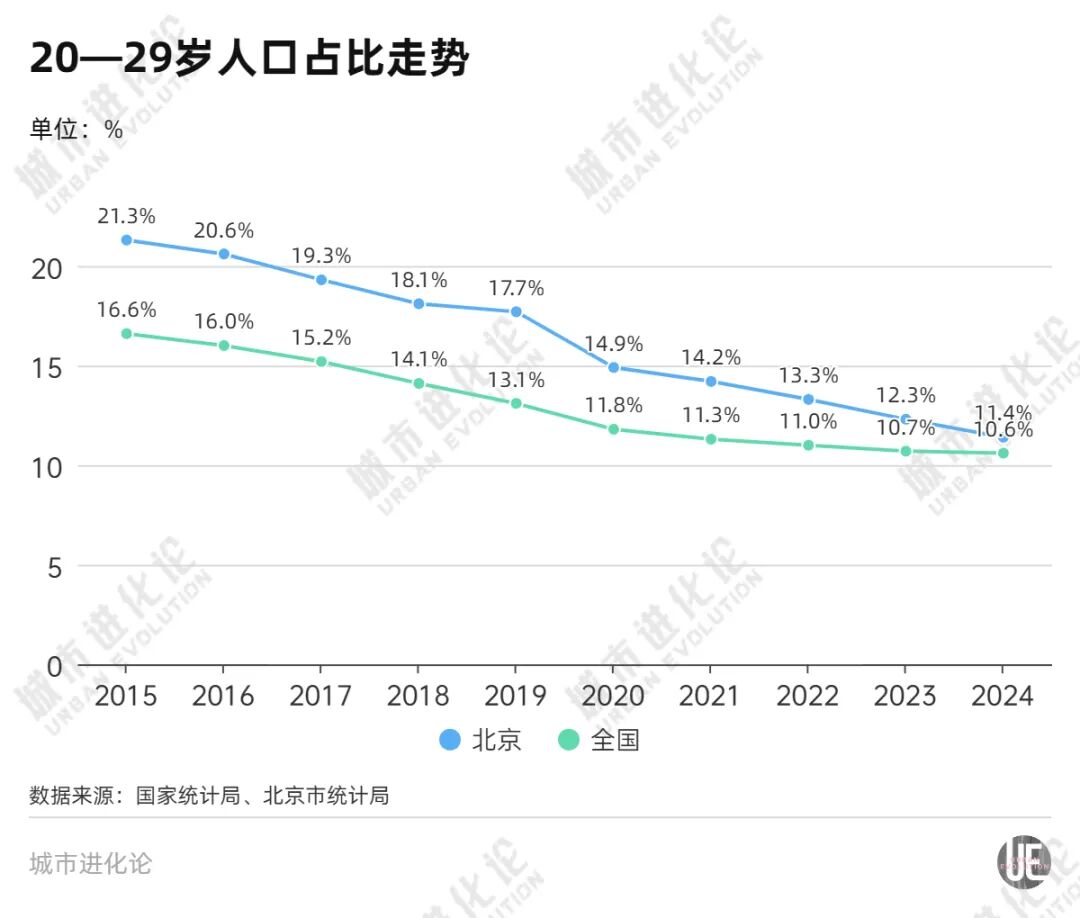
Also during this period, the proportion of the elderly population aged 60 and above in Beijing grew rapidly, rising from 15.7% to 23.5%; the proportion of population in other age groups remained relatively stable.
In this regard, Song Xiangqing believes that "the proportion of the permanent resident population aged 20-29 in Beijing has dropped significantly in the past decade. The core reason is the superposition of multiple factors such as the relocation of non-capital functions, high living costs, and the thresholds for household registration and home purchase, and young people have more diversified choices for employment and residence."
If this change is placed in the spatial geography, the trend of change will be more obvious.
Previously, Xu Shan, associate professor at the College of Land Science and Technology of China Agricultural University, pointed out in the study Spatio-temporal Evolution of Beijing's Population Structure and Comprehensive Model of Regional Types that the change intensity of age structure in Beijing from 2010 to 2020 rose from 8.71% to 13.3%, showing a circular layer structure feature.
The study found that the outflow areas of young migrant population are concentrated in the urban area, showing a massive distribution feature. This is closely related to the regional industrial structure adjustment, high living costs, the expansion of transportation networks and the increasing attractiveness of peripheral areas.
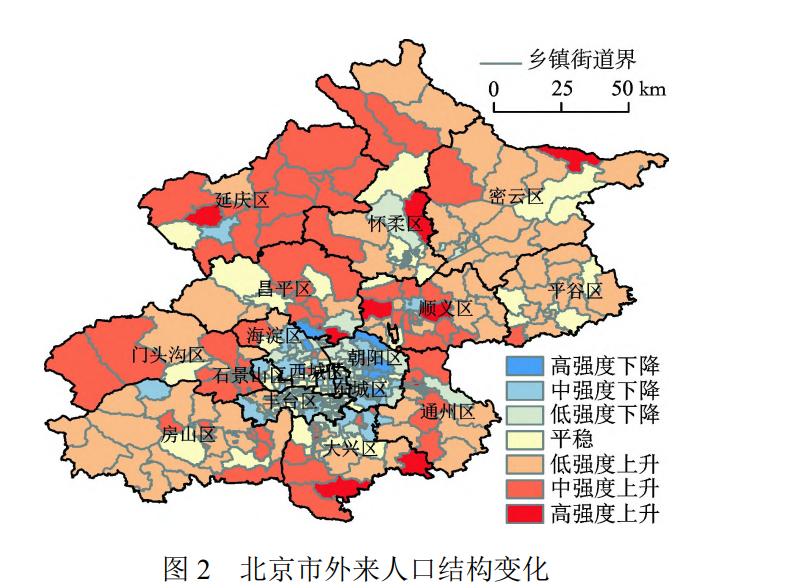
Image source: Spatio-temporal Evolution of Beijing's Population Structure and Comprehensive Model of Regional Types
For example, Shijingshan District in Beijing, as one of the important old industrial bases in China, is experiencing the re-layout after industrial transformation under the promotion of the non-capital function relocation policy. Industry is an important carrier to accommodate and absorb young migrant population, and industrial adjustment directly leads to the outflow of young migrant population.
Changes in industrial structure and functions affect the flow of population structure. Song Xiangqing believes that Beijing's previous growth model driven mainly by a large supply of young labor force is gradually changing. The tightening of labor supply constraints is forcing urban development to shift from factor-driven to innovation-driven.
03
Integration of Industry and Talents
Facing the 15th Five-Year Plan period, Beijing proposes to accelerate the construction of a high-level talent highland, so that all kinds of talents can find their proper positions and give full play to their strengths in Beijing.
"At present, the new round of scientific and technological revolution and industrial transformation is developing in depth. As the primary resource of innovation, talents have become the key driving force for promoting scientific and technological progress and industrial upgrading." On September 21, the 2026 China-Europe Talent Forum was held in Beijing. The main leading official of the Beijing Municipal Party Committee stated that Beijing will accelerate the construction of a high-level talent highland, further optimize the talent development environment, improve the international talent service system, and introduce more pragmatic measures in talent cultivation and introduction, innovation and entrepreneurship support, and living supporting guarantees, so that all kinds of outstanding talents can engage in academic research with peace of mind and concentrate on starting businesses in Beijing.
Beijing's logic is to promote the re-adaptation of innovation resources such as talents to industrial development with the idea of integrating industry and talents.
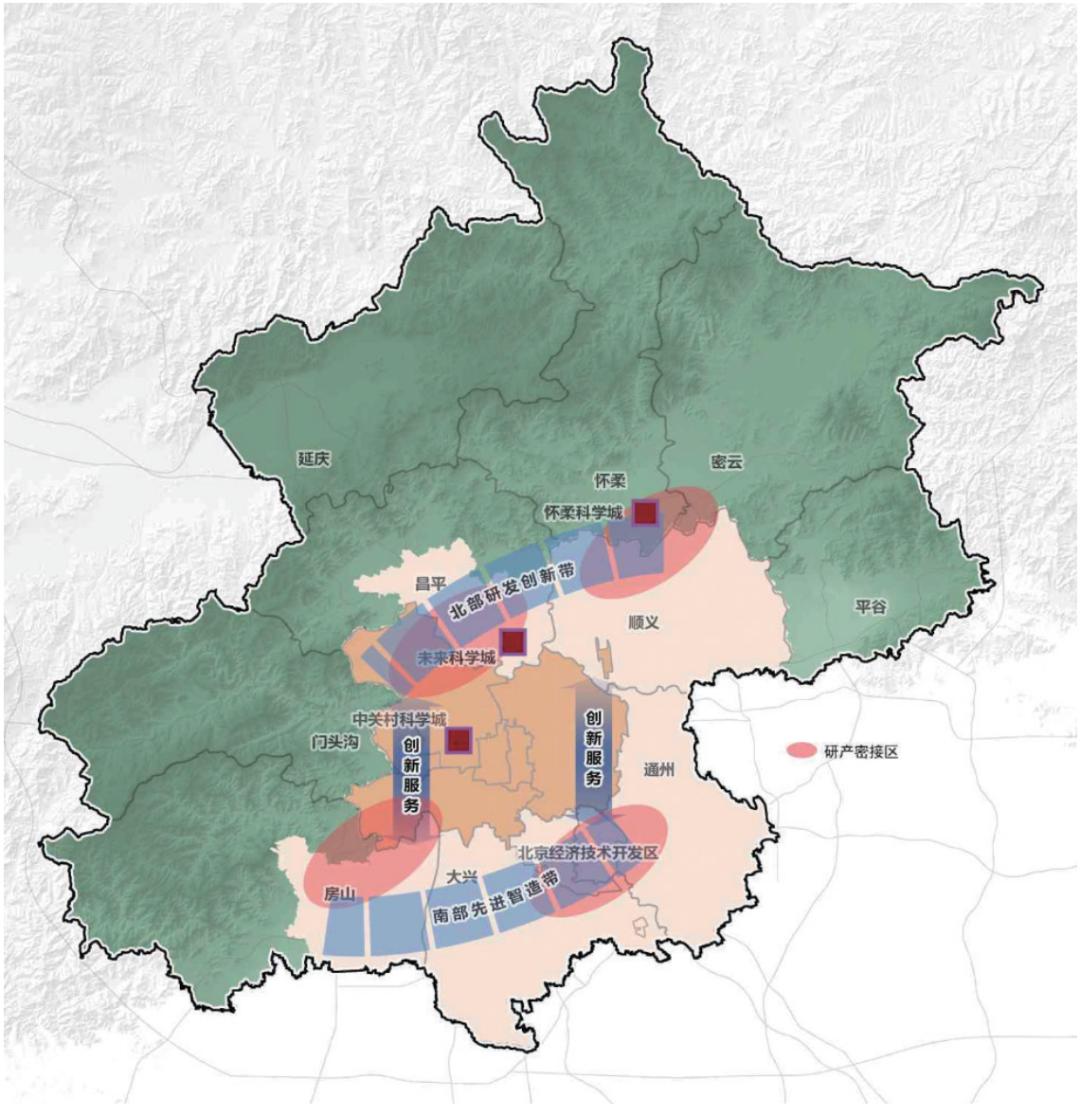
Planning Map for Regional Coordinated Layout of Beijing's High-end Precision Industries Image source: Development Plan for High-end Precision Industries of Beijing during the 15th Five-Year Plan Period
Not long ago, the Beijing Municipal Human Resources and Social Security Bureau released the Beijing Human Resources Development Catalogue for New Quality Productivity (2026 Edition) (hereinafter referred to as the Beijing Human Resources Catalogue), which includes four parts: the human resources development catalogue for key industries, the human resources development catalogue for future industries, the skilled talent demand catalogue, and the professional evaluation guideline catalogue for skilled talents.
Among them, the Human Resources Development Catalogue for Future Industries is newly added this year, covering 21 core fields such as general artificial intelligence, brain-computer interface, humanoid robot, 6G, and hydrogen energy. The human resources development and evaluation of core fields such as general artificial intelligence, 6th generation mobile communication (6G), quantum technology, brain-computer interface, humanoid robot, hydrogen energy, and AI+ materials are rated 5 stars, representing the highest development value.
"The integration of industry and talents is indeed the core logic for Beijing to retain young people. The essence of Beijing's release of the new human resources catalogue is to accurately match the talent supply around industrial demand, change the past model of simply relying on the city to attract young people, and ensure that talent cultivation, introduction and support policies follow wherever the industrial development direction goes."
In Song Xiangqing's view, this mechanism can enable young talents' professional skills and development expectations to accurately align with the city's future industrial tracks, reducing the mismatch between talent supply and demand.
"On the one hand, it attracts high-quality young talents from all over the world to devote themselves to future industries such as artificial intelligence and quantum information. On the other hand, it continuously creates high-quality positions relying on industries, retains talents with high-quality positions, and forms a positive cycle of industries gathering talents and talents prospering industries," he said.
From a broader perspective, Beijing is not an ordinary city. It is a megacity with a permanent resident population of more than 20 million, and even a huge economy with a total GDP of more than 5.2 trillion yuan and industrial added value accounting for 50%.
When such a city turns to re-adapt its population structure to industrial development, the signal it releases is not only a change in talent policies, but also an adjustment of the development logic of megacities.
And this, perhaps, is a question that all megacities need to answer together in the future.
This article is from the WeChat official account "City Evolution Theory", written by Dan Zhongkui, and published with authorization from 36Kr.