Can Hebei Involution Network help factories in Hebei?
In April 1995, Jack Ma founded China's first Internet commercial information release website with his friends in Hangzhou, named "China Pages", which was China's first .com domain commercial website and also laid the groundwork for Jack Ma's later establishment of Alibaba.
More than 30 years later, the mobile Internet has long been ubiquitous, the wave of AI innovation is in full swing, and old-style information service platforms like "online yellow pages" seem to have long been out of this era. However, unexpectedly, a B2B industry docking yellow page jokingly called "Hebei Involution Network" became a smash hit in September this year, and its cross-circle popularity has spread from Hebei's local market to the entire e-commerce industry.
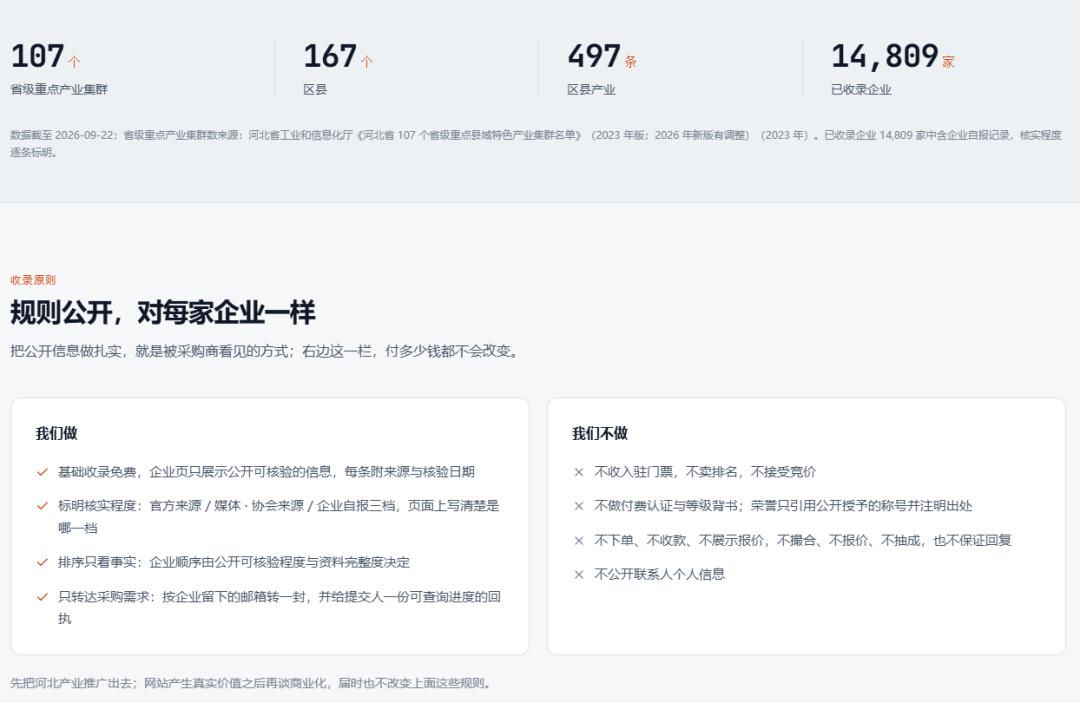
According to the website introduction, this yellow page mainly enriches and improves the industrial and factory data of Hebei, marking the main products, location and verification degree of each enterprise one by one, for purchasers to search and compare independently, then directly connect with factories to negotiate bulk procurement and long-term cooperation.
Webpage information shows that as of September 23, the website has included 497 district and county industries and 14,809 enterprises, covering 167 districts and counties. The site name has also been changed from the previous "Hebei Involution Network" to "Hebei Factory Network".
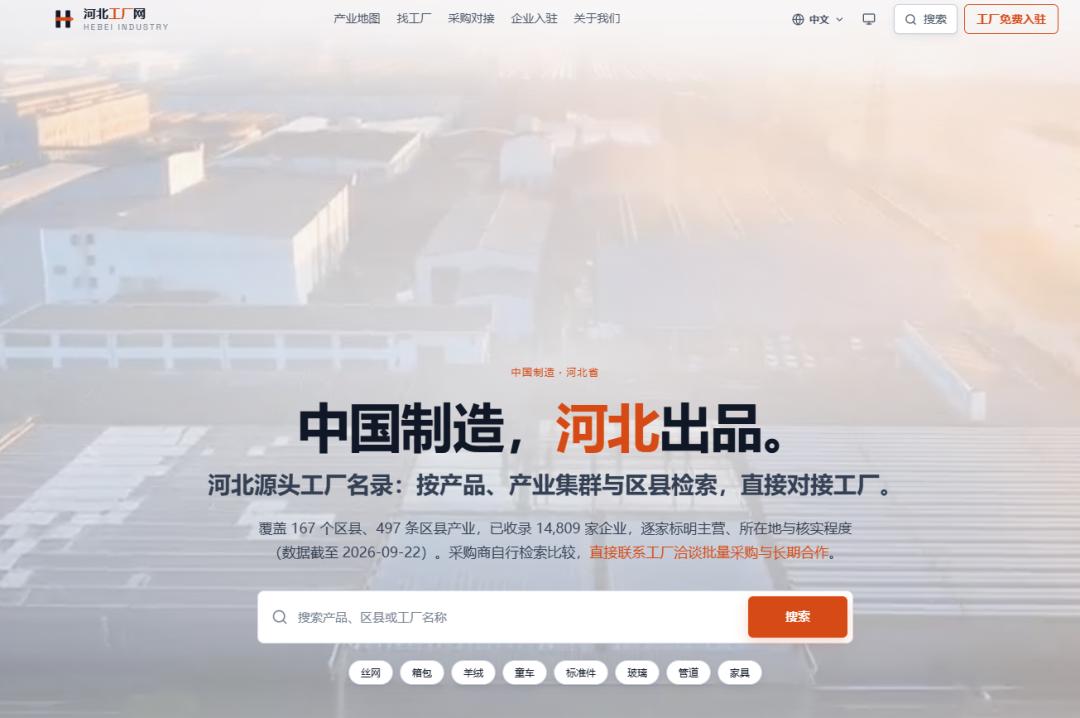
Different from other B2B websites, the biggest feature of "Hebei Factory Network" is that it adheres to the positioning of "no matchmaking, no quotation, no guarantee, no commission deduction".
In an era when various e-commerce websites, social media and short video platforms are ubiquitous, why do Hebei sellers still look for business opportunities through the "ancient" Internet communication method of "yellow pages"? And can this seemingly sincere mutual support really allow both the upstream and downstream of factories to obtain the satisfactory "great results" they expect?
Why Hebei
There is no exact verifiable statement about the real origin of the e-commerce concept of "Hebei Involution Network". It is even difficult to distinguish the genuine one from the fake one among various Hebei Factory Networks and Hebei Involution Networks on the Internet. However, many media reports have mentioned that the original intention of establishing "Hebei Involution Network" was for Hebei e-commerce merchants to resist the low-price exploitation from platforms.
Compared with this website, Hebei e-commerce merchants are far more well-known in the industry.
Hebei's e-commerce sellers are spread all over the province, covering categories ranging from daily necessities, clothing, bags and suitcases, to hardware accessories, tables, chairs and outdoor products. The reason why they make other peers "tremble with fear" is that they push prices to the extreme. Even e-commerce sellers in industrial belts such as Yiwu and Guangzhou cannot compete head-on with Hebei sellers on price.
On the Internet, the low-price jokes about Hebei sellers have long become a major talking point in the e-commerce circle.
When it comes to profits, Hebei sellers only need to earn more than farming; when it comes to costs, the employees of Hebei sellers are either their own children or themselves. The procurement price is the selling price, and they will lose money if they wrap one more circle of adhesive tape. They can earn 200 yuan a day just by selling cartons...
Putting aside these playful remarks, the reason why Hebei sellers can push down prices is inseparable from the complete industrial system foundation in the province. According to the data released by the Bureau of Statistics of Hebei Province, in 2024, Hebei has covered 40 of all 41 major industrial categories and 193 of 207 medium industrial categories.
The completeness of the industry brings convenience to production. As early as 2023, Hebei has formed a development pattern of "every county has its own industrial cluster" for county-level characteristic industrial clusters, with a total of 107 key characteristic industrial clusters across the province, which realized operating revenue of 3.86 trillion yuan in 2025.
Among them, some clusters have high market share in the national and even global markets. For example, the towel textile industry in Gaoyang County accounts for about one third of the national market share; Qinghe County is the world's largest distribution center for cashmere raw material processing; the production, sales and export volume of woven screen products in Anping County account for more than 80% of the national total.
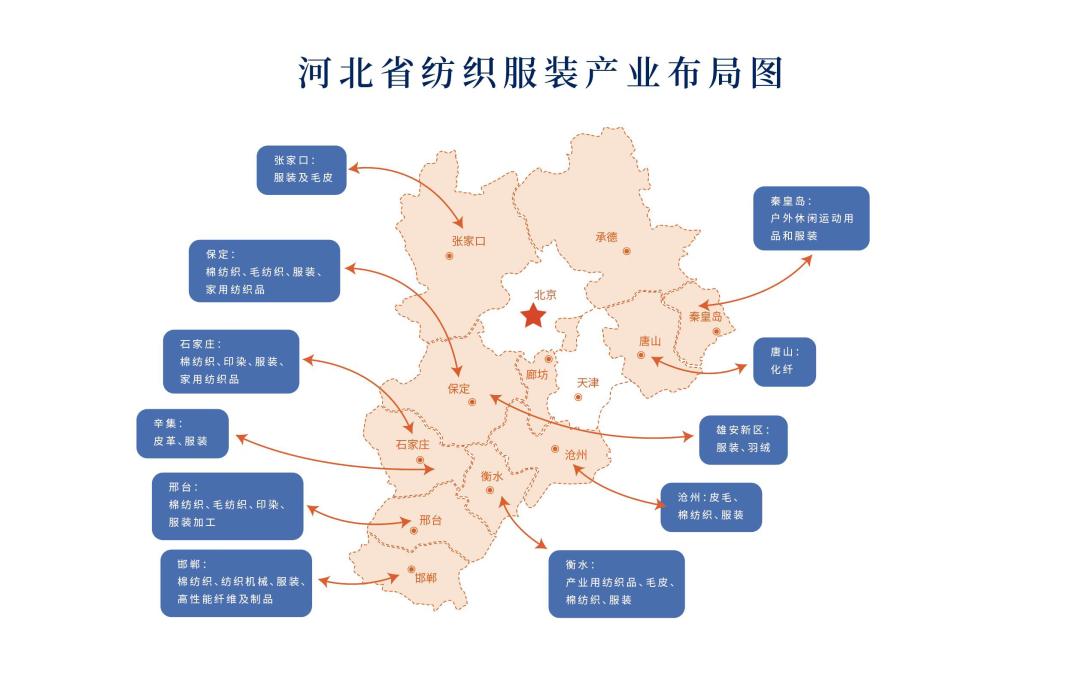
In addition, the wire and cable industry in Ningjin County, the bio-health industry in Quzhou County, the special automobile parts industry in Wei County, and the children's bicycle industry in Pingxiang County are all well-known industrial agglomeration points in their respective fields.
The well-connected express delivery network across Hebei has further boosted the accelerated development of e-commerce in the industrial belts. The express delivery business volume of Hebei has long ranked fourth in China for years, second only to Guangdong, Zhejiang and Jiangsu. The huge express delivery volume has also spawned a price war in the express delivery industry. For a period of time, the delivery price in Hebei can be directly compared with that in Yiwu, which gives Hebei sellers more confidence to offer "low price with free shipping".
However, it is precisely because of the long-term path dependence of low-price and high-volume sales that Hebei, a major e-commerce province, has not incubated a number of well-known e-commerce brands like Zhejiang and Guangdong. As a result, when facing the profit squeeze from e-commerce platforms, Hebei sellers will eventually have no room for further involution.
Can it take the share of e-commerce platforms?
When Hebei e-commerce sellers, who became famous for low prices, unite to build their own platform, many people's first reaction is that this will hurt the interests of Pinduoduo. After all, in terms of price, direct supply from manufacturers is always more cost-effective than selling through the platform as an intermediary.
But in fact, neither Hebei Involution Network nor Hebei Factory Network can hardly get a share of the e-commerce platform market through direct sales from factories.
The reason is not complicated: today's e-commerce platforms, even low-price malls like Pinduoduo, have a complete sales guarantee system covering multiple links such as logistics, after-sales service and payment. The commodity price paid by consumers already includes these hidden costs, and factories can hardly match the full range of services provided by e-commerce platforms.
Moreover, Hebei's e-commerce industry generally follows the low-price route, the value of goods is not high, and the profit margin that can be provided to consumers is limited. For example, if consumers buy goods worth thousands of yuan, they may save hundreds of yuan in price difference by bypassing e-commerce platforms and purchasing directly from manufacturers; but for small items worth only a few yuan or more than ten yuan, e-commerce platforms with more convenient after-sales services are the first choice for the vast majority of people.
Whether it is established e-commerce giants such as Taobao, JD and Pinduoduo, or emerging traffic centers such as Douyin, Kuaishou and Xiaohongshu, they have made consumers form the habit of shopping through platforms. In addition, these platforms also launch promotional activities and distribute coupons from time to time, which further enhances consumers' user stickiness.
When merchants in industrial belts unite to build their own platforms, the wholesale and procurement websites like 1688 are the ones that may be truly impacted.
First of all, for factories, although e-commerce retail can boost sales in a short time, the traffic is not in their own hands; although the wholesale price is slightly lower, it is characterized by stable sales and shorter payment recovery cycle. The sense of security brought by this certainty cannot be provided by any number of e-commerce platforms combined.
In the past, wholesale and procurement websites had more customer traffic, and factories were willing to pay for advertising on these platforms. But as the trend of price comparison in e-commerce spread from the retail end to the procurement end, many factories were forced to fall into involution, and could only obtain a higher ranking on procurement websites at a lower price, so as to get more customers and orders.
But in the long run, this way of competing by cutting prices will definitely end up sacrificing product quality. Low prices lead to low quality, which will make retailers lose customer trust; when products are no longer popular in the market, it is the factories themselves that eventually lose orders.
When factories unite to build their own yellow page websites, what they are ultimately resisting is not the service fees charged by other Internet platforms, but the unreasonable price comparison rules of the platforms that they have to endure after paying the fees. This kind of exploitation is far more destructive than direct charging.
Why do factories choose to unite?
It is not a new topic to let factories supply goods directly to e-commerce platforms. For a period of time, this even became a new channel that many factories competed to expand.
As early as 2019, Alibaba launched the semi-managed operation service "Taofactory", focusing on the M2C model of direct supply from source factories, covering all categories of goods for food, clothing and daily use.
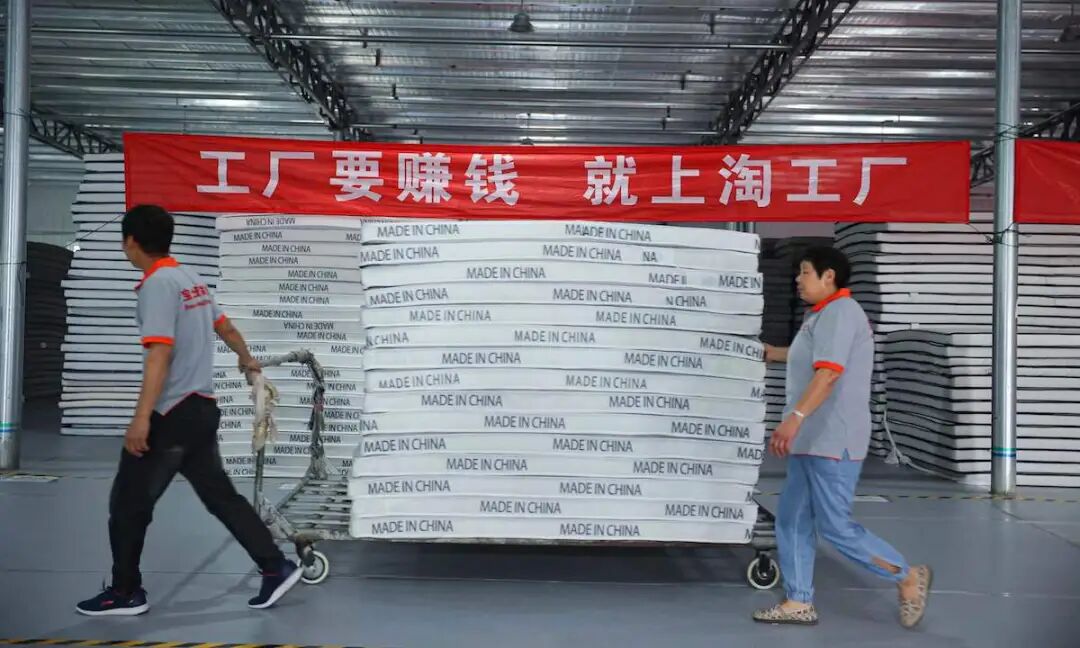
In recent years, JD and Pinduoduo have been vigorously promoting the fully managed self-operated model, mainly inviting unbranded factories from industrial belts to settle in, with the platforms responsible for operation, marketing, logistics and other links, which greatly reduces the operating costs of factories.
However, after factories and platforms went through the short honeymoon period of explosive orders, problems began to emerge. Factories found that the biggest advantage that platforms valued when choosing to cooperate with them was still price; other values that factories could provide were mostly ignored.
When factories that only focus on production are involved in the vortex of infinite price comparison, their risk resistance capacity is sometimes not as good as that of traders. Traders can choose different categories of products to sell, but most factories only have the ability to produce one type of product. Once the profit of this type of product is compressed to an extremely low level by the market, the whole factory is likely to face a fatal blow.
Moreover, as more and more products are sold, the platforms have more and more accurate data on product prices, and can directly offer a "choking-price" to manufacturers: if the factory does not accept it, there will be no order volume; if the factory accepts it, there will be no profit.
When factories lose the right to negotiate prices, and even the bottom price is no longer a secret, the factory owners who realize this belatedly will naturally want to break away from the platforms and seek mutual support with each other.
Hebei merchants are no longer willing to engage in meaningless involution, and local governments are also making efforts to promote industrial transformation. In particular, regions with a solid industrial system foundation and convenient transportation like Hebei have more opportunities to continuously upgrade and develop in the form of industrial clusters.
In February this year, Hebei Province announced that it would launch the 2026 anti-involution, quality improvement and competition promotion action, to comprehensively rectify the irrational competition problems of county-level characteristic industrial clusters. It will carry out special actions to crack down on inferior low-price products, resolutely investigate and deal with illegal acts of counterfeiting and shoddy products, and promote the transformation of competition from "competing on price" to "competing on quality".
Specific measures include launching the anti-monopoly "law enforcement to protect enterprises" action, resolutely correcting acts that use dominant positions to squeeze the development space of other business entities; thoroughly rectifying illegal charges involving enterprises in fields such as government departments and their subordinate units, industry associations and chambers of commerce, standardizing unreasonable charging behaviors, and reducing the institutional transaction costs of business entities.
Of course, for the factory owners in Hebei, they do not lack opportunities to be seen. But the inherent impression of low prices is narrowing their living space. To get out of this dilemma, they still need to rely on the power of platforms and brands. Relying solely on the yellow page website, a marketing method from the last century, may not be able to change their fate in the new era.
This article is from the WeChat official account "Spiral Lab", the author is Wuqing, and 36Kr is authorized to publish it.