Apple's new CEO rolls out his first major move targeting India's production expansion push: after sinking tens of billions of US dollars into the project, the company is now rushing to slam on the brakes.
On September 1, 2026, Apple officially saw a leadership reshuffle. Tim Cook transitioned to the position of Executive Chairman, and John Ternus, Senior Vice President of Hardware Engineering, took over as CEO.
The outside world originally waited to see the new CEO's first bold moves — Cook has been talking about "supply chain diversification" over the past decade, pouring tens of billions of dollars into building factories in India, while Foxconn, Pegatron, and Tata have been rushing to set up production facilities in Tamil Nadu and Karnataka.
According to the expected scenario, the new CEO should continue to push for production expansion in India, shifting more production capacity from China to the country.
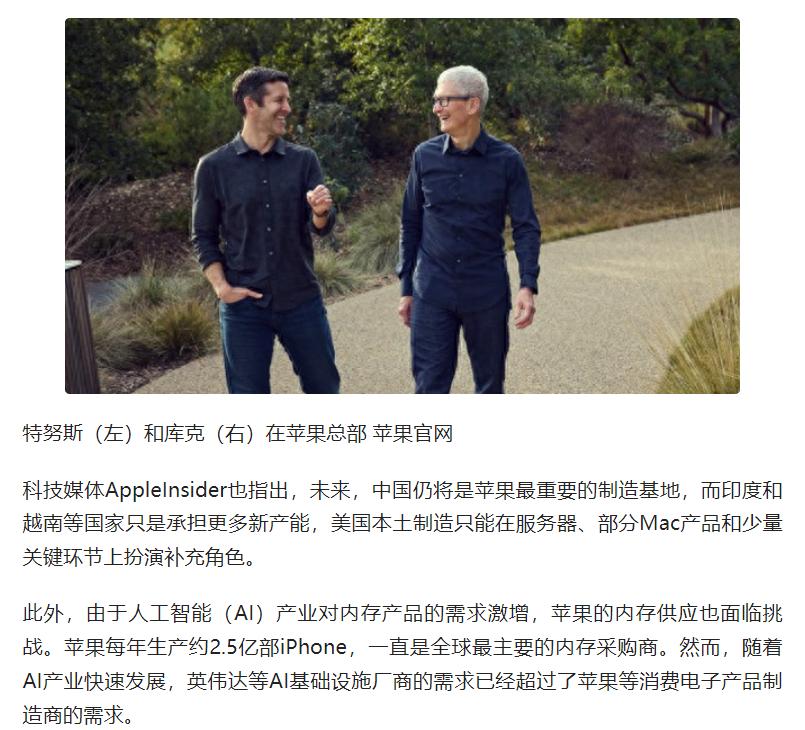
However, right after Ternus took office, his first move was to hit the brakes. A clear signal is that all foldable screen production has been arranged in China, and Apple's aggressive production expansion in India will slow down significantly for at least the next year.
Previous reports from tech media AppleInsider also pointed out that in the future, China will remain Apple's most important manufacturing base, while countries including India and Vietnam will only take on more new production capacity.
Apple has been pursuing "diversification" for a long time. Now that it is led by an engineer, why is it no longer in a hurry?

The answer lies not in the conference room, but in the factories in southern India.
On September 10, Apple released the first foldable iPhone Duo in its history. It is Apple's product with the highest technical density, highest unit price and greatest process difficulty.
Following the logic of "de-Sinification", this strategic new product should have been first tested in India, first manufactured in the United States, and its production shared globally.
However, after teardown, the entire industry fell silent.
China Daily directly published a headline: "Apple's first foldable iPhone is fully developed in China". The supply chain sorting done by National Business Daily is more straightforward: at least 11 Chinese enterprises have entered the Duo supply chain, covering complete machine assembly, chips, structural parts, circuit boards, testing and optics.

Let's count in detail: the complete machine assembly is still handled by Foxconn Industrial Internet, with production lines located in Shenzhen and Zhengzhou; Lens Technology takes 70% of the share of inner screen UTG ultra-thin glass.
In the hinge segment, the share of Longsys Precision exceeds 25%; the liquid metal spindle structural parts are supplied by Yian Technology; Sunwoda takes 40% to 50% of the battery pack share; Universal Scientific Industrial (Shanghai) Co., Ltd. is the exclusive supplier for SiP system-in-package. Samsung supplies the inner screen at a unit price of 250 US dollars, with a three-year exclusive agreement signed; the chips are manufactured by TSMC.
If you go over this list over and over again, you will find a particularly awkward fact: for Apple's most cutting-edge, most expensive product that requires the highest process density, there is not a single link in the entire chain — from assembly to hinge, to ultra-thin glass, to battery and packaging — located in India.
This points to a harsh truth that only hardware engineers can better understand.
The process of the bar iPhone has been standardized to the extreme by Apple: screen lamination, motherboard mounting, battery packaging, and casing assembly have all been written into SOPs page by page, and Foxconn engineers can train local workers to get started in three months.
But foldable screens do not follow this logic.
The core difficulty of the foldable iPhone Duo lies in the set of precision hinges that can open and close tens of thousands of times without loosening, shaking or letting dust in, the layer of UTG ultra-thin glass that is only tens of micrometers thick and needs to bend together with the hinge, and the dust-free environment where not even a single micrometer-level dust particle is allowed during flexible screen lamination.
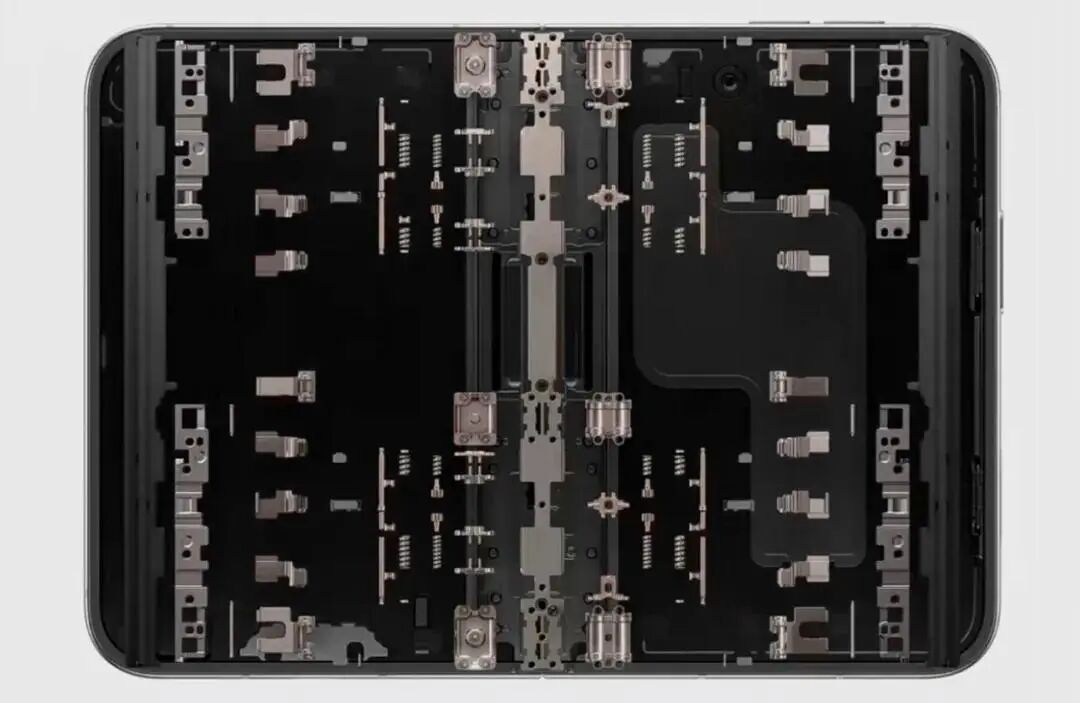
These problems cannot be solved just by building factories and recruiting workers.
It relies on a network that has been built over more than a decade within a three-hour drive around Shenzhen, Zhengzhou and Dongguan: knowing which type of steel is fatigue-resistant, which laser welding machine has the highest yield, how the stress distributes when glass bends, and who to turn to when engineers run into problems at 3 a.m.
Ternus Hits the Brakes and Sees the Truth of the Hardware Supply Chain
Cook and Ternus have completely different core backgrounds.
Cook came from a supply chain operation background, believing that as long as people are well managed, factories are well built, and SOPs are detailed enough, the Chinese supply chain can be replicated in India. During his ten years in office, he regarded India's production expansion as a management problem with clear goals.
Ternus is different. He has worked at Apple for 25 years, is in charge of hardware engineering, and has personally supervised every production line from Apple Watch to Mac to iPhone. He knows very well how a piece of metal is bent, how a piece of glass is curved, and how a hinge can open and close tens of thousands of times without failure.
So the first thing he did after taking over was not to continue to increase the production share in India, but to stop and calculate the hardware and efficiency accounts.
It has long been circulating in the industry: during the 2026 Spring Festival, Chinese engineers and the management team of Indian factories went back to China for a half-month vacation, and the Indian production lines directly broke down, with the yield rate dropping from 90% to 30%, and the qualified rate of motherboards only reaching half.
This figure may not be completely accurate, but it hits the nail on the head — without Chinese engineers, Indian factories are like a kitchen without a chef, falling into total chaos.
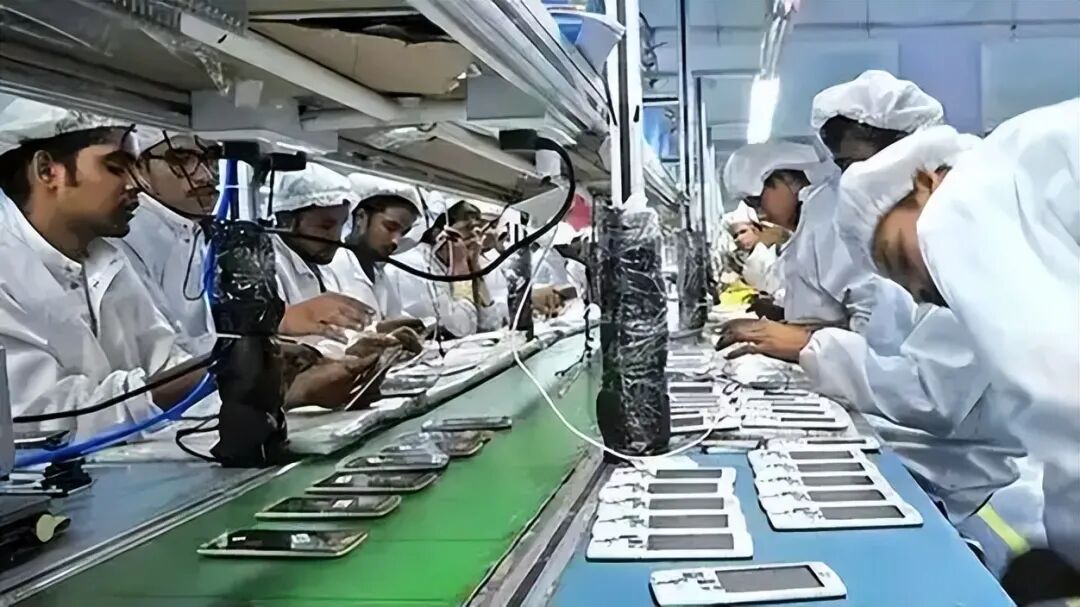
To prevent this from happening, Apple has not been idle over the years, sending more than 1,000 Chinese engineers to India to teach local workers how to make mobile phones hand in hand.
However, in July and August 2025, Foxconn continuously withdrew five to six hundred workers, all of whom were in core positions of production line calibration, quality inspection, and supply chain management.
Once these people were withdrawn, the production lines immediately showed their original flaws. It took months of modification just to change the machine interface from Chinese to English.
CNBC later also confirmed one thing: Tata wanted to recruit technical workers for small iPhone components from China, which was restricted by China's new regulations on technology transfer. Apple wants to move its production capacity, but while factories and equipment can be moved, process know-how and engineers cannot be relocated.
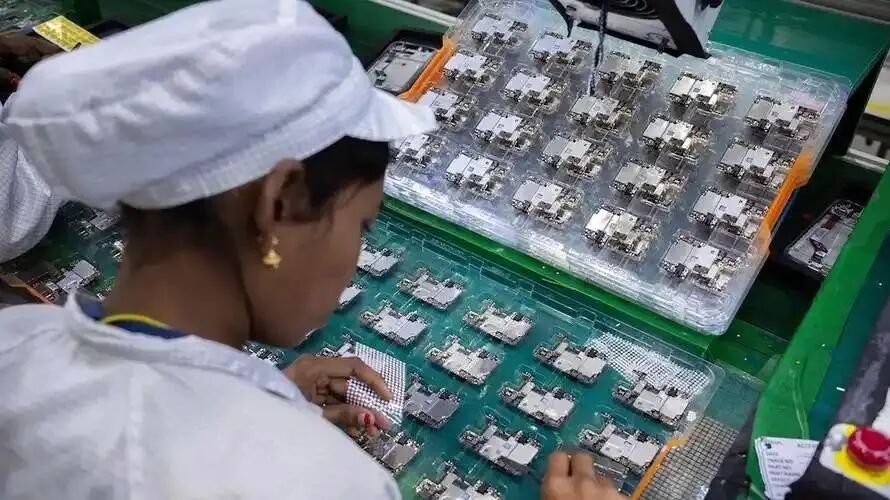
If people cannot be retained, at least the parts can be imported, right?
The more embarrassing part is here. When National Business Daily teardowned the iPhone Duo in September, it mentioned in passing that the local parts supporting rate in India is only about 15%.
All core components — screen modules, motherboards, connectors, battery management chips, and precision structural parts — are flown in from China.
This is the truth of Apple's "Made in India" initiative over the years: India only completes the final process, assembling the parts airlifted from China into a complete mobile phone.
The casing may be stamped in India, and the screen may be laminated in India, but if you take the device apart, all the core components are manufactured by the Chinese supply chain.
Flying parts from China to India for assembly, and then shipping the finished phones back to the United States from India — after going through this whole circle, the freight, tariffs and yield loss are all counted into Apple's costs.
After Pouring Tens of Billions of Dollars, the Indian Government Issues a Fine in Return
Apple has made huge bets in India.
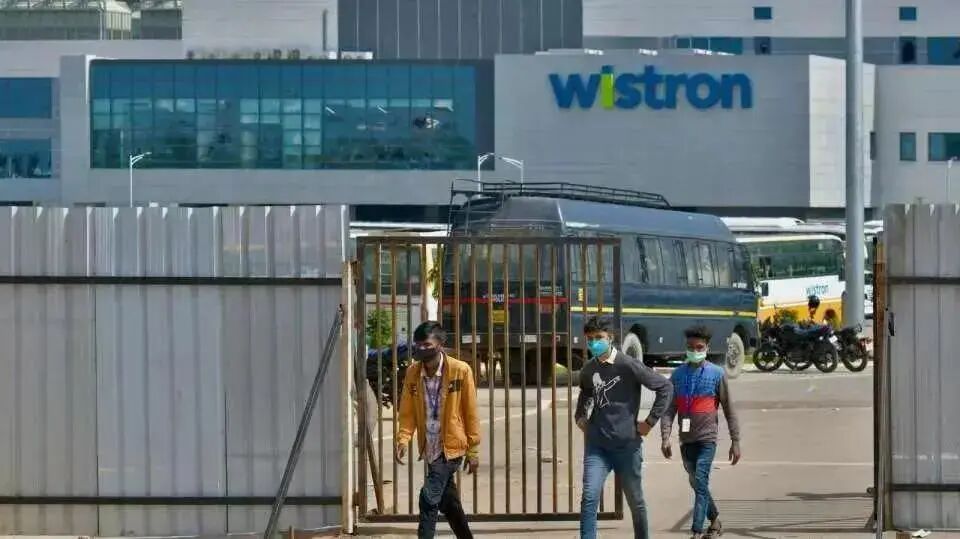
In recent years, the Modi government has provided land, tax incentives, and production-linked subsidies, inviting Foxconn, Wistron, and Pegatron to set up operations in India one after another. Apple itself has poured tens of billions of dollars to build a small ecosystem of 40 to 50 suppliers in southern India.
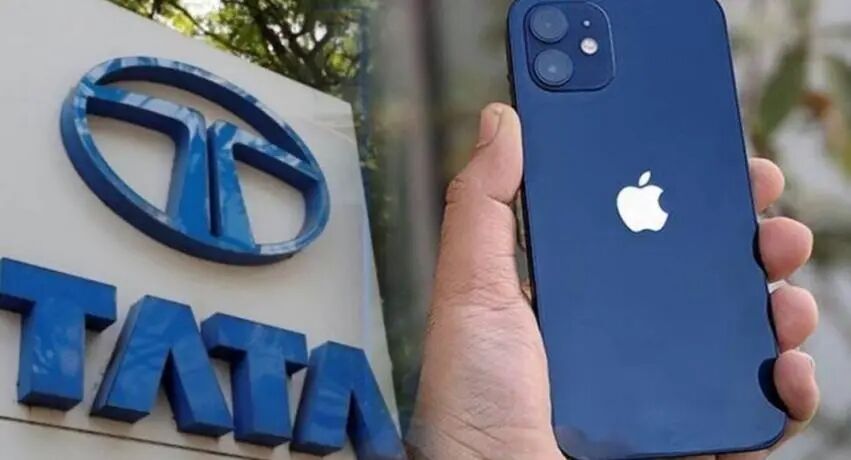
The Tata Group acquired Wistron's Indian business at a low price, and then set up a joint venture factory with Pegatron, with 10,000 workers and an annual production capacity of 5 million units — which seems to be quite impressive.
However, unexpectedly, India took action again.
In April 2026, the Competition Commission of India (CCI) accelerated the anti-monopoly penalty process because Apple refused to submit financial data.
According to India's newly revised rules in 2024, if the maximum fine is calculated at 10% of global revenue, Apple will face a fine of 38 billion US dollars. Apple took the Indian government to the Delhi High Court, claiming that this rule is "arbitrary and unconstitutional".
But India no matter where you make your money, calculates the fine based on your global income for operations in India, which casts a huge shadow over Apple's development in India.
Before this matter was settled, a leak incident broke out again in 2026. Tata Electronics leaked all of Apple's confidential materials, setting the record for the most serious leak case in Apple's history. Some reports pointed out: after this incident, Apple's pace of transferring high-end R&D and trial production of core production capacity to India has "slowed down significantly".
Apple Is Now Stuck in a Dilemma on Both Sides
At this point, Apple's accounts are extremely difficult to calculate.
It is impossible for Apple to withdraw from India. Tens of billions of dollars have already been invested, and 40 to 50 suppliers have been established. As a result, this move has in turn tied Apple's hands and added another layer of risk.
If Apple admits defeat and leaves now, all this investment will be completely lost. India has given policy preferences, and if you want to withdraw, you will also face sky-high tax recovery and policy backlashes.

Therefore, as a hardware engineer, Ternus's choice is very realistic: he talks about diversification publicly, but slows down the pace of relocation in practice. High-end R&D, trial production lines, and new processes will not be moved to India for the time being.
New products like foldable phones that test process density the most will remain entirely in Shenzhen and Zhengzhou. If India takes them over rashly now, the yield will collapse completely.
Apple's transfer initiative was originally intended to disperse production capacity, reduce dependence on a single country, and buy an insurance policy in terms of geopolitics.
However, it miscalculated that the bargaining power does not depend on whether you have moved the factory or not, but on whether the other party can function without you.
Without Chinese engineers, Indian factories have to stop their production lines; without Chinese parts, Apple's Indian plants cannot assemble mobile phones. On the contrary, the Chinese supply chain can fill the gap left by Apple's orders with other mobile phone clients.
Therefore, when a substitute itself cannot do without the party it is supposed to replace, the whole "substitution" logic is invalid from the very beginning. Ternus hitting the brakes is not a departure from Cook's route, but a realization that Apple wants to replicate a Chinese supply chain in India, but the center of the supply chain has never left Zhengzhou and Shenzhen for a single day.
This article is from the WeChat Official Account "Hot Comment" (ID: redianweiping), written by Wang Xinxi, and authorized for release by 36Kr.