The life-and-death divide for Chinese factories: The silent explosion ignited by AI
At 4 a.m. at the Yiwu exit of Shanghai-Kunming Expressway, convoys of container trucks fully loaded with packed boxes stretch in a long line, the roar of their engines muffled in the thick fog. Forklift drivers, cigarettes in their mouths, heaps boxes of daily necessities onto the trucks, the crisp clatter of iron sheets mixed with the smell of diesel seeping into every factory building that has stayed awake all night.
But what you may not know is that AI has already taken charge of the scheduling of most of these goods.
A set of public data may illustrate this point: more than 20% of procurement demands on Alibaba 1688 are already initiated by AI agents, the figure is expected to exceed 40% this year, and may reach 80% within two years.
The demand side is changing, and so is the supply side — more and more factories are using AI to receive orders, test product styles, and arrange production. China's B2B sector is rapidly evolving into A2A.
This is not a scenario in the distant future; it is something happening right now.
With the core question of "What exactly is happening in Chinese factories in the AI era?", Ebrun recently conducted field research in the frontline workshops of 1688-certified factories in Yiwu, Yongkang, and Keqiao (Shaoxing) in Zhejiang Province.
The answer is surprisingly clear, and surprisingly harsh as well.
After the full visit and survey, the strongest feeling of Ebrun is not what AI has changed, but an accelerating division: some businesses are on the rise, while others are falling off a cliff. There is no "almost the same" state — you are either on an upward track, or slipping at an accelerating pace.
This silent, explosive disruption triggered by AI is neither a temporary industry downturn, nor a cycle that you can simply wait out.
The old business model that relied on hit products, extremely low prices, and massive ad traffic investment is collapsing entirely. Traffic is getting more and more expensive, the dividend of hit products is shrinking shorter and shorter, and homogeneous competition has pushed everyone's profit to the floor. The market demand is stock-based while the supply is over-saturated, the three traditional pillars of the old-era e-commerce are failing collectively — this is not a problem of a single platform, but a change in the entire supply-demand structure.
Switching tracks does not mean changing direction, but shifting to a completely new competitive arena.
But the factory owners in the workshops do not talk about these concepts. They just hold their calculators, figuring out how many graphic designer salaries AI can save, while estimating how much longer they can hold on.
Their actions honestly reveal the essence of this transformation: in the past, every link from sourcing goods to closing a deal was full of frictions — you needed connections to find suppliers, cycles for sampling, time to build trust, and waiting for logistics.
These frictions are the very reason for the existence of the intermediate layer, as well as the hidden costs weighing on both factories and buyers. Today, AI is targeting all these bottlenecks and breaking them down one by one.
The AI on the cloud only tells stories, while the AI in the workshop only saves 3 yuan for each step. But when every link saves 3 yuan, the entire industrial chain will be completely transformed.
When AI fully connects the design, production scheduling and delivery of factories, Chinese manufacturing may become a printer that can be called by the whole world at any time — overseas entrepreneurs spot business opportunities on social media, place orders to factories in Yiwu or Shenzhen the very same day, and receive the goods a few days later. The premium of creativity stays locally, while the manufacturing capacity remains in China.
This day has not come yet, but people in the workshops have already started preparing for it.
Operation Revolution: As Long As It Cuts Costs, the Abacus Will Align With Algorithms
It is unrealistic to expect traditional manufacturing business owners who only have junior high school education to become AI tech geeks, but that does not stop them from integrating AI technology into their business calculations.
"We are grassroots entrepreneurs, we came to Yiwu with just a few hundred yuan at the very beginning," Wu Xianmin, founder of Zhejiang Duopin Daily Necessities, told Ebrun. Survival is always the top priority. Facing the extremely fierce, ultra-low-margin industry landscape, "the net profit margin for most categories is only around 5 percentage points. If you do not have a competitive moat and just compete with others by selling goods at low prices, you simply cannot survive."
This harsh survival pressure is forcing business owners to actively seek solutions from algorithms. In the past, if a traditional factory wanted to test cross-border e-commerce, it needed to hire a dedicated design team to shoot and retouch pictures, and employ multilingual translators to connect with overseas clients, which would cost hundreds of thousands of yuan in fixed labor expenses alone every year.
Nowadays, Fang Juncheng, Chief Strategy Officer of Zhejiang Duopin Daily Necessities, opens the AI system and demonstrates to clients in Kazakhstan on the screen: "Even if you do not know exactly what style you want, we can generate product images within 30 seconds based on the cultural characteristics of your country, which is beyond their imagination. In the past, this work would require at least three designers and two translators."
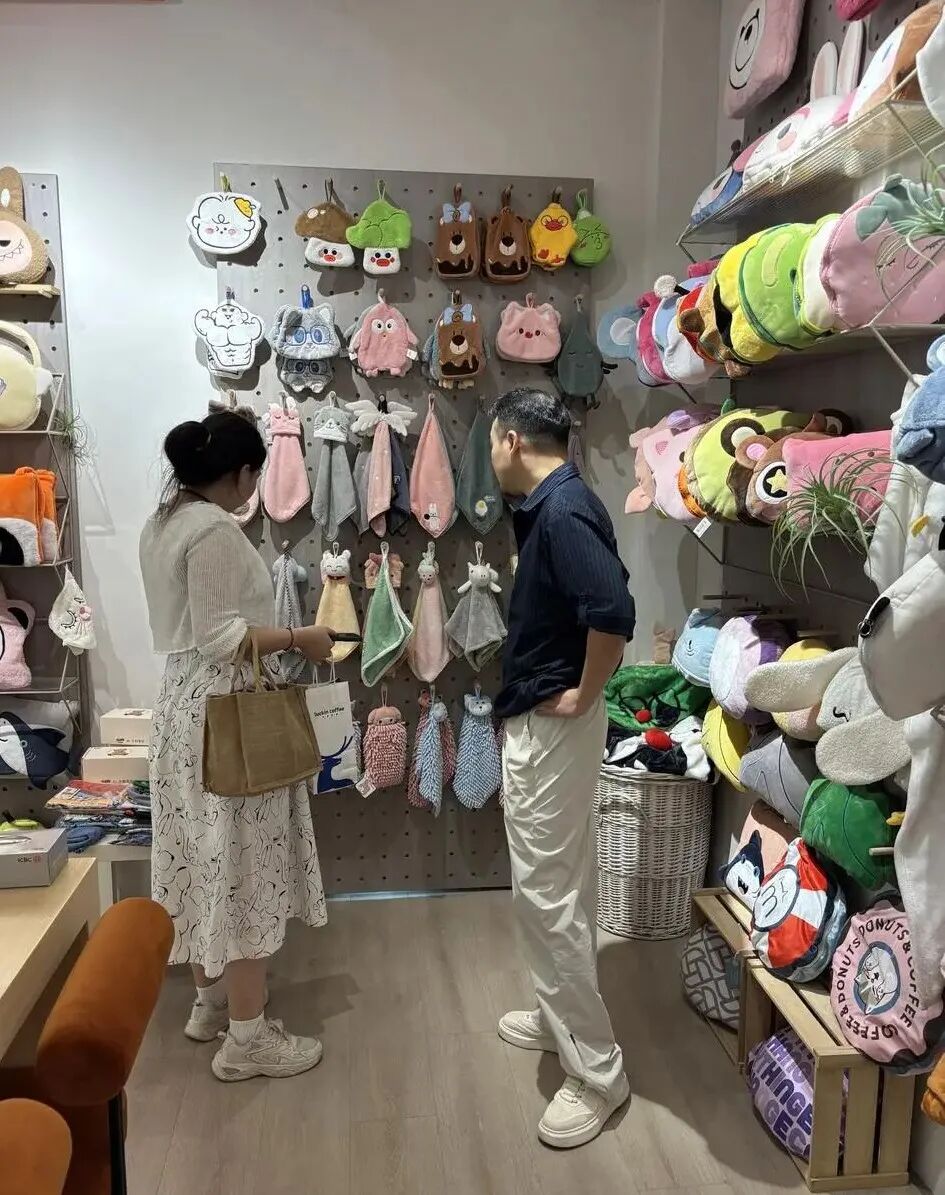
Yifan Sample Display Area
In addition to cost, a lot of time is also saved. At the frontline of production and customer expansion of Yifan Daily Necessities, the management team uses AI to generate images with one click and carry out precision marketing to quickly screen high-potential overseas buyers, shortening the product R&D and trial-and-error cycle that used to be calculated in "months" to "days". As for Helv Apparel, which focuses on luggage and travel gear, it leverages AI tools to create a large number of overseas localized visual scenarios, eliminating the need to fly overseas to shoot real scenes.
AI has avoided the literary route of writing poems and painting for factories, and directly played the role of a shopkeeper who carefully calculates every penny for the business owner. The essence of AI in B2B scenarios is to lower the threshold of commercial trial and error to the horizon at an extremely low cost.
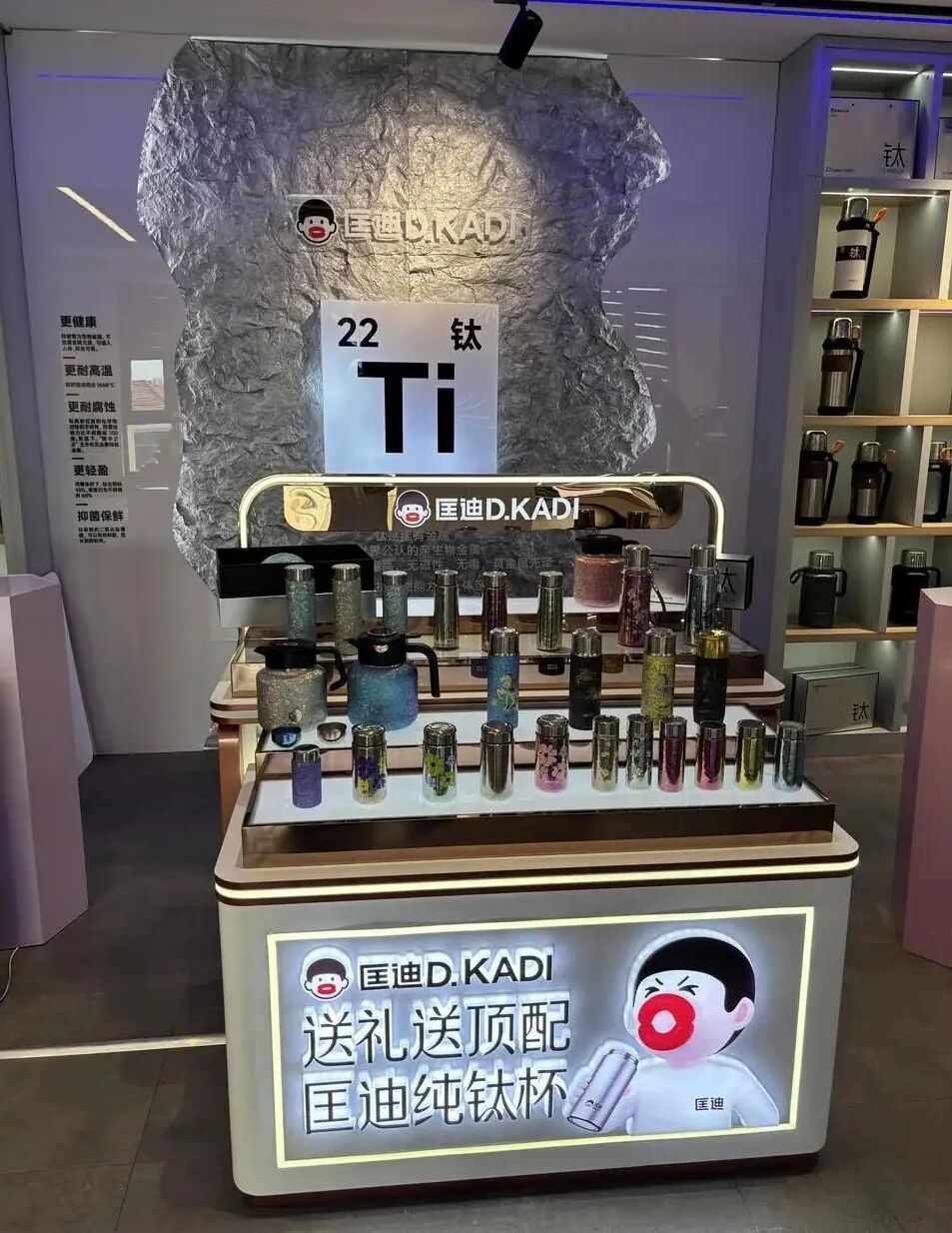
Kuangdi Sample Display Area
The more labor-intensive the traditional enterprise is, the greater its determination to bet on AI. In Yongkang, Zhejiang, a major hub for cup and pot manufacturing, Zhejiang Kuangdi Industry and Trade has previously gone through the costly "robot replacement" phase. The polishing workshop used to have the worst working environment, and it was difficult to recruit workers even with a monthly salary of 20,000 yuan. After introducing an integrated robot set worth 5 million yuan, 90% of the work in the workshop has been automated. Now, Zhejiang Kuangdi Industry and Trade has entered the "AI replacing robots" phase.
During the visit to the factory, the most profound feeling of Ebrun is: Do not talk to workshop owners about the grand vision of AI. As long as AI can cut costs, their business abacus will naturally align with algorithms. The most primitive driving force of business has nothing to do with lofty ideals, but purely comes from extreme cost-effectiveness.
Job Restructuring: Old Experience Cannot Beat New Algorithms, Mastering New Tools Is the Pass
As AI extends its reach to every node of the assembly line, ordinary workers and frontline managers are personally experiencing the drastic restructuring of job responsibilities. Walking through the prefab houses and packing rooms of the factory, you will find that the panic of "unemployment wave" has not swept in as expected, but the skill logic of jobs has already undergone earth-shaking changes. The old authority of empiricism is collapsing, and the new force that masters new tools is rising rapidly.
The veteran tailors and senior mold craftsmen who used to be highly valued for their 20 to 30 years of sampling experience, their experience accumulated by intuition is being quickly deconstructed by algorithm models. In contrast, young workers, frontline HR or operation assistants, as long as they master the methods of using AI auxiliary tools, can show amazing production efficiency.
Take the HR department of Zhejiang Duopin Daily Necessities as an example. In the past, sorting out performance records and checking interview record forms was extremely tedious and time-consuming. "Now we directly use the AI-built performance and interview system to finish all the work in one page," said Manager Li, the head of human resources. AI has completely broken and reorganized the traditional boundaries of job positions.
Traditional home textile enterprises used to spend 50,000 to 60,000 yuan every year hiring third-party designers to make images. Now, the graphic design and operation links have been completely reshaped by AI. Hu Bin, factory director of Shaoxing Kaibin Home Textiles, said bluntly: "In the past, it took several days to finish a product link. Now with AI, we can generate images in a few minutes, and the effect is better than manual work." They even directly designed a hit "shawl blanket" with a hat and a middle opening through AI creativity.
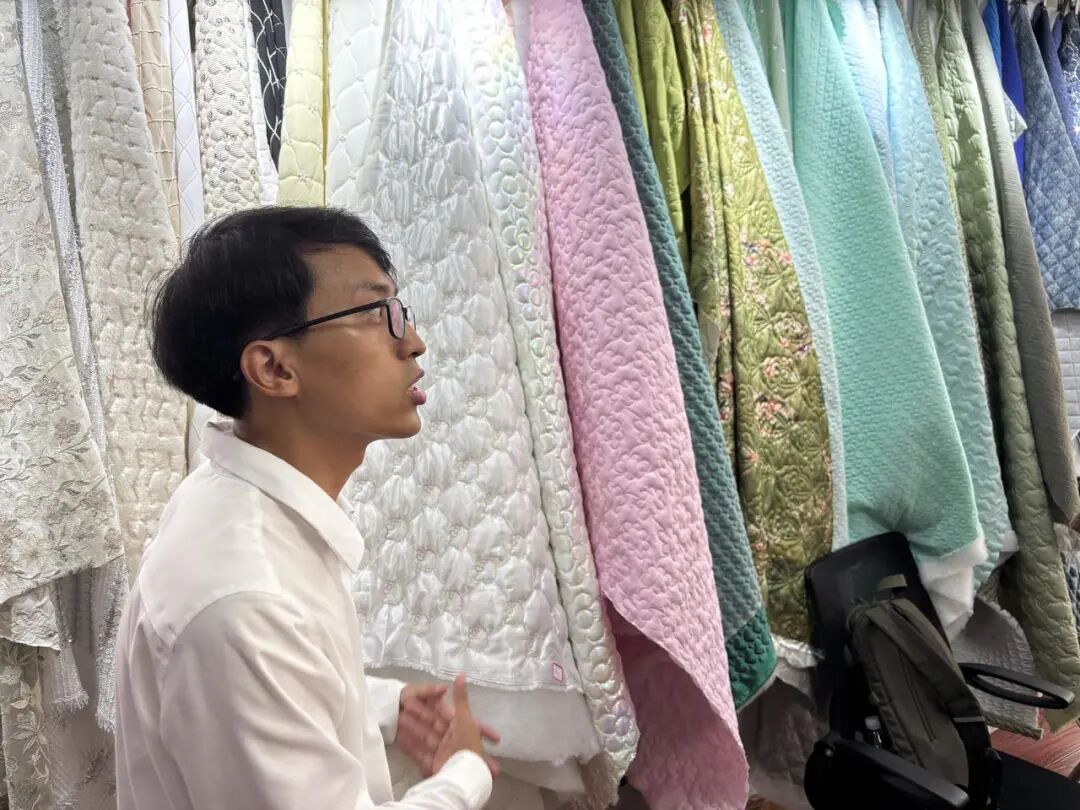
Jiang Yuan from Muli Textiles Introduces Products of His Factory
Jiang Yuan, the post-90s founder of Shaoxing Muli Textiles, is using AI agents to digitally restructure the traditional ERP process into standardized SOPs. "Our generation of young people embraces AI with open arms."
Wu Xianmin, founder of Zhejiang Duopin, is aggressively promoting the "all-staff AI adoption" strategy: all employees participate in development, and everyone has a monthly task to develop AI applications for their own job positions.
"Calculated based on the efficiency of the traditional model in the past, to achieve the current output value scale, we would have needed a team of 1,000 people; but now with AI, a team of 200 people can easily achieve that," Wu Xianmin revealed. "Our total number of employees has not changed, but our performance has doubled. The quality requirements for employees have increased significantly, and the proportion of employees with college and bachelor's degrees is getting higher and higher."
This is a silent job transformation: Workers are no longer bound by heavy physical machinery, but are tied to their positions by the more invisible, second-level precise "algorithm efficiency". Old experience cannot beat new algorithms, and everyone is quietly integrating algorithms into their own livelihood.
Supply Chain Reshaping: From Blind Production Scheduling to AI-Driven Precision Response
The pain point of traditional manufacturing is the huge inventory risk caused by the "produce first, sell later" model. In the extremely competitive market environment, a single misstep can lead to backlogged goods in the warehouse that instantly crush the cash flow of a factory. Today, a brand-new "test while produce" model is spreading rapidly.
Merchants can first upload AI-generated concept product images and sampling effects, measure the market potential through real click rates and inquiry volumes, and once they capture the signal of a hit product, they can quickly make samples and put into production. The inventory risk has been reduced to the lowest level in history.
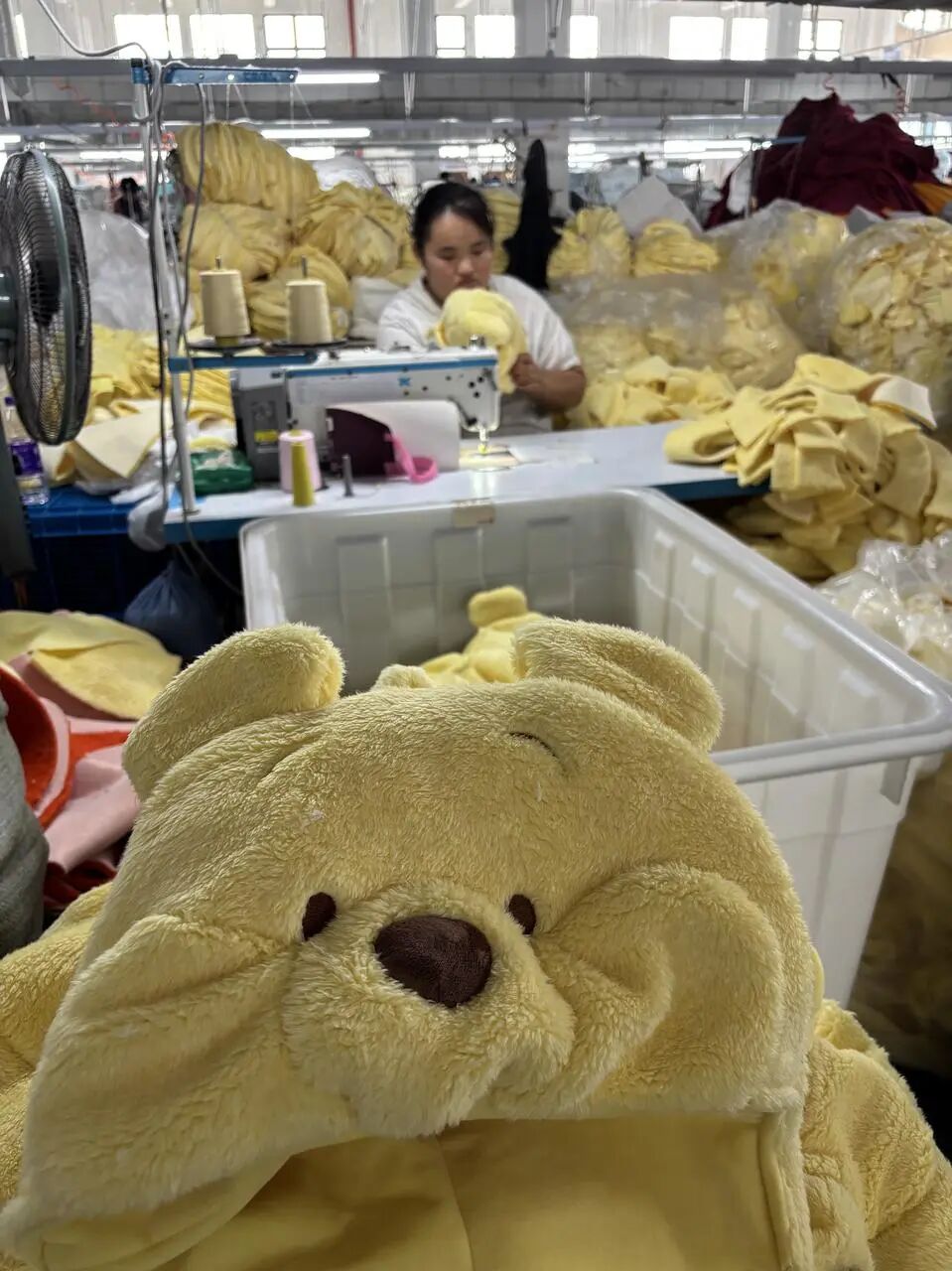
A Glimpse of the Production Workshop of Kaibin Home Textiles
Shaoxing Kaibin Home Textiles knows this very well: Facing the impact of low-cost inventory fabrics from Hebei and other regions, Kaibin sticks to the strict inspection route of IP authorization such as Disney and Sanrio, and uses AI as a "style testing artifact". It generates images first and puts them online to test inquiries, and arranges production only after receiving orders. "We even accept orders for a single blanket, the core advantage is full flexibility."
Traditional industrial products and complex accessories have high sampling costs and long cycles. Pailuns Industry and Trade connects AI front-end modeling with flexible sampling data, realizing "extreme fast response" from customers putting forward customized demands to small-batch trial production. The mechanical structure and process parameters that used to take weeks to discuss can now produce a full set of mass-producible implementation plans within a few days.
Pailuns Product Display
In the underlying logic of supply and demand scheduling, the precise reach of global buyers that used to only be achievable for large factories can now be directly realized by a small factory of 5 people through AI tools and digital interfaces on 1688. The massive inquiry and interaction data tested by factories on the platform are backed by the real procurement demand signals accumulated by the platform. Factory owners have bid farewell to the stage of blindly guessing the market, and the market now tells factories in real time what to produce.
From the perspective of the interviewed factory owners, 1688 has to some extent evolved into an "AI-driven capacity scheduling center" — converting the real demands scattered among tens of millions of buyers into flexible production scheduling signals that factories can see and use.
"The competition is extremely fierce now. In the past, once you launched an innovative product, it would be imitated very soon, and others would sell it at a lower price than you," Wu Xianmin lamented to Ebrun. To get rid of the trap of disorderly low-price competition, factories must shorten the supply chain response time to the extreme. From AI design and style selection, rapid confirmation of formulas and specifications, to flexible production scheduling and delivery in the factory, the cycle is strictly compressed to within 48 hours or even 24 hours.
AI is enabling small and medium-sized factories to have the flexible supply chain response capabilities that used to only belong to super-large factories. In fact, in the future, there will be no distinction between large and small factories, only the difference in response speed, and the difference between victims and beneficiaries of AI.
Cruel Knockout Round: Technology Does Not Believe in Tears, Those Who Do Not Understand AI Are Accelerating Blood Loss
Behind the grand narrative of technological evolution, there is never a warm, all-advancing journey. The frontline survey presents the real dark side and transformation pain with mixed cold and hot situations. The downward penetration of computing power brings convenience, but also brings unprecedented homogeneous dilemmas.
Due to the popularization of AI one-click image generation and one-click copywriting generation tools, a large number of highly homogeneous AI images and hypothetical products have emerged on all major platforms. Buyers are amazed by the images, but the gap between the physical goods they receive is huge; the definition of intellectual property and design plagiarism has become increasingly blurred.
In addition to the homogeneous dilemma, there is a deeper division that is quietly tearing apart the factory camp. On the one hand, the new generation of "second-generation factory owners" or young entrepreneurs who understand technology and dare to try are skillfully using "AI + full-network customer expansion" to achieve counter-trend breakthroughs. Jiang Yuan represents the confusion and exploration of the new generation of entrepreneurs in Keqiao: they use AI to make We