What are consumers who fixate on battery performance when shopping for cars afraid of?
If we take 2021 as the inflection point for the accelerated sales growth of new energy vehicles in China, this round of popularization has gone through five years by this year. As the driving range and service time continue to accumulate, some problems that were not obvious in the early stage have gradually emerged, among which the power battery has attracted the most attention.
Last year, a Chinese self-owned brand filed a lawsuit against a second-tier power battery supplier over cell quality and related losses; earlier this year, a luxury brand launched a global recall for some vehicles due to the risk of overheating in partial battery modules that may cause fires; a few months later, the "banana battery" incident once again sparked huge public controversy.
Apart from safety incidents, battery issues are also increasingly frequently included in daily vehicle complaint cases. The Q2 2026 report released by CarQuality.cn shows that "power battery failure" entered the TOP 20 new energy vehicle complaint problems for the first time, ranking 6th, with the number of fault complaints doubling month-on-month; in the same period, the complaint volume of pure electric vehicles increased by 70.2% month-on-month.
Regulatory standards are also tightening accordingly. The mandatory national standard GB 38031—2025 *Safety Requirements for Traction Batteries Used in Electric Vehicles* issued by the Ministry of Industry and Information Technology has been implemented since July 1, 2026, further strengthening safety requirements such as "no fire, no explosion". Authorities including the Ministry of Industry and Information Technology have previously required vehicle manufacturers and power battery enterprises to jointly investigate abnormalities in temperature, voltage, current, insulation and other indicators, and form a closed loop of risk warning, fault handling and after-sales service.
Most consumers are unable to study every parameter and test item of batteries one by one; after an accident, it is also difficult for them to identify which link the responsibility lies in on their own. For ordinary people, one of the most intuitive solutions is to find a trustworthy battery brand, and then include models equipped with that brand's batteries in their selection range.
A large number of consumers have chosen CATL to take on this role. According to NielsenIQ's 2026 Global New Energy Vehicle Consumer Research Report, 37.1% of Chinese respondents said they would consider giving up purchasing their desired model if it is not equipped with CATL batteries.
The era has come when a single battery can determine whether a vehicle is purchased or not.
01
Why do consumers choose vehicles based on battery brands?
In the era of fuel vehicles, few people would ask who supplies the fuel tank or a core component of the engine before buying a car. In the era of new energy vehicles, however, batteries can hardly stay hidden behind the vehicle brand, as they determine safety, driving range, energy replenishment efficiency, vehicle residual value and long-term maintenance cost at the same time.
In the NielsenIQ survey, 80% of Chinese respondents believe that battery is the key factor determining the safety of new energy vehicles, and another 80% think that battery quality represents the overall quality of the vehicle. The gap between the actual driving range and the nominal driving range is the most prominent pain point in current battery experience; the charging speed presents a mismatch of "high importance, low satisfaction". For car owners, these problems will finally converge into a simple judgment: after several years, the battery determines whether the car can still complete daily travel safely and stably.
The difficulty lies in that a power battery never works independently as a single cell. Cells, modules, Pack structure, thermal management system, software warning and vehicle layout together form the safety chain. Any deviation in any link may be manifested as a "battery problem". The recall of a new vehicle-making force brand is a direct example: the risk source points to the anti-corrosion performance of coolant, while the final disposal covers coolant, power battery and front motor controller.
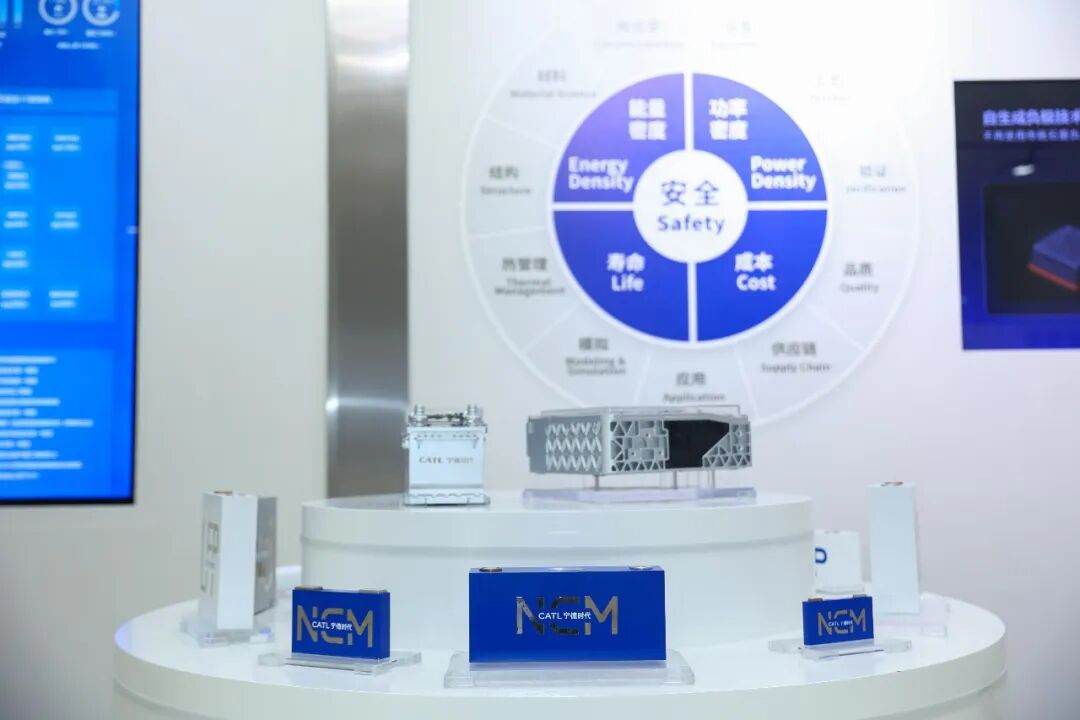
Commercial disputes can also reflect the complexity of responsibility boundaries. Last year, a Chinese self-owned brand filed a lawsuit against a second-tier power battery supplier over cell quality and related losses. It also takes a long process for carmakers and suppliers to clarify the responsibilities among cells, system integration, verification standards and actual use scenarios.
Similar problems did not appear for the first time. In 2019, multiple fire accidents occurred after a model under the new energy brand of a traditional carmaker was launched. A senior executive of the carmaker's battery business summarized the responsibility attribution dilemma in the industry at that time very directly: vehicle manufacturers may look for causes from the battery, while battery enterprises will also check the vehicle system design; some accidents cannot be fully reproduced in the laboratory, and the legal proof and compensation boundaries are very complicated. When the responsibility division is inherently difficult, the subsequent handling can hardly fully meet the expectations of car owners.
Therefore, brands begin to play the role of "risk compressor". The NielsenIQ survey shows that 79% of respondents believe there are obvious quality differences between different battery brands, 79% think that well-known and high-quality battery brands will increase their willingness to buy cars, and 76% are willing to pay extra fees for that.
Dong Yang, Chairman of China Automotive Power Battery Industry Innovation Alliance, said at the TEDA Forum in September that carmakers should actively build strategic alliances with head suppliers to jointly promote industrial progress, instead of simply pursuing price comparison in procurement and only choosing the supplier with the lowest quotation, which is not a sustainable long-term cooperation mode.
Consumers may not be able to distinguish the cathode material formula or thermal management path, but they will observe how many models a brand supports, how many years of large-scale operation it has experienced, and whether a clear responsible subject can be found when problems occur.
In addition, battery quality has also been directly included in the used car valuation system. Manheim, a US used car trading platform, has added a battery health adjustment item to its Market Report Value (MMR), to correct the valuation according to the remaining battery capacity of the vehicle with a specific VIN. The National Data Administration disclosed that the new energy used car evaluation project in Shanghai uses 56 types of data including charging behavior, battery health, fault warning and driving behavior to generate reports such as SOH, range attenuation and temperature consistency. Batteries are no longer just a new car configuration, but also affect the pricing of vehicles in the used car market.
The survey shows that nearly 40% of Chinese respondents said they would consider giving up purchasing if their intended model is not equipped with CATL batteries. Such statement essentially reflects consumers' anxiety psychology of looking for long-term certainty.
02
How much do consumers trust CATL?
If a brand wants to enter the consumer decision-making process, it must first be remembered and recognized by consumers.
The NielsenIQ survey shows that CATL's total awareness rate in the Chinese market reaches 87%, and the unprompted top-of-mind awareness rate is 40.9%, both ranking first among the surveyed battery brands; in overseas markets, its total awareness rate is 78%, and the top-of-mind awareness rate is 26.7%. This means that even without giving the brand list in advance, a considerable number of consumers will take the initiative to mention the name "CATL".
After awareness comes more specific trust differences. Among Chinese respondents, 39% said they "trust CATL very much", which is higher than other surveyed battery brands in the report; its positive trust rate is 81%, and the brand strength index is 6.0. In overseas markets, CATL's positive trust rate is 75%, and the brand strength index is 3.9. According to NielsenIQ's model, brand communication power and the image of "safe and reliable" are the two factors with the highest correlation to high trust.
Apart from the survey, on platforms such as Xiaohongshu and Douyin, discussions around the configuration of models with mixed battery supply such as Xiaomi SU7 and iCAR V23, questions like "whether the battery can be specified", "whether a certain version is equipped with CATL battery" and "how to check the battery supplier when picking up the car" appear repeatedly.
Zeng Qinglin, General Manager of Yijing Automobile, publicly stated on Weibo: "Users understand cars better than we thought. This is why Yijing uses CATL batteries for all its vehicle lineup."
This trust makes being equipped with CATL batteries a "symbol" of high-quality models. Xiaomi SU7 Pro, Max, Xiaomi YU7 Pro, Max, Ultra, the 100kWh versions of Zhijie S7 and R7, as well as the 501 version of iCAR V23, all place CATL in higher configuration or higher value versions. The first batch of batteries for Li Auto's high-end models i9 and Mega still use CATL batteries.
When 79% of respondents believe that well-known battery brands will increase their willingness to buy cars and 76% are willing to pay extra for that, one of the reasons why high-value models write CATL into their configuration list is that it can provide identifiable quality endorsement for high-end versions.
According to statistics from public websites, there are currently more than 250 models equipped with CATL products, including nearly 30 models priced below 100,000 yuan; more than 100 models in the 100,000-200,000 yuan range; and more than 120 models priced above 200,000 yuan, accounting for as high as 80% of the market in this price range.
This does not mean that CATL has a low installation volume in low-priced models. In fact, Geely Xingyuan, a cost-effective compact car that has won the monthly sales championship of all categories for 16 consecutive months from May last year to August this year, is equipped with CATL batteries. The sales volume of this model in the past year reached 437,000 units, which is higher than the overall annual sales volume of most new vehicle-making force brands.
Globally, according to data from SNE Research, as of July 2026, CATL has entered 99 of the 136 global new energy passenger vehicle brands, covering 442 of 991 models; its global installed capacity from January to July 2026 is 289.6GWh, with a market share of 39.9%. Brand trust does not only come from one-time promotion, but is gradually accumulated through such large-scale, cross-model usage records.
While such large-scale installed capacity brings considerable revenue, it also means that from a statistical point of view, the number of accidents may be higher than that of other battery manufacturers, but the fact is the opposite. This is precisely where CATL's greatest strength lies.
03
What needs to be paid to gain consumers' trust?
It is not difficult to be remembered by consumers. The difficulty lies in making a brand maintain consistent performance among hundreds of millions of cells and under thousands of different working conditions.
The first is R&D investment. CATL's 2026 semi-annual report shows that its R&D investment in the first half of the year reached 11.377 billion yuan, a year-on-year increase of 12.70%, covering links including materials, cells, systems and recycling; it has more than 20,000 R&D personnel, and AI has been applied in R&D and manufacturing. By the end of 2025, the company owned and was applying for 54,538 patents at home and abroad; by the first half of 2026, this number increased to 60,319, with a net increase of 5,781 patents in half a year, a growth rate of about 10.6%.
These investments are not only used to improve energy density or charging speed. That a sample passes the test only proves that the solution is feasible; making hundreds of millions of cells maintain stability in different production lines and different batches is the real threshold of mass production capacity.
Zeng Yuqun, Chairman of CATL, disclosed a special part of this mechanism — the "Anti-Counterpart Team" in his video speech at the 2026 World Power Battery Conference. Zeng Yuqun said that the company formed this team at the very beginning of its establishment; as he put it, this is the "first and only" such team in the industry. The team members cover fields including electrochemistry, mechanics and artificial intelligence, with recruitment standards aligned with the R&D team, and have a one-vote veto power. Its task is not to help new products pass the review faster, but to find design loopholes from the opposing perspective, so that the products can go through sufficient challenges before mass production.
Long-term consumer trust also depends on whether after-sales services can cover the whole vehicle life cycle. After some vehicle brands faced operating pressure, car owners once encountered problems such as unstable Apps, spare parts and service outlets. A vehicle may be used for ten years, so battery testing, maintenance, health assessment and recycling all require longer-term service support. CATL launched the "Ning Home Service" in 2024, and opened a 5-star direct sales experience center of about 3,700 square meters in Chengdu, covering three-electric system and vehicle maintenance, as well as undertaking technical training. This means that battery enterprises have begun to extend from delivering products to participating in full life cycle services.
In addition, continuously updated technology layout is also the basis for maintaining market expectations. In recent years, CATL has successively launched Shenxing Super Charging Battery, condensed state battery and chocolate battery swapping solution, targeting energy replenishment efficiency, energy density and battery swapping standardization respectively. The Fujian Provincial Department of Industry and Information Technology disclosed that the deployed chocolate battery swapping stations adopt two standard swapping blocks of No.20 and No.25, which can be adapted to more than 20 models from enterprises including FAW, Changan and GAC, and a single battery swapping process takes less than two minutes. The sodium-ion new battery launched in 2025 tries to improve low-temperature performance, resource constraints and cost problems through a new material system.
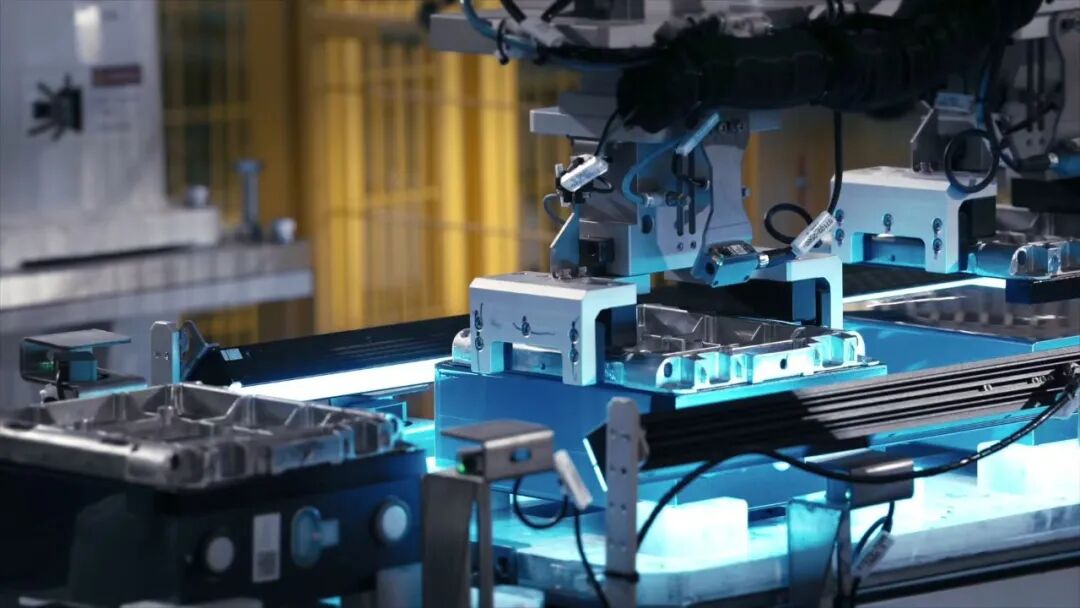
Nowadays, the weight of power battery brands in car purchase decisions has reached an unprecedented level. More and more battery enterprises are beginning to move from behind the scenes to consumers, and every brand wants to become the most trusted first choice in the hearts of consumers. But CATL's "tree" was planted as early as 15 years ago.