With traffic costs continuing to rise, why is brand trust the ultimate moat for cross-border e-commerce? | Review of the Super Krypton Hall Event

In 2026, cross-border e-commerce is undergoing a profound transformation from "traffic" to "trust".
Over the past few years, as the advertising logic of "trading traffic for sales" has gradually lost its effectiveness, a large number of sellers on cross-border e-commerce platforms such as Amazon have fallen into the dilemma of stagnant or declining revenue and profits. The extensive traffic-driven growth has come to an end, forcing the industry to rediscover the next sustainable growth engine.
At the same time, brand trust is evolving from a "bonus item" to a key factor affecting conversion rates, attracting more sellers' attention and helping them understand its commercial value.
On September 16, 2026, 36Kr held the second event of the "Deep Water Rules" · Global Expansion Super Kr Hall series in Shanghai. With the theme of "From 'Traffic Dependency' to 'Trust Compound Interest' — How Brand Trust Becomes the Ultimate Barrier for Cross-border E-commerce?", the event invited three front-line practitioners in the global expansion field: Zhang Yifei, Cross-border Business Marketing Manager of Loctek, Yang Fei, Managing Partner of Ocean Stone, and Wang Xiao, Senior Product Expert for SME Applications of Alibaba Cloud, to conduct in-depth discussions with dozens of representatives of overseas-oriented enterprises. From the perspectives of digital identity and domain names, independent sites and traffic, brand customer relationships, and AI-powered foreign trade, the participants analyzed how trust can be built, maintained and monetized.
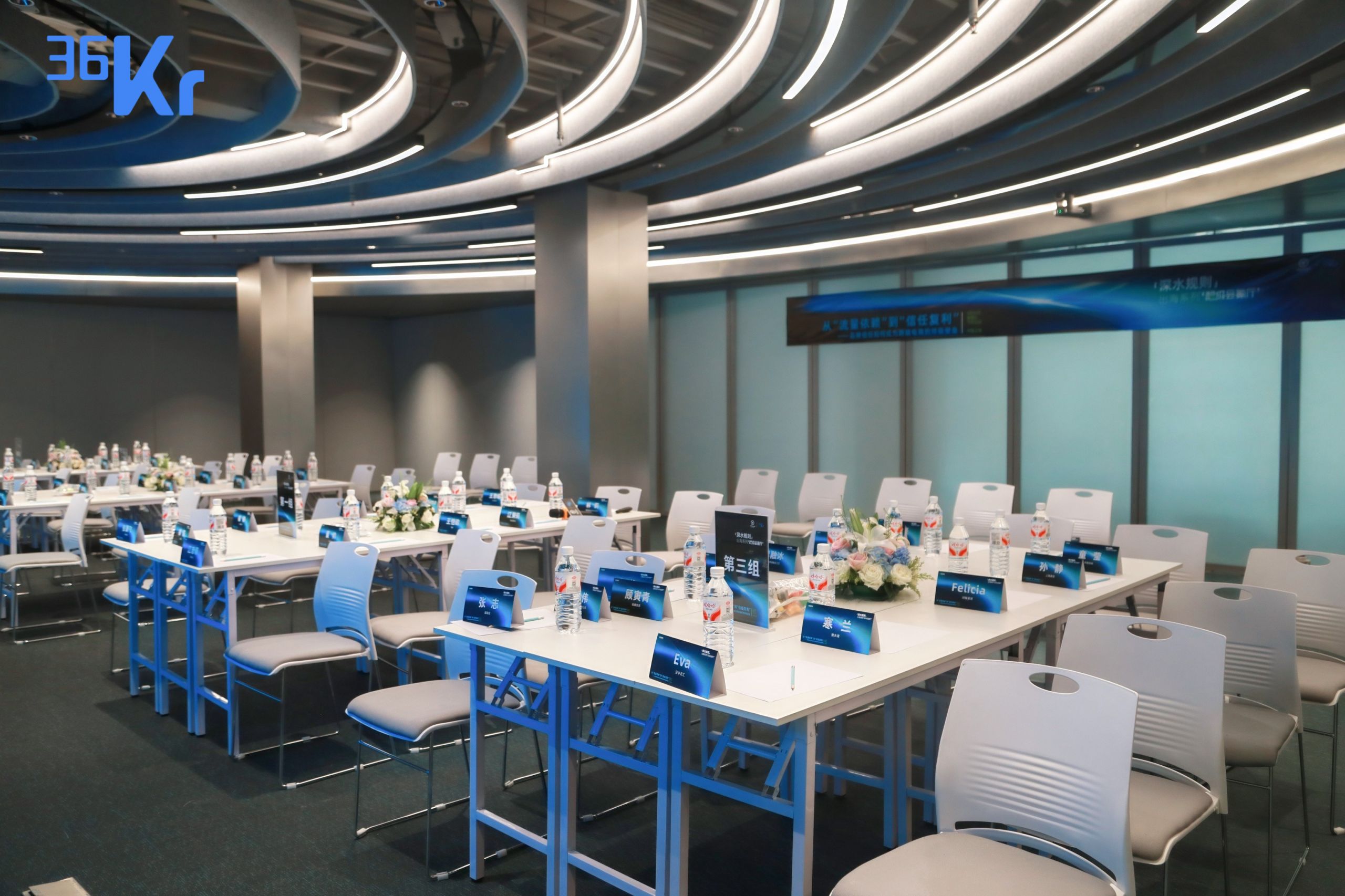
During the Super Insight session, Zhang Yifei, Yang Fei and Wang Xiao further analyzed how the proposition of "shifting from traffic to trust" can be implemented in actual combat, from the respective perspectives of independent site brand operators, brand growth consultants, and AI foreign trade service experts.
Survival Rules Under Traffic "Inflation": Fight Against the Platform "Traffic Tax" with Independent Sites
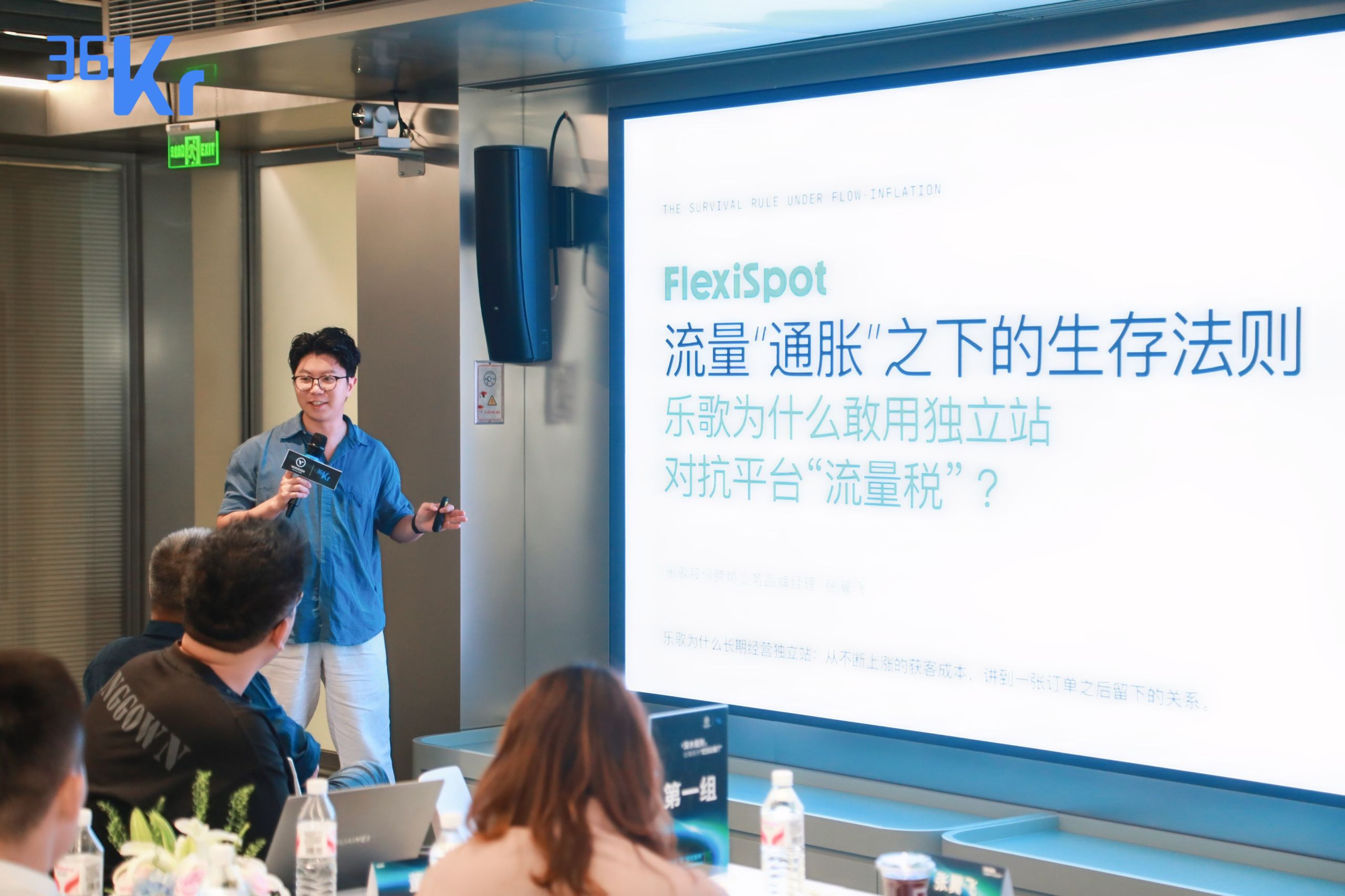
Loctek is the first A-share listed company in the health ergonomics industry, and also a representative player of the independent site model. Zhang Yifei first cited industry data to point out the current traffic dilemma faced by cross-border e-commerce: taking Amazon as an example, the CPC of all categories has been rising for consecutive years, and the customer acquisition cost of some keywords keeps increasing, leading a large number of sellers into the vicious circle of "the bigger the business, the thinner the profit".
Meanwhile, the proportion of independent sites in the cross-border e-commerce transaction volume of Chinese brands going global keeps increasing, and the DTC model is becoming the choice of more and more top sellers. Zhang Yifei emphasized that independent sites and platforms are not in an antagonistic relationship, but two different paths: Platforms help brands get their first order faster, while independent sites enable brands to achieve user retention and repurchase.
Of course, we should also see that the promotion cost of independent sites is not low. Loctek has signed with star basketball player Paul George and invited a large number of influencers to do product reviews. Zhang Yifei explained that the logic behind these investments is not to achieve short-term explosive sales, but to obtain long-term exposure. "The promotion investment of independent sites has a long-tail effect — content can continue to be searched, and product explanations can be reused repeatedly."
Zhang Yifei summarized the advantages of independent sites into three points: better product explanation than platforms, more direct user feedback, and sustainable brand compound interest. Compared with the product pages on Amazon, independent site pages are concise, which can display material details, life scenarios and user reviews, reducing information noise. The consumer decision-making logic behind this is also different: users on Amazon will compare products of different brands in the same category, while on independent sites, users are attracted by the presented life scenarios.
Another key factor supporting the independent site experience is overseas warehouses. Taking Loctek as an example, the company has deployed public overseas warehouses in the United States, covering core areas in West America, East America and the whole country, so that consumers can receive their orders within 1-2 days after placing them. For medium and large-sized products, Loctek is equipped with a variety of automated equipment. For example, the automated sorting line can realize pre-sorting, allowing orders to bypass logistics congestion and achieve rapid fulfillment. Zhang Yifei said that although buying land and building warehouses in the United States is a very heavy-asset investment, it can bring high returns in the longer term.
Make the Right Key Decisions with "Data + AI"
Yang Fei has over ten years of experience in consumer investment, and has served as CMO for multiple consumer brands in recent years, helping brands complete the 0-to-1 development of overseas markets. He pointed out that the main cost in the process of going global is not capital investment, but the trial and error cost caused by the old model: problems such as wrong market judgment, biased consumer insight, and insufficient product localization often stem from the traditional decision-making model's reliance on experience and intuition.
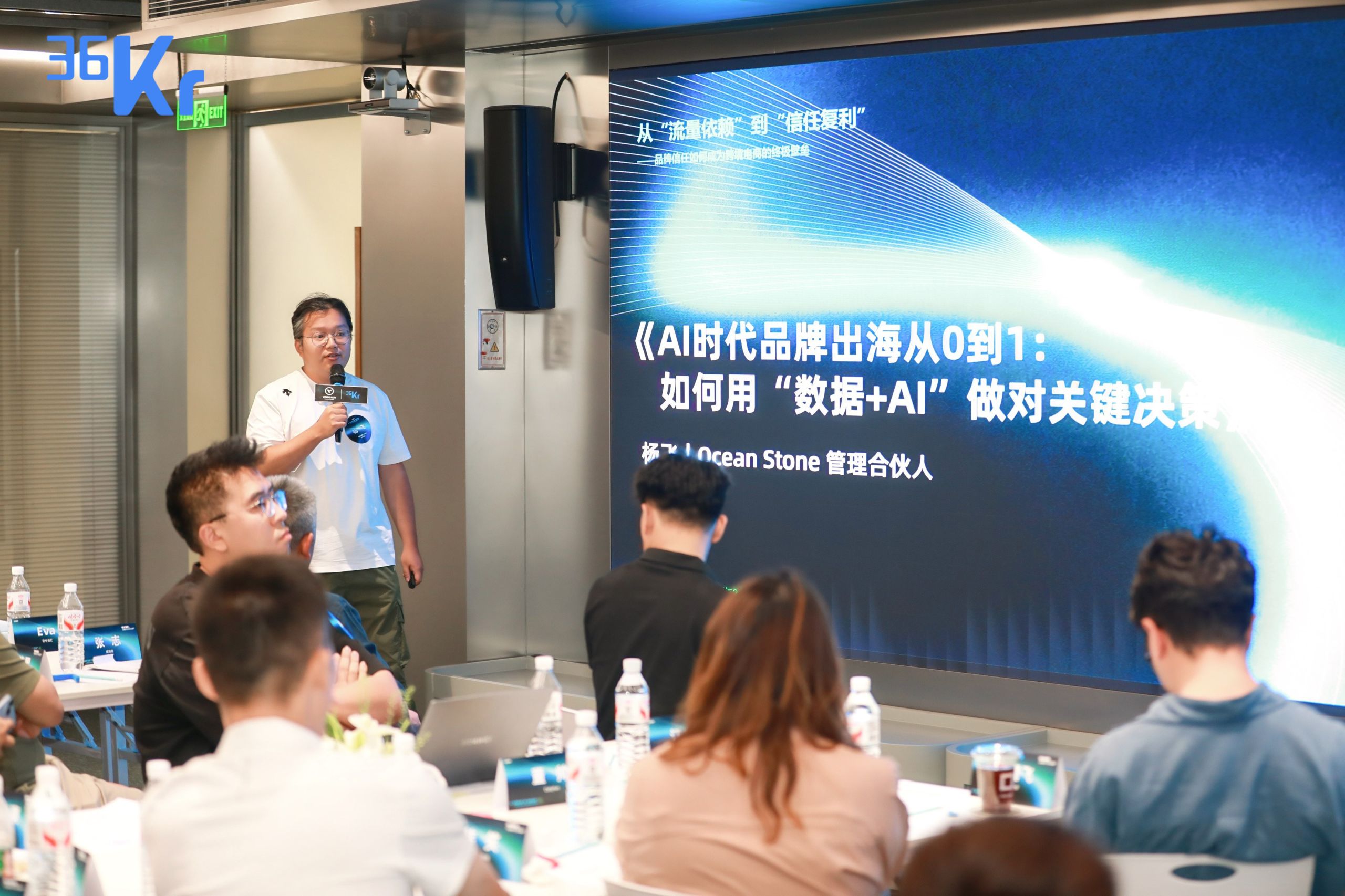
Yang Fei compared traditional decision-making with AI decision-making: in the traditional way, most companies would invite research firms to conduct qualitative and quantitative research, make manual induction and judgment before execution, and it takes a long time to find out whether the decision is right or wrong; in the AI era, people first use AI tools to see what the public is discussing in the market and what users are thinking, use AI to form cognition and assumptions, then test with a small budget, and make corrections while operating.
He took a small household appliance product going global as an example. The product has global functional patents, but previous attempts on Amazon and crowdfunding channels did not achieve full success. After introducing AI capabilities, the team used AI tools to crawl reviews from historical purchasers, combined with data sources such as Google Trend and SellerSprite for attribution analysis, then tested crowds and selling points through social media ads for six months, and finally gradually found the points that users are willing to pay for. On this basis, the team created targeted content for different crowds and creative combinations, and obtained a large amount of organic traffic.
From "Finding Customers" to "Operating Business", Build Trust for Global Expansion
Wang Xiao shared several observations from the perspective of domain name registrars: localized domain names are a low-cost way to gain localized trust. This also means that domain name cybersquatting is a major risk for brand protection, and the cost of appeal and repurchase for abused .net domain names is extremely high. Decentralized domain name management can also easily cause serious consequences due to forgotten renewal.
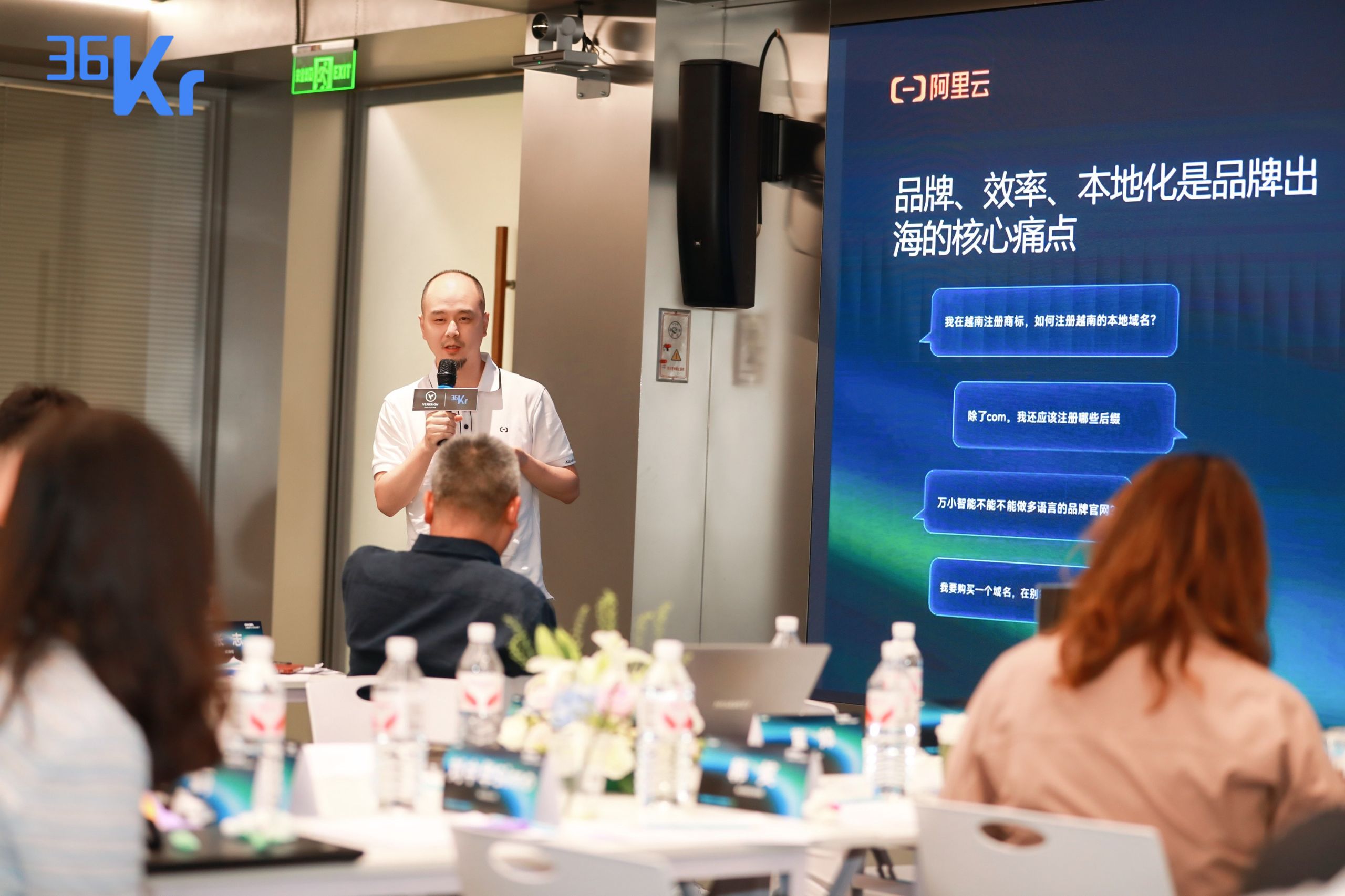
He emphasized that in the AI era, domain names are not only tools for people to find brands, but also shoulder the important task of allowing AI Agents to find brands. "There will definitely be problems of AI Agent identity verification in the future. Domain names, DNS and certificates will always be the digital foundation of brand identity authentication."
Wang Xiao introduced that Alibaba Cloud and Alibaba International Station provide nearly 400 suffix domain name registration services, and the launched Wan Xiaozhi AI site building product supports localized style adaptation and real-time multi-language translation, and cooperates with OKKI to provide full-link services from domain names, site building to CRM and proactive marketing.
Traffic Costs Keep Rising — Where is the Critical Point of CPC Increase?
During the Super Discussion session, participating enterprise representatives discussed CPC management in actual operation.

The third group shared from the perspective of the advertising industry that the rise of CPC is inevitable under the pressure of the market. The core goal of small and medium-sized enterprises is to survive first, and they can continue to invest as long as the ROI can turn positive. They took SHEIN as an example: the early traffic cost was only a few cents, and now the customer acquisition cost of brands such as TEMU is 6 times higher than that of SHEIN, but the investment has not stopped. No matter how the traffic cost rises, the countermeasures for small and medium-sized enterprises are to compress other costs, choose relatively less competitive channels, and expand more platforms to diversify risks.
Some members of the first group said that they gave up the overseas market in 2024-2025 to focus on promoting new domestic products, and believed that going global in the second half of 2026 is an inevitable strategy, and they want to re-develop the Japanese, South Korean and North American markets. They believe that the critical point is essentially ROI. Platform companies will definitely consider the input-output ratio when going global, and they will not do it if it is not cost-effective.

The representative of the fourth group admitted that when operating the Amazon platform, CPC usually needs to be controlled within 30% to make profits. Now that they are involved in cross-border payment, they realize that the independent site model is more flexible, and suggest other enterprises present to deploy on multiple platforms to diversify risks.
Many representatives are mainly engaged in ToB foreign trade, lack practical experience in cross-border e-commerce operation, and look forward to more in-depth exchanges to specifically understand the traffic delivery methods of different platforms.
"While evaluating CPC and ROI, you might as well expand your own channels. Don't put all eggs in one basket." The host reminded in the final summary.
The above is the wonderful content of this issue of 36Kr Super Kr Hall "From 'Traffic Dependency' to 'Trust Compound Interest' — How Brand Trust Becomes the Ultimate Barrier for Cross-border E-commerce?".