Elon Musk wants to be a "superman", while Chinese scientists are more concerned about another matter.
In 2026, the world's first invasive brain-computer interface (BCI) product was approved for marketing in China, and a large number of patients can hardly wait to use it.
Every Wednesday morning, the BCI consultation and evaluation clinic at Beijing Tiantan Hospital, Capital Medical University (hereinafter referred to as "Tiantan Hospital") releases 30 appointment slots, which are almost fully booked every single time without exception.
Yang Yi, chief physician of the Department of Neurosurgery at the hospital, sees patients on schedule. Many of the patients and their families waiting outside the clinic travel from other cities, only to consult about the possibility of undergoing BCI implantation surgery.
In July, Huashan Hospital Affiliated to Fudan University in Shanghai issued the first BCI treatment prescription nationwide, priced at about 400,000 RMB. BCI is like laying a dedicated line between the human brain and the machine, translating the brain's thoughts into signals that the machine can understand, and the machine feeds back signals in return to enable direct communication between the brain and the machine.
Thousands of miles away, the same scene is unfolding in Silicon Valley, the United States. Elon Musk's BCI company Neuralink is undoubtedly the center of this boom. Its PRIME clinical trial (human trial) has achieved phased breakthroughs in early tests, and the company plans to gradually expand the scale of the clinical trial to include more patients with motor dysfunctions such as limb paralysis or amyotrophic lateral sclerosis (ALS) into the test group.
In the narrative for capital, BCI is defined as the "ultimate interface" between the human brain and machines. From helping paralyzed patients regain motor function and aphasic patients regain the ability to communicate, to realizing "superhuman capabilities" in the future, it carries humanity's imagination about the boundaries of human capabilities.
However, current BCI technology is still at the stage of proving that it can operate in a long-term, stable, safe and low-cost manner, which is precisely the most difficult step for the technology to be truly implemented in real scenarios.
No.1
Hospital Outpatient Clinics Are Filled With Hope, But Few Patients Are Enrolled In Trials
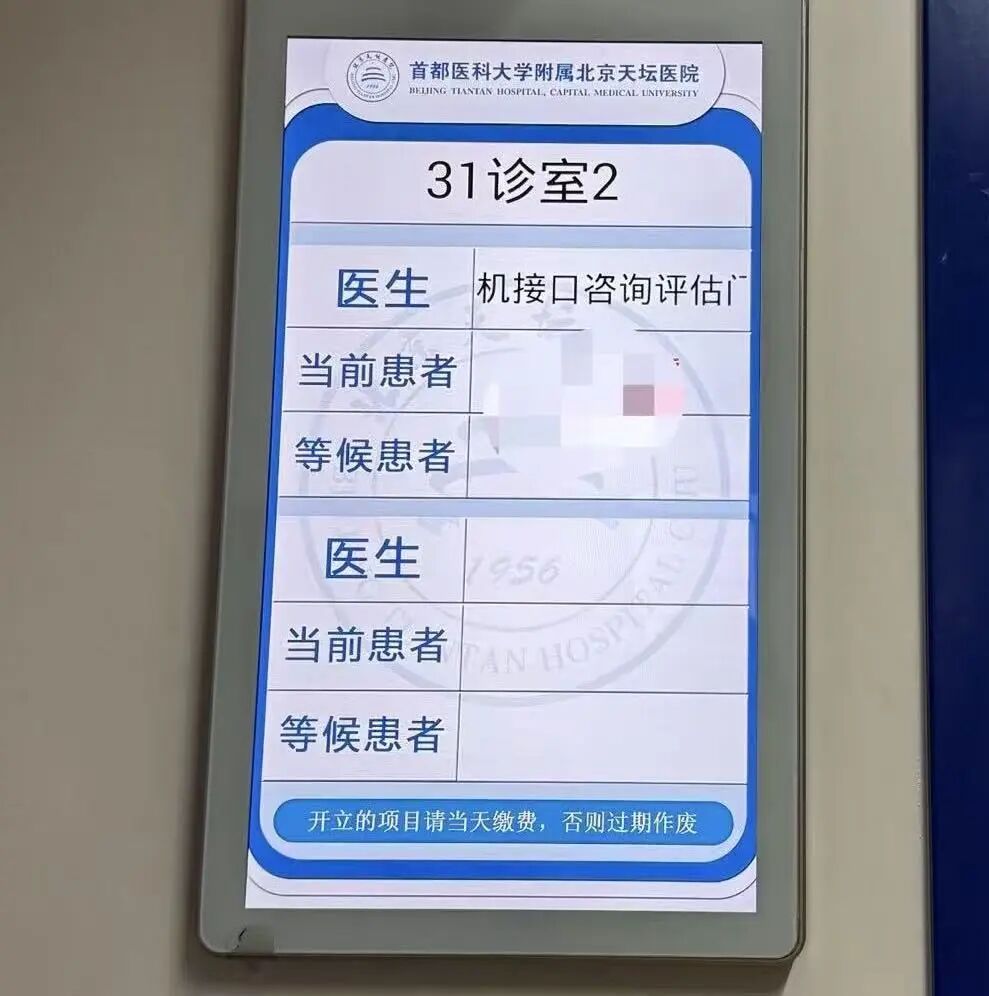
Photo by Ding Ning
Tiantan Hospital is carrying out a clinical trial that helps patients with spinal cord injury and total limb paralysis restore motor functions through BCI surgery.
A large number of patients come to the outpatient clinic for consultation, but only about 10% of them can enter the detailed evaluation stage, and even fewer patients can actually be enrolled in the trial.
First of all, patients need to have a brain with all normal functions. Among the consulting patients, some have undergone cranioplasty surgery, and some have large-scale loss of brain structure, all of which are not suitable for BCI implantation.
Wang Mu (pseudonym), who underwent high paraplegia surgery after a car accident, is one of the few selected patients enrolled in the trial. Spinal cord injury patients with motor dysfunction like him are the main target group for most medical BCI technologies at the current stage.
At the end of April, he received BCI implantation surgery at Tiantan Hospital. During the operation, the doctor cut his scalp, reserved a bone window on his skull for placing electrodes, then implanted electrodes on the surface of the dura mater, and fixed the miniature host. After that, the doctor tested the signal path to ensure that the EEG signals could be read in real time. When all preparations were completed, the doctor sutured the wound.
Completing the surgery is only the first step. Wang Mu found that the greater challenge is to learn how to use these high-tech products. He needs to spend several hours a day doing training in front of the computer, such as visual cursor tracking training, to obtain precise control over neural signals. Another rehabilitation training is to reconstruct muscle memory and control ability by practicing grasping and lifting movements of arms and hands.
Now Wang Mu can already try to hold a water cup. His wish is that one day in the future, he can change his own diapers and put on clothes by himself, and no longer be a burden to his family.
On July 15, *Caijing* observed at the BCI outpatient clinic of Tiantan Hospital that Yang Yi needed to tell patients over and over again that the essence of BCI at present is that patients "accumulate experience for the machine" through recovery training. The main purpose is to let patients provide signals for algorithm decoding and coding training, rather than the machine actively serving the patient's rehabilitation treatment.
On that day, a patient who could not speak normally after a stroke came to Yang Yi, hoping to restore his speech function through BCI. Yang Yi could only explain to him patiently: although there are speech-related BCI products at present, they are mainly aimed at severe aphasia, amyotrophic lateral sclerosis, locked-in syndrome and other conditions. This patient can still clearly say his own name, so using BCI for him is like "killing a mosquito with a cannon".
According to Yang Yi's evaluation, patients suitable for BCI surgery are generally between 18 and 60 years old, with stable conditions for more than six months, have motor or communication disorders, but good cognitive function, and their physical condition can adapt to the training intensity.
Although BCI is still in a very preliminary stage of clinical application, it has shown explosive growth in the medical field. According to the *National BCI Ward Research Report*, as of May 2026, about 58 hospitals have complete BCI wards, centers or clinics, distributed in more than 20 provinces and cities, covering general hospitals, rehabilitation specialized hospitals, integrated traditional Chinese and Western medicine hospitals and other types of medical institutions.
Three months ago, doctors from the neurology department of a provincial hospital came to Tiantan Hospital to conduct a one-month research, learning the whole process management mode from outpatient screening, enrollment evaluation, surgery implementation to post-operative rehabilitation and effect evaluation, and they wanted to bring this set of modes back to local areas.
No.2
Which Technical Route Can Read the Brain Better?
"More than 85% of people in China know about BCI because of Elon Musk. In fact, Tsinghua University has a 40-year history of EEG research, which is exactly what we call BCI today." said Gao Xiaorong, a tenured professor at Tsinghua University. This is a rare cutting-edge technology track where China and the United States are running in parallel without generation gap.
Both countries have made layouts in the three clear technical paths: invasive, semi-invasive and non-invasive.
The "North Brain No.1" implanted in Wang Mu is semi-invasive. Through minimally invasive surgery, an extremely thin flexible electrode patch is attached to the outside of the dura mater, without puncturing the brain tissue, and is laid on the surface of the cerebral cortex to collect brain signals. It is jointly developed by the Beijing Institute for Brain Disorders (hereinafter referred to as "Beijing Brain Institute") and CoreMind.
The "North Brain No.2", which is being developed by Beijing Brain Institute and CoreMind at the same time, adopts a more technically difficult invasive route, where electrodes are directly implanted into the brain tissue to obtain higher quality neural signals. "Compared with 'North Brain No.1', it has stronger decoding potential, but the degree of surgical invasion is also relatively higher." Zhang Lei, Director of the Technical Platform of Beijing Brain Institute and General Manager of CoreMind, introduced to *Caijing*.
The invasive route not only faces the risks of brain tissue damage and immune rejection, but also needs to transmit massive raw data in real time, which brings great bandwidth pressure, and the service life of implanted devices is relatively short. However, its signal quality is very high. For the non-invasive route, the signal quality is relatively low, but it has the advantages of safety and easy promotion. The semi-invasive route is to find a balance between "high signal quality" and "safety".
In Zhang Lei's view, the semi-invasive route is designed to make the technology enter hospitals faster to serve patients; while the invasive route is to push the technology to the limit and explore the physical boundary of BCI.
The research and development of semi-invasive technology in the United States is mainly driven by top scientific research institutions and several landmark innovative enterprises, forming two mainstream technical routes. The first is the intravascular/stent electrode route mastered by the Synchron company located in New York, whose core product Stentrode is a mesh stent electrode. Doctors use minimally invasive interventional surgery to introduce the stent through the patient's jugular vein, the electrode is attached to the blood vessel wall inside the blood vessel, and collects neural signals from the cerebral cortex through the blood vessel wall. It is one of the world's first companies approved by the U.S. Food and Drug Administration (FDA) to carry out human trials, even earlier than Musk's Neuralink.
The other is the epidural/subdural thin film array route, which is similar to "North Brain No.1". The representative team is from the University of California, San Francisco (UCSF), which has made breakthroughs in speech decoding by using electrocorticography (ECoG) semi-invasive arrays.
All the above technical routes belong to the electrode route. China and the United States have the same direction in electrode implantation: more flexible electrodes, more channels, smaller size, more intelligent decoding, as well as more minimally invasive and more "surgery-friendly" features.
However, the technological revolution of BCI does not stop there. Merge Labs, a BCI company invested by the U.S. artificial intelligence company OpenAI, has popularized ultrasound technology.
Ultrasound can detect blood flow changes through the acoustic window, its signal quality is better than non-invasive electrode technology, and no implantation is required. In China, a number of ultrasound BCI companies have also emerged. In January 2026, Peng Lei, former CEO of BrainCo, and Chen Tianqiao from Shanda Group jointly founded Gestalt Technology, and there are also companies such as Huachuang Shenkong, Sisheng Technology, and Brain Age, which are all popular targets that capital is paying attention to.
However, the shortcomings of ultrasound technology are also obvious: the blood flow response lags behind the electrical signal, and it is still difficult to complete high-speed real-time decoding tasks such as speech decoding. Up to now, no ultrasound BCI enterprise in China has entered large-scale clinical trials, and whether it can stably achieve curative effect in real clinical scenarios still needs data verification.
In Gao Xiaorong's view, every path is worth exploring, and it is far from the time to draw a conclusion now.
The exploration of technology has not affected the clear application route of BCI in the medical field: it will solve motor dysfunction, sensory dysfunction, cognitive dysfunction, and emotional dysfunction step by step, and is expected to be applied to diseases such as Alzheimer's disease and depression, and finally develop from assisting rehabilitation to treatment.
No.3
20% of the Market Is Rigid Demand, 80% Depends on Imagination
In March 2026, BrainCo, which was spun off from the scientific research achievements of the Neuroengineering Laboratory of Tsinghua University, obtained the medical device registration certificate for invasive BCI, which is known in the industry as the world's first "admission ticket".
The NEO-ONE SCI approved for marketing by BrainCo is suitable for patients with quadriplegia caused by cervical spinal cord injury. The National Healthcare Security Administration of China quickly completed the medical insurance coding for it. However, whether it is included in the medical insurance reimbursement, the reimbursement ratio and payment category are formulated by each province and city independently.
Shanghai included NEO-ONE SCI in the local medical consumable catalogue through the green channel. In July, the first nationwide prescription was issued, priced at about 400,000 RMB. With the support of Shanghai medical insurance payment, the personal out-of-pocket cost is about more than 300,000 RMB.
In Beijing, Hubei, Zhejiang and other places, the government-guided price for invasive BCI implantation is about 7,000 RMB per operation, and the price for non-invasive BCI implantation is about 1,000 RMB per operation. The specific reimbursement items vary from region to region. For example, in Beijing, the implantation fee of BCI is fully reimbursed; in Ningbo, it is included in the Category B of medical insurance, and patients need to pay 10% of the fee in advance.
However, even BrainCo, which is closest to commercialization, has not yet made a profit. According to BrainCo's prospectus, its revenue in 2025 was 108 million RMB, and the net profit attributable to shareholders was -230 million RMB.
The U.S.-based NeuroPace has been listed, focusing on the closed-loop BCI regulation system for the treatment of intractable epilepsy. Its revenue in 2025 was about 100 million US dollars, making it one of the non/semi-invasive companies with the smoothest commercial realization in the U.S. hospital medical settlement system (Medicare/commercial insurance reimbursement).
"No other product can replace the unique function of BCI. As long as the product has solid functions, long service life and can be implemented in real scenarios, there will definitely be a market." A founder of a BCI enterprise believes that there are about 3 million patients in China suitable for this technology, but less than 500,000 people are really willing to accept implantation, and the future market will be focused on these 500,000 people.
"The real imagination of BCI lies outside the medical field, in non-invasive consumer scenarios." Gao Xiaorong analyzed, referring to the consumer-level track.
At present, there are already consumer-level health products for meditation training, sleep monitoring, fatigue reminder, etc.; medical rehabilitation products are mainly used for nerve injury, stroke rehabilitation, neuromodulation and other scenarios.
The founder of a BCI enterprise told *Caijing* that what he has always wanted to achieve is human enhancement. His vision is very specific: make BCI devices into lightweight helmets or headbands, read the brain's motor intentions and language intentions, directly control drones, robots or exoskeletons, and even carry out "thought dialogue" with AI Agents. He expects that such products are expected to be launched within five years.
Zhang Lei holds a reserved attitude towards this: "In five to ten years, the main implementation scenarios of BCI should still be medical and health care."
In fact, BCI in China and the United States is still in the transition stage from pre-clinical research and development to the early stage of commercialization. Therefore, the vast majority of companies' current revenue mainly comes from sales of scientific research tools and clinical cooperation settlement, rather than large-scale sales of terminal medical products.
The U.S. Defense Advanced Research Projects Agency (DARPA) and the National Institutes of Health (NIH) are the two largest "government sponsors" of BCI technology in the United States. Obtaining funding from DARPA or NIH means that the project has passed the strict review of top academic and national defense experts in the United States, which can greatly help companies attract venture capital in the follow-up stage.
From a global perspective, the vast majority of BCI companies have not achieved real net profit, and are still in a state of relying on financing/burning money for expansion, or barely breaking even.
No.4
Products Are Awaiting Commercialization, While Capital Is Already Boiling
"BCI can really be described as extremely hot." Huang Jinglu, Vice President of Legend Capital, sighed at a forum.
Gestalt Technology, which was established only half a year ago, has received two rounds of financing totaling 570 million RMB. The 330 million RMB angel round of Active Technology set the record for the largest angel round in the domestic BCI field. Hot money is pouring into this track which is still in the early stage of commercialization at an unprecedented speed.
Public data shows that in the first half of the year, nearly 50 BCI financings were announced in China, with the financing amount exceeding 5.38 billion RMB, far exceeding the total financing amount of 2025.
Some investors even need to "pay to meet people" in order to sit down and talk with BCI companies. There are public reports that Li Xiaojian, founder of MicroNeuro, generally does not meet investors, and if he does, he charges 5000 RMB per hour.
In 2026, BCI was written into the Chinese government work report for the first time and was listed as a future industry. BCI companies are springing up like mushrooms. According to the *BCI Industry Research Report (2026)*, the number of core BCI enterprises in China has reached nearly 200, accounting for about 22% of the global total.
Taking Heyin BCI Fund as an example, it has contacted about 360 BCI-related enterprises within two years. Among them, only 30% to 40% meet the requirements of commercial self-consistency and can achieve industrial expectations, while the rest are far from the stage of achievable technology and reproducible business, and some enterprises even have difficulties