Giants are swarming into the AI glasses track. Is this a real pain point or a pseudo demand?
With the explosion of large language models, the form factor of AI hardware has been repeatedly discussed in recent years.
From AI Pin to smart interactive bracelets, and various other new devices that people place high hopes on, almost all of them are stuck at the passing line of battery life and practicality.
It was not until Meta's co-branded Ray-Ban AI glasses shipped over 7 million units in 2025 alone, an astonishing figure roughly three times the total of the previous two years, that this track finally saw real large-scale shipment validation.
Nowadays, AI glasses are increasingly accepted by the public. They have gradually moved from the drawers of geek players to consumers' noses, starting to help users solve problems encountered in daily life.
As a result, players in this track are demonstrating their unique strengths in various ways. Not only are early established AR enterprises making painstaking efforts, but also mobile phone giants, large internet companies, audio peripheral brands and traditional eyewear manufacturers have all joined the competition, with all five forces ready to make a big splash.
For a moment, giants are frantically flocking to lay out AI glasses. Is this really hitting the public's consumer demand, or just an expensive skill that is useless in daily life?
1. Fierce Competition, Who Takes the First Place
When it comes to AI glasses, the three brands Rokid, RayNeo and XREAL are impossible to bypass.
For a long time, there have been public relations battles with different calibers in the market around the question of "who is the real industry leader" among these three brands.
Take XREAL as an example. Its sales revenue has ranked first in the global AR glasses market for four consecutive years from 2022 to 2025, which is undoubtedly the source of its confidence to compete for the top spot.
Although XREAL's sales revenue has ranked first for four consecutive years, its sales volume has basically remained stagnant. The revenue growth is mainly driven by new products with higher unit prices (such as the One series) rather than the expansion of user scale.
It should be further pointed out that this "first place" usually refers to the segmented track of display-type AR glasses. If non-display AI glasses are included, XREAL's share in the smart glasses market is only 2.6%, far lower than Meta's 56.8%.
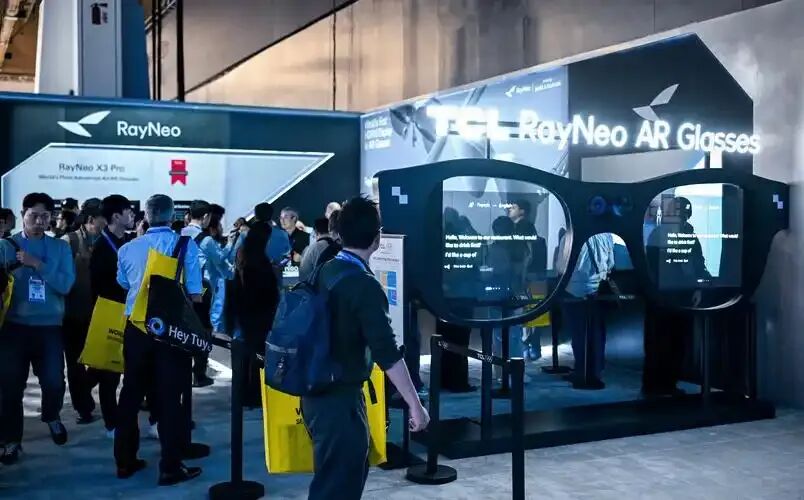
The confidence of RayNeo comes from TCL, the home appliance giant behind it. RayNeo's sales volume in 2026 is quite impressive, occupying a market share of about 24.8%, which means that 1 out of every 4 AR glasses sold is from RayNeo.
Data from 5 institutions including IDC, Counterpoint and Lu Tu Technology shows that RayNeo ranks first in the global AR glasses shipment volume in the first half of 2026, marking its 5th consecutive quarter of leading the global shipment volume.
At the same time, RayNeo has also appeared on the stage of the world's top events, and will be showcased at the 2026 League of Legends World Championship, making long-term explorations on personal terminals.
Although the five institutions all list RayNeo as the "first place", its advantage is not obvious or even non-existent when switching to the sales revenue caliber.
So how is Rokid performing? Rokid now has quite impressive achievements in the C-end market, and has built deep channel barriers in B-end markets such as cultural tourism and industrial inspection, occupying a leading market share.
Rokid currently ranks first globally in the segmented category of AI glasses with display functions, and ranks second globally in the entire AI glasses category, second only to Meta.
Therefore, the so-called "first place" competition is essentially the three enterprises expanding their territory on their respective focused technical routes and business models.
In short, Rokid, RayNeo and XREAL each have their own strengths, and none of them can claim to firmly crush others and take the first place in all aspects.
2. The Second Echelon, Following Closely Behind
What really makes the AI glasses track boil over is the collective entry of large companies such as Alibaba Qwen, Huawei and Xiaomi. At this stage, most of the products they promote are lightweight AI glasses.
The fundamental purpose of these giants making AI glasses is not to make huge profits from hardware. What they value is the hardware entry in the era of large language models.
Alibaba's trump cards are the Tongyi Qwen large model and its huge local life service ecosystem (such as Amap, Alipay, Taobao). During the new product release period in March and April 2026, Qwen AI glasses once accounted for 19.4% of the online retail share, and the figure reached 30.4% if the Quark series is included.
Huawei adopts a steady and differentiated strategy. Its AI glasses emphasize the seamless audio flow of the HarmonyOS ecosystem, and are equipped with a camera module and the multi-modal visual capability of Xiaoyi Seeing the World.
Xiaomi is also coming on strong, launching Xiaomi AI glasses priced from 1999 yuan, directly entering the AI camera glasses field, trying to quickly seize the market with cost-effectiveness and supply chain capabilities.
The giants have clear and pragmatic cognition. Whoever can make users wear their hardware every day can obtain the most authentic offline interaction data. This is a foundation defense battle for the future AI operating system, and no giant dares to be absent from the table.
Under the multiple attacks from head players and internet giants, the living space of the second echelon is being severely squeezed. They do not have a deep enough capital pool, nor can they compete with the material cost of the top supply chain.
Of course, some brands have found their own positioning and blazed a unique path of their own. For example, LLVision chooses to deeply cultivate the segmented track of "translation + barrier-free communication".
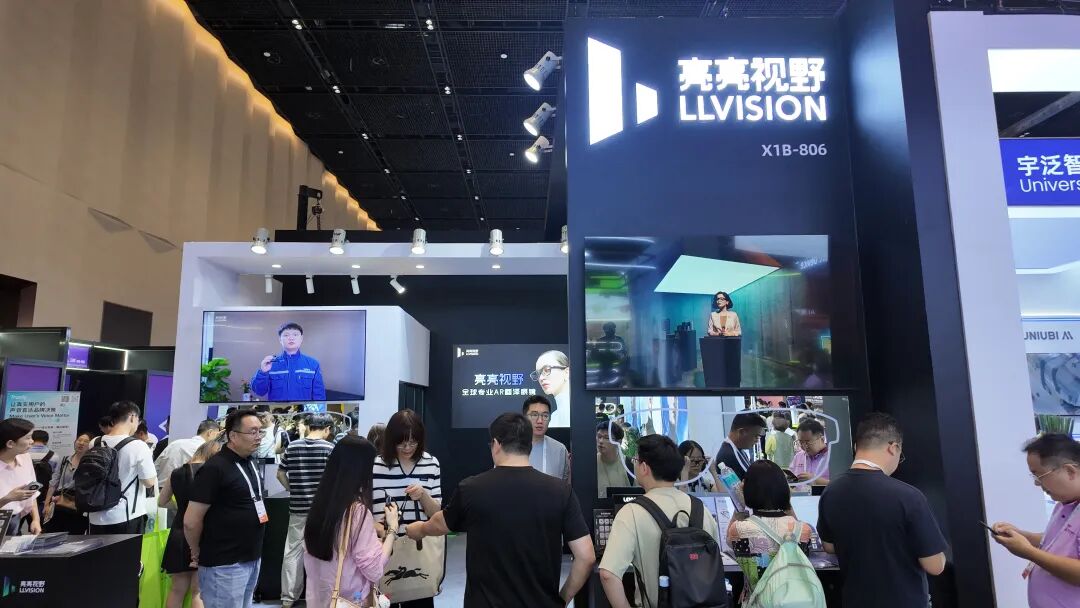
LLVision first targeted the hearing-impaired group, and then naturally extended the technology to the cross-language real-time translation scenario, avoiding the head-on fight in the red ocean of the C-end market.
LLVision is currently the most focused player in the translation track of AI glasses. Its core product Leion Hey2 translation glasses focus on cross-language communication, supporting real-time subtitle translation of more than 100 languages.
What is more commendable is that it has no camera and no external speaker, focusing on audio input and visual output, with relatively good privacy performance. It looks the same as ordinary glasses when worn, and does not affect communication at all. The experience of "no need to lower your head or take out your mobile phone" is much more natural than mobile phone translation.
There are also brands like INMO that originally focused on the hardware ecosystem, which make AI audio glasses with the logic of making smart earphones. This low-cost affordable alternative effectively lowers the threshold for the public to try new products.
Of course, traditional optometry channel providers like Doctor Glasses are not idle. They have all joined the market intensively, providing underlying optometry support for technology brands, and completing the last piece of the ecological puzzle for this business.
3. Real Pain Points or Pseudo-Demands
Currently, AI glasses have limited demand. They are products that "add icing on the cake" and have not reached the level of being a necessity for the public, not a rigid demand that "provides timely help".
No matter for navigation, real-time translation, or portable recording, AI glasses are used intermittently, lacking high-frequency scenarios that people need all the time like mobile phones.
Then back to the most fundamental business question, how far can AI glasses go?
If we discuss the perfect "spatial computing", restricted by the current battery density and the volume of the optical module, heavy AR glasses are not perfect in terms of weight and field of view, and there are still physical compromises.
However, more and more heavy users in daily life are starting to wear them outdoors for real-scene navigation and information prompting, and products with display modules are no longer just toys left indoors to collect dust.
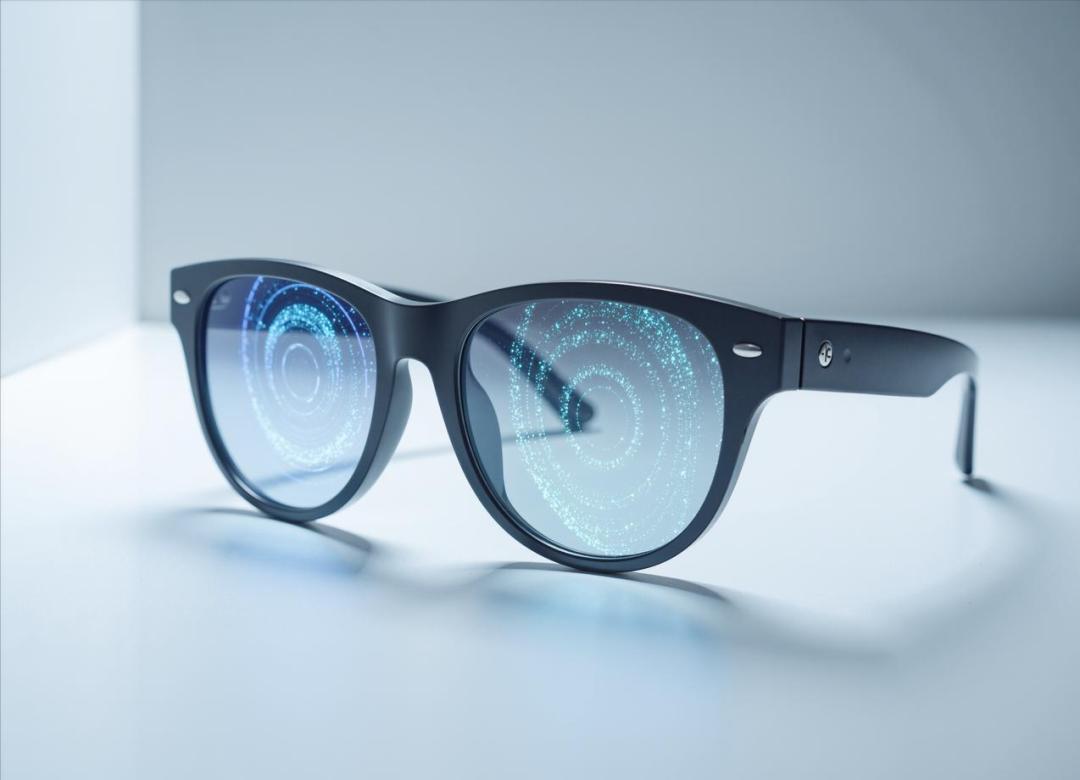
In terms of the lightweight route, the real demand for AI glasses has been verified long ago.
The latest data from IDC for the second quarter of 2026 shows that audio and audio-camera products (without screens) account for more than 70% of global shipments.
The fact that Meta Ray-Ban is out of stock worldwide also proves that "audio + AI camera" is enough to solve users' pain points of recording anytime, anywhere and fragmented question answering.
Therefore, AI glasses do have real demand. They are positioned more like an upgraded alternative to earphones, as a supplementary device rather than a necessity at the level of smartphones.
Final Notes
The popularization of consumer hardware never relies on stacking the most cutting-edge technical parameters, but on finding a subtle balance among weight, battery life, price and functions.
The current AI glasses market is in a critical period of transition from geek toys to mass tools, and is far from reaching the ultimate form of smartphones that "everyone has one".
As a transition solution for the next-generation computing platform, the underlying business logic has been initially established. The entry of giants and the promotion of policies will undoubtedly accelerate the maturity of the supply chain and the decline of costs.
If in the near future, wearing AI glasses to conduct multi-modal interaction on the street no longer looks out of place, this piece of glass on the bridge of the nose will truly usher in its golden age.
This article is from the WeChat official account "Zhige Business Review", Author: Li Renjie, Editor: Li Zhiting, published with authorization from 36Kr.