Have cheap snacks forgotten their roots?
In August this year, the 12345 hotline of Cangzhou announced the investigation result of Zhao Yiming's incident of "4 pieces of beef jerky priced at 64 yuan only weighed 17 yuan after re-weighing":
It was confirmed that the store clerk's improper operation accidentally weighed 0.08kg of beef jerky as 0.299kg, making the price quadruple.
Coincidentally, in Henan, a clerk of Haoxianglai also accidentally weighed a product worth 64.8 yuan as 111 yuan, and a clerk in Sichuan similarly accidentally weighed a product worth more than 60 yuan as 111.71 yuan, and this kind of problematic phenomenon spread more and more intensely.
Pulling out the radish brings out the mud, market regulation authorities in Inner Mongolia, Shanxi, Jiangsu and many other regions quickly took action to carry out special supervision and inspection of electronic price scales at bulk snack stores such as Zhao Yiming and Haoxianglai.
This incident is historically known as the "Scandal of Weighing Scales".
It is well known that in the TV series *Conquest*, the guy Hao who sold unripe melons tried to play tricks on Hua Qiang by using a magnet to tamper with the scale, and ended up getting stabbed.
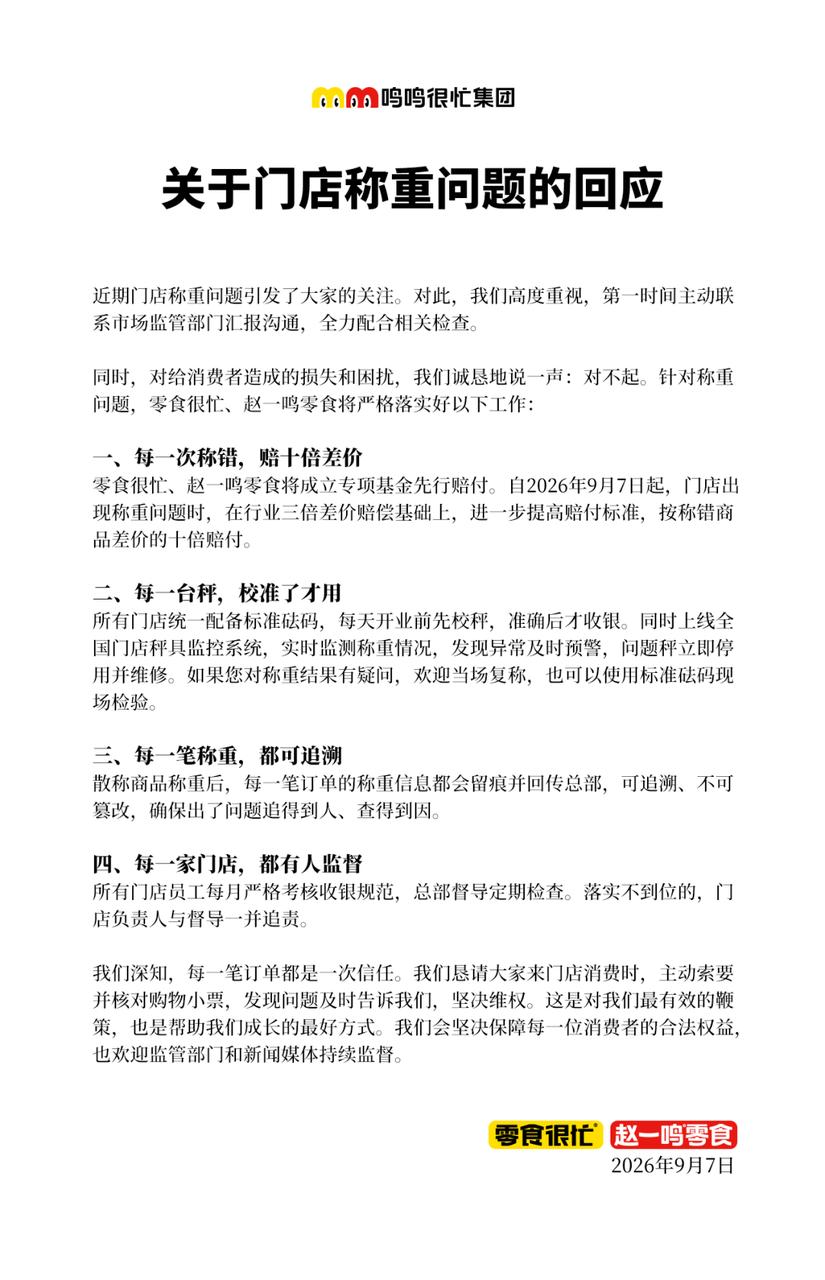
On September 7th, Mingmangmangmang publicly apologized for the weighing problem, and at the same time launched an unprecedented rectification and compensation plan. Right after that, Haoxianglai also apologized and launched the same ten times compensation policy.
Why did the problem happen in the bulk weighing area? This is related to the product structure of bulk snack stores.
Bulk snack stores generally have a product system of "three-tier brand portfolio": well-known big brands with low gross profit (about 5%) attract customer flow; mid-range brands with high gross profit (about 35%) are the core source of profit; at the same time, a certain proportion of white-label products with gross profit margin of 30-35% are retained to create differentiation [1].
Among them, low-gross-profit products are clearly priced, most of which are big brand products, such as 3.9 yuan bottle of Genki Forest sparkling water, 2.8 yuan pack of Lay's potato chips, and high-gross-profit snacks are sold by bulk weighing. Most of the products with high profit margin are located in the bulk area.
Manual weighing is not exclusive to Mingmangmangmang. Why other peers do not have this problem, but the bulk snack industry is special?
Besides, this is not an occasional incident, but an outbreak of problems in many stores across multiple regions. Deliberately tampering with the scale here is far more complicated than just improper operation.
A Wonderful Business Model
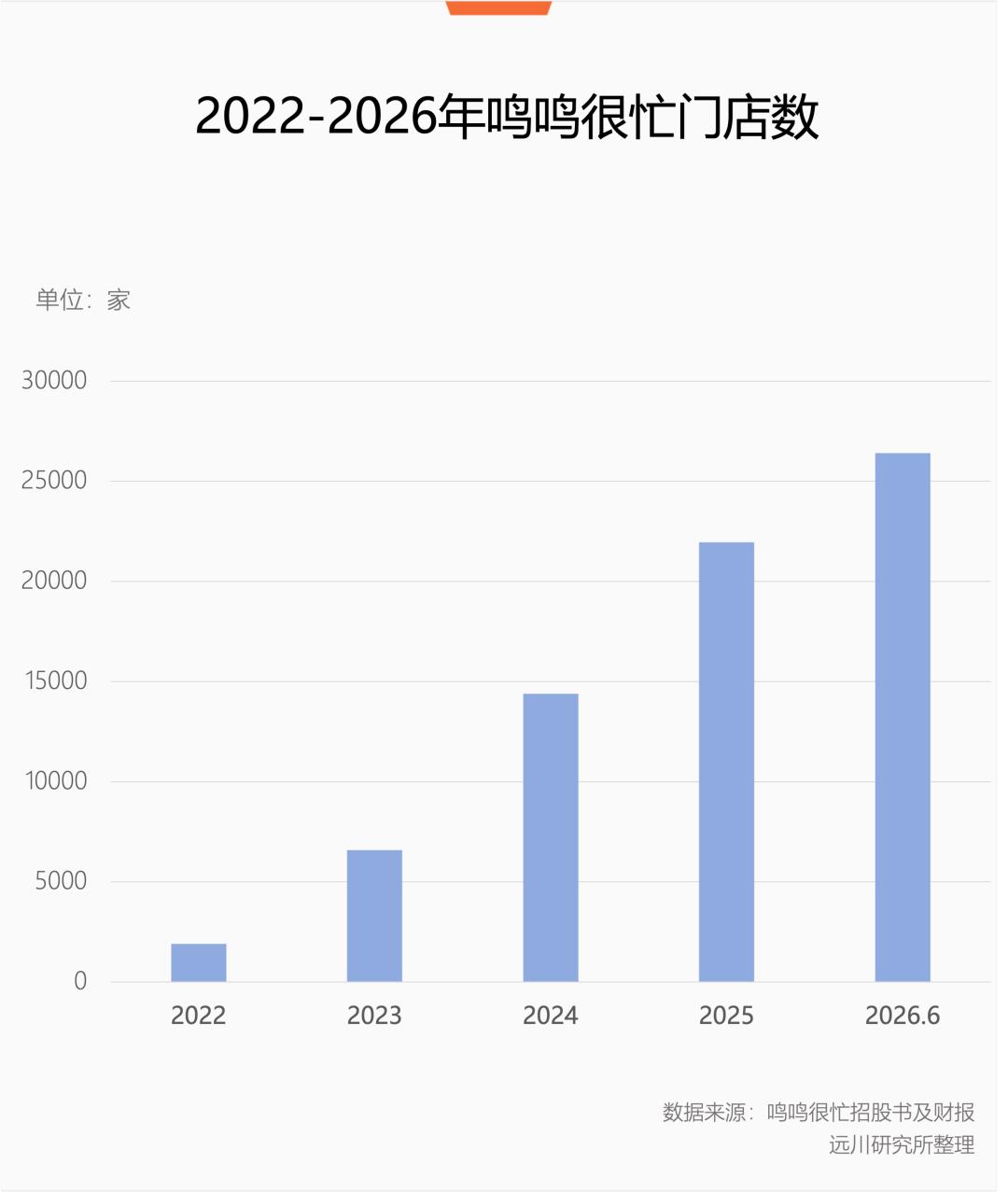
Bulk snack retail is the most popular track in the retail industry in recent years. In the past two years, the number of Mingmang stores has increased from 6585 to 21948, a 2.3-fold increase. The threshold of the "10,000-store club" has been rapidly lowered.
In 2025 alone, Mingmang opened 7813 new stores, which is almost equivalent to the number of Starbucks opened in 20 years, with an average of more than 20 new stores per day, approaching the store expansion speed of Luckin Coffee, which is famous for its rapid store opening.
Mingmangmangmang advanced triumphantly with rapid growth: its revenue increased by more than 6 times, and its net profit increased by 10 times.
In 2024, the channel share of bulk snack retail in the leisure food and beverage retail sector was about 37%, which was higher than that of supermarkets (about 22%) and e-commerce (about 20%) [2]. The reason why latecomers overtake is that they expand aggressively and seize market share fiercely.
Bulk snack retail is first of all a kind of channel innovation. Snack consumption is highly impulsive, most of which are bought casually when people go shopping, so the online penetration rate is not high, and offline channels are dominant.
The core of traditional FMCG channels is to distribute goods to terminals at all levels across the country through a huge, multi-level distributor network. The profit left for distributors in each circulation link is the foundation of maintaining this network.
At the same time, brand owners have absolute discourse power over distributors: if you want to get best-selling goods, you have to match some slow-moving goods, and you can't casually hold promotions to disrupt the price system. Every successful consumer brand basically has a strong channel team.
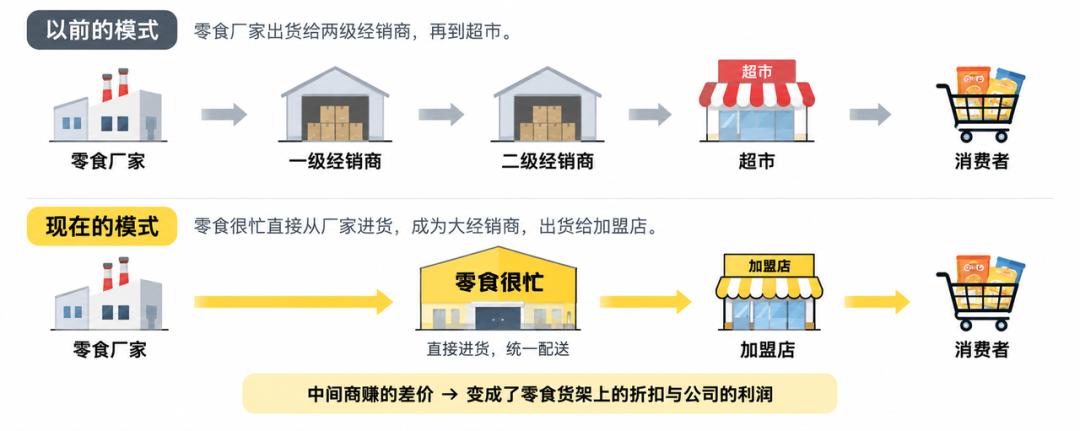
The idea of bulk snack retail is to eliminate the "sublessor" and become a large intermediary.
Bulk snack retail brands have tens of thousands of stores, making them super-large distributors. With the expansion of scale, they have the bargaining power to negotiate prices with brands, can directly purchase goods from snack manufacturers, and then sell them to franchise stores, and the price difference in between becomes the company's profit.
After the scale goes up, bulk snack retailers can also negotiate with brands based on order volume to create customized SKUs. For example, for a 350ml beverage priced at 3.5 yuan, bulk snack retailers can negotiate a 200ml SKU priced at 2 yuan.
There are two advantages of doing this:
First, the price is low. After eliminating middlemen, the room for price reduction becomes larger. According to the Frost & Sullivan report, the average price of Mingmangmangmang's products is about 25% lower than similar products in offline supermarkets.
Second, extremely rich SKUs. Mingmangmangmang stores generally display no less than 1800 SKUs, which is twice the average SKU of food and beverages in ordinary supermarkets, and the total number of SKUs in stock of the company is close to 4000.
Consumers wander around in the snack kingdom, getting dazzled and unconsciously picking up a basket of white-label snacks. They claim a large 1-cent red envelope, activate the small amount of contactless payment function for 200 yuan, and spend money quickly.
Such bulk snack stores are generally located in sinking markets where chain stores are not yet dense, which is like college students crushing primary school students in intelligence, and violently defeating the village convenience stores through standardized, branded and cost-effective chain management.
Every opening is accompanied by gongs, drums and firecrackers, which deeply grasps the two essential characteristics of the public: loving to watch the excitement and loving to take advantage of small bargains. The business model forms a wonderful closed loop, and stores multiply rapidly like noodles.
Congenital Deficiencies
As of June 30, 2026, Mingmangmangmang has 26405 stores, of which 26396 are franchise stores and only 9 are directly-operated stores.
The franchise system is the mainstream solution for the current chain catering industry, and it is also a model carried forward by Mixue Bingcheng.
Mixue Bingcheng leaves the stores to franchisees, who bear the rent and labor costs. The company firmly grasps the supply chain and makes money by selling raw materials for milk tea to franchisees. In just a few years, the store scale has climbed to the 50,000 mark, making many peers who rack their brains to achieve the 10,000-store goal feel extremely stressed.
Therefore, the industry gradually realizes that if you want to expand rapidly in scale, the franchise system is the best means. Brands that once indulged in the direct operation model have put down their obsessions one after another and opened up franchise opportunities.
However, when this set of playbooks for the chain catering industry is transferred to the retail industry, there will be a problem: there is no profit from the production and processing link.
Retail is different from tea drink industry. What Mixue Bingcheng sells to franchisees is raw materials, and what franchisees sell are finished products such as lemonade. The added value of the production and processing link remains in the franchise stores.
For a 4-yuan cup of lemonade, the headquarters charges 2 yuan as cost, and the remaining 2 yuan covers the labor and rent of the franchisee, and the gross profit margin of sales can reach 31.5%.
But what the retail industry sells are finished products, with no added value from the production link. The profit margin of large supermarkets in the retail industry is very low, the gross profit of product sales is generally around 20%, Costco has only 14% all year round, and makes money through membership cards. A supermarket with a net profit margin of 3% is already considered very healthy.
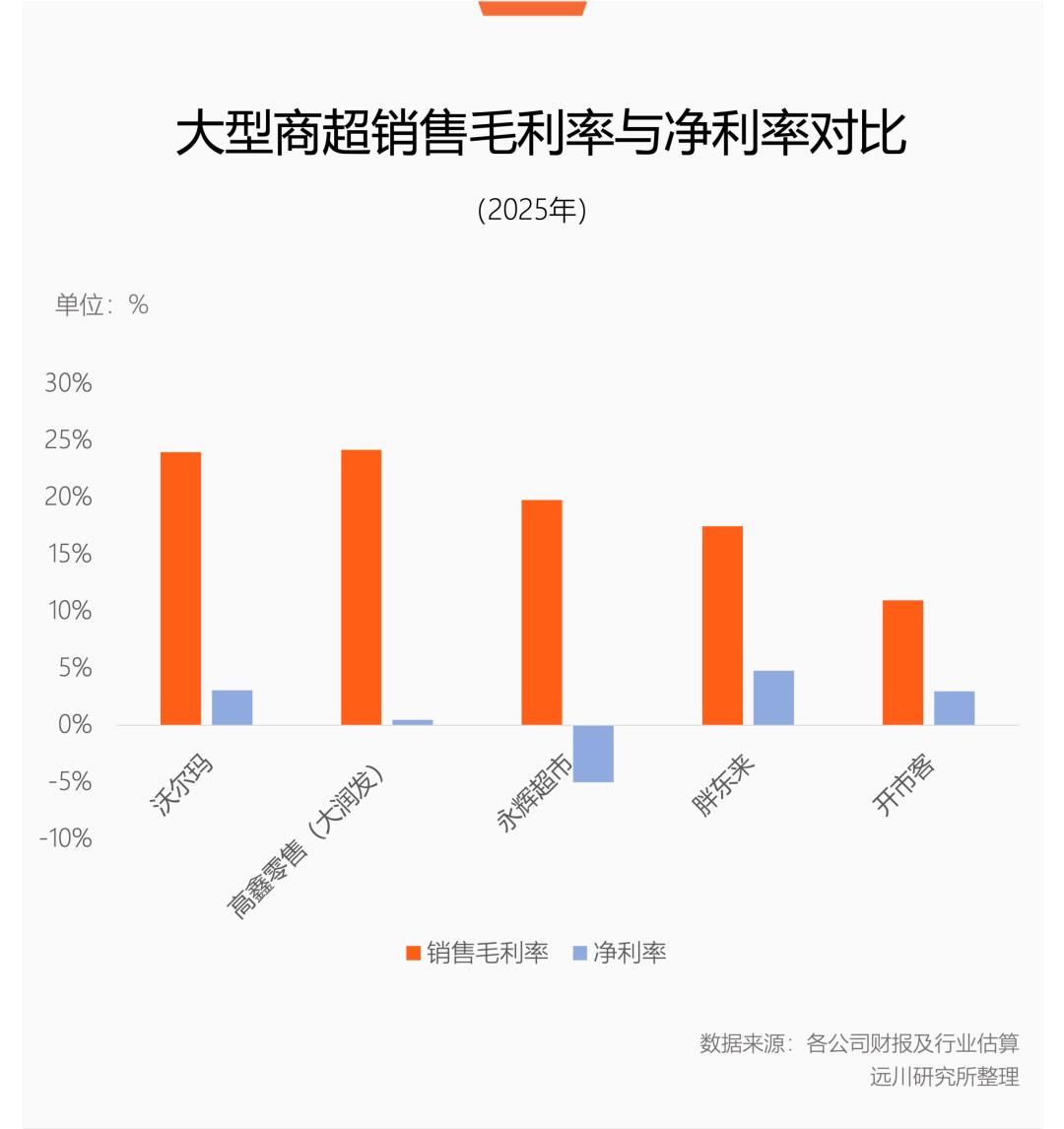
Mingmangmangmang has completed the entire procurement, warehousing and logistics system, but its gross profit margin in the first half of 2026 was only 11.5%. Even such a small amount of profit has to be shared with franchisees.
Supermarkets are operated by their own owners, while the stores of bulk snack retailers are owned by franchisees. In order to squeeze out profits for franchisees, Mingmangmangmang came up with two methods:
First, increase the profit of a single store. The best way is to develop self-operated brands to squeeze more profits from the supply chain. This is also the move that most bulk snack retailers are trying to do: gradually replace low-gross-profit big brands with high-gross-profit white-label and self-operated brands.
However, according to estimates by securities firms, the revenue proportion of Mingmangmangmang's self-operated brands is only in single digits, and the profit generated is still limited at present.
Second, improve the turnover rate. Assuming that the profit margin of the franchisee remains unchanged, the more times the 10,000 yuan of payment for goods is turned over, the greater the absolute value of profit. That is to use scale to increase profit.
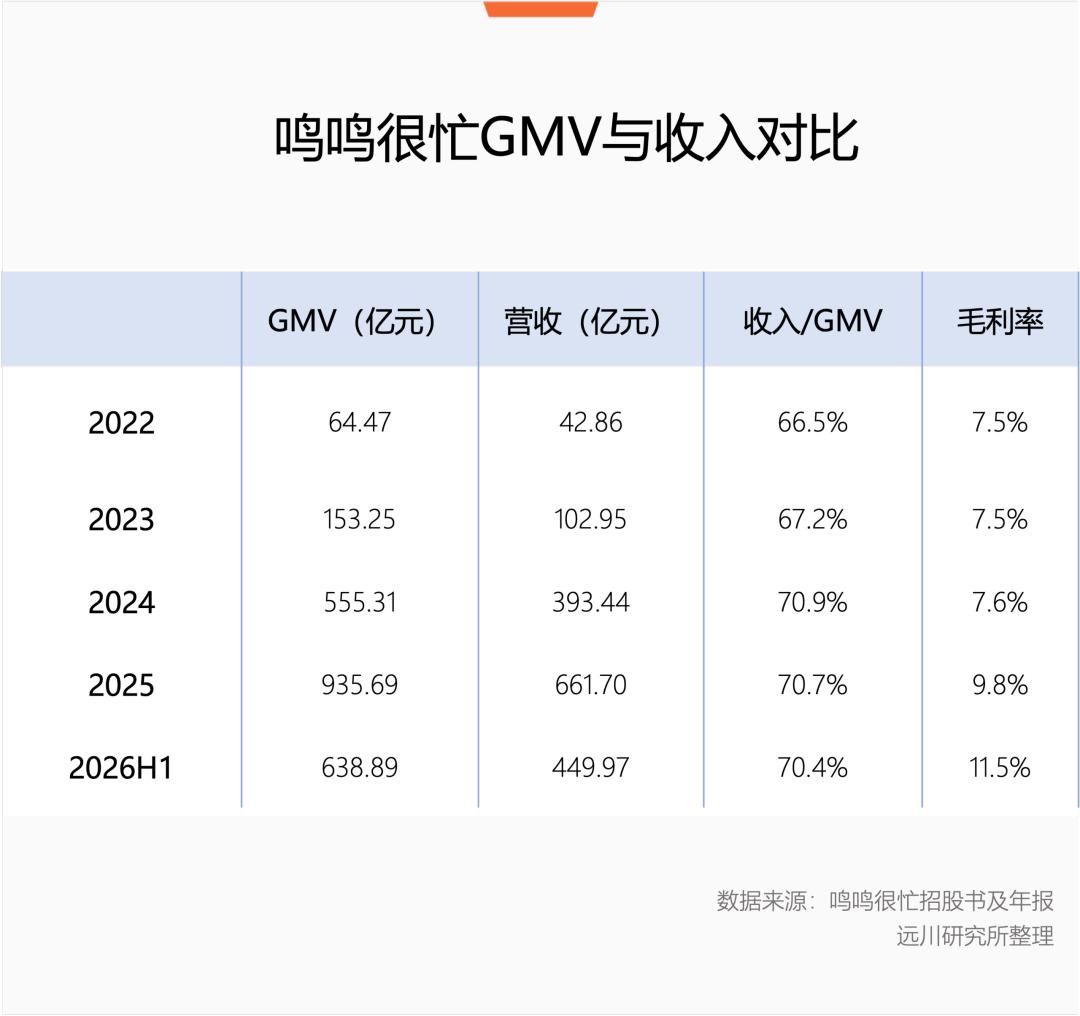
The scale effect does work. In the first half of 2026, Mingmangmangmang's GMV reached 63.89 billion yuan, with more than 2700 cooperating manufacturers. The sales cost growth rate was 56.1%, lower than the revenue growth rate of 60%.
But we all know that it is impossible for all four players at a mahjong table to win money.
The Fate of Franchisees
Let's look at an interesting key indicator: Revenue / GMV.
In the franchise model, the total GMV of the brand refers to "the total sales of all stores". The brand makes money by selling raw materials to franchisees, so the brand's revenue is "the money the brand earns from franchisees".
For example, if a Mixue Bingcheng store sells a 4-yuan cup of lemonade, it will be counted into the GMV of 4 yuan. The franchisee spends 2 yuan buying lemons, paper cups, straws and other materials to make this cup of lemonade, and this 2 yuan is the revenue of Mixue Bingcheng.
The ratio of the two can help us observe how much profit space the brand reserves for franchisees.
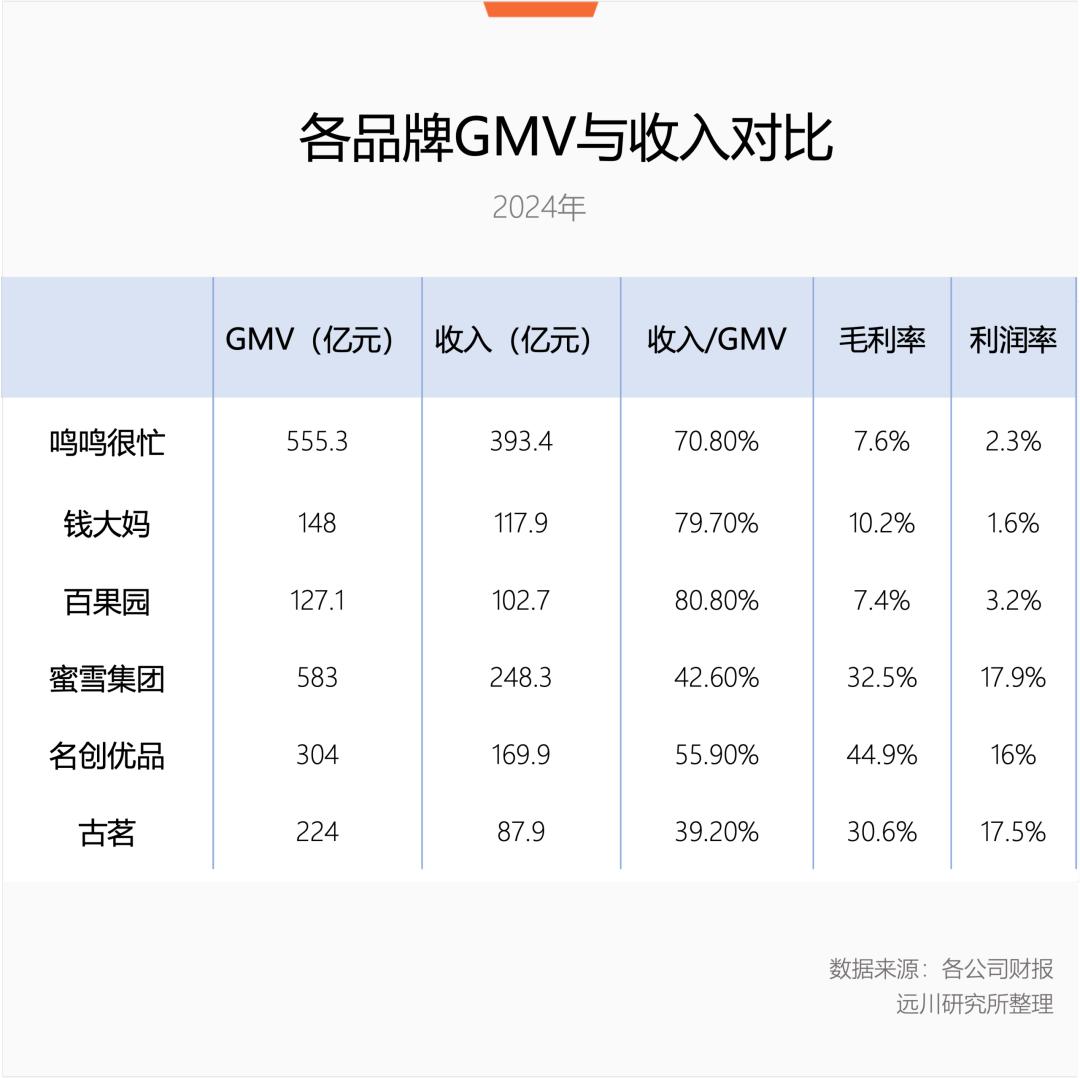
Although Mingmangmangmang has a store density as high as milk tea chains, its Revenue/GMV ratio is actually at the level of Pagoda and Qian Dama. Snacks, as a category whose shelf life is comparable to that of wild dog milk, have a similar ratio to fresh fruit and fresh food, is that reasonable?
The three of them actually have one thing in common: no added value from the production and processing link. Looking at Guming and Mixue Bingcheng, their models are much more benevolent.
As the gross profit margin increases, the Revenue/GMV ratio has hardly changed, which indicates that the additional profit generated after the headquarters' gross profit margin increases has not been significantly returned to franchisees by reducing the proportion of the headquarters' revenue.
The good days of franchisees seem to have been eaten by Mingmangmangmang like seaweed snacks.
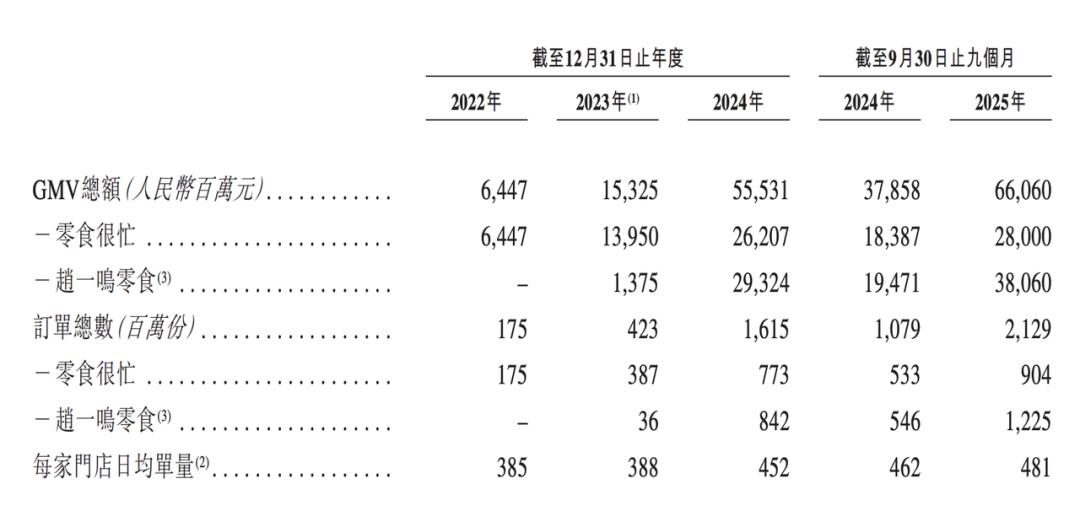
At the same time, Mingmangmangmang is expanding wildly, and the efficiency of single store is diluted.
The number of daily orders of each Mingmangmangmang store only increased from 462 to 481, with a growth rate of 4.1%, while the GMV increased by 74.5%, which is entirely driven by the large-scale expansion of the number of stores.
A similar situation also occurred to Haoxianglai, which is also in the bulk snack track:
