Grok 4.7 is launched, ranking third in the world. Elon Musk stated that the training of 4.8 has also been completed.
Just now, SpaceXAI founded by Elon Musk was officially released, with its brand-new flagship model Grok 4.7!
Its core selling point is highlighted as delivering extremely strong performance at the exact same price and speed.
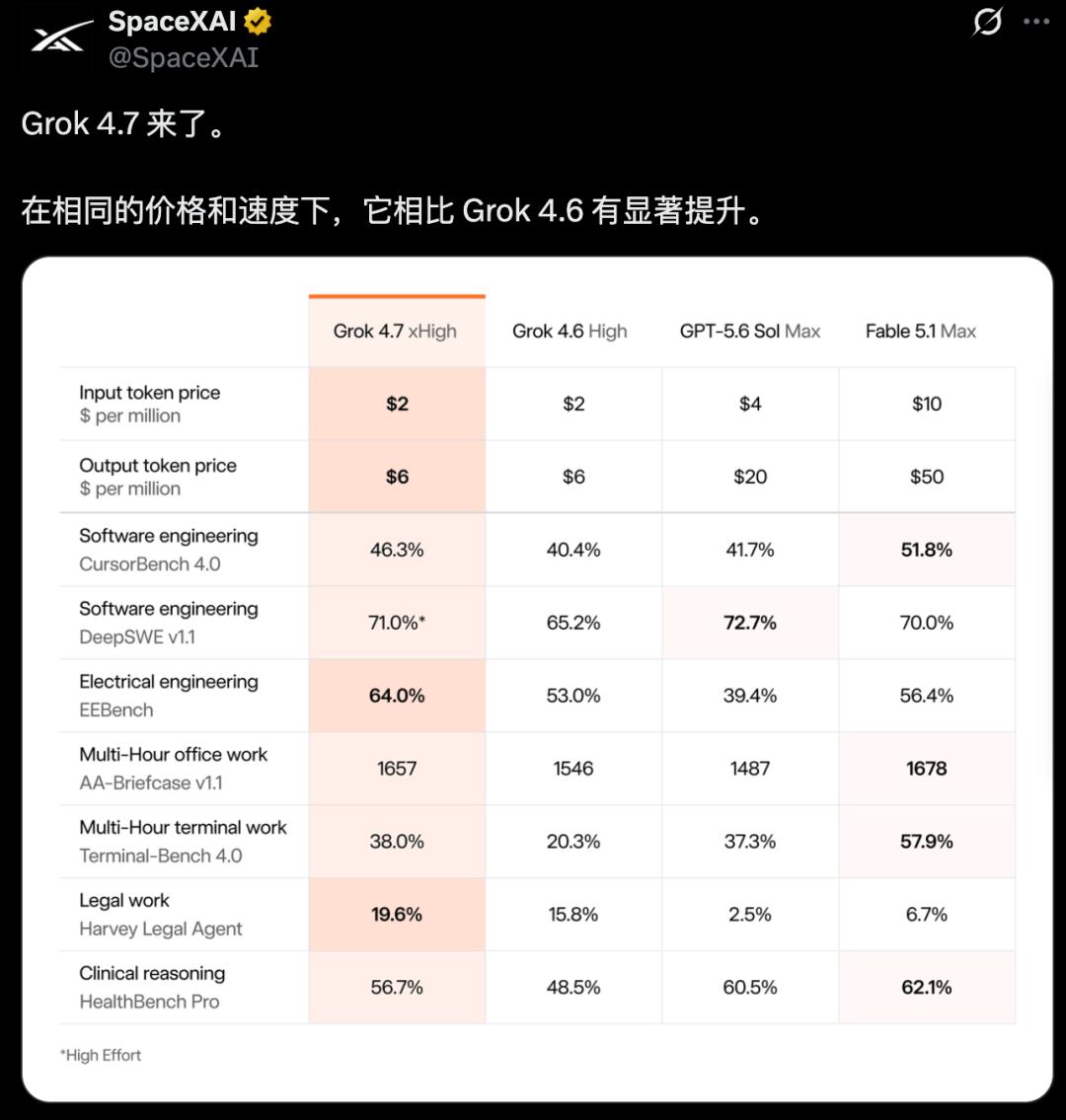
Elon Musk immediately stated publicly, "Grok 4.7 has pushed SpaceXAI to the third place in the field of agent programming, second only to Anthropic and OpenAI".
Boasting ultra-fast speed and extremely low price, Grok 4.7 is the top choice for individual developers to get work done efficiently.
On the official account of SpaceXAI, the official positioned it as the strongest Grok ever, built exclusively for programming and knowledge work.
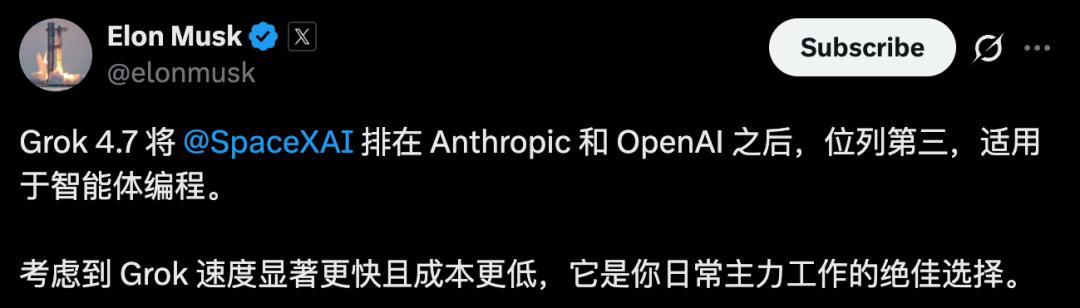
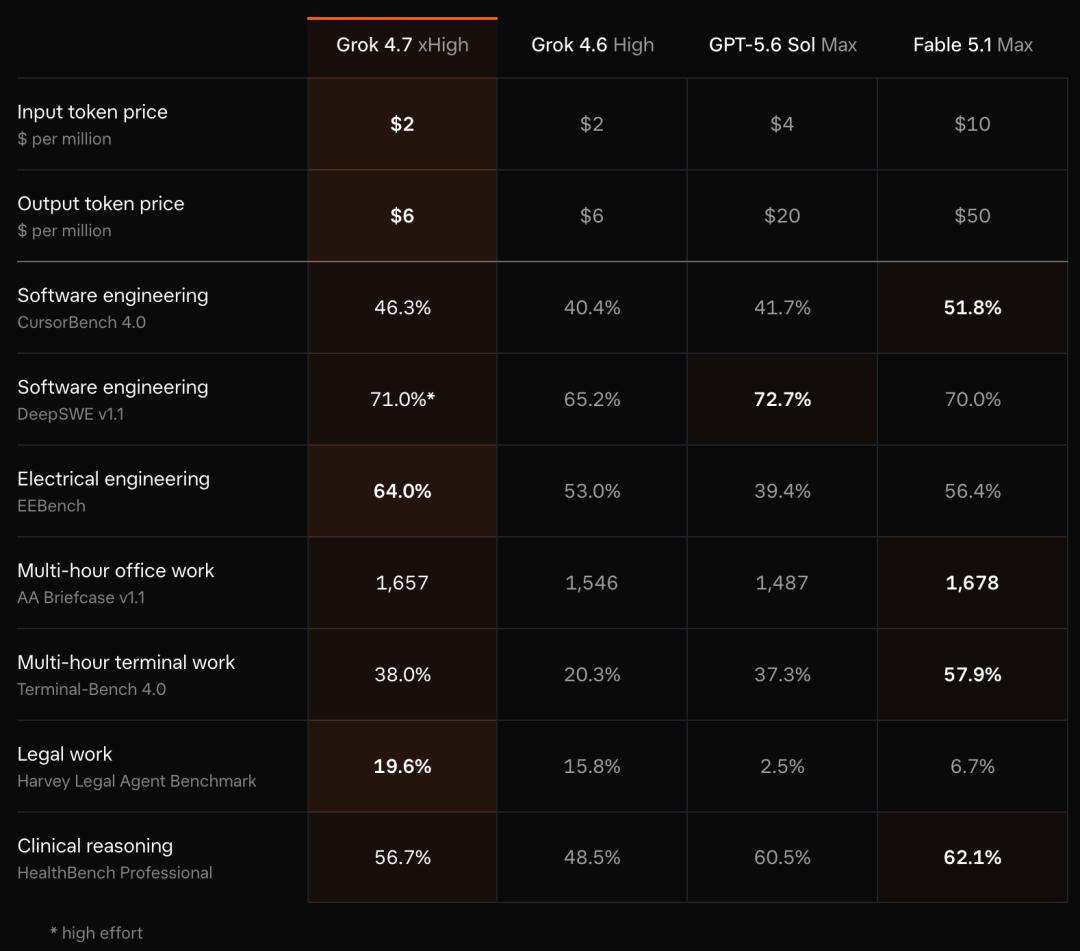
Specifically, on the benchmarks for programming and knowledge work, Grok 4.7's performance almost outperforms GPT-5.6 Sol Max, and is very close to Fable 5.1 Max.
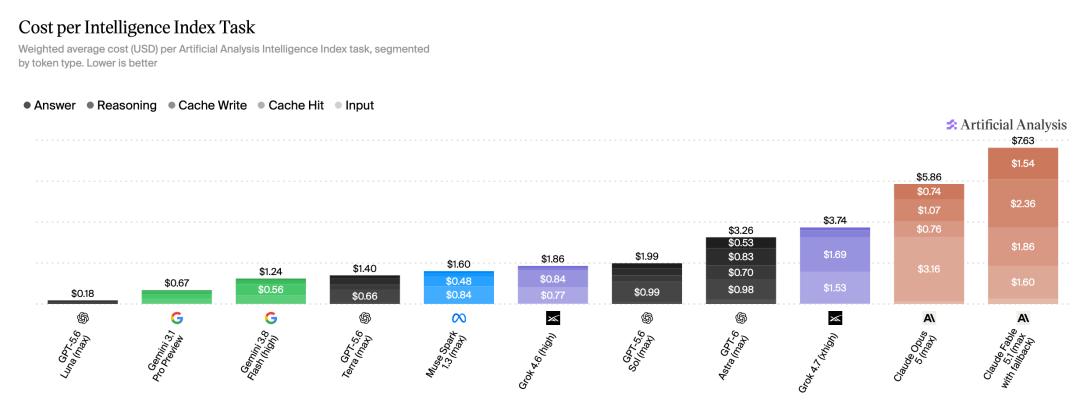
The price is $2 per million input tokens and $6 per million output tokens, which is exactly the same as Grok 4.6.
However, the underlying model has been completely revamped: the base model is larger, the reinforcement learning training process is extended, and the task difficulty weighting is tilted towards "work that takes several hours to complete".
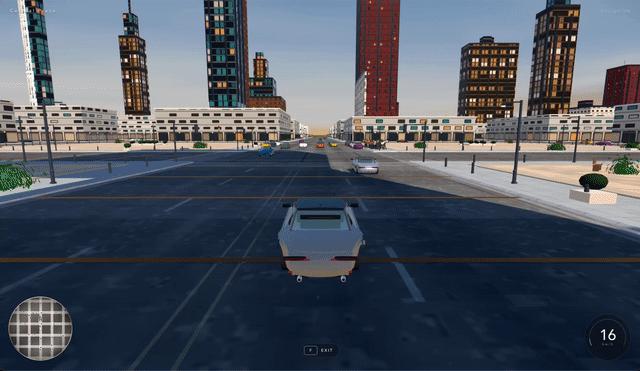
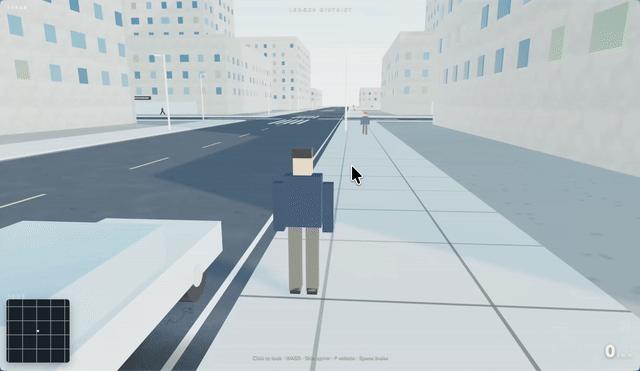
If you let Grok 4.7 and Grok 4.6 develop an open-world city game respectively, the performance gap between them is completely visible to the naked eye.
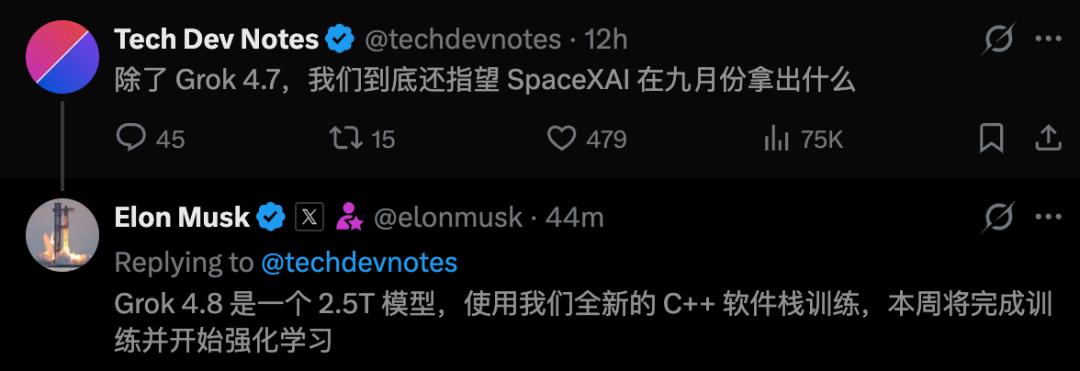
It is worth mentioning that the next-generation 2.5T new model Grok 4.8 has also finished training.
Elon Musk's signature masterstroke has only just begun.
Grok 4.7 Debuts, Its Programming Capability Enters the First Tier
The programming test can better quantify the progress brought by Grok 4.7 this round.
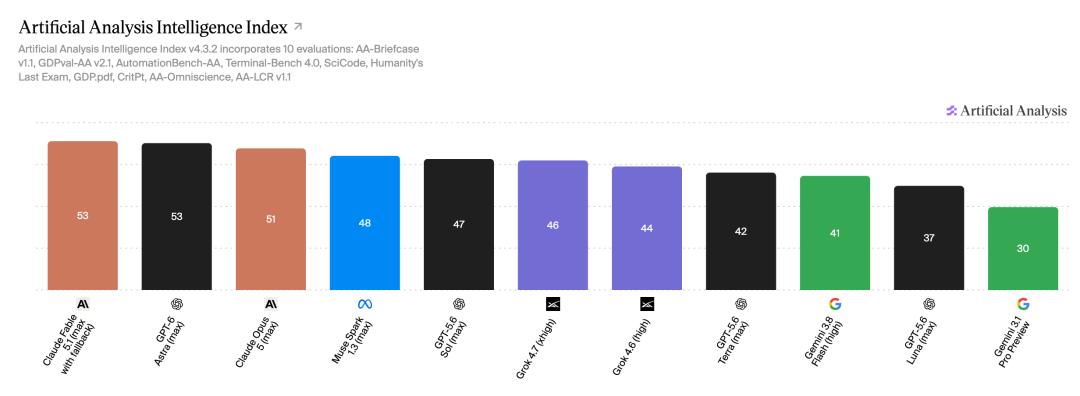
Looking into the AA ranking list, the data is very interesting.
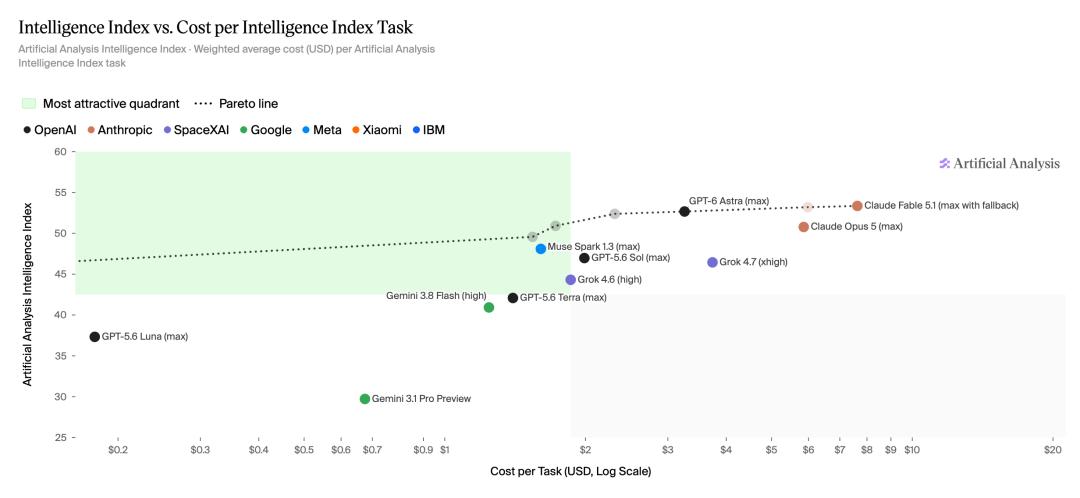
In terms of the general intelligence index, Grok 4.7 scored 46 points, only 2 points higher than Grok 4.6. By contrast, Fable 5.1 and GPT-6 Astra in the first tier both scored 53 points.
Calculated by individual model, it ranks 16th; calculated by laboratory, it just squeezes into the 4th place.
As for the programming ranking that Elon Musk highly praised, there are actually two different versions.
1. With the GrokBuild framework applied, Grok 4.7 scored 56 points, ranking right after Fable 5.1, GPT-6 Astra and Opus 5. The "global third place" mentioned by Elon Musk actually merged the two models of Anthropic into one camp.
2. After switching to the unified benchmark Terminal-Bench 4.0, the pass rate of Grok 4.7 plummeted to 26%~27%. For comparison, the pass rate of GPT-6 Astra is 60%, and that of Fable 5.1 is 55%.
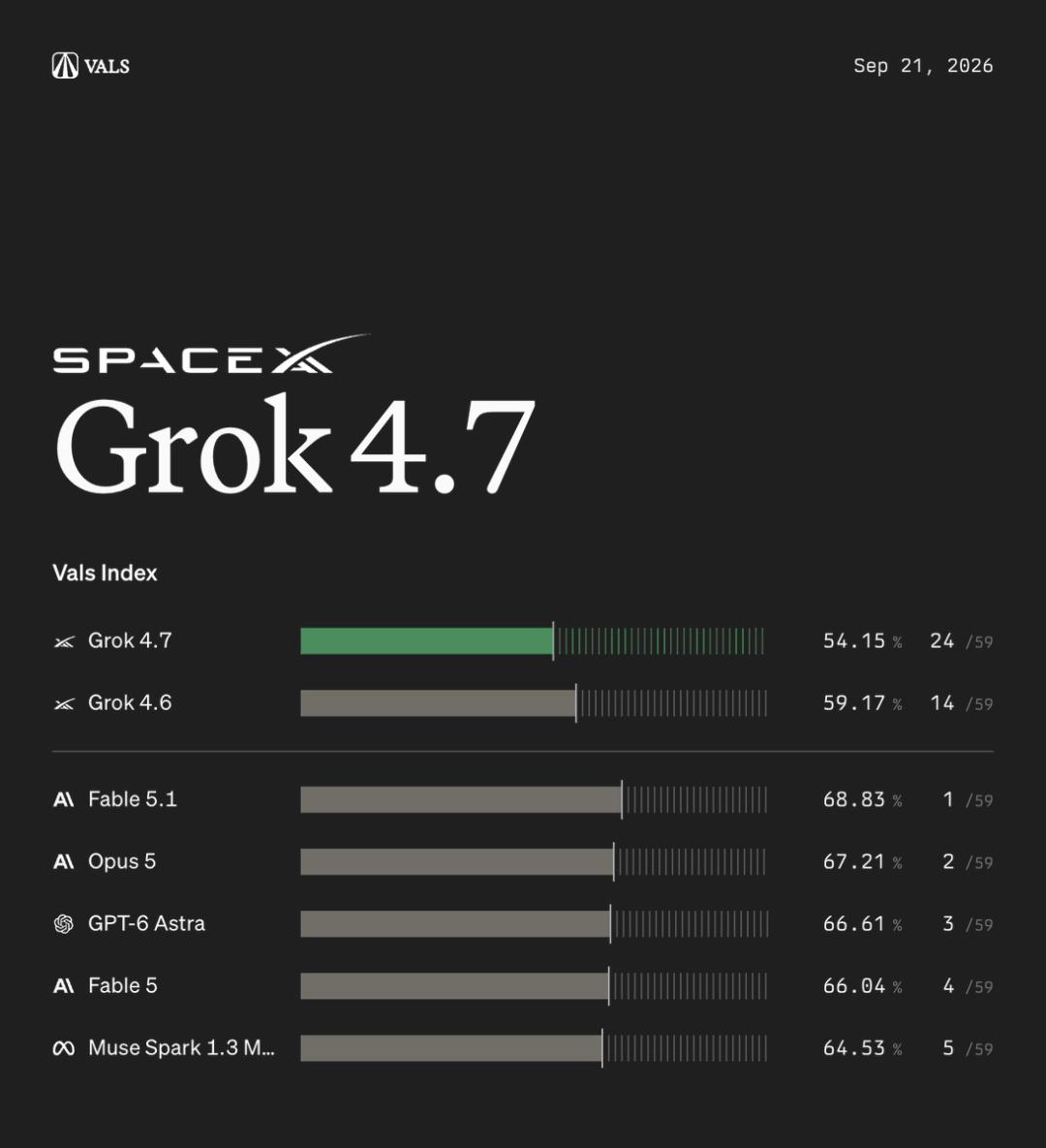
However, according to the evaluation agency ValsAI, Grok 4.7's ranking dropped instead of rising, falling directly from 14th to 24th, which is 5 points lower than the previous generation Grok 4.6.
Why did Elon Musk spare no effort to endorse the Build framework? The answer is hidden in the note of the official announcement —
In the pre-training stage, Grok 4.7 is deeply aligned with the interaction mode of the GrokBot framework.
In other words, it extremely relies on the invocation logic and task decomposition routines of its own tools. Once it leaves the "greenhouse" of its own supporting system, its performance will be greatly reduced immediately.
Impressive Knowledge Capability
Another key point of this upgrade is a scenario that is closer to everyone — office work.
In the long-process knowledge work test AA-Briefcase, Grok 4.7 scored 1657 Elo, 111 points higher than the High version of Grok 4.6.
On GDPval-AA, it scored 1695 Elo, 90 points higher than the previous generation.
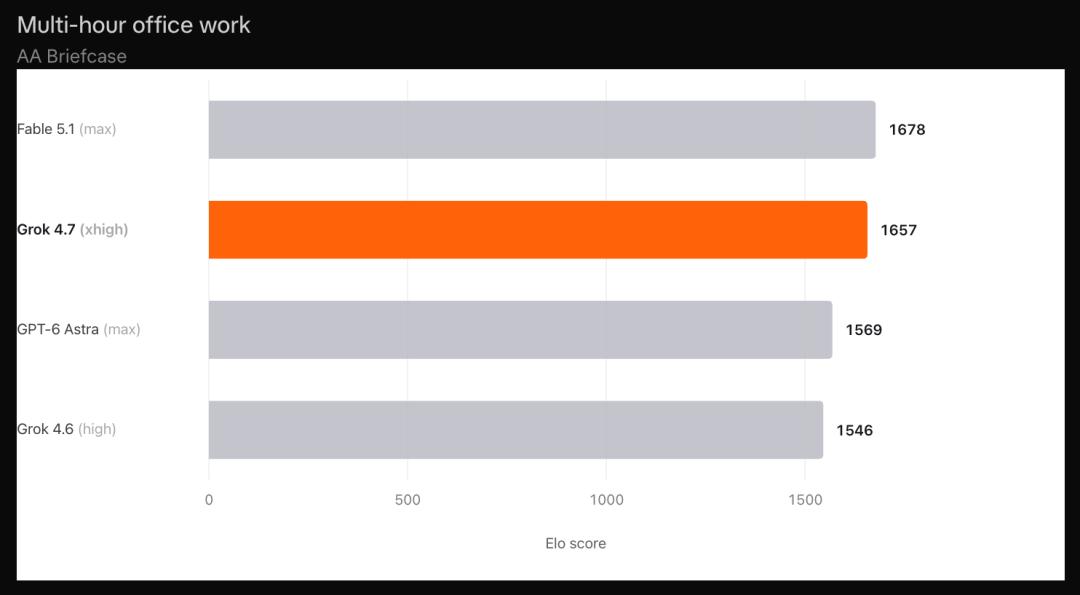
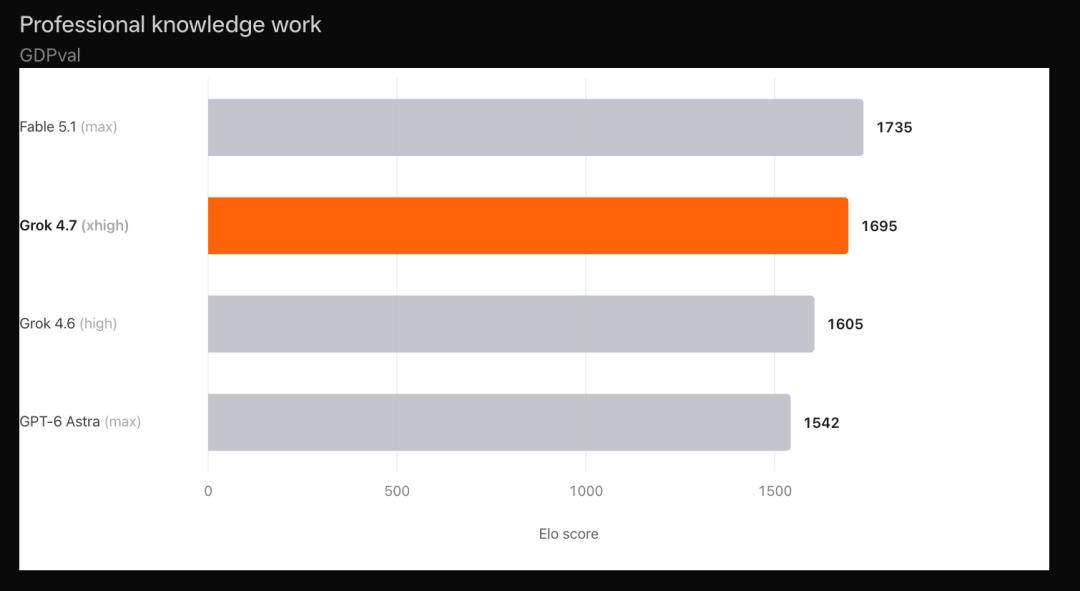
These tasks focus on whether AI can really help professionals finish their work and deliver high-quality outputs.
For example, in tasks such as organizing materials, making documents, completing analysis and producing presentations, Grok 4.7 has seen a significant improvement compared with the previous generation.
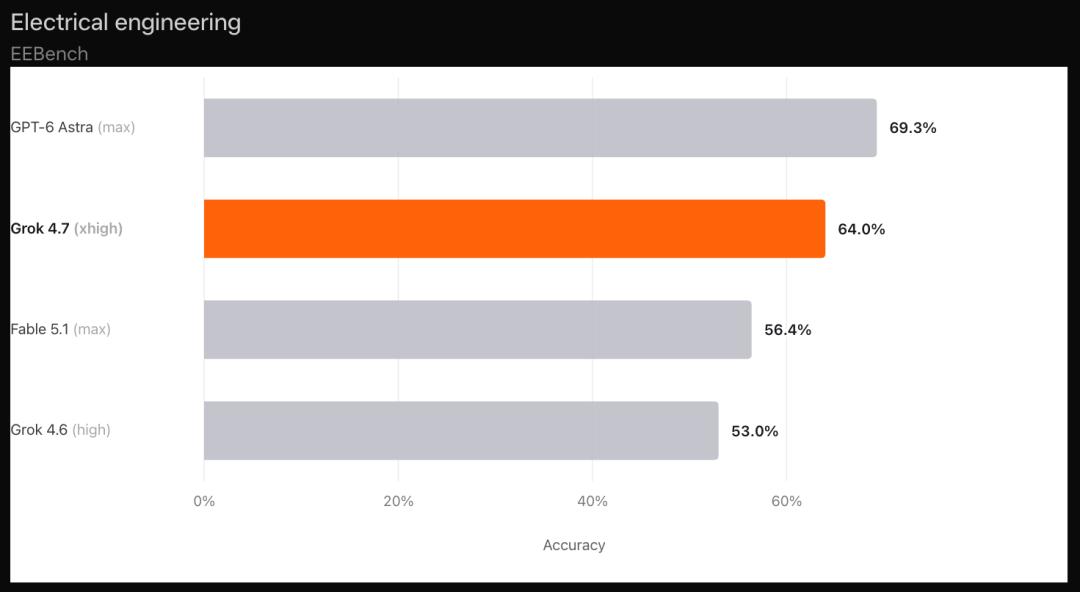
In addition, on the electrical engineering test EEBench, Grok 4.7 scored 64.0%, the highest among the four listed models.
The First Public Test Online: Surprises and Unexpected Failures
As soon as Grok 4.7 was launched, many people were already eager to try it out.
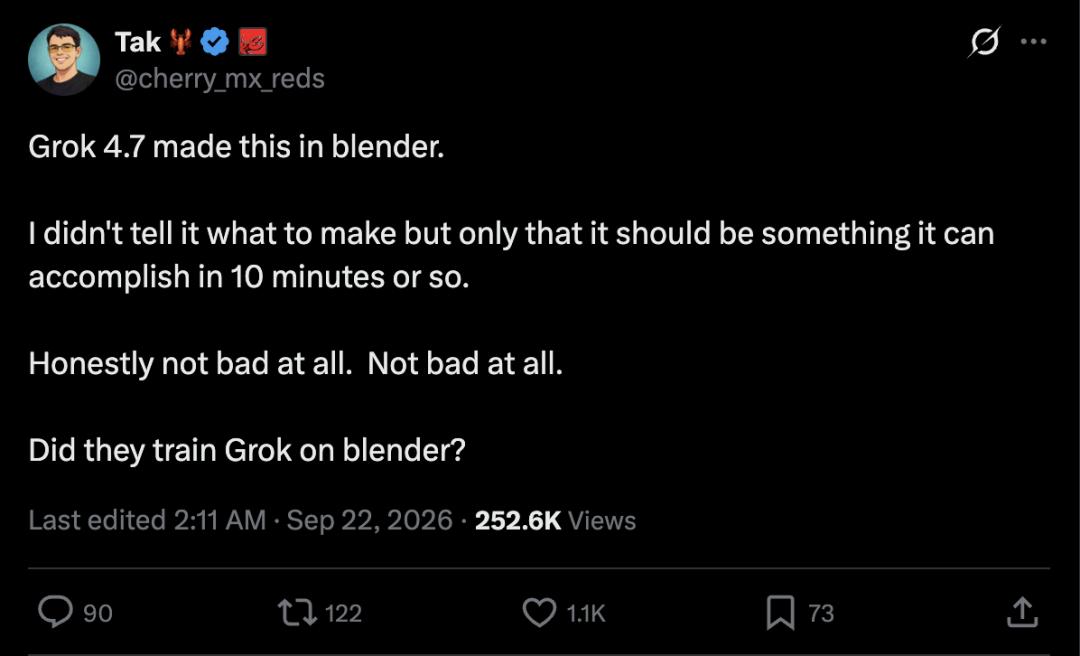
The most viral demo came from the developer Tak.
He did not give Grok 4.7 specific requirements, but just left a sentence: "Do whatever you can do within 10 minutes".
As a result, Grok automatically ran to Blender and created a brass armillary sphere, on which the planets can even rotate, attracting 250,000 people to watch all over the internet.
Tak commented: "Honestly, its performance is not bad at all".

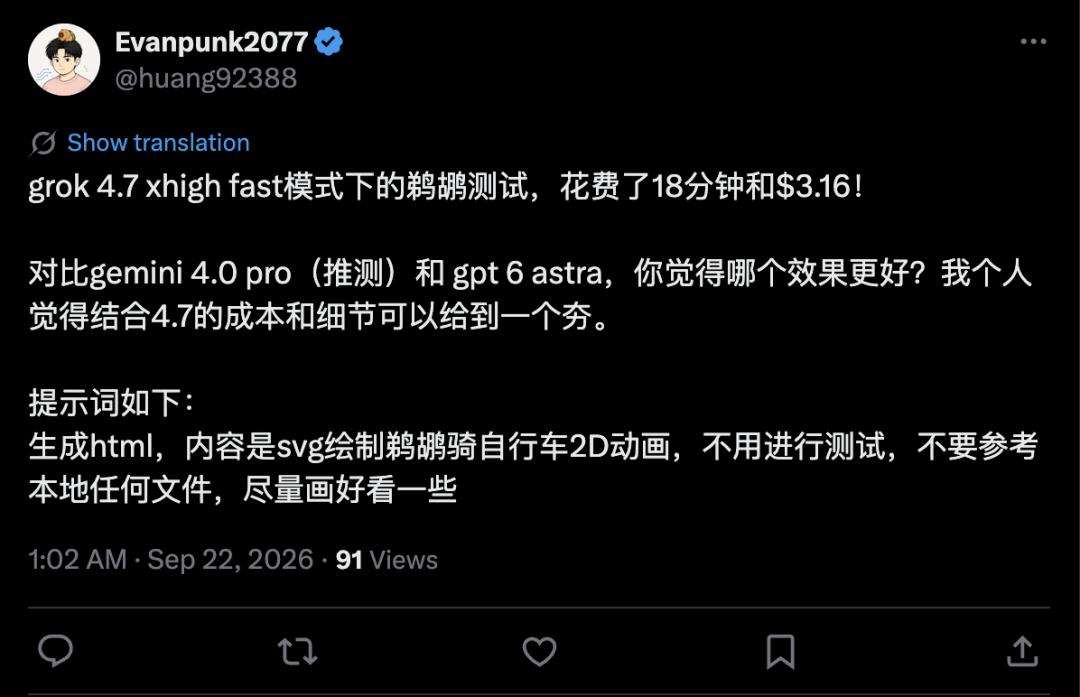
Then comes the classic test case: a pelican riding a bicycle.
Someone directly turned on the highest configuration, ran the xhigh plus fast mode, which lasted for 18 minutes and cost 3.16 US dollars.
The generated result is quite realistic: a white pelican is riding a bicycle by the sea, with its wings resting on the handlebar.

However, the result generated by another person is much worse: the brown bird he generated is directly slumping on the bicycle.


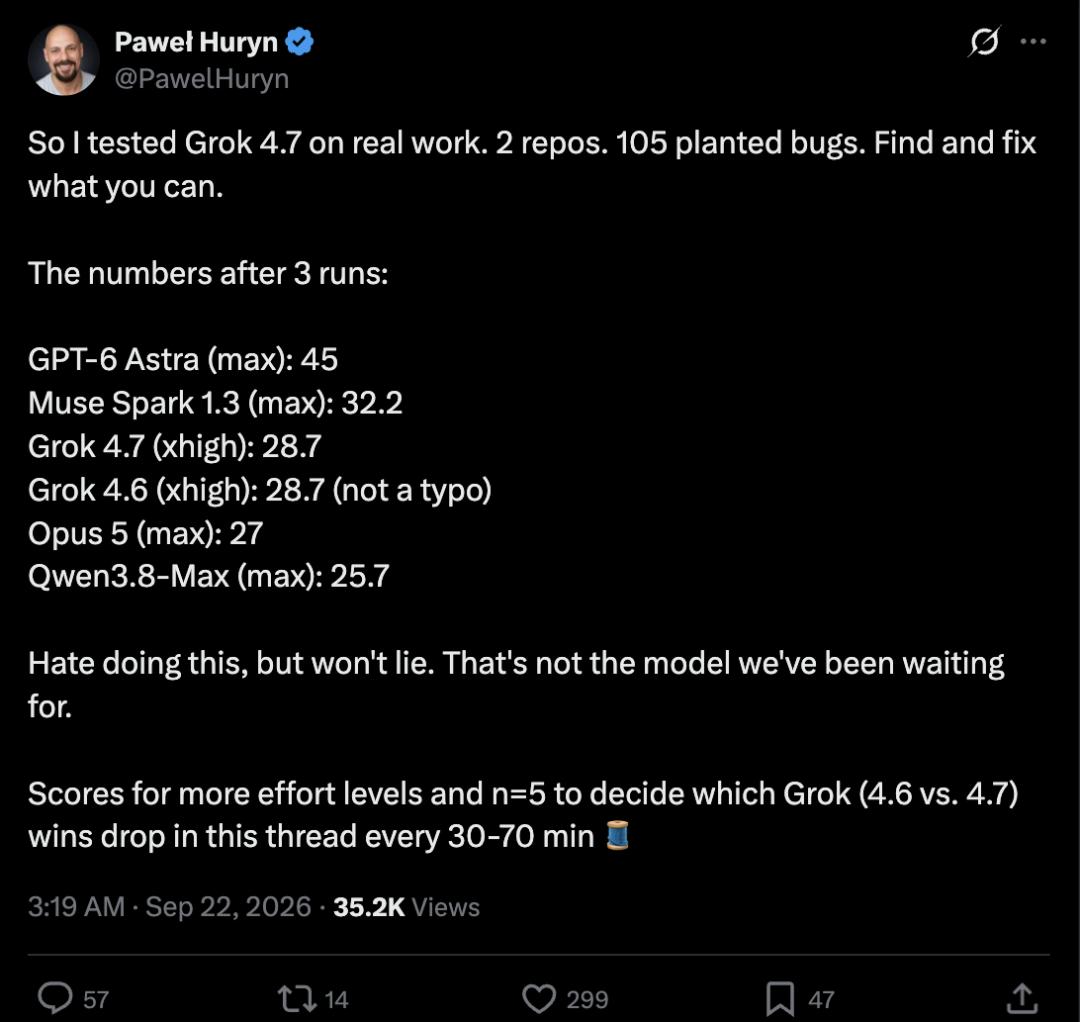
Product blogger Paweł Huryn used two real codebases with 105 pre-set bugs to run three rounds of tests.
The result shows that GPT-6 Astra can fix 45 bugs, while Grok 4.7 can fix 28.7 bugs. Dramatically, the previous generation Grok 4.6 can also fix 28.7 bugs.
Some other people conducted a head-to-head control experiment: they assigned the same chip project to Grok Build and the Grok 4.7 in Cursor at the same time.
After two full hours of testing, the most intuitive feeling can be summed up in four words: fast and cost-effective.
By the way, they also found a new hidden feature: Cursor has quietly increased the context window of Gro