36Kr Exclusive | The flight control and display system supplier previously invested by GL Ventures has raised over 50 million yuan in new financing, completing three consecutive fundraising rounds within half a year.
Author | Qiao Yujie
Editor | Yuan Silai
This article is about 2500 words, recommended reading time is 5 minutes
36Kr learned that Shenzhen Qingwei Aviation Technology Co., Ltd. (hereinafter referred to as "Qingwei Aviation"), a supplier of high-safety-level flight control and display systems, has recently completed a new round of financing of over 50 million RMB, jointly invested by CITIC Construction Investment Capital, Optics Valley Science and Technology Venture Capital, and Jiangxi Financial Holding Capital.
This is the third round of financing completed by the company within half a year, following the investments from GL Ventures, Songhe Capital and Plum Ventures. The funds will be mainly used to accelerate the R&D and airworthiness process of the high-safety-level (DAL A) fly-by-wire flight control computing platform and intelligent cockpit display system.
Against the backdrop of the continuously warming up of low-altitude economy investment and financing in 2026, capital is extending from complete aircraft manufacturing to core airborne systems. According to statistics from different calibers, there have been more than 160 domestic investment and financing events in the low-altitude field this year, with a total scale of nearly 30 billion RMB. However, there are still very few domestic enterprises that truly have the capability to develop and obtain airworthiness certification for core airborne avionics systems of DAL A level (the highest safety level in civil aviation).
Founded in 2023, with its headquarters in Nanshan, Shenzhen, Qingwei Aviation established an R&D center in Xi'an at the end of 2024, and set up an Airborne Airworthiness Electronics Technology Co., Ltd. in Chengdu in 2026. It mainly develops airworthiness-compliant high-safety-level fly-by-wire flight control computing platforms, intelligent cockpit display systems and integrated modular open platforms, which are known as the "brain and nervous system" of civil aircraft.
Flight control computers and display systems directly determine the safe, reliable control and indication of aircraft. For low-altitude aircraft (eVTOL) targeting multi-seat passenger carrying, they must meet high safety and high reliability standards, while taking into account the commercial requirements of low cost, scalability and reusability.
Qingwei Aviation is one of the few domestic enterprises that can independently complete the development and airworthiness certification of two DAL A-level products, namely the fly-by-wire flight control computing platform and the cockpit display system. Guo Qing, the founder, has been deeply engaged in the field of aviation engineering for 21 years, and has successively participated in the development of 7 types of aircraft; the core team of the company comes from domestic and foreign aviation enterprises, has participated in the R&D work of many important domestic civil aircraft, and has rich practical experience in civil aircraft product development.
In terms of products, the company has deployed two product lines: the 3*2 heterogeneous dissimilar flight control computing platform and the intelligent cockpit display system, corresponding to the "brain" and "nerve center system" of the aircraft respectively.
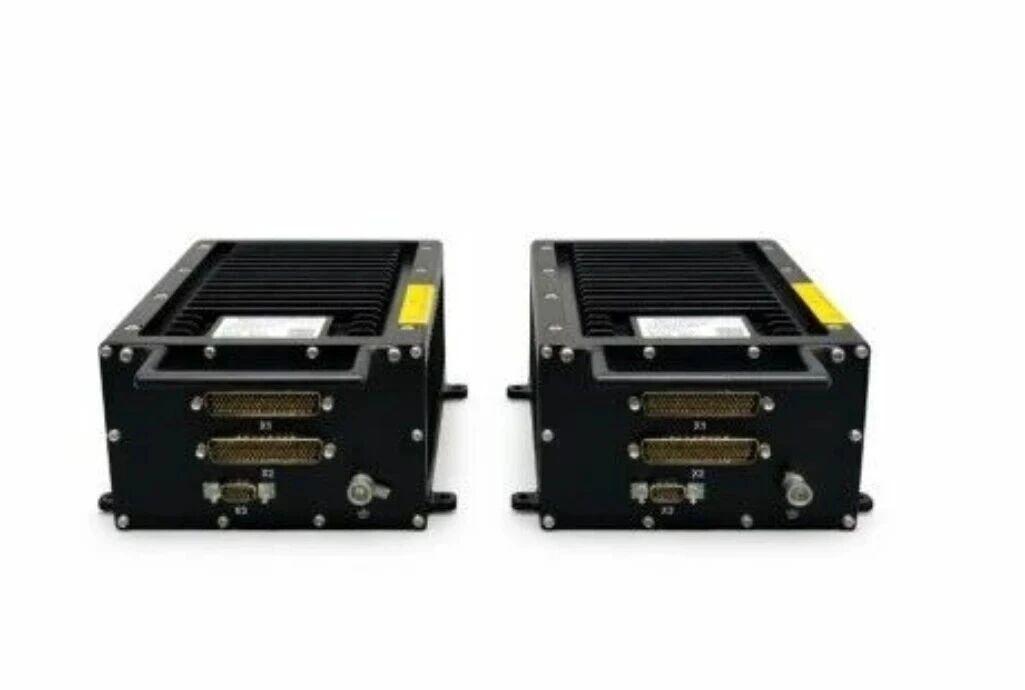
DAL A-level 3*2 Heterogeneous Dissimilar Flight Control Computing Platform (Source: Enterprise)
DAL A-level Integrated Display System (Source: Enterprise)
It is worth noting that the two types of products of the company, flight control and display, can realize collaborative development through the reuse of the underlying platform. Guo Qing introduced to 36Kr that the underlying technology reuse rate of the two products can reach 70%, covering underlying elements such as power supply, computing module, I/O, driver, real-time operating system, software middleware and integrated development environment. "Platform reuse can not only save a lot of R&D time, manpower and capital costs, but also help OEMs reduce the R&D cost and development cycle of aircraft TC certification, and speed up the certification of the complete aircraft."
At the critical stage when the low-altitude economy is moving from "being able to fly" to "obtaining certification for passenger carrying", the demand of OEMs for flight control and cockpit display systems is shifting from "usable" to full life cycle management of "designable, certifiable, mass production guaranteed and sustainable airworthiness". Qingwei Aviation completed the establishment of the Design Assurance System (DAS) in December 2025, and is currently building the dual-pillar capabilities of Design Organization Approval (DOA) and Production Organization Approval (POA).
In terms of R&D system, the full life cycle development of the company's products follows system and safety standards such as ARP-4754B, ARP-4761A, DO-160G; the software complies with DO-178C, and the hardware complies with DO-254, all developed according to DAL A/B level requirements; tool qualification is implemented in accordance with TQL-1/TQL-2 of DO-330; and the model-based development method of DO-331 is adopted.
At present, the CTSOA independent certification project of one of the company's flight control products has been accepted by the Chengdu Airborne Equipment Certification Branch of the Civil Aviation Administration of China, and the design approval review is underway. After the certification is completed, this product will be sold as a standard off-the-shelf airborne equipment to system-level suppliers and OEMs, and can be approved for installation on aircraft according to procedures. In terms of certification along with the aircraft, the company plans to take an appropriate number of OEM customers, and work with OEM customers in the long term to complete the TC certification of the aircraft and subsequent large-scale delivery.
The company's products can currently cover scenarios such as general aviation, low-altitude flight, business jets and regional airliners, and have received orders, R&D contracts and product deliveries from leading OEM customers.
The following is the Q&A with the founder:
36Kr: What specific pain points does the design of the 3×2 heterogeneous dissimilar flight control computing platform solve?
Guo Qing: Civil aviation has extremely high safety requirements for flight control systems, and the failure probability needs to be lower than 10⁻⁹ per flight hour. Therefore, the flight control system must not only solve the problem of random failure of a single hardware, but also avoid the failure of the entire system caused by common cause failures such as design defects.
The 3×2 heterogeneous dissimilar architecture is designed for these two types of risks. The system consists of 3 flight control computers, and each computer is equipped with two independent computing channels, which are responsible for command and monitoring respectively. On this basis, the two channels adopt heterogeneous dissimilar design at both hardware and software levels. For example, the dissimilarity in hardware design uses chips from different manufacturers or with different architectures; the dissimilarity in software design can use different development teams, languages or tools. In this way, even if a certain type of hardware or software has systematic defects, the heterogeneous and dissimilar design can solve single-point random failures and reduce the risk of common mode failures.
36Kr: The platform reuse of the two types of products is a major advantage of Qingwei Aviation. Why does the company deploy the integrated modular open platform and promote the platform reuse of flight control and display products?
Guo Qing: The core goal is to improve the product reuse rate and development efficiency, and reduce development costs and airworthiness costs through platform-based and modular design. The safety standards and airworthiness system of civil aviation are globally universal, so from the very beginning, we hope to develop internationally competitive airborne electronic products in accordance with global standards and a controllable global supply chain.
Initially, we focused on the flight control computing platform, but during the R&D process, we found that the display system can also reuse a large number of technologies from the flight control platform at the underlying technology level. After sorting out the supply chain and a large number of pre-research work, we found that the technology reuse rate of the two products can reach 70%.
Therefore, we further abstract these shared underlying capabilities to form an integrated modular open platform, on which we develop the flight control computing platform and the display computing platform. In this way, the hardware computing platform can be generalized, software applications can be developed independently, different products can share underlying capabilities, and combinations can be made according to the requirements of different aircraft and systems.
This open and modular architecture is also consistent with the architectural concepts in the international avionics field such as MOAA (Modular and Open Avionics Architectures) and MOSA (Modular and Open Systems Architectures). It can realize interoperability between different systems and suppliers through clear interface and function definitions, realize the generalization of hardware platforms and the independence of software applications, while reducing product R&D and full life cycle costs.
36Kr: What are the difficulties in realizing the integrated modular open platform and the platform reuse of the two types of products?
Guo Qing: The core difficulty is to collect all the underlying software and hardware components that meet the airworthiness requirements of civil aviation, and complete adaptation, integration, verification and airworthiness certification. This involves three types of key components: first, processors that can simultaneously meet the civil aviation compliance evidence requirements, performance and power consumption requirements, have a wide range of safety domain applications, and have life cycle support; second, real-time operating systems and file systems that already have complete compliance evidence, have been actually applied in the civil aviation field and obtained certification; third, graphics libraries, graphics drivers and graphics development tools involved in the display system.
In addition, it is necessary to adapt all processors, real-time operating systems, file systems, graphics libraries, graphics drivers and graphics development tools to our hardware platform, and complete a large number of development and certification work. IP and technical systems from different manufacturers also need to be decoupled and connected through software middleware or support layers, while ensuring that the intellectual property boundaries of all parties are clear. Both product lines require forward development, and rigorous completion can only be achieved by adopting complex systems engineering methods.