Can the 20,000-yuan Qiyuan robot justify the 60 billion yuan market capitalization of Sunway New Materials?
On September 20, Qiyuan Robotics hosted a new product launch event in Shanghai, with many celebrities including Huang Xiaoming, Hu Jun, Tian Liang and his wife showing up to offer their support.
Qiyuan Robotics is an unconventional player in the industry. The brand was founded at the end of 2025, with a short history but a very "solid" background: it is a consumer-grade embodied intelligence brand under A-share listed company Swancor New Materials, holding the dual background of "listed company + Agibot ecosystem". Peng Zhihui (Zhihui Jun), co-founder of Agibot, serves as the chairman of Swancor New Materials.
Public information shows that in terms of R&D collaboration, Qiyuan has obtained authorization for part of Agibot's general underlying software code; in the supply chain, it inherits Swancor's accumulation in lightweight and high-rigidity materials, as well as Agibot's experience in robot mass production energy consumption control and assembly traceability. However, Swancor New Materials publicly disclosed that the production, operation and core technology development of the two parties remain independent, and Qiyuan's core technologies for consumer scenarios are developed by an independent team.
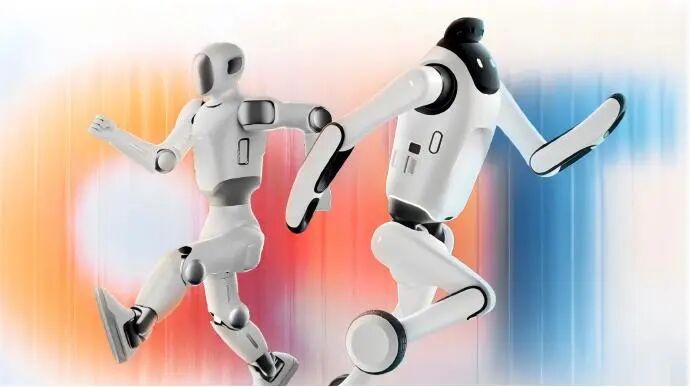
Due to its special background, Qiyuan's first batch of new products directly launched for the C-end has attracted widespread attention. Two robots are on sale this time: the 88cm-tall humanoid Qiyuan Q1, and the Qiyuan T1 that can transform between wheel-footed humanoid and quadruped modes. The basic versions of both are priced at 19,999 yuan, and will be shipped on October 1.
The sales performance of this launch will directly affect the stock price of its parent company Swancor New Materials. Over the past year, Swancor New Materials' stock price rose from more than 7 yuan to a peak of 223 yuan, with its market cap once approaching 90 billion yuan, and still remaining at around 60 billion yuan even after the pullback. The company recorded a revenue of 803 million yuan and a net loss of 167 million yuan in the first half of the year, while its robot business generated 210 million yuan of advance receipts in the same period, which has not been recognized as operating revenue yet.
Celebrity endorsements and surging stock prices are driven by the same factor: the expectations brought by the robot business.
Now that the products are officially on the shelves, it is time to answer the core question: can a 20,000-yuan robot support a market cap of 60 billion yuan? How much real added value can Agibot's endorsement bring to Qiyuan?
01. With Agibot already in place, why is Qiyuan needed?
To assess the actual value of the "endorsement", we first need to clarify the relationship between the two companies.
In the past two years, the Agibot ecosystem has successively deployed companies covering dexterous hands, robot leasing, data collection and other fields through methods such as investment and incubation. For robot ontology, there are two separate entities: Agibot, which focuses on industrial and commercial scenarios, and Qiyuan, which targets individual users. According to public reports, the two share the brand endorsement of the Agibot ecosystem externally, and divide the market by application scenarios internally.
Why was Qiyuan established separately? The official attributes this to positioning differences. When explaining the split of subsidiaries under the Agibot ecosystem, Peng Zhihui emphasized the overall logic of "scenario decoupling and specialized in-depth operation". For Qiyuan, Tian Hua, CEO of Swancor New Materials, gave a more specific division of labor, stating that Qiyuan is positioned for personal and family scenarios.
After clarifying the relationship, the reason why this launch event has attracted so much attention becomes clear: Qiyuan is regarded as a beneficiary of multiple favorable conditions. Theoretically, Agibot's accumulation in technology, materials and supply chain can be utilized by Qiyuan, and the official also lists such collaboration as one of its core advantages. But can this endorsement be truly implemented?
Based on the views of multiple industry practitioners, Qiyuan does have certain advantages in robot manufacturing, but Agibot's advantages cannot be directly transferred, and the difficulties are mainly concentrated in three dimensions.
The first is the supply chain dimension. Chen Ming, a practitioner at a leading embodied intelligence company, believes that Agibot's accumulated supplier resources, bargaining power and mass production debugging experience are helpful to Qiyuan, and the "one unit off the production line every 2.5 minutes" disclosed at the launch event also reflects the preliminary production capacity. But he reminded that this is still small-batch production. The production line needs to be re-debugged when switching to new models, and the manufacturing system for producing thousands of units a year is completely different from that for producing hundreds of thousands of units a year. No player in the entire industry has proven that it has reached the level of large-scale mass production.
The second is the material dimension. An embodied intelligence technology practitioner pointed out that the path of industrial robots that pursue strength at the cost of material consumption is not applicable in the consumer sector. He put forward a logical chain: consumer-grade robots follow the triple constraints of weight reduction, battery life and safety. A lighter body will not cause injury when falling, extend the battery life, and make users willing to let the robot stay close to children. Once weight reduction is pursued, the battery layout, center of gravity distribution and joint torque all need to be recalculated. What is really expensive is not the material itself, but the cost of re-designing the whole machine.
In addition to design, he also added a detail: manufacturers that supply joint motors for humanoid robots basically do not do business for industrial robots, as the size specifications of the two are completely different.
The last is the technology dimension, and the consensus among practitioners is that only partial collaboration is possible.
Algorithms for walking, navigation and data iteration can be directly migrated, but they also repeatedly emphasize that safety is exactly the part that industrial experience is most difficult to cover. In factories, people walk around robots, while in homes, robots walk around children. If a problem occurs in industrial scenarios, the equipment can just be shut down for maintenance, but consumer scenarios require slow and absolute stability: once a robot loses control and falls, its malfunction may threaten the safety of the elderly and children.
Moreover, there are relatively mature safety certification standards in the industrial field, but there are still no corresponding mandatory standards for consumer-grade humanoid robots. The industry has no unified answer to what level of safety is sufficient for robots. This is not a problem for a single company, but a threshold that the entire industry must cross together.
Qiyuan has inherited the ability to manufacture products quickly and efficiently, but for the part of safely bringing products into families, it can only rely on time and capital to fill the gap. These two resources are exactly the most expensive assets in the current embodied intelligence field.
02. Can Qiyuan's prospects support a market cap of 60 billion yuan?
First, let's look at the size of the consumer-grade market where Qiyuan is located.
In terms of market value, most institutions count the overall scale of humanoid robots, and few separate the family and personal scenarios independently. The China Investment Industry Research Institute lists "family consumption" as a separate category, estimating that the market size will reach about 500 million yuan in 2026 and 36 billion yuan in 2030.
The shipment volume can be used for cross-verification. Multiple institutions have different forecasts for China's humanoid robot shipments in 2026, but the overall trend is consistent: Morgan Stanley forecasts 50,000 units, Nomura forecasts 40,000 to 50,000 units, and GGII forecasts 62,500 units, forming a forecast range of about 40,000 to 62,500 units. Nomura also splits the data by application scenario, with consumption and performance entertainment each accounting for about 30%. If we only calculate based on the 30% proportion of "consumer grade" and the median of 50,000 units for the total shipment, the potential addressable market is about 15,000 units. Even if Qiyuan monopolizes this market with its 20,000-yuan starting price, its revenue will only be about 300 million yuan. Compared with the market cap of more than 60 billion yuan, this revenue is very small. The market cap reflects more expectations for long-term penetration rate and ecological monetization, rather than the current hardware sales.
What can be confirmed at present is advance receipts rather than recognized revenue. The 2026 semi-annual report of Swancor New Materials shows that the consumer-grade embodied intelligent robots have generated 210 million yuan of advance receipts, and the ending contract liabilities increased from 4.32 million yuan at the end of last year to about 188 million yuan.
This shows that the market has a certain willingness to place orders, and several key scenarios demonstrated at the launch event to a certain extent represent the high-demand directions that Qiyuan itself is optimistic about. But whether these demands can be realized needs to be analyzed separately.
A major selling point of Qiyuan T1 is outdoor accompanying and image tracking shooting, but there are precedents for this kind of personal mobile device. The Segway balance car launched in 2001 was predicted to change urban transportation at that time. It had strong technical performance, but was finally reduced to rental service in scenic areas due to high price and limited scenarios, and was acquired by Ninebot in 2015. Technical feasibility and actual market demand are often two completely different things.

The family scenario is another focus of the launch event, and also the scenario with the highest safety requirements. Chen Ming said, No player in the industry has fully figured out the operation model of real family humanoid robots. Once the robot is required to enter the kitchen or take care of the elderly, its safety requirements are more stringent than those in industrial scenarios.
Relatively speaking, "intelligent companion for children" is a relatively realistic family entry point at present, but an embodied intelligence investor said, "A 20,000-yuan high-end companion toy is a low-frequency and non-essential consumption, and its market size is closer to that of the trendy toy sector." Moreover, there are multiple competitors in this scenario.
For small humanoid robots, Songyan Dynamics' Xiaobumi has lowered its price to 9998 yuan and once ranked first on JD's best-selling humanoid robot list. UBtech U1 and Galbot ET1 of Galaxy Universal are also making efforts in the consumer and family direction. Qiyuan is positioned in the middle zone where its products are more expensive than toys but cheaper than practical tools. More hidden competition comes from outside the category: robot dogs and AI toys may take up part of the budget for "interesting products", and second-hand trading and leasing models are also reducing consumers' willingness to buy new products for trial.
The space and market share on the demand side are relatively limited at present, and the pressure on the profit side has already been reflected in the financial report. Swancor New Materials' revenue in the first half of 2026 was 803 million yuan, with a year-on-year increase of only 2.4%. Its attributable net loss reached 167 million yuan, and the loss in the second quarter alone was 125 million yuan, expanding by 205% month-on-month. This is mainly due to high R&D investment: the company invested 180 million yuan in R&D in the first half of the year, including 164 million yuan in robot R&D.
Qiyuan is trying to follow the path of "acquiring customers by selling hardware, and increasing revenue through ecology and services". It has launched a skill store, 3D-printed shells, development toolchains and developer communities, and connected with partners including Ximalaya, Youdao and JD Health. The official disclosed that it has more than 1,000 developers, with more than 100 new skills added every month. But the premise of ecological monetization is sufficient installed capacity, which in turn depends on whether there is real high-frequency demand in family scenarios and whether the safety performance meets the standards. The current products have just gone on sale, and the data of payment willingness, user retention and return rate have not been verified at the quarterly level. In addition, the average price of humanoid robots in the industry is still declining. According to the prospectus of Unitree Robotics, the average unit price of its humanoid robots has dropped from about 590,000 yuan to 170,000 yuan within two years, and the starting price of its consumer-grade R1 has also dropped to less than 30,000 yuan. Qiyuan's 20,000-yuan pricing may face pressure in the future.
Back to the initial question: can Qiyuan's new products support Swancor New Materials' current market cap of about 60 billion yuan?
In the short term, it is still difficult. What Qiyuan is selling now is more like a ticket to the market: it first establishes a user base with 20,000-yuan products, and then observes whether companionship, education, developers and skill services can generate continuous revenue. The hard data worth tracking next is the data after shipment: delivery volume, return rate and user retention. When the robot business is first converted from "advance receipts" to "recognized revenue in the financial statement" in the fourth quarter, we can then judge whether this is real family demand, or just a temporary impulse of consumers to try new things.
* The pictures in this article are from the official Weibo account of Swancor Qiyuan Robotics. At the request of the interviewee, Chen Ming is a pseudonym in this article.
This article is from the WeChat public account "Ding Jiao" (ID: dingjiaoone), written by Wang Lu, edited by Wei Jia, and published with authorization from 36Kr.