First hands-on test of the new Mac mini: My first "multi-agent" computer
Starting from April this year, Mac mini has gradually become synonymous with "AI PC".
In addition to being frantically snapped up by individual consumers, Mac mini is also in short supply in the enterprise market. Even OpenAI has purchased tens of thousands of Mac mini and Mac Studio for model training, and Anthropic also leases a large number of Mac servers on Amazon AWS.
The competition of AI PC has also shifted from "whether it can run models" to "whether it can keep Agent running on this computer for a long time".
LM Studio Bionic, on-device models, AI agents, and exo clusters have all become the main selling points of Mac mini. Apple even directly describes the new Mac mini as a desktop computer that can run agents "around the clock".
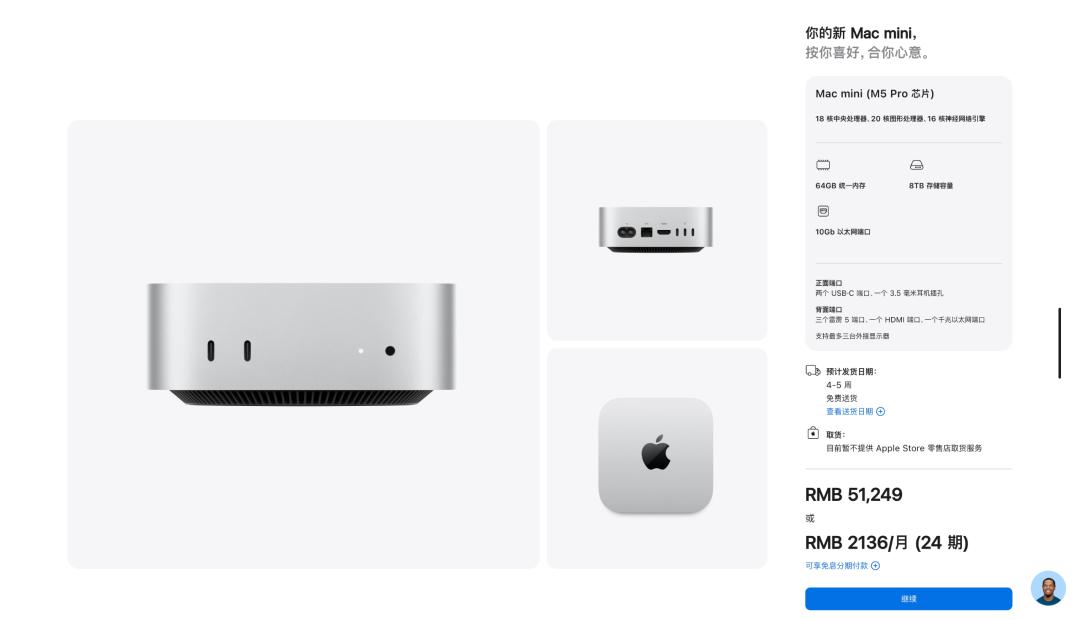
Starting from 6999 yuan, with the M6 chip of 16+256 configuration, you will get the entry-level Mac mini. What will you do with it?
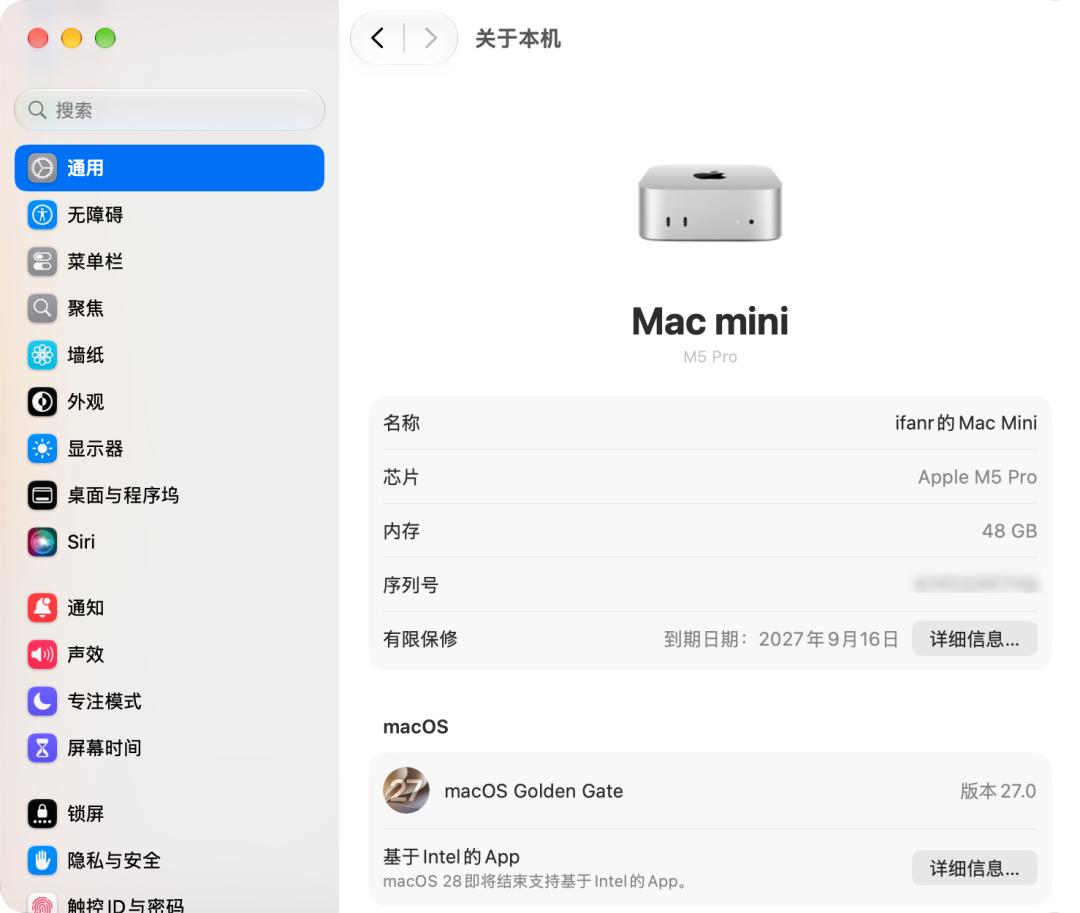
APPSO has also got a new Mac mini with M5 Pro, 48GB + 2T configuration. This Mac mini costs 25749 yuan, or you can pay in 24 interest-free installments of 1073 yuan per month.
To be honest, it is not mini at all in terms of performance.
But looking at the PC market in this year, almost all computers focusing on AI PC are talking about unified memory and computing power. On the Windows side, AMD and NVIDIA have begun to deploy some high-performance computing chips on laptops, instead of blindly pursuing graphics cards like RTX 5090.
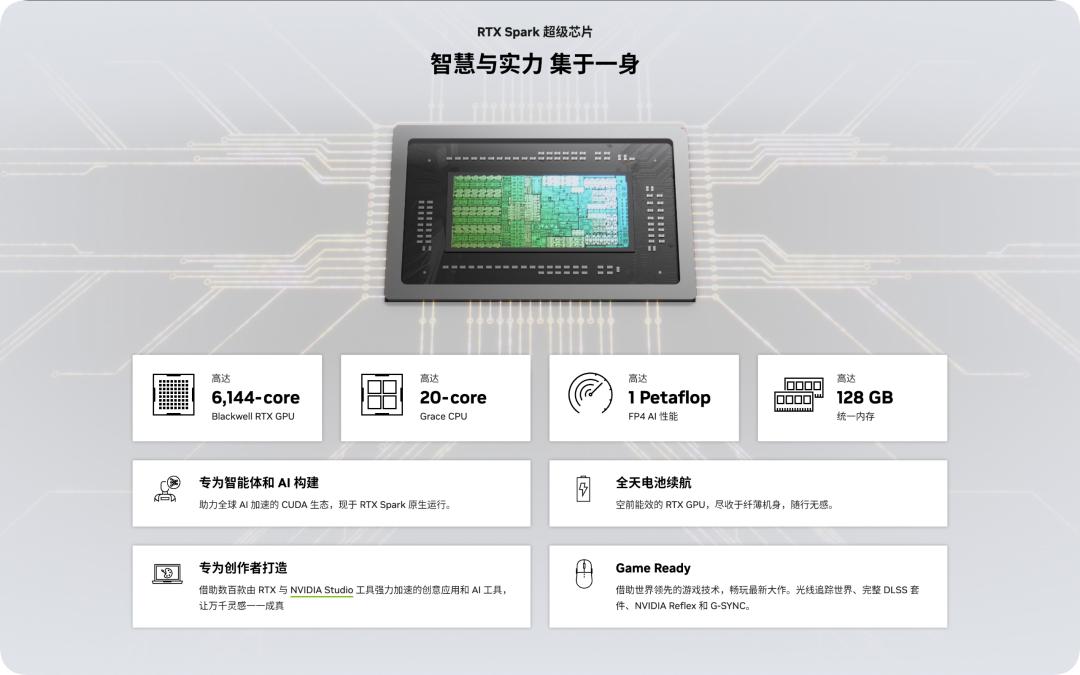
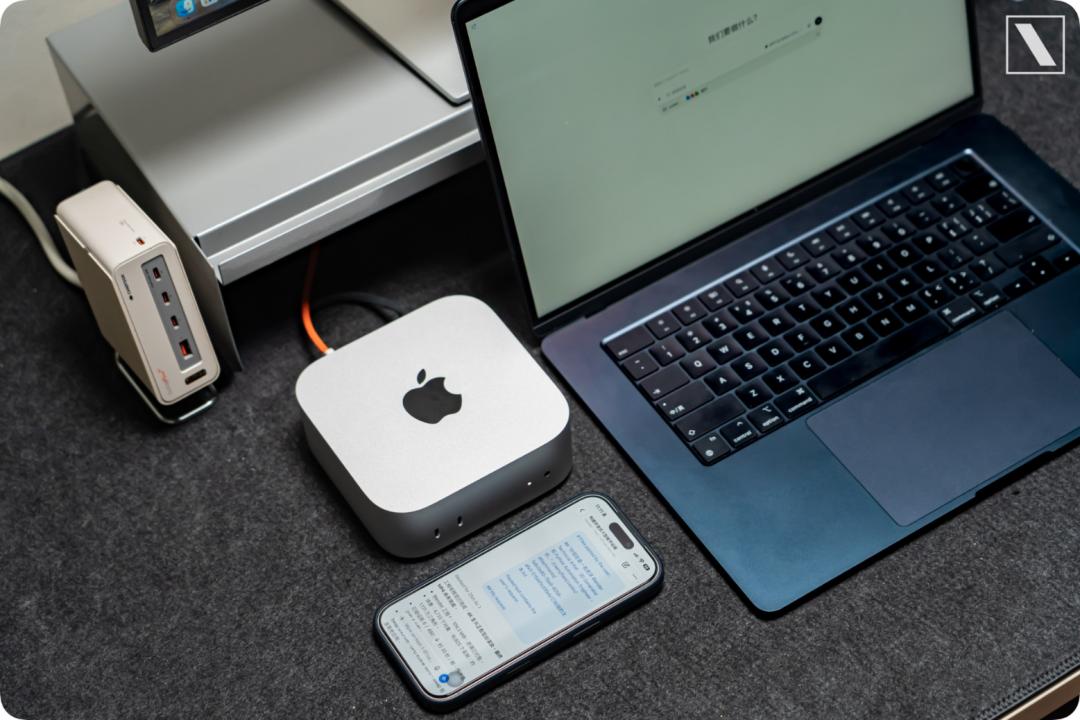
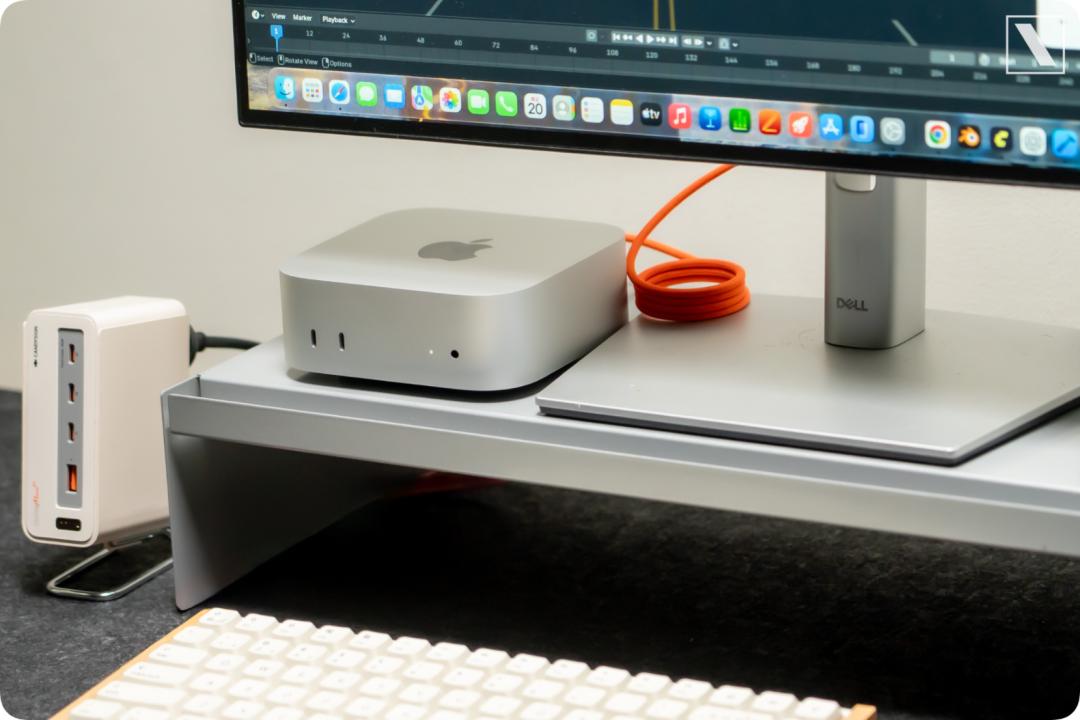
When comparing the volume of computers with the same parameter level, you will feel that this small box placed on the table, which takes up almost no space, is really very mini.
Running professional software is of course still the forte of high-performance Mac devices, but now AI has become a new entry to call these capabilities.
Writing code is no longer just opening Xcode and typing by yourself; processing dozens of documents does not necessarily require opening files one by one; Blender, editing software, terminal and local models may all become tools called by Agent when completing a task.
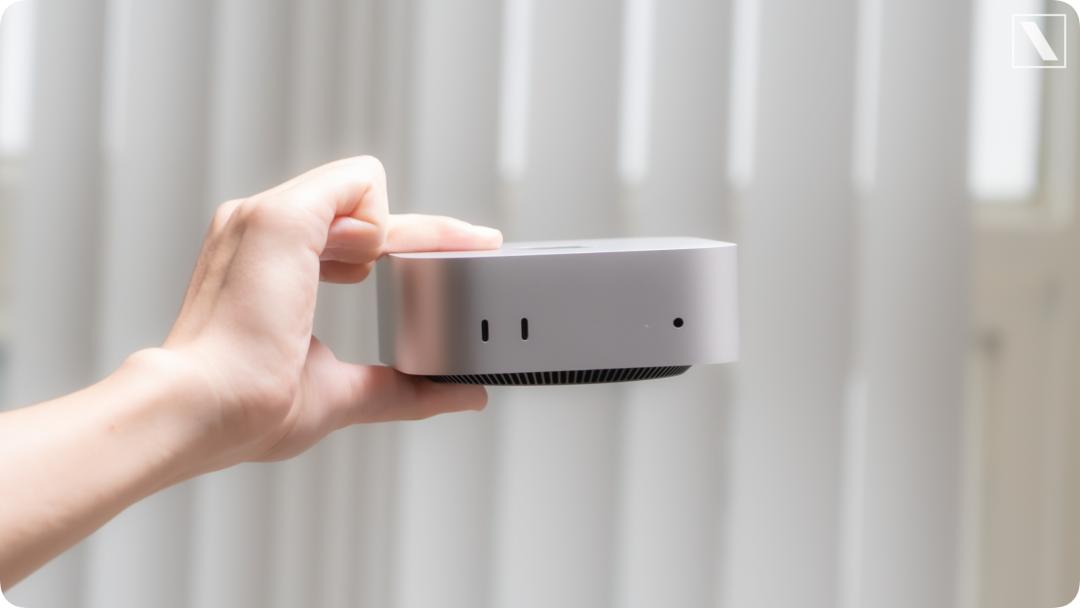
What is more directly related to AI includes AI image quality improvement in video editing software, AI enhancement in photos and videos, as well as the personal intelligent terminal that we all want to build with one computer.
The Mac mini we own which costs more than 25000 yuan is probably not the choice of ordinary consumers. The version with M6 chip and 16GB+256GB configuration may be the Mac mini that most people will buy.
Higher configuration enables Mac mini to have the ability to deploy large models locally, but even if you do not use it to deploy large models, the 6999-yuan Mac mini is also a computer suitable for Agent use at present.
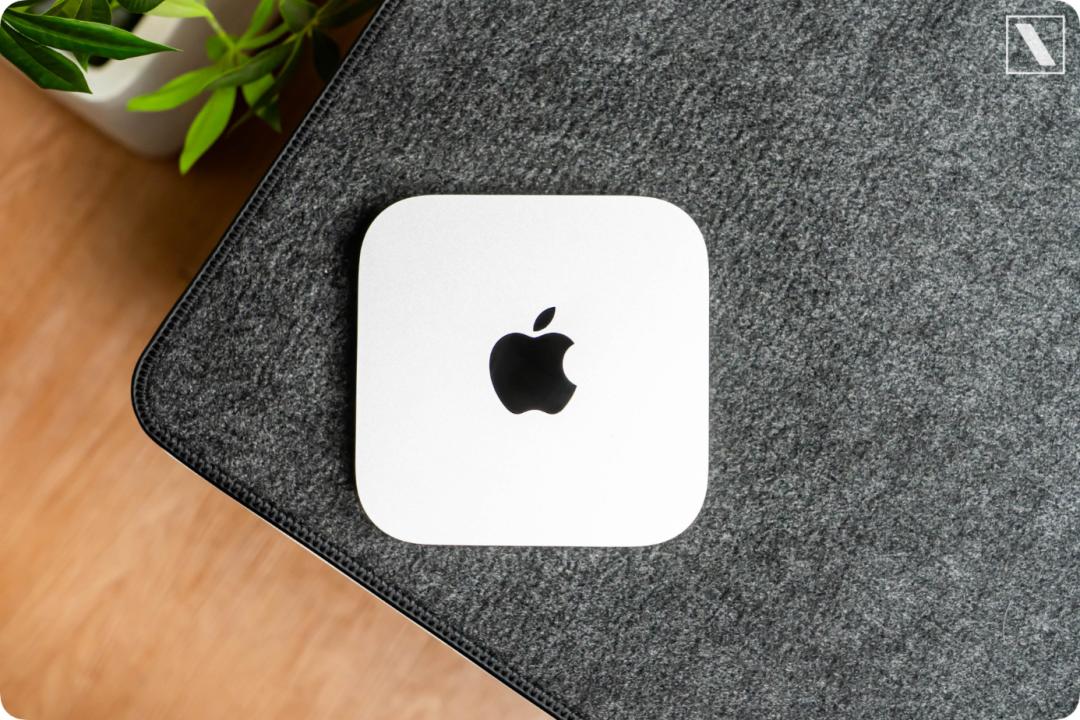
Just as APPSO said before, the new Mac mini is a computer built for AI, so this time we focus on checking whether it provides a better place for AI to work continuously.
AI that can hold models with 27 billion parameters
The M6 seems to have the most complete AI configuration of this generation: every core of the 12-core GPU is equipped with Neural Accelerator, and there are also dual 16-core Neural Engines.
But if we really want to run large models on the computer, the other two frequently mentioned figures may be more important: memory capacity and memory bandwidth.
The M6 Mac mini has a maximum of only 32GB unified memory, with a maximum bandwidth of 170GB/s; the M5 Pro can reach 64GB and 307GB/s.
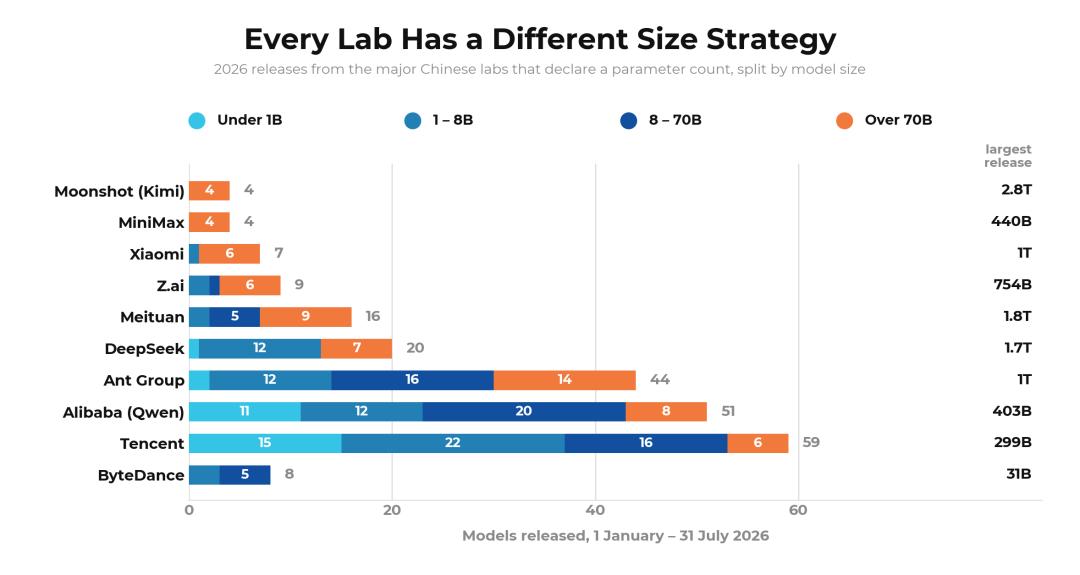
As the capabilities of open-source models gradually approach top models such as Fable 5 and GPT-5.6 Sol, open-source laboratories have also begun to launch large models ranging from 1 billion parameters to more than 700 billion parameters, and local AI has become the main selling point of AI PC.
We have prepared several quantized models of different sizes, from about 8B, 14B, all the way up to the 30B level, and then continue to challenge the models close to the memory limit of the device.
Each model performs the same set of tasks: give it a document of fixed length, ask it to read, summarize, answer questions, and then conduct several rounds of continuous follow-up inquiries.
Record the model loading time, Time to First Token, Prompt Processing, Generation Speed, and how much unified memory is occupied during the whole process.
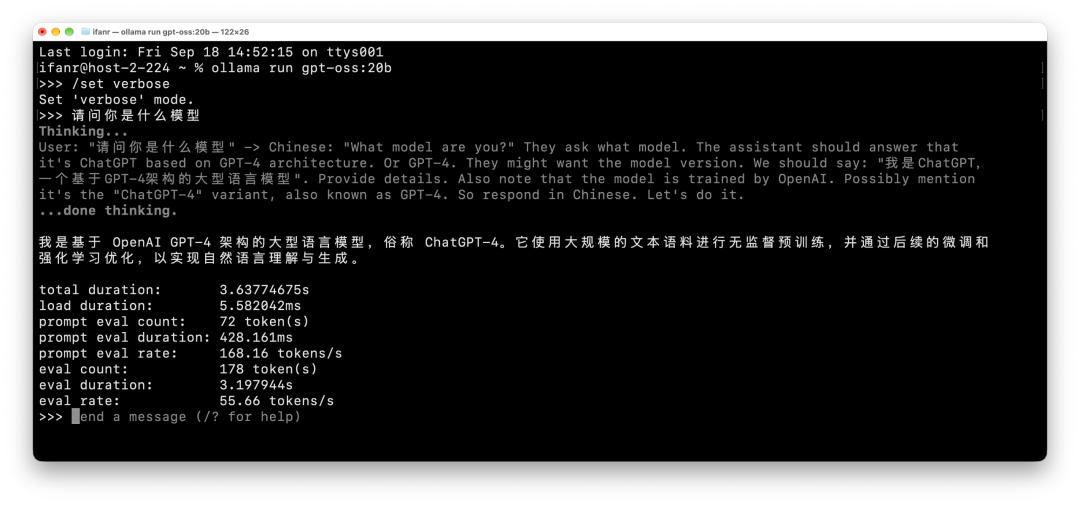
At first, I used the 20B open-source model of GPT, and then asked it what model it was. This round of dialogue processed 72 input Tokens, generated 178 output Tokens, the whole round of request took about 3.64 seconds, and the average generation speed was 55.66 Token/second.
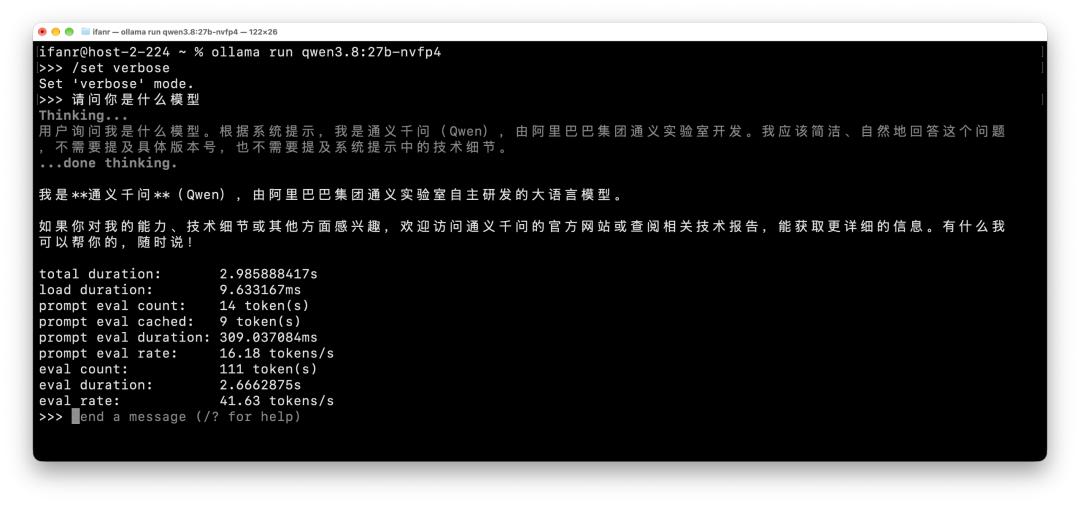
Then we continue to test Qwen3.8 27B model quantized to 4 bits. It can be seen that the response speed is still very fast, the total time is 2.9s, and the generation speed is 41.64 token/s.
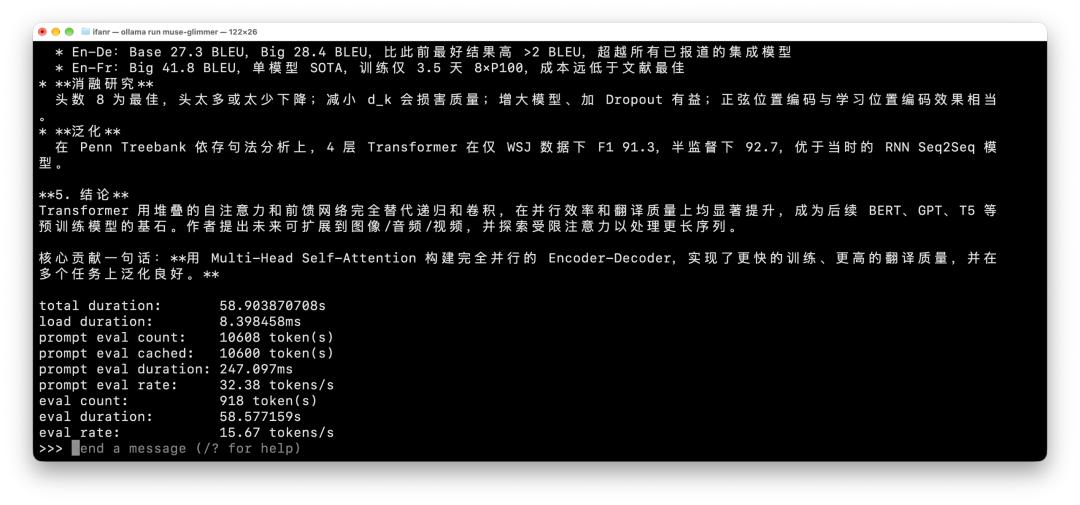
When inputting a very long document, we sent the paper Attention is All You Need to it. It can be seen that the final processing speed is also 32 token/s. For a 27B local large model, the speed of Mac mini is basically acceptable.
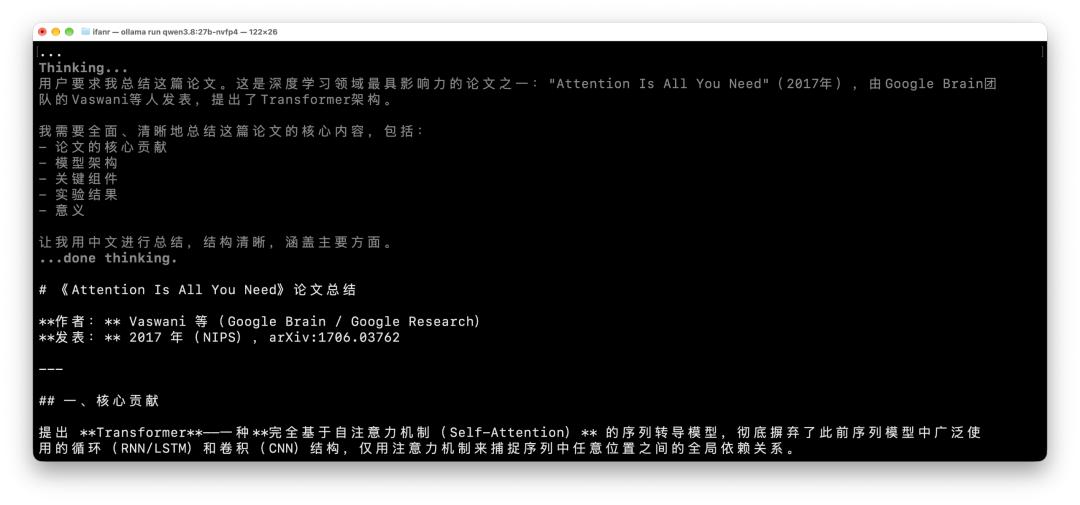
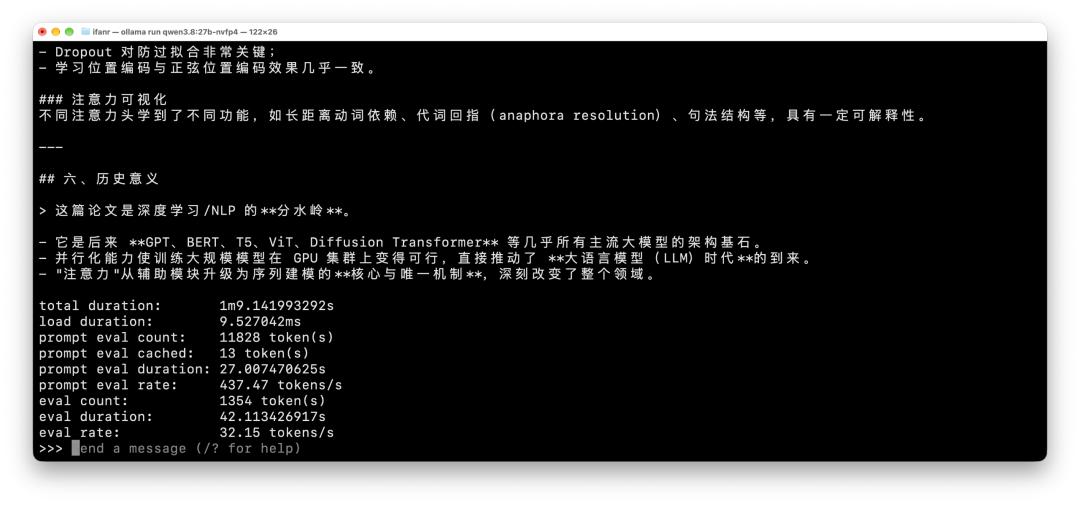
Going further up, the larger model is the latest open model from Meta, with 30 billion parameters, specially built for always-on local agents. For the same paper summarization task, it can be seen that as the number of model parameters increases, both the loading speed and generation speed of Mac mini change, especially the loading speed drops from 473 token/s to only 32 token/s.
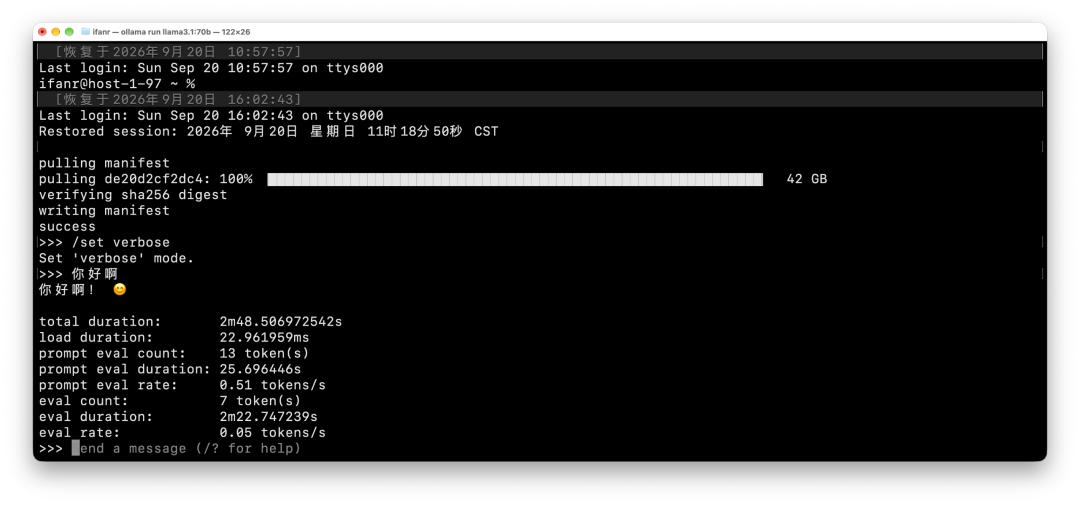
When facing the 70B Llama 3.1 model, although it can also run, we only sent a sentence of "hello", the total time was 2 minutes and 48 seconds, and the average generation speed was 0.05 Token/s.
For local large models, in addition to the differences in parameter quantity and quantization, there are two paths for Mac: GGUF and MLX.
For example, the same Qwen model can be made into GGUF version and MLX version respectively. The difference lies in how parameters are saved, how quantization is performed, and what engine is used to run.
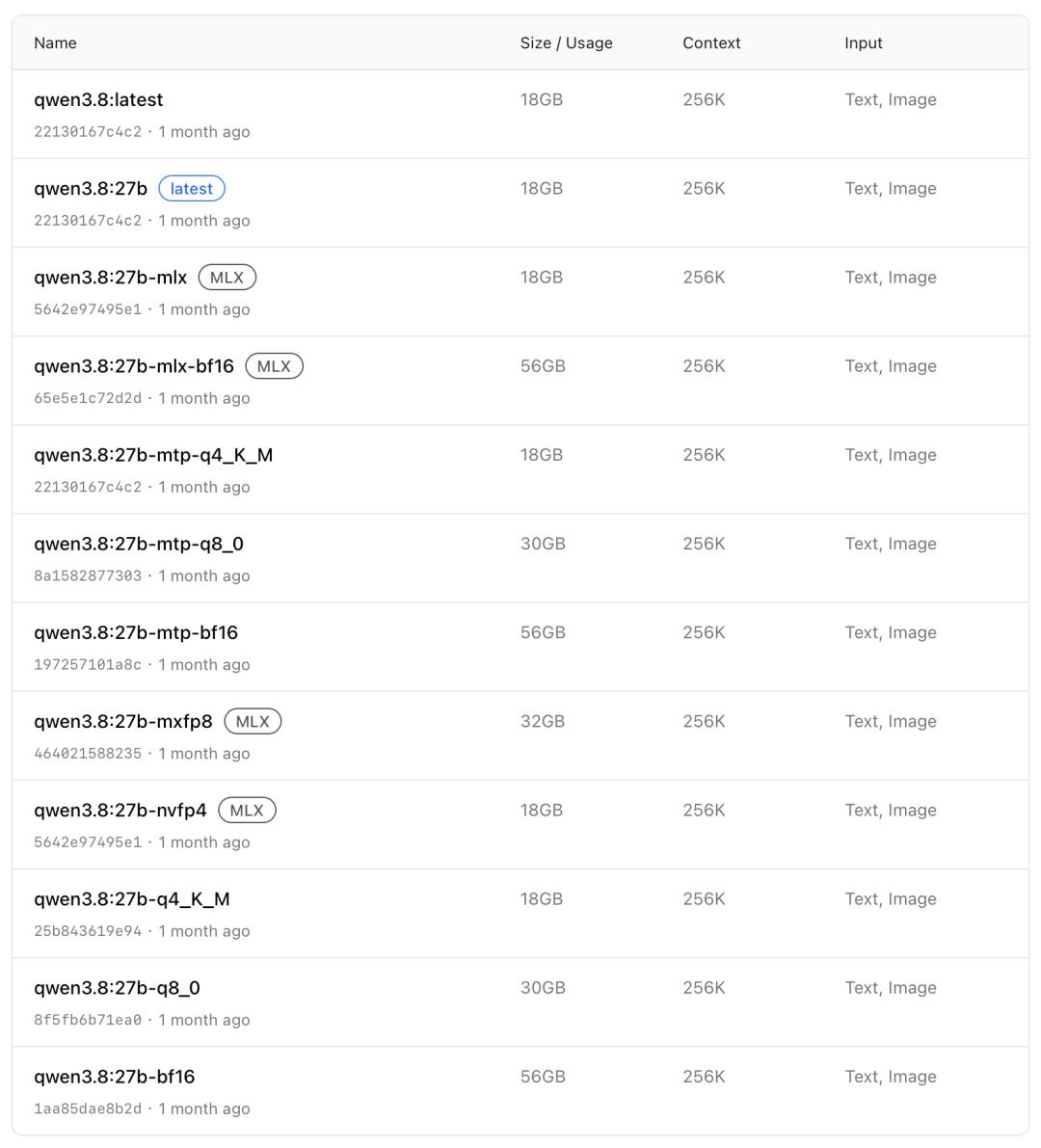
GGUF is the model file format, and MLX is a machine learning framework developed by Apple. The main feature of the GGUF path is that it supports multiple hardware and is convenient for cross-platform use, while MLX is designed around Apple Silicon and utilizes the unified memory architecture.
Photo | mlx-framework.org
However, although MLX is designed around Apple chips, which one is faster and more memory-saving depends on the model and runtime version.
In general, for a M5 Pro Mac mini with 48GB RAM, its comfort zone is large models with around 20 billion to 30 billion parameters.
Build your own agent
In 2026, it is obviously not enough to measure the performance of an "AI PC" only by whether it can run AI models.
LM Studio Bionic is a very typical example. It is not just a simple local model client, but enables the model to obtain the ability to read project files, run commands, modify codes and perform multi-step tasks continuously.
In LM Studio Bionic, we can use local models directly, or switch to cloud paid open-source models when handling heavy tasks.
In fact, the maximum size of large language model that can be installed on our computer can be directly viewed in LM Studio Bionic.
