ByteDance, Baidu, Hengrui and Novo Nordisk are making inroads into the commercialization of AI pharmaceuticals.
Leading pharmaceutical giants and top internet companies are all scrambling to make layouts in AI drug R&D.
Multinational pharmaceutical firm Novo Nordisk officially announced its partnership with Anthropic to carry out in-depth R&D cooperation on the Claude Science large scientific model, comprehensively upgrading AI capabilities from the previous automation of clinical documents to the source R&D links of new drugs such as cutting-edge target mining and experimental protocol design.
Domestically, Anew Labs, an AI innovative pharmaceutical company independently incubated by ByteDance, has completed a $290 million angel round of financing, with a post-investment valuation of $1.5 billion, equivalent to about 10 billion yuan. According to Tianyancha, its investors include HSG, GL Ventures, and IDG, among others.
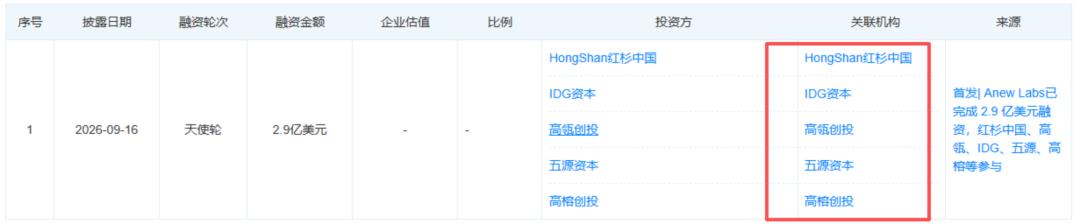
Screenshot from Tianyancha
In recent years, traditional pharmaceutical companies such as Eli Lilly, AstraZeneca, Merck & Co., and Hengrui Medicine have continued to increase their investment in AI drug discovery, and top internet companies including Baidu and Tencent have also entered the track one after another.
The continuous entry of giants has reshaped the underlying rules of the industry, and the industry is gradually bidding farewell to the extensive stage of concept speculation. The "small workshop era" of AI pharmaceutical, where financing and publicity could be achieved only with a small team, a single-point algorithm model, and virtual molecular demonstration, has gradually come to an end.
01. The industry has undergone a major reshuffle
Before 2022, it was the wild growth stage of AI drug R&D. At that time, the industry threshold was relatively low. An algorithm team of several people could package an AI new drug R&D project to get financing with a set of molecular generation models and a number of simulation data, and rise rapidly riding the trend of the concept.
In the early stage, many start-up teams were dominated by computer algorithm talents, lacking core teams of medicinal chemistry and biology, and no self-built wet experiment platform. AI can generate thousands of candidate molecules in a short time in the computer, but it cannot predict the solubility, toxicity and metabolic stability of molecules in vivo, let alone replace animal experiments to verify drug efficacy.
The capital popularity reached its peak in 2021, and then began to cool down.
According to CB Insights data, large financing rounds of more than $100 million in the global AI drug discovery sector accounted for 70% of the total track financing in 2021, dropped to 30% in 2022, and there were no large financing rounds of more than $100 million in the first half of 2023.
According to data from Pharma Intelligence, the global financing related to AI + drug R&D dropped from $6.2 billion in 2022 to $3.6 billion in 2023.
After the capital ebb, the real test of the industry has gradually come. The shortcomings of the "small workshop" model have been gradually exposed, a large number of projects have been cleared out, and the tracks at home and abroad have begun to reshuffle.
Domestic Superdimension Pharma received a ten-million-level angel round of financing in 2021, focusing on AI new drug innovation and benchmarking against leading enterprises in the industry. Although the team was equipped with talents related to drug R&D, it never managed to build its own experimental site, and failed to deliver implementable R&D results and project progress for a long time, and finally cancelled and exited in 2024.

Screenshot from Tianyancha
In the overseas track, Verge Genomics, an American AI pharmaceutical company, once relied on its AI platform to focus on R&D of neurological new drugs, and its core pipeline was advanced to clinical trials for ALS.
This candidate molecule screened by AI performed well in preclinical data, but failed to reach the preset efficacy endpoint after entering Phase 1b clinical trials, and the R&D was forced to terminate. After the pipeline setback, the enterprise could only drastically shrink its self-developed new drug business.
When a large number of small and medium-sized start-up companies were cleared out and the industry squeezed out bubbles, the two main forces of the world's leading pharmaceutical giants and top internet companies entered the market one after another, gradually replacing scattered small teams and starting to rewrite the competition rules of the industry.
02. Pharmaceutical giants and top internet companies develop in a differentiated manner
The two main camps have chosen different strategies.
Traditional pharmaceutical giants at home and abroad are used to taking AI as a handy tool, purchasing mature large models and embedding them into their mature R&D systems.
Represented by leading domestic and foreign innovative pharmaceutical companies such as Novo Nordisk, Eli Lilly, AstraZeneca and Hengrui Medicine, they generally adopt a robust strategy of empowering the existing R&D system with AI. After years of accumulation, such enterprises have built a complete R&D pipeline, clinical team and commercial network, with a mature industrial closed loop.
Traditional new drug R&D takes several years from target discovery to marketing, and a large amount of cost is consumed in repeated trial and error.
Therefore, they did not rashly invest in high-risk exploration of new targets, but introduced external large scientific models or built their own AI drug discovery platforms to embed into the original R&D process.
Among them, AstraZeneca has long cooperated with enterprises such as Recursion to use AI to assist target mining and clinical risk prediction, so as to improve the accuracy of early R&D. Eli Lilly cooperates with AI platforms such as Insilico Medicine to focus on small molecule screening and drug synthesis process optimization. Domestic Hengrui Medicine has self-developed the Lingzhu AIDD platform, which iterates models based on its own R&D data to fully empower target discovery and drug design.
For traditional pharmaceutical companies, AI is mainly used for auxiliary work such as literature retrieval, deduction of drug mechanism of action, experimental protocol design, and clinical data collection. The essence of this model is to superimpose AI tools on the mature pharmaceutical industry to improve efficiency, without changing the core R&D mode of pharmaceutical companies, with controllable risks and short implementation cycles.
According to industry statistics, AI assistance can compress the cycle of the early molecular screening stage from several months to several weeks, and significantly reduce the cost of early screening and trial and error.
Different from traditional pharmaceutical companies that improve efficiency, top internet companies choose to rely on computing power and capital to directly bet on source innovation.
Internet enterprises have computing power infrastructure, algorithm capabilities and sufficient funds, but generally lack the accumulation of pharmaceutical industry such as medicinal chemistry R&D, wet experiment verification and clinical transformation, and do not have a ready-made complete closed loop of new drug R&D.
As a result, each company has taken a different layout path from traditional pharmaceutical companies.
Baidu has self-developed a large life science model and incubated BioMap, focusing on AI protein and small molecule drug R&D. Tencent adopts the two-pronged strategy of "investment + self-development", strategically investing in XtalPi and Insilico Medicine externally to bind external AI pharmaceutical industry resources through equity investment; internally, it relies on the CloudPharma platform to self-develop algorithms, and lays out relevant patents in the GLP-1 polypeptide track.
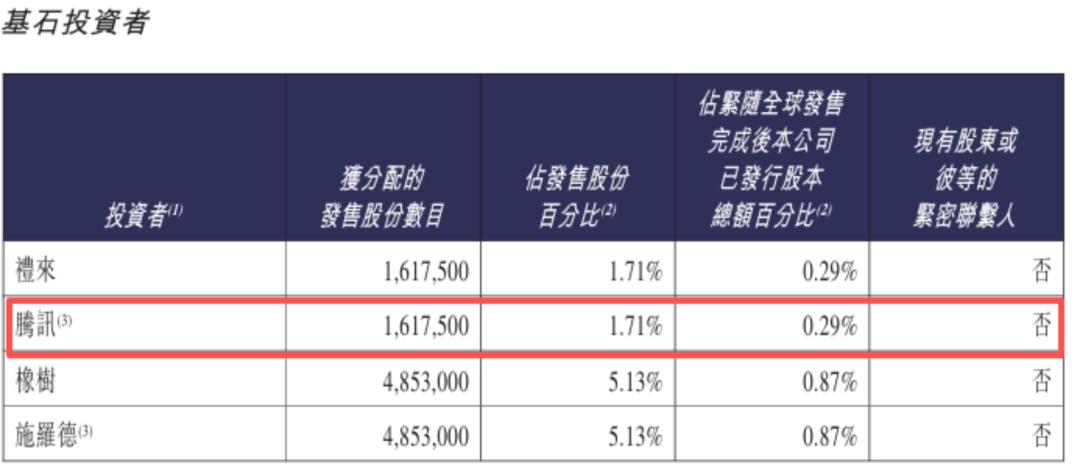
Screenshot from Hong Kong Stock Exchange announcement
Coupled with ByteDance's move to split its AI pharmaceutical business independently to establish Anew Labs, the camp of large companies entering the AI pharmaceutical track is still expanding.
The core advantage of top internet companies' strategy lies in their abundant capital reserves, which enables them to cut into the R&D of new targets with high barriers. However, the shortcomings are also obvious: the failure rate of new drugs in the clinical stage remains high all year round, and the pipeline verification cycle is very long, which requires continuous capital investment, testing the long-term strategic determination of enterprises very much.
The competition logic of the AI pharmaceutical track is also changing — the focus of competition is no longer the scale of financing, but the ability of commercial implementation. Even if AI can shorten the early R&D cycle of drugs, the ultimate test of the industry still falls on the realization of pipeline value.
03. Who will take the lead in the commercialization of AI pharmaceuticals?
At present, the industry has achieved practical results that prove the front-end value of AI. In July 2026, the first original drug in China developed with AI assistance — Isterovir Hydrochloride Tablets (Aipusovir) jointly developed by Westlake University and Westlake Pharmaceutical, was successfully approved for marketing.
From target exploration to final approval, it only took three and a half years for this drug. Relying on AI's ultra-high-throughput screening capability, the R&D team quickly locked the optimal compound from a candidate molecular library of hundreds of millions, verifying the practical value of AI in compressing the early R&D cycle and improving screening efficiency.
However, front-end technological breakthroughs do not mean that commercialization is successful. The development path of Hong Kong-listed leading firm Insilico Medicine shows part of the current commercial status of AI pharmaceutical companies.
As a benchmark enterprise of AI pharmaceuticals in China, Insilico Medicine has explored a dual-track commercial model of "platform technology licensing + self-developed pipeline promotion", which is also the mainstream survival path in the industry at present.
In the first half of this year, Insilico Medicine achieved revenue of $106 million, a significant year-on-year increase of 287.2%. The revenue mainly came from down payments and milestone income from external pipeline cooperation, and AI R&D platform technical services served as the auxiliary income component.

Screenshot from Hong Kong Stock Exchange announcement
This financial report with impressive growth rate proves that AI technology has the ability to realize commercial value immediately. However, short-term BD revenue can only solve the cash flow problem of enterprises, and cannot define the long-term value of the industry.
Insilico Medicine's core pipeline ISM001-055 is the world's first innovative drug with a new target discovered by AI and molecular design completed by AI, which has been advanced to Phase 3 clinical trials. It is indicated for idiopathic pulmonary fibrosis, and is currently in the clinical promotion stage. It is expected that key Phase 3 data will be read out in 2029.
This also means that even though Insilico Medicine has realized technology monetization and rapid revenue growth, the truly high-value, marketable self-developed new drugs still have a long cycle before commercialization after being approved for marketing.
Looking at the entire AI pharmaceutical track, simply selling AI platform software has a low revenue ceiling and weak customer stickiness; while the potential profit space of self-developed pipelines is huge, a single clinical failure may devour the R&D investment of the enterprise for many years.
For this reason, most leading enterprises will choose to stabilize short-term cash flow through BD licensing, and at the same time lay out self-developed pipelines to pursue long-term commercial returns.
AI technology models can accelerate the starting point of new drug R&D, but the players who stand out in this track are most likely the ones who take the lead in realizing clinical transformation and commercial implementation.
Note: The article materials are from official reports and public information, and the views are for reference only | Some pictures are from the Internet, please notify us to delete them if there is any infringement.
This article is from the WeChat official account "Yuan Media", author: Hu Qingmu, published with authorization from 36Kr.