Why has a pack of tissues become a massive hit in Southeast Asia?
Paper towels are arguably one of the products that best test the basic capabilities of a cross-border business.
As a relatively mature daily consumer good, it has a clear product differentiation scope and price range, plus distinct characteristics in terms of unit value and volume. Therefore, when expanding from Chinese factories to overseas markets, higher requirements are raised for the cost and efficiency of links such as ocean shipping, customs clearance, warehousing and last-mile delivery.
Yet a brand called RoyoPanda has been growing its paper towel export business in the Philippines over the past two years. Its parent company, Royo Tianfu Industrial Group, was founded in 2005 and has been deeply engaged in the paper industry for more than 20 years before deciding to go global.
From a leading player in a niche industry to a new cross-border entrant, what RoyoPanda has experienced is far more than a simple channel expansion.
01. From Selecting Bestsellers to Penetrating the Market
When deciding to go global in 2024, the first question RoyoPanda faced was not "what to sell" but "where to sell".
Yang Jingcheng, Director of RoyoPanda's Overseas Business Division, told us that there is a core set of judgment logic behind the final choice of the Philippines: whether the market demand is large enough, whether there is still room for new entrants in the existing supply, and whether the enterprise's original advantages in the Chinese supply chain can be realized locally.
In terms of the overall market, the Philippines is indeed still in a stage of rapid e-commerce expansion. According to *e-Conomy SEA 2025* released by Google, Temasek and Bain, the GMV of the Philippines' digital economy reached 36 billion US dollars in 2025, of which the e-commerce GMV was about 24 billion US dollars. E-commerce has become the largest component of the Philippines' digital economy.
In the early-stage research, RoyoPanda's overseas team paid more attention to the specific gap between supply and demand, and whether its own manufacturing capacity can be transformed into product competitiveness. After the market was determined, the team selected Shopee as its core platform. Leveraging the platform's momentum, RoyoPanda was able to enter the Southeast Asian market at an extremely low threshold and cost, test products in small batches relying on the mature domestic supply chain, and find SKUs with scaling potential.
The real problem emerged after sales began to grow.
For paper towels, there is a whole cross-border logistics chain between "consumers are willing to buy" and "the business can operate sustainably in the long run".
02. Solving Logistics Bottlenecks and Realizing Localized Warehousing
When RoyoPanda first entered the Philippines, it adopted the cross-border direct mail model. After consumers placed orders, the products were transported from China to a transfer warehouse, followed by cross-border transportation, customs clearance and local delivery. Under this model, the whole cycle from consumers placing orders to receiving goods once exceeded half a month.
For paper towels, slow delivery is not the only problem.
In the logistics industry, goods whose volume is relatively large compared to their actual weight are usually called "volumetric cargo". When calculating postage, carriers usually compare the actual weight with the volumetric weight and charge the higher of the two values. Therefore, although a carton of paper towels is not heavy, it may incur high logistics costs as it takes up a large amount of transportation space.
Operating data provided by RoyoPanda shows that in the early stage of the business, the cross-border logistics cost of some products once accounted for about 40% of the selling price. For high-frequency consumer paper products, this cost structure can hardly support large-scale growth. After the early test was completed, changing the cross-border logistics method of goods became an extremely urgent problem.
The team then tried third-party local warehouses for a short period of time, shipping goods to the Philippines in advance and then delivering them to consumers locally. However, after the order volume continued to expand, different service providers still needed to cooperate for unloading, labeling, inventory synchronization, packaging, last-mile delivery, return and exception handling, so RoyoPanda needed a more powerful partner.
This was almost a decision that did not require much hesitation. RoyoPanda finally chose to connect its core SKUs to Shopee's official warehouse, letting Shopee's platform system take charge of warehousing and fulfillment, which brought a smoother and more complete experience in process standardization, campaign support, peak season stability and after-sales guarantee.
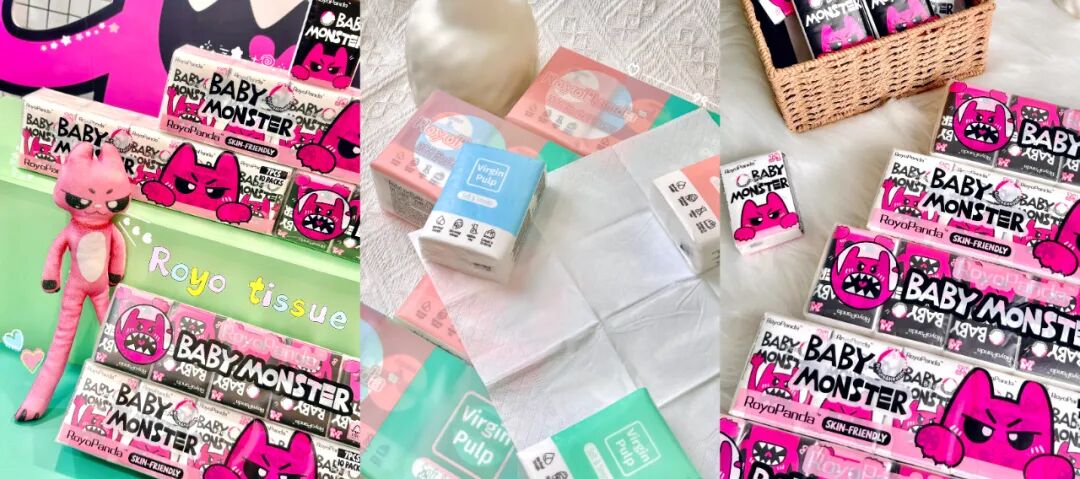
The significance of this step lies in transforming the original "order-by-order cross-border" model into "batch cross-border + localized fulfillment". Cross-border transportation is moved to the pre-order stage: goods are first transported to the Philippines in the form of batch inventory, and after consumers place orders, they can be delivered directly from local warehouses, which greatly improves the fulfillment efficiency.
After fully accessing Shopee's localized fulfillment service, RoyoPanda's logistics cost ratio dropped from about 40% in the early stage to 10%-18%, and delivery can be completed in as fast as 2 to 3 days in some regions. Meanwhile, the order volume increased by more than 10 times.
Of course, as the business operation continues, product maturity, price adjustment, platform campaigns and brand awareness may all affect the final order volume. What local fulfillment really solves is the fundamental bottleneck in the process of brand scaling: when the order volume continues to grow, fulfillment capacity will no longer be an obstacle to business development.
The importance of logistics capabilities is also on the rise as can be seen from the platform's own operating data.
The 2025 annual report of Sea, Shopee's parent company, shows that Shopee's annual GMV reached 127.4 billion US dollars, a year-on-year increase of 26.8%; the total number of orders reached 13.9 billion, a year-on-year increase of 27.2%. When explaining the growth of GMV, the company listed service improvements such as "faster delivery" as one of the reasons. At the same time, as the order volume grows, Shopee's investment in logistics capabilities has also increased synchronously. Faster fulfillment efficiency has effectively supported more demand. On the day of this year's 9.9 mega sale, the volume of cross-border "instant delivery" orders surged 9 times compared with the beginning of the year.
It can be seen that the competition among cross-border platforms is extending from simple traffic matching to the fulfillment links after transactions.
03. Changes in Operation Methods Illustrated by the 9.9 Mega Sale
Pre-storing goods in official warehouses does not mean that all problems are solved.
When goods are shipped overseas in advance, the operation logic of cross-border sellers also changes accordingly. Under the cross-border direct mail model, sellers' inventory is mainly stored in China, and goods are shipped after orders are generated. Localized fulfillment, however, requires enterprises to predict the sales volume in the next month or even two months before orders come in, and complete production, booking, ocean shipping and warehousing in advance. The operation mode has shifted from only focusing on orders to simultaneously tracking sales volume, inventory turnover and cash flow.
Take this year's Shopee 9.9 mega sale as an example. As the annual "major exam" for sellers, RoyoPanda started to arrange stock preparation and shipping schedules as early as the end of July. In addition, production cycles, ocean shipping time, possible shipping delays, platform campaign rhythms and local warehouse inventory all need to be taken into consideration in advance. Thanks to a number of seller support initiatives and brand new operation functions launched by Shopee, RoyoPanda's order volume on the day of the 9.9 mega sale reached about 6 times the usual level. As a top paper towel seller in Shopee's Philippine market, it has maintained steady growth even on a high base, which fully demonstrates the high performance of its operation.
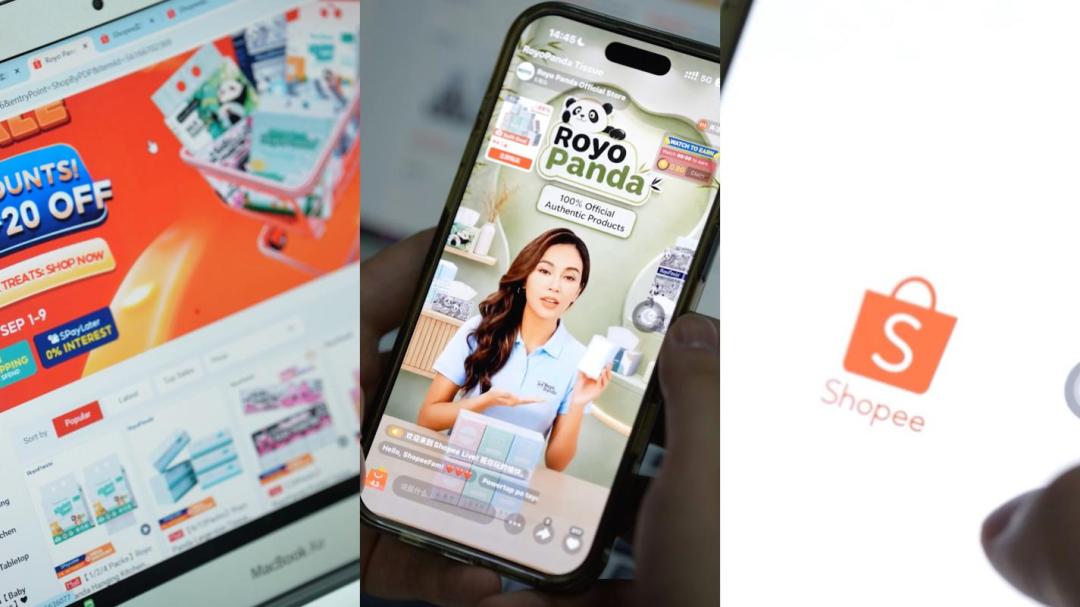
In the past, the core task of a cross-border enterprise might be to find bestsellers: which products have price advantages, which keywords have high traffic, and which SKUs have the potential to achieve rapid sales growth. But now, enterprises need to take into account sales forecasting, inventory turnover, capital occupation and supply chain response speed at the same time. Insufficient stock preparation may lead to stockouts of bestsellers during the mega sale; excessive stock preparation, on the other hand, will tie up capital for a long time and generate extra warehousing costs.
As a result, the smallest unit of cross-border competition has begun to change. What enterprises compete for is no longer just whether a certain SKU can become a hit, but whether the entire system covering production, logistics, inventory and sales can operate stably.
After verifying the system capabilities in the Philippine market, RoyoPanda has begun to expand from single-category household paper to home cleaning daily necessities, and plans to gradually open up other Southeast Asian sites such as Singapore and Malaysia.
RoyoPanda's success is only a microcosm of the paradigm shift in cross-border e-commerce.
For a long time in the past, cross-border e-commerce naturally favored products with high unit value. The emergence of the localized fulfillment model provides a new solution: through batch cross-border transportation, inventory pre-positioning and local delivery, the original long-distance cross-border chain that runs through each individual order is split, making it possible to sell heavy and volumetric goods overseas.
Paper towels are a very typical category in this regard. The same goes for home cleaning products, maternal and child products, household items, and other goods that are sensitive to volume, delivery time and stable supply. Demand is not non-existent. What really determines whether it can become a viable cross-border business is whether the entire fulfillment chain can achieve a sound financial balance.
This may be a more accurate way to understand the "second half of cross-border e-commerce" today: the journey of going global is both far and near, and no one can succeed alone. Going local and finding the most suitable partner is the most important thing.