Layout the ASEAN token offshore general hub: How does Runjian Co., Ltd. deliver Token services to ASEAN?
On September 16, the Pinglu Canal, a landmark mega infrastructure project, was officially opened to navigation.
Stretching 134.2 kilometers from Hengzhou, Nanning all the way south through Qinzhou to the Beibu Gulf, this canal opens a new river-sea access route for Guangxi and the broader southwestern region of China.
With the physical corridor opening to the sea, discussions on another "corridor" kicked off in Nanning two days later.
On September 18, the 2026 China (Guangxi) - ASEAN Artificial Intelligence Application Ecosystem Exchange Conference was held in Nanning. During the event, Rujian Co., Ltd. officially released the China-ASEAN (Wuxiang Cloud Valley) General Token Export Hub Strategy, aiming to answer a key question: how to rely on Guangxi's geographical location, network and industrial foundation facing the ASEAN region to truly bring Token services to the ASEAN market?
AI going global is far from a new topic.
Over the past two years, from model export, computing power export to application export, a growing number of enterprises have been seeking new incremental markets overseas. But when it comes to practical implementation, how do the "digital goods" in the digital era flow across borders? Who will build this corridor? Who can set the rules, and who can guarantee security?
These issues have become particularly urgent in 2026.
On one hand, domestic large model capabilities are iterating rapidly, intelligent computing centers are accelerating construction, and the supply of computing power is shifting from shortage to relative surplus, making going global to explore incremental markets an inevitable choice. On the other hand, the growth rate of ASEAN's digital economy has exceeded most people's expectations. The *e-Conomy SEA Report* jointly released by Google, Temasek and Bain shows that the GMV of ASEAN's digital economy will rise from about 400 billion US dollars in 2015 to an estimated over 3 trillion US dollars by the end of 2025. The theme of the report has also shifted from the early "can it grow" to "how much change AI can bring".
However, a complete set of infrastructure lies between growth and actual implementation. ASEAN is home to 680 million people, more than a dozen official languages and hundreds of ethnic languages, with data scattered in separate government systems and enterprise databases, and the data regulatory frameworks of various countries differ significantly.
To bring AI capabilities to the region, three unavoidable issues need to be addressed: where does the computing power come from? How to deliver the services? How to manage security? No single enterprise can answer these questions alone.
Xu Wenjie, President of Rujian Co., Ltd., clearly explained the positioning of this ecosystem exchange conference in his speech, "We hope to further connect China's intelligent supply capacity with the real industrial demand of ASEAN." He mentioned that Rujian Co., Ltd. has a service network and engineering team covering 29 provinces across China and 11 ASEAN countries. "Entering the Token era, we will closely connect this industrial-site-oriented service capability with energy, computing power, models, platforms, agents and industry applications, and look forward to working with ecological partners to jointly promote the Token export initiative."
As the organizer of the conference, Rujian Co., Ltd. organized a series of activities under the "1+3+1+1" model, including one strategic launch event for the ASEAN Token Export General Hub, three industry sub-forums covering AI+FDE, AI hospital development, and AI intelligent security practical drills, one OPC community sub-forum, and one Token Ecosystem Application Alliance exhibition.
From Token export to scenario implementation, from AI security to ecosystem construction, this Nanning-based listed company is trying to run through the whole process of Token export end to end.
Where are the bottlenecks for Token export?
There has long been a structural mismatch between China's computing power production capacity and ASEAN's computing power demand. Domestic intelligent computing centers are being built at an accelerated pace, and computing power supply is growing rapidly; the AI infrastructure in most ASEAN countries is still in the initial stage, with a prominent computing power gap. The reality is very clear: there is no lack of demand, what is missing is the corridor that can turn demand into business.
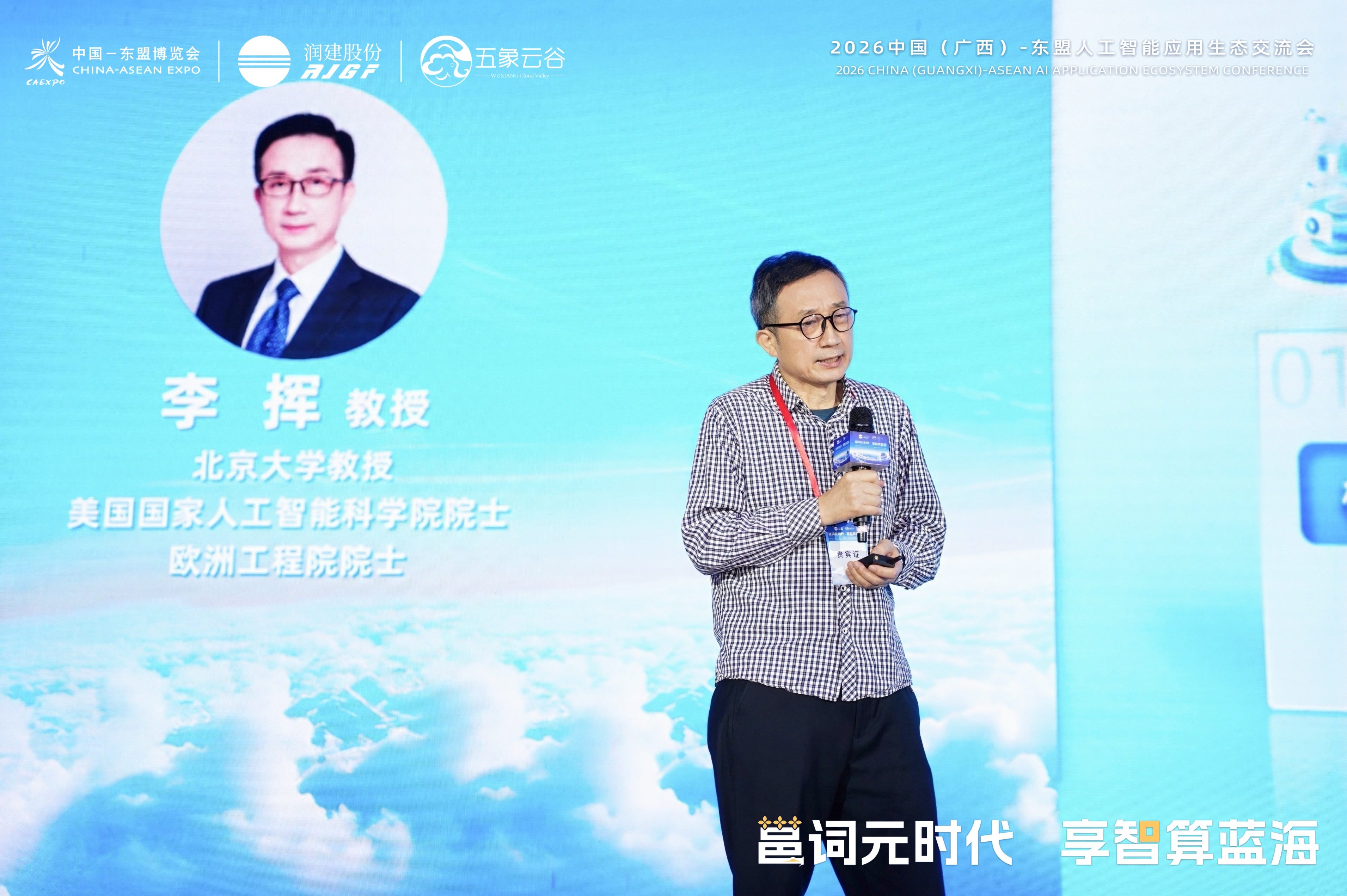
In the trend interpretation session of the main forum, Professor Li Hui from Peking University, Fellow of the National Academy of Artificial Intelligence of the United States and Fellow of the European Academy of Engineering, pointed out the coordinates of this corridor in his speech. He extended his vision to the underlying layer of cyberspace. He mentioned that the IP network has three inherent genetic defects: cyberspace is under unilateral monopoly, the network has no inherent security genes, and the architecture system is extremely rigid. "It is a twice the effort with half the result to build a trusted data space on an untrusted network." Li Hui said. The core of the Multi-ID Network architecture (MIN) he proposed is to solve the three problems of network sovereignty monopoly, traceable identity and quantifiable security.
For the corridor to operate smoothly, standardized capabilities on the production side are also required. A Token factory is far more than simply packaging and selling computing power, it involves a series of links including model scheduling, metering and billing, service quality assurance, and every link needs replicable standards.
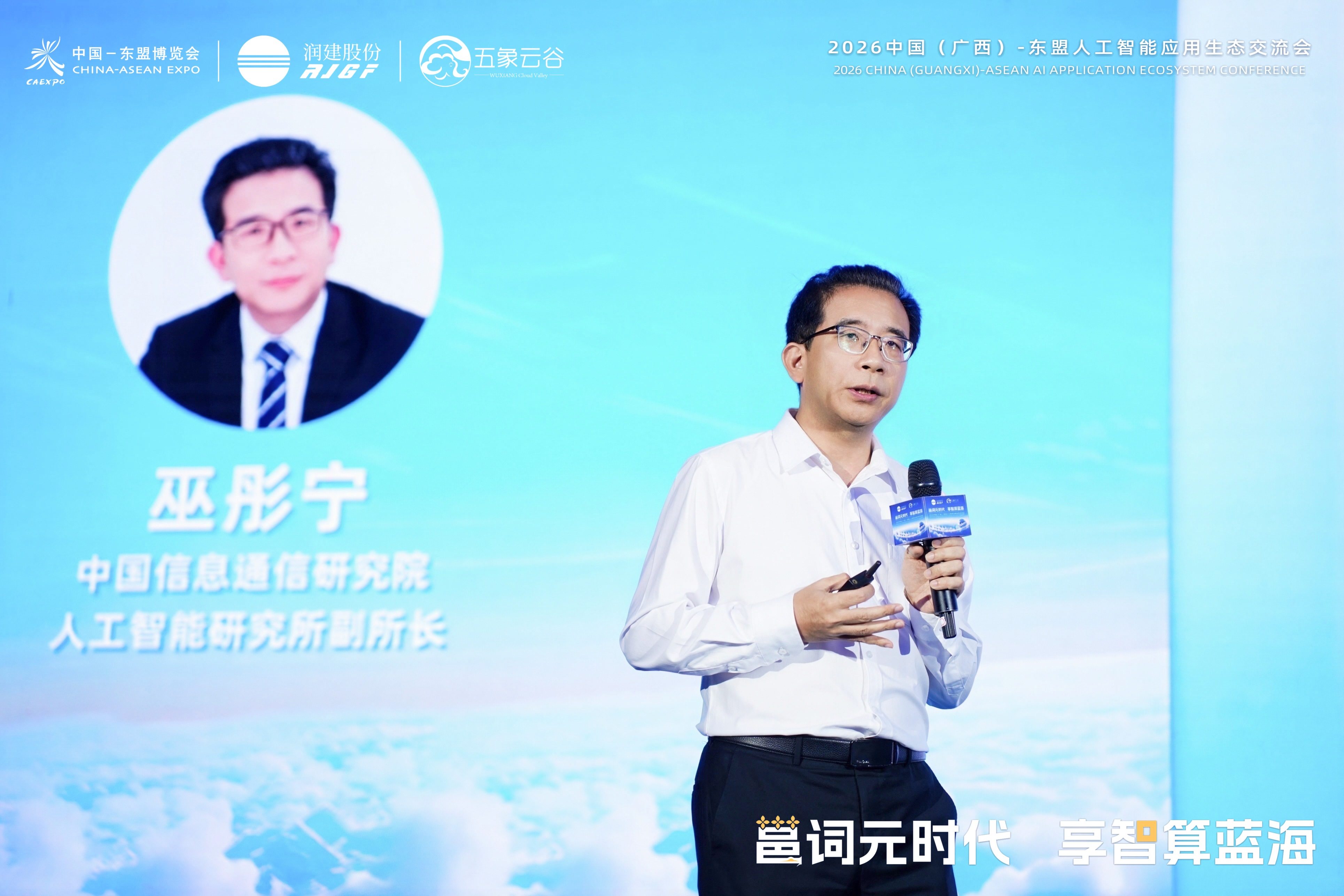
At the conference, the *Research Report on the Construction, Operation and Ecological Development of Token Factories* jointly compiled by the Institute of Artificial Intelligence of China Academy of Information and Communications Technology (CAICT) and Rujian Co., Ltd. was officially released. Wu Tongning, Deputy Director of the Institute of Artificial Intelligence of CAICT, interpreted the report, which systematically sorted out the core connotation, industrial ecosystem, operation path, industry practice and development trend of Token factories for the first time, and proposed to promote large-scale, high-quality and low-cost Token supply through capabilities such as heterogeneous computing power integration, inference acceleration, task-aware routing and unified measurement.
In fact, the cooperation between Rujian Co., Ltd. and CAICT on Token standardization has been advancing for some time. In June this year, the Artificial Intelligence Industry Development Alliance (AIIA) launched the preparatory work for the Token Service Working Group, led by CAICT and joined by 22 units including Rujian Co., Ltd., to promote the construction of a standard system covering the whole process of Token production, circulation, application, metering and billing.
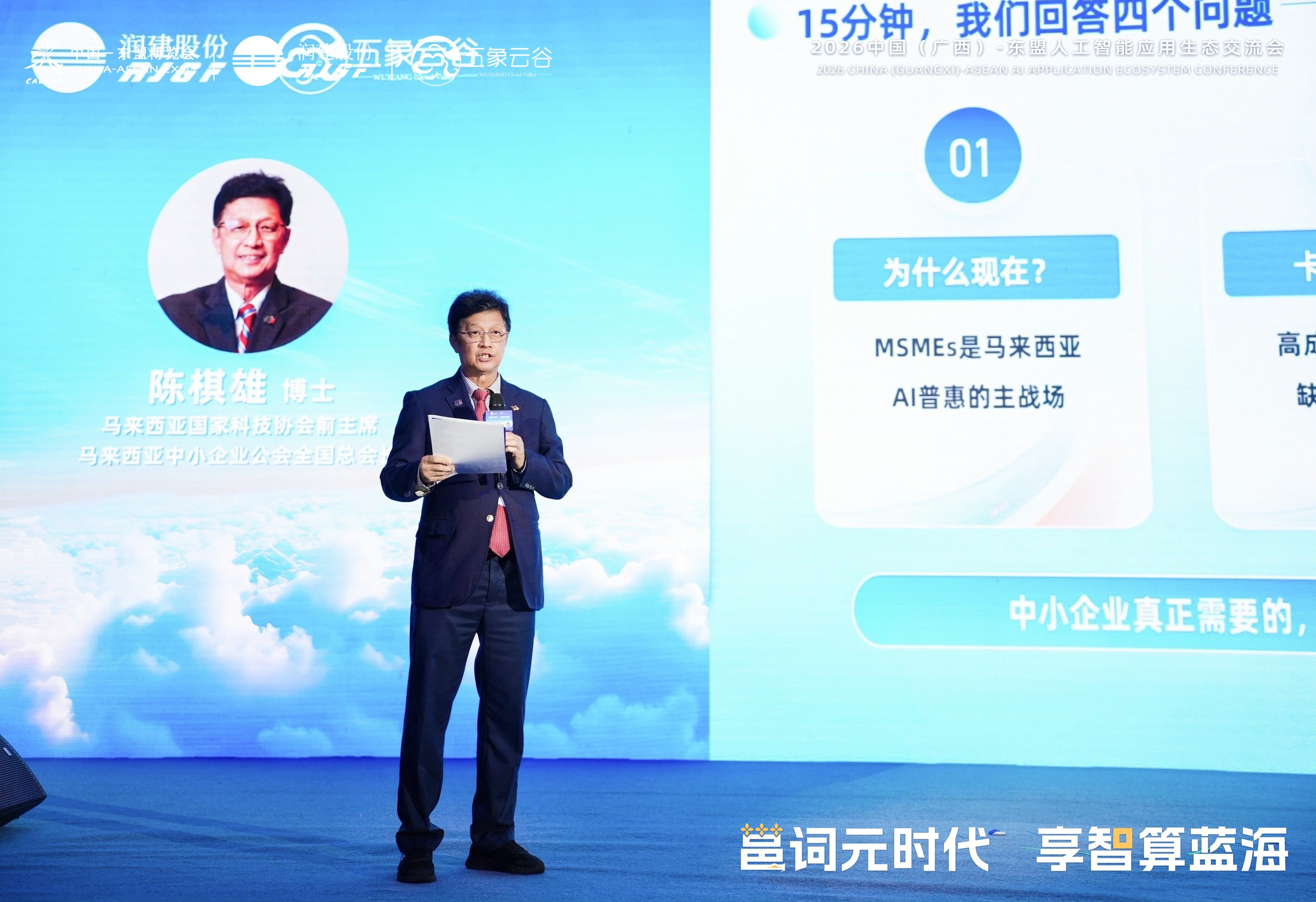
The standard framework is in place, and the production capacity is also ready. But can the ASEAN market at the other end of the corridor accommodate this supply? Dr. Chen Qixiong, former Chairman of the Malaysia National Science Association and National President of the Associated Chinese Chambers of Commerce and Industry of Malaysia SME Chamber of Commerce, gave a response from the ASEAN side. He presented the fundamentals of Malaysian SMEs: they contribute 39.7% of GDP, 77.4% of employment and 14.7% of exports, with a total of 1.2926 million MSMEs. "SMEs do not necessarily need their own AI infrastructure, what they need is the ability to use AI productively in a simple and low-cost way." Chen Qixiong said, "We want to turn AI from a capital good for large enterprises into a production material for SMEs."
The three sharing sessions point to a fact: only when the direction, standards and demands are aligned, can the corridor give full play to its production capacity, truly penetrate into industrial scenarios and create value.
Why Guangxi, why Wuxiang Cloud Valley?
The answer first lies in the industrial foundation.
Zhang Zhenyu, Member of the Party Leadership Group of Nanning Municipal People's Government, mentioned in his speech that Nanning has been successfully approved as the fourth national international communication service exit and entry bureau in China. The interconnection network routes from Nanning to ASEAN no longer detour through Guangzhou, with the distance shortened by more than 1800 kilometers and the latency reduced by 73%. Guangxi has built 12 cross-border fiber optic cables connecting to ASEAN countries, and the total capacity of international communication corridors exceeds 9000G.
At the policy level, Guangxi is accelerating the construction of the development path of "R&D in Beijing, Shanghai and Guangzhou + integration in Guangxi + application in ASEAN". At the same time, Nanning also has policy and industrial foundations such as the national pilot for international cooperation in the data field and the "data import for processing" initiative. The combination of these conditions forms the foundation for Wuxiang Cloud Valley to deploy the general Token export hub.
Li Shuanglei, Deputy General Manager of Wuxiang Cloud Valley Co., Ltd., released the "China-ASEAN (Wuxiang Cloud Valley) General Token Export Hub Strategy" in the key release session, further interpreting the hub positioning of Nanning: policy and location advantages facing ASEAN, international communication infrastructure, cross-border data pilots, green energy conditions in Guangxi, and the new pattern of opening up to ASEAN brought by the opening of the Pinglu Canal.
"Only Nanning has all these advantages combined." Li Shuanglei said.
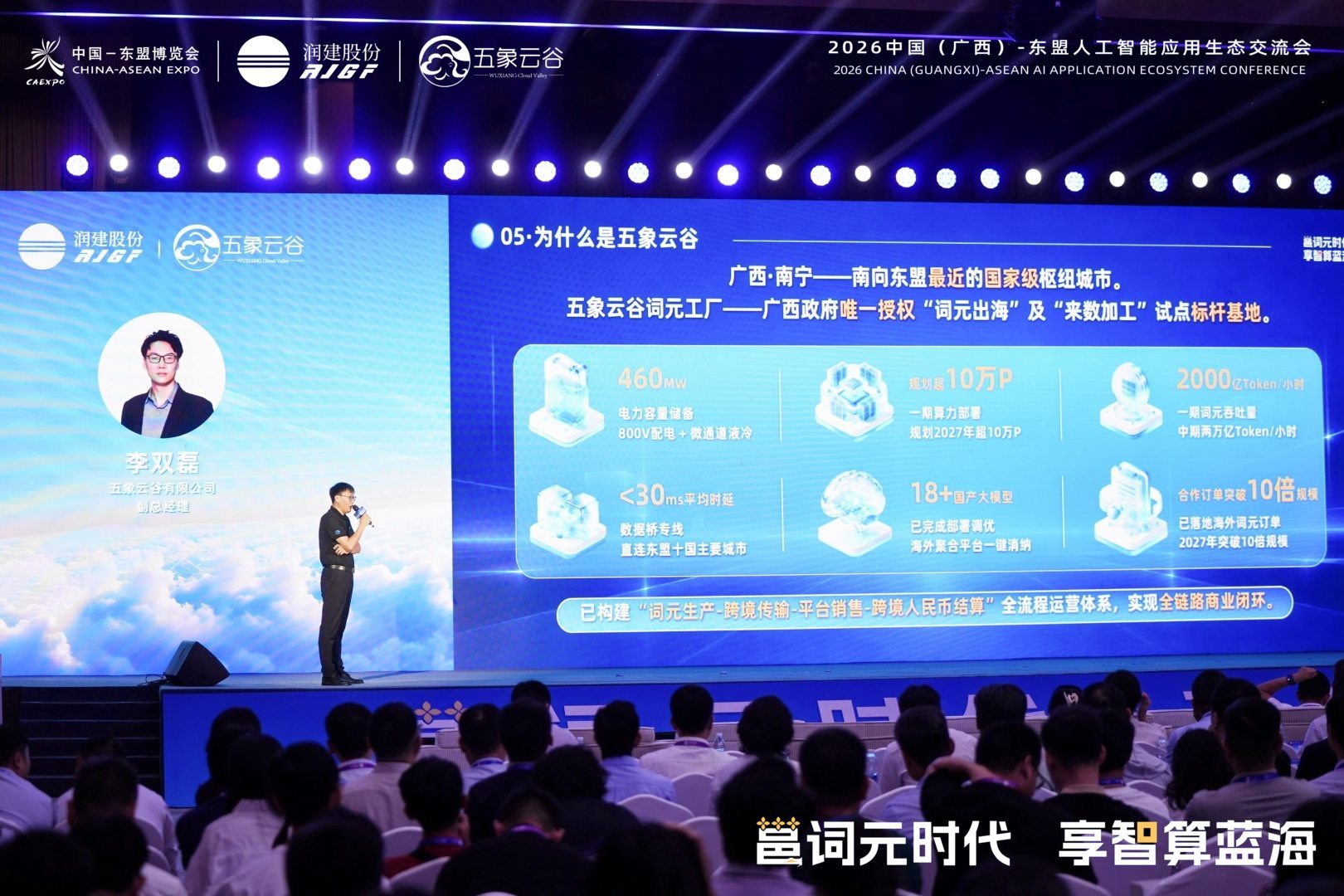
Wuxiang Cloud Valley is the only pilot benchmark base authorized by the Guangxi government for "Token export" and "data import for processing". According to the general strategy, Wuxiang Cloud Valley is positioned as "China-ASEAN General Token Export Hub & New Highland for Data Import for Processing", with three pillars: based on Wuxiang Cloud Valley to build the Token production base; connecting cross-border data bridges to link the markets of 11 ASEAN countries; building a full-link ecosystem to realize business closed loop.
Rujian Co., Ltd. has already put the Wuxiang Cloud Valley Token Factory in Nanning into operation. It is reported that this factory is one of the first Token factories in China to realize commercial operation. At present, Wuxiang Cloud Valley has opened up the full-process operation system of "Token production - cross-border transmission - platform sales - cross-border RMB settlement", and completed the full-link business closed loop of data flow, contract flow and capital flow.
Completed infrastructure does not mean that enterprises can use it smoothly. Between the Token output from the factory and the business site of ASEAN enterprises, there is still a layer of service network. This is especially true for SMEs in the ASEAN market: they have AI demands, but lack the technical capabilities and operational experience to convert computing power into usable services. The general hub solves the problem of "where does Token come from", but "how to deliver Token to customers" requires another set of system.
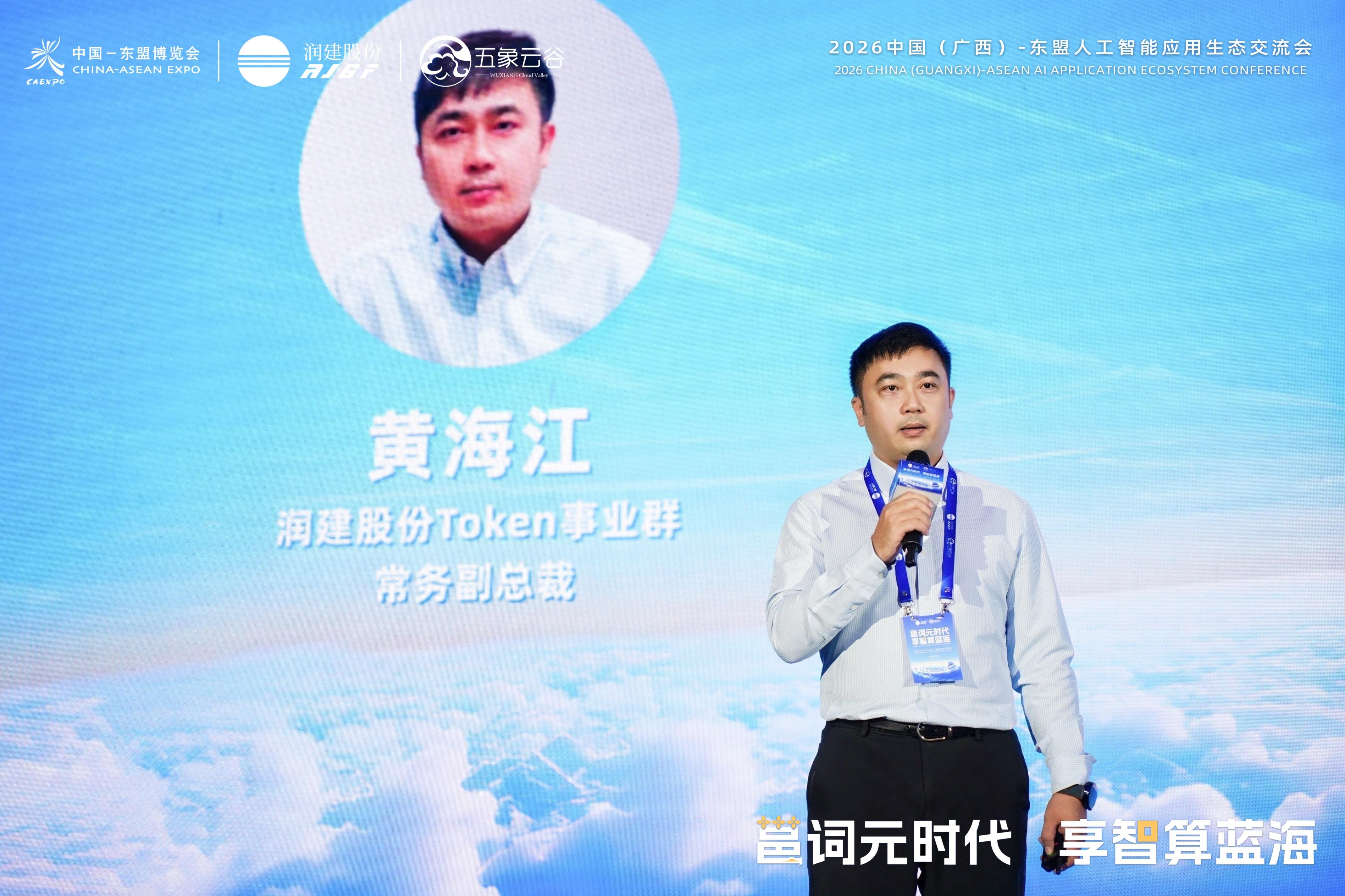
Huang Haijiang, Executive Vice President of the Token Business Group of Rujian Co., Ltd., shared the topic of "Connecting Intelligent Supply and Co-building Enterprise Token Service Network" at the ecosystem exchange conference, and released the Cijing TokenHub platform. He put forward three practical pain points: the first is the supply pain point, after the rise of multiple AIs and multiple Agents, Token consumption has increased by dozens of times compared with chat scenarios; the second is the aggregation pain point, the interfaces and formats of different model providers are different, and enterprises need to invest a lot of R&D resources for adaptation when adding new models; the third is the governance pain point, most enterprises lack perfect AI access control. "What we want to do is to fundamentally solve these problems." Huang Haijiang said.
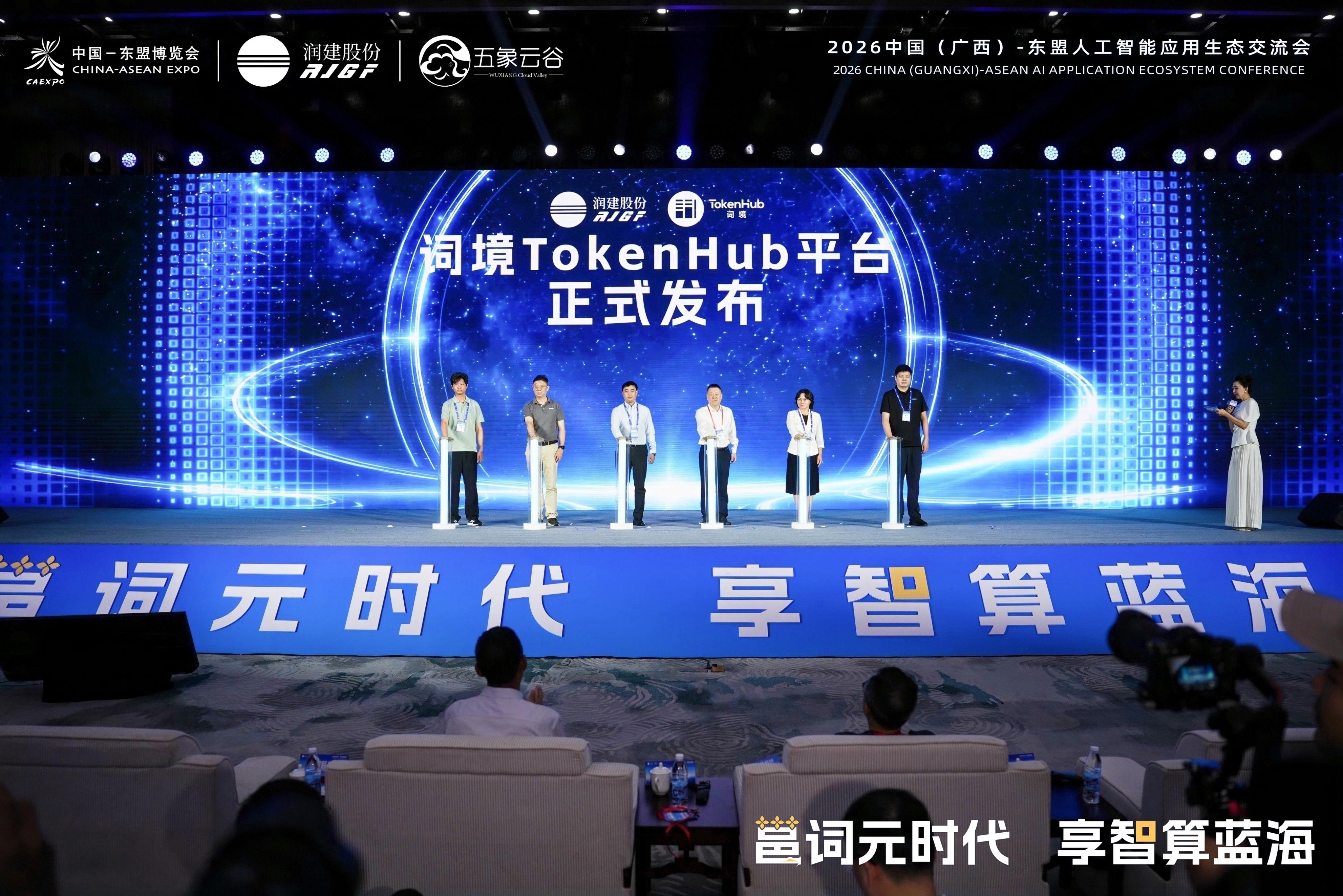
The core logic of the Cijing platform is the collaboration between TokenHub and TokenOps: TokenHub manages the "incoming" part, aggregates diverse computing power and models, realizes unified access and intelligent scheduling, which is equivalent to the "general gate" of AI; TokenOps manages the "outgoing" part, lands on the enterprise side, manages permissions, usage, costs and security, which is equivalent to the "steward" of enterprise AI. The whole network connects the supply side on one hand and enterprises on the other, and is implemented through the partner operation system in the middle, forming a complete service network.
In terms of cost control, TokenOps supports three dimensions of enterprise, department and project, with records for every call and attribution for every expense. Internally, it can realize cross-departmental measurement and allocation, making the value of computing power clear; externally, idle computing power and private models can be connected to the TokenHub network to directly generate revenue. The TokenOps platform has transformed from a cost center to a profit center." Huang Haijiang said.
With the service network expanded and Token starting to flow across borders, another issue emerges: security. "Security is an unavoidable prerequisite for Token export." Dr. Chu Ge, Chief AI Security Scientist of Rujian Co., Ltd., delivered a keynote speech titled *Token Security in the Era of Cross-border Computing Power*, systematically expounding the security challenges and response systems faced by intelligent computing platforms under the background of computing power export.
Chu Ge pointed out that the essence of computing power export is to deliver Token to overseas customers. Token carries four attributes at the same time: the carrier of customer data, the voucher of platform revenue, the export of model assets, and the boundary of content responsibility. Focusing on these four attributes, the intelligent computing platform needs to hold four security lines: customer data protection, trusted metering and billing, model asset protection and content compliance.
In terms of customer data protection, Chu Ge proposed that platforms should move from the "promise not to view" stage to the "prove cannot view" stage, and place platform operation and maintenance outside the trust boundary through trusted execution environment and remote attestation, supplemented by engineering measures such as tenant isolation, zero retention and differential privacy. In terms of metering and billing, he proposed a verifiable metering idea of "customers get receipts, platforms keep hashes, and disputes are resolved through signatures and sampling", which takes into account both credible bills and zero data retention. In terms of model assets, he introduced measures such as output watermarking and limiting the exposure of probability distribution, so that model distillation in cross-border scenarios can be forensically traced and held accountable. In terms of content compliance, he emphasized that a closed loop must be formed between runtime guardrails and pre-launch security evaluation, and "the platform blocks risks at the generation stage" is the only feasible solution for multi-jurisdiction regulation.
