Over the past 30 years, Yunnan's coffee industry has staged a remarkable turnaround.
In recent years, Yunnan coffee has undergone tremendous changes.
Its price, which used to be overlooked by the market, has gradually become unaffordable for many.
At the beginning of the 2023/24 production season, the transaction price in Yunnan market (33 yuan) was higher than both the international futures price (26.56 yuan) and the procurement quotation of international traders (around 23.9 yuan).
In 2024, the planting area of coffee in Yunnan increased by 4% year on year, and the output increased by 3% year on year.
While the output rose, the price did not drop.
In the same year, the average price of green coffee beans was 41.02 yuan per kilogram, up 10.3% year on year, more than 14% higher than the average price of international small-grain coffee.
Earlier this year, the bulk price of Yunnan coffee beans showed an "inverted" phenomenon, that is, the domestic purchase price was higher than the export price, which prompted many enterprises to adjust their layout and shift from export to domestic sales.
In 2021, Zhengjie Club published an article titled "Yunnan Coffee Sold at a Low Price: Ranked First in the National Industry, But Has Become a Cheap Supplier for Transnational Capital".
Over the past 30 years of Yunnan's coffee industry, from one stage to another, what on earth has happened?
01
What is the truth
Earlier this year, domestic purchasers flocked to the producing areas one or two months in advance to snap up coffee beans.
At that time, the closing price of New York Arabica coffee futures was converted to about 45 yuan per kilogram.
However, the average purchase price in domestic producing areas was 10 to 20 yuan higher per kilogram than the export price.
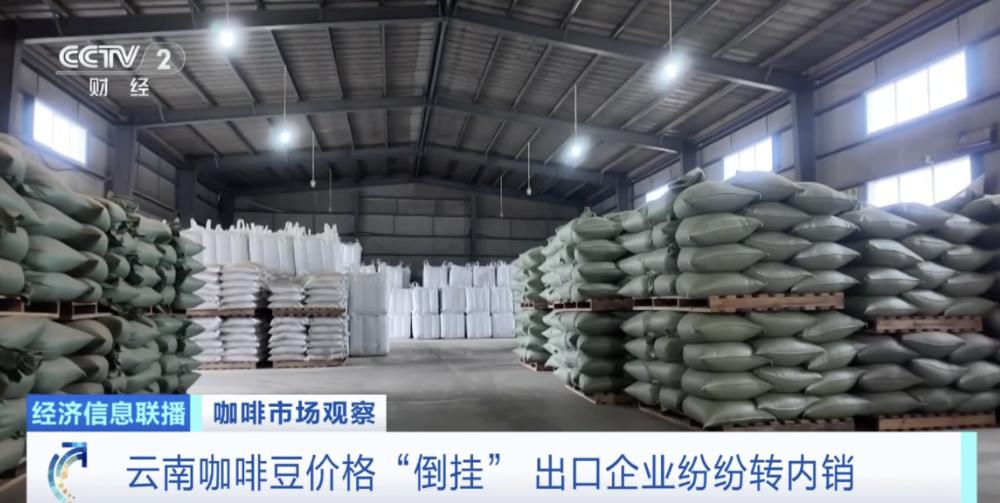
For so many years, in most industries, earning dollars is more profitable than earning RMB.
But in Yunnan, selling the same batch of coffee beans to domestic buyers is more profitable instead.
It should be noted that Yunnan's coffee industry was nurtured by foreigners from the very beginning.
In 1892, French missionary Jean-Antoine Badan brought several coffee seedlings from Vietnam and planted them in Zhukula Village, Binchuan, Dali.
The first coffee plant in mainland China was right there.
That was the earliest origin, but the real large-scale cultivation did not start until the 1950s.
In order to repay Soviet loans and supply the Soviet and Eastern European markets, large areas of coffee were planted in Lujiangba, Baoshan and Dehong.
However, after the Sino-Soviet relations deteriorated, coffee lost its market. Coupled with the spread of leaf rust, almost all coffee trees were cut down.

In 2011, Nestlé signed a memorandum of strategic cooperation with the Pu'er Municipal Government of Yunnan Province to jointly promote coffee cultivation.
It was not until 1988 that the situation turned for the better.
Nestlé entered Pu'er to lay out its business, and set up a coffee agronomic service department and a purchasing station four years later. In the following 20 years, international giants such as Starbucks, Volcafe and Louis Dreyfus also entered the market one after another.
So, can you see it?
Yunnan coffee is essentially a foreign-introduced product, which was originally planted to meet the needs of others.
That's why this reversal today is so meaningful.
Why does an industry that grew up to improve the raw material efficiency of others suddenly no longer have to only cater to the preferences of others?
It has been sold at a discount for 30 years. What exactly is the discount for?
To understand this reversal, we must first figure out the discount.
In the international coffee trade, there is a universal benchmark called the KC price.
In 1914, the New York Coffee Exchange (NYBOT, acquired by the Intercontinental Exchange (ICE) in 2007) launched the standard Arabica coffee contract (namely "Coffee C"), with the quotation unit of cents per pound, which laid the core trading pattern of international coffee futures for more than a hundred years.
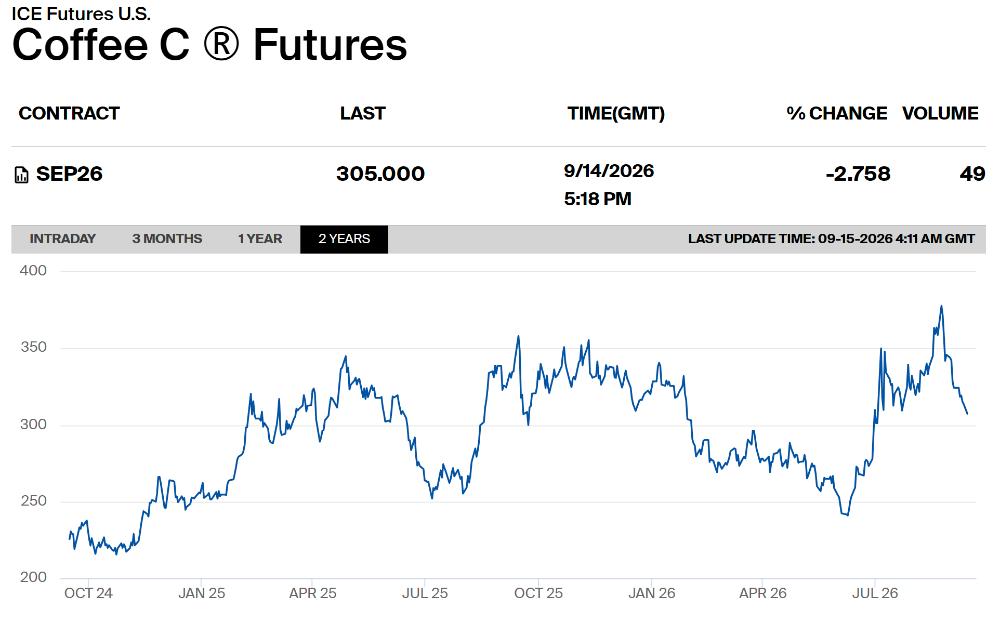
Futures curve of standard Coffee C in the past 2 years
The ICE Coffee C price is an important benchmark price for washed Arabica coffee worldwide, and the vast majority of global Arabica coffee trade uses it as the pricing anchor.
Specifically, the benchmark (par delivery) grade of the ICE C contract is washed Arabica from Central American/African origins such as Mexico, El Salvador, Nicaragua and Peru.
Most other origins are anchored to this benchmark, and the pricing method is called differential pricing. The formula is: Actual transaction price = C price (futures benchmark) ± differential (unit: cents per pound)
For example, origins such as Colombia, Costa Rica and Kenya can have a premium of 1000 points; while the Dominican Republic, Ecuador and Brazil have discounts ranging from 400 points to 600 points respectively.
The differential of Yunnan coffee has been negative for a long time.
A discount of 10 to 20 cents per pound has been the position of Yunnan coffee beans in the past 30 years.
What exactly is the discount for?
First of all, it is the consideration of quality.
The main variety planted in Yunnan is Catimor, which is disease-resistant, high-yield and easy to grow. After being introduced in the 1980s, it once accounted for more than 95% of the province's planting area.
But the cost is flavor.
Catimor has a little Robusta ancestry, and when planted at conventional altitudes, it tends to have an earthy herbal aftertaste.
In addition, due to inconsistent processing standards, the defect rate once reached as high as 15%.
Such beans are mainly used as raw materials for instant coffee and blending.
The quality basis of Yunnan washed beans naturally cannot get the premium of specialty coffee.
But the second reason is that the purchasers deliberately suppress the price.
The planting area, output and agricultural output value of Yunnan coffee account for about 98% of the whole of China, but its share in the global market is only about 1%, which is very insignificant.
Nestlé, Starbucks, Volcafe, Louis Dreyfus and ECOM all have globally distributed supply chains, and Yunnan is just one of their purchasing points.
On the contrary, the main buyers of Yunnan coffee in the past were them, and there was no other choice.
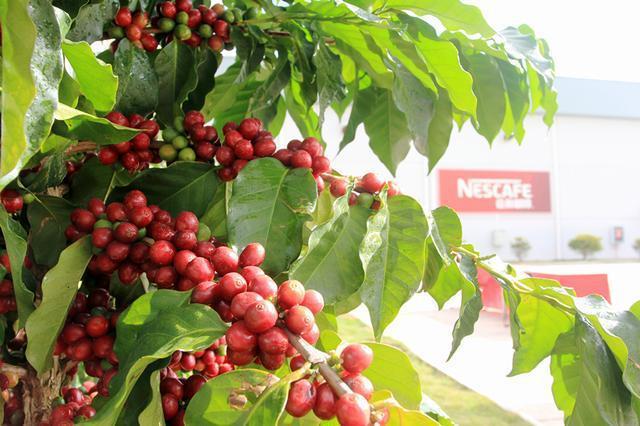
Before 2015, Nestlé used a unified price when purchasing coffee beans in Yunnan.
Beans with a cupping score of about 78 points and no obvious defects were priced the same.
Good beans and ordinary beans were sold at the same price, which is called the "Nestlé price" in the industry.
Even, it was the pricing benchmark of the whole producing area. Whatever price Nestlé offered, other buyers would follow.
There was no price channel for the difference in quality.
A trader put it very bluntly:
Yunnan is just one of their purchasing points. When the price is high, they will purchase less; when the price is low, they will purchase more.
The Yunnan Innovation Finance Research Institute calculated that each ton of Yunnan coffee beans was sold at least 3000 yuan cheaper than similar international products.
It is not difficult to understand that if there is only one buyer for a long time, or a big buyer with overwhelming influence, the price will inevitably be arbitrarily determined by the buyer.
Yunnan is "too small", while the buyers are "too big".
02
The people who buy it have changed
The turning point first occurred on the buyer side.
Luckin Coffee confirmed in its 2026 Q1 earnings call that it will purchase more than 30,000 tons of Yunnan beans in this production season, with an amount of nearly 2 billion yuan.
This volume accounts for 50% of the output of first-grade beans in the whole province.
Luckin Coffee has built a fresh fruit processing plant in Baoshan, which can process 5,000 tons of fresh coffee fruits a year, covering 20,000 coffee farmers.
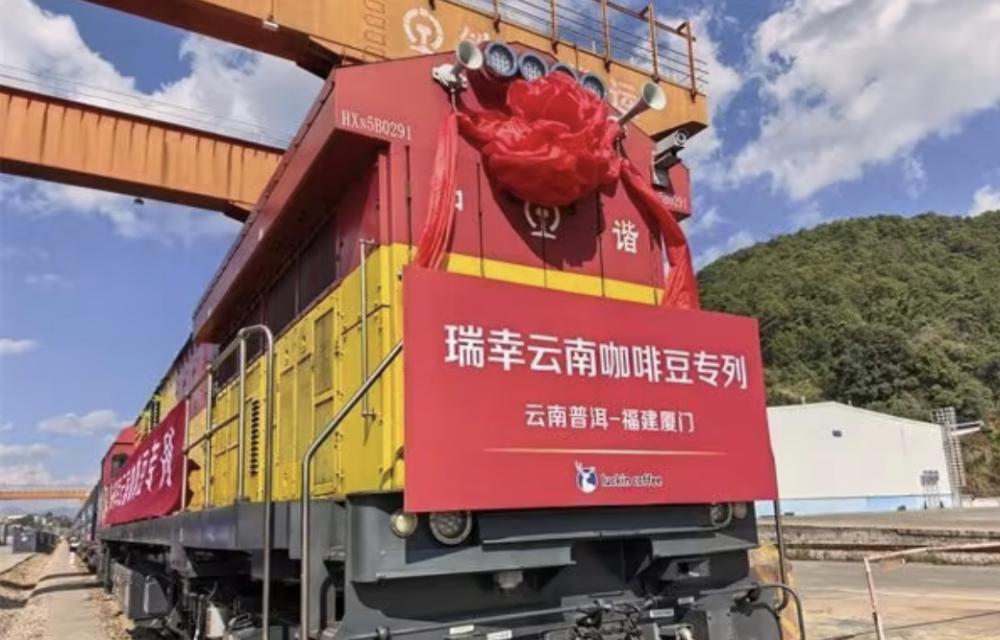
It has set up a local procurement company in Yunnan. In January this year, it also launched a special railway train named "Luckin Train": departing from Ning'er and heading for Xiamen, with subsequent transportation plans covering Qingdao and Kunshan.
The cycle from Yunnan to the stores can be further shortened.
There are a series of similar moves.
Cotti Coffee plans to invest 500 million yuan to build an industrial park in Lincang.
Manner has set up a purchasing station in Menglian.
Saturnbird signed an agreement to purchase more than 10,000 tons of coffee beans annually, with the purchase price 5 to 8 yuan higher than the average market price.
Mixue Bingcheng signed a guaranteed purchase agreement with Yunnan's coffee cooperatives.
This group of new buyers have placed their own factories, special trains and stores all over the producing areas.
Traders found that after more buyers entered the market, if the quotation was too low, farmers would not sell their beans to them.
Careful observation shows that a cup of Luckin Coffee is only sold for 9.9 yuan at the terminal, which originally could not support raw material beans priced at 60 yuan per kilogram.
But with the scale of 35,000 stores, to maintain relatively stable costs, it is necessary to have a stable, controllable and nearby bean source.
Therefore, Yunnan has become the inevitable choice, and these domestic chain brands must take root here.
The bargaining power never only depends on how good your product is, but also on how much the counterparty needs you.
The expansion of China's coffee consumption market has turned Yunnan from an optional choice in the past to a necessary choice now.
From around 2010 to 2024, the per capita coffee consumption in China has increased from 2 to 3 cups per year to 22.24 cups.
Coffee has changed from a refreshing drink in office buildings to a daily drink on the streets of county towns.
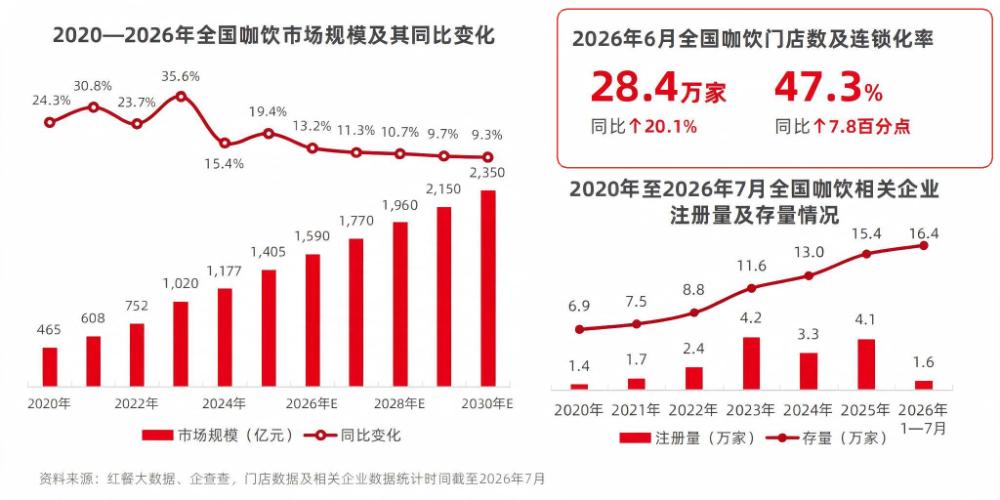
Source: Redcafe Industrial Research Institute
Accordingly, Yunnan coffee beans no longer rely solely on exports. The sales structure has changed from 90% for export six or seven years ago to 90% for domestic sales now.
The support of domestic demand has enabled Yunnan coffee beans to gain local bargaining power for the first time, and the price has tripled in 3 years.
The space for price suppression has disappeared from here.
03
The evolution of Yunnan coffee itself
However, customers alone are not enough. Ultimately, quality speaks for itself.
Therefore, in addition to the demand side, the second variable is on the supply side.
In the past five years, Yunnan coffee has taken considerable major measures in four core directions.
The first is the variety line.
The proportion of Catimor has dropped from more than 95% to about 80%.
The planting area of high-quality varieties has reached 162,000 mu, and Yunnan has independently bred 22 varieties.
The cupping score of Yunnan Coffee No.1 is 86.25 points, and its technology transfer fee is 2 million yuan, setting a record for the transfer of domestic coffee varieties.
Yunnan Coffee No.2 has a score of 86.75 points, refreshing the upper limit of domestic specialty coffee.
High-end varieties have also begun to be planted, and Geisha has been successfully trial-planted in high-altitude manors in Lincang and Baoshan.
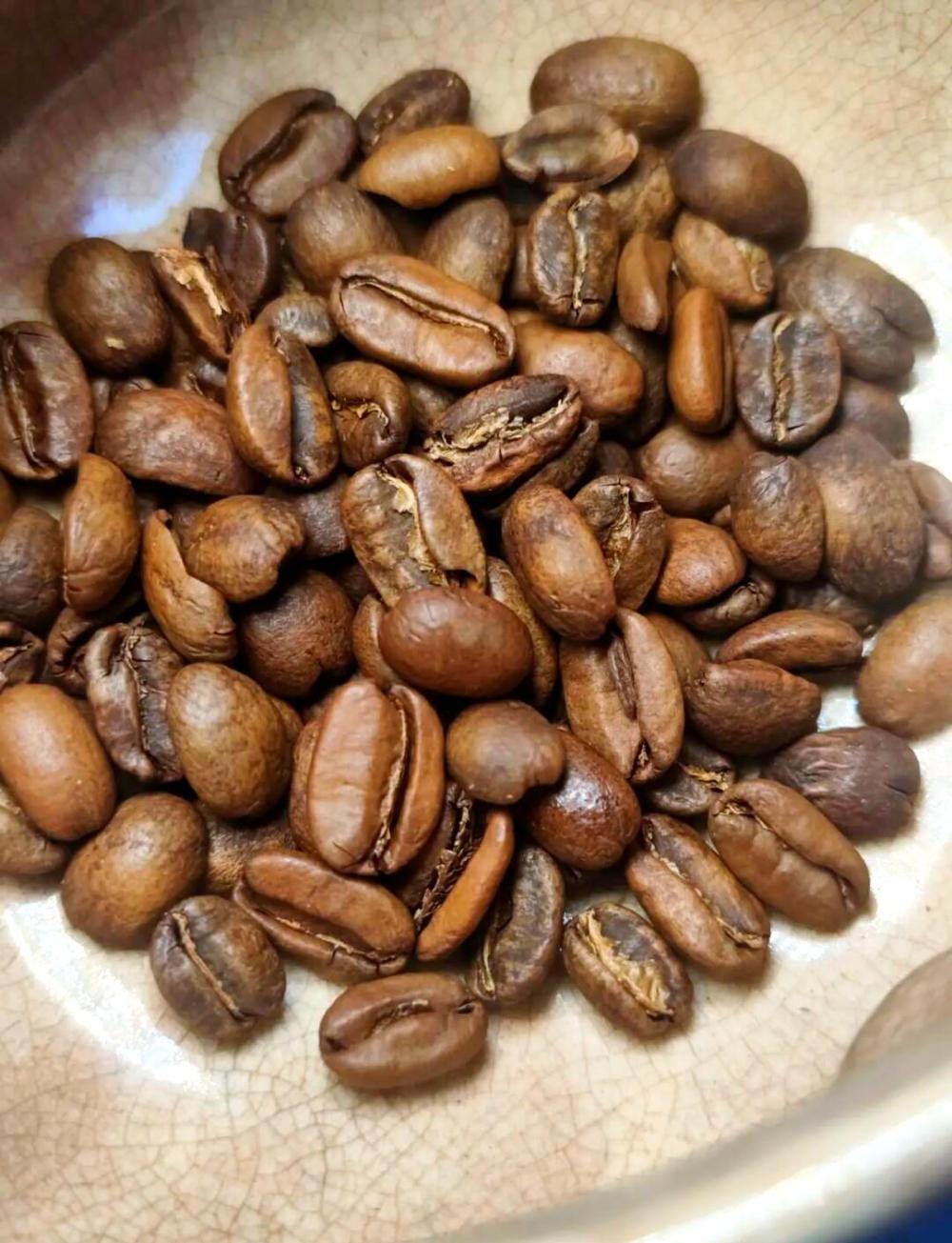
Geisha coffee beans
How big is the price gap brought by different varieties?
Ordinary Catimor fresh fruits are 6 to 6.5 yuan per kilogram, while Geisha fresh fruits are 200 yuan per kilogram.
At the green bean stage, Catimor is 60 to 90 yuan per kilogram, while Geisha can be sold for 800 to 1600 yuan per kilogram.
The second is the processing line.
After years of development, Yunnan coffee has formed a whole industrial chain integrating breeding, planting, processing and sales, and the specialty coffee ratio has reached 41.7%.
The intensive processing rate has also increased from 20% in 2021 to 85% in 2025.
What does this figure mean?
Five years ago, most of Yunnan's coffee beans were sold out in whole bags.