Nansha and Bao'an are truly about to join forces.
After the opening of the Shenzhen-Zhongshan Link, the psychological distance between Guangzhou and Shenzhen has indeed become much closer.
Two months ago, I wrote an analysis on the signing of the strategic cooperation framework agreement between Nansha, Guangzhou and Bao'an, Shenzhen. At that time, I stated that this was not just a form of regional cooperation, but a substantial step taken to advance the urban integration of Guangzhou and Shenzhen.
Two months on, progress has moved faster than I expected, as Nansha and Bao'an have shifted from the initial "handshake" phase to the down-to-earth "implementation stage".
01
How did Nansha and Bao'an come to form this partnership?
The story goes as follows:
On June 5, Nansha District and Bao'an District officially signed a strategic cooperation framework agreement. The agreement covers multiple fields including industrial collaboration, scientific and technological innovation, talent exchange, infrastructure development, and high-quality living circle building, with the goal of jointly building a new model of coordinated development in the Greater Bay Area.
At that time, many people thought that for this kind of framework agreement, people would just take a group photo after signing, and then push the follow-up work slowly.
But the pace this time is completely different.
Less than a month after the signing, the two districts finalized their first list of proposed cooperation matters, covering joint investment promotion, exploring the co-construction of industrial cooperation parks, jointly holding exhibition activities, university-enterprise collaborative innovation, and linked tourism development of scenic spots, among many other items.
At the end of July, the AI industry matchmaking exchange meeting was held in Bao'an, which was attended by more than 100 people including academicians, experts, representatives of universities, leading enterprises and investment institutions, focusing on empowering industrial innovation and achievement transformation with artificial intelligence.
On August 7, the semiconductor and integrated circuit industry cooperation exchange meeting was held in Nansha Core Power Science and Technology City, with nearly 100 representatives participating, covering sectors such as electronic materials, equipment, packaging and testing, EDA software, and computing power servers.
From signing the agreement to holding the matchmaking meetings, the whole process only took two months. This speed is rarely seen.
02
Why are Nansha and Bao'an so attractive to each other?
As we all know, "strong-weak cooperation" between cities is very common with little resistance, but "strong-strong cooperation" is much more difficult to promote.
Both Guangzhou and Shenzhen are sub-provincial cities with comparable urban energy levels. Their cooperation naturally faces more problems and difficulties to overcome than the cooperation between Guangzhou and Foshan, or between Shenzhen and Dongguan.
Therefore, the cooperation between Nansha and Bao'an must find points where their advantages can complement each other.
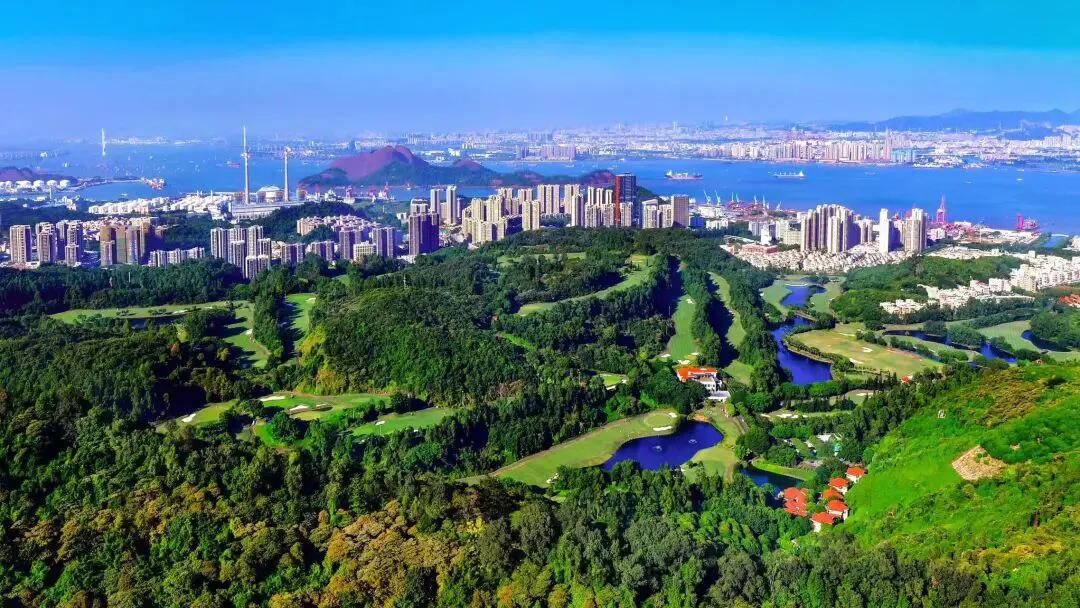
What are the respective advantages of the two districts? Bao'an is a major industrial district of Shenzhen, with high manufacturing density, complete industrial chain supporting facilities, a large number of well-known enterprises, and solid talent bases.
Nansha is a coastal new city built by Guangzhou with the efforts of the whole city, enjoying the support of provincial-level education and medical resources. It has strong public service capacity and great attractiveness to high-end talents. At the same time, as a free trade zone, it has abundant land space and flexible policies, which is very attractive to manufacturing-oriented sci-tech innovation enterprises.
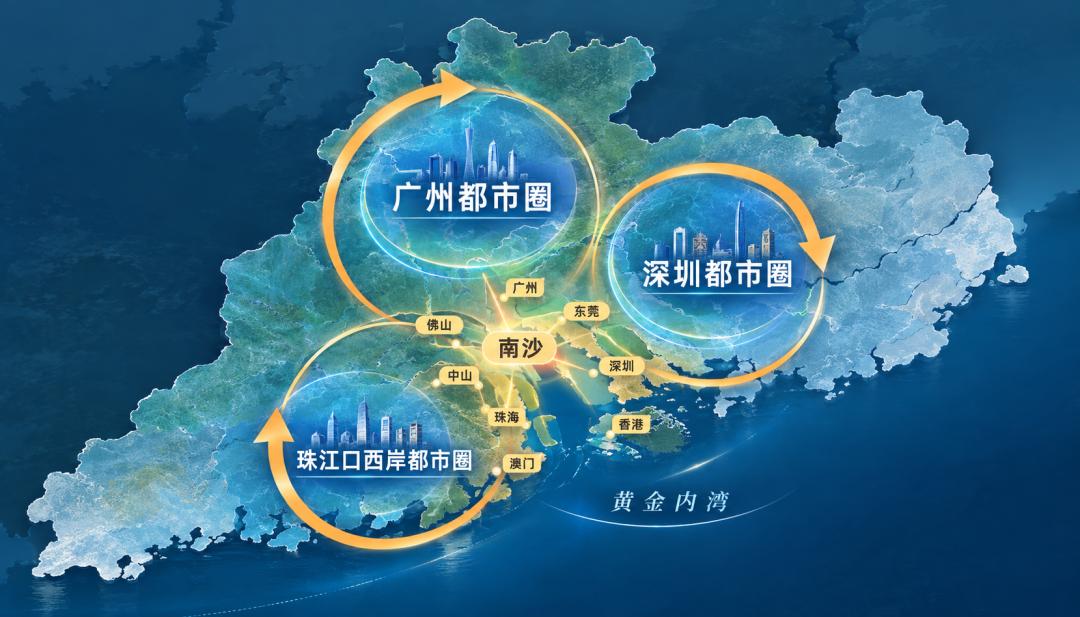
Meanwhile, Nansha is located at the geometric center and transportation center of the Guangdong-Hong Kong-Macao Greater Bay Area, with very convenient access to all destinations and a super seaport that can connect to a huge number of resources.
To put it simply, what Bao'an lacks is space and incremental development, while what Nansha lacks is the maturity and density of the industrial chain. One is more focused on "production capacity", the other on "connection capacity", which makes them naturally complementary.
03
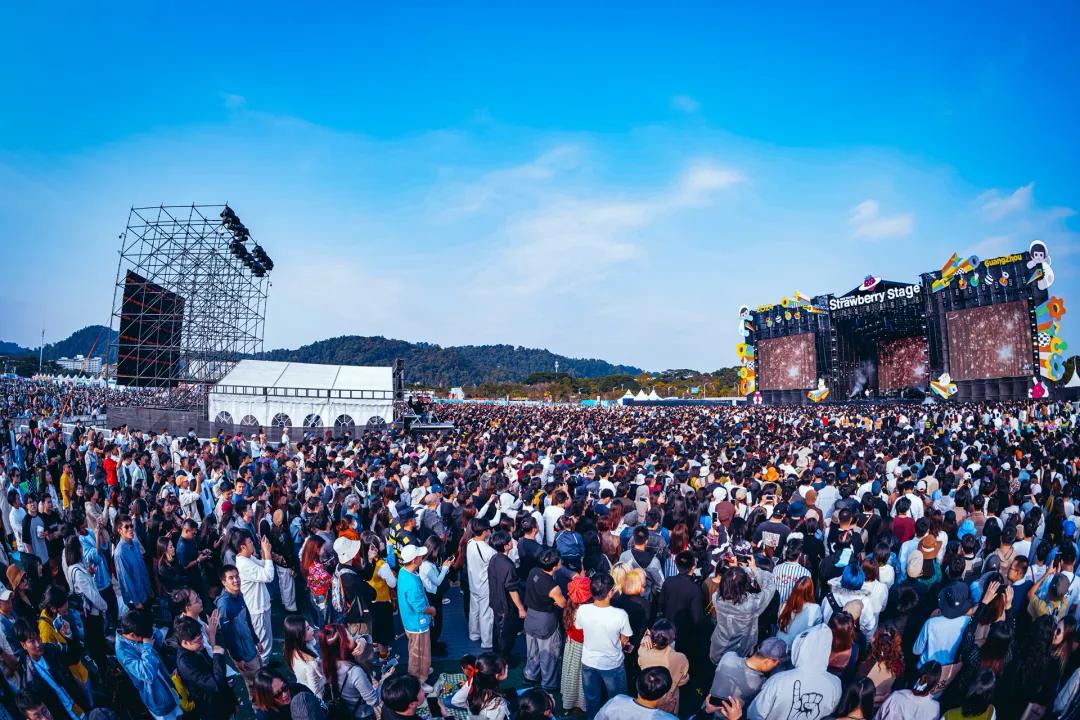
The exchanges between Guangzhou and Shenzhen residents are moving towards urban integration
Personnel exchanges are developing even faster than industrial cooperation.
The first move is the cross-city use of provident fund. The two districts have made it clear that they will take the lead in piloting the cross-city use of housing provident fund. This means that the institutional barriers for people who work in Bao'an to buy houses in Nansha, or people who pay provident fund in Shenzhen to purchase properties in Nansha, are being removed.
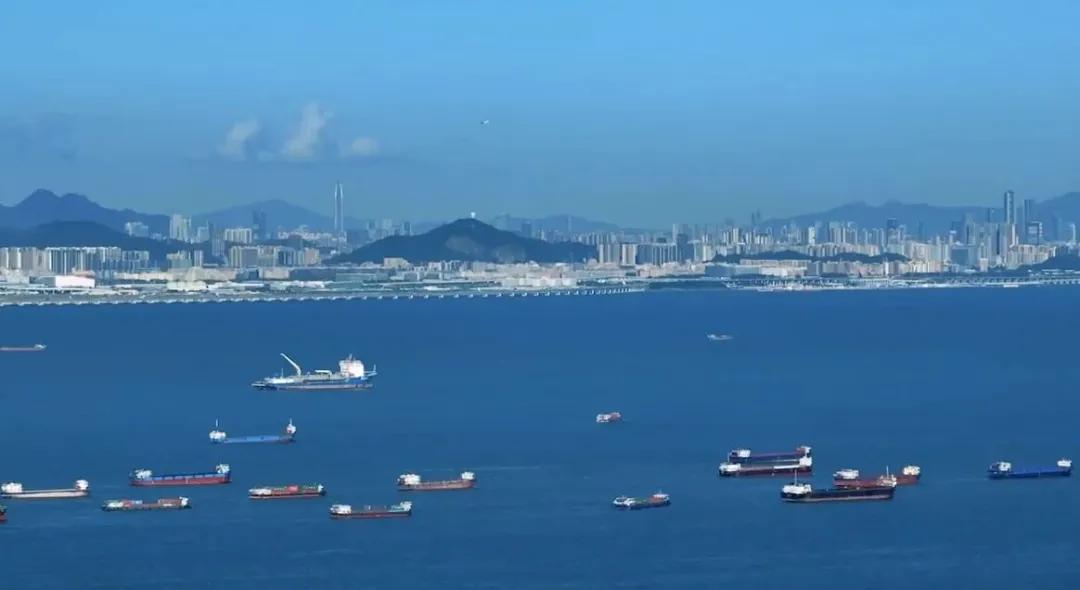
The transportation improvement is more direct. The Shenzhen-Zhongshan Link has been opened. Nansha has launched cross-city special lines directly connecting to Qianhaiwan Metro Station of Shenzhen, Shenzhen Bay Port, Bao'an International Airport, and Gongbei Port of Zhuhai. The regular shuttle bus between Nansha and Bao'an International Airport has been put into operation, and it only takes 20 minutes to reach Bao'an International Airport from Nansha via the Nansha section of the Shenzhen-Zhongshan Link. The number of stopping trains at Nansha North Station has also been greatly increased to 55-60 trips per day, doubling the original scale.
From the cross-city use of provident fund to cross-city bus lines, from the increased train frequency to cross-border special lines, these are no longer dotted lines on the planning map, but solid lines that have already been put into operation.
04
Connection itself is productivity
In the past, urban competition focused on: which city is larger, which is stronger, and which is the center.
But the urban form of the Greater Bay Area is different, which features: multi-centers, multi-nodes, and a network structure.
In this structure, the role of Nansha is not a simple "center", but a "repeater" and "router" that connects all cities along the Pearl River Estuary.
Many people may ask: What is the use of connection?
The answer is: Connection itself is productivity.
Because it brings three major benefits: reducing transaction costs, maximizing resource utilization efficiency, and improving the flow efficiency of factors.
Why did Uber change urban transportation? It is not because it owns a large number of vehicles, but because it achieves "higher connection efficiency". Why did Airbnb change the hotel industry? It is not because it has a huge number of houses, but because it "connects idle resources".
A few months ago I saw the "Nansha Ten Policies", and now we need to re-examine it, whose essence is the leverage thinking.
The "Nansha Ten Policies" cover ten aspects including trade-in housing schemes, existing house sales, school enrollment linked to home purchase, and affordable housing acquisition. The maximum subsidy for house exchange reaches 170,000 yuan, and the pilot of existing house sales has been implemented — at the end of July, Nansha launched the first residential plot in Guangzhou that incorporates the "existing house sales commitment system" into land transfer conditions.
To put it simply, who are the house exchange subsidies targeted at? People who sell their old houses and buy new ones within the scope of Guangzhou. Who is the cross-city use of provident fund targeted at? People who pay provident fund in Shenzhen and Bao'an. Who do the cross-city bus special lines cover? People who commute between Shenzhen, Dongguan, Zhongshan and Zhuhai.
Putting all these together, Nansha's intention is very clear: What Nansha is doing now is not just focusing on "owning" resources locally, but amplifying its "connection capacity".
05
What is the upper limit of Nansha's development?
Let's go back to a bigger question: What is the ceiling of Nansha's development?
If we only look at its positioning as the "sub-center of Guangzhou", Nansha's development story will at most lead to another ordinary new city. But when we place Nansha in the structure of the "Golden Inner Bay", its role is completely different.
Looking at the map of the Pearl River Estuary, Nansha is exactly located at the geometric center where Guangzhou, Shenzhen, Dongguan, Zhongshan, Hong Kong and Macao meet. It is the only key anchor point in the Greater Bay Area that can reach four major international airports within 1 hour. The shortest straight-line distance between Nansha and Bao'an is only 10 kilometers, making it the natural intersection of the two major metropolitan areas of Guangzhou and Shenzhen.
This kind of geographical location is equivalent to Yokohama in the Tokyo Bay Area, or Incheon in the Seoul Metropolitan Area. Both Yokohama and Incheon are outer ports of their respective core cities, but the outer ports are not underdeveloped, and their development ceilings are very high — Yokohama is the second largest city in Japan, and Incheon is the third largest city in South Korea, because they undertake the functions of flow, exchange, transformation and connection, which are all high-level urban capabilities.
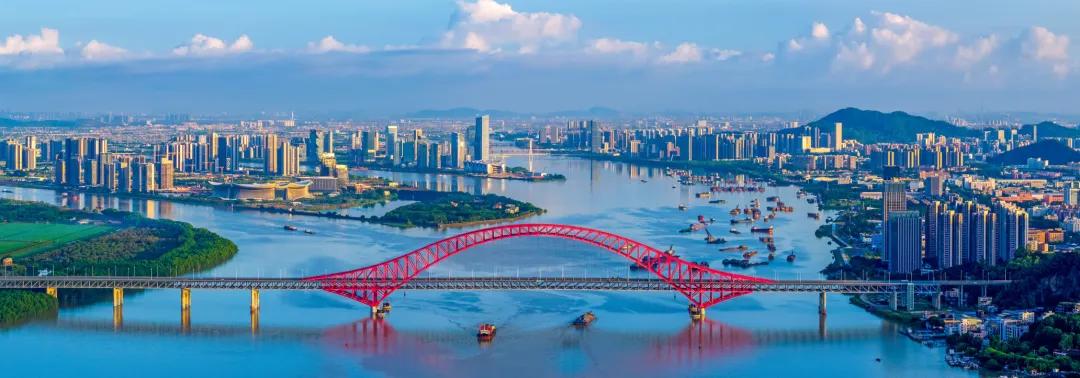
Today's Nansha is also moving towards high-level urban capabilities.
The strategic cooperation framework signed in June, the first cooperation list in July, the semiconductor and AI industry matchmaking meetings in August, the cross-city bus special lines, the cross-city use of provident fund, and the pilot of existing house sales — all these actions combined form a clear picture: Nansha is not only the "Nansha of Guangzhou", but also strives to become the "Nansha of Guangzhou and Shenzhen" and the "Nansha of the Greater Bay Area".
In other words, the real opportunity for Nansha is: to become not just a new city center, but a super router connecting all cities in the Greater Bay Area.
If this goal is achieved, the upper limit of Nansha will not only be the sub-center or new center of Guangzhou, but may become the third pole of the Greater Bay Area!
What is the third pole of the Greater Bay Area?
It refers to the third growth pole after the Guangzhou-Foshan and Shenzhen-Hong Kong metropolitan areas — the core development pole of the Golden Inner Bay.
This article is from the WeChat official account "City War", written by Sun Bushu's team, and authorized for release by 36Kr.