Duan Yongping's Wisdom of the Tao Te Ching
In 2001, Duan Yongping was 40 years old, and BBK was at the height of its prosperity. That year, he did something that could barely find any precedent in Chinese business history: he split BBK into three separate entities, handed them over to three of his subordinates, then moved to the United States to reunite with his wife, and never participated in the company's operations ever after.
Looking back on this "handover" over two decades later, the result is three outstanding performance records: OPPO, whose global smartphone shipment volume has long ranked among the top five all year round; vivo, which has taken the first place in China's market share for many times; Xiaotiancai, which has long occupied half of the children's smartwatch market. Three companies spun off from one enterprise have all become the leaders in their respective industries — there is no second such record found across the world.
What is more unconventional is the distribution method. When the split was completed, Duan Yongping only retained about 10% of the shares in OPPO and vivo respectively, and distributed the rest to the management and employees. Over 60% of the shares in OPPO are held by its employees, and even dealers are included in the shareholder list of vivo. For more than 20 years after that, he stayed in the United States, barely intervened in the business, and never regarded himself as the founder. Instead, he attributed all the credit for the success of the three companies to Chen Mingyong, Shen Wei, Jin Zhijiang and their teams.
The Chinese business circle has many titles for Duan Yongping: "Godfather of OV", "China's Warren Buffett". But the screen name he gave himself is the most meaningful — his Xueqiu ID is "The Great Form Is Formless While I Have My Own Form". The four characters "The Great Form Is Formless" originates from "The Great Image Has No Form" in Chapter 41 of *Tao Te Ching*. The connection between Duan Yongping and this classic is not a coincidence, but a conscious and literal choice: he hid himself in a Taoist screen name.
1
Retire After Achieving Success: The Departure at the Age of 40
Hold a thing and fill it to the brim, it is better to stop in time; Grinds the edge to be too sharp, it cannot last long. Gold and jade fill the hall, no one can keep them safe. Being wealthy and arrogant, you bring about your own disaster. Retire after success and achievements, this is the way of heaven. —— *Tao Te Ching* Chapter 9
Chapter 9 of *Tao Te Ching* is the most incisive chapter in the whole book. Its logical chain is: a full cup will spill, a knife ground too sharp will get blunt, and no one can keep a hall full of gold and jade. Therefore, you should retire after you have made great achievements, which is the law of nature.
When most people read the phrase "retire after achieving success", they think of a helpless ending. Duan Yongping provided an opposite version: retreating is not the price of success, but the final step of achieving success.
Back to 1999, BBK at that time had three core businesses: audio-visual electronics, communication technology, and educational electronics. The three businesses were crowded under one roof, competing for resources and leading to declining efficiency. Most founders would choose to strengthen control, centralize integration, and make the company bigger and more like their own will. Duan Yongping chose to "dismantle this city": the three businesses became three independent companies with completely separated legal, financial and personnel systems. Chen Mingyong was in charge of the audio-visual business (later OPPO), Shen Wei took over the communication business (later vivo), and Jin Zhijiang managed the educational electronics business (later incubated Xiaotiancai). Two years later, he reduced his shareholding to only about 10%, and moved his whole family to the United States.
How thorough was this retreat? For more than 20 years after that, he never attended the business meetings of the three companies, and never intervened in product decisions. He never asked Chen Mingyong and other leaders whether they would make mobile phones or how to make them. A reporter once asked him a question like "If there is news about BBK in the newspaper 50 years later, what kind of news do you hope it will be", and his answer was: "Any news, because it means we are still alive."
He does not pursue a monument, but only hopes the enterprise can survive, which is the *Tao Te Ching*-style concept of longevity. The subsequent development of the three companies has become the most powerful endorsement for this retreat: without the boss present, the companies have grown to a height that they never reached when the boss was in charge.
Why did he retreat so resolutely? Duan Yongping's own explanation is so simple that it does not even look like a strategy: "They are the people who are actually working on the front line." But looking deeper, this is a complete implementation of Chapter 9 of Laozi's work. Rather than holding the full hall of gold and jade in your arms and waiting for the situation that "no one can keep them safe", it is better to distribute them out at the peak. The distributed companies belong to the people who are running the business, and these people will guard the companies as their own lives.
2
Giving Life Without Possessing: The Victory of Splitting One Into Three
Generating things without possessing them, acting without relying on one's own ability, achieving success without claiming credit. Precisely because he does not claim credit, his credit will never fade away. —— *Tao Te Ching* Chapter 2
"One company split into three, and all three succeed". Why did this record happen to Duan Yongping, rather than other entrepreneurs with stronger desire for control?
The answer lies in the design of the split. What Duan Yongping split is not assets, but "the qualification to be in charge". The three companies operate independent accounting and make independent decisions, and only share three things: BBK's brand assets, the channel network all over the country, and the corporate culture called "Benfen (sticking to one's own duty)". Duan Yongping himself only retained a small proportion of shares and the position of a spiritual shareholder. When he talked about OPPO and vivo on Xueqiu later, his tone was always "I don't know much about their business, and they do better than me".
This is not a gesture. The talent structure of the three companies can prove that: Chen Mingyong has been working in OPPO for more than 20 years, Shen Wei has been in charge of vivo and kept such a low profile that almost no public information about him can be found, Jin Zhijiang has developed Xiaotiancai from a learning machine company into the overlord of the children's smartwatch market. None of the three companies have ever had a parachuted professional manager as CEO, there is no public record of internal struggle and consumption, and the founding team is so stable that it is rare in the same industry. The reason is not complicated, the companies truly belong to them. They hold the shares, have the decision-making power, and their names are all on the credit roll.
Chapter 2 of *Tao Te Ching* puts forward the concept of "generating things without possessing": you give birth to it, but you do not own it. Duan Yongping is the actual "biological father" of OPPO, vivo and Xiaotiancai, but he gave up the title of "father" from the very first day. Laozi's promise for this choice is: "Precisely because he does not claim credit, his credit will never fade away." Precisely because he does not rest on his achievements, his achievements will never leave. Today when people in Chinese business circle mention OPPO and vivo, no one can tell who their major shareholder is, but everyone knows their core culture is "Benfen", their origin is BBK, and Duan Yongping is the man behind BBK. What he gave away are shares and titles, what he left behind is the corporate gene.
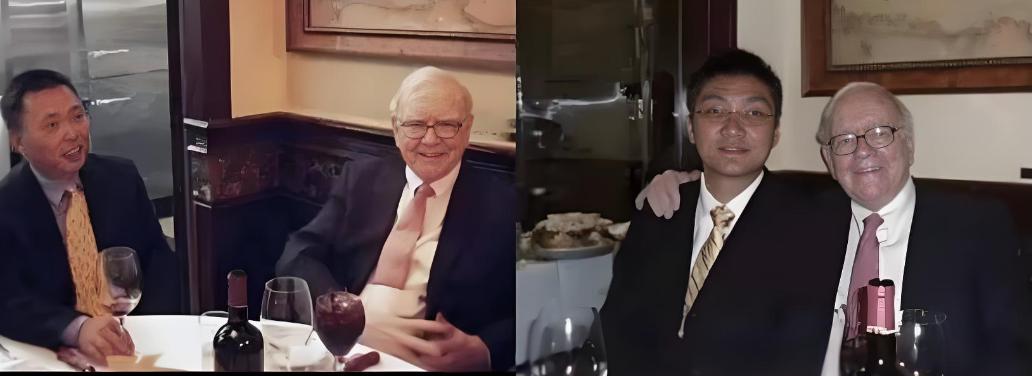
This set of philosophy later bore fruit once again, and the fruit is called Pinduoduo. In 2006, when Duan Yongping won the Buffett's lunch auction, he brought Huang Zheng, a 26-year-old junior fellow apprentice of Zhejiang University, with him. Huang Zheng later founded Pinduoduo, and copied the concept of "Benfen" into the corporate culture manual of this new company. Huang Zheng publicly said that Duan Yongping is the person who has the greatest influence on his business philosophy.
A person who does not possess any company has become the common source of four leading enterprises. The cause and effect in Chapter 7 appears in advance here: "Put oneself behind others and one will end up ahead, regard one's own interests as secondary and one's own interests will be preserved. Isn't it because he is selfless? Therefore he can achieve his own interests."
3
Never Dare To Be The First Under Heaven: Strive For Perfection After Others
I have three treasures that I hold and cherish. The first is compassion, the second is frugality, the third is never dare to be the first under heaven. ... Never dare to be the first under heaven, so one can become the leader of all instruments. —— *Tao Te Ching* Chapter 67
The third treasure of Laozi's three treasures, "never dare to be the first under heaven", has always been the most controversial. If you do not strive to be the first, how can you win? Duan Yongping has given the standard answer with his 30 years of product practice, and the name he gave to his methodology is almost the direct copy of Laozi's original words: the full expression of "dare to be after others" is "dare to be after others, and strive for the lead in the process".
Looking back at his product resume, none of his products was the "first under heaven": Subor learning machine was launched after Nintendo game consoles and the concept of learning machine appeared; BBK VCD came out after Wan Yan invented the VCD technology; OPPO and vivo started to make mobile phones after Nokia reached its peak. Every time he adopted the late-mover strategy, the logic behind it was the same — let the market verify the demand first, then harvest the market with differentiated products and strong execution.
Wan Yan, the first company to make VCD, invented the whole product category, but went bankrupt before the industry ushered in the dawn. Duan Yongping waited until the industry matured to enter the market, and made BBK the biggest winner in the VCD era with advertising investment and channel layout. Laozi said "never dare to be the first under heaven, so one can become the leader of all instruments". The one who does not strive to be the first becomes the leader of the industry, and Duan Yongping is the best annotation of this sentence in the past 30 years.
But this strategy has a fatal premise, which he explained very clearly: "The premise of adopting the late-mover strategy is that you can provide differentiated products that your user group needs, but others cannot provide. If you can't find the differentiated value, the product that adopts the late-mover strategy will end up as a tragedy."
In other words, "being late" does not mean being slow, but to save the cost of trial and error, and invest all the resources in creating differentiated value. When OPPO entered the mobile phone market as a late mover, it focused on offline channels and fast charging technology; when vivo entered the mobile phone market later, it focused on Hi-Fi sound quality and imaging function. Others verify the market demand, while they polish the user experience. "Being late" solves the risk problem, and "striving for the lead" solves the value problem. This rhythm is perfectly consistent with the complete logic of Chapter 67 of *Tao Te Ching*: among the three treasures, compassion makes you brave, frugality makes you extensive, and never dare to be the first makes you the leader of the industry. Compassion for users, frugality of resources, and willingness to lag behind in the ranking are all indispensable.
4
For Tao, You Reduce Every Day: The Stop Doing List
For learning, you increase every day. For Tao, you reduce every day. Reduce and reduce again, until you reach the state of non-action. Do nothing, and nothing is left undone. —— *Tao Te Ching* Chapter 48
Most of the books on management bookshelves teach people "what to do": how to achieve growth, how to expand, how to seize opportunities. Duan Yongping's core methodology is a reverse list — Stop Doing List. He has a classic guiding sentence: "A good company must have a long Stop Doing List, which records all the things the company will never do."
What does this list look like? Summarized from his interviews and Xueqiu Q&A over the years, it at least includes: no credit sales, no delayed payment to suppliers, no delayed salary payment, no OEM business, no interest-bearing loan, no merger and acquisition, no blind diversification, no blind expansion, no price war, no chasing cost-effectiveness, no producing products without differentiated value, no exaggerated advertisement, no attacking competitors, no excessive pursuit of market share... Every item on the list is something that everyone in the industry is doing, and he is fully capable of doing as well.
For example, "no sales department": BBK-related companies have no sales departments for a long time, all customers get goods at the same price, no discount, no rebate, no one can bargain. For example, "no debt": the company has abundant cash on account, and the credit line provided by the bank has been idle for years. For example, "no price war": when the VCD industry was in the most fierce price war, BBK withdrew from the price competition and focused on polishing product quality.
Chapter 48 of *Tao Te Ching* says that for learning, you add knowledge every day; for pursuing Tao, you reduce unnecessary actions every day. Reduce again and again, until you reach the state of non-action, and then nothing can not be accomplished. Duan Yongping's interpretation almost corresponds to the original text word by word: "The so-called doing the right thing is actually achieved by not doing the wrong thing." "If you find something is wrong, stop it immediately, because the cost at this time is the minimum."
He also used a metaphor of playing Go to condense the whole set of philosophy into a vivid picture: "The biggest secret to winning a Go game is not to play brilliant tricks, but to play standard moves all the time without making mistakes, and wait for your opponent to make mistakes. Running a business is the same. Which of the failed enterprises was killed by others? They all died of their own mistakes."
Do not die of your own mistakes, and wait for your opponents to make mistakes, this is the commercial vernacular version of "doing nothing and nothing is left undone". The "reduction" in the process of pursuing Tao means to remove all actions that may lead to fatal mistakes, rather than removing the enterprising spirit. The longer the Stop Doing List is, the longer the enterprise can survive; the longer it survives, the greater the compound interest will be. Duan Yongping's understated summary is actually the most shocking statistical fact in China's business circle in the past 30 years: "Most of our competitors in the past have disappeared, and we are still alive."
5
The Highest Good Is Like Water: Benfen
The highest good is like water. Water benefits all things and does not compete with them, it stays in the places that everyone dislikes, so it is close to Tao. —— *Tao Te Ching* Chapter 8
The core of BBK's corporate culture only has two characters: Benfen. Duan Yongping's definition of these two words is so simple that it seems almost crude: "My understanding of Benfen is that you don't do things that are not in line with your duty", "Benfen means that if the thickness of an object is 1.0, you say it is 1.0", "Benfen is something in your bones, and it should not be learned from others."
It sounds like moral preaching, until you see its actual application scenarios. Duan Yongping once shared a story: in the early days of BBK's founding, he took a fancy to an idle trademark called "Xiaotiancai", and offered 3 million yuan to the trademark owner, but was rejected directly. Ten years later (around 2007), he commissioned an intermediary company to try again. The other party did not know who the buyer was, and directly offered 300,000 yuan, and repeatedly emphasized that "this trademark is very valuable, BBK once offered 3 million yuan to buy it ten years ago". The transaction process went very smoothly. During the process, BBK learned that the trademark owner was already very down and out, so Duan Yongping made a decision: he made up the price difference to the other party according to the original 3 million yuan price ten years ago.
His own explanation is: "We learned that he was very down and out at that time, so we decided