Lei Jun has "put" a coffee shop into Xiaomi cars, is there a new battlefield emerging for the coffee industry?
In the near future, you may be able to enjoy freshly ground coffee right in your car.
Recently, the news that Xiaomi Pengcheng has teamed up with Peet's Coffee to create a "Free Coffee Shop" has drawn widespread public attention.
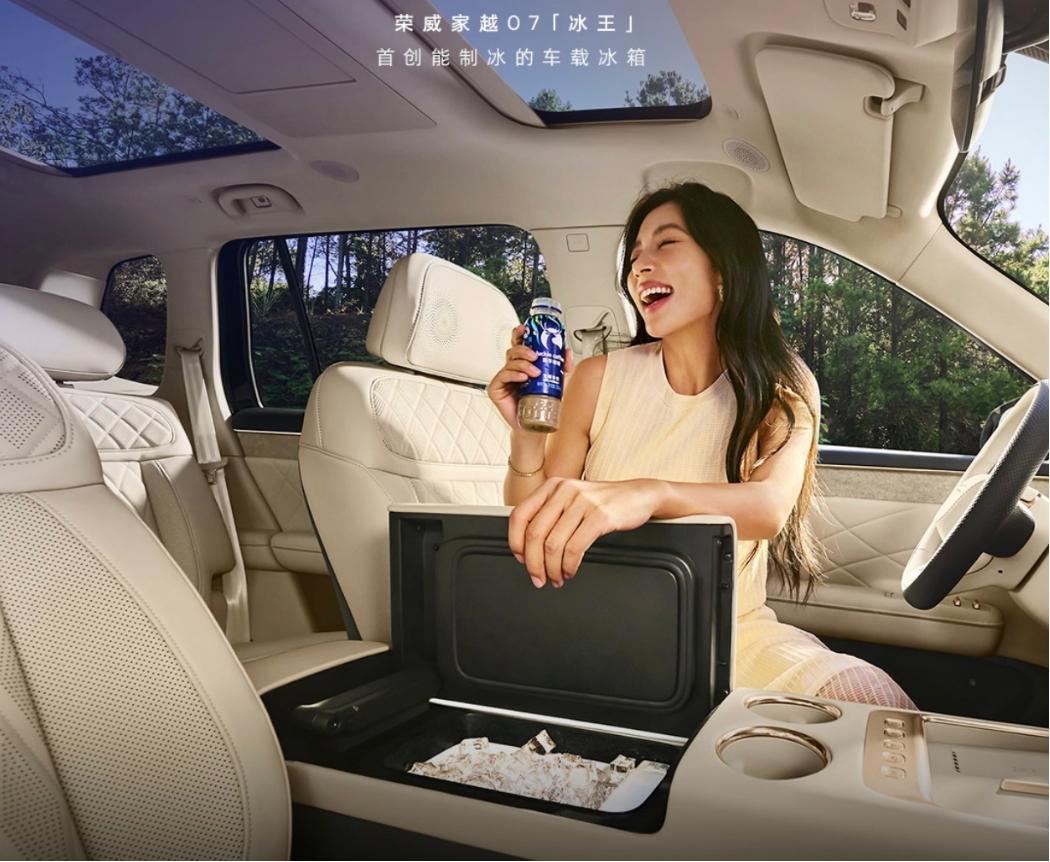
Apart from Xiaomi, SAIC Roewe has cooperated with Luckin Coffee to realize "fresh iced coffee made in the car" with a high-speed refrigerator; Huawei's Zunjie V800 features the first built-in integrated "Private Beverage Bar" that can extract coffee with one tap; NIO's NIO Café has been launched on food delivery platforms.
When leading automakers step into the coffee business, how much incremental growth can they bring?
1
Leading Automakers
Are Moving Coffee From Brick-and-Mortar Stores Into Vehicles
On September 7, Lei Jun posted a poster on Weibo with the caption: "Xiaomi Pengcheng and Peet's Coffee are co-building the Free Coffee Shop, which is currently under renovation."
On the poster, Xiaomi's new vehicle model "Pengcheng" and Peet's Coffee echo each other under warm yellow lighting, but the specific location, form and opening date have not yet been announced.
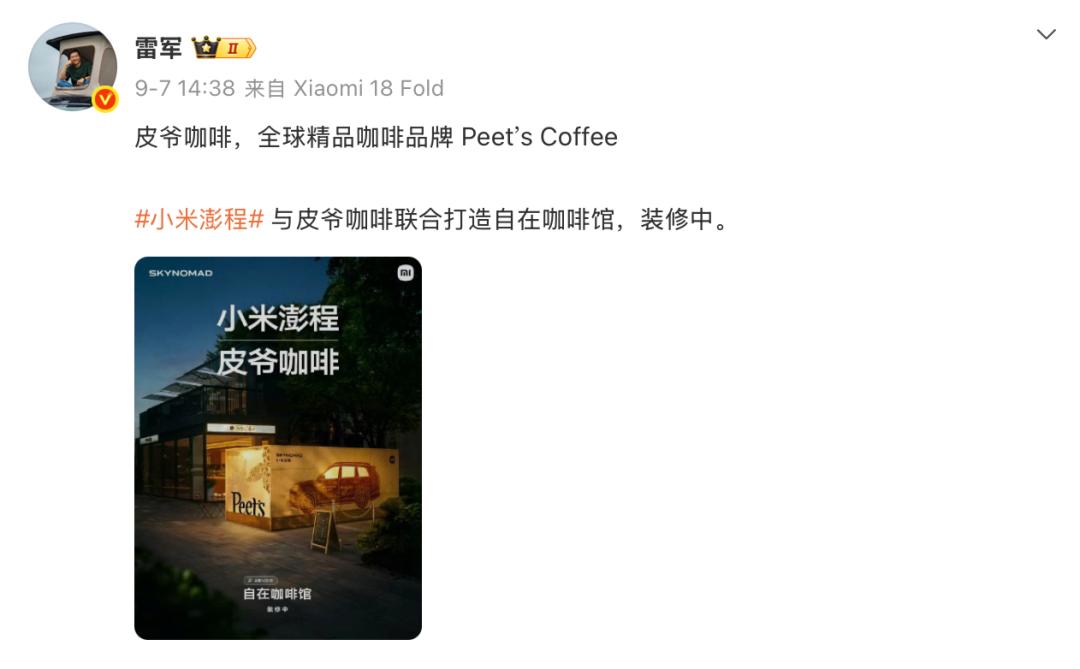
After the news was released, it sparked extensive discussions among a large number of "Mi Fans". Some urged "when can we get to drink the coffee", while others paid attention to "whether all car models support this function". Many people praised "this cooperation is extremely well-planned", while some others questioned "whether it is more flashy than practical".
In fact, as early as 2022, Xiaomi joined hands with Peet's Coffee to open an "Imagery Story Coffee Shop" by the West Lake. In July this year, Lei Jun showed off custom coffee at the Xiaomi Science and Technology Park printed with the "Pengcheng" logo; at the delivery site of "Pengcheng" in Shanghai on September 13, the souvenir gift for car owners was also a custom Peet's gift box.
It's not just Xiaomi, recently cooperations between other automakers and coffee brands are also very frequent, and their operation modes have been clearly differentiated.
Some take a light-weight approach. The AI high-speed iced and hot dual-purpose refrigerator built in SAIC Roewe's Jiayue 07 model, paired with Luckin's ready-to-drink bottled coffee, realizes "fresh iced coffee made in the car" in 10 minutes. The refrigerator is the core, and the coffee brand provides products rather than equipment.
Some adopt a heavier-weight solution. Huawei's Harmony Intelligent Mobility Zunjie V800 directly integrates coffee equipment into the vehicle's hardware. The integrated "Private Beverage Bar" is installed in the central island area of the second row, supporting the extraction of freshly ground Americano and Espresso, the water temperature can be adjusted between 40℃ and 95℃, and it can make 3 drinks continuously.
This is not just "putting coffee in the car", but turning the car itself into a space for making coffee.
Xiaomi and Peet's have blazed a third path — "co-construction of space". Peet's has embedded itself into Xiaomi's user operation system. Coffee brands no longer only reach consumers through their own stores, but leverage other parties' scenarios, users and traffic pools.
Connecting all these cases together, we can find a common trend — beverage brands are shifting from "opening their own stores" to "embedding into other parties' scenarios".
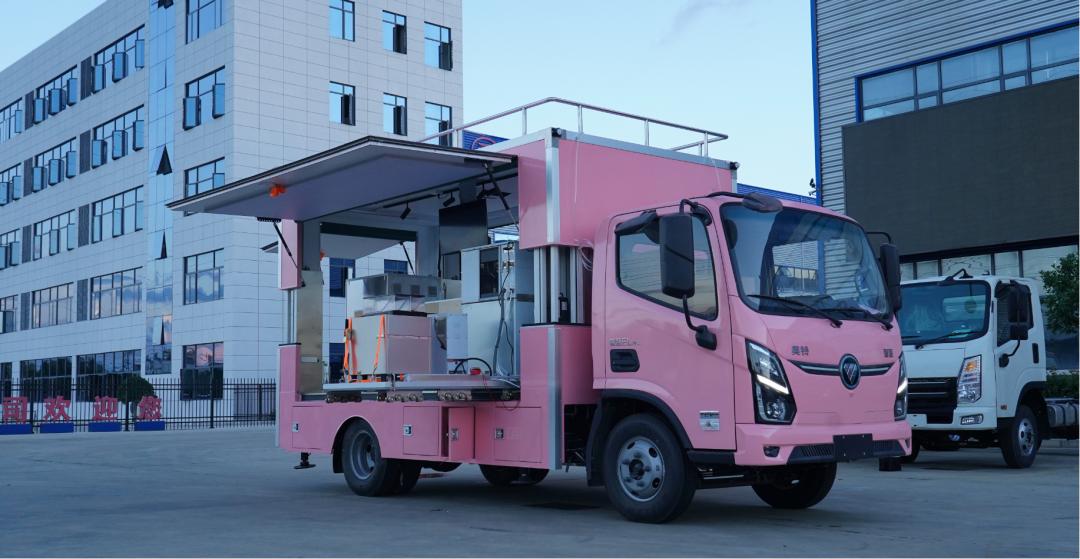
Wu Wendi, founder of Crazy Rabbit Lab and Coffee RV, told me: "The third space will definitely be the vane of the future. For people who love coffee, the coffee shop is the third space; and now, cars have become the third space in many people's lives, especially RVs and caravans. When new third spaces are formed in the future, coffee lovers will definitely place coffee and coffee machines in them."
2
"In-Car Coffee", a New Incremental Market?
Peet's is the first specialty coffee brand that has carried out "physical space co-construction" with automakers. Will more brands follow suit after Peet's?
Equipment manufacturers have already taken action, and the real thresholds lie in water, power and compliance
In fact, the matter of making coffee in the car has been quietly developed by equipment manufacturers for many years. Sifei Technology and Li Auto jointly developed in-vehicle coffee equipment, reconstructed the product in the form of a thermos, and won the Gold Award for Product Innovation at the Shanghai Import Expo with the concept of "mobile coffee shop".
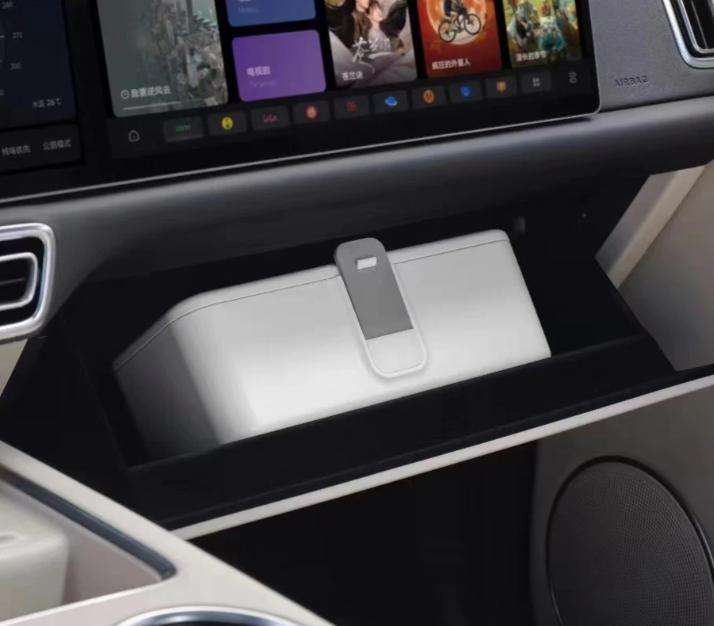
But integrating coffee making functions into the car is not as simple as imagined.
Wu Wendi said: "The biggest problems of household in-vehicle coffee are water and electricity, which are not difficult to solve, and there are mature solutions on the market; but for commercial use, it will further bring a series of problems such as power rating, battery capacity, ice making capacity, waste water and qualification compliance."
Automakers have different procurement logic, and new B2B channels are opening up
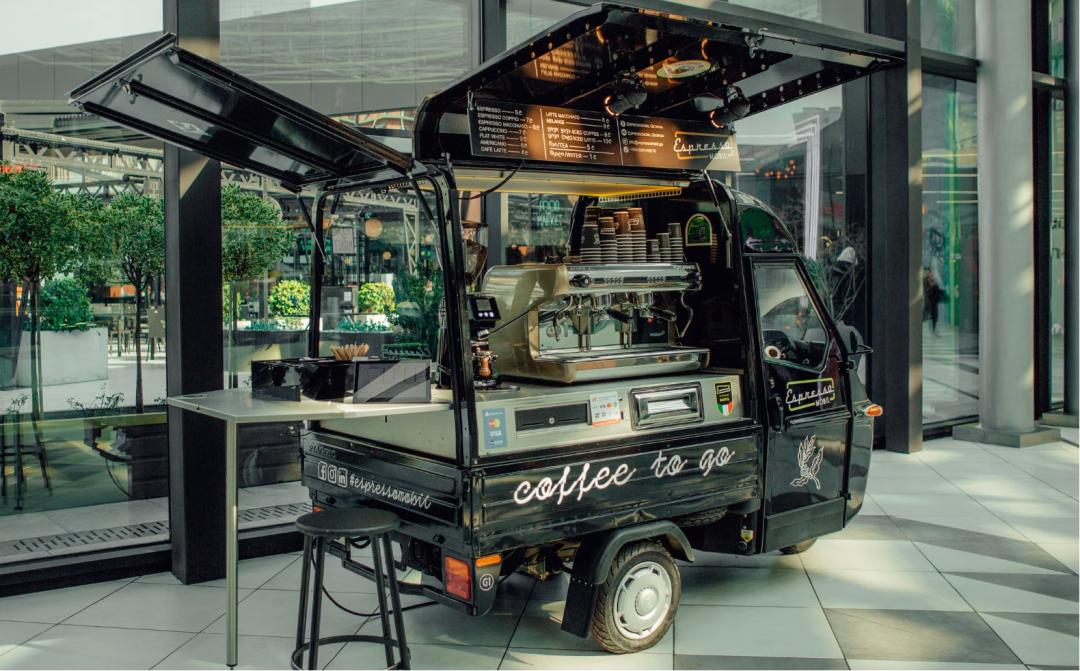
Under the Xiaohongshu post released by Peet's about the cooperation, the most-liked comment came from a mobile coffee shop entrepreneur: "I want to convert an N70 into a small mobile coffee shop, and I'm working on the solution right now."
For upstream tea and coffee equipment suppliers, the participation of more leading automakers means that a new B2B channel is opening up.
Sample Image
The procurement logic of automakers is completely different from that of beverage stores: beverage stores have small procurement volume per store, and focus on cost-effectiveness and easy operation; automakers make bulk purchases, and focus on vehicle-level certification and safety. Once entering the supply chain system, the orders will be stable and large in volume.
"Coffee was born out of hobby and developed due to commerce. Both senior coffee shop operators and chain brands are rapidly embracing the general trend of in-vehicle coffee. Facing changes, coffee practitioners have always maintained a positive attitude." said Wu Wendi.
After coffee, what will be the next thing to be installed in the car?
Wu Wendi's judgment is baking and light meals: "The car is just a place. Products that are most easily combined with traditional coffee shops, such as bagels, sandwiches, pizzas, ciabatta, and ice cream, will naturally be integrated into in-vehicle coffee scenarios. Consumption habits are in the same line."
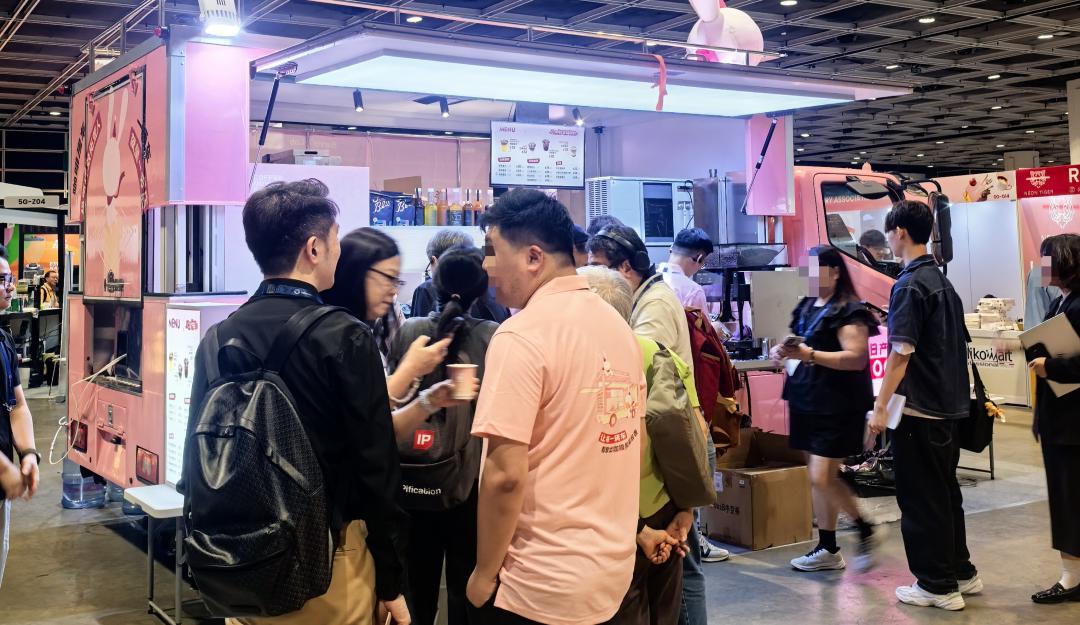
From physical stores to vehicles, coffee consumption scenarios are being redefined.
For the coffee industry, this is not just an extra place to sell coffee, but also an extra possibility for consumers to "get coffee anytime, anywhere".
3
From "Opening Stores" to "Embedding"
The Next Growth Path for Coffee
If we take a broader view, we will find that the practice of coffee brands "embedding into other parties' scenarios" has already been verified in multiple channels.
1. Convenience Stores: The Shop-in-Shop Model Has Been Verified
Nowwa Coffee has cooperated with more than 100 convenience store brands, covering over 300 cities across China. Among them, the revenue from the cooperation with Meiyijia has exceeded 100 million yuan, and the overall revenue growth rate of cooperative stores remains at 20% to 50%.
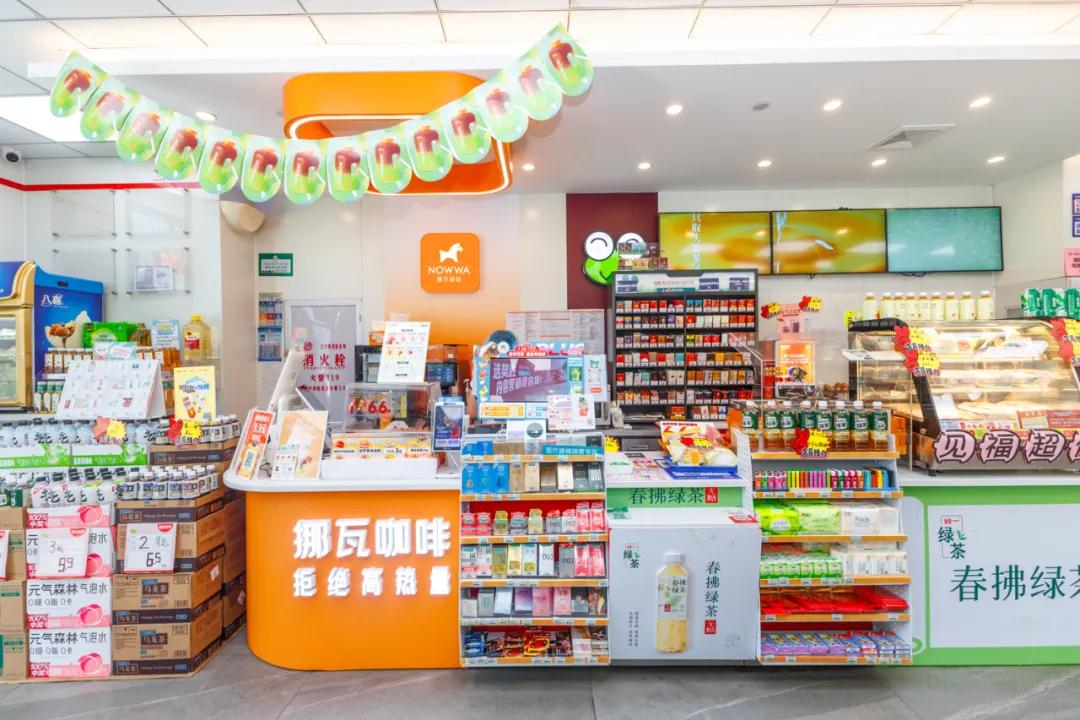
Cotti Coffee has launched three store types: "coffee shop + convenience store + shop-in-shop", embedding the convenience store form into related chain formats to further intercept consumers.
2. Subway Stations: Commuting Scenarios Become New Battlefields
Recently, Luckin Coffee signed an agreement with Xiamen Metro to settle in 14 stations. It has previously reached cooperation with Tianjin Rail Transit and Suzhou Metro. Mixue Bingcheng has opened stores in bus stations, high-speed railways and airports, and ranks first among affordable tea and coffee brands in terms of the total number of transportation hub stores. Brands including Manner and Tims Coffee are also accelerating their layout of subway locations.
3. Mobile Coffee Carts: Chain Operation Is Accelerating
Starbucks China's "Thousand Stores, Thousand Faces" strategy clearly includes the mobile coffee cart form, which adapts to commuting, cultural tourism, communities and other scenarios, ranging from coffee carts at concert sites to convenience stores in modular office buildings.
Liu Wenjuan, CEO of Starbucks China, said that future store expansion will completely break the limitations of the traditional "large store" model, presenting a diversified and flexible layout trend.
Chen Hao, Retail General Manager of Peet's Coffee, clearly stated at the FBIF2026 Forum that the brand is exploring "stores with stronger scenario attributes".
From convenience stores to subway stations, and then to mobile coffee carts, coffee brands are changing from "waiting for customers to come" to "taking the initiative to reach customers".
The in-car scenario explored by Xiaomi and Peet's is essentially another extension of this path — making coffee appear in places where consumers will naturally stay.
This article is from the WeChat official account "Kamen" (ID: KamenClub), written by Xiya, and authorized for release by 36Kr.