Everyone is afraid that "Ning King" will win by too large a margin.
The automotive industry has once again launched a massive "de-CATL" movement.
As the supplier of the component that takes up the largest share of new energy vehicle costs, market players are not actually averse to CATL making profits, but are concerned that CATL is earning excessively high returns.
Let's look at this set of data: in the first half of this year, the total revenue of 14 mainstream automakers reached 1.47 trillion yuan, with the total attributable net profit standing at about 18 billion yuan, corresponding to an overall net profit margin of only around 1.22%; while CATL (300750.SZ) saw its attributable net profit rise 41.98% year-on-year to 43.28 billion yuan in the same period, earning more than the sum of the 14 automakers combined.
Looking at the domestic installed capacity of power batteries, data from the China Automotive Battery Industry Innovation Alliance shows that in the first half of this year, CATL's domestic passenger car installation share reached 46.7%, roughly equal to the sum of the second to tenth place players, reaping the largest share of industry dividends on its own.
Automakers are trapped in cutthroat price wars, and the saying that "all efforts end up working for CATL" has come true; second and third-tier battery manufacturers can no longer stay on the sidelines, sounding the counterattack horn and all wanting to add their own names to the "CATL + BYD + others" battery supply structure.
This has led to a recent abnormal polarizing phenomenon of CATL's robust financial results growth and falling share price.
Automakers have mixed feelings towards CATL, while its peers are extremely jealous. Squeezed by pressure from both sides, CATL's market value has evaporated by one third in 4 months. The market is focusing on when this cold wave started, and how long and how deep it will spread.
1
The Helplessness of Automakers
The automotive industry has developed rapidly in recent years, but has fallen into a strange cycle of "sustained revenue growth and obvious profit pressure".
According to statistics from the China Association of Automobile Manufacturers, in the first half of 2026, the automotive manufacturing industry generated a revenue of 5.19 trillion yuan, up 1.8% year-on-year; the total profit reached 1953.5 billion yuan, down 19.5% year-on-year, with a profit margin of only 3.8%. The 22 A-share and Hong Kong-listed automakers recorded a total revenue of about 1.50 trillion yuan in the first half of the year, with a combined attributable net profit of about 33.4 billion yuan, and the average profit margin was only 2%.
Among traditional automakers, GAC, Changan and Great Wall saw their net profit drop by more than 60% year-on-year in the first half of the year, while new energy startups including Li Auto, Voyah and Seres turned from profit to loss. However, CATL can make a net profit of about 240 million yuan per day, and the net profit of this single battery enterprise is twice the sum of the profits of 14 mainstream listed automakers.
The imbalance of profit distribution in the industrial chain has been fully exposed, and the statement that "automakers are working for CATL" has become increasingly concrete. At every performance briefing, executives are repeatedly asked: "How to reduce dependence on CATL".
It is not that automakers are not striving for improvement. On the demand side, the domestic retail penetration rate of new energy passenger vehicles in China has exceeded 60%. In the first half of the year, the cumulative retail sales of domestic narrow-sense passenger vehicles reached 8.701 million units, down 20.2% year-on-year; among them, the retail sales of new energy passenger vehicles were 4.704 million units, down 14% year-on-year, and the retail sales of fuel passenger vehicles were 3.997 million units, down 26.4% year-on-year.
According to HSBC's forecast, 58 and 98 new car models will be launched in the Chinese market in the third and fourth quarters respectively, totaling 156 models, of which about 90% are new energy vehicles. The competition situation is becoming increasingly severe, and price wars among automakers have become the norm in the industry.
The terminal market has been pushed to the point where profits are nearly exhausted, automakers are struggling to survive, the industry concentration is not high, they have no say in upstream procurement and no pricing power in downstream sales, and the rise of raw material costs is difficult to absorb in the short term. They can only reduce costs in multiple ways, mainly in three directions: diversifying battery suppliers, self-developing chips, and standardizing components.
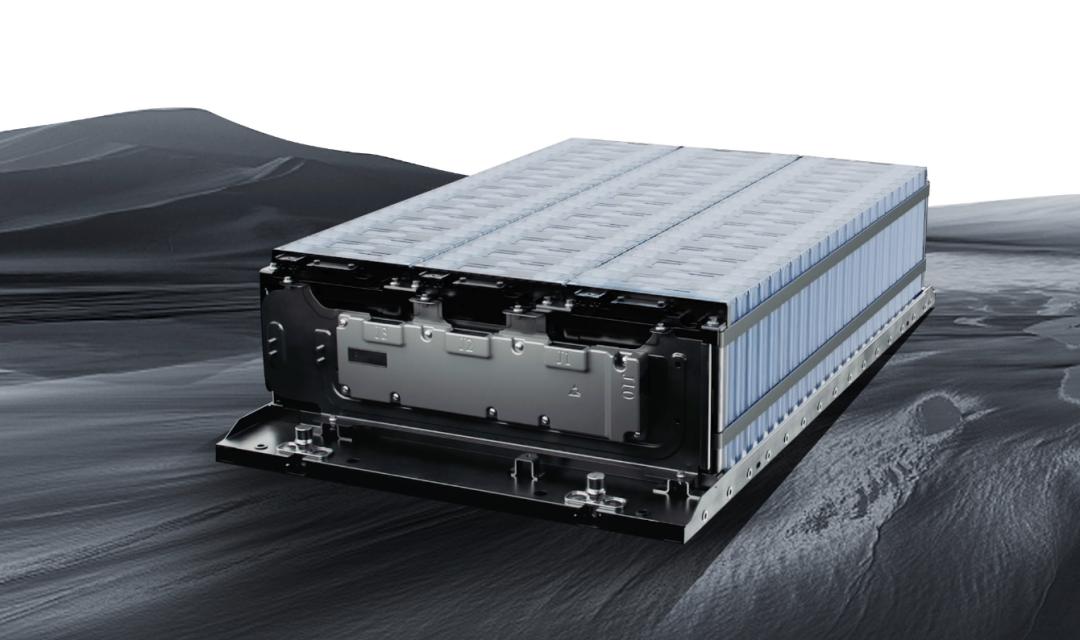
Among them, power batteries account for 30% to 40% of the total cost of new energy vehicles, which is the core of vehicle cost reduction, and the cells are particularly expensive.
Therefore, automakers are all targeting the upstream side, following the example of mobile phone manufacturers to develop batteries independently, so as to gain bargaining power.
Cui Dongshu, Secretary-General of the China Passenger Car Association, took the lead in stating that as automakers improve their efficiency, the pace of in-house battery manufacturing will inevitably accelerate; Wang Jianxin, an expert from the China Battery Industry Association, also euphemistically proposed that automakers and battery manufacturers can carry out joint R&D or build joint ventures; Dong Yang, Chairman of the China Automotive Battery Industry Innovation Alliance, wrote an article hoping that measures can be taken to make the profit distribution across the industrial chain more balanced, so that the automotive industry can operate in a better condition.
Under the "inverted profit distribution" situation, CATL has become the target of public sentiment, its share price keeps falling, and its market value has evaporated by 700 billion yuan in 4 months.
2
Li Auto and Xiaomi Take the Lead
Typical cases of automakers seeking to break away from CATL are Li Auto and Xiaomi.
Li Auto has taken the most aggressive actions. Since its founding in 2015, it has maintained a nearly ten-year honeymoon period with CATL. This year, it directly announced that its self-developed batteries will gradually cover all its vehicle models. The new L8 models launched in 2026 all switch to Sunwoda for cell supply, and at the same time, Li Auto has invested 2.65 billion yuan to increase its capital in Sunwoda Electric Vehicle Battery, jumping to become the second largest shareholder.
The i6 model that Li Auto will apply for certification in the fourth quarter will further launch a version that does not use CATL batteries. In addition, its self-developed 5C battery is manufactured by Sunwoda (300207.SZ) and CALB (03931.HK), and the battery PACK link is controlled by Li Auto itself.
Xiaomi has also chosen the path of "self-defined design, second-tier manufacturers for OEM production". The newly launched Xiaomi Pengcheng models do not continue to use the CATL batteries selected for the previous SU7 and YU7 models, and are all equipped with Xiaomi Longjia batteries. According to Tianyancha data, the Longjia batteries are led by Xiaomi in product definition and participate in cell design, CALB collaborates in the development of the electrochemical system, and Sunwoda is responsible for cell manufacturing.
In the first half of the year, Li Auto recorded a net loss of 3.98 billion yuan, and the operating loss of Xiaomi's automobile division reached 5.7 billion yuan. The "self-developed battery" initiatives of these two automakers are essentially "de-CATL" of the cell supply.
In fact, the "de-CATL" trend among automakers is not a new topic. Zeng Qinghong's famous remark about working for CATL in 2022 was the first shot; from 2023 to 2024, more than ten automakers announced plans for self-developed battery packs or cells as the second round; now, automakers have begun to deeply participate in battery definition and supply, marking the third round of the "de-CATL" movement.
Li Auto and Xiaomi together account for about 13.6% of CATL's domestic installed capacity. This figure is not fatal, but the trend makes the market uneasy. In the same period, automakers including XPeng, Leapmotor and Seres have also followed up one after another, introducing new suppliers to compete for the right to speak in the battery link, among which Leapmotor has already dabbled in cell manufacturing.
3
The Counterattack of Second-tier Battery Manufacturers
Data released by SNE Research shows that from January to June 2026, the total global installed capacity of power batteries reached 608.5GWh, a year-on-year increase of 20%. The diversified demand of automakers has provided a window of opportunity for second and third-tier battery manufacturers to achieve breakthroughs.
But CATL is still the unshakable leader in the industry. Among the top ten global power battery shipments in the first half of the year, CATL alone accounts for nearly 40% of the global share, ranking first for nine consecutive years.
Back to the domestic market, in the past, the duopoly of "CATL + BYD" jointly occupied 70% of the domestic market share, and second-tier manufacturers could only survive in the gaps; with the advancement of the "de-CATL" movement, second-tier battery manufacturers have gained growth opportunities, and in terms of growth rate, second-tier battery manufacturers seem to have outperformed CATL.
In the first half of 2026, the global power battery installed capacity growth rates of EVE Energy, Gotion High-tech and CALB all exceeded 30%, far higher than CATL's 25.3% growth rate in the same period, and they have steadily occupied a domestic market share of more than 5%.
This prosperity is not entirely real. The second-tier battery manufacturers are mainly taking over the low and mid-range market of lithium iron phosphate and the cell supply field for extended-range electric vehicles. This part of the market has low requirements for energy density and fast charging performance, and is highly price-sensitive, which is also a market segment where CATL voluntarily gives up profit margins.
In the same period, CATL's domestic installed capacity share accounted for 46.04%, up 2.99 percentage points year-on-year, and its domestic ternary power battery market share even reached 75.24%, which means that its high-end basic market has not been shaken at all, and the industry concentration has instead increased.
Looking at the real profitability, the four leading second-tier battery manufacturers including CALB, Gotion High-tech, EVE Energy and Sunwoda saw their cumulative revenue increase by 47.8 billion yuan year-on-year in the first half of 2026, close to half of CATL's incremental revenue. The actual incremental revenue from power batteries totaled about 60.5 billion yuan (according to financial report standards), and the net increment was about 41.9% of CATL's, even lower than the 46.7% at the end of last year.
This is because CATL is still strictly defending its market share at this stage.
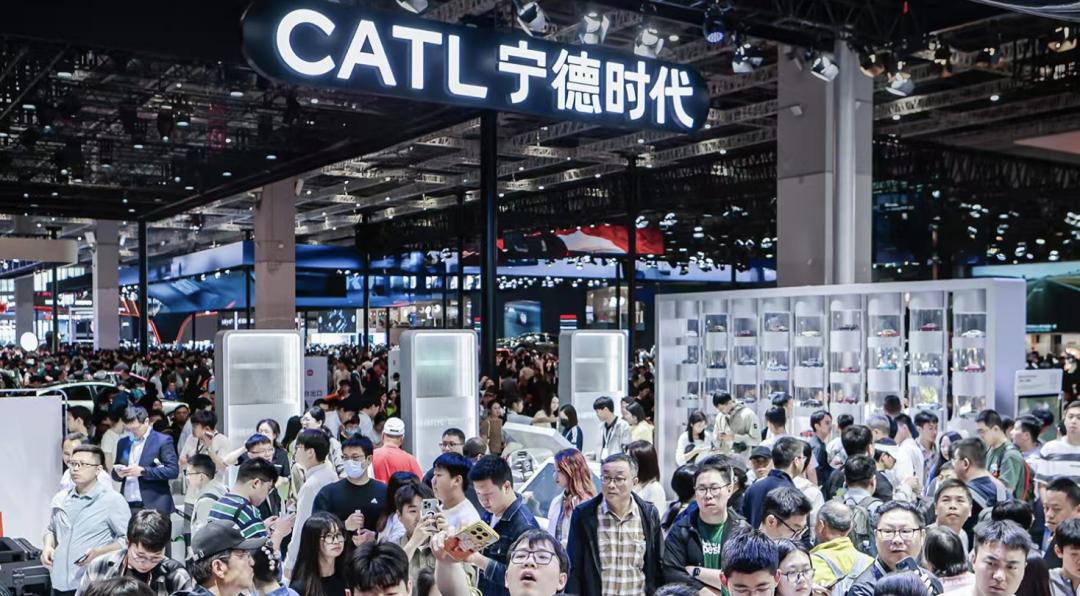
Zeng Yuqun publicly stated that CATL will not launch price wars. In the first half of the year, both its power battery and energy storage gross profit margins declined, and its inventory increased by nearly 40% compared with the beginning of the year. Industry insiders speculate that to a large extent, CATL is deliberately lowering its shipment price, giving up short-term profits to maintain the competitive landscape of the downstream industry, and gaining more market share at the same time.
At the same time, CATL is also expanding its business boundaries to fields beyond batteries such as AI, computing power, chips, robots, intelligent driving, and data centers through technological R&D and industrial investment, to capture the most valuable parts of the industrial chain, which is also out of reach for second-tier manufacturers.
4
Will the Throne Be Overthrown?
Both automakers and peers are targeting CATL. Is its leading position still stable?
CATL is equivalent to NVIDIA in the cloud industry and Qualcomm in the mobile phone industry, undertaking part of the technical R&D and manufacturing work for automakers, and rising in the professional division of labor of the industry.
Apple tried to get rid of Qualcomm and launched its self-developed C1X baseband chip to reduce Qualcomm's share, while Microsoft, Google, Amazon and other companies are also speeding up the layout of self-developed chips while snapping up NVIDIA chips. None of these changes the fact that Qualcomm and NVIDIA are still indispensable super suppliers in the industry.
The moat of CATL lies first in its stable cell system and manufacturing capability. Its R&D investment last year reached 22.1 billion yuan, and the cumulative R&D investment in the past ten years exceeded 90 billion yuan. It is reasonable for it to enjoy a technology premium. Moreover, it has achieved scale effect, with a capacity utilization rate of nearly 95%, while the capacity utilization rate of second-tier manufacturers is generally 50%-60%, and their ability to dilute fixed costs is vastly different.
Secondly, CATL also holds upstream mining rights, with a high degree of vertical integration of the industrial chain. In the cycle of rising lithium carbonate prices, its self-owned mining capacity can effectively hedge the fluctuation of raw material costs, and even pass the cost to downstream automakers by requiring advance payments.
Thirdly, CATL has high-end brand advantages in the consumer side. According to the "2026 Global New Energy Vehicle Consumer Research Report" released by Nielsen IQ, 37.1% of Chinese consumers will give up buying a car if it is not equipped with CATL batteries, and CATL batteries are also the last line of defense for consumer trust.
Ni Jun, Chief Manufacturing Officer of CATL, said bluntly: "Those who can make cars may not be able to make batteries. Professionals should do professional things", and Zeng Yuqun, Chairman of CATL, also said: "It is not difficult to make one good battery, but it is difficult to make one billion batteries of the same high quality."
Related to safety, this statement is plain but reasonable. Except for BYD, no automaker has yet been able to truly achieve large-scale mass production of self-developed cells.
To sum up, CATL's leading position will not be easily overthrown; but cracks have appeared in its throne, after all, the industry cannot tolerate CATL staying in the comfort zone of "monopolistic dominance" forever.
In fact, CATL, which seems to be invincible, has seen its revenue growth rate drop several steps, from 159.06% in 2021 to 17% in 2025.
The expectations and pricing methods of the capital market are also changing. In the past, the capital market regarded CATL as a high-tech growth stock, but now the "growth" attribute is in doubt, and a pure leading manufacturing company can no longer meet the expectations of the capital market.
Even if CATL keeps releasing positive news and actively repurchases shares, it has not stopped the decline of its share price.
Harvard professor Michael Porter once praised the symbiotic relationship between TSMC and its customers, which is deeply bound and mutually beneficial. CATL also benefited from this relationship during the boom of the new energy industry. After the industry entered the stock competition period, the imbalance of profit distribution in the industrial chain intensified, automakers were overwhelmed and full of complaints, and the harmonious customer relationship changed.
In this battle for the right of definition and discourse power, automakers want to "have more choices", second-tier manufacturers want to "get a seat at the table", and pessimism is rising under the squeeze from both sides.
To win back the confidence of the market and the patience of capital, CATL may need to adopt a combination of tough and flexible strategies.
This article is from the WeChat official account