Can Apple's most powerful chip, the M8 Ultra, make Mac return to the server market?
Here's a fun anecdote:
Right as the iPhone Duo launched, Samsung tracked down an ordinary New Zealand resident named Tim Cook to endorse its foldable Galaxy Z Fold 8:
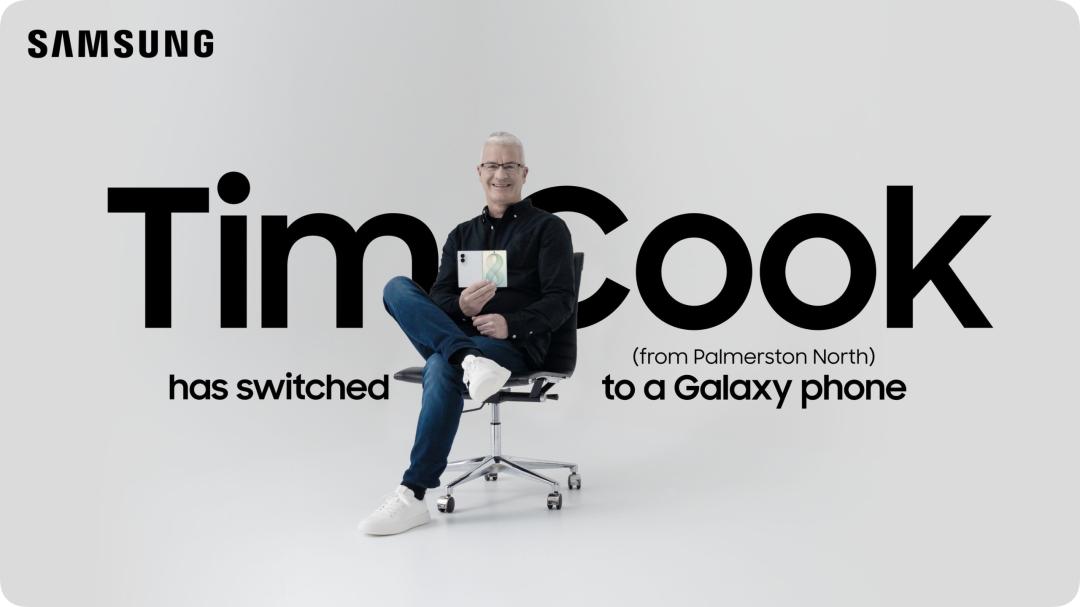
Leaving aside the actual effect of this "ambush-style" marketing campaign, it is clear that many rival vendors have shown a stress response when their home turf is "invaded" by Apple.
And now, it's Dell, HPE, Lenovo and other enterprise server suppliers' turn to get on tenterhooks —
According to The Information, Apple is considering developing AI servers for external customers, which may come in two configurations with two and four M8 Ultra chips, and may use NVIDIA's NVLink interconnection technology for connection.
This project has been in development for nearly a year, and was approved at the very beginning by John Ternus, who was then in charge of hardware engineering and is now Apple's CEO.
But we won't see this product launch anytime soon — even if it is eventually released, it will not hit the market until 2029, and there is a good chance that the project could still be canceled.
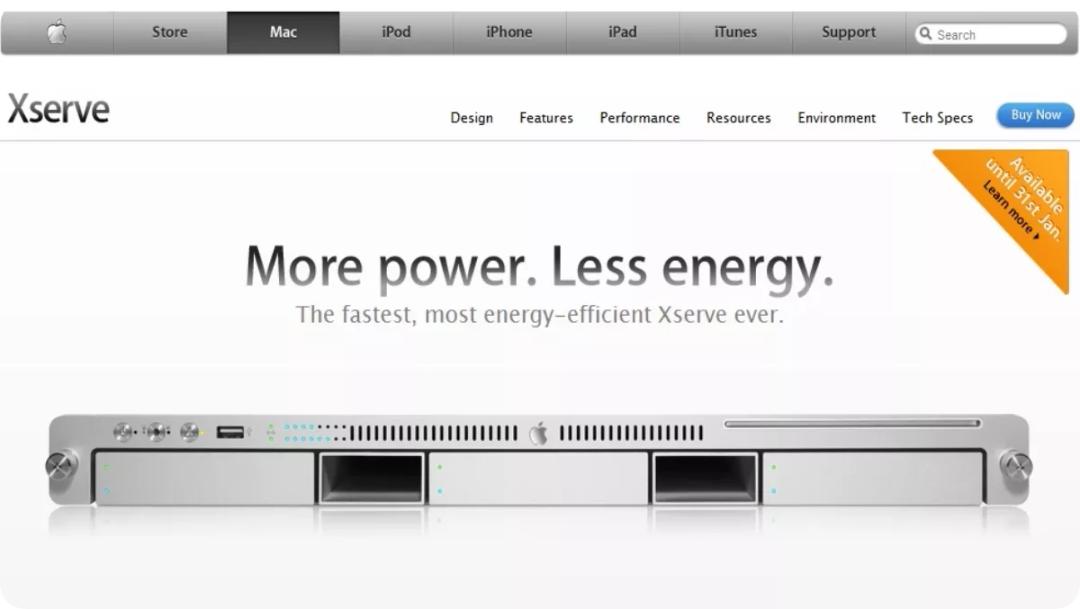
Ever since the Xserve was completely phased out in 2011, Apple has never considered re-entering the enterprise server market. If this secret project is finally greenlit, we will very likely witness a plot as dramatic as a viral short drama:
The 18-year grace period is over, and Apple is poised to recapture everything it lost in the data center.
Moving Macs into data centers is a major trend today
The most obvious reason for a company that has long focused on consumer products to reconsider the enterprise server market is, of course, the sufficiently large market demand —
In the past two years, we have already seen the enterprise market's enthusiasm for consumer products like the Mac mini and Mac Studio.
In the past, various Mac desktops were mostly positioned as computing devices on office desks; but now, the AI wave has subtly changed their application scenarios.
A large number of cutting-edge laboratories and cloud service providers have started to load multiple Mac minis into server racks, using these compact devices as cloud-hosted macOS instances to run Agent products, collect behavior trajectory data, and further optimize models and Agent products themselves.
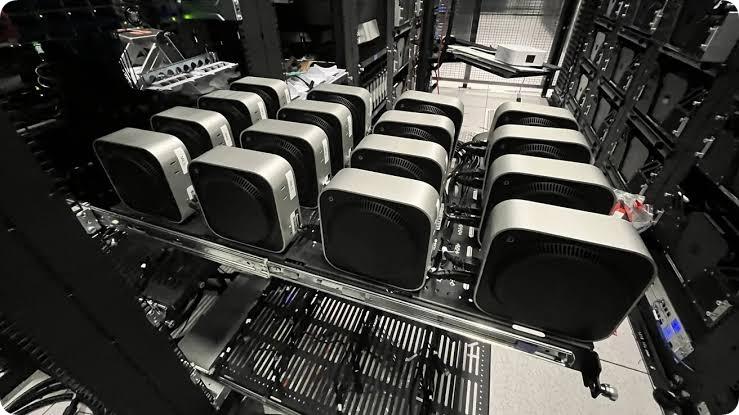
Photo credit | AppleInsider
OpenAI is reported to have stocked tens of thousands of Apple computers, Anthropic is also renting a large number of Mac computing instances on Amazon AWS, and third-party hosting providers have even designed dedicated racks specifically for large-scale Mac deployments.
A major driving force behind Mac's explosive popularity in the enterprise market is that the main line of the current AI competition has shifted to competing on post-training and Agent capabilities, especially Computer Use capabilities, to help users solve practical problems encountered in work and daily life.
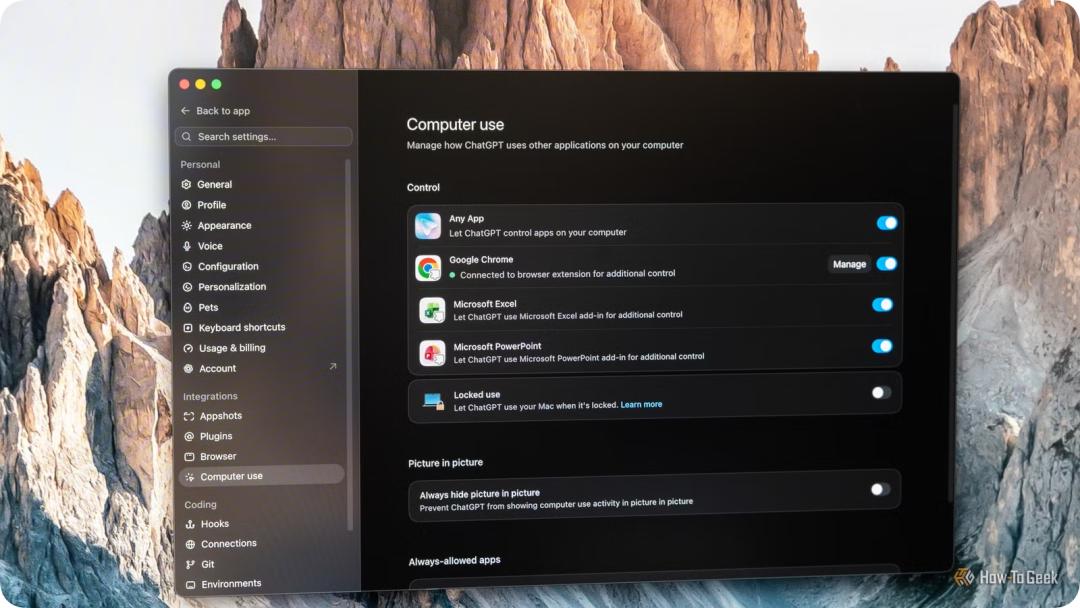
Photo credit | How-to-Geek
For training tasks that require a real macOS desktop and application environment, the Mac mini provides a straightforward deployment path. The licensing restriction that macOS must run on Apple hardware also means that ordinary servers cannot simply replace Mac hardware through virtual machines or "Hackintosh" solutions.
All things considered, using Mac mini directly is actually more cost-effective.
On the other hand, the Unified Memory Architecture (UMA) that Apple has adhered to since the M1 era was an unintended success, which has just achieved "remarkable results" in the AI era —
Large model inference relies not only on pure computing power, but also on memory and bandwidth. In traditional PC and general-purpose server architectures, there is a physical separation between system memory and GPU VRAM. When applied to scenarios with extremely high data throughput such as large model inference, it causes severe data congestion and communication latency.
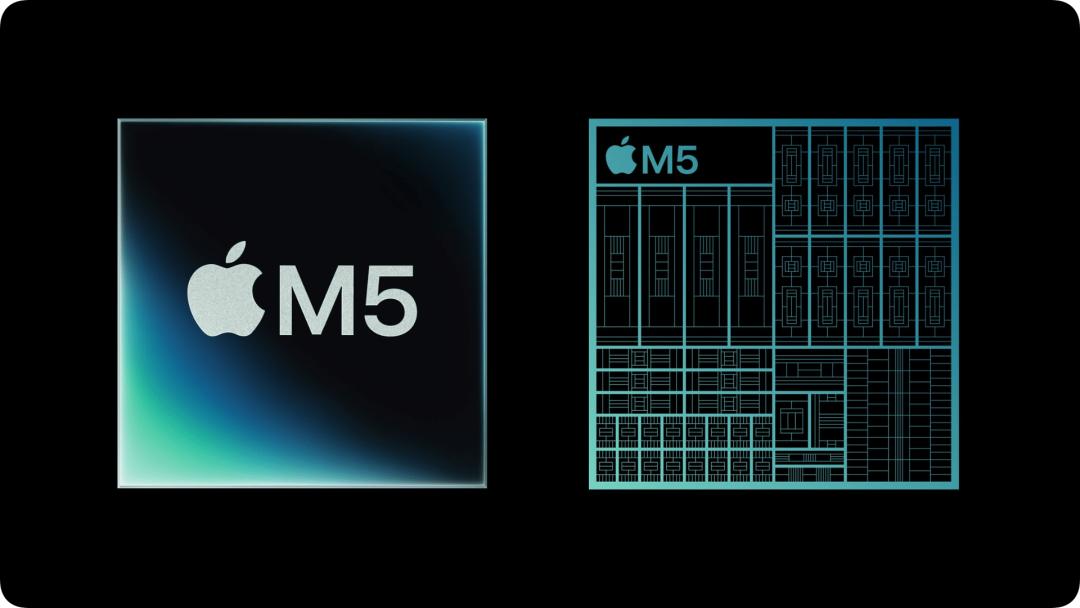
The hardware features of Apple Silicon happen to allow the CPU and GPU to share the same large-capacity memory pool. The M5 Ultra on the latest Mac Studio supports up to 512GB of unified memory with a bandwidth of 1.2TB/s.
The huge high-speed memory is large enough to load the full model weights that would otherwise require multiple professional GPUs to hold, eliminating the latency of moving data across buses. For inference scenarios with large models and low concurrency, the solution provided by Mac is undoubtedly very attractive.
Naturally, with the popularity of OpenClaw earlier this year and a large number of subsequent Agent products, this demand has spread to the consumer market, leading to Mac mini shipping delays of a month or even longer, sharp price increases for new products (which is of course also related to the skyrocketing cost of memory chips), and a 29% year-on-year quarterly revenue growth for the entire Mac product line.
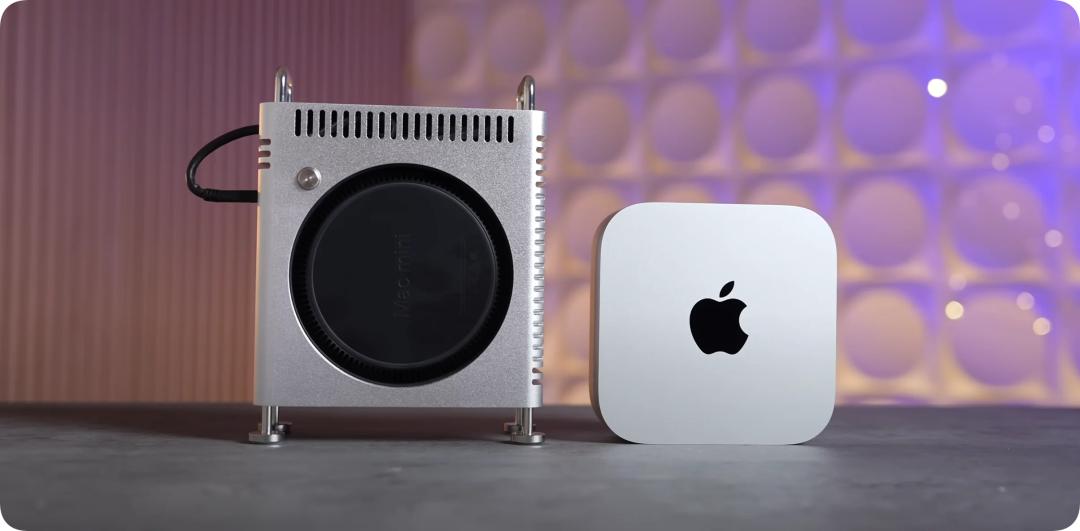
Photo credit | zeera wireless
From this perspective, developing dedicated server products may actually be the least risky choice for Apple —
The existing demand is already large enough, and even the current consumer products that have never been designed for the enterprise market are very popular. Any subsequent "enterprise-oriented" optimization will only make Apple's products more well-received.
The unbearable weight of the enterprise market
Given the huge appetite of current AI laboratories for Mac mini and Mac Studio, rebuilding the server division and entering the enterprise market should logically be a reasonable choice for Apple.
But reality is never that simple.
According to reports from multiple sources, Apple is still hesitant about this direction. There is a big question mark over whether we will see this legendary server product in 2029.
Because re-entering the enterprise market does not align with Apple's long-standing business logic.
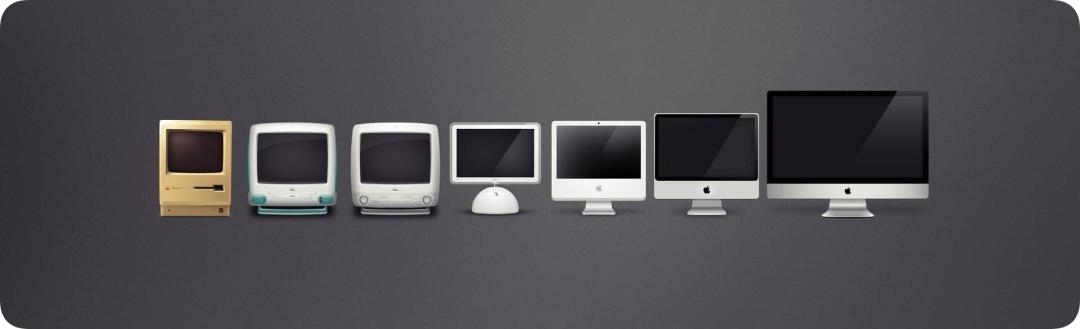
Consumer products are Apple's comfort zone: they are lighter, more elegant, and easier to sell. The B-end server market is the exact opposite: it is heavy, slow, tied to a large number of sales and operation & maintenance personnel, and multi-year contractual obligations.
Apple is extremely good at software and hardware design, but the server market is never just about hardware design. It requires building a complete system of sales, deployment, maintenance and support around enterprise customers.
The Xserve enterprise server that Apple launched in 2002 also failed for exactly this reason.
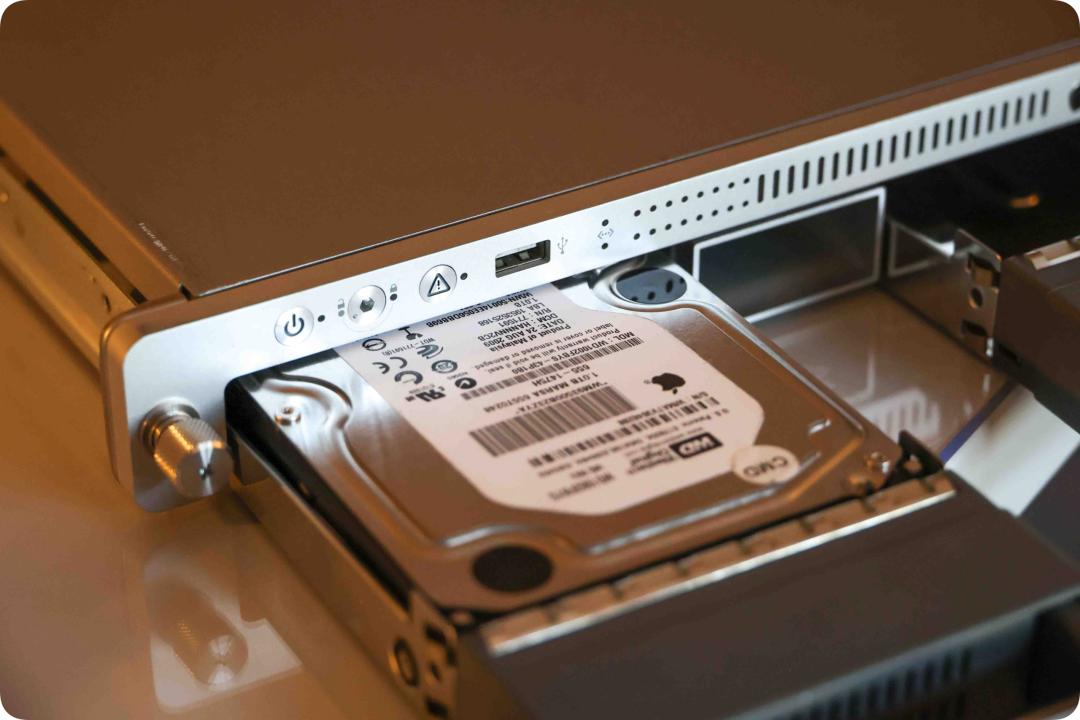
In fact, even by today's standards, the industrial design of the Xserve can be described as outstanding. The delicate anodized aluminum facade and neatly arranged ports and vents present a rare visual balance for industrial equipment.
But enterprise customers obviously do not care that much about the appearance of machines hidden deep in data centers. On the contrary, most enterprises prefer devices that are low-cost, flexible to customize, easy to maintain, and fully compatible with their existing IT management systems.
The Xserve was almost the exact opposite of these requirements. The high hardware premium and the closed ecosystem of the Mac OS X Server operating system meant that the Xserve never gained widespread traction, and the entire product line was completely discontinued as the company refocused its strategy.
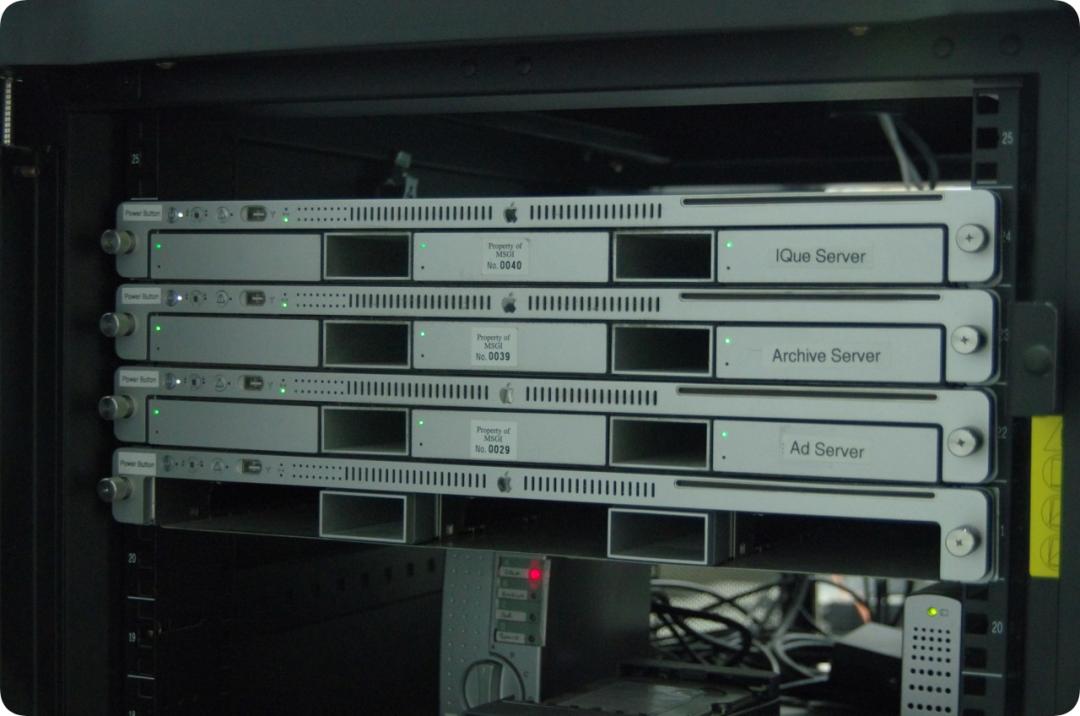
Photo credit | David Clark
Ultimately, the consumer electronics products that Apple excels at, and the enterprise products that caused it to stumble, are completely incompatible in their core design philosophy.
Consumer electronics are first and foremost targeted at individual "people". It requires a person to see and touch the product in person, and still be willing to pay for it after using it. So highlights in appearance, interaction, performance, and even unboxing experience can all become product competitiveness.
Enterprise servers, on the other hand, face an abstract "system".
In this system, no single person has the final say. The procurement department cares about costs, the IT department cares about compatibility and maintenance, the data center cares about density and power consumption, and the people who control the servers may never even set foot in the data center.
This means that Apple's usual strategy of leaning into its strongest advantages to create a "reality distortion field" that makes people ignore shortcomings does not work in the enterprise market.
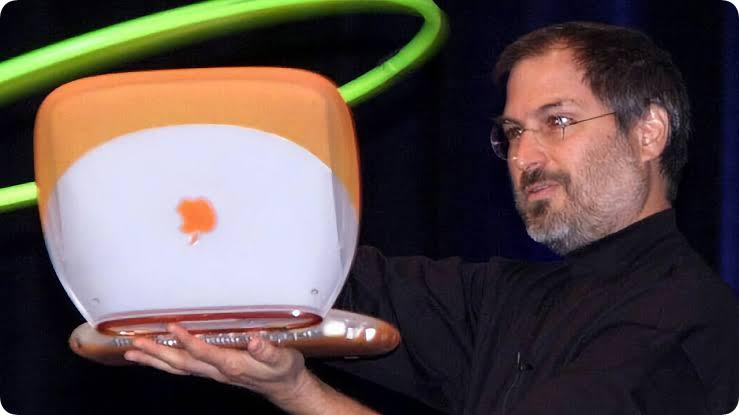
Steve Jobs said this in a 2010 interview:
We are committed to building better products. What I love about the consumer market, and what I have always hated about the enterprise market, is this: we launch a product, we try to present it to everyone, and every person votes for themselves. They say "yes" or "no"; if enough people say "yes", we get to come back to work tomorrow. The enterprise market is not that simple. The people who use the products cannot make decisions on their own, and sometimes the people who make these decisions are confused themselves.
For a company that prefers to collect feedback directly from users and iterate on products, the layered bureaucratic procedures of the server market, and the separation of ownership and usage rights, run completely counter to their product philosophy.
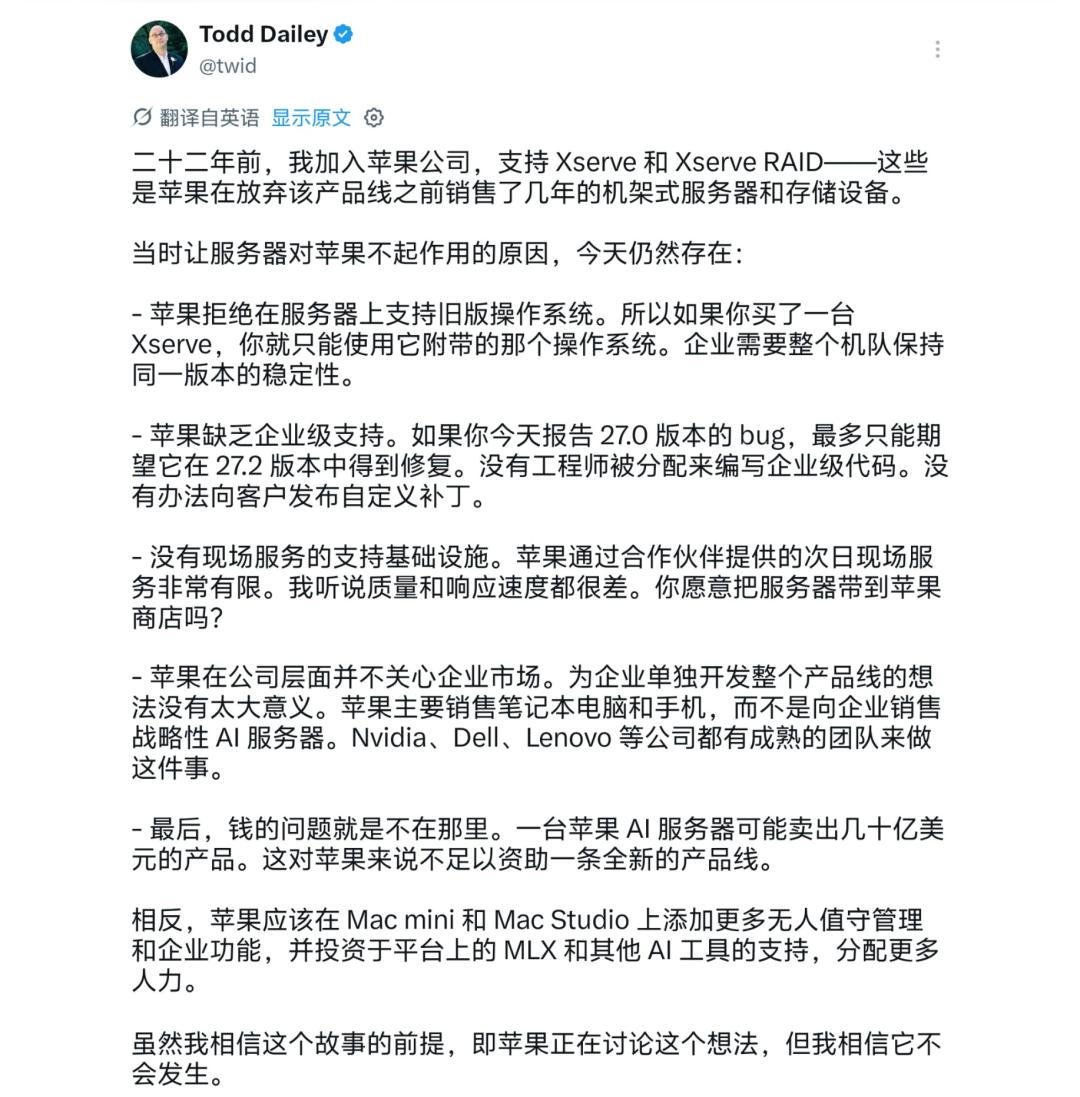
Todd Dailey, who once worked in the Xserve division, is also completely pessimistic about Apple's prospects in the server industry — the problem is not demand, but the pride and persistence that allowed Apple to lead innovation in the consumer market, which are not compatible with the enterprise market.
Breaking traditions may be more welcome
With these premises in mind, it is easy to see why the process of Apple's server product being born (or canceled) is itself a major talking point:
On one side is the huge enterprise demand for Mac servers, and on the other side is the reality that Apple is not experienced in enterprise services. How to maintain balance between these two opposing forces will test Apple's product design capabilities, and even more so its resolve.
In the view of ifanr, the final outcome may not be a binary choice between continuing or canceling the project.
Because in this recent boom, enterprises' desire for Macs essentially represents greater demand for the computing capabilities of Apple Silicon and the performance of the macOS ecosystem, including heterogeneous computing, large-capacity unified memory, high energy efficiency, and hardware security.
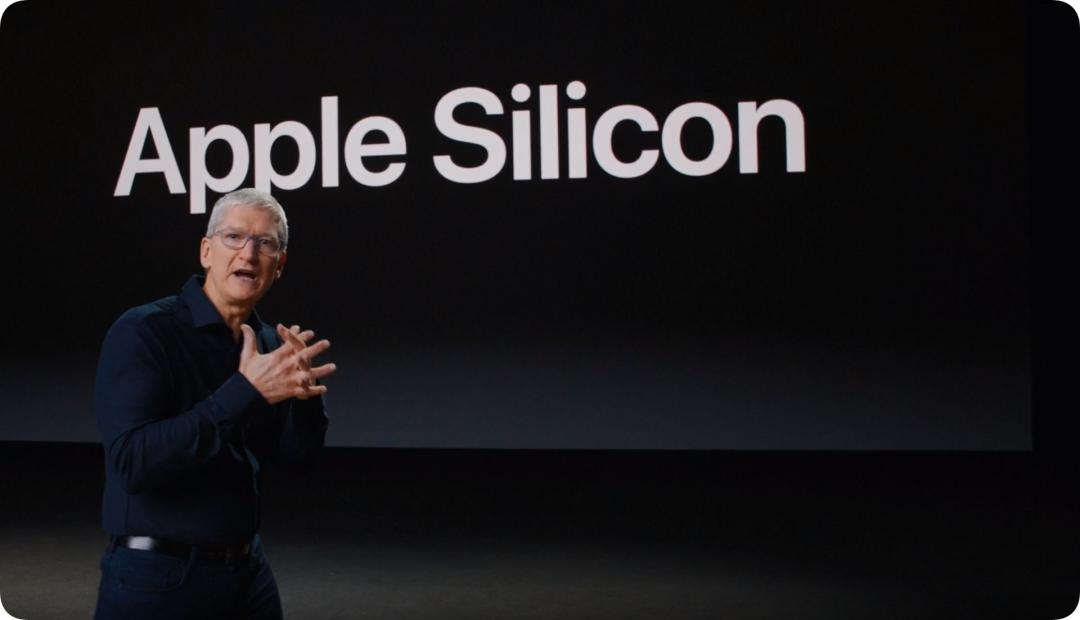
These capabilities do not need to be tied to the traditional rack server form factor.
This also gives Apple the opportunity to enter the enterprise market in a more lightweight way: the rumored M8 Ultra server may not be a fully featured standard server. It may look more like the current Mac Studio, or even the Mac mini.
To meet enterprise requirements, Apple can offer higher density computing, more complete remote management, network interfaces better suited for clusters, and software capabilities optimized for AI inference, based on existing consumer products —
In fact, these technologies are already relatively mature on Apple's "Private Cloud Compute" (PCC) servers used to process Apple Intelligence/Siri AI workloads.
