Is China's new energy vehicle industry facing "overcapacity"? They may have miscalculated three key accounts.
A plain business common sense is that unsalable goods never need tariffs to block them. No country will build a tariff wall as high as 102.5% for products that no one is interested in.
Yet this is exactly what China's new energy vehicle industry is experiencing right now.
The US has imposed combined tariffs of up to 102.5% on Chinese electric vehicles, while the EU has levied anti-subsidy tariffs of up to 35.3% on Chinese-made pure electric vehicles and is brewing a mechanism to set a minimum price. At the same time, the claim that "China has an overcapacity of 20 million vehicles" has been circulating repeatedly among Western think tanks and media outlets.
The "15th Five-Year Plan" for the Development of the Intelligent Connected New Energy Vehicle Industry, released on September 11, does not point to unregulated expansion, but to the upgrading of production capacity to high-end levels and the creation of new demand through new supply.
Tariffs are actions, and "overcapacity" is a narrative. To answer the question of whether there is real overcapacity, we might as well calculate three accounts that the other side is unwilling to count: the account of market behavior, the account of industrial history, and the account of national systems.
1. Actions are more honest than narratives
If Chinese electric vehicles were really unwanted products, the market would vote with its feet, so why would politicians go to such great lengths?
The reality is that while trade barriers are being raised layer by layer, the market share of Chinese EVs is rising against the trend.
Even with anti-subsidy tariffs, the share of Chinese brands in the European market is still climbing; in the first 8 months of this year, the share of Chinese brands in the UK's new car market has more than tripled compared to before. The UK's Business Secretary publicly opposed tariff restrictions for a very straightforward reason: trade protection ultimately makes domestic consumers pay the price.
Then look at the repeatedly cited "overcapacity" figure. A European think tank report claims that China's overcapacity "will reach 20 million units by the end of 2025", and its calculation method simply adds up the nominal planned production capacity of all enterprises, neither deducting the parts that have not yet been put into production and have been eliminated, nor taking into account the year-on-year growth in demand.
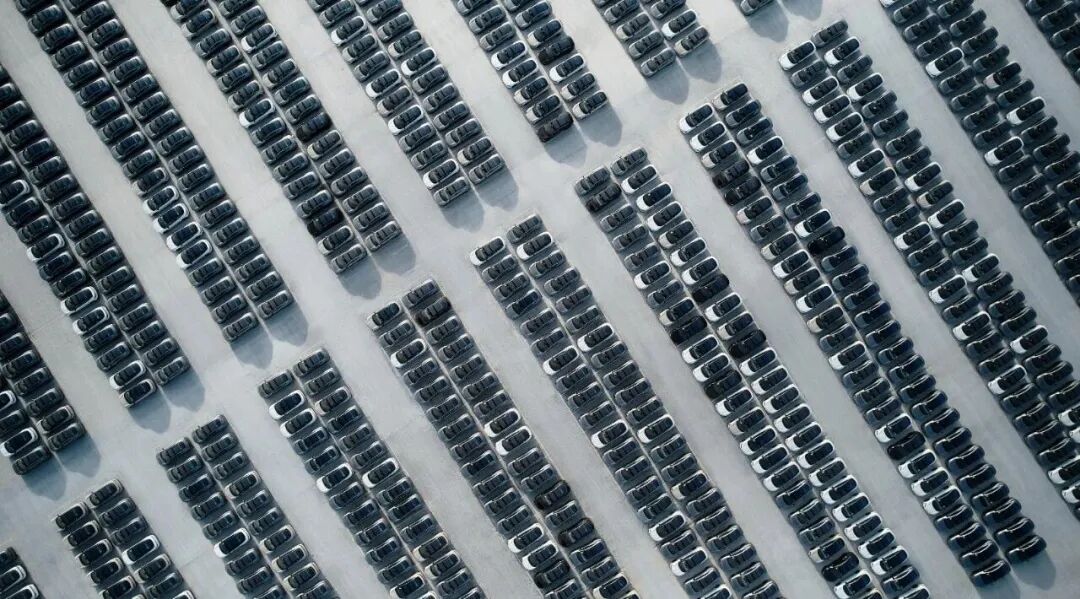
Authoritative data paints a completely different picture.
A Bloomberg survey shows that China's top automobile exporters are operating at a capacity utilization rate within the internationally recognized normal range; the proportion of China's automobile exports in total output is far lower than that of Germany, Japan and South Korea.
The average capacity utilization rate of China's automobile manufacturing industry in the past three years is 73.3%, while the US automobile and auto parts industry is also less than 70% in the same period. In the same interval, it is called "cyclical adjustment" in the US, but "overcapacity" in China — the scale of the ruler changes with the object it is used to measure.
2. Yesterday of photovoltaics, today of automobiles
The accusation of "overcapacity" is nothing new. In 2012, the exact same scenario played out in China's photovoltaic industry: the US imposed tariffs of 34% to 47% on Chinese photovoltaic products, the EU followed up with "anti-dumping and anti-subsidy" measures, China's photovoltaic exports plummeted by more than 40%, and Suntech Power, the world's largest module manufacturer at the time, collapsed.
But in the following ten years, the cost of photovoltaic power generation per kWh dropped by more than 80%, and photovoltaics evolved from an expensive environmental gimmick to the cheapest source of electricity in many regions.
China's global production capacity share in all four links of polysilicon, silicon wafers, cells and modules has exceeded 80%, and the total export value of photovoltaics during the 14th Five-Year Plan period has exceeded 180 billion US dollars.
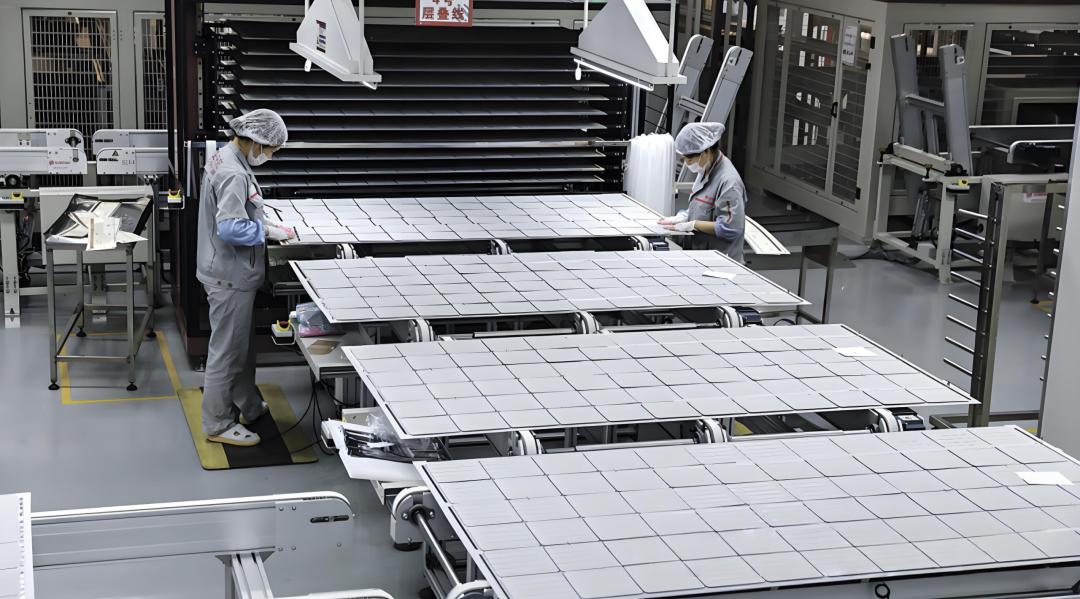
The moment when the cry of "overcapacity" was the loudest was exactly the eve of the birth of a globally leading industry.
A distinction needs to be made here.
The advanced production capacity of emerging industries actually falls into two categories: one is inefficient repetition of backward technologies, which is destined to be eliminated in competition, which is the normal state of the market economy; the other is "productive advancement", which rapidly pushes down the technical cost curve through fierce competition and creates demand that did not exist before.
Since 2018, the energy density of China's power batteries has increased by more than 50%, and the production cost has dropped by more than 60%. Every drop in cost has made a family that could not originally afford an electric vehicle a new user.
It takes 3 to 5 years for a complete vehicle production line to go from construction to commissioning. Today's production capacity is originally prepared for the market five years later. Using this year's production and sales data to pronounce the death sentence on a long-cycle industry is just like denying high-speed rail back then based on its passenger occupancy rate.
3. Another account of production capacity
The accounts of new energy vehicles cannot only be calculated on the profit statement of automakers, but also cannot ignore the profit statement of automakers.
Let's first clarify the liability side: in the past two years, the price war has resulted in widespread losses in the vehicle manufacturing segment, extended payment periods for suppliers, and low utilization rates of some production lines built under the leadership of local governments.
These are real problems — the reason why the "overcapacity" narrative has a market is precisely because it is attached to these real pain points.
But what the capacity utilization rate cannot reflect are several other system-level benefits.
The most solid one is the account of energy security.
China's external dependence on oil will still reach 72.7% in 2025, and automobiles are the largest end consumer of refined oil. In 2025, new energy vehicles across the country will replace about 38 million tons of gasoline, and the consumption of refined oil has already peaked and begun to decline.

What electric vehicles do is to transform transportation energy from oil that needs to cross the Strait of Hormuz to domestically diversely supplied electricity. This account is not reflected in any capacity report, but it is being cashed in every year.
There is also an account of technology spillover.
Power battery technology spills over to the energy storage sector, and the perception and decision-making technologies of autonomous driving share the same origin with robotics — a smart electric vehicle production line hones the full-stack capabilities of chips, operating systems, AI algorithms and precision manufacturing.
Morgan Stanley's recent judgment is that the competitive focus of China's electric vehicle industry has shifted from price advantage to technological advantage.
As for the sense of gain on the consumer side, it is even more a natural result: smart cockpits and combined driving assistance have moved from a novelty to standard features, configurations that used to cost 400,000 to 500,000 yuan are now available in 150,000-yuan family cars, and the plan also specifically arranges to reduce maintenance costs and deploy high-power charging facilities.
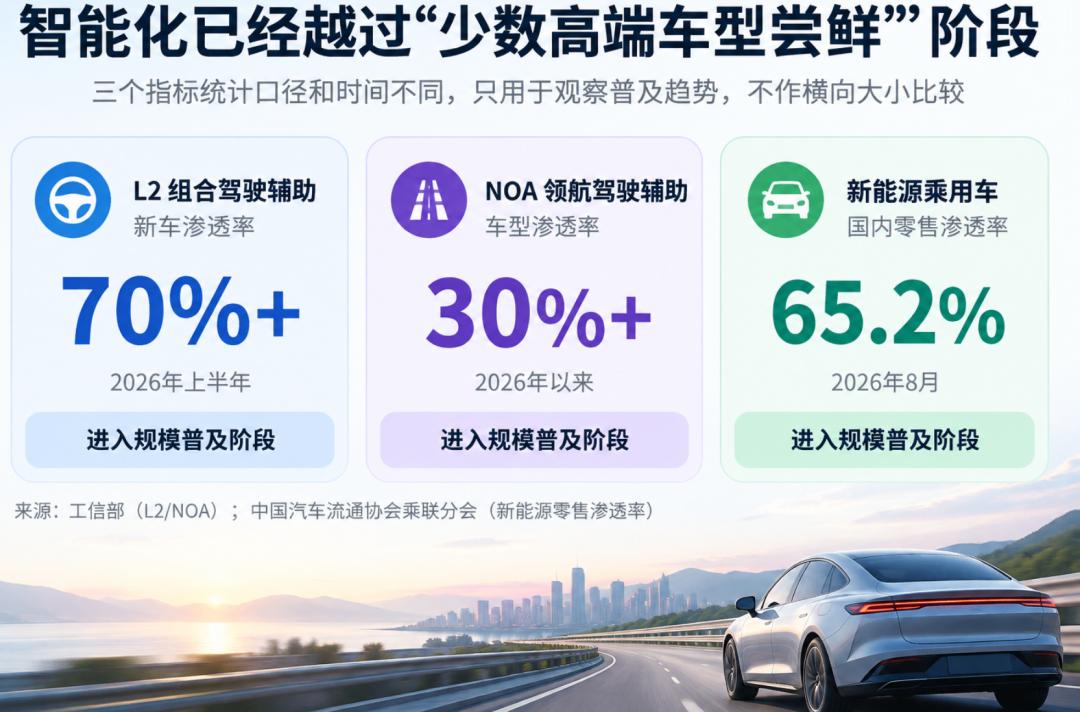
Safer, smarter and more hassle-free vehicles are the most intuitive by-products of this system.
Adding the green supply in the global carbon neutrality process constitutes the complete balance sheet of this production capacity.
Of course, recognizing the value of "productive advancement" does not mean denying the existence of supply-demand mismatch.
In fact, the elimination within the industry is already underway: idle trailing production capacity, accelerated mergers and reorganizations, and significantly reduced new local projects. The direction given by the 15th Five-Year Plan is not unregulated expansion, but to upgrade production capacity to high-end levels, standardize the competitive order through law enforcement and anti-monopoly, strengthen the top-level design of internationalization, and create new demand through new supply.
Neither being deterred by the "overcapacity" narrative nor using administrative means to protect backward production capacity, allowing market competition and government supervision to jointly complete structural upgrading — this is a more practical answer than arguing over labels.
4. Conclusion
Looking back at industrial history, the warning of "overcapacity" is almost a fixed soundtrack when Chinese industries approach the global leading position: steel, photovoltaics, communication equipment, without exception. Every time, those who issued the warnings stood on the wrong side of history.
Unsalable goods do not need high walls, and backward production capacity does not need warnings. What needs to be blocked by a 102% tariff has never been overcapacity, but the arrival of a new era.
This article is from the WeChat official account "Caijing Wuji", written by Chen Song, and published with authorization from 36Kr.