Having been at the helm of Changan for 12 years, how far is Zhu Huarong from a perfect ending to his tenure?
On September 17, Changan Automobile held an extraordinary general meeting of shareholders to complete the leadership reshuffle, and 61-year-old Zhu Huarong was re-elected as chairman. Counting his first tenure at the helm of Changan in June 2020, this is his third consecutive term. If he completes this full term, his time as chairman will be nearly nine years, which exactly spans the most intense cycle of electrification and intelligent competition in China's automotive industry.
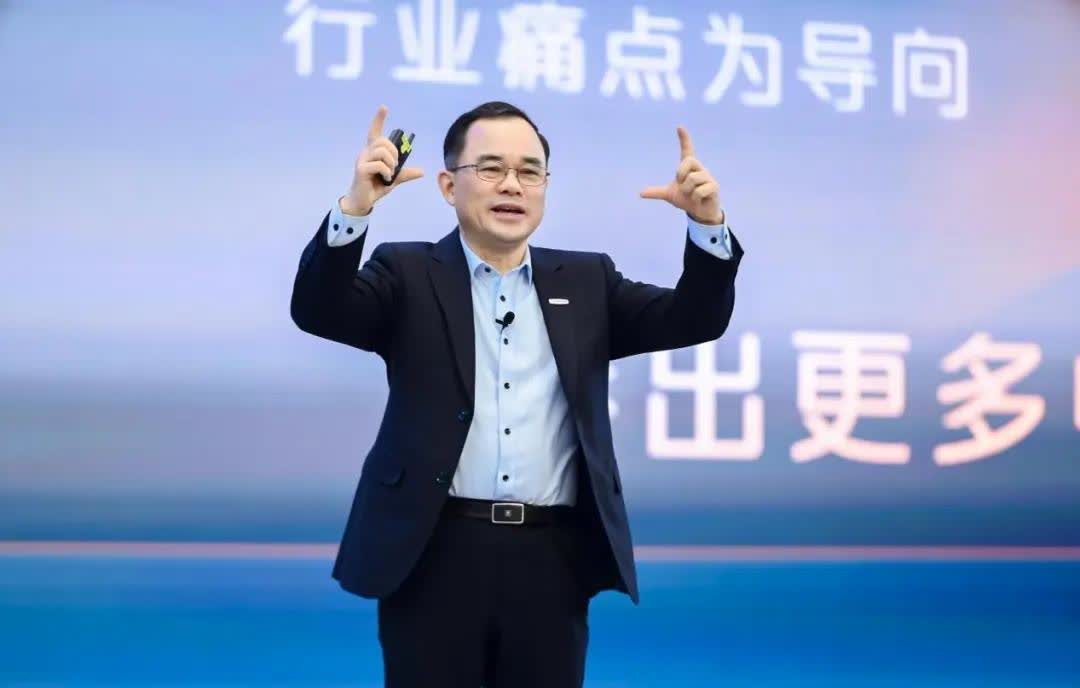
Especially after China Changan Automobile Group was officially established as a new central state-owned automotive enterprise in July 2025, Zhu Huarong's identity is no longer just the chairman of the listed company, but the Secretary of the Party Committee and Chairman of the new central SOE.
This re-election is largely the organization's recognition of his performance over the past five years.
In 2021, his first full fiscal year after taking office, Changan Automobile recorded revenue of 105.142 billion yuan, a year-on-year increase of 24.33%, net profit attributable to shareholders of 3.552 billion yuan, a year-on-year rise of 6.87%, and non-GAAP net profit of about 1.65 billion yuan, which turned positive for the first time after three consecutive years of total losses exceeding 10 billion yuan. In 2025, the company's revenue reached 163.99 billion yuan, up 2.67% year on year, net profit attributable to shareholders was 4.075 billion yuan, down 44.34% year on year, but non-GAAP net profit hit 2.795 billion yuan, representing a year-on-year increase of 8.03%.
The net profit margin dropped from about 3.4% in 2021 to around 2.5% in 2025. The overall gross profit margin was 15.54%, up 0.6 percentage points year on year, and rose to 16.82% in the fourth quarter. Cash flow figures better illustrate the pressure of transformation: the net cash flow from operating activities for the full year 2025 was only 1.836 billion yuan, with a net outflow of 8.6 billion yuan in the first half of the year at one point. Fortunately, the monetary funds at the end of the period still exceeded 54 billion yuan, and the company still has sufficient capital to continue its operations.
Changes in the sales structure are more notable than the income statement. In 2021, Changan's total vehicle sales reached 2.301 million units, up 14.8% year on year, returning to the fourth place in the industry. New energy vehicle sales exceeded 100,000 units for the first time, with a year-on-year growth rate of over 200%, and the proportion of new energy vehicles was only about 4.6%. Overseas sales hit 104,000 units, up 114% year on year, also crossing the 100,000-unit mark for the first time, accounting for around 4.5% of total sales. By 2025, total sales reached 2.913 million units, up 8.5% year on year, hitting a new high in nearly nine years and recording positive growth for six consecutive years. New energy vehicle sales hit 1.11 million units, up 51.1% year on year, exceeding the 1 million-unit mark for the first time, accounting for about 38.1% of total sales. Overseas sales reached 637,000 units, up 18.9% year on year, a record high, accounting for 21.9% of total sales. The cost is also reflected in the financial statements: the average price per vehicle in 2025 was 53,400 yuan, 3,300 yuan lower than the previous year, meaning that the growth in sales volume still partially relies on downward pricing strategies.
R&D investment is the most consistently upward indicator over the past five years. In 2021, Changan's R&D investment reached 4.827 billion yuan, up 24.51% year on year, accounting for 4.59% of revenue. In 2025, R&D investment hit 12.6 billion yuan, up 23.79% year on year, accounting for about 7.7% of revenue, with around 12,400 R&D personnel. The direction of investment is very clear: the SDA central integrated electrical and electronic architecture continues to iterate; the battery production capacity of Times Changan completed the investment and construction of 50GWh of battery cells from 2025 to 2026, bringing the total capacity to 75GWh; solid-state batteries are planned to be installed in vehicles for verification in 2026 and gradually mass-produced in 2027, with a target energy density of 400Wh/kg; L3-level autonomous driving obtained the first official access license in China; the Tianji Intelligent Experiment Center was completed, covering more than 400,000 virtual simulation test scenarios, with a daily simulated driving mileage of over 3.3 million kilometers for intelligent driving; humanoid robots and flying cars have also been put on the agenda, among which flying cars are targeted for mass production and delivery in 2028.
The brand side presents a typical look of the transformation period. Changan Qiyuan sold 410,000 units in 2025, reducing its net loss by more than 50% year on year. Deepal sold 325,000 units, up 44.4% year on year, but still recorded a net loss of 899 million yuan. Avatr sold 123,000 units, with monthly sales exceeding 10,000 units for 10 consecutive months, recognizing an investment loss of 1.16 billion yuan, a slight year-on-year reduction in loss.
Talent and governance arrangements have also been adjusted following the upgrade to central SOE status: Zhu Huarong serves as Secretary of the Party Committee and Chairman of China Changan, Zhao Fei serves as General Manager and President of Changan Automobile. At the listed company level, Ye Pei serves as Executive Vice President, Mi Mengdong serves as Vice President. Deng Chenghao, former CEO of Deepal, was promoted to Chairman, Jiang Hairong, former CMO of Honor's China region, joined as CEO of Deepal. Wang Hui took over from Zhu Huarong as Chairman of Avatr Technology. In the same period, Changan uniformly shortened the payment period for suppliers to 60 days.
Dongfeng, which is also in the period of restructuring and integration, is facing an industry new energy penetration rate of 44.3% in the first half of 2025. Changan's 38.1% new energy proportion is lower than the industry average, which is the most notable shortcoming in its performance report.
In his last term, Zhu Huarong put forward a set of quite aggressive mid-term targets: the group's sales volume would reach 4 million units in 2025, including 3 million units under the Changan brand, 1.05 million new energy units accounting for 35% of total sales. In 2030, sales would hit 5.5 million units, including 4.5 million units under the Changan brand, 2.7 million new energy units accounting for 60% of total sales, and overseas sales accounting for 30% of total sales. The supporting commitment was to invest more than 80 billion yuan in key areas such as new energy and intelligence before 2025, achieve carbon peak by 2027 and carbon neutrality by 2045.
The actual sales volume in 2025 was 2.913 million units, only completing about 73% of the 4 million-unit target. Even compared with the 3 million-unit striving target lowered in 2024, the completion rate was only 97.1%. New energy sales hit 1.11 million units, exceeding the 1 million-unit target and slightly higher than the earlier 1.05 million-unit target. Overseas sales reached 637,000 units, with a completion rate of 91% against the "minimum 700,000 units" target, and a clear gap from the 1 million-unit striving target. On the investment side, the commitments were fully delivered: the single-year R&D investment in 2025 was 12.6 billion yuan, and the total cumulative investment from 2021 to 2025 far exceeded the original commitment of 80 billion yuan.
The failure to hit the 4 million-unit target is not entirely due to execution issues. This target was proposed during the industry's upward cycle in 2021, when Changan achieved high growth for three consecutive years, with new energy sales tripling in one year. However, after 2023, price wars broke out across the board, and the industry shifted from incremental competition to stock competition. Changan lowered its 2025 sales target to 3 million units in 2024. This is not a single case of Changan withdrawing its target, but a microcosm of the whole industry collectively lowering its expectations. What is more worth noting is the structure: the total volume did not meet the target, but the 35% new energy proportion target was exceeded at 38.1%, and the overseas proportion rose from 4.5% to 21.9%, leaving only 8 percentage points to the 30% target for 2030.
The profit decline also needs to be analyzed in detail. The net profit attributable to shareholders dropped by 44% in 2025, but non-GAAP net profit increased by 8%, indicating that the core business did not decline. The reported profit was mainly eroded by two factors: first, the investment income from joint ventures and associated enterprises turned negative, reaching -570 million yuan in the fourth quarter of 2025; second, the total recognized losses of Deepal and Avatr exceeded 2 billion yuan.
In other words, the profit loss was not caused by the old business, but by the transformation investment and the ramp-up period of new energy brands. The management defined the profit pressure as "necessary investment in the transformation period" at the performance briefing. Whether this statement is valid depends on whether the investment in the next stage can bring back pricing power.
In April 2026, China Changan put forward the "1+4+4+5" framework at its global strategy conference, with 2030 targets of 600 billion yuan in revenue, total sales of 5 million units including 2.4 million new energy units and 1.5 million overseas units, entering the top 10 global automotive brands with a brand value of 200 billion yuan, which refers to the "five-fold growth" of new energy business, overseas business, revenue, profit and brand value.
For 2026, the target is total sales of 3.3 million units, up 13.3% year on year; new energy sales of 1.4 million units, up 26.2% year on year; overseas sales of 750,000 units, up 17.7% year on year. On the investment side, a total of 14.47 billion yuan is planned to be invested in 2026, focusing on intelligent basic platforms, overseas production capacity, flying cars and humanoid robots. Over the next decade, around 200 billion yuan will be invested in the intelligent connected new energy sector, with an annual average of nearly 20 billion yuan.
Zhu Huarong is 61 years old this year. According to the new regulations on delayed retirement, he can theoretically serve until the age of 63. This three-year term is most likely his final campaign.
Over the past five years, he has transformed Changan from a traditional automaker with annual sales of 2.3 million units and a new energy proportion of less than 5% into a global automaker with 38% new energy proportion and 22% overseas proportion, at the cost of halved profits and cash flow pressure. In the next three years, he needs to prove that this transformation, which has cost a lot for five years and will continue to consume nearly 20 billion yuan on average every year, will eventually bring returns on the income statement, rather than just a good-looking sales structure.
With 54 billion yuan in cash on the account and a 10-year investment plan of 200 billion yuan ahead, Zhu Huarong's final campaign is essentially a challenge to the long-term profit-generating capacity.
Source: Xinghe Business Review
This article is from "ZAKER Finance", authorized for release by 36Kr.