"All assets are likely to rise before the end of the year!" Goldman Sachs' latest interview
Goldman Sachs strategists believe that the current market pricing for the interest rate hike path has been overly pessimistic. With the potential easing of inflationary pressures, there is a trading window for "a rally across all assets" before the end of the year.
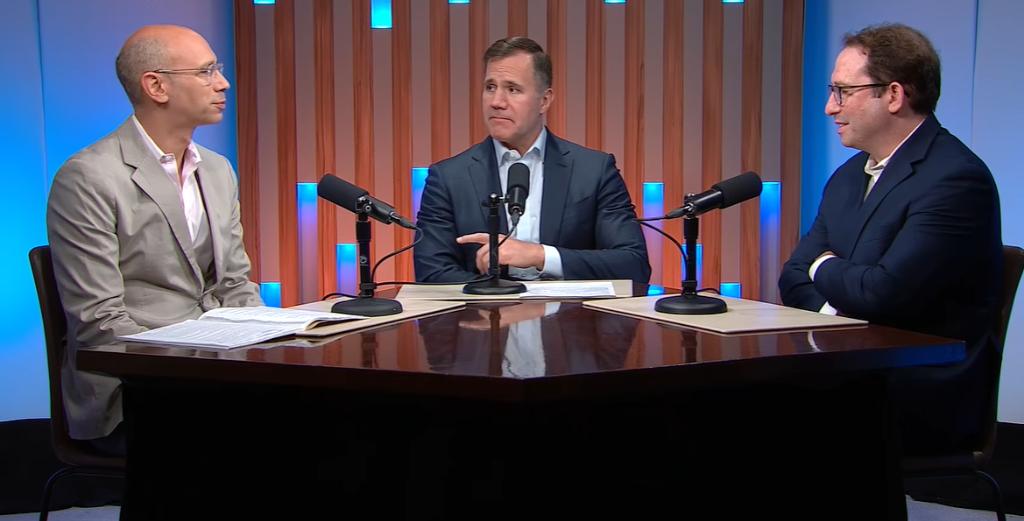
On September 17, Dominic Wilson, Senior Advisor of Goldman Sachs Research, and Josh Schiffrin, Global Head of Risk, stated on a Goldman Sachs podcast that the roughly four cumulative interest rate hikes currently priced in by the market are "clearly excessive", and both believe that the actual number of rate hikes in this cycle is more likely to be two.
(
Dominic Wilson explicitly stated that if you have to judge the probability distribution between "two times" and "six times", the answer "very clearly leans to the side of two times".
Both pointed out that the trend of oil prices is the key variable determining the final interest rate hike path. Once oil prices see a substantial pullback, it will create conditions for the synchronous strengthening of a wide range of global assets.
The current bond market has fully priced in a large number of bearish factors, and the long-term real yield is at a rare high level in decades; the stock market has shown stronger-than-expected resilience under multiple pressures including soaring oil prices, a sharp rise in yields, and AI-related uncertainties.
Dominic Wilson believes that with the marginal reduction of short-term uncertainty after the conclusion of the Fed's current meeting, the current point in time is one of the clearest long trading windows in the near term.
Fed rate hike expectations peak: "If you have to pick a number, it's 2"
Against the backdrop of a sharp rebound in energy prices, the sharp rise in inflation expectations is reshaping the monetary policy outlook. The market has now priced in the expectation that the Fed will raise interest rates four times, but Goldman Sachs strategists believe this forecast may be too aggressive.
Josh Schiffrin said that the surge in oil prices is the biggest market surprise this year, which continues to push up inflation expectations and also makes the market's pricing of the interest rate hike path increasingly aggressive. He said
The market has fully priced in a complete tightening cycle of about four rate hikes, but I personally do not think the final number will reach that level.
If a specific forecast is to be given, he leans towards two hikes.
Dominic also agrees with this view, he believes that the baseline scenario is "one more rate hike in October, followed by a long pause".
He pointed out that although the global market (including the Federal Reserve, the European Central Bank, Japan and Canada) has now priced in nearly four rate hike expectations, Dominic said:
But the actual risk is that major central banks may under-deliver on rate hikes. If you ask me whether it will be two or six times, I will say that two times is far more likely.
The bond market has fully digested bearish factors, and long-term real yields are attractive
Despite the recent rising market concerns about fiscal deficits, inflation persistence and capital competition, Josh Schiffrin believes that the current pricing structure of the bond market is completely different from that of the past decade.
The 10-year U.S. Treasury yield stands above 5%, and the 30-year real yield exceeds 3%, he said:
Coupon rates and real yields at this level have not been seen for quite a long time.
Josh Schiffrin believes that the bond market has digested a large number of negative factors and its attractiveness is rising, but a reversal still requires a catalyst, and the most likely catalyst is a fall in oil prices.
Dominic Wilson analyzed the fundamental drivers behind the rise in real interest rates from a structural perspective: The simultaneous expansion of corporate financing demand and fiscal deficits brought about by the AI investment boom have jointly pushed up the pressure of capital competition, while the resilience of economic growth has also made inflation fall slower than expected, further supporting higher policy rate expectations.
He said:
There is limited room for yields to fall sharply before there are substantial changes in these financing dynamics and growth stories.
He also pointed out that if the AI capital expenditure cycle turns, or the economy suffers an unexpected downside shock beyond expectations, there will be substantial room for long-end yields to move down, but neither of these two scenarios is in Goldman Sachs' baseline forecast.
U.S. stocks show resilience, the window for "a rally across all assets" requires cooperation from oil prices
In terms of risk assets, Josh Schiffrin said that U.S. stocks have performed significantly better than expected under multiple pressures including soaring oil prices, a sharp rise in yields, and uncertainties in AI regulation. Josh Schiffrin said:
Judging from the results, the market is quite resilient, which partly reflects the current large-scale capital expenditure cycle and the strong growth of the real economy.
Dominic Wilson gives a more forward-looking framework. He believes that the market has now accumulated a considerable degree of bearish pricing, and expectations of four rate hikes, rising real yields, and oil prices above $100 are all reflected in prices.
This makes it "much easier to see the path of relief from here". He described the current point as "the clearest long window on the long side in the near term, not as good as the end of July, but with a similar feel".
For the most certain trade before the end of the year, Josh Schiffrin proposed three directions:
First, the U.S. dollar will strengthen, supported by the Fed's relatively hawkish stance and the leading advantage of the U.S. economy;
Second, if oil prices fall after the midterm elections, there will be a trading opportunity of "a rally across all assets", "but a fall in oil prices is needed as a catalyst";
Third, continue to pay attention to the allocation value of ultra-long-end high real yields from a medium and long-term perspective.
Dominic Wilson said that given the current level of rate hike pricing and the existence of multiple paths for inflation to ease, he is increasingly confident in the direction of rate pricing correction before the end of the year, and prefers to participate in this potential trend through a low-cost option structure.
The full text of the interview is as follows:
Tony Pasquariello: Alright, welcome to today's discussion. Dominic, Josh, it's great to have you here. Let's start with the Federal Reserve. At the beginning of the year, the market expected several rate cuts, but now it seems that this year will end with several rate hikes. Josh, with full understanding of how difficult it is to predict the future, where do you think this rate hike cycle will eventually go?
Josh Schiffrin: I don't think it's just the Fed's single rate hike yesterday. Combined with the overall tone of the press conference, there should be more hikes. The current market pricing reflects four rate hikes. I think oil prices will be a very key determining factor.
Looking back at this year, the biggest surprise is probably the sharp rise in energy prices. Previously, as conflicts eased somewhat, oil prices fell briefly, but then climbed again, back above $100. I think this has had a significant impact on the inflation outlook — after a series of inflation shocks, the market might have begun to see the possibility of inflation returning to 2%, but this energy price shock has caused overall inflation to jump again, with a huge impact.
The market is now strongly betting on a complete rate hike cycle, that is, four hikes. Personally, I don't think the final number will really reach that level, but the market obviously...
Tony Pasquariello: Very cautious. So in your view, the total will be two to three times?
Josh Schiffrin: Yes, two to three times. If I give a specific number today, I will say two times.
Tony Pasquariello: That means this rate hike cycle will end this year? Dominic, what do you think?
Dominic Wilson: Our baseline forecast is: one more rate hike in October, followed by a long pause. Of course, as Josh said, there are still many uncertain factors that may affect the trend, and the distribution range is quite wide.
I think two times is a good anchor point, but the probability of upward skew is slightly higher. If you ask me whether it is more likely to be two or six times, I will clearly tell you that two times is more likely. I think the market has priced in a fairly high risk premium for a complete rate hike cycle, and our baseline forecast believes that the actual number of hikes will most likely be less than what the market has priced in.
Tony Pasquariello: Alright. Josh, I want to come back to you. Let's talk about the bond market. This year, the yield curve has flattened, but recently most of the market discussions and concerns have focused on the long end. Do you have a relatively clear judgment on the future shape of the yield curve?
Josh Schiffrin: I don't have a particularly strong view on the shape of the curve. But there are several points worth noting: despite many discussions on issues such as fiscal deficits, the forces driving the market generally come from the short end — the market has repriced monetary policy expectations, and the spot market has done a lot of digestion. Of course, there is a lot of pessimism in the market, and various narratives are coming one after another, whether it is strong economy, fiscal deficit, or concerns about inflation.
But now the 10-year Treasury yield has reached 5%, and the 30-year real yield exceeds 3%. Recent trends may be difficult to predict, but I want to point out that in terms of the coupon level provided, the current structure of the bond market is completely different from that of the past decade. Especially at the long end, the real yield offered is quite considerable. Therefore, I think the bond market has digested quite a lot of bearish factors at this point.
Tony Pasquariello: It sounds like both of you think that despite the complex situation, the price already contains quite a lot of risk premium, and the same is true for fixed income. Is this understanding correct?
Josh Schiffrin: Yes. I think a certain catalyst is needed to really turn the situation around. The most likely catalyst is a fall in oil prices, which will bring a certain degree of comfort to the market.
Once such a catalyst appears, that is, a more bullish factor, I think buyers will return — because from a longer-term perspective, the current valuation is more attractive than it has been for quite a long time in the past.
Tony Pasquariello: I want to stay on the topic of fixed income for a while. In hindsight, we can explain from multiple angles why yields have reached their current level: debt and deficits, of course inflation (which has been above target for 66 consecutive months), and capital competition. There is also a more moderate factor, which is that nominal growth has been very strong. But how worried are you about the sustainability of these factors?
Dominic Wilson: This is exactly the question you asked Josh earlier, and I think it is necessary to look at these factors separately. In terms of my personal priority, the rise in artificial intelligence and corporate financing demand, superimposed on the continued existence of fiscal deficits, I think this is an important driving force for the rise in real yields — the narrative of capital competition.
The corresponding cyclical factor is: economic growth is quite resilient, and the process of inflation returning to target is slow or even stagnant, so the pressure to maintain even push up policy interest rates has resurfaced.
In addition, there are issues on the inflation side: energy price shocks, widespread concerns about oil prices transmitting inflation, plus concerns that policy intervention may suppress yields, are gradually seeping into market pricing.
From a deeper structural perspective, I think the rise in real interest rates is largely driven by the two major factors of capital competition and growth resilience. Therefore, the room for change lies in: As Josh said, a certain degree of inflation easing will help weaken the strength of this Fed tightening cycle; the fall in oil prices will also bring a certain degree of easing room to the long end through this channel.
But I do think that the high real interest rate structure we are seeing now is largely rooted in the above financing dynamics and growth narratives. Therefore, before these fundamental factors have substantially changed, it is difficult to expect yields to fall sharply just by the fading of inflation risks.
To achieve a meaningful decline in yields, the AI investment boom may need to cool down, or there may be a substantial unexpected downside in growth beyond our current forecasts. Otherwise, we will be in a high yield environment for a long time, and in the next 6 to 12 months, the real side risks will still tend to be that financing pressure continues to suppress or even push up yields.
Tony Pasquariello: I want to ask you two about your views on risk assets. Dominic, start with you. The market experienced violent fluctuations in July, and after that, the pattern felt a little clearer, and there were still some aftershocks in August. But all kinds of headlines and related fluctuations around artificial intelligence seem to continue. What is your current view on risk assets?
Dominic Wilson: As you said, recent times have really been tricky. I feel that we have been circling around the same set of risks for some time — artificial intelligence, interest rates and yields, and oil and energy risks brought about by the Iran conflict. At least two of these three types of risks have real high uncertainty, and sometimes the three are superimposed at the same time.
At the end of July, there was that short window you mentioned, the situation seemed to be clarified, the market did reset upwards, and then at least retained part of the gains. But the ups and downs of these risk factors keep the situation complex.
I think the current pattern is: these risks have not disappeared, and the uncertainty range in several aspects is still wide, especially geopolitical conflicts and energy price risks. The uncertainty of artificial intelligence also falls into this category in my opinion.
However, going back to the interest rate issue we talked about earlier, I think we have moved pricing and concerns to a different position than before: concerns around artificial intelligence have been more fully digested, key market sectors have experienced a certain degree of de-bubbling, and earnings are still robust at present — this point continues to give us confidence. We have priced in four Fed rate hikes, real yields have risen, and oil prices are priced above $100. Therefore, the distribution of pricing has indeed changed significantly, and the path for a relief rally from here is now much easier to see.
So I think after getting through the Fed meeting, after the Fed came out with a hawkish stance and anchored the back end of the yield curve, maybe the pattern is a little clearer again. But the difficulty level is still high.
I tend to use the currently low index volatility to protect myself, whether it is downside protection or upside exposure. Overall, this is the clearest pattern we have seen on the long side recently — maybe not as good as the end of July, but it has a bit of that feeling. After coming out of this Federal Open Market Committee meeting, even against the background of a hawkish surprise, the situation seems a little clearer.
Tony Pasquariello: It sounds like you want to buy some call options.
Dominic Wilson: Yes, I think the short-term pattern is good, and the pricing of related options also looks quite attractive.
Tony Pasquariello: Alright. Josh, what do you think?
Josh Schiffrin: I think the stock market has withstood a lot of shocks and performed quite well — oil prices have risen sharply, bond yields have climbed sharply, and all kinds of headlines around artificial intelligence are emerging one after another. Through all these disturbances, the market has generally maintained a range-bound pattern. I think the resilience of the stock market is actually quite impressive.
Of course, earnings are part of the reason, but it is also likely similar to the situation you once described — after a bumpy period against all kinds of headwinds, the rally can resume after some headwinds dissipate. This may also reflect the strong economic fundamentals: We are in a large-scale capital expenditure cycle,