Shuidichou has raised its fees again. Is online fundraising still a good business?
On September 18, a family member of a patient in Jinan applied to withdraw 6,831 yuan on Shuidichou, but was deducted 546.48 yuan as platform service fee and 41.04 yuan as channel fee, totaling 587.52 yuan, with the actual received amount being 6,243.48 yuan.
The customer service of Shuidichou confirmed that since August 15, 2026, the platform service fee has been raised from 6% to 8%, with a maximum cap of 8,000 yuan per single project.
This is already the third price increase of Shuidichou.
In January 2022, a 3% service fee was piloted in Xuzhou, which was rolled out nationwide in April with a cap of 5,000 yuan; in December 2023, the fee was raised to 6% with the cap increased to 8,000 yuan; in August 2026, it jumped to 8%. From 2016 to the beginning of 2022, Shuidichou had always operated under the banner of "0 service fee", only allowing third-party payment providers to deduct a 0.6% channel fee.
Six years of free service, and the rate has risen to 8% within four years.
I. Qingsongchou Follows the Hike, Share Prices of Both Platforms Stagnate
Shuidichou is not the only online fundraising platform that has raised its fees.
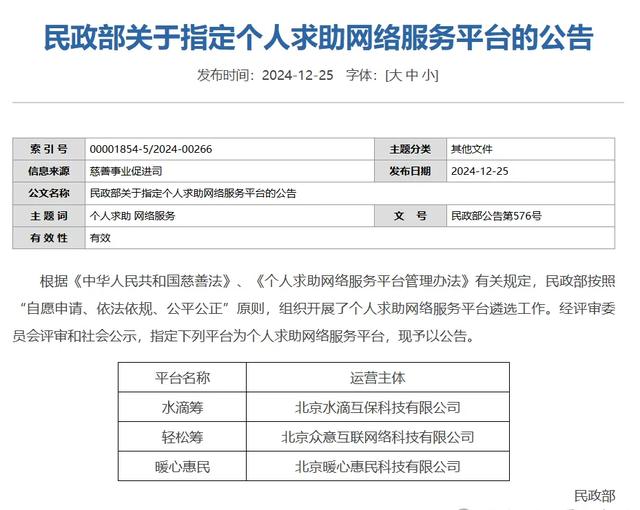
At the end of 2024, Nuanxin Huimin took the lead in charging an 8% service fee; in 2025, Qingsongchou followed up, charging 8% for fundraisings initiated offline, while keeping the rate at 6% for online ones. By September 2026, the service fees of these three online platforms designated by the Ministry of Civil Affairs have all been unified at 8%, with a maximum cap of 8,000 yuan for each.
[Note] This rate is a unified government-guided price, not set by Shuidichou or Qingsongchou unilaterally.
However, as service fees rise, the share prices of the companies have not gone up.
Waterdrop Inc. was listed on the New York Stock Exchange in May 2021 with an IPO price of 12 US dollars. Its share price fell below the issue price on the first trading day, stayed below 2 US dollars for a long time after 2022, and once dropped below 1 US dollar in August 2026, down more than 90% from the issue price.
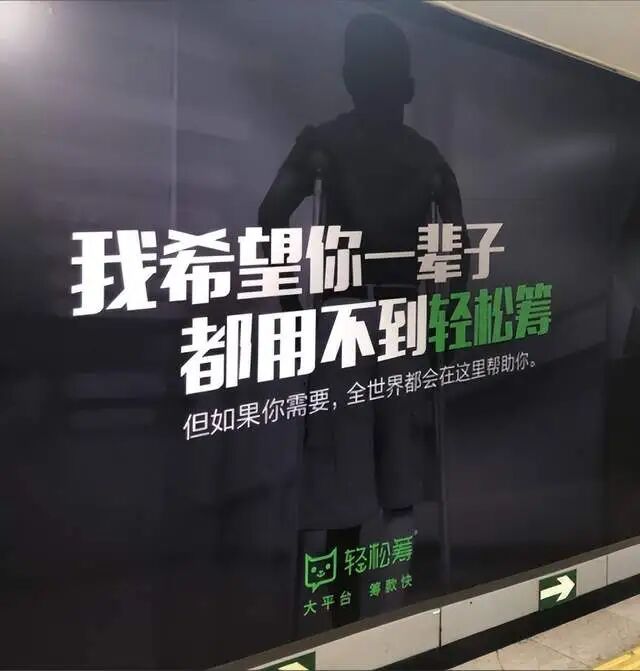
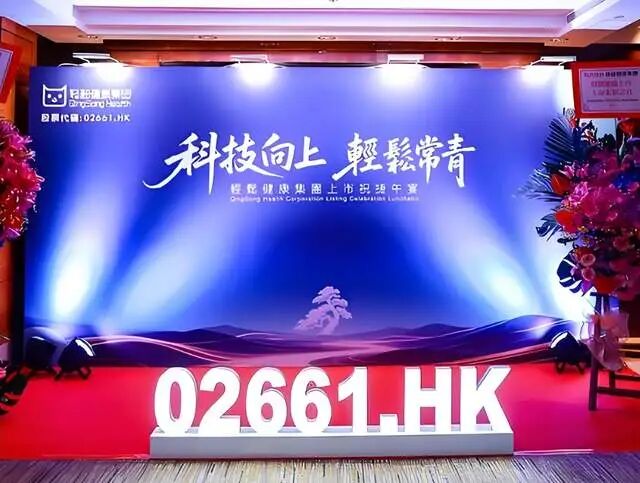
The story of Qingsongchou is even more dramatic. Qingsong Health went public in December 2025, with its share price surging 158% on the first trading day, hitting 162.7 HKD in March 2026 and its market value exceeding 30 billion HKD. Four months later, the price fell to 6.32 HKD, a drop of more than 96%.
As of September 18, the closing price of Qingsong Health was 4.41 HKD.
Raising service fees cannot save the valuation.
Because the ceiling of the online fundraising business does not lie in the service fee rate, but in its business model.
II. Crowdfunding Does Not Make Profit, It Is the Users It Brings That Generate Revenue
Shuidichou is classified into the "Crowdfunding" segment in the financial reports. In the second quarter of 2026, the service fee revenue of this segment reached 63.6 million yuan, with an operating loss of 37.26 million yuan, and a total loss of 73.32 million yuan in the first half of the year.
In other words, Shuidichou, which charges an 8% service fee, is still losing money.
Then what does Waterdrop Inc. rely on to make money? Insurance.
In the second quarter of 2026, the operating profit of Waterdrop Inc.'s insurance division reached 183.6 million yuan, and the operating profit in the first half of the year hit 336.5 million yuan.
Shuidichou has never been a profit center, but a traffic entry point.
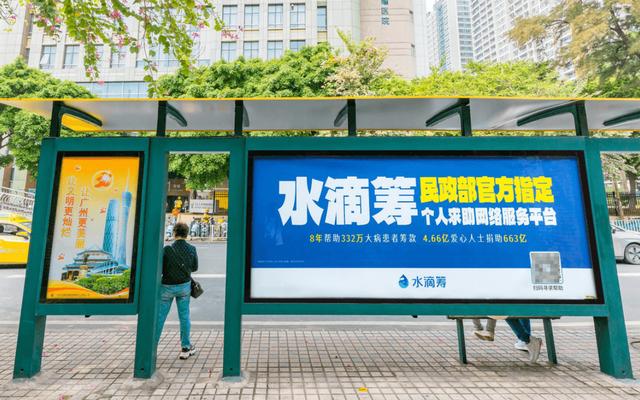
Shuidichou attracts users through the medical crowdfunding scenario for serious illnesses, and then sells insurance products through Waterdrop Insurance Marketplace, which is the clear business logic stated in Waterdrop Inc.'s prospectus. The 2020 prospectus shows that 46.5% of the traffic of Waterdrop Insurance Marketplace comes from Waterdrop's own traffic, and more than 40% of donors said they would have the urge to buy insurance after seeing fundraising information.
Qingsongchou followed the same path, but took a wrong turn.
In June 2024, to meet the compliance requirements for foreign investment access, Qingsong Health divested Qingsongchou from its listed entity. The cost of this divestment was that the number of active users plummeted from 65.1 million to 22.7 million, a drop of nearly two-thirds.
Qingsong Health went public with the new narrative of "AI + Healthcare", but the traffic pipeline of crowdfunding was cut off. The remaining user base cannot support the 30 billion HKD market value narrative, so the collapse of its share price was only a matter of time.
The two companies are doing the same thing: using public welfare scenarios to accumulate traffic, and realizing monetization through insurance. The difference is that Waterdrop still retains Shuidichou, while Qingsong Health has divested Qingsongchou. The one that retains the crowdfunding platform loses money, and the one that divests it loses traffic.
Crowdfunding itself does not make profit, what makes profit is the users it brings.
However, the conversion rate of converting users from "donors" to "insurance buyers" is declining.
III. Compliance Constraints and Shrinking Traffic
At the end of 2024, the Ministry of Civil Affairs designated Shuidichou, Qingsongchou and Nuanxin Huimin as three personal assistance online service platforms, bringing the industry from the gray area into the regulatory framework.
Official designation means confirmation of legitimacy, and it also means that the fees charged must be "cost-recovering or slightly profitable", with standards made public and notified to fundraisers in advance.
This creates a dilemma for the platforms.
If no fees are charged, the crowdfunding business will continue to lose money, and the profits from the insurance business have to be used to cover the losses;
If fees are charged, the rate rising from 3% to 8% will constantly touch the public's psychological red line.
The more fundamental problem is that the overall online traffic is shrinking.
The user growth of online fundraising has long passed its peak.
The number of people initiating fundraisings is decreasing, and the number of donors is also decreasing. The rise in service fees cannot make up for the gap brought by the shrinking transaction volume.
Waterdrop Inc. is currently supported by its insurance business. In the second quarter of 2026, its insurance revenue increased by 80.5% year on year, with an operating profit of 183.6 million yuan.
However, the strong performance of insurance sales precisely shows that Waterdrop Inc. is increasingly becoming an insurance brokerage firm, rather than a technology company that "protects hundreds of millions of families with internet technology".
Investors value the company based on the logic of insurance intermediaries — a share price of around 1 US dollar is exactly the proper pricing for such an intermediary.
Shen Peng once reminded the public in an interview that Waterdrop is a commercial company, not a public welfare organization.
The problem is that when a commercial company obtains the trust of hundreds of millions of users with the public welfare image of "0 service fee", and then cashes in on this trust with an 8% service fee, the public will feel betrayed rather than see it as a reasonable "business logic".
The predicament of Shuidichou and Qingsongchou is essentially a choice for business models: taking public welfare as a traffic entry point has been proven unworkable — customer acquisition costs are rising, conversion rates are falling, and valuations are collapsing.
The 8% service fee may still not be the end point, but just another tight knot on the deadlock of this business model.
Extra
It is necessary to remind readers that in many WeChat groups, fundraising links about neighbors' sick children, sick relatives and friends and similar content are often sent out, and those are all fraud messages sent by robot programs. On the one hand, these fraudulent fundraising links come from various fundraising mini-programs and platforms with different names, not the three platforms designated by the Ministry of Civil Affairs, namely Shuidichou, Qingsongchou and Nuanxin Huimin.
On the other hand, even the formal fundraising information that has passed the preliminary review on the three major platforms will not be pushed to completely unrelated catering groups, residential community groups or industry groups.
Do not feed robot scammers with your kindness.
This article is from the WeChat official account "Zhang Dongwei", written by Zhang Dongwei, and published by 36Kr with authorization.