Stellantis CEO: The global automotive market is split between the United States and the rest of the world.
Introduction
While the rest of the world is actively advancing the development of electric vehicles, the United States has become the only isolated outlier.
Some time ago, Stellantis CEO Antonio Filosa stated at an analyst meeting that there is a clear division in the global automotive market today: the United States, and everywhere else.
It should be noted that Stellantis is a large global automotive group spanning Italy, France and the United States, and the many brands under the management of Antonio Filosa are spread across all corners of the world. His judgment on the global situation can basically represent the obvious regional characteristics presented by the global automotive market.
Therefore, what he has to face includes the different US trade and policy environments in other regions including Europe, as well as cooperation with China.
Faced with the island-like market of the United States, the challenges Stellantis faces, and even the challenges its competitors face, are how to develop automobiles for the United States, a major source of profit, because US regulations and consumer demands are completely different from the rest of the world.
Antonio Filosa said that in the United States, the automaker relies entirely on local engineering and R&D capabilities. In other markets including Europe, Stellantis cooperates with other automakers including China's Leapmotor and Dongfeng Motor.
Although Antonio Filosa said these partnerships have no plans to launch models in the United States, other automakers that have reached similar agreements have been criticized by the Trump administration. For example, US officials lashed out at Ford Motor Company's signing of a joint venture agreement with China's Geely Automobile.
On the contrary, Ford stated in Europe that it supports the global expansion of Chinese automakers. Ford also said it is adapting to the new global situation and becoming more streamlined and flexible through these partnerships.
The US Hits the Brakes
Since last year, electric vehicles have swept the world, with the United States being the only exception. According to the annual report released by the International Energy Agency a few months ago, global electric vehicle sales increased by 20% in 2025 to exceed 20 million units, and one quarter of all new cars sold worldwide are electric vehicles.
However, according to data from Kelley Blue Book, a subsidiary of Cox Automotive, US electric vehicle sales fell by 2% last year.
The reason is that rising global fuel costs have pushed consumers to switch to electric vehicles at an unprecedented rate. US gasoline prices also rose sharply, breaking through $4 per gallon in April. However, consumers have fewer electric vehicle options to choose from, especially in the economy car segment.
Chinese automobiles, which drive the growth of global electric vehicles, are subject to a 100% tariff in the United States. In addition, the United States imposes an additional 25% tariff on all imported vehicles. In most countries, even without subsidies, the cost of owning an electric compact car within five years is lower than that of a gasoline car of the same class.

But these cars are made in China and are shut out of the US market. No US local automaker has yet produced an alternative model with a similar price point.
In September last year, a policy that provided US consumers with a $7,500 new energy vehicle purchase subsidy expired. From the end of 2024 to the end of 2025, the United States gradually stopped importing the lowest-priced foreign models, increased the prices of other imported models by raising tariffs, and canceled the subsidies that previously made it easier for US consumers to buy electric vehicles.
According to a report from Kelley Blue Book, the results show that US auto sales fell 36% year-on-year in the fourth quarter of 2025, and 27% year-on-year in the first quarter of 2026. Several major US automakers saw their quarterly electric vehicle sales drop by 60% to 70%.
In contrast, the European Union and Canada have opened their markets to Chinese electric vehicles. In January this year, the European Union allowed Chinese automakers to sell electric vehicles, provided that the price is higher than the minimum standard; Canada allowed the import of Chinese electric vehicles from March, with tariffs reduced from 100% to 6.1% and an annual import cap of 49,000 units set.
According to data from the International Energy Agency, in 2025, electric vehicle sales in Europe increased by more than 30%, Asia-Pacific markets excluding China grew by 80%, and Latin America grew by 75%. In March this year, monthly electric vehicle sales hit an all-time high in about 30 countries. In addition, the Middle East conflict has accelerated the process of consumers in countries where affordable electric vehicles are popular switching from gasoline cars to electric vehicles.
In the first quarter of this year, electric vehicles accounted for only 5.8% of new car sales in the United States, about half of their share six months ago. David Hart, a senior fellow at the New York-based think tank Council on Foreign Relations, believes that "American consumers will gradually realize what they might have missed. When they travel abroad, or when a small number of cars cross the border into the United States, some people will see it with their own eyes."
China's strategy is no longer a secret: beat competitors with low prices, and this strategy has worked. Although some reviews point out that Chinese-made electric vehicles have slightly lower manufacturing costs than other models of the same class and are slightly less fun to drive, consumers still cannot resist their extremely low prices.
US senators are well aware of this and do not want this to happen. In the United States, political leaders and organizations have continued to resist the entry of Chinese electric vehicles into the US market. Affordable electric vehicles are extremely attractive to American families who cannot afford new cars, especially electric vehicles.
American automakers cannot lower their prices to such a low level and cannot compete with them. Ford CEO Jim Farley previously stated that this is "not a fair competition".
Without Chinese electric vehicles to compete with, US automakers have continuously launched high-priced electric vehicles that are unaffordable for ordinary consumers. Despite rising gasoline prices, many people still choose to keep driving gasoline cars instead of spending $50,000 on an electric vehicle. As American consumers are reluctant to buy electric vehicles, automakers have decided to adjust their US market plans.
This has led to the cancellation of many electric vehicle projects, from supercars to family SUVs. While some automakers are still working to make electric vehicles a success, the prices are still not low enough to attract American consumers, especially when they know that Chinese electric vehicles are $10,000 to $20,000 cheaper.
The Rest of the World is Racing Ahead
Looking at the data for this year, global electric vehicle sales continued to grow in 2026, but the growth rate slowed sharply in August, with a sharp decline in North America offsetting strong growth in Europe and improvements in monthly sales in the Chinese market.
According to data from Benchmark Mineral Intelligence, global electric vehicle sales reached 1.83 million units in August 2026, an increase of 2% over August 2025. Global electric vehicle sales in the first eight months of this year reached 13.4 million units, an increase of 4% over the same period in 2025.
The August data highlights the increasingly fragmented status of the global electric vehicle market. The European market continues to maintain strong growth, while China remains the world's largest electric vehicle market despite a year-on-year decline in sales. At the same time, as the US federal electric vehicle tax credit policy expires, the North American market is experiencing a significant decline.
Last month, Europe performed the strongest among the major electric vehicle markets. Electric vehicle sales rose 36% year-on-year to 380,000 units, although sales fell 15% from July as the region's traditional summer sales off-season continued. Despite the sequential decline, the European electric vehicle market is still expanding rapidly in 2026. Sales from January to August reached 3.3 million units, up 29% from the same period last year.
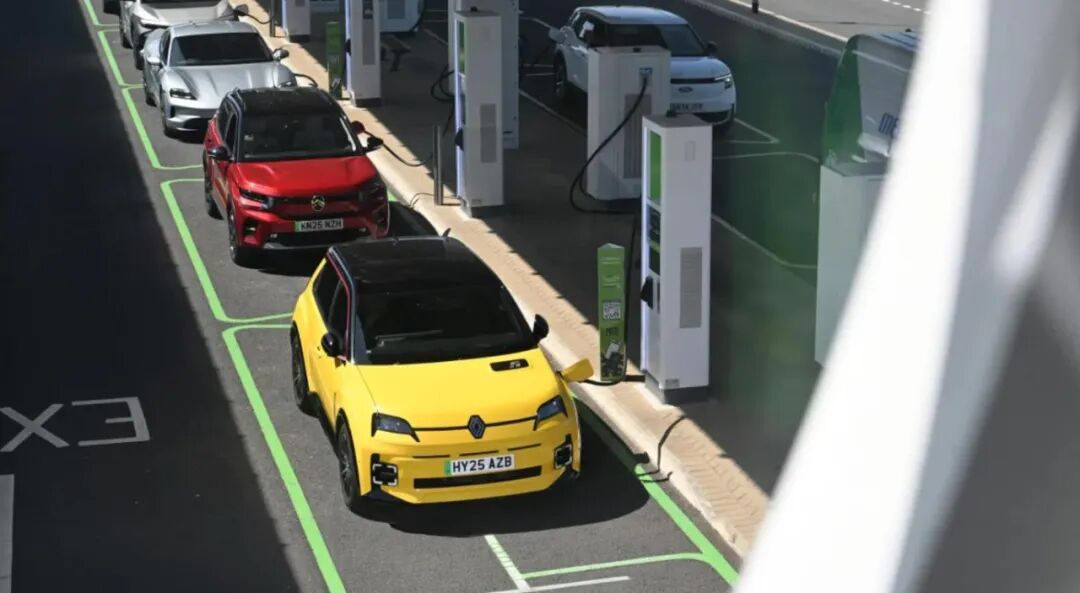
Government incentives, a growing number of lower-priced electric vehicle options, and rising fuel costs are all helping to support demand in several major European markets. France, Germany, and the United Kingdom together account for more than half of European electric vehicle sales and have been important contributors to the region's growth. France performed particularly strongly in August, with electric vehicle penetration reaching a record 41%.
Spain's new Auto+ subsidy program is also expected to inject new impetus into the electric vehicle market. The program, which opened for applications on August 4, provides a basic subsidy of up to 4,500 euros for the purchase of brand-new electric passenger vehicles. The program has a budget of 400 million euros in 2026 and replaces the MOVES III program that expired at the end of 2025.
Correspondingly, North America remains the biggest weak link in the global electric vehicle market. According to data from Benchmark Mineral Intelligence, electric vehicle sales in the region fell 33% year-on-year to 140,000 units in August. This brings the year-to-date decline in electric vehicle sales in North America to 21%, with the United States being the main cause of this downward trend.
The main reason for the sharp decline in sales is the difficult year-on-year data comparison caused by the expiration of the US federal electric vehicle tax credit policy. Consumers rushed to buy electric vehicles before the policy expired in September 2025, resulting in exceptionally strong sales in the same period last year. Therefore, compared with the buying spree in 2025, sales in August 2026 appear to be significantly weaker.
As consumers continue to weigh price, range, charging infrastructure and incentives when choosing their next car, hybrid vehicles have also recaptured some of the market share lost by pure electric vehicles. Another sharp year-on-year decline is likely to occur in September, as there was a large wave of buying in the same period in 2025 when federal incentives expired.
The situation in Canada is different. Its first six-month low-tariff window for importing Chinese-made electric vehicles ended on August 31, with 15,603 of the 24,500 available quotas used, accounting for about 64% of the available quotas. Unused permits have been carried over to the second window starting on September 1, allowing manufacturers to access more than 33,000 permit quotas by the end of February 2027.
China's electric vehicle market sold 1.03 million units in August, down 11% year-on-year but up 4% month-on-month. Although Benchmark said the year-on-year decline was larger than the 5% drop in July, this change mainly reflects a larger base compared to August 2025 rather than a sudden deterioration in underlying demand.
So this market remains huge, with electric vehicles accounting for more than 60% of passenger car sales for the fourth consecutive month. Although overall automotive demand remains sluggish, the reduced operating costs of electric vehicles and increasingly fierce market competition have continued to drive the reduction in demand for internal combustion engine vehicles.
In the global electric vehicle market, the role of Chinese electric vehicles is also growing. New energy vehicle exports in August increased by more than 150% year-on-year to about 518,000 units, setting a new monthly record. Cumulative exports of new energy vehicles in 2026 have exceeded 3.3 million units.
In this context, even if the growth rate of global electric vehicle sales slows down, demand remains strong. In 2026, the global electric vehicle market will enter a more complex stage. From January to August this year, global electric vehicle sales reached 13.4 million units, a year-on-year increase of 4%. However, the 2% growth rate in August indicates that the growth momentum in major markets is becoming uneven.
Europe is benefiting from incentive policies and expanding electric vehicle penetration, while China maintains an extremely high electric vehicle penetration rate despite a year-on-year decline in sales. As the US federal government ends its incentives for electric vehicles, the North American market faces a more difficult adjustment, while other markets outside the traditional leading electric vehicle markets are growing rapidly.
For automakers, the message is clear: global electric vehicle demand is still growing, but success increasingly depends on the situation in each individual market, government incentives, pricing, and the ability to compete internationally. It cannot be denied that the global electric vehicle industry is still expected to set a new annual sales milestone in 2026.
This article is from the WeChat Official Account "Auto Community" (ID: iAUTO2010), author: Yang Jing, published with authorization from 36Kr.